Copyright Contradictions

Over the weekend, I put together a very tiny animation about a tune plagiarised from Moore’s Irish Melodies in 1815.  Interesting Twitter conversation ensued with Paul Cooper (of RegencyDances.org) and folklorist Jurgen Kloss in Hennef, Germany. In brief, it does appear that folk tunes – and even country dances – were seen as fair game for repurposing and republication, although there are a number of legal disputes on record in contemporary newspapers.  And I have some more great references for the bibliography, next time I’m updating it!

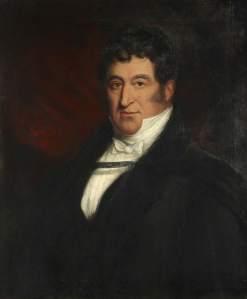
220px-Thomas_Moore,_after_Thomas_Lawrence—————————————————————————–

Here’s my original weekend posting:-

I unearthed an unexpected instance of musical plagiarism yesterday.  And I wonder if Thomas Moore and James Power were even aware of it!  I won’t divulge too many of the details, as I might be referring to it in a conference paper one day, but here’s the teaser, in the form of a brief Biteable animation! Please click the link below:-
Copyright Contradictions

Early photography: Elizabeth Johnston Hall (1822-1901)

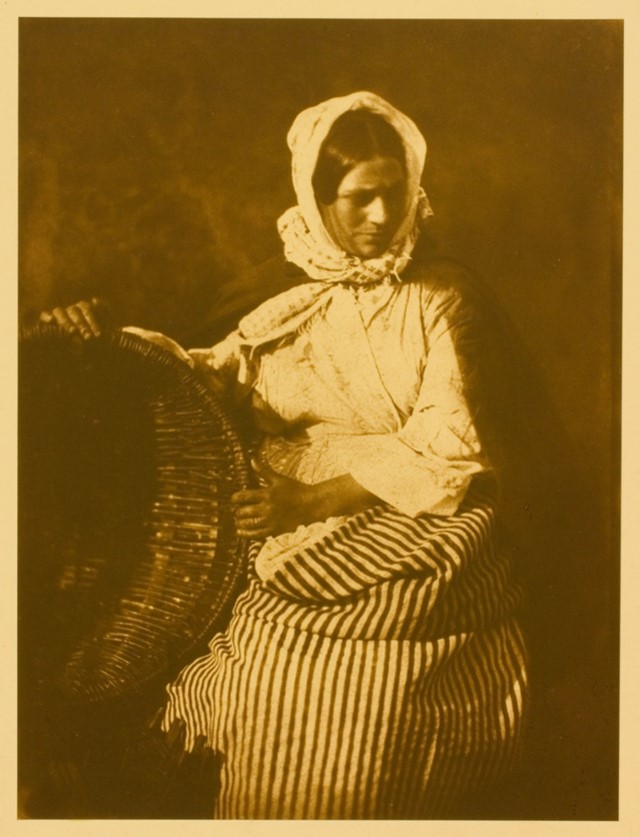
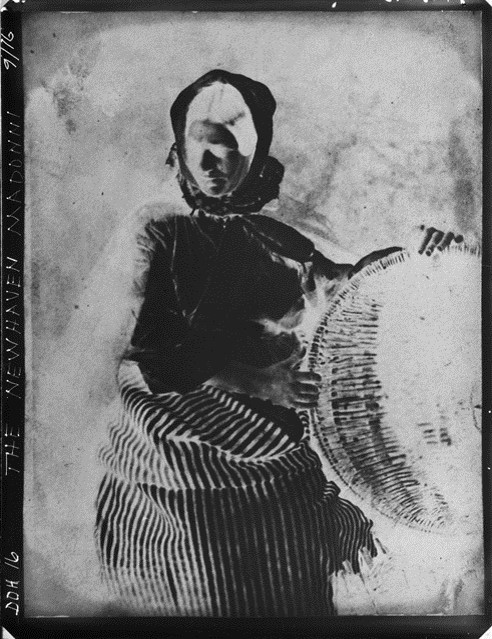
This makes me think of the early photograph of an old lady, Mrs Bertram of Edinburgh. (As readers of Claimed From Stationers Hall blog and the EAERN project blog will realise, I think it highly likely that it’s “our” school proprietress, Jane Bertram.) I’m intrigued that so much can be found out about the subjects of early photographs. Hopefully I’ll be able to reach out to the authors of Glasgow University Library’s blogpost to see if they’ve ever encountered her!

Sarah Hepworth's avatarUniversity of Glasgow Library Blog

Guest blog post by Roddy Simpson, photographer and writer on the history of photography, author of ‘The Photography of Victorian Scotland’ (2012).

Elizabeth Johnston Hall Elizabeth Johnston Hall by Hill and Adamson. Carbon print by Jessie Bertram 1916. University of Glasgow Library, Special Collections Dougan Add. 40

Elizabeth Johnston Hall (1822-1901) is one of the most famous photographed Scottish women because of the superb image of her produced in the mid-1840s, at the very beginnings of photography, by the pioneering Scottish partnership of David Octavius Hill (1802-70) and Robert Adamson (1821-48). She is clearly identified because ‘her name had been written by D O Hill under the photograph’ (see footnote 1).

The beautifully composed and lit image of this Newhaven fishwife has appeared in countless exhibitions around the world, been enlarged to poster size and also appeared on the sides of buses and trams. She has been written about by academics and art…

View original post 2,883 more words

Research Outcomes

At a time when all researchers earnestly and diligently record and submit outcomes and fishmosaicoutputs for ResearchFish, I wonder how I could intimate the activities that have been initiated for 2019 as well?!  This month, I’ve submitted abstracts in response to FOUR conference calls for papers.  I’ve started thinking about another potential project.  But I’ve also got several things already in the pipeline, written during the research grant for Claimed From Stationers’ Hall – and indeed, a few that have been in the pipeline for much longer than that!  (Inspired by ResearchFish – not that this particular piece of writing has anything to do with my present research – I have just enquired about some encyclopedia entries that I wrote in 2016, and was relieved to hear that publication is (in encyclopedic terms) imminent.  It’ll be good to strike them off my “pending” list!)

Isn’t it frustrating when your outputs are significantly greater than have actually reached fruition or publication!

Ah well, back to ResearchFish, and I’ll see if I’ve missed anything off the present list!

Remember Mrs Bertram of St Leonard’s?

Readers may remember that I contributed a blogpost to the EAERN website (Eighteenth-Century Arts Research Network) back in 2017. I wrote about boarding school proprietress Mrs Jane Bertram, who owned a school in St Andrews (St Leonard’s, near the ruined Cathedral) until 1826, and then another at Newington House in Edinburgh. My primary interest was in her music borrowing from St Andrews’ University Library.

Whilst I was in St Andrews today, I went for a brisk, sunny but bitingly chilly walk at lunchtime, to establish just where St Leonard’s was. I knew that the present highly-esteemed private school is not in any way a direct descendant of Mrs Bertram’s establishment, albeit on the same site, but I made some more discoveries that pleased and surprised me, nonetheless.

I had never looked for the school before – and I had been unaware how close it was to the cathedral and the harbour. I was therefore equally unaware how close it was to the Lambert’s family home on the south side of South Street. However, whilst the families probably knew each other, “my” Miss Elizabeth Lambert would have been an adult by the time I estimate Mrs Bertram bought her school in the second decade of the nineteenth century, so any momentary excitement that Elizabeth might have been taught there, soon evaporated!

What I did discover on my walk was that St Leonard’s was later home to two university professors during some of the intervening years, before the present school was founded by professors anxious that a good quality school should be founded in the town. Not pertinent to Mrs Bertram’s story in the slightest, but it was nice to know a bit more about the property!

Anyway, I took some photos, so I’ll share them here for your enjoyment! First, the walk to St Leonard’s and a plaque outside the grounds …

And next, into the courtyard and a view of the old St Leonard’s Chapel, and the old school building with its plaques about the former professorial occupants!

Can You Copyright a Quilt?, asked Alexandra Marvar in The Nation

Forgive me – combining two of my passions, I have to share this article!

Can You Copyright a Quilt?

Long after their iconic American quilts caught the art world’s attention, the Gee’s Bend artisans are taking control of their legacy.

Nineteenth-Century Music Review – CFP

Spotted on Twitter, shared in haste – this might be of interest to network readers:-

Call for papers for a themed edition of Nineteenth-Century Music Review: ‘Rediscovering and Playing the Classics in the Nineteenth Century’

The full CFP can be read in Marten Noorduin’s recent tweet

And here’s the journal itself:-

https://www.cambridge.org/core/journals/nineteenth-century-music-review

If you’re rushing to submit a proposal, then the following whispered (well, tweeted) insider comment might make you feel a bit less stressed:- “Officially the deadline is today, but I won’t actually be looking at them until Monday morning. Anyone who sends me an abstract before 9 am on 6 February will still be considered!”

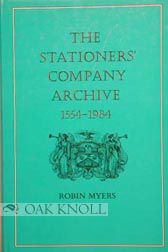
Invaluable Resource: The Stationers Company Archive 1554-1984, by Robin Myers

robin myers book coverBy and large, this book is aimed at book and publishing historians – it enumerates the contents of the Stationers’ Company Archive from 1554-1984, at Stationers’ Hall. The compiler, Robin Myers, was for a long time Honorary Archivist there. (She has the status of Liveryman at the Stationers’ Company.)

Not the first attempt at documenting this complex body of material, but certainly the most comprehensive, I commend especially the Preface (xiii-xiv) and Introduction xvii-xxxvii), which gives an overview of the history of the Archive. Significantly, the creation of a proper muniment room in 1949 made visits more convenient for researchers, and also saw the awakening interest of musicologists looking for first London editions by famous composers.

Next, cast your eye over the Contents, and in particular Section I – the Entry Books of Copies & Register Books 1557-1842; Registers of Books Sent to Deposit Libraries 1860-1924; a Cash Book & Copyright Ledger Book 1895-1925; and Indexes of Entry Books 1842-1907 appear between pp.21-30. The Entry Books cover several years at a time for the earliest period, and a couple of years at a time for the era that our project has been covering. As I may have mentioned already, I’m quite interested in the book commencing June 1817, and we find in the listing that the wording, ‘Published by the author and his property’ “begins to appear not infrequently in this volume.” This would seem to imply a greater sense of intellectual property, although there may be another more technical explanation of which I’m not aware!

Much of the rest of the book concerns leases, freedoms, wardens’ vouchers and other documentation which are maybe of little concern to the average musicologist, but it would do no harm to glance through the contents if only so that you know what else is there. A complicated web of documentation of which many of us are blissfully unaware!

Myers, Robin (ed.) The Stationers’ Company Archive 1554-1984 (Winchester: St Paul’s Bibliographies, 1990) ISBN 0906795710

The records of the Stationers’ Company are now available as digital images via publisher Adam Matthew: Literary Print Culture: the Stationers’ Company Archive, 1554-2007. As well as the records themselves, there’s also a wealth of background information, including commentary by Robin Myers. You can view a short YouTube video here.

ISECS – International Congress on the Enlightenment: Call for Papers

edinburgh-3913492_960_720
Edinburgh skyline, via Pixabay

Everyone loves a good CFP,  and I’m delighted to share this particular CFP, which I’m quite excited about:-

The British Society for Eighteenth-Century Studies

is proud to host

The International Congress on the Enlightenment

on behalf of the

International Society for Eighteenth-Century Studies (ISECS)

at the University of Edinburgh, 14-19 July

Theme: ‘Enlightenment Identities’


Call for papers link, please click here.


What did Rossini think?

French School; Gioacchino Antonio Rossini (1792-1868)
Rossini, painting via ArtUK from Royal Society of Musicians of Great Britain

It is an inescapable fact that many a late Georgian or early Victorian music cabinet must have contained at least one set of piano variations on an operatic theme by Rossini.  There are just so many of them!  Since they proliferated in the 1820s (ie the last decade of Rossini’s operatic compositional phase, and the era when he also visited Britain), you won’t find them listed in Kassler’s Music Entries at Stationers’ Hall – his bibliography ends in December 1818.  But you have only to search Copac or glance at St Andrews University Library’s listings, to see how many composers were inspired to write virtuosic variations on the great man’s tunes.

What did Rossini think of this, I wonder?  I’ve only started to scratch the surface of this particular enquiry, but to date I’ve discovered only that copyright legislation was not as advanced in Italy as it is in the UK.  What’s more, there may not be very many extant letters by the great man from the 1820s, and that the authoritative modern edition of his letters is in Italian.  I do know Rossini would have been very conversant with legal documents, considering the number of contracts he signed for his many, many operas.  None of this tells me (yet!) what Rossini thought of other composers making free use of his lovely melodies.

unknown artist; Giaochino Antonio Rossini (1792-1868)
Rossini, painting via ArtUK from Royal College of Music

What I do have is William Lockhart’s article in Music and Letters (vol.93 no.2, 2012), ‘Trial by ear: legal attitudes to keyboard arrangement in nineteenth-century Britain’; Charles Michael Carroll’s ‘Musical Borrowing – Grand Larceny or Great Art?’ in College Music Symposium (vol.18 no.1, 1978); and Derek Miller’s Copyright and the Value of Performance, 1770-1911 (2018).  I shall in due course have a couple more books on Rossini, so I haven’t yet given up on finding out how he felt about this evidence of his popularity.  Maybe he just felt flattered – but I’d love to find his own words on the subject!

As for his published letters? Well, I may have to look for them. I know a little Italian, thankfully.  But meanwhile, if you know anyone who has read the recent edition, please do let me now! I’d be deeply grateful!