Dr Karen McAulay explores the history of Scottish music collecting, publishing and national identity from the 18th to 20th centuries. Research Fellow at Royal Conservatoire of Scotland, author of two Routledge monographs.
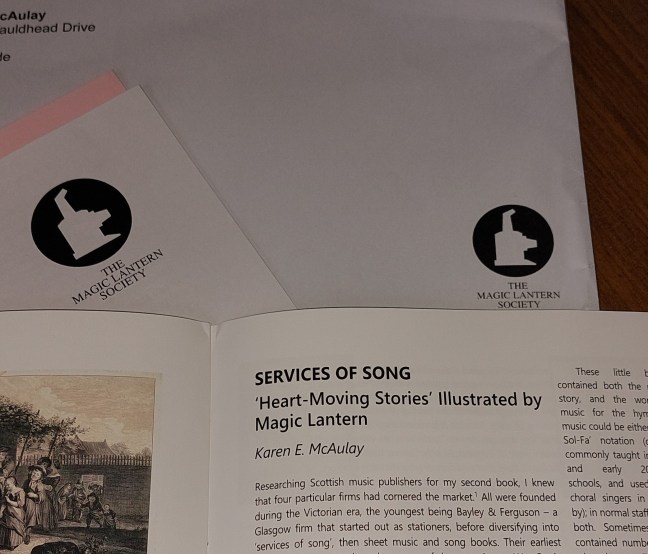
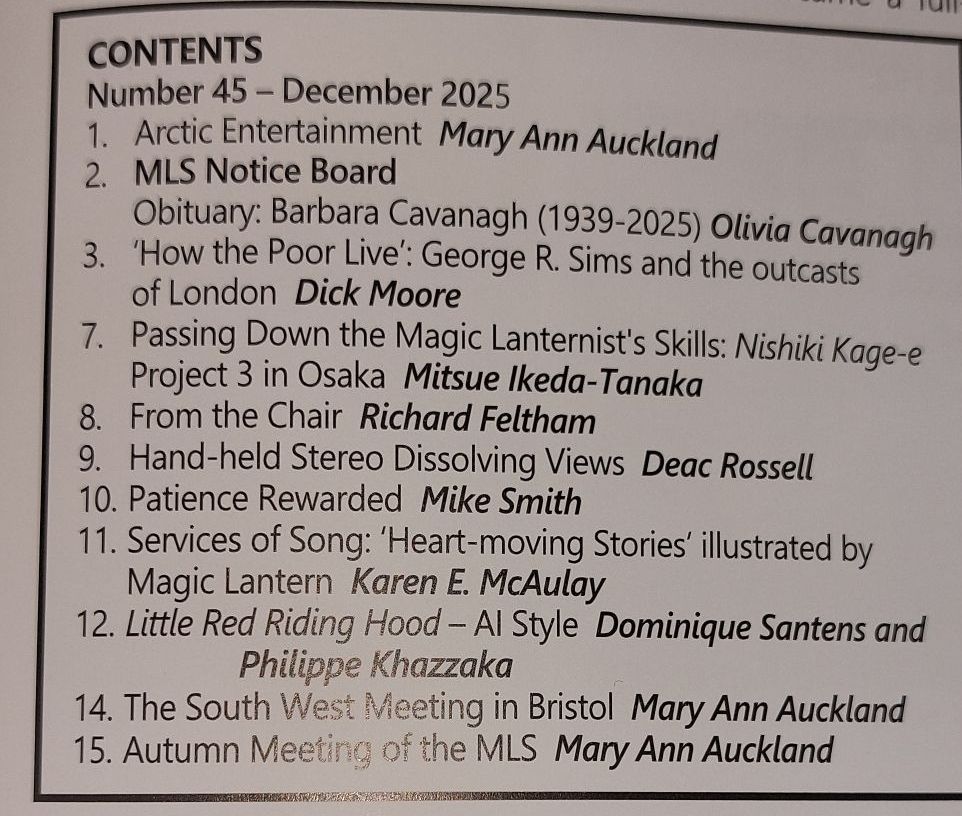
This morning saw the arrival of the latest issue of The Magic Lantern (no.45, December 2025) containing my article, ‘”Heart-Moving Stories” Illustrated by Magic Lantern’. I’m grateful to have had this opportunity to share a favourite bit of research, to which I alluded briefly in my recent monograph.
‘”Heart-Moving Stories” Illustrated by Magic Lantern’, The Magic Lantern no.45 (Dec 2025), pp. 11-12.
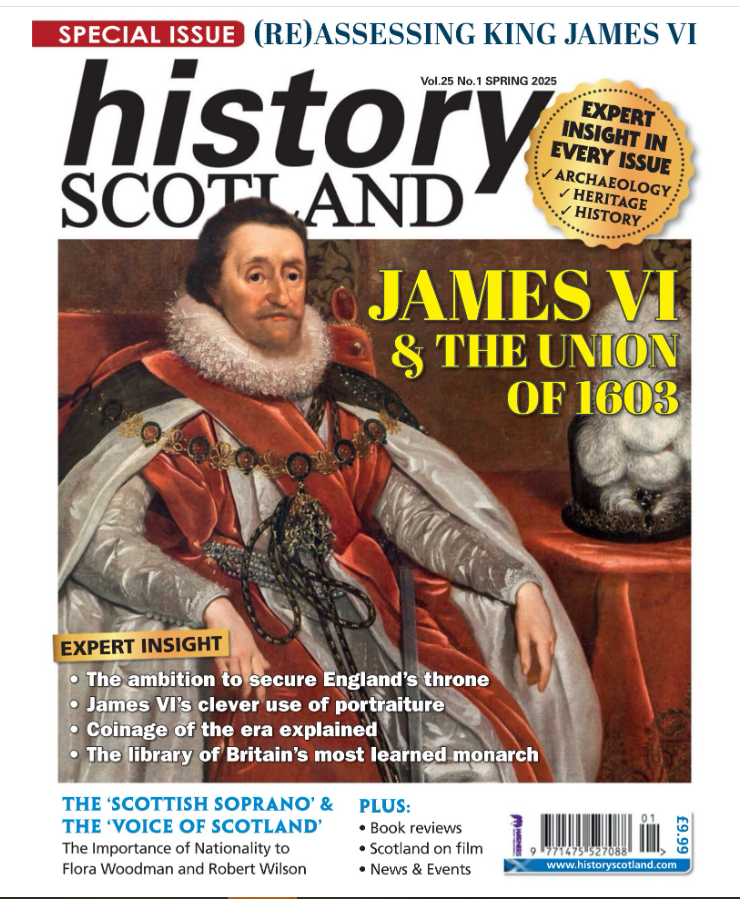
Sadly, this is the last issue of History Scotland, but I’m very pleased to have an article published there. I have really enjoyed writing this, and I think my idea of comparing two very different Scottish singers has actually come together rather well. I wanted to write about Robert Wilson, but I didn’t want to go over the same ground that has already been covered. I also wanted to write about Flora Woodman – but would anyone remember her? Then came the inspiration: what if I wrote about them both, two almost contemporary but very different celebrities, and then I could compare them. This hadn’t been done before! And it worked – the piece almost wrote itself.
Karen E McAulay, ‘The ‘Scottish Soprano’ and the ‘Voice of Scotland’: the Importance of Nationality to Flora Woodman and Robert Wilson’, History Scotland Vol.25 no.1 (Spring 2025), 74-81
If your public library has e-magazines, you’ll be able to read it online. Glasgow Life certainly has it!
Flora Woodman – photo and compliments, 25th October 1924
Yesterday, I set out to track down some music. It’s light music, not great music – almost ephemeral, you could say – but together, it tells a story.
I also wanted to find out more about the life of one of these fin-de-siecle Glasgow woman music publishers.
It’s not that easy. The music is scattered round our legal deposit libraries; the cataloguing isn’t completely consistent; and fin-de-siecle ladies, whether single, married, childless or proud mothers, didn’t leave much record of their daily lives. They’re hidden in the shadows of family members, and, whilst I imagine they knew one another, let me stress that this is NOT a tale of a female publishing cooperative!
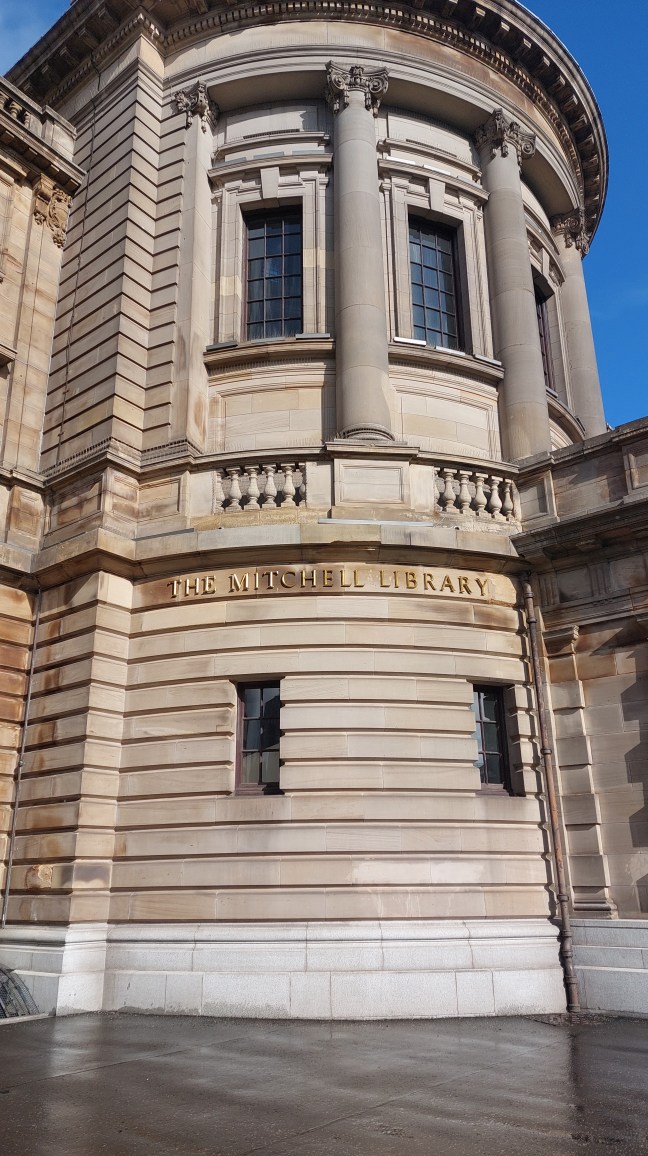
I had a nice chat with a local history librarian, making an acquaintance who is now equally keen to find out more; then I headed home – as yet, none the wiser – to devise a complex spreadsheet of music titles. I’m visualising a pinboard with strings criss-crossing between ladies, libraries and work-lists.
So complex, indeed, that I still haven’t planned how best to get to SEE the music.





 Karen McAulay, Musicologist