Archival Truths: the Reality of Archival Research

White puzzle with black gap where the missing piece should be.

I can say this very succinctly!

That which you seek may not be there.

Indeed,

That which you seek may not exist.

You can look as hard as you like, for as long as you like, with as much concentration and determination as you can muster from every inch, every fibre of your body … but not everything you want to find, will have survived to the present day, whether in archives or attics, boxes or basements.

Thus, the Thomas Nelson archive may have a handlist, but even the handlist (a second or third version of a handlist made by unknown hands at some point in the past) may document items that no longer exist. I struck lucky with my searches for correspondence about the four Nelson Scots Song Books (1948-1954). Of course, I still don’t know if there was further correspondence between the song book editors (by which I mean the compilers), as well as that between the compilers and Nelson’s in-house editors. But I found enough to be interesting, and to document the general story of their coming to fruition. It is possibly significant that they were published post-war, by the educational department editors, who had all been in Edinburgh for years by now.

However, for the past few weeks, I’ve been looking for correspondence between the author of a 1935 (ie, pre-war) book aimed at the general reader, and Nelson’s in-house editors. There was correspondence as early as 1932 – I know that much, but I can’t find it. Not only have I completely failed to find it, but we’ve discovered at least half-a-dozen boxes are missing. I bet you anything the missing correspondence is (was) in one or more of those missing boxes! Now, Nelson had offices in Edinburgh and London. The editorial staff for educational materials seemed to have been based in Edinburgh before the Second World War, whilst some – but not all – of the other editorial staff joined them from London’s Pater Noster Row at the start of the war. Thus, my 1935 book – not a school textbook – may have been edited from the London office, not in Edinburgh. Hold onto that knowledge.

Missing in Enemy Action?

When the London offices were bombed, the remaining London editorial staff, including the juvenile literature department, were found temporary office accomodation with another publisher. If my missing correspondence was lost either during a move to Edinburgh, or during the London raids, or in the general upheaval that followed, then they will never be found.

Ironically, when I was researching in the British Museum for my Masters degree, there was a particular Augustinian plainsong manuscript that I desperately needed to see – I’d travelled from Exeter to see it. But I filled in the paper slip (this was 1980 – that’s how you did it) – and got the slip back, marked ‘Missing in Enemy Action’. I rather think I have come up against the same problem again!

And the handlist? The original copy could even have been made by Nelson’s own staff, maybe in Edinburgh, but incorporating letters that had come up from London.

There remain four ‘temporary boxes’ at the end of the sequence, which may contain my prey. And a handful of other boxes that I can’t look at until the next time I’m in Edinburgh. But I’m preparing myself to accept the almost inevitable. In this particular instance,

That for which I search may not exist at all.

Imperial War Museum image (copyright © The Family Estate (Art.IWM ART 16123) – I can only share the link).

[Dangerous] Women who Dared

Earlier this year, IASH blogged about an exciting book that Ben Fletcher-Watson and Jo Shaw would soon be releasing.  And yesterday, I attended its launch – the third book of the Dangerous Women project:- 

The Art of Being Dangerous: Exploring Women and Danger through Creative Expression (Leuven University Press, 2021) edited by Jo Shaw and Ben Fletcher-Watson

Dangerous Women: fifty reflections on women, power and identity (Unbound, 2022) edited by Jo Shaw, Ben Fletcher-Watson and Abrisham Ahmadzadeh

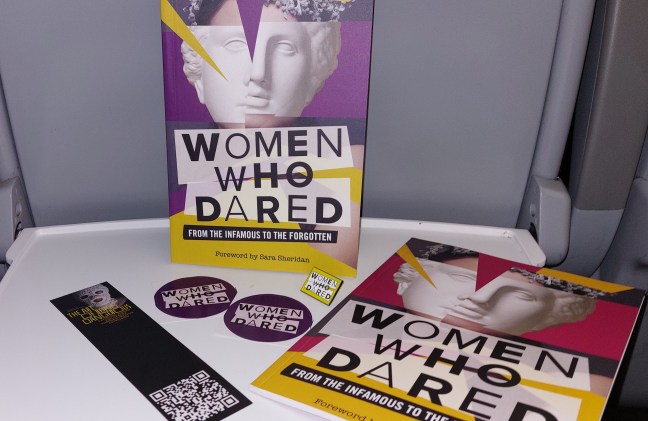
Women Who Dared: From the Infamous to the Forgotten (Edinburgh University Press, 2025) edited by Ben Fletcher-Watson and Jo Shaw

It was a lovely book launch, and we had excellent speakers, who had all contributed to the book: Jo Shaw, Sara Sheridan, Ruth Boreham and Jo Spiller. 

Women who Dared is an anthology of short biographies – all of them historical ‘women who dared’.  I chatted with the speakers afterwards, and enjoyed hearing more about their work. There are so very many women of note, whom history has entirely forgotten about, so books like this are both very welcome, and very necessary.

Edinburgh University Press link

Book launch spoils!

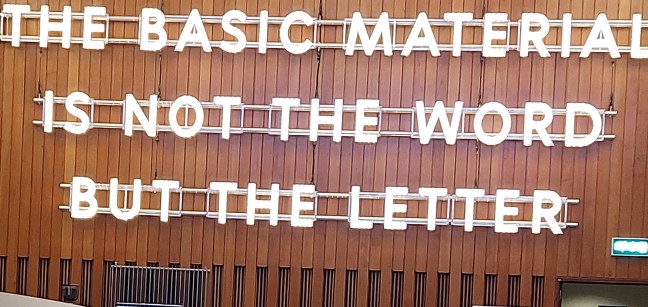
“The Basic Material is not the Word but the Letter” – Nathan Coley, for CAHSS

So says the striking, illuminated art piece in the entrance hall of Edinburgh University Library.  The College of Arts, Humanities and Social Sciences’ website explains that it is the work of Nathan Coley:-

The illuminated sculpture was created by Turner Prize-nominated artist Nathan Coley. […] The Basic Material is not the Word but the Letter [is] also the name of the piece.  19 Jan 2018 CAHSS

The words come from a manuscript in the archives.  Make your own interpretation, says the website.

Well, after my frequent sojourns in the Heritage Collections reading room, consulting thousands of letters in the Thomas Nelson archives, as far as I’m concerned it definitely means letters of correspondence, as opposed to alphabet letters! 

And what a lot I’m learning about the former Edinburgh publishing company.  One of the nicest things is observing the warm rapport established between the editors and their authors. The ones they had most contact with, clearly became friends, over and above their close working relationship. (Although, sometimes I get so caught up in their conversations that I forget they’re talking about books that don’t strictly concern me. Today, I caught them discussing a nursery school expert at Moray House.  But I couldn’t track down the song-book she was said to have written!)

Edinburgh Composers’ Workshop Tomorrow Sunday 25 February 2024

2-5 pm.

Charteris Centre, Pleasance, Edinburgh, EH8 9, United Kingdom

https://www.facebook.com/share/o7SoBUuj6WnjRYxL/

I won’t be there, but my choral piece, Not Like Noah, is one of the songs being tried out at this workshop.

I’m proud that, although I’m primarily a musicologist and librarian, my composition is getting a chance to be performed. Yes, it’s another piece about climate change. I hope the singers enjoy it!

[Later] And I have heard a recording. Gratifyingly successful, I must say.  When there’s a weblink, I’ll share it here. Sounds as though the sopranos enjoyed doing their ‘howling gale’ glissandi, too!

Extinction Calypso: my Composition for Climate Change

Composer Chris Hutchings established an organisation called Choirs For Climate, using choral music to raise awareness of environmental issues arising from climate change. After an initial workshop last autumn, a choral concert of 55 voices took place in Edinburgh’s Greyfriar’s Kirk on Sunday 5 March. It was funded by Creative Scotland, and attracted about 150 in the audience raising several hundred pounds for Greenpeace.

I was delighted that my own Extinction Calypso was included. Although I wasn’t able to attend last week, Chris has shared the video with me, and I have his permission to share it here. The video is the work of Andy Henderson of ah-media.co.uk. Video of the entire concert will appear on Choirs for Climate in due course.

Video of Extinction Calypso

(Image of Greyfriars Bobby, from Pixabay)

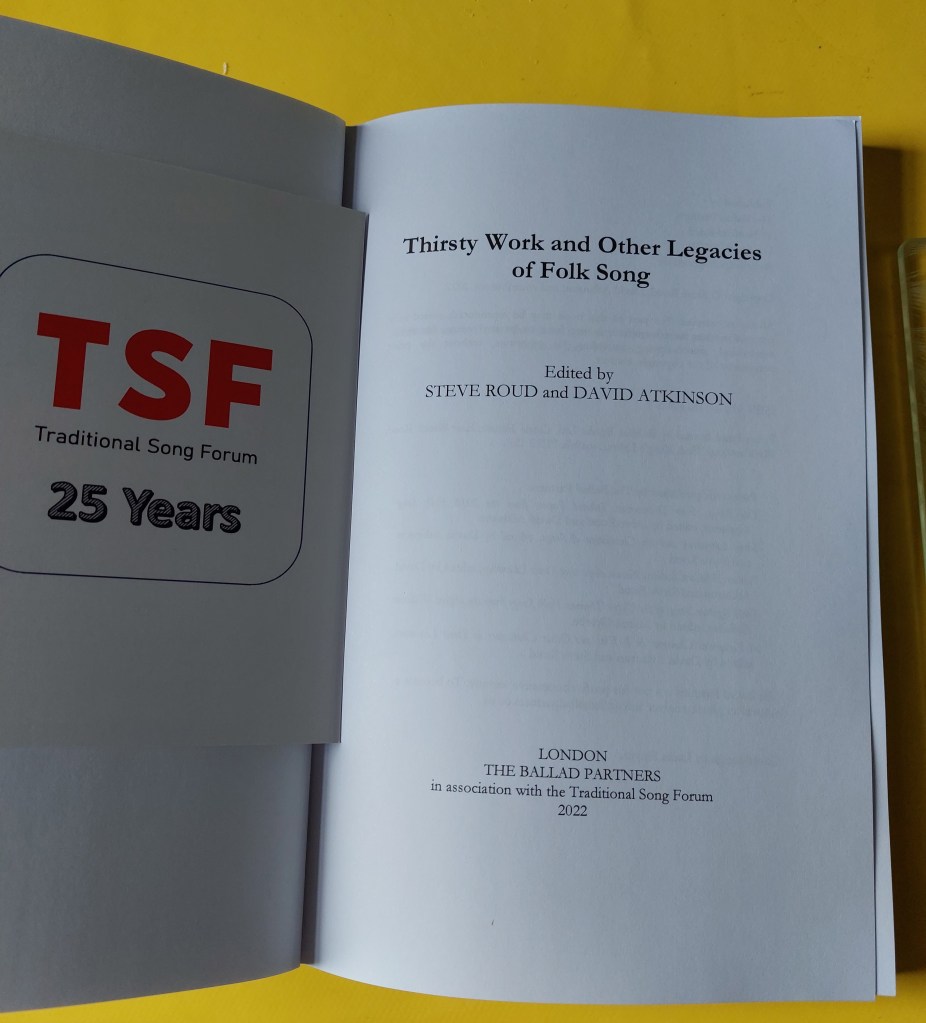
Read about Song-Collector Alexander Campbell, in ‘Thirsty Work and Other Heritages of Folk Song’ Conference Papers

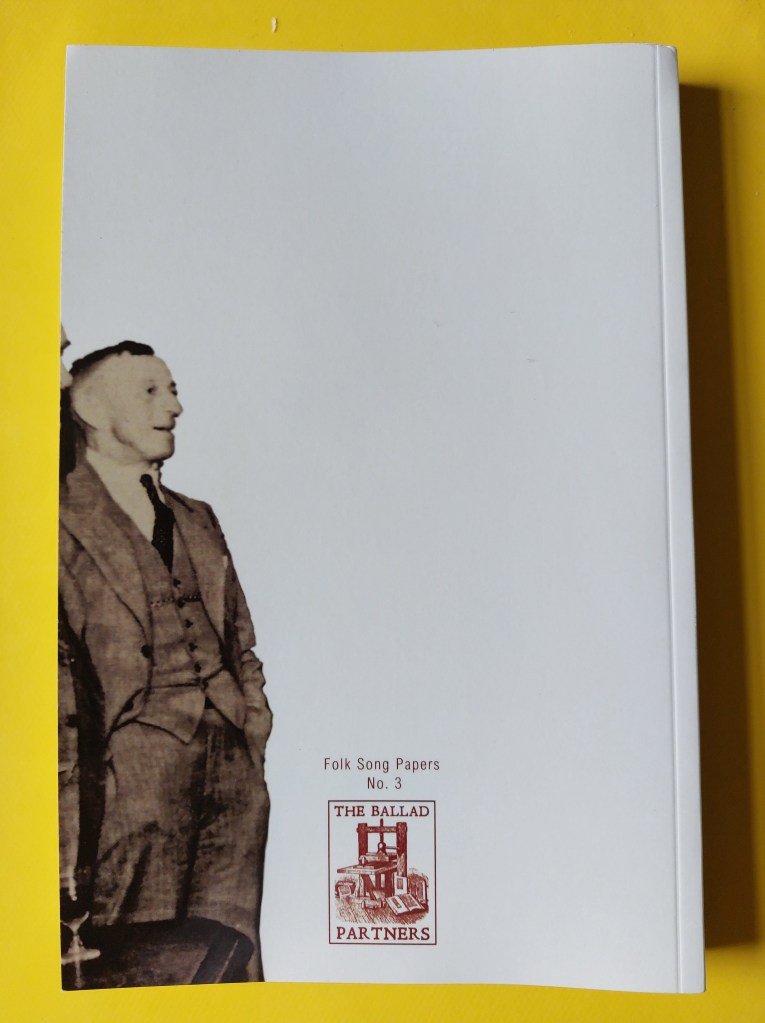
I’ve just received my own copy of a new publication by Ballad Partners, Thirsty Work and Other Heritages of Folk Song, which contains my most recent Alexander Campbell article: ‘Alexander Campbell’s Song Collecting Tour: ‘The Classic Ground of our Celtic Homer’. There’s a section on Campbell and his musicianship – an entirely new angle which I spent some time contemplating during lockdown.

The book is Ballad Partners’ third book of Folk Song Studies.

I have just catalogued a copy for the Royal Conservatoire of Scotland Library – I listed the contents there, so I’ll repeat the list here for your interest. If you would like to purchase a copy of the book, please visit the Ballad Partners’ website. (I’m unconnected with the publishers – I am just one of the contributors!)

CONTENTS

Thirsty work: traditional singing on BBC Radio, 1940-41 / Katie Howson — From Tyneside to Wearside: in search of Sunderland songs / Eileen Richardson — Sam Bennett’s songs / Elaine Bradtke — Newman and Company of Dartmouth and the song tradition of Newfoundland’s South Coast / Anna Kearney Guigne — Railwaymen’s charity concerts, 1888-89 / Colin Bargery — Picturing protest: prints to accompany political songs / Patience Young — ‘That is all the explanation I am at liberty to give in print’: Richard Runciman Terry and Songs from the Sea / Keith Gregson — Drawing from the well : Emma Dusenberry and her old songs of the Ozarks / Eleanor Rodes — Alexander Campbell’s song collecting tour : ‘The Classic Ground of our Celtic Homer’ / Karen McAulay — ‘Don’t let us be strangers’ – William Montgomerie’s fieldwork recordings of Scottish farmworkers, 1952 / Margaret Bennett — ‘No maid in history’s pages’ : the female rebel hero in the Irish ballad tradition / Therese McIntyre — Who is speaking in songs? / David Atkinson

Bruce, Clements and Co.

This is another posting that I put on the Facebook Glasgow Music Publishers page a couple of days ago. I wonder if anyone can provide any pointers to this firm, currently a bit of a mystery to me?!

A QUESTION FOR EDINBURGHERS!

My study of historical Glasgow music publishers may need to embrace other Scottish music publishers too. (A metaphorical, socially distanced embrace, obviously.)

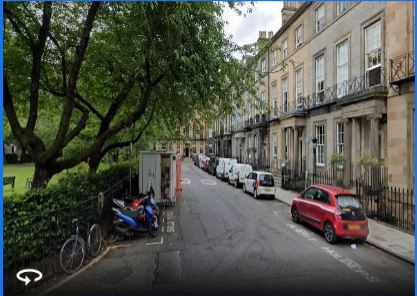
So. The first question is, who WERE Bruce, Clements & Co, who traded in Edinburgh circa 1921-1937, published quite a bit by W. B. Moonie and a significant work – Dirge for Cuthullin – by Cedric Thorpe Davie? I’ve only looked at Jisc Library Hub Discover and the British Newspaper Archive so far, but although I can find out what they published, I don’t know who they were – sometimes they called themselves Bruce Clements & Co., and other times Bruce, [COMMA!] Clements & Co. – though I do know they traded from 30 Rutland Square.

W. B. Moonie – YouTube of “Perthshire Echoes” played by pianist P. Sear

I don’t have access to Post Office Directories in Libraries – and they’re too “modern” to be in the National Library of Scotland Digital Gallery – though appropriate directories might yet tell me more about Mr Bruce or Mr Clements! At the moment, it’s just a question arising from my insatiable curiosity, but I should still like to know, because you never know what connections firms had with other firms or individuals.

I have had a couple of responses – Jack Campin tells me that Davie’s son was Tony Davie, computer scientist at the University of St Andrews.  And I am sure there will be plenty of material about Cedric Thorpe Davie himself at St Andrews’ research repository, so that could be an interesting angle to pursue.

Meanwhile, another respondent pointed me in the direction of a couple of directories available via the Internet Archive, so I now have their address, (You’d be surprised how many firms I’ve traced at Rutland Square, which plainly housed more than one company at a time. The Boy Scouts Association were there, for starters. But I digress!

Interestingly, Thorpe Davie’s choral work, Dirge for Cuthullin, published in 1937 and admired by Vaughan Williams (four letters survive at VaughanWilliams.uk), was subsequently taken over by Oxford University Press in 1946. (See notes on manuscripts at St Andrews University Library.) I have a feeling Bruce, Clements and Co published very little, if anything else, by Thorpe Davie, and I believe the firm fizzled out in the very early 1940s. (I’d still like to know who they were!)