

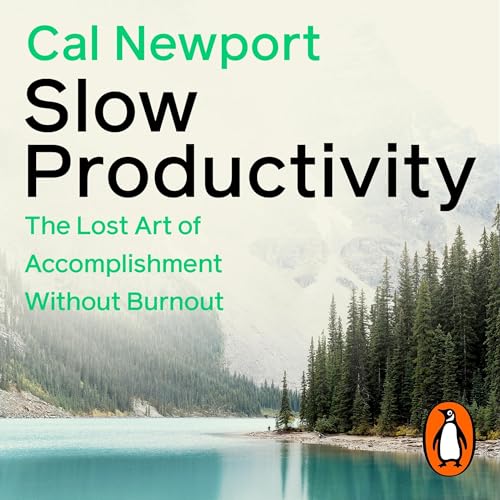
Slow Productivity: The Lost Art of Accomplishment Without Burnout
by Cal Newport and Penguin Audio (March 2024)
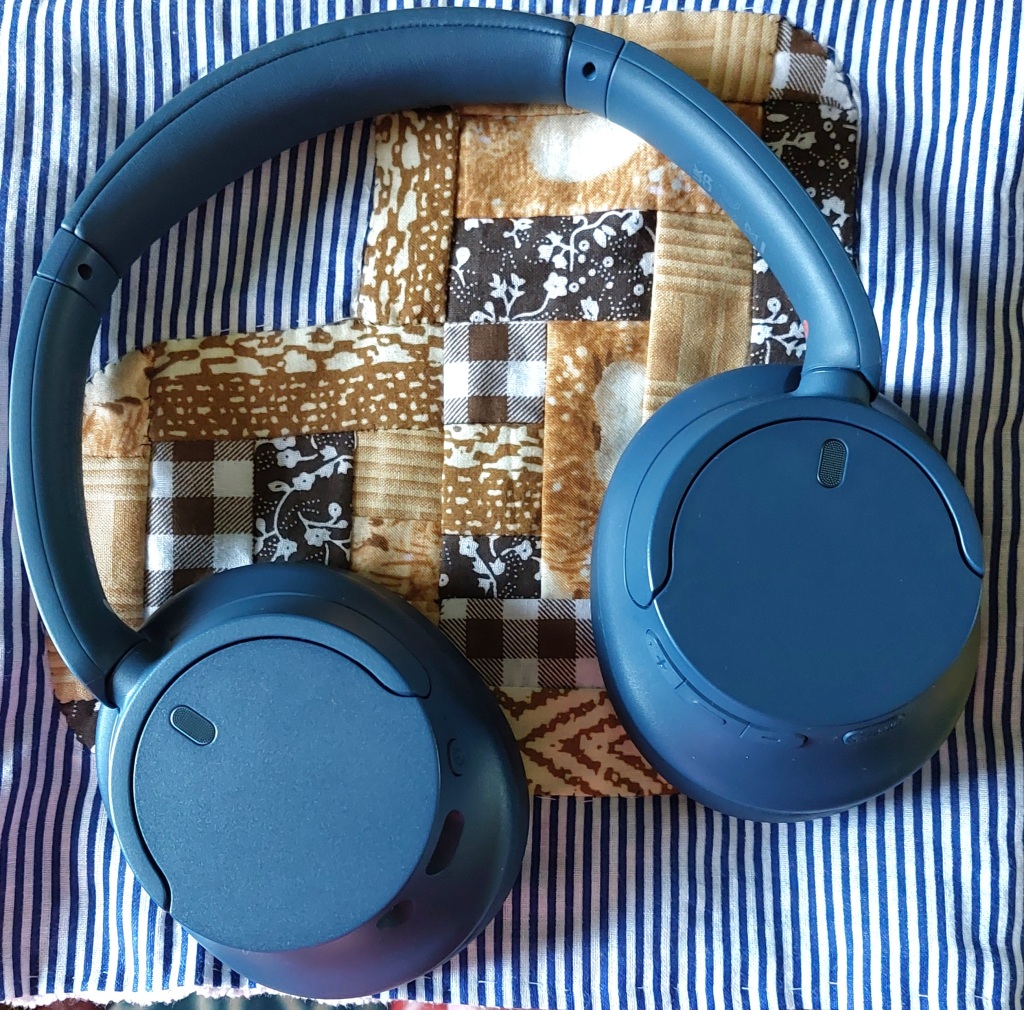
I’ve been listening to Cal Newport’s book, Slow Productivity: the Lost Art of Accomplishment without Burnout, on Audible. I’ve taken my time over it – appropriately – and I’m approaching the end of it. Because I haven’t finished completely, what I’m writing here today can’t really be described as a review, so much as a first impression.
But why, you might ask, would anyone less than two months away from retirement age, decide to read a book about productivity at all? It’s a good question! I think I was both intrigued by the title, and fascinated by the different paces at which different people work. There are times when I achieve a lot – but not usually at a frenetic pace. I don’t throw myself into tasks at fever-pitch, unless a deadline is creeping up on me. On the other hand, I do tend to have so many things on the go, that going slow feels impossible. (And I’m worryingly obsessed about accomplishment and achievements! That’s how I was raised.)
The main thrust of the book is that we ‘knowledge-workers’ should be more deliberate, allow ourselves time to do things well, factor in holidays, breaks and slower-moving spells, and not take on too much. That we’re not like factory workers on an assembly line, and aren’t generally required to produce so many units of whatever-it-might-be, per hour, day or week. Newport’s historical examples are inspiring, underlining his message, but some suggestions have no application to any role I’ve ever occupied. Pay someone to do some part of my work? If I was self-employed, possibly. However, the only time I’ve ever done that, was getting my first book indexed professionally. Librarians don’t outsource their work. (Neither do 0.3 of the week researchers!) Similarly, if you own a business or are freelance, you can deliberately decide to make a little less profit in exchange for a longer, more intentional route towards a high-quality product/performance act/whatever. People employed in any kind of academia can choose to seek a promoted position or not (depending on circumstances, of course), but it’s not about profitability directly affecting one’s own pocket.
Obsess over Quality
However, the suggestion to look at your role and focus on the ‘core activities’ that will have the most impact, is certainly sensible. As I’ve mentioned before, cataloguing barely-used jazz CDs is a soul-destroying task, mainly because it has such little impact. I hardly needed an Audible book to endorse that sentiment, but there it was.
Impactful Librarianship
As I did the ironing one night last week, listening to my book, I think that’s what prompted me to make sure my final weeks of librarianship would have a bit more impact than that! I’ve thrown myself back into tracking down music by BIPOC composers, and it certainly passes the time more quickly than other tasks I could mention!
My aim is simply to make it possible for students to find more diverse repertoire, should they feel so inclined. My efforts won’t result in a massive listing – there are less than a thousand such items tagged in our catalogue, and our budget isn’t huge. It’s not just about getting the materials in – but I won’t be the one devising ways to get it known about and borrowed, after 28 June 2024.
Yesterday, a highlight was discovering one particular new acquisition was already on loan to a second borrower. Result! That in library terms, is impact.
And Impactful Research
As for slow productivity? I need to finish reading Newport’s book and then consider how to apply the best suggestions to a semi-retired existence. At the time I’m posting this, it’s a Wednesday, and I have my research hat on. I have a book review to do, and then I’ll look at my list of projects … because I’m not retiring from research! Far from it.

 Karen McAulay, Musicologist