‘Una Voce Poco Fa’ (a Voice a Little While Ago) – a Hit for Two Centuries

The aria, ‘Una Voce Poco Fa’ from Rossini’s Il Barbiere di Siviglia (The Barber of Seville) may have been composed in 1816, but it remains popular to the present day – a showpiece for coloratura sopranos.  It was certainly an often-performed solo in recitals by the early 20th century star about whom I’m writing at the moment.  In the context of the original opera, it’s sung by Rosina, whose overbearing guardian wants to marry her. Of course, Rosina’s sights are set on a handsome young suitor. (Eventually the barber sorts it all out. Of course!) 

The Lyric Opera of Chicago gives you the relevant details on a handy page about the work, here.

You can find a translation on the Opera Arias Database.

But what, exactly, draws both singers and audiences to this amazing piece?  Jenna Simeonov has written a guide for sopranos learning the aria, on the Schmopera website, and her introduction gives a few clues as to why it would have appealed to a talented young soprano:-

This is a cornerstone aria for many young mezzos, and one of the few chances they have to show off coloratura and play a girl. It’s also an aria full of options.

‘How-to Aria Guides: Una Voce Poco Fa (14 October, 2015)

Sure enough, the woman I’m researching was very young, so the role of Rosina would have felt like one she could empathise with.

Simeonov gives a great deal of useful advice on singing the later coloratura part of the aria, helpfully with a marked-up score to show what she’s talking about.  She gives more insight into singing it, from a  performer’s point of view, than I could possibly have hoped for, but in her opening words, also advises working with a singing teacher.

The fast part

As we get into the coloratura bits, I can offer some general, if incomplete, advice. Help yourself by always finding the larger tune within the string of sixteenth notes, and stay nice and light. For more specifics, get thee to thy voice teacher.

Looking at the score – my goodness, talk about vocal acrobatics! Swooping scales, trills and other ornamentation, high notes, tricky fast passages that would challenge any soloist – and that’s before the conductor tries to keep an orchestra in synch with ‘Rosina’.  Or it’s up to the pianist, in a recital context.  No wonder ‘my’ singer was in the habit of noting if her allocated accompanist was good, bad or indifferent!

Here’s Kathleen Battle singing the aria – a beguiling, and impeccable performance:-

(Kathleen Battle – Rossini: ‘Una voce poco fa’, from the opera Il Barbiere di Siviglia by Gioacchino Rossini.  Recorded in Antwerpen December 1984.  From the TV show: Rene Kollo – Ich lade gern mir Gäste ein.

So, it really is completely understandable why it’s such a well-loved piece of the repertoire, isn’t it?!

Cover image from IMSLP: Editor Castil-Blaze (1784-1857)
Pub. Info. Paris: La Lyre moderne, n.d. Plate 346.
Copyright: Public Domain
Misc. Notes Biblioteca Fondazione Rossini Pesaro

Memorable Accordions

When I was invited to come and listen to our accordionists’ final recitals, it struck me that this would be a great way to mark my 36th anniversary here. And it was!

We heard solo pieces, mixed ensembles, and one with dancers and a speaker. I only heard the first and second players, sadly – I heard my cataloguing calling me, after that  – but I thoroughly enjoyed what I heard. Truly, those recitalists must have had six fingers on each hand, they played such fiendishly difficult pieces!

I was talking to a couple of teaching colleagues recently about the ‘diverse’ music I’ve been acquiring. They were both keen to tell me that it IS beginning to make a difference in concert programming. That makes me a bit happier! Indeed, I recognised one woman composer’s name today, that I wouldn’t have known of, five years ago.

So, there’s another memorable morning in my last weeks as a performing arts librarian. Not many more days!

Diversity in the Concert Programme

Below, you’ll find a blog post that I have just written for the Whittaker Library blog. In my library career, I haven’t changed the world, but I have bought and catalogued quite a lot of music.  (Why be modest? Mountains of it!) In the past five years, I’ve focused particularly on equality and diversity – I put a huge amount of effort into it, and I hope it has made a difference to our users.  Perhaps one day, there will be an event to raise awareness of all this music.  I tried, but I have done all I can.  I wish it had been more, and I wish it could have ended more triumphantly.

In an era that’s all about impact and engagement, it can be an up-hill struggle for a librarian to make a significant difference, and even harder to blow one’s own trumpet metaphorically when surrounded by genuine stars in the making, deservedly blowing their own actual trumpets!

Whilst repertoire lists might not seem the most exciting topic in the world, if they’re important to recitalists and other people planning concert programmes, then they’re important to us. We would like to remind everyone that the Whittaker Library does have a lot of music by women and/or BIPOC composers. We’ve committed a fair chunk […]

Diversity in the Concert Programme

“I Packed my Bag, and in it I put …”

Do you remember the old family memory game, ‘I packed my bag, and in it I put ….’ Each successive person has to remember the list, and add something else.

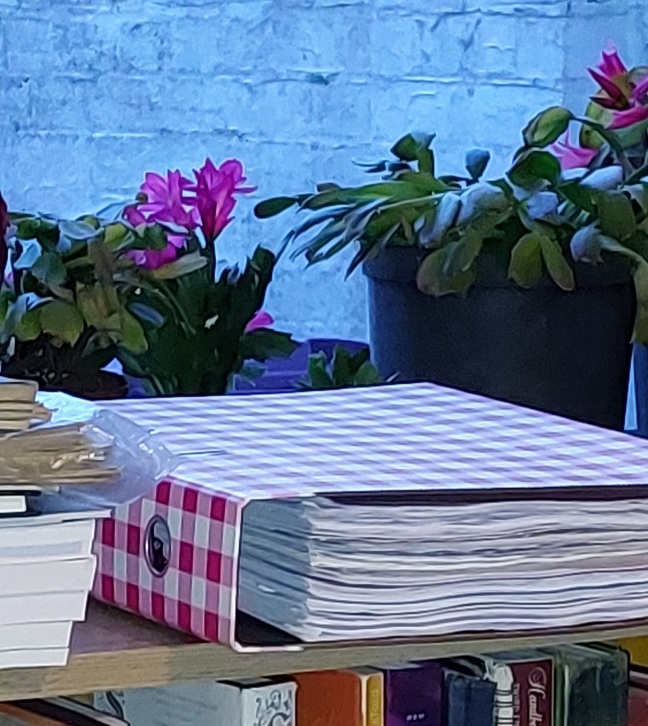
Today, I both literally and metaphorically packed my bag. At the end of the working day, I took home my thick lever-arch file containing Stationers’ Hall research notes. It used to live in the research lab until it ceased to be a working space for staff researchers. Then it had an honoured shelf behind my desk in the library. Then my desk moved to another office, I got a smaller desk in the new office, and lost all but one of my shelves. It’s time for my research notes to go home, one file at a time. Research is something that often lends itself to working from home, though I don’t know where I’ll put the extra files!

Since this is a memory game – I also attended a lunchtime concert of the Strings Department, to give myself some more enjoyable memories of my final weeks as a librarian. I heard a fabulous piece by Schnittke for violin and accordion (Suite in the Old Style, op.80); Beethoven’s Piano Trio, op.70 no.2 and Suk’s Piano Trio, op.2. Unfortunately, I had to get back to work after my lunchbreak, so I missed Bartok, more Suk and – sadly – Mancini’s Pink Panther. Ah, well. I did gather some pleasant memories, and I hope I get to hear that Schnittke again in that setting one day. It really was lovely! The original violin and piano piece is very charming, but it was even nicer with accordion instead of piano.

Post Script.

Today’s treat was lunch and a book at Waterstone’s. Research files have all gone home. Bookshelves empty and desk surface clear. (Should I go now?!)