Fellow Amongst Kindred Spirits

Print Networks conference programme cover

Perhaps it’s not surprising to find more librarians and former librarians than usual at a research conference about book and print history and the book trade – but I was certainly in my element amongst the researchers at this week’s Print Networks conference in Newcastle. Indeed, I even found two more musicologists and a music practitioner amongst the kindred spirits, so I didn’t really need to try very hard to make my point that printed music history is indeed a branch of book history. Glasgow printers also got a look-in, so my talk about Glasgow music publishers wasn’t out on a limb geographically, either.

Then there were trade catalogues, book pirates, Stationers’ Hall, slave narratives, radical newspapers in Birmingham … just so many interesting papers!

Having spent the first part of the week in Newcastle, the last couple of days were ‘mine’, an agreeable blend of sociability, along with mundane catching-up at home, and (ahem!) more research.

A Lost Work, aka, a Ghost Publication

An old copy of a classical piece in a Mozart Allan edition raised some interesting questions – could I resist following them up? Indeed I could not. I’ve found another lost work – or as I prefer to call it, a ‘ghost’ publication. It would have been so very nice to have tracked this down. The advertisement absolutely reinforced a point I make in my forthcoming book. But it’s in neither Jisc Library Hub Discover, WorldCat, the British Newspaper Archive, Abe, Alibris, eBay, the Sheet Music Warehouse, Google Books nor Archive.org. There’s no mention of an editor or compiler for this collection, just a title. Oh, bother!

London suburbs

And a London Gent supplying Mozart Allan with Light Music?

It gets worse – another advert at the back of the same classical piano piece appears to suggest that a light-music composer who published almost exclusively with Ascherberg, Hopwood and Crew, also published a few early works with Mozart Allan – but using a different first name. Two of the works published by Mozart Allan also appear later with the first name he was mainly known by. This is interesting. I’ve spent several hours yesterday and today trawling eBay (and treating myself), whilst on the trail of this gent. Yes, I know the book is already in preparation. Anything I find won’t go in the book, but research doesn’t stop when a book is published, does it?!

Fellow on her Travels. Newcastle-upon-Tyne

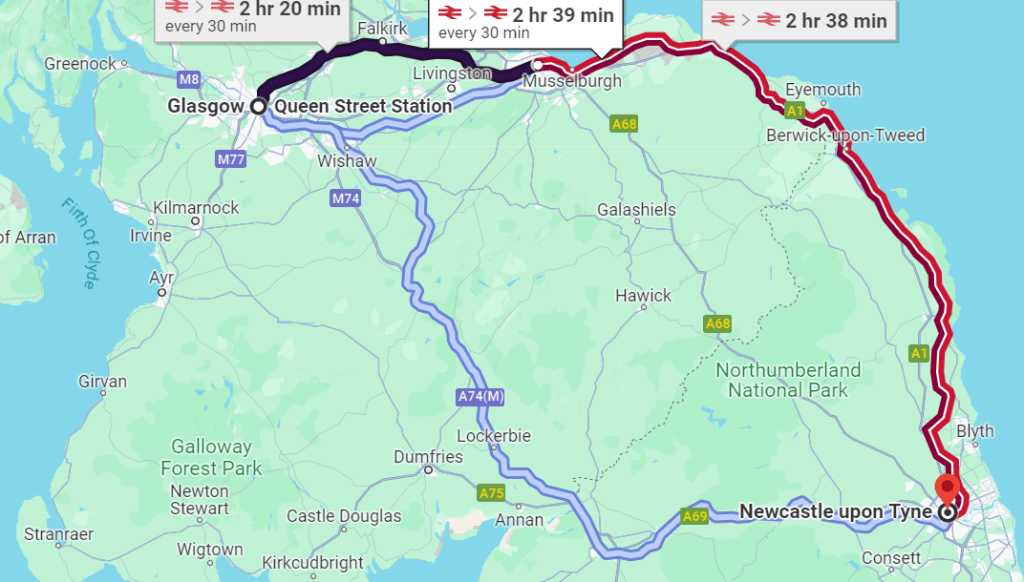
I’m off to Tyneside for a conference. I went to university in Durham, had my first permanent job in South Shields, and my husband was born and brought up in Newcastle, so the north-east isn’t entirely unknown to me. I’m curious to see what the quayside in Newcastle looks like now – it must be a couple of decades since I was last there for more than a few hours.

‘Music for All’: the Rise and Fall of Scottish Music Publishing, 1880-1964

I’m looking forward to giving my paper at the Print Networks conference. 

  • Paper? Check!
  • PowerPoint? Check!
  • Power-dressing jacket?
  • Power-dressing jacket???
  • Power-dressing jacket left on dining room chair …. ????

Not to worry, I found a viable alternative on my way to Queen Street Station.  I’m really not into tailored dressing, anyway!

‘Holiday’?

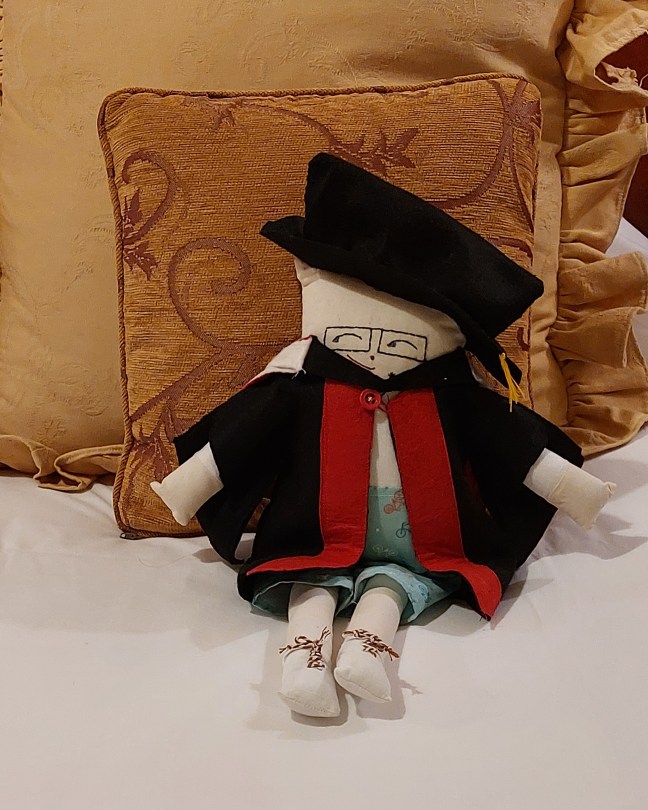
'Don', one of the IAML Cambridge Congress mascots, clad in academic robes

Today is officially the end of my annual leave. I drove to Cambridge so I can attend IAML Congress tomorrow. It feels as though I have been off work for ages, but a holiday it really was not.

I wake up thinking about unsatisfactory paragraphs. I dream of inconsequential details that will have to be changed. I had a couple of restful days in Norfolk, but even those were disturbed by nocturnal thoughts of untraceable bibliographical details and diurnal anxious thoughts about driving to Cambridge and finding my accommodation – because I have no sense of direction whatsoever!

So, here I am. I, my car and Don the Congress mascot, all safely in the right place, proof that motorway signs marked ‘to London’ can actually be correct in the right circumstances, so long as you get off when Google says so!

And tomorrow I can just be a delegate – no papers to give. I have avoided committing myself to writing anything else that would hinder The Book this year!

Report of Conference: Reading and Book Circulation, 1600-1800

(Libraries, Lives and Legacies Festival of Research), University of Stirling, 17-18 April 2023

I wrote a report for the conference that I attended in April this year, thanks to an LIHG Bursary. This report has just been published in the latest LIHG Newsletter for Summer 2023 , Series 3, no. 53 (ISSN 1744-3180), pp.7-10.

I thought I’d share excerpts of the report here, too.

The conference resonated strongly with the research topic of my 2017-18 AHRC Networking Grant, Claimed from Stationers’ Hall, when we were investigating surviving music in the British Legal Deposit libraries of the Georgian era.  Although my network was interested in books rather than music, I had immersed myself in the Georgian borrowing records of St Andrews University Library, and had taken a particular interest in the music borrowing habits of women of that era, so the opportunity to hear more about what people borrowed apart from music was irresistible. 

On the subject of borrowing records, the opening introduction to the ‘Books and Borrowing 1750-1830 project’ and demonstration of the digital resource by Katie Halsey, Matthew Sangster, Kit Baston, and Maxine Branagh-Miscampbell was fascinating, offering so much data for investigation.

The following panel on Reading Practices in Non-Institutional Spaces was just as interesting, with Tim Pye’s ‘Had, Lent; Returned: Borrowing from the Country House Library’, along with Abigail Williams speaking about non-elite book use in rural settings, and Melanie Bigold’s paper about women’s book legacies. Whilst my own interest has been in formal library borrowing, ‘my’ borrowers took music away for their leisure-time enjoyment, and these papers served as a reminder that musicians were probably just as likely to have borrowed music outwith the more regulated library environment. Similarly, the concept of the Sammelband is very familiar to me – that was how libraries kept their legal deposit music. Sam Bailey invented a useful new verb, ‘Sammelbanding’, during the course of their talk on ‘The Reading and Circulation of Erotic Books in Coffee House Libraries’ – a topic far removed from my own research.

Kelsey Jackson Williams’ hands-on session with books from the Leighton Library, in an exhibition curated by Jacqueline Kennard, was the perfect after-lunch session, offering the chance both to stretch one’s legs on the way there, and to inspect some rare selections from the Leighton.

Parallel sessions meant tough choices, but I opted to hear Angela Esterhammer talk about John Galt’s various publishing ventures – an intriguing history – followed by Cleo O’Callaghan Yeoman’s ‘Still my ardent sensibility led me back to novels’.  (I reflected that St Andrews’ first music cataloguer, Miss Elizabeth Lambert, had read a wide variety of books, and whilst her reading included travel accounts, religious books, and books on botany and conchology, she certainly wasn’t averse to reading a good novel, too.)  Next came Amy Solomon talking about Anne Lister’s considerable book collection at Shibden Hall, and how she had made an inherited collection her own, as well as keeping commonplace books, diaries, and reading journals. I regret having missed seeing the films about her diaries, and the two more recent ‘Gentleman Jack’ series on the television.

The first keynote paper was given by Deidre Lynch, on ‘The Social Lives of Scraps: Shearing, Sharing, Scavenging, Gleaning’.  I am sure I was not the only delegate pondering as to whether any of my own ‘scraps’ would survive to intrigue future readers, but more importantly, Deidre’s paper reminded us that proper ‘books’ are only a small proportion of the vast amount of printed material still surviving, often against the odds and far from their original context. 

On the second day, the opening plenary roundtable chaired by Jill Dye addressed borrowers’ records across Scotland, and I heard from several people with whom I was already acquainted, three of them through my own AHRC Networking project. 

We heard about the library of Innerpeffray, the National Library of Scotland, and Edinburgh, Glasgow and St Andrews’ University Libraries. I was interested to hear about the bigger picture, so that I could place my own special interests into the wider context.

For the third panel, I opted for the panel on Readers, Libraries and Loss.  Jessica Purdy gave a fascinating talk on ‘Libraries of Lost Books?’, speaking about chained church libraries, and the fact that their tight security and still pristine condition suggest that the books might as well have been ‘lost’ as far as most of the local residents were concerned.  Elise Watson, too, made us reflect upon just how many publications of Catholic devotional material had been published, even if they were so ephemeral that there are now ‘”Black Holes” of Ephemeral Catholic Print.’

For the fourth panel, I attended the panel on ‘Education’, hearing Maxine Branagh-Miscampbell talking about the Grindlay bequest and ‘Childhood Reading Practices at the Royal High School, Edinburgh’.  The Grindlay bequest was valued sufficiently that it was all added to stock, even though some material was never going to interest young or teenage boys.  Mary Fairclough gave an interesting talk on ‘Barbauld’s An Address to the Deity and Reading Aloud’.  I have recently encountered Victorian publishers appropriating evangelical hymns for magic lantern shows, but had not considered that poetry might also be ‘trimmed down’ and repurposed.

Duncan Frost’s paper did have a musical subject: ‘Bird Books: Advertising, Consumption and Readers of Songbird Training Manuals’.  Who would have thought that so many books were written about catching and training songbirds to sing in captivity?!  The most intriguing aspect of this genre of books was in fact that, despite many pages dedicated to all aspects of caring for and training your bird, there was significantly little information about the kind of tunes that you might want to teach it.

The second and closing keynote lecture was delivered by Andrew Pettegree, on ‘The Universal Short Title Catalogue: Big Data and its Perils’.  Professor Pettegree was at pains to underline not only what the USTC had achieved, but also its shortcomings, or rather, what it was not.  We were also reminded of some aspects that I have encountered in my own work: that books in libraries were not the only copies of these titles; they would have existed plentifully outside libraries, and so might other books which we can now only trace by, for example, publisher’s catalogues and advertisements. Moreover, library catalogues can conceal different editions, or show duplicate entries, depending on minor differences in cataloguing approaches.

Since my own networking grant, I have had to reflect upon the benefits of the work, and the impact the research has had.  One of the outcomes that I identified then, was that library history research created effectively a ‘third space’ where librarians and academic scholars – and those like myself, straddling both library and research worlds – could meet and beneficially share our insights and learning.  I realise that at this recent conference I had experienced exactly the same kind of meeting of minds again. Similarities of approach and a common interest in library and book history meant that I felt I had an underlying understanding enabling me to benefit from their fresh insights.

I am grateful to the Library and Information History Group for enabling me to attend this wonderful and thought-provoking conference.  Besides having such a rich array of papers to listen to, I certainly did benefit from the opportunities to talk to other delegates.  It was a treat to be able to take two days out of normal routine in such a beautiful setting, giving plenty of food for thought for the future.

Image: Image by G.C. from Pixabay

Countdowns!

You know the story of the shoemaker and the elves? He goes to bed, exhausted, and wakes to find the little elves have done all his outstanding work? Oh, I wish!

Technically, my book is meant to be finished by the end of July. I’ve written quite a bit of the last chapter, but it goes without saying that that’s not the end of the process!

  • Writing the conclusion;
  • Tidying the introduction;
  • Checking the whole thing – for content, and also against the style guide;
  • Converting footnotes to endnotes;
  • Sorting the bibliography…

I’m also handling the comms for an international congress – it begins on 31 July.

Of course, there’s also the day-job to be done! And domesticated things don’t just stop. Garden hedges grow regardless of everything. Aargh!

And I have a whole magazine issue to proofread ASAP. (This task was accepted on my behalf – literally nothing to do with me!)

Daily Countdown

Now, the book deadline has been engraved on my brain for a long time. I’ve also known the congress date quite a long time. But believe it or not, it’s only just dawned on me that both dates coincide, and that therefore 38 days’ countdown for one thing would be 38 days for the other. Strange how the realisation suddenly makes it all the more stressful! All I can do is keep doing what I can. A colleague asked me the other day, what were my plans for this summer … ?

‘Finish a book’, I whispered. One way or another!

Alas, I don’t feel indomitable today. More like, a bit hopeless, faced with the mountain in front of me.

Home from Stirling – after the Conference

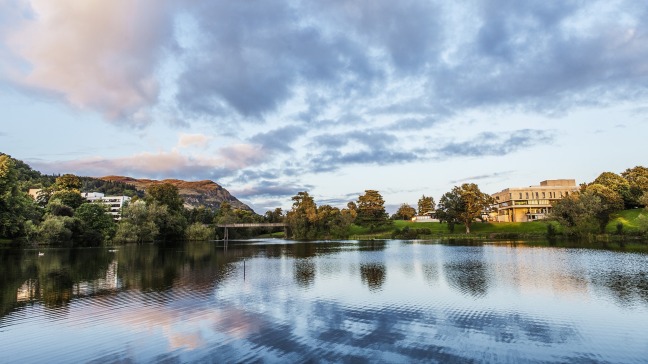
Stirling University Campus - photo from Pixabay

Conference: Reading and Book Circulation, 1600-1800

I am just back from a fabulous library history conference at the University of Stirling. Even better still, I was the lucky recipient of a generous bursary from the CILIP Library History & Information Group, meaning my attendance was fully funded.

I had many pages of notes to read through and reflect upon before I wrote my report – so many excellent papers to think about. My AHRC networking grant not so long ago was about music in libraries ca.1790-1836, and although I’m currently writing about more recent music publications, it was very interesting to see what else was happening whilst “my” legal deposit library music was being accumulated in libraries in England, Ireland and Scotland.

‘Claimed from Stationers’ Hall’ frock makes a comeback for the conference!

And of course, there was the networking. After the pandemic, lockdown, working from home, hybrid working and so on, it was quite a treat to be able to spend time with kindred spirits for two whole days!

My report will appear in the LIHG Newsletter in June 2023 – it’ll appear online on the LIHG pages hosted by CILIP. This might mean that only members can read it, but maybe I can write a summary of it to share here, once the whole report has gone live.

Image of Stirling University Campus by 昕 沈 from Pixabay

I won a Bursary!

Exciting news. Thanks to CILIP’s Library and Information History Group, I shall be attending a fascinating conference in Stirling soon!

Books and Borrowing 1750-1830.

The conference is 17-18 April in Stirling, and the programme for ‘Reading and Book Circulation, 1650-1850’ is on their Events page:- borrowing.stir.ac.uk/events/

My interest in this topic

It’s of special interest to me because of my work on music borrowing at the University of St Andrews in the days of the old Copyright Libraries: I examined the borrowing habits of two particular women, Miss Elizabeth Lambert and Mrs Bertram, and contemplated the changing readership over the three and a half decades under examination. This work led into my successful application as Principal Investigator of an AHRC postdoctoral research network, the Claimed From Stationers’ Hall network (2017-2018) investigating music surviving from legal deposit in the old copyright libraries.

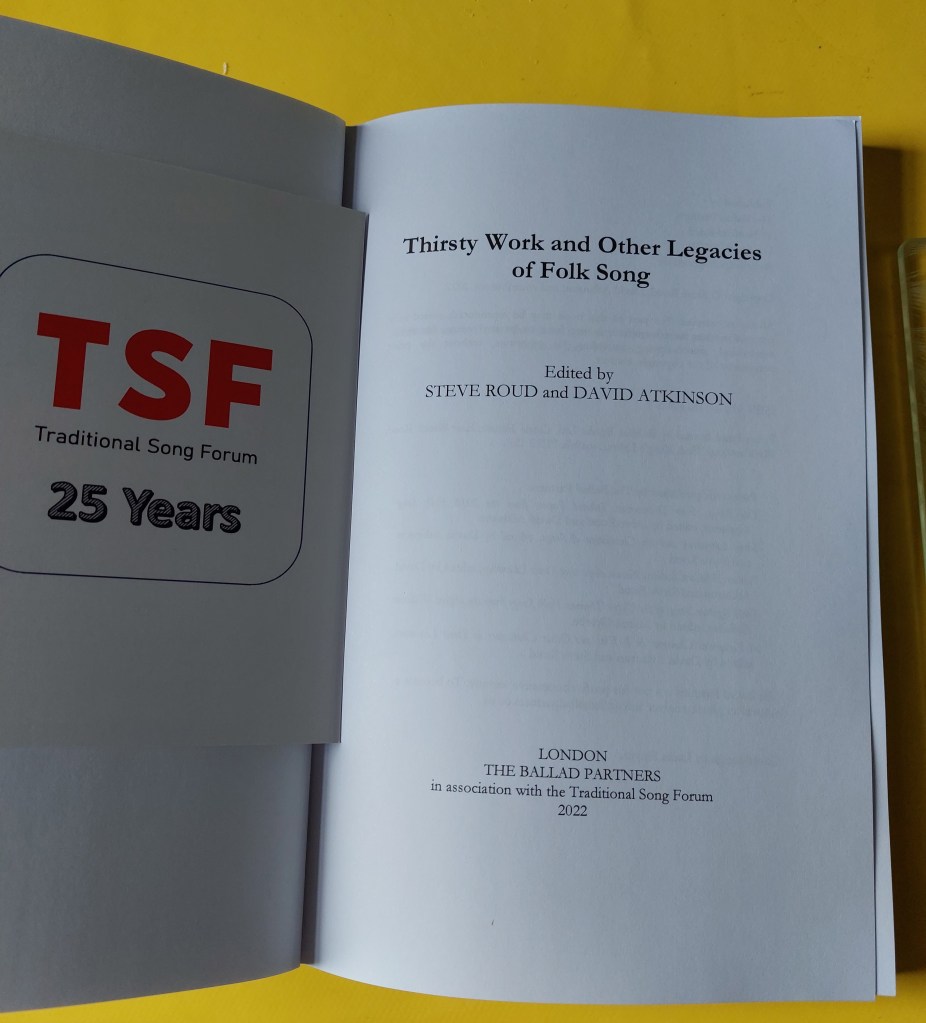
Read about Song-Collector Alexander Campbell, in ‘Thirsty Work and Other Heritages of Folk Song’ Conference Papers

I’ve just received my own copy of a new publication by Ballad Partners, Thirsty Work and Other Heritages of Folk Song, which contains my most recent Alexander Campbell article: ‘Alexander Campbell’s Song Collecting Tour: ‘The Classic Ground of our Celtic Homer’. There’s a section on Campbell and his musicianship – an entirely new angle which I spent some time contemplating during lockdown.

The book is Ballad Partners’ third book of Folk Song Studies.

I have just catalogued a copy for the Royal Conservatoire of Scotland Library – I listed the contents there, so I’ll repeat the list here for your interest. If you would like to purchase a copy of the book, please visit the Ballad Partners’ website. (I’m unconnected with the publishers – I am just one of the contributors!)

CONTENTS

Thirsty work: traditional singing on BBC Radio, 1940-41 / Katie Howson — From Tyneside to Wearside: in search of Sunderland songs / Eileen Richardson — Sam Bennett’s songs / Elaine Bradtke — Newman and Company of Dartmouth and the song tradition of Newfoundland’s South Coast / Anna Kearney Guigne — Railwaymen’s charity concerts, 1888-89 / Colin Bargery — Picturing protest: prints to accompany political songs / Patience Young — ‘That is all the explanation I am at liberty to give in print’: Richard Runciman Terry and Songs from the Sea / Keith Gregson — Drawing from the well : Emma Dusenberry and her old songs of the Ozarks / Eleanor Rodes — Alexander Campbell’s song collecting tour : ‘The Classic Ground of our Celtic Homer’ / Karen McAulay — ‘Don’t let us be strangers’ – William Montgomerie’s fieldwork recordings of Scottish farmworkers, 1952 / Margaret Bennett — ‘No maid in history’s pages’ : the female rebel hero in the Irish ballad tradition / Therese McIntyre — Who is speaking in songs? / David Atkinson

CILIP Copyright Conference, 18 May 2022

SHAMELESSLY sharing this call for papers, word for word. Maybe one of the Claimed From Stationers Hall networkers might feel inspired to talk for five minutes?

“Speaking at a conference is a big step on your career journey & lightning talks are an ideal way to dip your toe in the water. We’re searching for speakers for 5-min lightning talks CILIP’s Copyright Conference (18 May, online).”

Here’s the link for more info.

The deadline is 1 April 2022. (No kidding.)