2018 Round-Up: the Scholar-Librarian

Annual Review, 2018

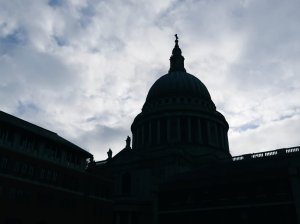
St Pauls SilhouetteI am a Performing Arts Librarian 3.5 days a week, and a Postdoctoral Researcher 1.5 days a week.  In this self-imposed annual review, I’m not listing routine activities conducted in either capacity; it goes without saying that I’ve answered queries, catalogued, delivered library research training to a number of different class groups, attended meetings, and pursued research-related activities and fieldwork.

From September 2017 to September 2018, I was the AHRC-funded Principal Investigator for a new research network, the Claimed From Stationers’ Hall music research project.  Since then, I have continued to conduct research and network with the various scholars and libraries involved with this project, and in the new year shall be pursuing further grant-funding in order to extend the reach of the project.

As someone who continually asks themselves, “Am I doing enough?”, I feel that even I can be reasonably content with this year’s outputs!

  • JANUARY
  • Chaired sessions at Traditional Pedagogies, international conference at Royal Conservatoire of Scotland
  • FEBRUARY
  • Blogpost: Copyright Literacy: Legal Deposit (Copyright Behind the Scenes) – and Scores of Musical Scores  https://copyrightliteracy.org/2018/02/21/legal-deposit-copyright-behind-the-scenes-and-scores-of-musical-scores/
  • Initial iteration of Claimed From Stationers Hall Bibliography, (since updated regularly) https://claimedfromstationershall.wordpress.com/bibliography/
  • Book chapter, ‘Wynds, Vennels and Dual Carriageways: the changing Nature of Scottish Music’, in Understanding Scotland musically: folk, tradition and policy. Abingdon, Oxon: Routledge, p. 230-239.
  • MARCH
  • Claimed From Stationers’ Hall Workshop, Royal Conservatoire of Scotland, (26 Mar)
  • Scottish Library & Information Council (SLIC) From PGCert to PG Certainty: Enabling the Distance Learner (invited talk, sectoral organisation) (March 2018)
  • APRIL
  • IAML(UK & Irl) Annual Study Weekend, invited talk, Pathways, outputs and impacts: the ‘Claimed from Stationers Hall’ music project takes wings
  • IAML(UK & Irl) Annual Study Weekend From PGCert to PG Certainty: Enabling the Distance Learner (quick-fire session) (April 2018)
  • MAY
  • Blogpost based on the session I gave at the IAML(UK & Ireland) Annual Study Weekend 2018 for the IAML(UK & Ireland) blog, http://iaml-uk-irl.org/blog/libraries-reaching-out-distance-learners
  • JUNE
  • EAERN (Eighteenth-century Arts Education Research Network), ‘Claimed From Stationers’ Hall: But What Happened Next?’ (University of Glasgow, 6 June)
  • Romantic Song Network steering group seminar at British Library
  • JULY 
  • IAML/AIBM Annual Congress, Leipzig, ‘A Network of Early British Legal Deposit Music: Explored through Modern Networking
  • SEPT
  • RMA Conference, Bristol, ‘Overlapping Patterns: the Extant Late Georgian Copyright Music Explored by Modern Research Networking’
  • NOV
  • Field-trip to King’s Inns and Trinity College Dublin Libraries, and British Library
  • EFDSS Conference, London, ‘National Airs in Georgian British Libraries’
  • ARLGS (Academic and Research Libraries Group Scotland) Teachmeet at Glasgow University Library – speaker
  • Article, Trafalgar Chronicle, New Series 3 (2018), 202-212, jointly authored with Brianna Robertson-Kirkland, ‘My love to war is going’: Women and Song in the Napoleonic Era’.
  • DEC
  • Article, Information Professional, Nov-Dec 2018, ‘Coffee and Collaboration’ [teaching electronic resource strategies]

Additionally, I have authored 79 blogposts and 5 Newsletters in connection with the Claimed From Stationers’ Hall research project.

Bat printed cup and saucer possibly New Hall £2-00Institutional Repository: Pure.  My profile:- https://tinyurl.com/KarenMcAulayPureInstRepository

I’ve blogged elsewhere about my musical and sewing activities – both essential to me in terms of relaxation and balance!  You’ll find it here:-

https://karenmcaulay.wordpress.com/2018/12/22/2018-round-up-in-creative-mode/

Collage map golden triangles legal deposit

Golden Triangles? In Legal Deposit Libraries? Well, after a fashion!

Collage map golden triangles legal deposit

This isn’t about mathematical golden triangles!

The other day, I decided to make a map of the UK’s Georgian legal deposit library locations. Yes, I know – it’s a strange way to interpret a serious research project, but I wanted an illustration that would have impact for an audience,  not all of whom may know as much about legal deposit as I now do!  So, first I thought about making a patchwork map, but after experimenting with lines on a map, I concluded that it would be such a weird piece of patchwork that maybe I needed to come up with a Plan B.

A collage map seemed more feasible, and I thought I’d mark out where the legal deposit libraries were by linking them together and then appliqueing the shape that resulted. And there they were – a triangle in England (London-Oxford-Cambridge) and a triangle in Scotland (Glasgow-Aberdeen-Edinburgh, with St Andrews sitting on the line between Aberdeen and Edinburgh).  Finally, there were the new arrivals of two legal deposit libraries in Dublin from 1801 onwards (Trinity College and Kings’ Inns) – I couldn’t force them into a triangle, but I gave them one anyway.  So there it was – the three triangles formed another triangle, and I had my graphic illustration.

But why the big gap in the middle with no legal deposit libraries? Ah, that’s probably because there weren’t any university libraries old enough to be considered when legal deposit was established at the beginning of the 18th century!  As a graduate of Durham myself, I thought it was a shame that we missed out on this privilege, but the fact is that although Durham Hall became Durham College back in 1286, it was actually founded by the University of Oxford, eventually becoming Trinity College, Oxford in 1555.  The University of Durham and University College weren’t founded until 1832, and  the Royal Charter was granted to the University by King William IV in 1837. (All dates from the University website.)  By the time Durham had its university, widespread legal deposit was about to be curtailed, and the Library Deposit Act had already been enacted a year before its Royal Charter was granted.  “Too late”, as a Scottish friend put it succinctly!  (Similarly, the Victoria University of Manchester was formed as a medical school in 1824, but did not become a university until even later, in 1851.)

So, the harsh facts are that there weren’t any old-established universities between the southern golden triangle and the Scottish one, at the time the legislation was enacted! And that’s why the legal deposit libraries were scattered around the UK and Ireland as they were.

National Songs and Georgian Legal Deposit Locations

This week I’ve been focusing on my paper for the EFDSS conference, Traditional Folk Song: Past, Present & Future, on Saturday 10 November, 9:30am – 5:00pm at Cecil Sharp House, London. I’ll be talking about ‘National Airs in Georgian British Libraries’, and particularly focusing on the collections in St Andrews and Edinburgh.  I’ll also be alluding to that old nineteenth century irritation – the allegation that England had no national music!

As it happened, I needed to take a day’s annual leave for a non-work related reason yesterday, but I hoped that for most of the day I would be free to concentrate on my presentation.  Well, it didn’t work out quite that way, but I did start writing in the evening.  Today, I spent the first couple of hours teaching library research skills, then it was back to the laptop in the research room for the rest of the day.

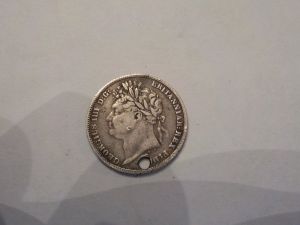
  By the end of the working day, I had written just over 4,000 words and felt I deserved a treat: I left my papers on the desk and came home to spend the evening sewing!  (Better still, another little indulgence had arrived in the post for me: a silver sixpence dating1821 George IV sixpence holed from 1821, the year of George IV’s coronation, and with a hole pierced in it by a previous owner so that it could be worn on a ribbon.  As of course I already am!)
The conference will actually be the culmination of a particularly busy week for me: I’ll be visiting the two Irish Georgian legal deposit libraries in Dublin earlier in the week, and Stationers’ Hall and the British Library on the day before the conference. One of my choir-members looked somewhat surprised when I remarked that I’d be fitting in choir practice between Dublin and the overnight sleeper between Glasgow and London!
I’m particularly looking forward to this conference because it will be a completely different audience to those at the conferences I’ve already been to this year. I’m intending to give a fairly wide-ranging paper. If I unearth any surprises in Dublin, then there will be last-minute tweaking to add them into the mix!

NB  If you liked this, you might like a post I wrote on a related topic, earlier this year – essentially a continuation of the story after the period that I’ll be describing in my latest conference paper:- England has no National Music? Chappell Set Out to Refute This

Enthusiasm in Edinburgh

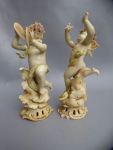
Edinburgh Alison House Nicholson Square Historic Environment Scotland image
http://portal.historicenvironment.scot/designation/LB29414


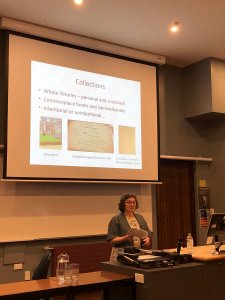
My research lecture at Edinburgh University went well last week (though I say it myself!) – I was delighted to have received such a warm reception.  Here’s my powerpoint, also uploaded to the Calendar tab of this blog.  It was good to have the opportunity to give a talk focusing on a collection (well, what’s left of the legal deposit music!) that hasn’t had a great deal of exposure before, and I was absolutely delighted to make the acquaintance of a former Edinburgh academic who is probably the only person to have investigated Edinburgh’s legal deposit music in a systematic way.  Apart, of course, from Hans Gal’s bibliographic efforts, which noted some but not all of the Reid Music Library’s contents dating pre-1850.  I’m about to start reading some notes that I was generously given after my lecture – it’s a great privilege to be given them.

Whilst St Andrews has its magnificent collection and all the related documentation and archival material, I’m keen to stress that Edinburgh has different strengths: not nearly as much legal deposit music, but an entire historical musical instrument collection, and the wonderful St Cecilia’s Hall which not only exhibits them, but also offers unique performance spaces.  Nothing would make me happier than to learn that students were inspired to explore the music on the historical instruments!  Early printed music is fascinating in musicological terms, but bringing it back to life in terms of sound is something special – as the Sound Heritage network has been keen to demonstrate in many wonderful ways.

Next stop, meetings in Dublin and London – and then the EFDSS conference.  Better get writing again!

Glasgow to Leipzig: IAML 2018

2018-07-27 22.28.08Now safely back from the IAML Congress at Leipzig, I have to get back into harness at the workplace tomorrow. I gave my paper about our CFSH network on Thursday afternoon – well-attended, and well-received. It was a good week – plenty of interesting papers with a music library focus.  The story of Peters (the publisher) music library was particularly fascinating, to name but one.  During the week, one couldn’t help reflecting how often politics and wars have divided, relocated or destroyed precious collections. The Peters collection became Hinrichsen, then Peters again, was in state and then private and then state hands … a complex narrative, to be sure.

2018-07-24 21.21.37I attended a seminar about the mechanics of entering an original source on RISM, and heard an update about RILM.  I also fell in love with a digital music app, visited the National Library, saw Bach’s Thomaskirche and attended three concerts. All in baking heat – on my final night, it was 33 degrees at 11 pm!

2018-07-25 15.37.17

Now, all that remains is to sift through all my notes, publishers’ catalogues, receipts etc … and I have my Outlook inbox to “look forward” to, tomorrow….

If you’re waiting for a reply to an email, I will try to reply as soon as possible.

Pathways, Outputs and Impacts

220n0g0000007wqnj0ed6_r_550_412

This weekend, it’s the Annual Study Weekend for British and Irish music librarians,  members of IAML(UK and Ireland).  The study weekend is at the University of Edinburgh, so it’s not far for me to travel!

Stationers Hall fabric

royal-mile-arthur-seat-path-to-top-edinburgh-600x328
Pathway to Arthur Seat, from Lothian & Borders website https://lothianandborders.com/arthur-seat-and-queens-park-edinburgh/

I was invited to talk about my research project, but I needed a new slant on it, since I gave a presentation about my St Andrews research (“Ghosts of Borrowers Past”) back in 2016.  This time, therefore, I’ll be talking about the whole process of finding grant funding for projects.  My talk (“Pathways, Outputs and Impacts”) is at 20.45 on Friday – after dinner, news and updates and another paper – so I hope I can be sufficiently entertaining to keep everyone interested.  (In my mind’s eye, I see myself doing a quick tap-dancing routine, but sadly, I cannot dance at all …)

Musica Scotica 2018, 21-22 April

newsThe Claimed From Stationers’ Hall research network, whilst very well-represented in Scotland, is not actually focused on Scottish music.  Nonetheless, we’re sharing this conference booking announcement for anyone who is working in that area.
Musica Scotica 2018 takes places 21-22 April 2018, in the Tolbooth, Stirling. You can find out where to book your place, here.

January 2018 Network Newsletter

Read the latest update here!

Cherubs
Wee happy dance!

And I omitted to mention that I have had two abstracts accepted this week:- IAML’s international Congress in Leipzig in July, and the RMA Conference in Bristol in September. Very exciting!

Halfway Round the Globe and Back

My talk in DunedinI returned from New Zealand yesterday morning.  If you’d like to read about the University of Otago’s Centre for Book Research Seminar and the UNESCO Creative Cities Southern Hui, please follow this link.  (And here’s a quick YouTube flick-through of my slides – don’t worry, it’s not the whole presentation!)


Claiming Copyright in your Music

Music Copyright, the 18th/19th Century Way:

So you’re a composer in Regency Britain, say 1813, and you want to claim copyright inwriting-1043622_640 your music.  What do you do?  Well, if you have a publisher, they might submit it to Stationers’ Hall, where it would be registered.  They might not, though.  (Some publishers thought they’d have the best of both worlds – they’d print a copyright statement to the effect that it had been entered at Stationers’ Hall, but they wouldn’t actually bother doing so.)  In any event, it’s a bit hit or miss.

If you’re self-publishing, then you might consider it in your own interest to register your copyright in the work.  After all, by now it’s at least accepted that composers’ work did count as intellectual property and deserved protection.  That wasn’t necessarily the case in the mid-18th century!

Copies of music registered at Stationers’ Hall would then be sent to all the legal deposit libraries – the British Museum (which became the British Library), Sion College in London, the Universities of Oxford, Cambridge, Edinburgh, Glasgow, St Andrews, Aberdeen and Trinity College Dublin, the Advocates’ Library (which became the National Library of Scotland), and Kings’ Inns, also in Dublin.  Whether the music gets to all these places is also a bit hit or miss!  It’s not always sent, not always kept methodically upon arrival, and some libraries don’t want all this music anyway.

Tracing It Today

The Claimed from Stationers Hall project sets out to find out more about what happened to all the Stationers’ Hall music.  This is Week 2 of the network’s existence, so you’ve come in right at the start.  If you’re interested in early music publishing, library history, or the social, cultural side of the music borrowed from these libraries, then this network is right up your street.  Please follow this blog, and the Twitter @ClaimedStatHall, and do let us know if you’re working on anything in any way related to this repertoire!

St Andrews and now Aberdeen

Karen has spent some time exploring the rich archival resources at the University of St Andrews, where the Stationers’ Hall music was sifted through, much was catalogued, and then it was eagerly borrowed by a number of people via the professors’ library memberships.  We can trace what was received, find it in a fascinating handwritten catalogue, and even observe who borrowed what.

unknown artist; King's College, Aberdeen
King’s College, Aberdeen
unknown artist
University of Aberdeen

But what of the other libraries?  This week, the magnifying glass focused on the parallel collection in Aberdeen.  Work has been done on the documentation of what was received by the library in the 18th century by former librarian and research scholar Richard Turbet, and we can now see what was received in these early years, even if it doesn’t all survive today.  (Turbet, ‘Music Deposited by Stationers’ Hall at the Library of the University and King’s College of Aberdeen, 1753-96′, RMA Research Chronicle 30 (1997) pp.139-162)

Roughly half of the surviving copyright music is now in the online catalogue there: at the time of writing, 2062 of an approximate 4400 items in the entire bound Stationers Hall Music collection.  How was it used by the community in contemporary Aberdeen, though?  The next question is to establish where there are comparable loan records to those in St Andrews.  We do know, through Richard Turbet’s work, that there were concerns as to what had happened to the Stationers’ Hall music, in the Aberdeen Censor of 1826.  Intriguing!

Catalogues and Conundrums

The union catalogue of UK University and national libraries makes it easy to trace most things so long as they have been catalogued online.  However, differences in cataloguing mean that it’s not always as easy as you’d think.  Take Gesualdo Lanza’s Elements of Singing in the Italian and English Styles.

Different cataloguing approaches make it a little difficult to untangle, but if you search Lanza, Elements of Singing, you retrieve 16 entries, one of which is just a print portrait. It was published in 1813 – different catalogues have it self-published, published by Button and Whittaker, or indeed printed and sold by Chappell.  Around 1819-20, an abridged version appeared, again by Chappell (though the catalogue records don’t all state this the same way), and apparently again in 1826.

So there are at least two if not three basic versions, and you’d expect them each to appear in all the copyright libraries?  Think again!  Differently styled catalogue records reveal copies of the 1813 publication in Glasgow, St Andrews, Aberdeen, the British Library and Oxford Bodleian, and a copy in York, which was not a copyright library.  The other legal deposit libraries don’t have it, unless it’s still not catalogued online.  (That’s another interesting question.  Some pre-1801 material is definitely not yet catalogued – grant-funding for retro-conversion theoretically took care of (most of) the post 1801 material, just over a decade ago.)  In total, the two or three versions of 1813, 1820 and perhaps 1826 yield 16 entries in Copac, which equates to slightly more than 16 copies.

This Was Week 2 of the Project

Besides looking at work already done on the Aberdeen collection, this week has also entailed documentation of some of the conferences and other networks that touch upon the subject of Regency music or library history – see our Useful Links page, and do please contact us if there are others we’ve missed!  And of course, we’ve been networking.  We’ve tweeted and we’ve emailed, and we’re loving the responses we’ve received.  Keep in touch!