A wee Saturday Expedition: The Librarian-Researcher’s Afternoon Outing

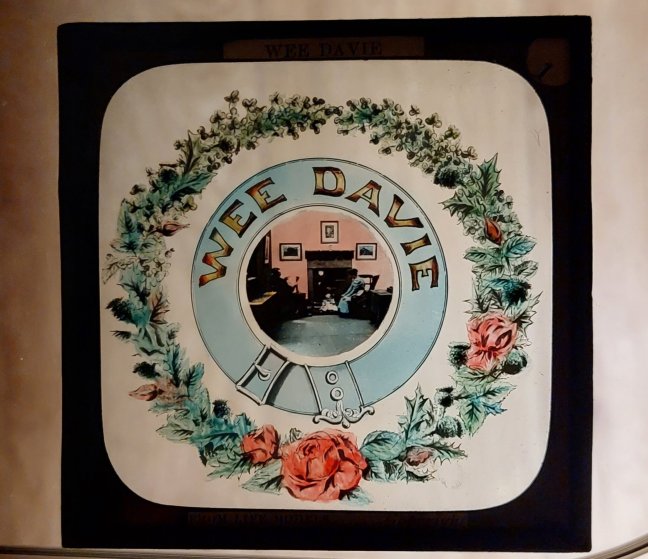
After diligently doing my organ practice this morning, I felt like an outing this afternoon. Only a librarian/musicologist would decide to go library-visiting! However, I knew that Paisley has a new, exciting public library building in the High Street, and I also wanted to find out about an old Paisley publication, so where else would I go? The image above is one I found on Renfrewshire Libraries’ website.

Sean McNamara’s enthusiastic tweet about the library, on 23 November 2023.

The library is bright and modern, on three floors. The ground floor has a large children’s section at the back of the floor, with places for parents and children to sit, and steps the children could go up and down – very cheerful and user-friendly.

There are also facilities for making a hot drink. Whatever next?! Very nice, but an unexpected surprise for an old-school librarian who last worked in a public library, erm, 36 years ago! 

Plainly there wasn’t going to be anything of the kind I was looking for, on the ground floor. I headed up to the next floor, and the next. Places for computer use, an array of different seating arrangements, non-fiction …..

I asked, but I discovered that if I would find what I wanted anywhere in Paisley, then it was not here. I need to go the Heritage Centre (aka “the archives”), elsewhere in the city. That’s a trip for another day, since it’s not open at the weekend.

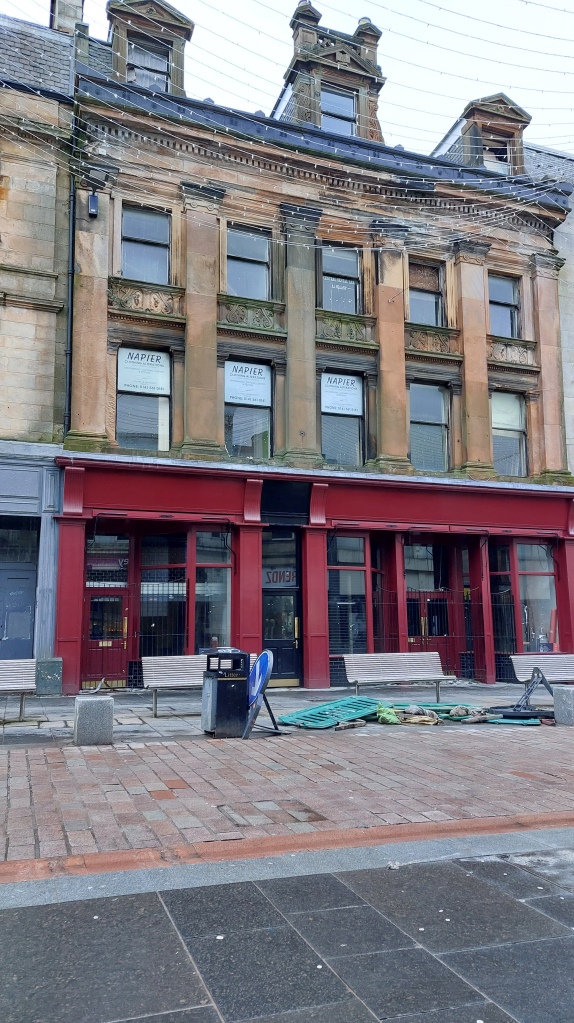
Shop front, Paisley High Street
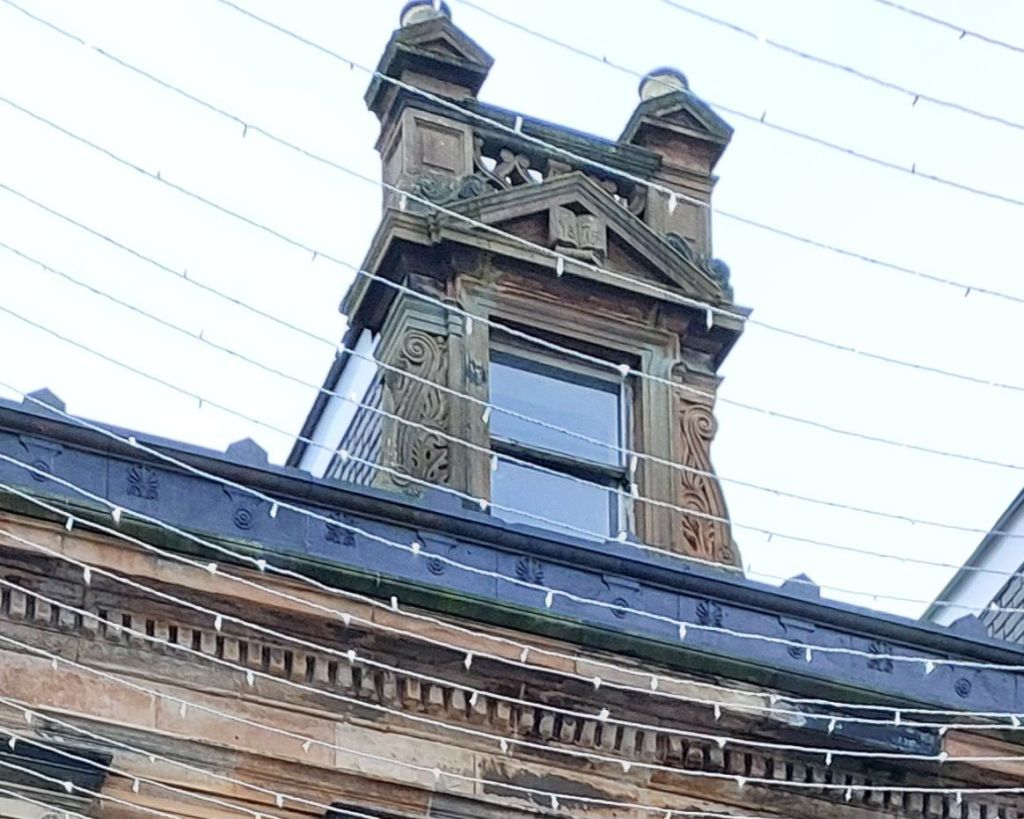
Parlane’s former offices in Paisley High Street. Book sculpture right above the top dormer window.

All was not lost. I also wanted to find out where Parlane’s offices had been. I knew that they, too, were in the High Street – and they were two doors away, in fact. They looked a bit sorry for themselves. I took a photo, but a string of twinkly lights (not illuminated by day) obscured a decent photo of the book sculpture at the top of the building. 

Maybe I’ll find a better one online somewhere. Messrs Parlane might have been pleased to find a new library as their next-door-but-one neighbour, but I fear they would have been sad to see the High Street today. It wasn’t exactly bustling on a Saturday mid-afternoon.

Home I came, and spent several hours making lists of things I’d like to see at the Heritage Centre. (I hope they’re as welcoming as the website suggests, or they’ll find me a bit of a nuisance with my long list!!)

Advance Notice! My latest Article is nigh!

Soon, very soon, all will be revealed! It’s been quite a quiet year, as far as publications go. Very quiet. But I have had one article and two chapters waiting at their publishers, and this weekend will at least see the article published in History Scotland. Featured on the cover, too.

Hooray!

Image by Belinda Cave from Pixabay

Researcher? Thinking of Writing a Book?

It occurred to me that many folk with a recently finished PhD or some other significant piece of research, must wonder whether to publish it as a book. Now my second monograph has moved to the revision stage, I thought I’d share a few thoughts on the process.

Everyone will arrive at this point with different prior experiences. In my case, I’ve written in a variety of formats and contexts. All writing experience is useful, even if you have to adopt different styles and protocols.

  • 30+ short stories for The People’s Friend
  • Serial for The People’s Friend (short stories and serial both great experience in telling a story, building a character, and writing to be understood.)
  • Countless book reviews
  • Blogging
  • Magazine articles
  • Journal articles
  • 20k word BA dissertation
  • 60k word MA dissertation
  • 100k word PhD dissertation, which became a
  • First monograph (= scholarly book)

So, here I am, revising the draft of my second monograph. And it’s different. It’s like swimming – eventually you take off your armbands, do a few lengths of the pool, and at some point, head for the sea. I can’t talk about writing a non-academic book, but I can certainly outline what’s likely to happen with a scholarly one.

  • You pitch your book idea to a suitable publisher. They’re likely to want chapter abstracts, a sample chapter, and an indication of the likely audience. Also some kind of literature review, proving the need for a book like yours to fill the gap.
  • Your pitch goes to peer reviewers. It may well take a while to get a response. They’re busy academics, after all.
  • They may suggest changes. Assuming the reviewers’ reports are generally favourable and recommend publication, you finally get a contract – and a deadline to finish writing the book.
  • Months pass. You get the book written and submitted – and then you wait. The full manuscript now gets reviewed, and eventually you receive the email you’ve been half-dreading. Changes may be suggested.
  • You respond to their reviews and indicate what you’re going to change. (Or perhaps, you will decide not to change something that you can defend just as it is!) With a second or subsequent book, these folk are the closest you’ll get to the kind of advice your tutors/doctoral supervisor offered – try to receive it gratefully and graciously, unless you really feel misunderstood!
  • You then wait for the go-ahead to make the agreed revisions, and agree a new deadline. It’s Scheduling Time! My calendar for the rest of 2023 is all mapped out.
  • I do know what will come next! The copy editor will be let loose on it. I’ll get to see and agree to the suggested edits, usually just small matters of style, or inconsistencies. Meanwhile, I will either have to produce an index, or pay an indexer.
  • A cover is agreed on. My book is part of a series, so there may not be much choice here.
  • The exciting part is when it’s just about ready to go to press; you are notified of the publication date, and can start planning that book launch.

And then – if it hasn’t happened already – someone utters the dreaded words,

“And what’s your next book going to be about … ?”

Unknown, interested well-wisher

Glass Half-Empty or Half-Full?

I’ve just given myself a strict talking-to.  On the face of it, I’ve published nothing of significance since January 2023.  The shame of it!  And me a 0.3 FTE researcher and all!  But when I remind myself that by the end of December 2024, I shall hopefully have published another monograph, two book chapters and an article, it doesn’t look quite so bad.  I really must stop comparing myself with full-time academics.

Women Composers

My last substantial article was actually written with my librarian hat on – maybe that’s not surprising, given that 0.7 of my role is as a librarian.  I wrote about my work getting more music by women composers into RCS Library:-

‘Representation of Women Composers in the Whittaker Library’Journal of Perspectives in Applied Academic Practice. Vol. 11 No. 1 (2023): Special Issue on Breaking the Gender Bias in Academia and Academic Practice, pp.21-26. (Paper given at the International Women’s Day Conference hosted by the University of the Highlands and Islands, 2022.) DOI: https://doi.org/10.56433/jpaap.v11i1.533

Watch out for my forthcoming article in History Scotland in December 2023. It’s about two Scottish women singers, one still famous (albeit not for her singing) and the other now forgotten. I’ve seen the proofs – it looks nice!

Historically Under-Represented Composers

Since writing the ‘Representation of Women Composers in the Whittaker Library’ article, I’ve continued adding music by historically under-represented composers to the library at RCS – it’ll be some kind of legacy to leave when I retire from the library in 38 weeks’ time!  I want to know that if students are looking for this kind of repertoire, there will be plenty to choose from.

Climate Change – Vocal Repertoire

I’d also like to see more songs about the climate crisis, a topic that colleagues have already been working on in the wider library collection.  If you’re reading this and know of published music suitable for young professional singers, do please get in touch.  I’m also looking out for decent publications of songs about environmental issues for classroom use, to benefit our trainee teachers in the Conservatoire.  If I can capitalise on the connections I’ve made through social media, to gather more information about this repertoire, then the collection can only benefit.  I’m just looking for songs – 38 weeks isn’t long enough to glean more than that, and it’s not as though the library won’t get on capitally without me next year in any case!! No-one’s indispensible.

Like this …

The music has to be commercially published – we’re not trying to build an archive of unpublished material with all the copyright complexities concomitant with such output.

But not this …

My own Extinction Calypso was performed in Edinburgh this March at Chris Hutchings’ Choirs for Climate concert, but it’s precisely NOT the kind of thing to end up in a Conservatoire library – fun, but lightweight, unpublished, and certainly not to be preserved for posterity!  It doesn’t make me any the less pleased with it, but I make no pretence of being anything other than a rather third-rate composer.  So – please tell me about proper works by serious composers, but not the likes of this:-

When I retire from the library, I shall still go on being a researcher professionally at RCS.  (No doubt I’ll also compose and sew pieces of nonsense in my retired-time!)  But it’ll be summertime before that happy day.  So for now, it’s on with the day-job, and the enjoyment of my Fellowship in St Andrews on Wednesdays and Thursdays!  More about that research in due course.

Image from Pixabay

You can’t have too much of a Good Thing

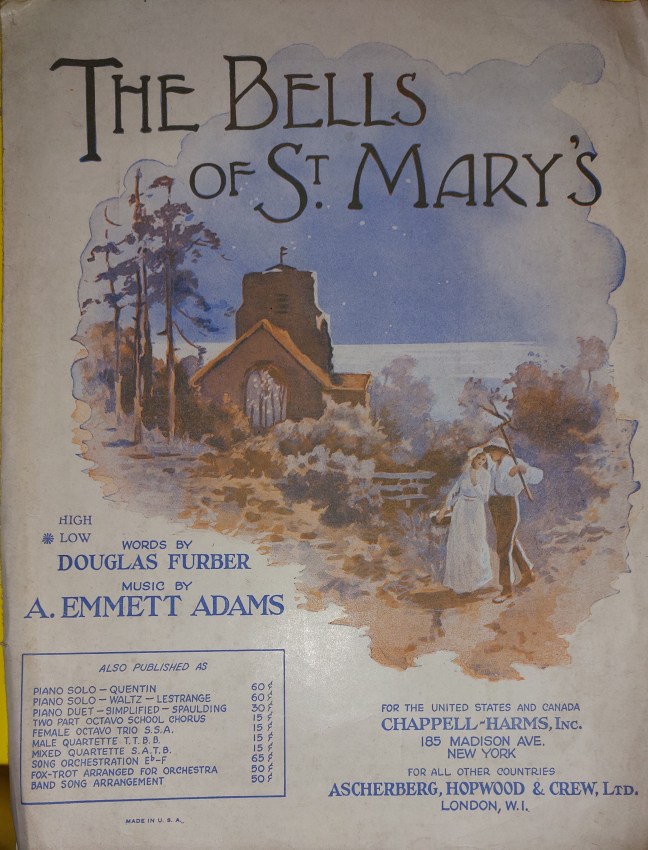
Saturday frivolity, not research. But it does give a bit of insight into the fin-de-siecle publishing trade.

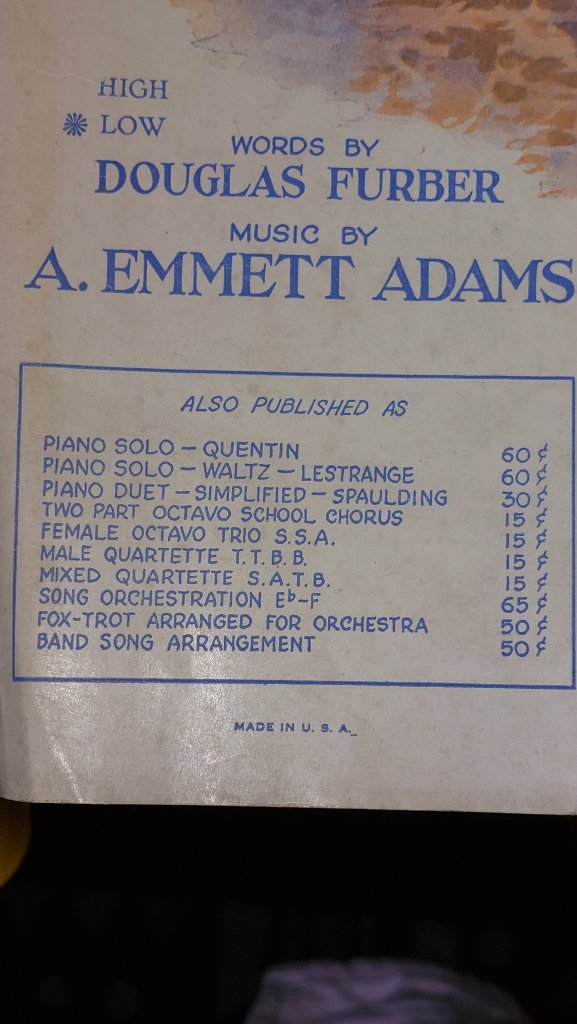
This came in a donation; we have the low voice version, but it was also available for high voice – that’s perfectly normal. Inside, there’s ukulele tab as well as the piano accompaniment, and instruction as to which notes you should tune the strings to. The publisher clearly thought he was onto a winner, and issued it in as many formats as he could think of. Just look! Oh, and he published it both sides of the Atlantic, for maximum exposure.

Just a trivial song, but it must have been a hit – in my family there are still memories of it being sung!

Enchanted!

The publisher travelled extensively, actually dying off the coast of South Africa on his final trip. Whether all these trips were for business or pleasure (or both), we’ll never know!

Image by Bob, Pixabay

The library received our second-hand copy of a music book today. It came from the USA, having first been sold in Johannesburg. There is something magical about a book, itself aimed at the Scottish diaspora, having been published in Glasgow and then spending time in TWO of the continents visited by its publisher, before returning to Glasgow today.

I know that, technically, it makes no difference to the contents. Of course it doesn’t. But I’d be lying if I didn’t say I’m over the moon with this particular book’s life-history!

Print and Tourism

I have contributed a chapter to a forthcoming collection on Print and Tourism, which is being published by Peter Lang.  The completed manuscript will soon be going to the publishers, which is very exciting.  You might ask what a musicologist was doing, writing about print and tourism?  Well, it won’t be long before all is revealed. 

I had enormous fun writing this chapter, and I think folk will enjoy reading it.  It’s different.  Well, that’s hardly surprising, given the subject matter, but I’ve placed it in a wider cultural context than my usual more musicological offerings, and I’m really looking forward to seeing it in print.

A Question for You: What’s significant?

The topic arose from a book I acquired during lockdown.  Ironically, it was only a couple of weeks ago that it dawned on me that not only would we need to buy the essay collection for RCS’s library, but we’d also need a copy of the book which inspired it! I can’t think why that didn’t occur to me sooner, but it is on order and on its way, so I’ll be cataloguing it very soon. We’ll have it well before the essay collection is finally published!

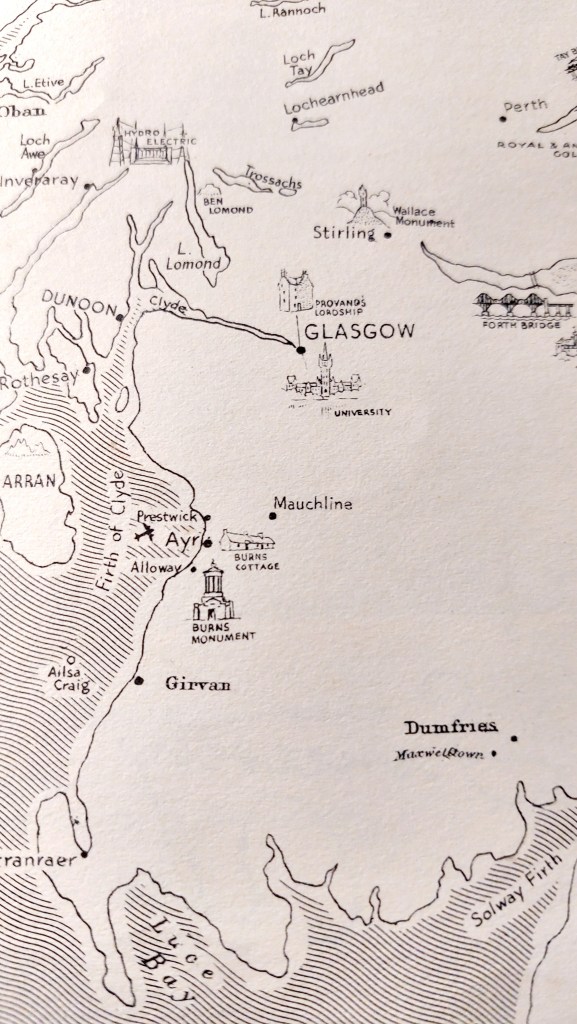
So, your challenge is this: Can you work out what is significant about this map?!

I would never, ever have dreamed, when I went to Exeter to start my first, unfinished doctoral studies on mediaeval English plainsong and polyphony, that I would end up completing a different PhD thirty years on, and writing and being published on such a very different topic!

Knowing When to Stop

The mystery teacher – photo from British Newspaper Archive

There are times when our insatiable curiosity leads us ‘up the garden path’, aren’t there? For me, it’s when I decide to pursue the life history of characters that really aren’t central to what I’m researching.

Take this weekend: I’m currently researching the pedagogical output of a Victorian Edinburgh music teacher, and I discovered his daughter collaborated on some of his publications. (This is confirmed by a letter that her sister wrote to a music journal later.) The collaborations appear to have been before she married.

I found a newspaper article about a story she had written for a women’s magazine called The People’s Friend in 1906, and this gave me her married name, but also informed me that she was working as a head teacher in a village quite a way from Edinburgh. It was definitely her – it named her father and his achievements.

Oh, my goodness. I wrote a number of stories for that magazine myself, some decades ago, so that made me sit up and look, straight away!

More interestingly, though – for a married woman still to be working, was a red flag in itself, because it was usual for a woman to stop working when she married. I traced her marriage certificate on Scotland’s People, and only noticed at the last minute that there was an amendment attached. She divorced her husband – whereabouts unknown – in 1912. Perhaps she had found it expedient to continue working, notwithstanding having a young child, if there had already been marital discord for a while. But who knows?!

I found the mother, a nine-year old son and a servant living back in Edinburgh in 1911. The census described her just as a teacher – no mention of headship here.

Really, my only interest at this point – whether or not she continued to collaborate with her father after she married – was my curiosity about a woman working as a teacher after marriage. Not long ago, I researched a late Victorian woman called Clarinda Webster, who was a music teacher, head teacher and ultimately a divorcee, so there was a human interest in finding someone else whose circumstances might have been vaguely similar …

After a few hours delving into Ancestry, Scotland’s People and the British Newspaper Archive, I made myself stop. I don’t know where this woman and her son ended up. Maybe they left Scotland or emigrated, who knows? At the end of the day, it doesn’t make any difference to my research into pedagogical music publications in the late Victorian and Edwardian eras.

On the other hand, stories of working women professionals in that era continue to interest me, whether musicians, teachers or both. It wouldn’t take much to convince me to keep looking…

Reunited! Moffat and Kidson’s Nursery Rhymes

You’ll remember that I recently treated myself to an Edwardian book of children’s songs published by Augener, partly because I’m interested in the compilers, but mostly for the delightful cover? I subsequently discovered it was the sequel to an earlier book, British Nursery Rhymes. Well, I couldn’t have the second without the first, could I?

The sequel: Children’s Songs of Long Ago

Luckily, my interests are generally quite inexpensive! I will take them to the piano at some point – and look more closely at the contents, from the point of view of repertoire.

D’you know, just about every bit of research I’ve done has involved examining repertoire. Starting with 13th century Gregorian chant – not many people know I was initially a mediaevalist! I’ve come a long way.

Chat GPT (Part 2) Fake News? It found me a Music Publisher that I haven’t heard of!

It’s intriguing – I couldn’t resist investigating it! Has Chat GPT led me up the garden path again? This time, my younger son is inclined to believe me rather than the AI. “Mum, you’ve researched the subject FAR MORE than Chat GPT has!” But the worrying thing is, that it looks so convincing. Anyone just hastily asking a question, and not having my level of knowledge, would completely believe what they were being told.

Music Sellers in the Paisley Post Office Directory for 1904-1905

The question that I asked Chat GPT, after it named the Reid Brothers

All of the information I’m about to reproduce here, comes from Chat GPT. I am not going to modify it at all. But before you read it, let me share a few truths with you! I will then annotate Chat GPT in square brackets.

  • This music publisher is unlisted in the Scottish Book Trade Index – but would have been too modern for that database. If it existed at all.
  • The Jisc Library Hub Discover database doesn’t have any music published by this firm.
  • They aren’t mentioned in the local press when they were starting trading.
  • They aren’t listed in the Paisley Post Office Directory for 1904-1905.
  • Chat GPT didn’t give me an actual address in Paisley.
  • I did find an Andrew Reid with those dates in a genealogy site – in Aberdeenshire, not Paisley, and nothing to do with music.
  • And there was a James Milton Reid in Kentucky with the dates for Chat GPT’s James Reid!

Here goes, courtesy of Chat GPT. It had already alluded to them briefly, so I threw out a challenge:-

ME “Tell me more about Andrew and James Reid, the Reid Brothers.”

ChatGPT:-

“Andrew and James Reid, known as the Reid Brothers, were Scottish music publishers who made significant contributions to the music industry in the early twentieth century. Here are some details about them:

  1. Background and Early Career [unverified]: Andrew Reid (1870-1944) and James Reid (1872-1956) were born in Paisley, Scotland. They came from a musical family, with their father being a music teacher. Both brothers developed a deep passion for music from a young age.
  2. Formation of Reid Brothers [no music shop traced, though a friend did trace a grocery shop]: In 1902, Andrew and James Reid established their music publishing business, known as the Reid Brothers, in Paisley. They started with a modest shop selling sheet music and musical instruments. Over time, their business expanded and became well-respected in the industry.
  3. Wide Range of Publications [untraced]: The Reid Brothers published a diverse range of music, including Scottish songs, instrumental compositions, dance music, and educational materials. They had a particular focus on Scottish music, contributing to the preservation and promotion of traditional Scottish tunes.
  4. Collections and Songbooks [untraced]: One of the notable contributions of the Reid Brothers was the publication of various songbooks and collections. They released compilations of Scottish songs, often accompanied by sheet music and lyrics. These collections played an important role in preserving traditional Scottish music and making it accessible to a wider audience. [I have never come across compilations ‘accompanied by sheet music and lyrics’. Lyrics are IN the compilations or IN sheet music of single songs. Lyrics are not provided to ‘accompany’ a compilation or a single song, which makes them sound like a separate entity…]
  5. Collaborations with Composers and Songwriters [untraced – this all looks like wishful thinking!]: The Reid Brothers worked closely with Scottish composers and songwriters, publishing their works and providing them with a platform for their music. They actively sought out new talent and supported local musicians, contributing to the vibrant music scene in Scotland.
  6. Music Shop and Instrument Sales [untraced, see above]: In addition to their publishing activities, the Reid Brothers operated a music shop in Paisley. The shop offered a wide range of musical instruments, sheet music, and accessories, catering to the needs of local musicians and enthusiasts.
  7. Influence and Legacy [untraced and probably again wishful thinking!]: The Reid Brothers played a significant role in promoting Scottish music and supporting local musicians during their time. Their publications and contributions helped preserve traditional Scottish tunes and fostered a sense of pride in Scottish cultural heritage. Their music shop and publishing business remained active for several decades.

The Reid Brothers’ dedication to music publishing [really?] and their efforts to promote Scottish music contributed to the rich tapestry of Scottish musical heritage. They played a vital role in preserving and disseminating traditional Scottish tunes, leaving behind a lasting legacy in the music industry.”

Now, it looks convincing, doesn’t it. Can ANYONE verify it, though?!

It was pointed out to me that I have just given the text credence by posting it. Hopefully the observations in square brackets will help cast doubt on the original!!