A Happy and Healthy New Year – Here’s Hoping!

Through sheer bad luck, all the men in my house had flu between Christmas and New Year. Call it Casa Influenza, if you will. I’ve been downing zinc, echinacea, and multivitamins with cod-liver oil – providing room service whilst wearing a mask, and cursing my FitBit for suddenly deciding to pass daily comment on my own levels of activity. It’s not counting the stairs, which I consider a very bad show considering how many times I’ve been up and down them. Then, after the first day of my Florence Nightingale gig, it observed I’d been overdoing it and should take a rest. So, I tried to rest the next day (as much as I could), whereupon it observed that I really needed to increase my cardio load. The third day, I walked to the postbox to increase my step-count, but this still wasn’t enough for FitBit. Stupid device!

Bah, humbug!

Only One Resolution!

Left to myself downstairs for several days, I couldn’t help myself doing a little bit of research in between fetching and carrying coffee, soup and meals on demand. However, having done absolutely nothing about seeing the new year in last night, I decided that if I was going to make one resolution this year, then it would be to do something more relaxing than searching databases on a public holiday. Moreover, I had woken up early – again – and couldn’t get back to sleep. I reached for my headphones and settled down to an audiobook.

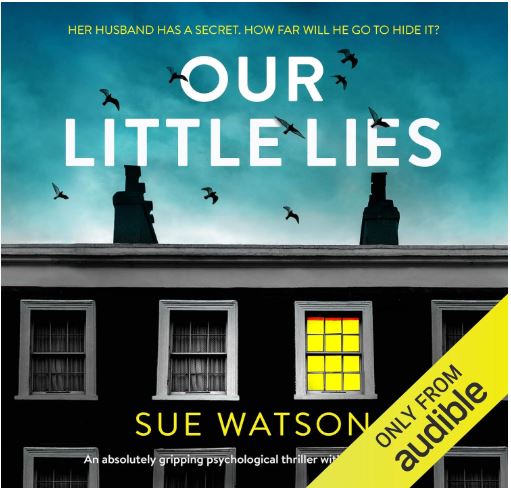
My book review of Sue Watson’s, Our Little Lies (2018)

(10 hours and 8 minutes, narrated by Katie Villa.)

An absolutely gripping psychological thriller with a brilliant twist.

I settled down under my duvet, ready to be psychologically thrilled. Although it began pleasantly enough, I must confess that I was too cosy, and I fear I may have been a bit drowsy through a couple of the chapters near the beginning. This didn’t promise to be as exciting as I’d hoped. It seemed like rather a slow, pedestrian start. On the other hand, maybe I’d have got on better if I’d been sitting up in a chair, or doing something else at the same time, rather than nearly falling back to sleep! When I woke up properly again, I didn’t feel as though I’d missed much.

Having said that, I took my phone round the house with me today, and listened to the entire story enjoyably enough, interrupted only when one of my invalids needed sustenance to be supplied! It did get better as it went on. The heroine was believable, and the anti-hero’s determination to gaslight her, accusing her of madness and psychological instability, grew more and more chilling as the tale unfolded. Her husband was a serial adulterer, a manipulative bully, psychologically and sometimes physically abusive.

As you listen (or read), you really do feel the heroine is caught in a trap, where her husband would do anything to make her feel guilty, whether literally finding fault where there was none, or for genuinely pathetic infringements (not folding the throws tidily enough, not tidying up crumbs off the sofa, or allowing the twins to watch TV) – or for serious tragedies for which she was in no sense to blame.

Marianne was certainly obsessive. But her husband Simon, who was a brilliant and ambitious surgeon, convinced her GP to prescribe heavy tranquillisers, and you were left wondering (as Marianne did) whether she was going mad, losing her memory, losing her ability to cope or becoming paranoid – or was the medication causing side-effects?

Admittedly, at one point, I wanted to yell, ‘For pity’s sake, you need to leave him, taking your kids with you!’, but of course, she had no-one to go to; even her so-called new friend turned out to be disloyal in the extreme.

The final chapters were very clever. Marianne arranged a party in which she would reveal her husband (and his lover) in their true colours. There was a murder a couple of days later, and because she couldn’t recall exactly what had happened, she was arrested and held for a number of hours before being released. However, the denouement was not as straightforward as it would have appeared, and – as in the best whodunnits, the culprit eventually turned out to be someone else entirely.

It’s not a detective novel, or even a crime story as such – emotional and domestic abuse underpin the novel, but the murder comes near the end of the book and – as I said – there’s a twist in the last ten minutes.

I closed my Audible book feeling that I had actually chosen just the right book for a lazy New Year’s Day. I’d recommend it.

Book Review: Gun Sireadh, Gun Irraidh: The Tolmie Collection

Never let it be said that I’ve ‘only’ published a monograph this year!

Now, in the Folk Music Journal Vol.12 no.5, pp.127-9, my review of a new edition of the Tolmie Collection, a significant Gaelic song anthology.

Kenna Campbell and Ainsley Hamill (eds). Stornoway: Acair Books, 2023. Illustrations. Bibliography. Index of titles in English and Gaelic. ISBN: 978-1-78907-109-2 (hbk). 978-1-78907-142-9 (spiral-bound). ww.acairbooks.com

I begin my review:-


Frances Tolmie (1840–1926) grew up and spent her final years on the Isle of Skye. She lived briefly in Edinburgh as a governess, later as a lady’s companion in the Lake District, and for a while in Oban on the Scottish mainland. Her collection preserved a rapidly dying repertoire of Skye women’s communal songs …

(Not yet readable online unless you’re a member of EFDSS, or your library has a subscription to the journal. It will appear in JSTOR in a couple of years from now.)

The Grumpy Friar (okay, Air-Fryer)

Today’s the last-but-one day of annual leave that I’ll ever take as a librarian. (The day before my 66th birthday will be the absolutely final librarian’s annual leave day.) After that, I’ll be semi-retired, not a librarian, and any annual leave will be as a researcher.

As you know, I’ve been thinking about healthy eating and more home cooking – although, since I’m not passionate about cookery, the less time I spend on it, the better. Tidying the lounge, I found the book I’d bought during the worst of the energy crisis. I had recently bought my first air-fryer – an appliance that a colleague assured me was the best invention ever. Less time means less energy, too.

Hannah Patterson, The UK Brand New Air Fryer Cookbook. 2023 edition. First published by the author in 2022. ISBN 9798360567448

Whilst enjoying my mini-holiday loafing around at home (getting things done, in a leisurely, unstructured way), I used the slow-cooker to cook some chicken. And then pork chops, which were very tasty but looked over-done. Surely, I reasoned, there must be more to it than this!

There is, however, a problem. As Patterson explains, there are different kinds of air-fryers. I knew mine was a small one – I thought it would do for three people – but along with being small, it’s also unsophisticated.  I didn’t know, until I opened her book at the beginning, that what I have is a Cylindrical Basket Air Fryer. As Patterson says,

‘Aside from the noise and the size, another downside is the functionality, as it only has one function.’

Mine isn’t noisy, but I was beginning to see what the problem was. Reading on, I discovered – as I had suspected from the recipes – that ‘basket’ means different things in different air-fryers. Mine is not open like a chip-frying basket. It’s basically a non-stick deep tin. And although there’s a ‘crisper’ – or whatever you call the round removable component that keeps the food off the bottom of the tin/basket – if you put the food on the crisper, it stays dry, but if you remove the crisper, everything is in the bottom and I’d worry about it burning the bottom of the tin.

And it got worse. Many of the recipes needed a baking tray or metal bowl that would actually go in the air-fryer. There isn’t room for either, in my wee machine. (Why did Russell Hobbs make a machine with so many limitations? Can I really only cook chicken or chips?!) Some recipes could be halved in quantity, but I still doubted that the food would fit with room for the air to circulate.

Sometimes, I fear people think I’m terribly negative. I prefer ‘cautious’ or ‘realistic’. Anyway, since I am at home reviewing a cookery book, I thought I’d just go with the flow and be myself. I went through EVERY recipe, and marked the index with whether it was technically feasible in my wee air-fryer. I honestly only marked a very few more that would need too many new ingredients, ingredients I would struggle to source, or that wouldn’t suit the tastes of my slightly conservative family. I haven’t done a statistical calculation, but it’s pretty clear that I’ve ruled out easily half the book – and possibly more than that.

Grumpy Friar (Image by OpenClipart-Vectors from Pixabay)

It’s a pity – the book is good value, and the food looks tasty. Perhaps much of it is not in our usual repertoire, but that’s not a bad thing. With some meals, I suspected that the preparation would be longer than I usually spend, partly due to unfamiliarity, or the faff of stuffing or rolling stuff into flattened chicken breasts or steaks.

Anyone got a book of recipes for a small, cylindrical air-fryer with minimal functionality? Until then, I’m off to make a quiche. In the oven.

Slow Productivity: my Latest Read

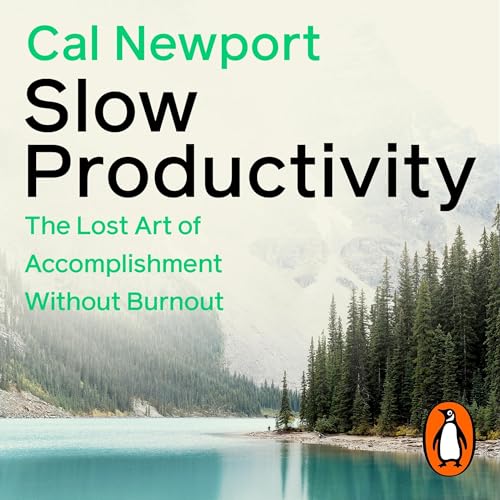
Cover of Cal Newport book, Slow Productivity

Slow Productivity: The Lost Art of Accomplishment Without Burnout
by Cal Newport and Penguin Audio (March 2024)

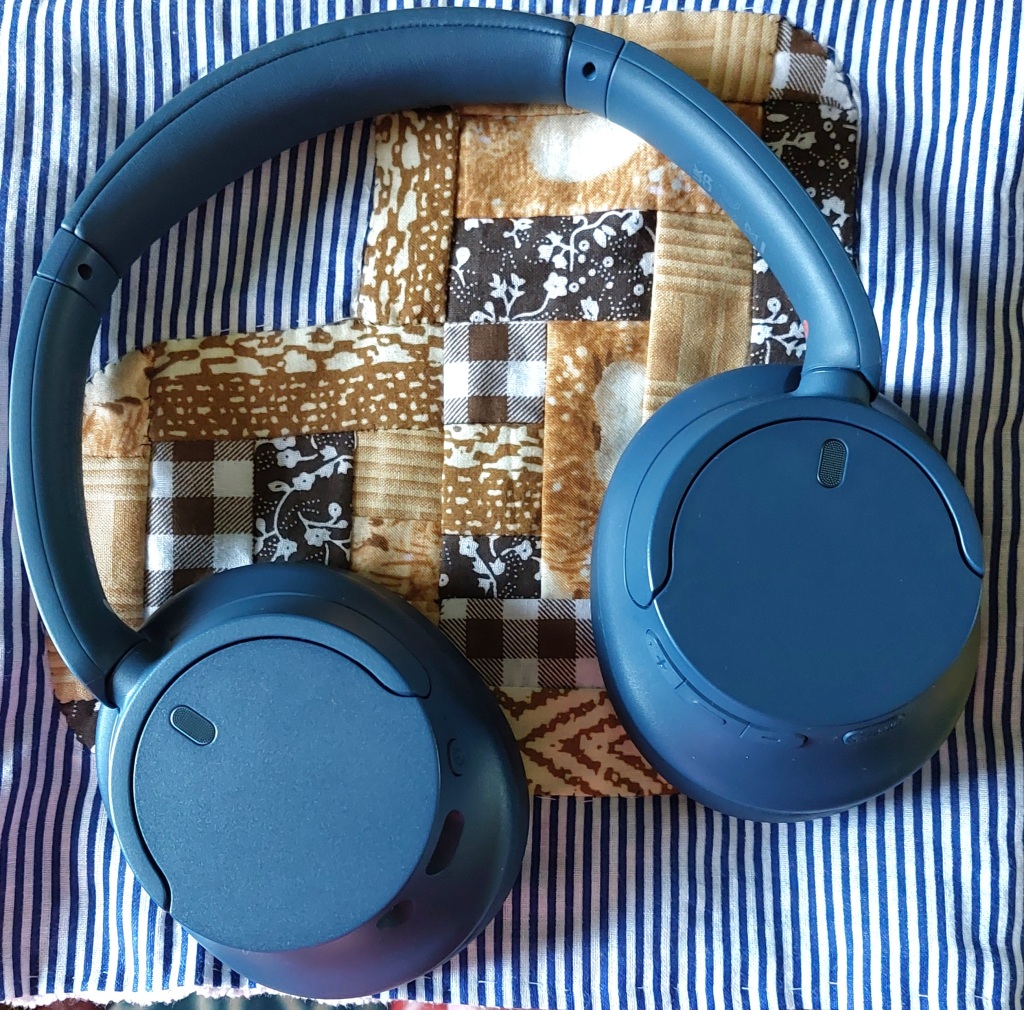
picture of headphones on a patchwork background.

I’ve been listening to Cal Newport’s book, Slow Productivity: the Lost Art of Accomplishment without Burnout, on Audible. I’ve taken my time over it – appropriately – and I’m approaching the end of it. Because I haven’t finished completely, what I’m writing here today can’t really be described as a review, so much as a first impression.

But why, you might ask, would anyone less than two months away from retirement age, decide to read a book about productivity at all? It’s a good question! I think I was both intrigued by the title, and fascinated by the different paces at which different people work. There are times when I achieve a lot – but not usually at a frenetic pace.   I don’t throw myself into tasks at fever-pitch, unless a deadline is creeping up on me. On the other hand, I do tend to have so many things on the go, that going slow feels impossible. (And I’m worryingly obsessed about accomplishment and achievements! That’s how I was raised.)

The main thrust of the book is that we ‘knowledge-workers’ should be more deliberate, allow ourselves time to do things well, factor in holidays, breaks and slower-moving spells, and not take on too much. That we’re not like factory workers on an assembly line, and aren’t generally required to produce so many units of whatever-it-might-be, per hour, day or week. Newport’s historical examples are inspiring, underlining his message, but some suggestions have no application to any role I’ve ever occupied. Pay someone to do some part of my work? If I was self-employed, possibly. However, the only time I’ve ever done that, was getting my first book indexed professionally. Librarians don’t outsource their work. (Neither do 0.3 of the week researchers!) Similarly, if you own a business or are freelance, you can deliberately decide to make a little less profit in exchange for a longer, more intentional route towards a high-quality product/performance act/whatever. People employed in any kind of academia can choose to seek a promoted position or not (depending on circumstances, of course), but it’s not about profitability directly affecting one’s own pocket.

Obsess over Quality

However, the suggestion to look at your role and focus on the ‘core activities’ that will have the most impact, is certainly sensible. As I’ve mentioned before, cataloguing barely-used jazz CDs is a soul-destroying task, mainly because it has such little impact. I hardly needed an Audible book to endorse that sentiment, but there it was.

Impactful Librarianship

As I did the ironing one night last week, listening to my book, I think that’s what prompted me to make sure my final weeks of librarianship would have a bit more impact than that! I’ve thrown myself back into tracking down music by BIPOC composers, and it certainly passes the time more quickly than other tasks I could mention!

My aim is simply to make it possible for students to find more diverse repertoire, should they feel so inclined.  My efforts won’t result in a massive listing – there are less than a thousand such items tagged in our catalogue, and our budget isn’t huge. It’s not just about getting the materials in – but I won’t be the one devising ways to get it known about and borrowed, after 28 June 2024.

Yesterday, a highlight was discovering one particular new acquisition was already on loan to a second borrower. Result!  That  in library terms, is impact.

And Impactful Research

As for slow productivity? I need to finish reading Newport’s book and then consider how to apply the best suggestions to a semi-retired existence. At the time I’m posting this, it’s a Wednesday, and I have my research hat on. I have a book review to do, and then I’ll look at my list of projects … because I’m not retiring from research! Far from it.

What you are Looking for is in the Library [a Review]

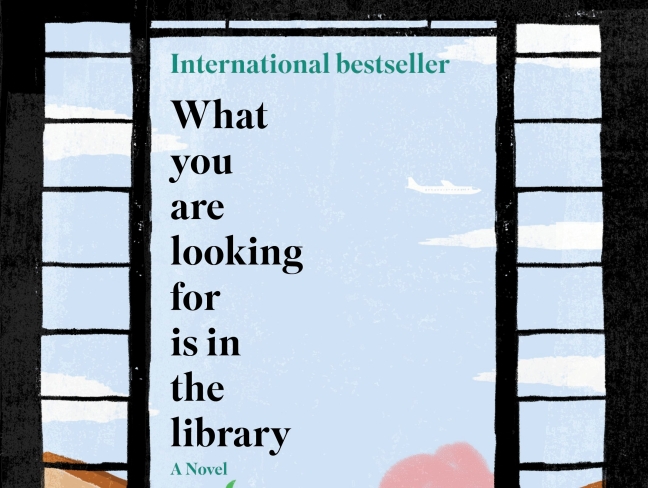
Audible, in its infinite wisdom and comparatively brief acquaintance with me, suggested I might enjoy this Penguin novel by Michiko Aoyama.

What You are looking for is in the Library (Penguin, 2023)

Was it because I enjoyed, The Premonition,  by Banana Yoshimoto? Or does Audible (Amazon) somehow know I’m a librarian? I don’t buy books on librarianship…

In any case, it’s not surprising that when this title came up as a new suggestion, I’d be drawn to it! Haven’t I spent 42 years hoping people would find what they were looking for in the library?

It’s an interesting idea: a series of individuals are drawn to visit a community library. It’s staffed by a nervous but friendly trainee and a mysterious, large, middle-aged former special-needs teacher turned librarian (with a penchant for Japanese honey dome cookies, and a felting obsession).  We encounter each library visitor at a crisis point in their lives. A girl wanting a more challenging job; a woman demoted during maternity leave; a man dissatisfied with his work; an unemployed artist; and a newly-retired man each consult the librarian for book recommendations, receiving a couple of perfect choices, and an apparently random children’s book, along with a bonus gift.

In each case, the random book and felted object help them to realise three truths: that there is always more than one way of looking at a situation; there are always other choices of direction; and that everyone draws their own message from any particular book.

Whilst the characters seem unlinked apart from these common threads, the final chapter does gather them together loosely. It’s a gentle, thoughtful, sequential book rather than one with a grand denouement. 

As such, the reader is left feeling less that it all came together in the end, than that each character had found a way to resolve something that had been troubling them. Less of a ‘Wow!’, more of a quietly satisfied, ‘Yes, I enjoyed that.’

Aoyama’s choice of characters is ingenious.  The librarian and her trainee are deftly and likeably characterised as a bit oddball, but happy in their environment, whilst their searching patrons – all new library users – are defined in such a way that the reader is sure to relate to some aspect of their collective predicaments.

And the three truths that I mentioned? Well, as I said, the third was that everyone takes their own message from a book. You’ll have to read it!

Endurance, by Alfred Lansing – the Bitingly Harsh Reality of the Antarctic

After my last Audible adventure – well, its dreamlike quality felt more like sleepwalking than an adventure – I needed something a bit more gritty for my next audio book. There can be nothing more ‘real’, or in the moment, than the story of the remarkable Ernest Shackleton’s abortive trip to the South Pole aboard The Endurance in 1915.

Alfred Lansing, Endurance. Abridged audio book (Blackstone Audio, Inc., 2000)

I don’t often read books in the ‘Adventures, Explorers & Survival’ or ‘Expeditions & Discoveries’ categories.  However, I found this book gripping, and even terrifying, as challenge after seemingly impossible challenge had to be surmounted.  To rescue the entire crew from two icy and inaccessible islands was more than remarkable.

For myself, I’d like to know what happened to them all after they got home! Do I need to look for another book …?

Banana Yoshimoto: The Premonition: heard on Audible

Eccentric old house

I’m still new-fangled with this Audible book app. It told me I had a monthly credit to spend, so I had a look at the recommendations. Yoshimoto’s The Premonition sounded intriguing, from the blurb – and the cover art was attractive; proof that book design matters!

Had I walked into a bookshop and seen it, would I have bought it? I don’t know. I’d have been surrounded by appealing new titles, and I can’t say whether I’d have chosen this above all others. It’s quite short, compared to the other books I’ve listened to, and – frustratingly – it is not broken up into chapters. I find it easier to put a book down if I’ve come to a structural break.

It’s a strange, dreamlike book, set in or around Tokyo. It’s richly descriptive of its physical surroundings, but I got a bit tired of reading about Yayoi’s brother’s straight back, the set of his shoulders and the way he walked!

Yayoi, the heroine is paradoxically both clairvoyant after a fashion (the word ‘clairvoyant’ isn’t used, but what is a clairvoyant if not someone who has premonitions?) and amnesiac, having lost all childhood memories after a traumatic incident. She knows that there’s something she doesn’t know. She has two loving parents; a wonderful brother a couple of years younger than her, whom she adores; and a completely eccentric young aunt who lives alone in a ramshackle house, from which she somehow emerges sane and tidy enough to work as a school music teacher every day … except when it rains.

We never find out quite why the house has been allowed to become so dirty and run-down (was there no-one to help her learn how to run a home?); why the aunt never seems to cook proper meals; or why she seems so dreamy and other-wordly. It takes a while to work out why the heroine feels so drawn to her.

There are loose ends. What was the significance of the heroine intuiting that someone had killed a baby in the leaky bath of the temporary accomodation that her own family rented during a house renovation? This seems to be completely unrelated to anything else in the story. And why did the aunt not like going out in the rain? Most particularly, once the heroine had worked out her real relationships to her brother and aunt, you’re left wondering why she hadn’t been told before.

Japanese mountain volcano peak
Image by kimura2 from Pixabay

At the end of the novel, Yayoi has pieced together the story, with the help of her aunt/sister. But what will become of the changed relationship with her brother? And how will the aunt/sister resume a romantic relationship with another young man, who had until recently been a classroom pupil? From a British vantage-point, all I could think about was child protection policies, ethical breaches and the involvement of social services, the teaching council and potentially the police. My knowledge of Japanese culture is so minimal that I don’t know if such a situation would be viewed differently there.

Discovering the truth may not make things any easier

So, if I had to summarise the book in one line, it would be this:- ‘Discovering the truth may not make things any easier.’

I’m not sure what I’ll read next, but perhaps I’ll opt for something a little more conventional!

No Audible Book Review?

Yesterday, I intended to start another audio-book. But somehow, nothing pleased me. I tried a book by a renowned TV presenter, but after a few minutes, one of the characters was standing gushing blood – and I just didn’t fancy it. No problem, I thought to myself, and started a twenty-first century pastoral narrative. Somehow, that didn’t catch my interest either. Finally, I read a few actual, paper pages of a book about the Edinburgh publisher Thomas Nelson – before my healthy eye got tired. Reading with one eye works fine for a wee while, but there’s no point in straining it.

I had yet another cuppa, and wrote a quick note to a friend, and that was all I managed. An attempt to go out for coffee failed at the first hurdle – my inability to see what I was doing was too annoying for my companion, who simply wanted me to pass a slice of cake. I couldn’t coordinate my hand with the different versions of what each eye was seeing.

I haven’t been in a reading frame of mind since then. Maybe tomorrow …

For folk with a Macular Hole
Our treatment has only one goal:
By careful incision,
To better our vision,
Then rest up and do as we’re tol’

Image by No-longer-here from Pixabay

Shhh! What Granny Didn’t Want Them to Know

The closed lock of an old suitcase

Tracking Irish Emigrants from Cork to USA and London

My third audio book just came up as a new publication when I logged onto Audible. Its title appealed to me. Additionally, since my own [in-the-pipeline] monograph touches upon emigration in the nineteenth and early twentieth centuries, then if Clair Wills’ book touched upon that, I was definitely interested.

Clair Wills, Missing Persons, or, My Grandmother’s Secrets (Penguin Audible, 2024)

The book describes the author’s extensive efforts to find out more about illegitimate births in her own Irish family; the adults involved, and the secrecy surrounding what had happened. The scandal of the Irish mother-and-baby homes during the twentieth century is naturally a significant focus, but the author also examines the part of the Irish Catholic Church; the local authorities; adoption; single mothers; questions of respectability and inheritance; of shame; of emigration (to America, and to England); of stigma and suicide; along with changing attitudes towards the end of the twentieth century. Since I’m neither Irish nor Roman Catholic, I was sure it would be informative – and it was.

It’s a moving, and multi-faceted narrative. Just when I was beginning to ask myself, ‘So, if the mother-and-baby homes were a twentieth century scandal, what happened before that?’, Wills explains how things gradually changed from the second half of the nineteenth century into the early twentieth, along with the political changes. The unbearable tragedies for the mothers and babies were too many to enumerate, but we’re reminded that the outcome for a young Irishman fleeing to life as an itinerant labourer in England was hardly what any young adult man would have hoped for, either.

Did any of this have any bearing on my own research? Not really, except to provide me with some statistics about emigration from Ireland that were far higher than I had imagined – and I already knew they were high. Moreover, my own musicological research really only requires me to say, ‘There was a lot of emigration from the Highlands and Ireland, usually for work.’ After all, I write about national songbooks, and their appeal to emigrants. If I was going to give more detail, I could, I suppose, add, ‘and sometimes, especially in Ireland, to make a fresh start where an illegitimate pregnancy made it expedient for either party.’ But to be honest, songs about missing your homeland – or even your sweetheart back in the old country – aren’t likely to go into specifics about babies born in inconvenient circumstances.

However, reading Audible books during a period of forced inactivity, doesn’t mean they have to be connected with research. It’s an unaccustomed luxury to listen to books for hours on end, and I’d recommend this one. I have six more titles lined up, but I don’t think I’ll start them today. I like to let the memory of one sink in, before beginning another.

From Glasgow to New York with my next Audible Book

As I mentioned yesterday, I’m being kind to my eyes this month. I challenge myself to review every audio-book I listen to in February. But – they’ll be the briefest of reviews!

David Wilkerson – The Cross and the Switchblade

This book was famous in the ‘Sixties, when I was far too young to read and understand it – and it later became a film. I had heard of it, probably in my undergraduate days, but I’d never read it. Wilkerson was an American pastor who felt a calling to minister to gang members, drug addicts and others on the edge of society. He set up a whole chain of rehabilitation centres under the name of Teen Challenge. There was much to marvel at, as I listened to his narrative. He was fearless, and 101% committed to his cause. What he achieved was remarkable – and to add to that, the funds were achieved by devout, purposeful prayer. I have Christian faith myself, but I don’t think I’ve ever encountered faith in action on the scale that Wilkerson, his team and his new converts practised. 

I don’t know how this book would come across to readers without faith. It in no sense preaches to the reader, but is just a straight, sincere narrative. I found it both moving and inspiring.