Dr Karen McAulay explores the history of Scottish music collecting, publishing and national identity from the 18th to 20th centuries. Research Fellow at Royal Conservatoire of Scotland, author of two Routledge monographs.
In the late 1920s, Thomas Nelson’s were just starting to work with the music specialist who would turn out to be very helpful to them over the next couple of decades. As I mentioned, I’ve been trying to find the very first letter that passed between them. Moreover, the Nelson’s editor had told his line-manager at the outset (in the mid-1920s) that he hoped this individual would be helping with ‘the large music book’. Now, this is delightfully vague, isn’t it? Nelson’s wouldn’t be publishing anything that I’d call ‘large’ in the way of printed music for several years.
And Another Music Man!
On Friday, I stumbled across editorial correspondence from 1929 about revising an earlierbook about music – one useful to individual students, possibly beyond school age – but not a school classroom text-book. When I get my hands on it, I expect to find that it’s a fairly standard Nelson printed book size. If this was ‘the large book’ (Possibility A), then it was only ‘large’ by comparison with slimmer materials intended for the classroom. Moreover, our music man was NOT the person who ended up revising it. His first contribution was something slimmer, and more classroom-based. But this book does perhaps better fit the timescale of a publication being projected in the late 20s.
It’s so easy to imagine up a sequence of events, with what is really insufficient evidence. After all, there could be another projected ‘large book’ (Possibility B) that never actually happened!
My working theory for Possibility A, is currently that even if they approached the first guy to revise a book, then for whatever reason, he wasn’t ultimately offered or didn’t fancy the commission. The chap who did do it was certainly a good choice, in any event – a knowledgeable scholar rather than a gifted practitioner and pedagogue.
There’s nothing for it – I must continue leafing through early correspondence in search of that initial letter! But I’ve also ordered a copy of the book that the scholar revised. After all, it’s another Nelson music publication. I need to know about it, too, whether it’s the ‘large’ book or otherwise.
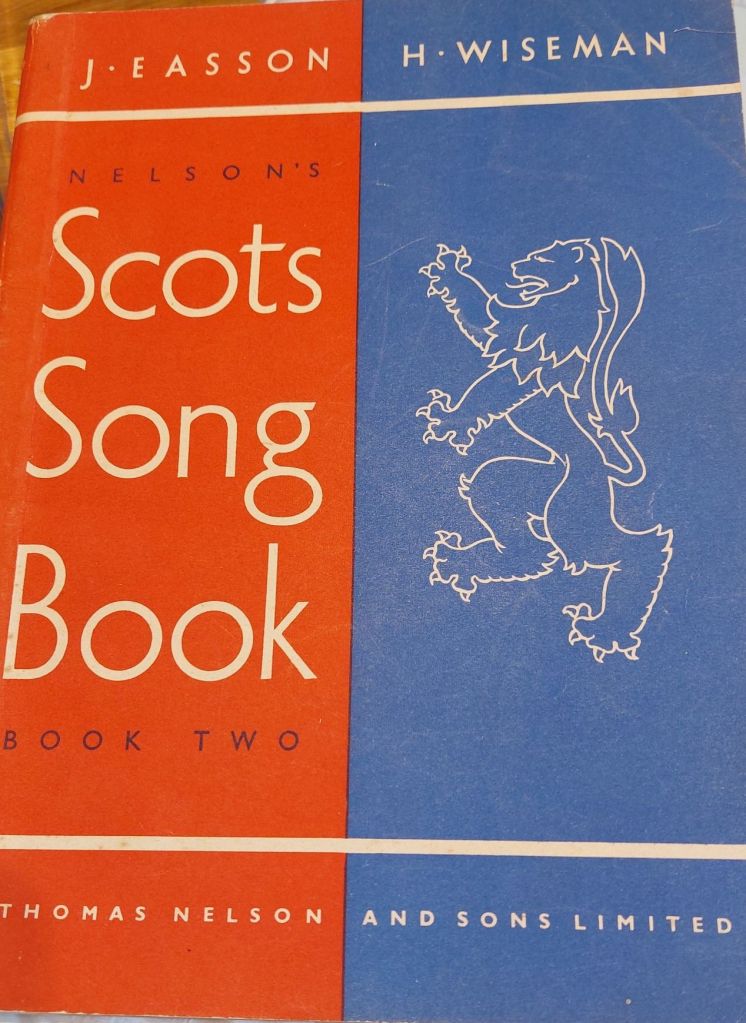
As regular readers will know, my IASH Fellowship concerns the history of the Nelson’s Scots Song Books.
I’ve seen all four of the teacher’s books in libraries; and possess one teacher’s edition of my own, plus one pupil’s edition – not the same volume number. And I’m going to some lengths to track down the other three of each edition. I want to be able to show them when I talk about them, so I simply must keep looking.
Today, I headed to town, feeling as though I ought to be riding a pony and tootling a hunter’s horn, to the sound of La Chasse or the William Tell Overture. (The heavens opened between subway and second-hand bookshop, somewhat spoiling my fantasy. Urghh!)
But hunting with a pack of hounds would have been no good at all, for you have to creep up on these rare beasts very, very softly. Pretend to be looking at something else, as you slowly extend your arm towards the shelf. And then, whilst it’s relaxed with its defences down, grasp it quickly and hold on tight.
Captured!
I examined it disbelievingly. Yes! I now have the teacher’s edition to go with my pupil’s edition of Vol.2. (Actually, I also found some other useful material that wasn’t published by Thomas Nelson.)
And then I turned round. On a table, if you please, there sat another Nelson music book that I’ve been reading about. Not a song book, but interesting just because it was published around the same time, by the same Nelson editors. It was as though it was waiting for me to find it.
Did I celebrate with a coffee? Now, what do you think!
I know what I’m looking for: any mention of music-related publications from the erstwhile Edinburgh publisher, Thomas Nelson. I found the important things I was hunting down, so now I’m just looking for contextual detail.
These were just a small part of Nelson’s output, of course. So, my plan of action entails identifying likely boxes (or folders, or binders) and methodically going through them. As I go, I encounter tantalising threads that I must not be distracted by: John Buchan copyrights, letters from Enid Blyton and Arthur Ransome, and glimpses of the editors’ daily business.
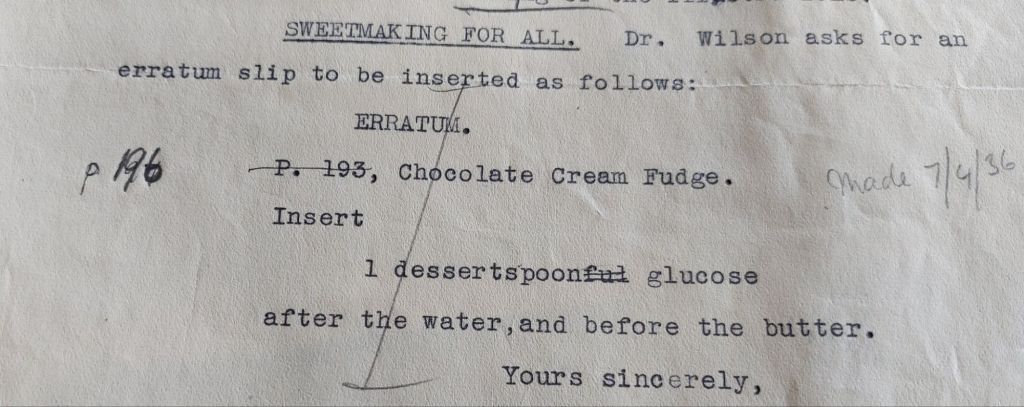
Sweets that would have been less Sweet
Imagine the author’s distress at realising that glucose had been omitted from their confectionery recipe:-
Wanderlust
Meanwhile, it seems Dr Wilson was the only person who could deal with a ‘peppery’ author, but explaining how a travel anthology had gone missing in transit between Bude and Edinburgh would challenge his diplomacy to the utmost. (You have to appreciate the irony.)
Naming no Names
And I was unimpressed by the managing director who had certain issues with women authors. Admittedly, this was the 1930s, but … really, Sir!
Anyway, I’m heading to the University of Surrey/ RMA conference in Guildford today, so all my editors and their authors can rest in peace until next week!
A strange coincidence occurred to me last week – I encountered conductor Landon Ronald in two quite different research contexts.
Firstly, I knew that soprano Flora Woodman appeared in at least a couple of concerts with Landon Ronald (1873-1938), Principal of the Guildhall School of Music. (Possibly more – but I was mainly focusing on her repertoire as I went through her logbook and scrapbooks.) However, I did note in her scrapbooks of press-cuttings, en passant, that she wished it to be clarified that she was not his protegee. Interesting – but there’s really nothing more to be said. If she wasn’t, she wasn’t.
Nonetheless, I had also encountered Landon Ronald in a different context last week. In 1936, Thomas Nelson published a book, Let’s Get up a Concert by Rodney Bennett (1890-1948, father of composer Richard Rodney Bennett) and H. S. Gordon, with a preface by Sir Landon Ronald and Illustrations by Joyce Dennys. Landon Ronald again! Nothing to do with Woodman this time. Indeed, it may not have a great deal to do with Landon Ronald either. I’ve found no evidence that he didn’t author the preface, but I do have evidence that someone else paid a ‘big name’ to put their signature to a preface for another book, in full knowledge that the ‘big name’ could be mentioned in book promotions and would undoubtedly add appeal and authority to the book. If Thomas Nelson allowed one author to do this, who’s to say they didn’t with others too?
Now aged 63, Ronald was still Principal of Guildhall, but he says he no longer promotes concerts. He alludes to his experience of ‘hundreds of orchestral concerts in the Summer Season on Sunday evenings at that most democratic of all holiday resorts, Blackpool’ (yes, Flora performed in Blackpool too) – ‘and an unbroken series of four hundred Sunday afternoon orchestral concerts at the Royal Albert Hall.’ (Plenty more about him on the CHARM website, which is the AHRC Research Centre for the History and Analysis of Recorded Music.)
But back to Bennett’s book. Part Two consists of practical advice to performers: dealing with nervousness, platform technique –
However much you desire to pop off like a frightened rabbit, don’t.
‘Walk like a Dancer’
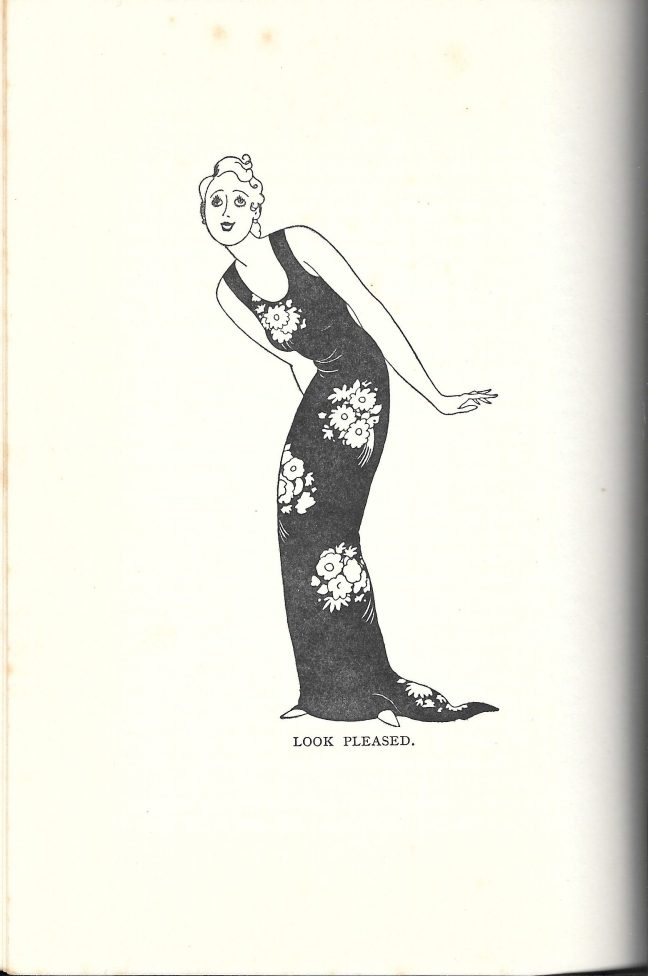
The eager would-be concert performer is advised to ‘learn from professionals’ (p.135) especially from foreign artists, whom Bennett says are more accomplished in this regard – and about ‘pleasing the eye’ (p.136). You must ‘walk like a dancer’, and ‘support [the man in charge*] with unfaltering loyalty’, whilst pianists should appear to be a ‘natural, kind-hearted, happy human being’.
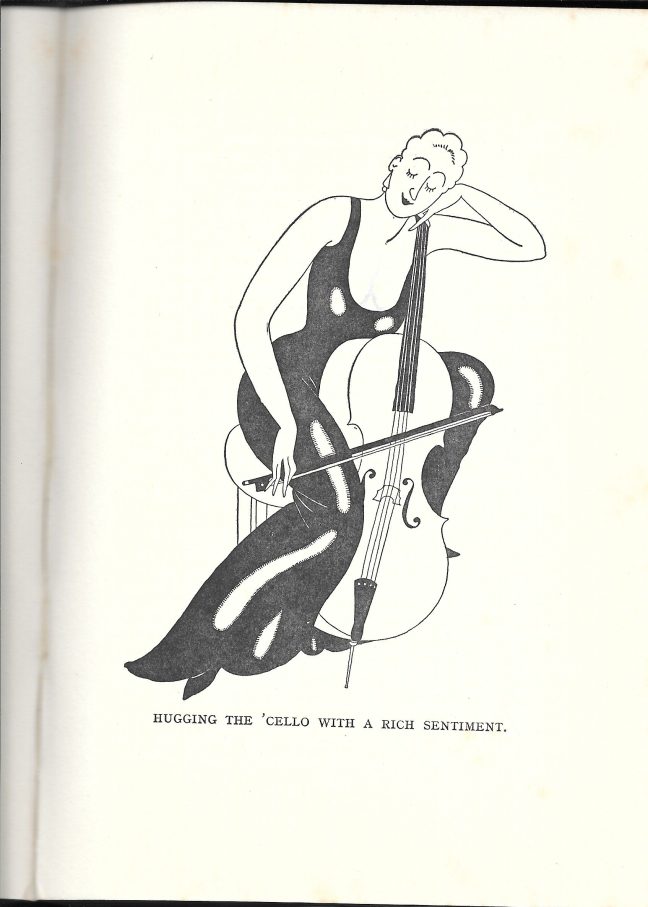
In fact, dated as it seems in some respects, there’s a lot of useful advice in this book. I can only commend the individual who presented it to Penarth County Girls’ School* Library in 1946. It would have been helpful at the time, and a lot of it still is. The illustrations are decidedly tongue-in-cheek, but on the plus side, they don’t patronise the intended audience – advice is always easier taken if the advice giver uses a touch of humour! The artist, Joyce Dennys (1893-1991) was a cartoonist and illustrator. The book perfectly fits into Thomas Nelson’s lists, with their emphasis on providing self-improvement, self-educational material for the intelligent layperson. You might be a teacher needing more guidance on laying on concerts, a nervous and somewhat inexperienced performer, or an organiser of any number of different kinds of musical entertainment, and this title would have plenty of accessible, useful advice.
Of course, platform etiquette would have been second nature to a superstar like Flora Woodman, who would probably have needed little advice after her first few performances. (Neither, I imagine, would she have liked the suggestion that foreign artistes had more stage presence! My gut feeling is that she had it by the bucketful.) She was mixing with professionals of the highest calibre, in Britain’s best concert halls.
I’ve already posted details of some of her fabulous wardrobe, and it would become rather dull if I went on producing lists. But I noticed today how she liked to ring the changes with glamorous accessories. They wouldn’t be wise choices today, but hey, this was a century ago. So – I spotted white fox, ermine, beaver and swansdown, as well as velvet hats, black tulle, hydrangeas, lilacs, pink flowers, a wreath (garland?), and regular adornments of silver (silver what? she doesn’t say). Also, even within a couple of years, she updated her outfits, with ‘second editions’ of her black and white, and pink and pearl ensembles. (Once again, do use your imagination – I’ve given you plenty to work on!)
Meanwhile, excuse me whilst I browse through Rodney Bennett’s book a bit more …
*Yes, Bennett does talk about ‘the man in charge’. It was a different age – don’t shoot me!
If I remember one comment from my doctoral viva, it was an observation about my writing.
You really bring the characters to life.
And I smiled inwardly, because for several years prior to that, I had published short stories and even a serial in a women’s magazine. I can write about people.
When it comes to research, though, the real people get so under my skin that I feel I almost know them personally. Yesterday, I found a few letters where an assistant editor was trying to hurry things along before she left for a new job. She explained this to her authors. Unusually, their replies were also there, so I looked eagerly for their well-wishing messages, or a word of thanks for her efforts – which had been considerable.
Nothing. Nada. Zilch.
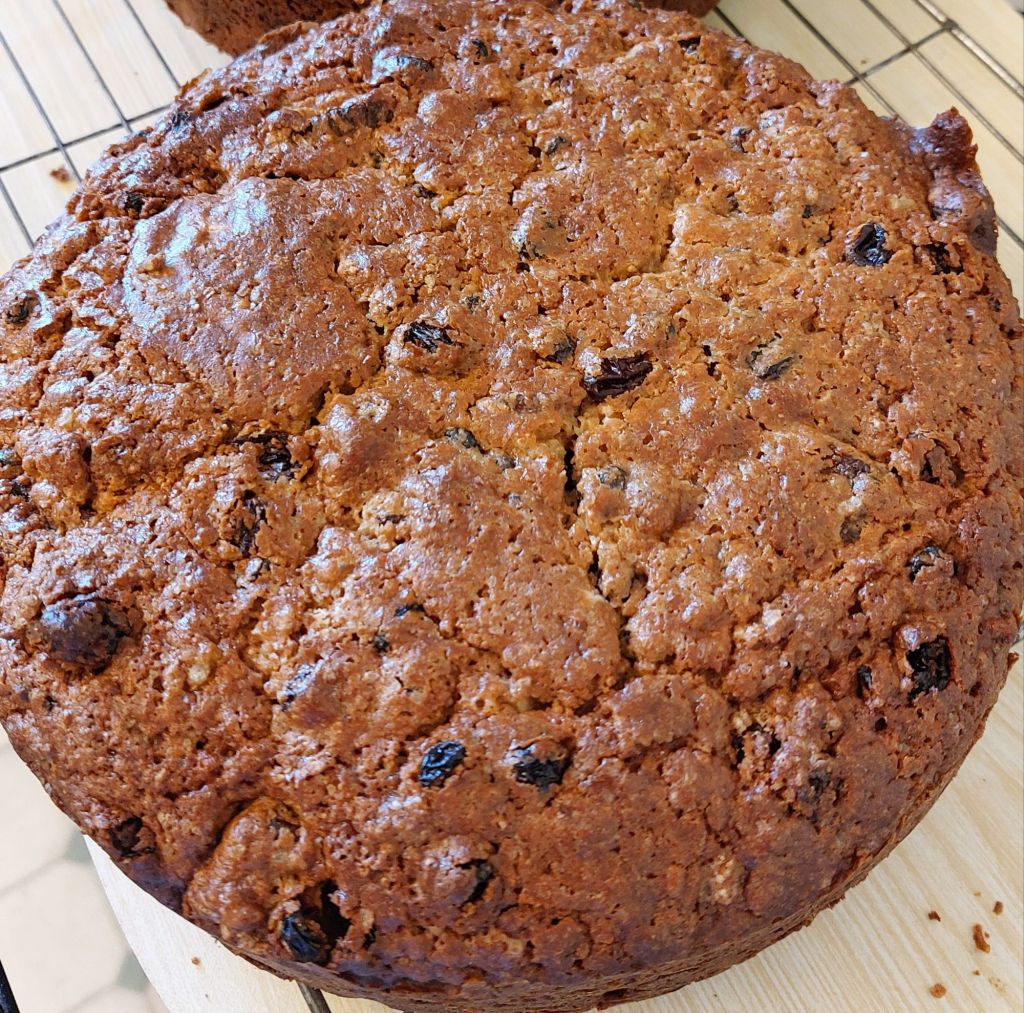
I felt indignant on her behalf, but it was the 1950s. Maybe gentlemen didn’t thank lady assistant editors in those days? I like to think there might have been a tea-party in the office, at least. I know for a fact that the ladies’ tea-breaks were affectionately referred to as ‘the tea-party’, so hopefully someone baked a cake or some scones for her last day!
Maybe?
It is sometimes, however, possible to read too much into a situation. I was surprised to catch an author suddenly writing ‘Dear Madam’ and ‘Yours faithfully’ to someone he’d been writing to for months. And yes, the recipient accordingly responded, ‘Dear Sir’. I think it was a momentary blip. Maybe Sir’s secretary didn’t remember the recipient’s name. Anyway, friendly terms resumed after that, so all was well!
Since January, I have leafed through thousands of cc’d letters concerning the publishing activities of the former Edinburgh publisher, Thomas Nelson & Son Ltd. Their four Scots Song Books were published 1948-54, so I focused on those years, a little before and a little after. You might struggle to imagine just how many boxes and file books were filled in such a comparatively short timescale – yards of them – but it was a big, commercially active firm.
And I have indeed found documents about the song books, but I’ve still harboured a sneaky suspicion that there had to be more. I made further lists of files I ought probably to check, just in case.
Today, I captured my prey! Two whole folders dedicated to these books, spanning several years but sitting quietly in the middle of one single year … with a handwritten note saying where they should be filed. (The ultimate, unattained destination is immaterial, considering the books and boxes now live in an archive rather than the demolished Parkside Works.)
These two grey folders are packed with letters and memos, and – unusually – there are quite a lot of incoming letters as well as the expected carbon copied outgoing mail. Very nice indeed. (I wanted to hug them, but that might have looked a bit weird!)
There’s nothing for it – I’m listing every sheet of paper, in chronological oder (thanks, Microsoft), with sender, addressee and a summary of content. Or a transcription, if appropriate. Data protection means no photos of anything from 1950 onwards, but photos aren’t a very good way of remembering the content in detail, so I don’t really mind.
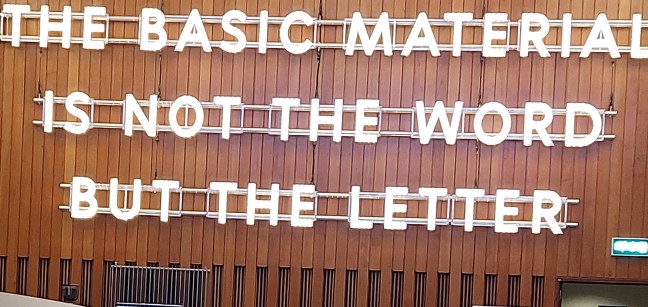
So says the striking, illuminated art piece in the entrance hall of Edinburgh University Library. The College of Arts, Humanities and Social Sciences’ website explains that it is the work of Nathan Coley:-
The illuminated sculpture was created by Turner Prize-nominated artist Nathan Coley. […] The Basic Material is not the Word but the Letter [is] also the name of the piece. 19 Jan 2018 CAHSS
The words come from a manuscript in the archives. Make your own interpretation, says the website.
Well, after my frequent sojourns in the Heritage Collections reading room, consulting thousands of letters in the Thomas Nelson archives, as far as I’m concerned it definitely means letters of correspondence, as opposed to alphabet letters!
And what a lot I’m learning about the former Edinburgh publishing company. One of the nicest things is observing the warm rapport established between the editors and their authors. The ones they had most contact with, clearly became friends, over and above their close working relationship. (Although, sometimes I get so caught up in their conversations that I forget they’re talking about books that don’t strictly concern me. Today, I caught them discussing a nursery school expert at Moray House. But I couldn’t track down the song-book she was said to have written!)
This afternoon, I gave a talk about my archival research, to the Friends of Edinburgh University Library – where I received the strongest indication that people love talking about their memories of school music lessons!
I had great fun introducing the long-forgotten editors at Thomas Nelson – including a lady who went on to work at the University Library after finishing her PhD – and, of course, the people who compiled the Scots Song Books. (They wanted to compile a fifth – I bet you didn’t know that! But Nelson’s didn’t …)
Main picture – tulips outside the University Library
On Friday afternoon, a tiny germ of a thought struck me. It was about a book to which I had previously given no thought whatsoever. It is unrelated to Scottish song, or even Scottish culture. It was published by a Scottish publisher.
100, 245, 260 …
(Forgive the little library codes! I haven’t forgotten where I came from.)
But I can’t see a title without wondering about the author, so I idly looked them up on my journey home from Edinburgh.
Well!
Here we have someone who …
Had LRAM piano and was a Dalcroze graduate
Trained primary school teachers in eurythmics
Gave classes for kids in a city studio
Helped choose music for the Royal Scottish Country Dance Society
Once or twice arranged music for same (but was never apparently on any committees – you can spend hours looking at RSCDS digital archives, and I have!)
Did I trace their birth and death dates, where they grew up, and where their parents married? Yes, I’m afraid I did!
MT? Definitely.
(Another clue for my former colleagues!)
All this falls into the scholarly equivalent of ‘pretty but pointless’, on the face of it, since it has nothing to do with a Scottish song book series for schools. But the book itself might have a tangential link to my present research – more anon – and gives me food for thought in another direction.
I have just talked myself into another eBay purchase …
A few weeks ago, I led a community ‘Scottish song’ event. I found myself singing a solo – well, to say ‘found myself ‘ is inaccurate, because I HAD planned and rehearsed it with a pianist.
But it seemed to go down well enough, so, emboldened by this, I sang a couple of examples from Nelson’s Scots Song Book at my Work in Progress talk on Wednesday. This time, I prerecorded my accompaniment myself. (Three cheers for the decent mic I had purchased during lockdown!)
I reminded myself that my esteemed audience were a mixture of musicians and non-musicians, and I was there as a researcher rather than a star turn, so hopefully they’d listen kindly rather than critically!
And it was fine. I suppose the more often you do something, the easier it gets. I have played in public, conducted in public, and sung in a choir numerous times, but singing solo? That’s something new.
I have another talk coming up in a few weeks. Of the two songs I sang this week, I much preferred one to the other – the range was more comfortable. So I looked through NSSB4 again last night, and hit upon a favourite – ‘I’ll aye ca’ in by yon toun.’ I took it to the piano for a first play through. Yes, I like Easson’s setting. It’s reasonably modern, and playable.
At this point – just as I’d finished the chorus – I was obliged to stop.
‘But, I was …’
You’d be alarmed at how routine governs my activities. No point causing upset by continuing to play, so the song will wait for another time. Supper couldn’t wait!
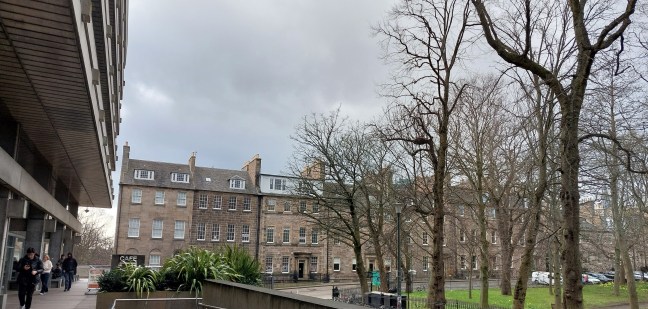
However, I thought I’d look for a YouTube rendition, to accompany my breakfast this morning, and what did I find, but a Topic recording of Jean Redpath performing it in the American Serge Hovey’s setting. I never heard Jean sing live, but she got an honorary DMus from the University of Glasgow (my Alma Mater), and her enthusiasm for Scottish song was influenced by her time at the University of Edinburgh – as I sit with a cuppa in the Library cafe, I’m literally looking out at the School of Scottish Studies building where she’d have talked with Hamish Henderson.
Having heard Redpath’s beautiful singing, I am less sure that my singing is a good idea, but there’s only one way I can share Easson’s setting, and that’s by playing it. Which, without a singer, wouldn’t work at all. I’d better get practising!











 Karen McAulay, Musicologist