

It was necessary! So I took to the library blog and wrote this …
Thoughts on Sharing and Generosity
I woke at 4 am again today. Could I get back to sleep? No. As I rode into town on the bus, I reflected that many of my wakeful thoughts had revolved around scholarly sharing. My mind seemed to bring out a series of issues, examining them one by one.
Tell me Everything
The breathless, ‘Tell me all you know’? Flattering, endearing, and with a piquant irony, considering one of our academic colleagues asked, more than two decades ago, ‘what does a librarian want with a PhD, anyway?’ Indeed, it was around that time that I overheard two graduate librarians opining that librarians don’t actually need degrees at all. Another academic told a colleague that they were ‘only a librarian.’ (Postscript. That librarian subsequently went on getting postgraduate qualifications too!)
So it’s nice that, as the postdoctoral librarian approaches retirement, she is acknowledged to be possessed of Useful Knowledge. Even if it’s scholarly knowledge, which now sits in books on the library shelves.
Quote (Unattributed)
Then my thoughts turned to the individuals whom I would characterise as academic vacuum cleaners, noting your pearls of wisdom and later quoting them, unattributed. I know it’s good to share, but it leaves a bitter taste when your sharing is taken advantage of, whether it’s scholarly research or professional assistance. On the other hand, if we acknowledge help given, it reflects well on both the sharer and the sharee!
The problem is that I’m a librarian AND a scholar. And as librarians, we’re accustomed to sharing. I sometimes find it hard to decide where a line has been crossed.
I Can’t. Please Can You …?
Similarly, we librarians share our expertise about referencing, but there’s perhaps a subtle difference between our, ‘this is how you reference’ advice, which I gladly and willingly do all the time – and, ‘can you sort my references?’ As a scholar, I don’t ghost-write articles for publication. Should I, as a librarian, ghost-format references? Would I be colluding in giving the impression that the author has done a superb job with all that technical detail?! Or do other librarians do this without a qualm? I just don’t know what’s the norm here.
This is Not a Question, But
There are also times when sharing is not so good, though. An interrupted talk where anecdotes are shared, uninvited, whilst you’re in mid-flow. Or ‘Questions’ afterwards, that are not questions so much as demonstrations of knowledge.
Worth a Try!
And best of all, requests for sharing that simply overstep the mark! Now you’re wondering what I mean, aren’t you?! Well, you won’t believe this one.
I was expecting a research question, in one particular email that I received a while ago. But that wasn’t what was being requested, on this occasion.
‘You have a sewing machine, don’t you? Can you show me how to sew curtains?’
[Meaning, ‘Can you sew them for me …?’]
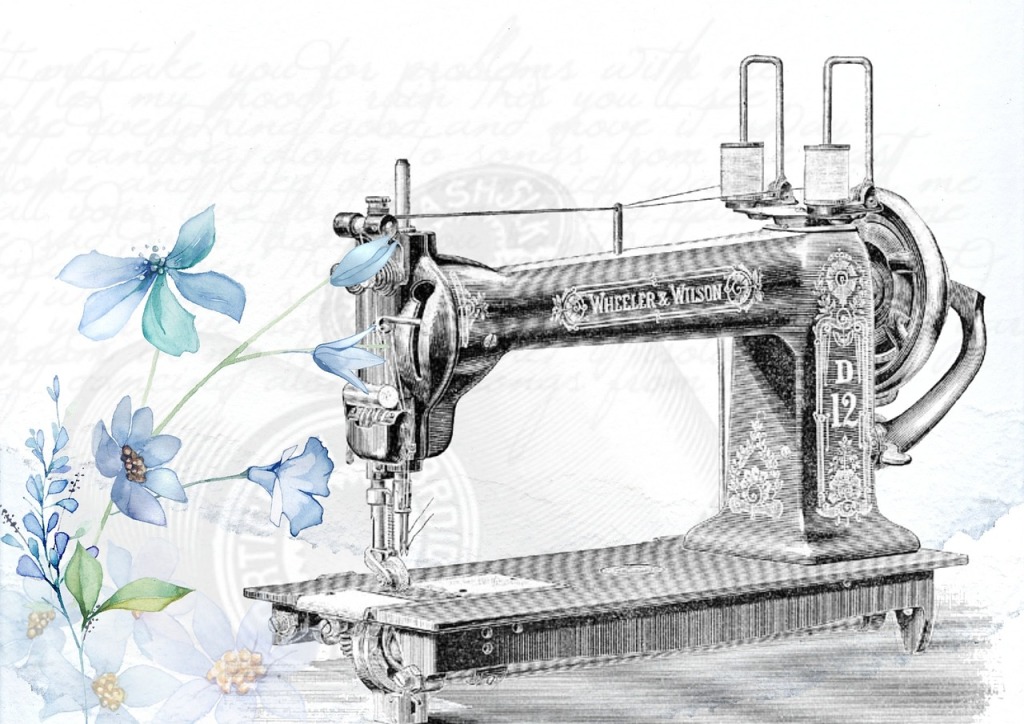
Clker-Free-Vector Images from Pixabay
The Doctor doesn’t have time to sew other scholars’ curtains. Helpful, I am, but not a mug!
Music Subscribers: a database by Simon Fleming and Martin Perkins

https://musicsubscribers.co.uk/
This is the very detailed and useful database compiled by Simon Fleming and Martin Perkins for their subscribers project. You can find out more about it on their extensive information pages.
I had early access to the database for my chapter on subscriptions to Scottish fiddle books. (Chapter 10: ‘Strathspeys, Reels, and Instrumental Airs: A National Product’, as I mentioned a couple of weeks ago. )
NB ‘The dataset is the intellectual copyright of Simon D. I. Fleming and Martin Perkins.’
Simon D. I. Fleming and Martin Perkins (eds.) Music by Subscription: Composers and their Networks in the British Music-Publishing Trade, 1676–1820. Oxford, Routledge, 2022.
NB. There’s currently (26 November 2023) a Black Friday deal on the book!
Image by Gerd Altmann from Pixabay
Honorar-estly Tired

This has been quite a week!
Wednesday. Glasgow to St Andrews, to do book revisions, and a lecture for the University’s Institute of Scottish Historical Research. (It was about the impact pedagogical and technological innovations had on Scottish music publishers.)

Thursday night. St Andrews to Dundee (expedient – it was the only way to get back in time for work on Friday!)

Friday morning. Dundee to Glasgow, for a day’s librarianship. One particular query took a couple of hours, but I was told that my reply would make the enquirer very happy … really, that’s all that matters.

Saturday. Glasgow to Dundee and back for the Friends of Wighton 20th Anniversary celebrations. I attended the speeches and morning concert …


I’m the Honorary Librarian, and my role was to show off Wighton’s books, in the afternoon. Although few visitors required my services, I had some very enjoyable conversations about the books, so it was a pleasant day.
It’s always fun to spot little comments made on the music by Wighton himself, and today I also found one of the books had belonged to an original subscriber. I wonder if she played the tunes when she got the book? In a chapter I wrote a couple of years ago, I found the number of women subscribers compared to men, went up as time went by. There’s a Miss Scrimgeour on the database compiled for that book, but Mrs Scrimgeour doesn’t appear there. Have I somehow found a new subscriber, or was she just mistranscribed at some point?!


Googlemaps will again be reporting record travel mileage this month! But I have awarded myself the rest of the weekend off. (Honestly, have I only walked 8466 steps today? I’m surprised!)
After their Moment of Glory, the Books Slept …

Well, the talk seems to have gone well, and again, I found a very responsive audience. After being taken out for a delicious dinner, I headed for Dundee, which was the only way I was going to be at work on time in the morning.

Another time, I need to clarify, for anyone not familiar with Tonic Sol-Fa, that it was devised for singers, not instrumentalists.
If you played an instrument, you learned off standard staff notation or by ear – with or without an instructor. In late Victorian times, after the 1870 and 1872 Education Acts, it stands to reason that more children would have learnt sight-singing by Sol-Fa, than learnt an instrument. Children whose parents could pay, might have had private instrumental lessons. Some might have had opportunities to join a band, learn from someone known to them, or pick up a fiddle (for example), but I still maintain that the majority of children were more likely to have encountered Sol-Fa.
As to social mobility … I’m not entirely sure whether it was easier or harder to fight your way up the ladder in those days. I’d need to ask a social historian of that era. I can only comment on the few instances that I’ve observed: ‘my’ music publishers certainly seemed to do well for themselves.
So, here I sit on a train back to Glasgow. Like Cinderella, my carriage will change back to a pumpkin, and my garb back to rags, if I’m not a librarian behind my desk by nine o’clock!
The Long Road to St Andrews

The bus got delayed in traffic today. (Significantly so. My journey was 4.75 hours from door to door!) This did reduce the time I had for book revisions, but I still managed a productive afternoon. I’ve revised the Introduction and created a Preface.
I had already done more work on my literature review, so I worked through the reviewer’s suggestions until I was pretty sure I’d addressed them all. I start with their suggestions and my responses. Once dealt with, each point is ticked off, and digitally ‘crossed out.’
So far, so good. Just a small matter of giving all the chapters the same treatment. I’ll get there eventually.
And because a mild, damp morning turned into a mild, dry afternoon, I even managed a walk by the sea. What could be nicer? (I didn’t quite get onto the sand, but next time, if I’m in trainers! …. )


From Magic Lantern to Microphone:

the Scottish Music Publishers and Pedagogues inspiring Hearts and Minds through Song’
You just have to get to St Andrews!
Thursday at 5.30 pm
https://x.com/ISHRStAndrews/status/1726346251262722510?t=Pcj4iHBLW-ABj4-jzAECvw&s=09
Researcher? Thinking of Writing a Book?

It occurred to me that many folk with a recently finished PhD or some other significant piece of research, must wonder whether to publish it as a book. Now my second monograph has moved to the revision stage, I thought I’d share a few thoughts on the process.
Everyone will arrive at this point with different prior experiences. In my case, I’ve written in a variety of formats and contexts. All writing experience is useful, even if you have to adopt different styles and protocols.
- 30+ short stories for The People’s Friend
- Serial for The People’s Friend (short stories and serial both great experience in telling a story, building a character, and writing to be understood.)
- Countless book reviews
- Blogging
- Magazine articles
- Journal articles
- 20k word BA dissertation
- 60k word MA dissertation
- 100k word PhD dissertation, which became a
- First monograph (= scholarly book)
So, here I am, revising the draft of my second monograph. And it’s different. It’s like swimming – eventually you take off your armbands, do a few lengths of the pool, and at some point, head for the sea. I can’t talk about writing a non-academic book, but I can certainly outline what’s likely to happen with a scholarly one.
- You pitch your book idea to a suitable publisher. They’re likely to want chapter abstracts, a sample chapter, and an indication of the likely audience. Also some kind of literature review, proving the need for a book like yours to fill the gap.
- Your pitch goes to peer reviewers. It may well take a while to get a response. They’re busy academics, after all.
- They may suggest changes. Assuming the reviewers’ reports are generally favourable and recommend publication, you finally get a contract – and a deadline to finish writing the book.
- Months pass. You get the book written and submitted – and then you wait. The full manuscript now gets reviewed, and eventually you receive the email you’ve been half-dreading. Changes may be suggested.
- You respond to their reviews and indicate what you’re going to change. (Or perhaps, you will decide not to change something that you can defend just as it is!) With a second or subsequent book, these folk are the closest you’ll get to the kind of advice your tutors/doctoral supervisor offered – try to receive it gratefully and graciously, unless you really feel misunderstood!
- You then wait for the go-ahead to make the agreed revisions, and agree a new deadline. It’s Scheduling Time! My calendar for the rest of 2023 is all mapped out.
- I do know what will come next! The copy editor will be let loose on it. I’ll get to see and agree to the suggested edits, usually just small matters of style, or inconsistencies. Meanwhile, I will either have to produce an index, or pay an indexer.
- A cover is agreed on. My book is part of a series, so there may not be much choice here.
- The exciting part is when it’s just about ready to go to press; you are notified of the publication date, and can start planning that book launch.
And then – if it hasn’t happened already – someone utters the dreaded words,
“And what’s your next book going to be about … ?”
Unknown, interested well-wisher
Diversifying the Repertoire

Choosing more diverse repertoire is challenging for instrumentalists and singers. For four or more years, I’ve been working hard on increasing our stock in this area – music by women, music by BIPOC composers, and, of course, music by women who are BIPOC composers – and I’ve compiled some helpful lists of music in stock at the Royal Conservatoire of Scotland’s Whittaker Library. They’re posted on the library WhittakerLive blog.
I intend this to be my legacy when I retire from the Library in July 2024.
Image by Gerd Altmann from Pixabay
All quiet over here

The Fellow had a migraine yesterday.
Caffeine, carbs, codeine and a lunchtime walk restored me to near normality, so I did some reading in preparation for the book revisions, and continued the task today. But migraines are very draining, so I’m tired!

I have taken annual leave in order to spend my Thursday afternoons researching, to maximise the time I have in St Andrews. So I settled down to do what needs doing, but STILL I received emailed queries. I spent as little time as I could, but readers shouldn’t be kept waiting. Anyway, back to the research ….
Having a finite amount of time certainly concentrates the mind. Is this relevant? Useful? How does it help the argument?
It pays to get an oversight of a book’s chapter structure, and to make use of the index. If something is in digital format, searching for keywords certainly gives an indication as to whether it’s worth spending time on.

From Magic Lantern to Microphone
Next week, I’m giving another talk, this time to the Institute of Scottish Historical Research. It’s all written, so I just need to read the whole thing out loud to myself between now and then, to ensure there are no tongue-twisters to trip me up!

And after carrying far too much to last week’s talk, be assured that I won’t make the same mistake again! My props will be no larger than will fit in a pocket.
 Karen McAulay, Musicologist