Find me at KarenMcAMusic.threads.net

What’s all this about? Everyone perhaps having to pay to be on Twitter? No, Sir! I’m not actively leaving just yet, but if failure to pay results in accounts disappearing, then I’m afraid I will disappear from Twitter.

I’m on Threads: KarenMcAMusic.threads.net – maybe I should be asking my Twitter followers to follow me there?

And of course, I’m here on my blog.

I know – a blog is not the same as the casual, friendly conversations we used to have on Twitter. It’ll be interesting to see what we’re all doing in a year’s time!

‘You can’t Judge a Book by its Cover’ (can you not?!)

I know you shouldn’t go on first appearances, but sometimes we do. (Why else do we make an effort with our appearance at interviews?!)

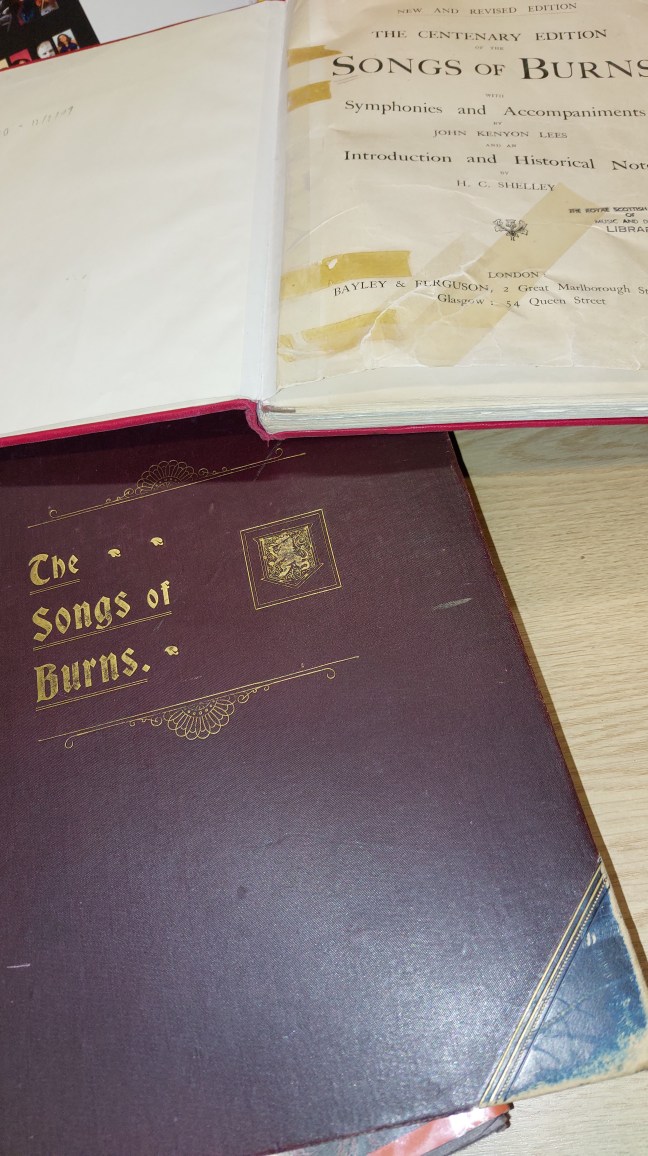
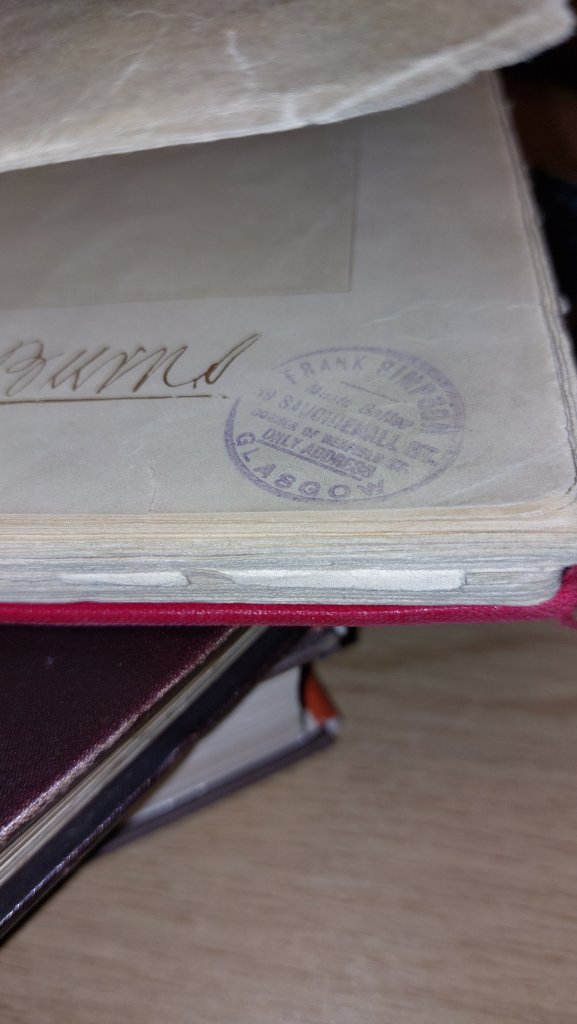
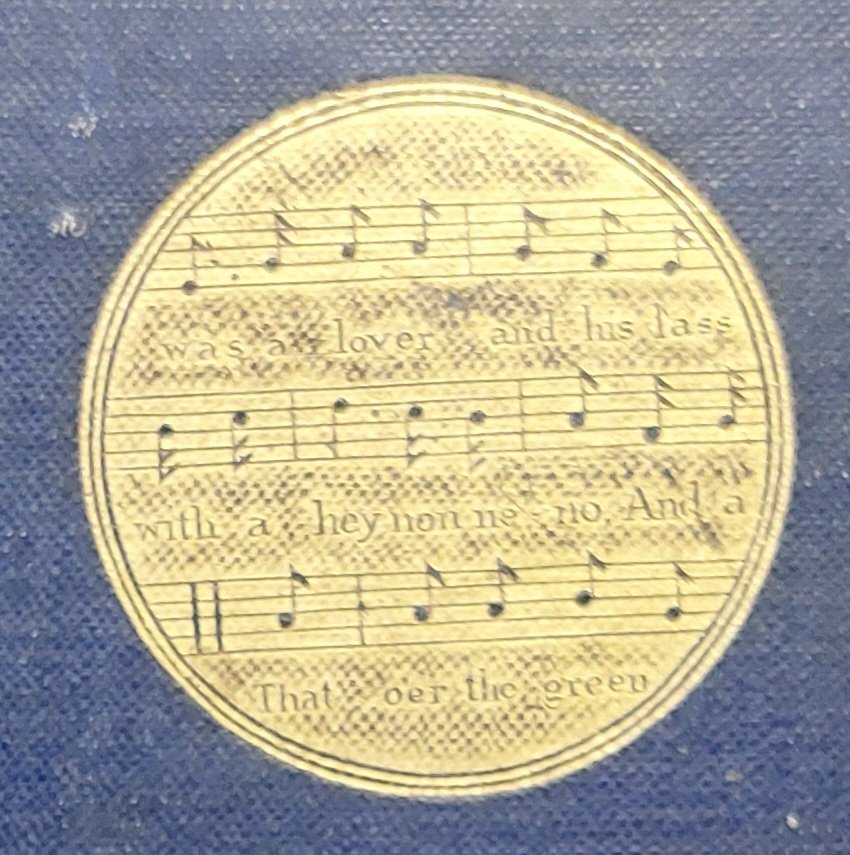
But I won’t spend my Saturday philosophizing. I just want to share my latest gorgeous ‘treat to self’, and a couple I bought earlier…

The above children’s book is a sequel! Yes, of course I have just bought a copy of the first book. Watch this space!

Lovely covers, and in Tonic Sol-Fa for easy reading!

Aspiring to be a ‘Jolly Good Fellow’

Week 2. My second visit to St Andrews this autumn literally flew by. I borrowed AND returned a book from the library; continued my literature search; finished reading a fascinating series of letters in a journal; had myself a library induction (setting a good example, since I’m always urging newcomers to attend their library induction!); and met some members of the Institute of Scottish Historical Research for lunch.

If in doubt, ask!

This last was the challenging bit. How do you identify a historian? They don’t have obvious ‘tools of the trade’ like musicians or artists. I hovered outside the hostelry, peeped in and couldn’t decide who was a historian, and finally solved the problem by asking at the bar! The bartender seemed to find this an entirely reasonable question, thankfully.

Image by 1195798 from Pixabay

Guys, Guys! Stop Squabbling! (A Musical Debate)

Old school classroom

The year is 1943, and the music teachers are debating.

An editorial in a music journal was followed by a heated discussion. It was all about the best way to get kids reading music – and believe me, they didn’t unanimously approve of the new, fashionable trends! One enlightened individual asked whether anyone had asked the kids what they thought. The editor remarked that we didn’t ask what they thought about learning maths, so why ask them about learning music? There was even some gloomy muttering about Beveridge and the welfare state …

On the whole, it was a gentlemanly conversation – and I can use that word, because the correspondents were, by and large, men. Not entirely – there was a lengthy contribution from a woman teacher training instructor, too.

After publishing a selection of responses over the three months following his editorial article, the editor attempted to sum up the arguments in the following three issues. He named and shamed those he disapproved of, stating quite openly, that someone’s opinion was frankly a load of nonsense! (I’m summarising – these are my words, and not the journal editor’s.)

The second, summarising editorial was supposed to be the end of his [lengthy] summary. But it took yet another editorial before he finally did finish it!

In actual fact, they almost all agreed that things weren’t as good as they had been, forty years earlier; precisely when the rot set in, was open to debate. Moreover, everyone blamed it on the politicians and inadequate time allocations.

Plus ca change …?

My New Favourite Journal

Victorian classroom, children seated around piano.

Pursuing one particular aspect of my recent research that fascinated me, I’ve turned up a number of useful references that I now need to sift through. I’ll still be working on this task in St Andrews this week.

History AND Music AND Education AND Scottish

The literature search has certainly had its challenges. Searching on History AND Music AND Education AND Scottish, just won’t cut it in this situation!

In one chapter of the book I’ve just finished writing, I’ve written about Scottish music publishers and some of the materials they produced for Scottish music education. Now, I need to move on beyond my book: I want to know how much their resources were used or disseminated beyond Scotland, and I want to catch the pedagogues talking about them! The tricky part of this search is in ensuring I get a historical perspective – I’m not looking at how the history of music is taught today, but a particular aspect of the history of teaching music.

One journal in particular wasn’t an obvious resource when my main focus was on Scottish music publishers. However, now I’m thinking even more deeply about their educational materials, I’ve just found a journal that looks distinctly promising:-

And I’m also going to be combing some resources on English music education, in the hope that some Scottish resources or pedagogues get at least a passing mention. If they’ve been mentioned, then I don’t need to reinvent the wheel. If not, then I have a blank canvas, and that in itself is exciting.

Celebrating Milestones

I’m sure I’m not alone in wanting to buy myself something to mark a significant milestone – admit it, you do it too! Getting my second book submitted on time was certainly an important occasion for me. So, too, was commencing my Fellowship at St Andrews.

My gaze strayed to my eBay ‘Watch List’! I had ‘liked’ a lot of items. Some of them might, arguably, have been even more useful a month or two earlier, but I went through that list carefully. It was all printed matter, whether music or ephemera. I made a couple of offers (one has been accepted already!), then checked I couldn’t easily access the most desirable of the other publications some other way. That still left a handful of items I could definitely justify getting!

They will all be useful in the research I am now embarking upon – an extension of one particular aspect that enthralled me in my book project.

But one particular songbook – which I resolutely did not buy during the book-writing – sneakily snuck into my shopping basket! I had been telling it all along that it couldn’t be included, since it wasn’t published by a Scottish publisher. But although my specialism is Scottish music, there’s nothing to stop me buying something published by a contemporary English firm. And it is very pretty, as well as not being expensive! I’ll show you when it arrives.

Indeed, there are several English-published titles by ‘my’ Scottish educationalists that I now need to examine alongside the things they published in Scotland! But there’s a difference between treating myself and going overboard, so I deferred looking for those until another time. There will be library copies of quite a few of them.

Now, how do I explain the postie paying us more frequent visits for the next week or so?!

Image by Petra Reuter from Pixabay

Great Expectations (not invariably fulfilled!)

It has been an interesting week in the library.

At the start of the week, I had a query from a colleague. I pointed out some possible books, and then shared the query on a couple of mailing lists. The next three days saw an absolute deluge of emailed replies.

I went to St Andrews, did my research (mine, nothing to do with the query), came back and found some more responses. I have never had so many replies. Well, it was an intriguing query, to be sure. The scholarly community proved itself amazingly generous, suggesting people to contact and resources to consider. I passed them on gratefully!

Today, at the end of the week, came a completely different query, which should have played to my own specialisms. Could I find anything? I’m afraid not! It would have been nice to have pointed to useful resources, but there was really nothing to point to. It seemed ironic that I was asked because of my expertise, but this time the well was dry!

Worse still, I didn’t want to risk being quoted speculating, when I had nothing to offer. It wouldn’t do my reputation any good at all!

I replied thoughtfully, but carefully. I do hope it won’t be disappointing!

I suppose you win some, you lose some …

A Fellow’s First Steps

I like to think I made an exemplary start!

I’ve activated my email and library account. I’ve made contact with the library, and I’ve called up a book to be fetched for next week. I’ve also started a literature search for the topic I’m hoping to explore. Half of me considers it unlikely that the general topic hasn’t been covered, and the other half thinks it’s highly unlikely that my specific niche has been written about! If I can research and write an article during this Fellowship, I’ll have a significant output that will have drawn on St Andrews’ admirable library resources.

And of course, I don’t yet know what/how much will need revising in my book! That could be another major task for this autumn.

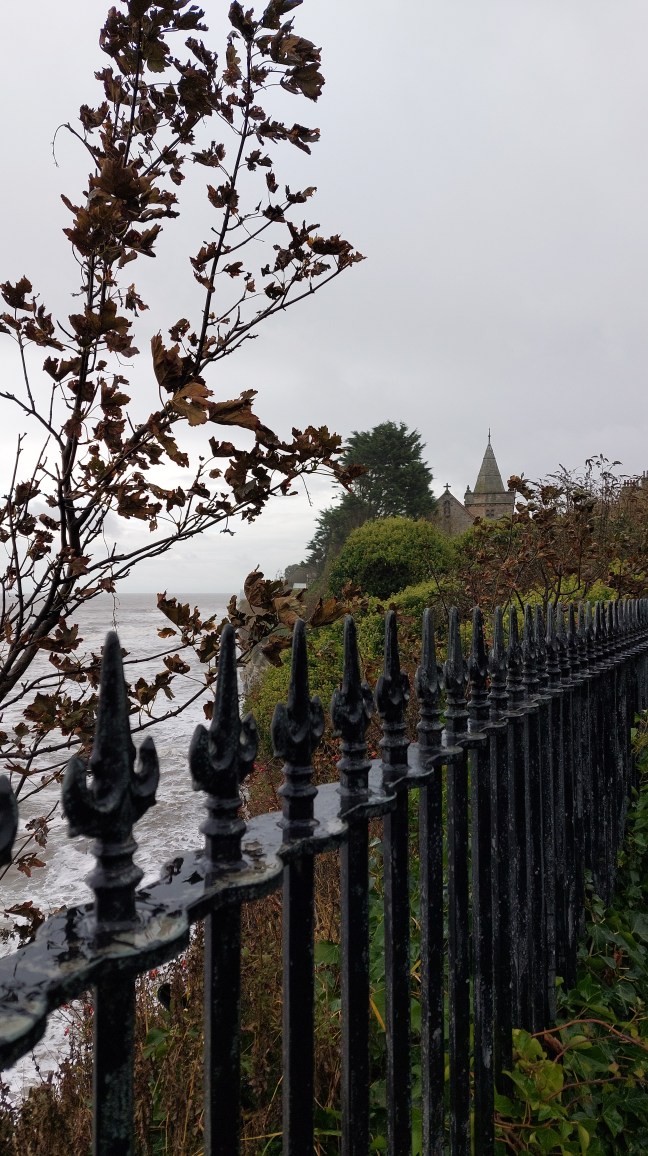
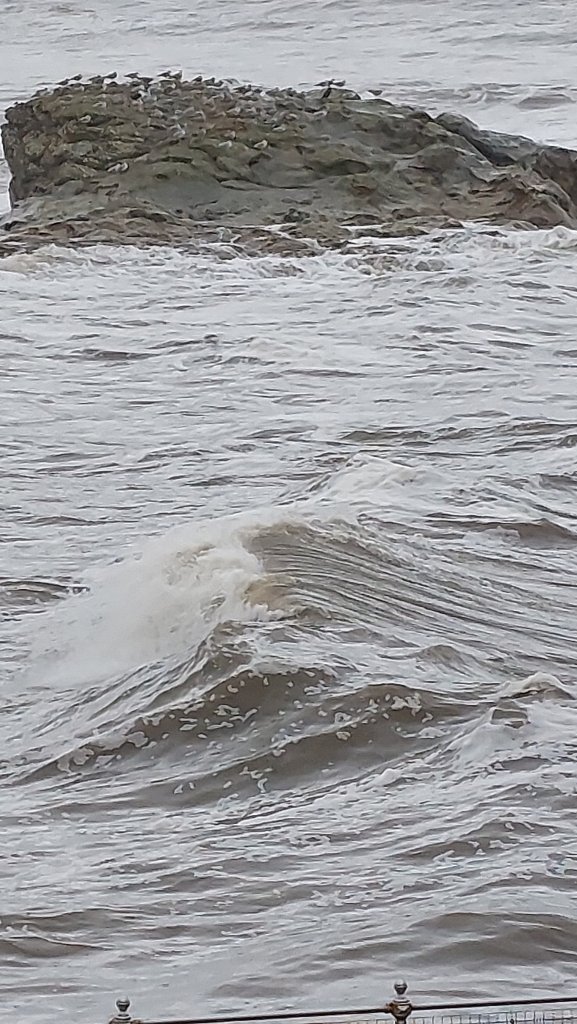
So far, so good. I have also achieved another personal goal. I wanted to see the sea at lunchtime. I did that, too!

Lunchtime Wandering
En route from the Castle
Outdoor Coffee Break
A rare sight! (New email account)

Room with a View

They say a picture speaks a thousand words. Well, in that case, here’s a full-length article! I’ve had a great first day as inaugural Ketelbey Fellow in Late Modern History, in the University of St Andrews’ School of History: sociable, welcoming and productive. I’m looking forward to tomorrow. For now, I need to sleep, so I’ll spare you a detailed account of ‘What Karen Did’, and ‘What Karen did Next’!

(Find out more about the Fellowship here, posted when I got news of it earlier this year.)

The Room, the View … and beyond the Trees, the Sea!
Walking from St Andrews University Library to St Katherine’s Lodge
Walking towards St Katherine’s Lodge

Articulating Your Research

I’m currently reading a new book in the Routledge Insider Guides to Success in Academia series:

Be Visible or Vanish: Engage, Influence and Ensure your Research has Impact (Routledge, 2023)

The authors are Inger Mewburn and Simon Clews; since I’ve followed Inger’s work for a number of years, I knew it would be good, and I got it for RCS Library recently.

It’s an approachable guide, and the kind of book you can tuck into a bag or pocket to read at free moments during the day. This morning as I drank my pre-work latte, I was reading the chapter on making academic small-talk, and being ready with an answer to the inevitable question:-

So, what is your research about?

(A reasonable question in any situation!)

It particularly resonated for me this morning, because I take up my honorary Ketelbey Fellowship at St Andrews tomorrow. Not only that, but a family member had been asking me the same question last night! What are you studying there? Why there? How are you going to benefit from the experience? It wasn’t intended as preparation for the sort of questions I should be anticipating, but I nonetheless took it as a prompt to think carefully about how I shall be introducing myself when I meet new colleagues!

I’ve also heard this described as an ‘elevator pitch’ – though in my case, I would need the elevator to travel more than one floor! As I’ve said before, the title of my recently-submitted book doesn’t exactly trip off the tongue. However, it outlines what my research has been about in recent years so I have to be able to trot it out.

  • A social history (yes, that describes it well)
  • of amateur music-making (make no mistake, that’s what we’re talking about – it’s not generally about serious, cutting-edge classical music)
  • and Scottish national identity (this is such a big deal, that it’s inextricably interwoven throughout the whole book)
  • [And then there’s the subtitle!] : Scotland’s printed music, 1880-1951 (I’ve been looking at the output of Scottish publishers during this era, which proved much more interesting than even I had ever imagined. When I got to 1951, I got to fever-pitch excitement. You’ll have to wait for the book to find out why!)

But, back to the questions of last night. I’ll be revising the book when it returns from the reviewer(s). I’ll also be investigating a particular aspect of my research that still merits even deeper investigation. I’ll be exploring a bigger, richer library collection than I usually have access to, and I look forward to engaging with a lot of different research scholars, hopefully gaining fresh ideas and maybe ideas for new directions or collaborations.

Most of all, I’ll be settling into my academic role – yes, I know, I’m a seconded researcher back in my home institution, but it’s new for me to be a Fellow for a few months – and I’ll be thinking about my future ‘second career’ as a researcher once I retire from music librarianship next summer.

Now, where was I with Be Visible or Vanish …?