Dr Karen McAulay explores the history of Scottish music collecting, publishing and national identity from the 18th to 20th centuries. Research Fellow at Royal Conservatoire of Scotland, author of two Routledge monographs.
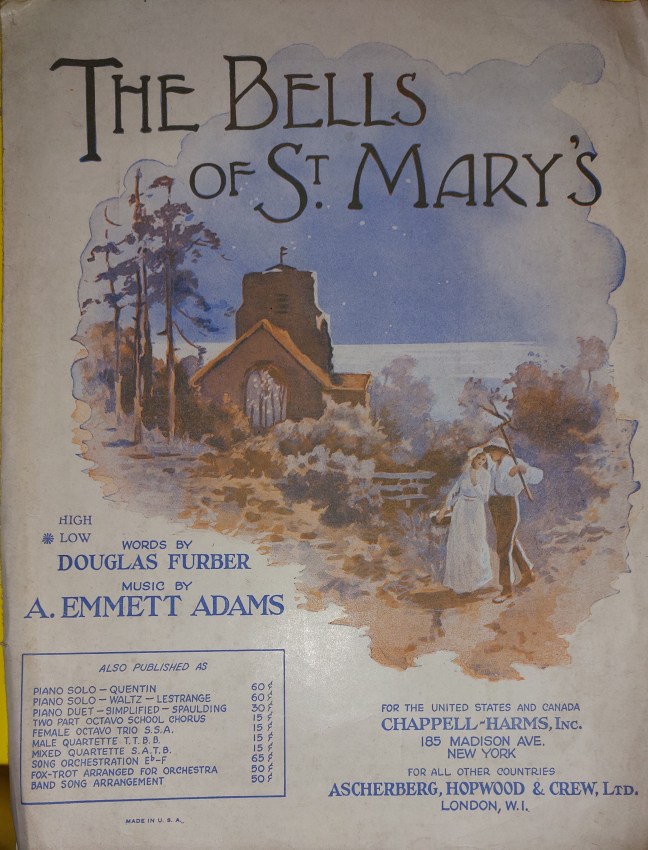
Saturday frivolity, not research. But it does give a bit of insight into the fin-de-siecle publishing trade.
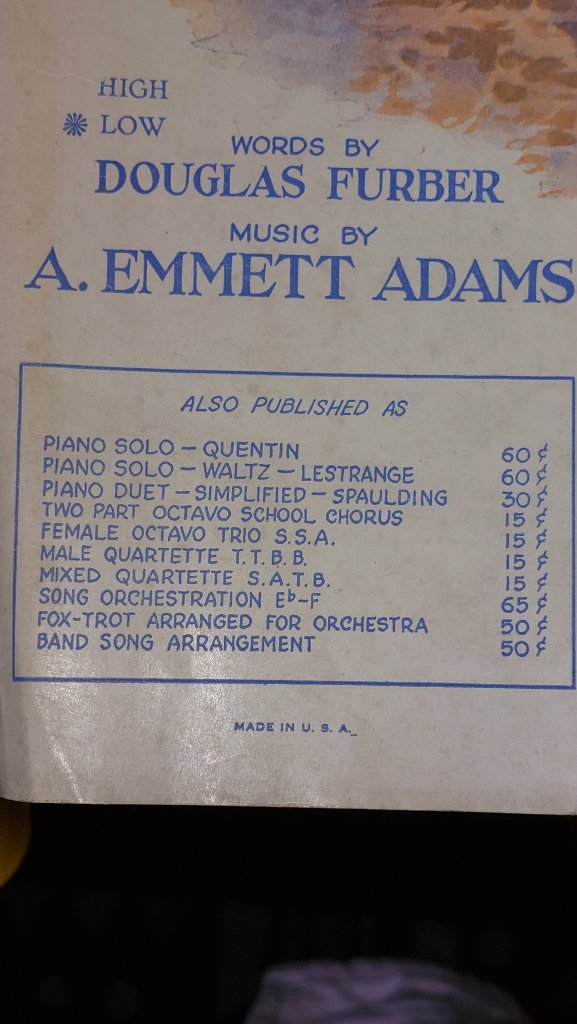
This came in a donation; we have the low voice version, but it was also available for high voice – that’s perfectly normal. Inside, there’s ukulele tab as well as the piano accompaniment, and instruction as to which notes you should tune the strings to. The publisher clearly thought he was onto a winner, and issued it in as many formats as he could think of. Just look! Oh, and he published it both sides of the Atlantic, for maximum exposure.
Just a trivial song, but it must have been a hit – in my family there are still memories of it being sung!
This week in Fellowship research, I continued looking at late Victorian sources. I identified a cataloguing glitch – as a librarian/researcher, I’m consistently and annoyingly good at this – and borrowed another armload of library books. But did I make any outstanding discoveries? Not really.
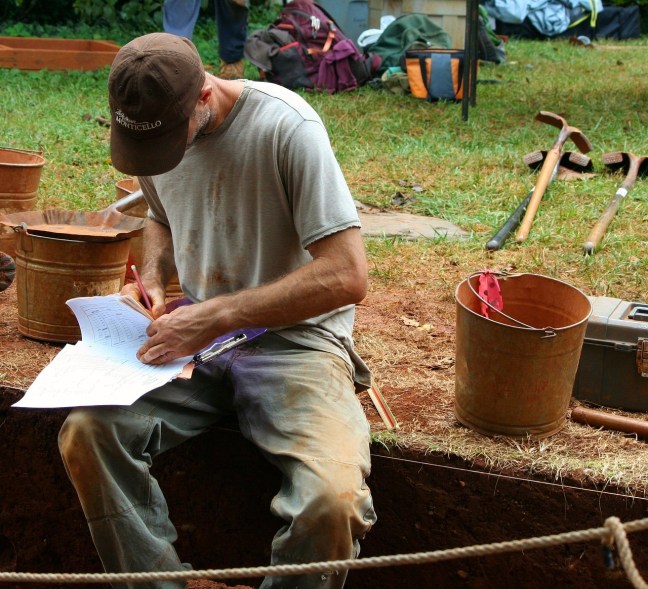
It’s probably a bit like being an archaeologist – you have to sift through a lot of ‘stuff’ to find a precious relic, and sometimes there is nothing to find. But you keep on sifting! Actually, I think I have it better than an archaeologist, because I know I’m looking at the right kind of material, and the more I examine, the more chances of seeing patterns.
In any case, it would be inaccurate to say I discovered nothing. Looking at more publications by one individual enabled me to confirm how enlightened his approach was, compared to another author. This is the latter one:-
Those poor mid-Victorian kids! Can you imagine working-class children in industrial Glasgow enjoying something like this?!
It also gave me another idea which I need to pursue, both in my historical research and in thinking about library acquisitions ‘at home’.
And additionally, researching in St Andrews gives me access to mainstream materials that we just don’t have in our specialist Conservatoire library. That’s invaluable!
But back to my original heading:-
When you think you’re getting nowhere, but you know you’re on the right track – keep going.
If you’re detecting patterns – keep looking.
If you have the tiniest idea about a new research question, write it down.
Did anyone ever make a breakthrough discovery in less than a month of looking? Probably. Maybe they were a genius, or maybe they were lucky with what they found. Maybe they knew exactly where to look. But there’s a lot to recommend the hard slog, too. After all, it would be tragic to be so close to a result, and not to achieve it. And I should know. I’ve mentioned before that I didn’t finish my first doctoral studies. This definitely proved to be a life lesson – I had realised how important it was to persevere, and how unsatisfactory it was to feel that you had left unfinished work and had nothing to show for it! My second thesis did get submitted – on time, to the day. So, more recently, did my second book. I like to think that persistence is one of my better characteristics!
If I haven’t been rapturously blogging from St Andrews this week, it’s because I’ve been confined to the West of Scotland and the staff side of a library. My ring-fenced research time found a gap in the fence, and no research has been done. But I’ve conducted a lot of library tours! Discussed historically underrepresented composers, and ordered some more music by women composers (all enjoyable tasks). Weeded some books (rather more mundane). But it has felt like a very long week – the first time I’ve been in the library Monday to Friday, since 2012. Why now?, you might ask. A fair question!
On the plus side, I’ll recoup the missing time in October, and (better still) this situation won’t arise again, because next Autumn I shall have retired from librarianship.
But NOT from research, certainly not. I truly can’t wait to settle into having just one professional role!
The publisher travelled extensively, actually dying off the coast of South Africa on his final trip. Whether all these trips were for business or pleasure (or both), we’ll never know!
Image by Bob, Pixabay
The library received our second-hand copy of a music book today. It came from the USA, having first been sold in Johannesburg. There is something magical about a book, itself aimed at the Scottish diaspora, having been published in Glasgow and then spending time in TWO of the continents visited by its publisher, before returning to Glasgow today.
I know that, technically, it makes no difference to the contents. Of course it doesn’t. But I’d be lying if I didn’t say I’m over the moon with this particular book’s life-history!
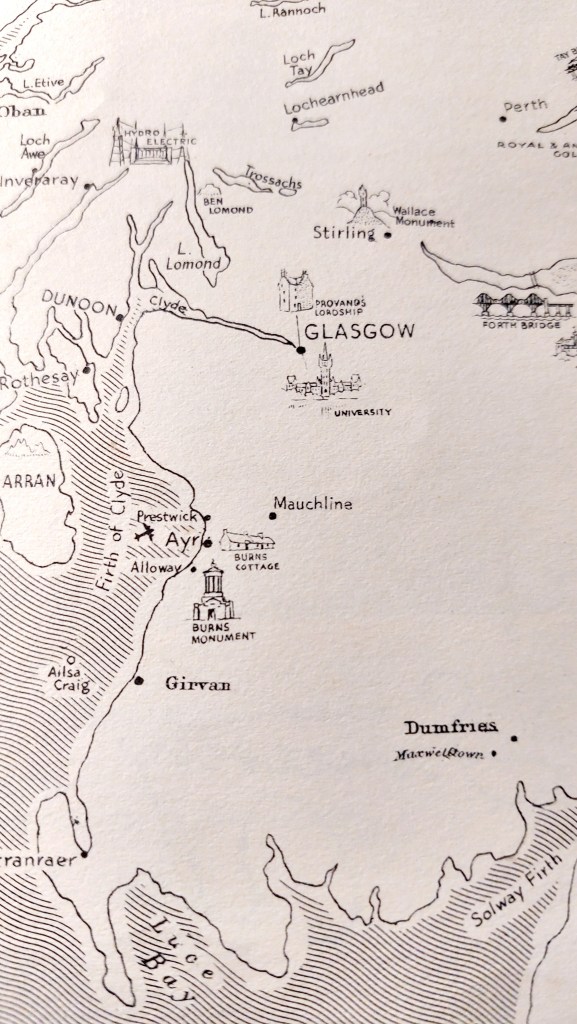
I have contributed a chapter to a forthcoming collection on Print and Tourism, which is being published by Peter Lang. The completed manuscript will soon be going to the publishers, which is very exciting. You might ask what a musicologist was doing, writing about print and tourism? Well, it won’t be long before all is revealed.
I had enormous fun writing this chapter, and I think folk will enjoy reading it. It’s different. Well, that’s hardly surprising, given the subject matter, but I’ve placed it in a wider cultural context than my usual more musicological offerings, and I’m really looking forward to seeing it in print.
A Question for You: What’s significant?
The topic arose from a book I acquired during lockdown. Ironically, it was only a couple of weeks ago that it dawned on me that not only would we need to buy the essay collection for RCS’s library, but we’d also need a copy of the book which inspired it! I can’t think why that didn’t occur to me sooner, but it is on order and on its way, so I’ll be cataloguing it very soon. We’ll have it well before the essay collection is finally published!
So, your challenge is this: Can you work out what is significant about this map?!
I would never, ever have dreamed, when I went to Exeter to start my first, unfinished doctoral studies on mediaeval English plainsong and polyphony, that I would end up completing a different PhD thirty years on, and writing and being published on such a very different topic!
The mystery teacher – photo from British Newspaper Archive
There are times when our insatiable curiosity leads us ‘up the garden path’, aren’t there? For me, it’s when I decide to pursue the life history of characters that really aren’t central to what I’m researching.
Take this weekend: I’m currently researching the pedagogical output of a Victorian Edinburgh music teacher, and I discovered his daughter collaborated on some of his publications. (This is confirmed by a letter that her sister wrote to a music journal later.) The collaborations appear to have been before she married.
I found a newspaper article about a story she had written for a women’s magazine called The People’s Friend in 1906, and this gave me her married name, but also informed me that she was working as a head teacher in a village quite a way from Edinburgh. It was definitely her – it named her father and his achievements.
Oh, my goodness. I wrote a number of stories for that magazine myself, some decades ago, so that made me sit up and look, straight away!
More interestingly, though – for a married woman still to be working, was a red flag in itself, because it was usual for a woman to stop working when she married. I traced her marriage certificate on Scotland’s People, and only noticed at the last minute that there was an amendment attached. She divorced her husband – whereabouts unknown – in 1912. Perhaps she had found it expedient to continue working, notwithstanding having a young child, if there had already been marital discord for a while. But who knows?!
I found the mother, a nine-year old son and a servant living back in Edinburgh in 1911. The census described her just as a teacher – no mention of headship here.
Really, my only interest at this point – whether or not she continued to collaborate with her father after she married – was my curiosity about a woman working as a teacher after marriage. Not long ago, I researched a late Victorian woman called Clarinda Webster, who was a music teacher, head teacher and ultimately a divorcee, so there was a human interest in finding someone else whose circumstances might have been vaguely similar …
After a few hours delving into Ancestry, Scotland’s People and the British Newspaper Archive, I made myself stop. I don’t know where this woman and her son ended up. Maybe they left Scotland or emigrated, who knows? At the end of the day, it doesn’t make any difference to my research into pedagogical music publications in the late Victorian and Edwardian eras.
On the other hand, stories of working women professionals in that era continue to interest me, whether musicians, teachers or both. It wouldn’t take much to convince me to keep looking…
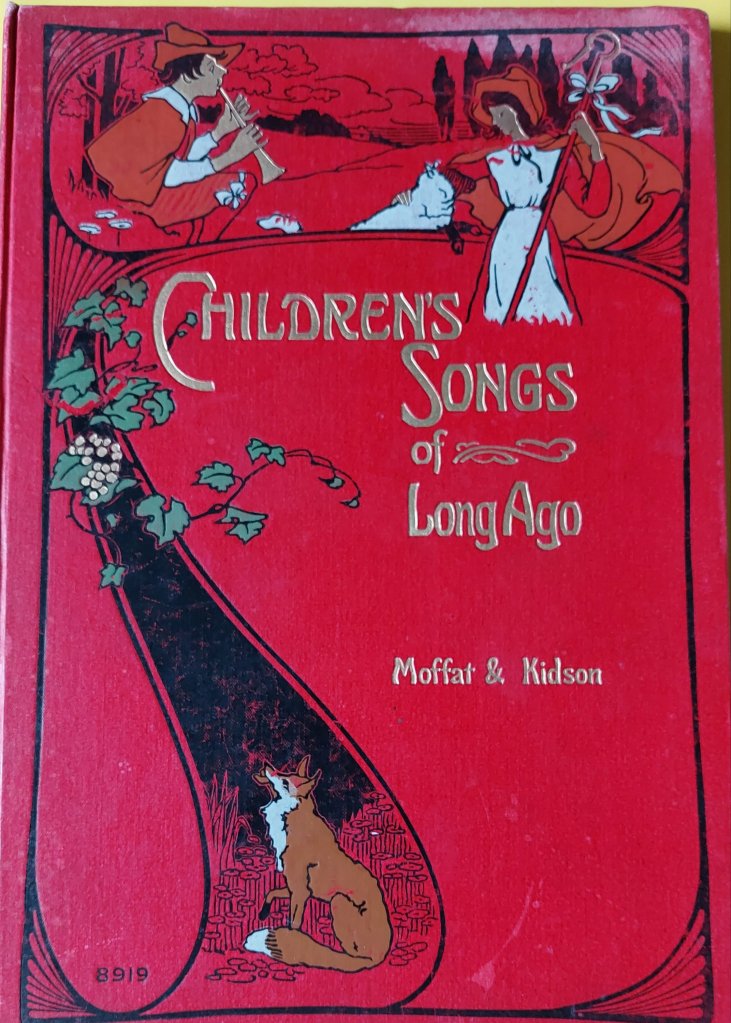
You’ll remember that I recently treated myself to an Edwardian book of children’s songs published by Augener, partly because I’m interested in the compilers, but mostly for the delightful cover? I subsequently discovered it was the sequel to an earlier book, BritishNursery Rhymes. Well, I couldn’t have the second without the first, could I?
The sequel: Children’s Songs of Long Ago
Luckily, my interests are generally quite inexpensive! I will take them to the piano at some point – and look more closely at the contents, from the point of view of repertoire.
D’you know, just about every bit of research I’ve done has involved examining repertoire. Starting with 13th century Gregorian chant – not many people know I was initially a mediaevalist! I’ve come a long way.
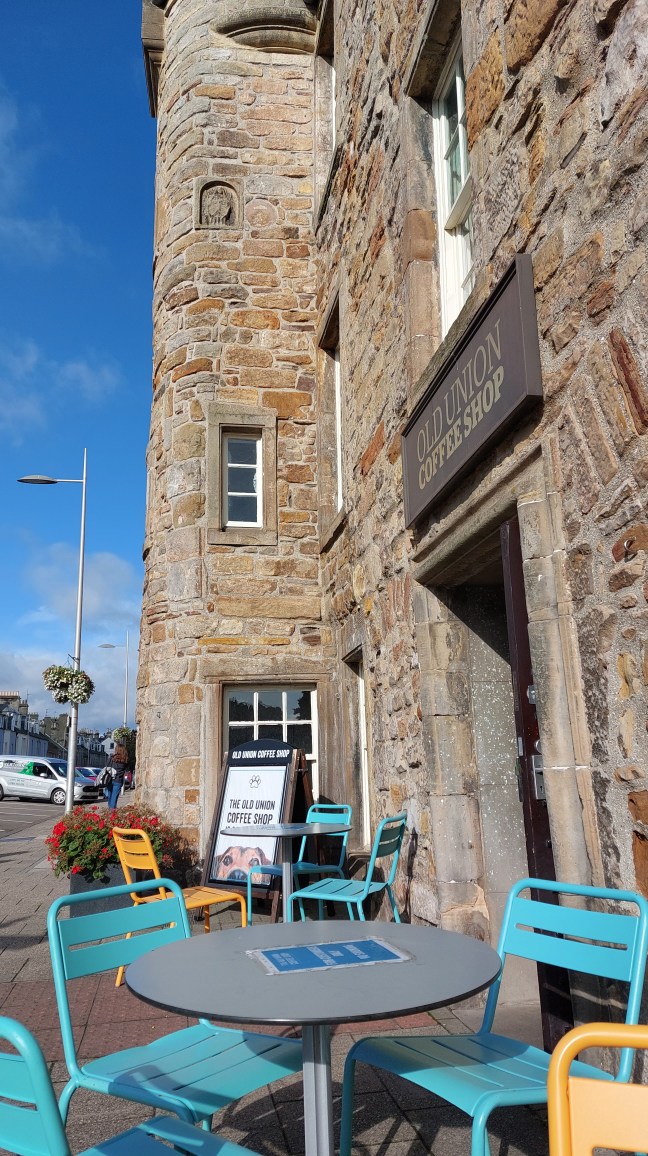
This is the third week of my Ketelbey Fellowship, and I arrived at St Andrews in pouring rain yesterday morning. Fortunately, it had subsided to a drizzle by the time I made my way to Martyrs Kirk, where materials from the Library special collections can be consulted. I didn’t get wet enough to risk dripping onto rare Victorian pamphlets! (I only know they were Victorian by the fact that the earlier numbers included God Save the Queen rather than the King – so they were published before January 1901.)
I had a ball! They each began with an editorial introduction – I love these. They’re so informative about the thinking behind whatever is in the book. Intriguingly, the editor seemed not to be the prime contributor, but all was revealed when I did some Googling later. Good old Baptie (Musical Scotland) informed me that the editor had two middle names, and used them as a nom de plume. No mystery after all! Moreover, one particular collaborator, more involved than most, was …
His daughter.
I didn’t quite get through the pile I’d called up, but I’m making good progress. And I encountered some interesting glimpses into social and political history. What’s more, if ever I needed proof that little girls’ education had a subtle difference to that of little boys, I found it today. It shouldn’t come as a surprise – I know it happened. But I wasn’t expecting to find this in a Sol-Fa song book!
It is such a luxury to have a desk in an office just a couple of minutes from a big university library. This morning, I snatched a quick coffee before I went back for another session with more of these instruction books. What’s more, I feel more a dedicated researcher here, compared to being ‘the librarian that also does research’ in Glasgow. It’s easier to focus, somehow. And tonight, I’m going to a research seminar, so I’ll get to meet some more historians then. Good times.
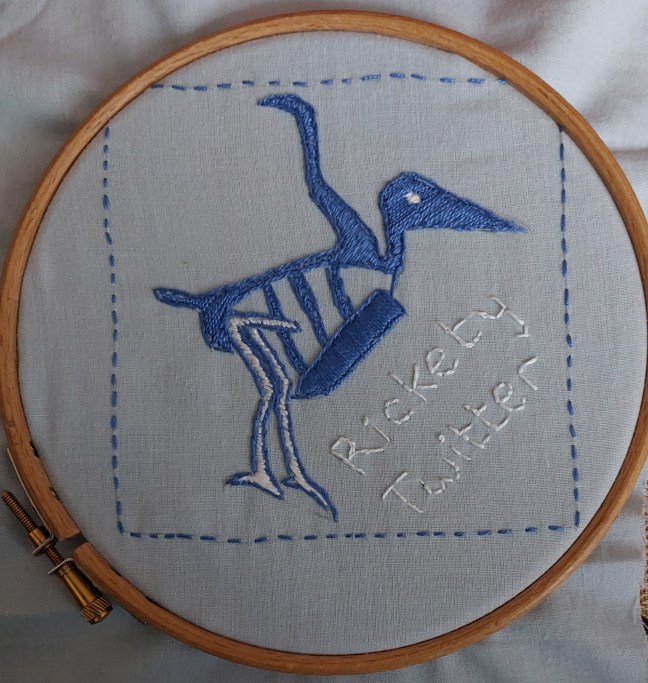
What’s all this about? Everyone perhaps having to pay to be on Twitter? No, Sir! I’m not actively leaving just yet, but if failure to pay results in accounts disappearing, then I’m afraid I will disappear from Twitter.
I’m on Threads: KarenMcAMusic.threads.net – maybe I should be asking my Twitter followers to follow me there?
And of course, I’m here on my blog.
I know – a blog is not the same as the casual, friendly conversations we used to have on Twitter. It’ll be interesting to see what we’re all doing in a year’s time!











 Karen McAulay, Musicologist