Dr Karen McAulay explores the history of Scottish music collecting, publishing and national identity from the 18th to 20th centuries. Research Fellow at Royal Conservatoire of Scotland, author of two Routledge monographs.
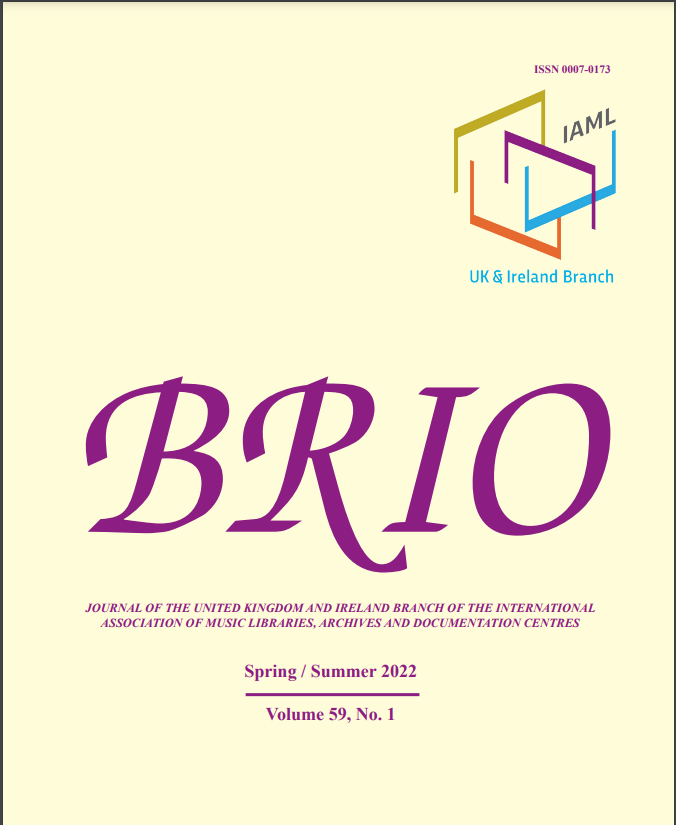
My latest article is on the IAML(UK & Ireland) website, in the members’ area, but paper copies will land on subscribers’ doormats and music library shelves this week! It’s about a strong and determined Victorian music teacher, who survived domestic abuse and made a remarkable career for herself – and I reveal her survey of music in Victorian public libraries, that I discovered literally by digging around online. (I’m rather pleased with this one – and it’s illustrated!)
Here are the details and the abstract:-
McAulay, Karen E., ‘An Extensive Musical Library’: Mrs Clarinda Webster, LRAM, in Brio Vol.59 no.1, 29-42
Although there has been the perception that middling-class women’s lives were confined to domestic circles, there are plenty of examples that directly challenge this idea. The late Victorian Clarinda Augusta Webster ran a music school and a school for young ladies. She escaped domestic violence, overcame personal tragedy, and created a highly successful career first in Aberdeen and then in London. She published, gave talks, was active in professional circles, and travelled both to Europe and America. She also conducted a ground-breaking survey on music library provision in late nineteenth century Britain, delivering her findings to the Library Association. Although her report has not been traced in its entirety, many of its findings were reported in newspapers, enabling us to piece together the results of her investigations. This article celebrates the sheer determination of a talented woman to make the most of her skills and create opportunities for advancement. It also demonstrates the perceived importance of music in wider late Victorian life.
It should be possible to read this Brio article in a music library somewhere near you, and it will also eventually appear on the RCS research repository (Pure). But if you can’t get sight of a copy, please feel free to message me and I’ll share the proofs.
When I’m sent an e-badge by my professional organisation, it would be churlish not to use it, wouldn’t it? But I wasn’t quite sure where to put it, so I’ll leave it here for now. I’m a Chartered Fellow of the Chartered Institute of Library and Information Professionals; a music librarian; and a musicologist.
Last night I gave a lightening talk as one of eight speakers at the latest HoPIN webinar. It’s the History of the Printed Image Network, so my Scottish music collections were slightly off the beaten track, but you know me – my mission is to ensure that anyone picking up an old Scottish music volume knows exactly what they’re getting into! And it was certainly interesting to hear about other people’s research into different aspects of printing.
This link summarises the scope of topics, even if the event is past! HoPIN Webinar 11 (hosted by the University of Wolverhampton).
The next HoPIN webinars are on 15 September and 17 November.
This is the second part of the talk that I gave at yesterday’s conference, ‘Towards a Scottish Traditional Music Archive’ (Saturday 11 June 2022). The first part of my talk was about Dundee’s Wighton Collection, but in the second part I address the question of the broader printed music legacy when it comes to Scottish traditional music resources held in Scottish libraries.
Documentation
Lecture Theatre, Scottish Storytelling Centre
The Wighton Collection is a priceless resource, but it’s only fair to point out that it is complemented by other facilities containing some of the same titles, since Andrew Wighton was not the only Victorian or Edwardian collector of this particular repertoire. If you take an overview of what is actually available in all these different collections, it’s a remarkably rich legacy.
A generation younger than Wighton, the Edinburgh bagpipe firm owner and music antiquarian John Glen lived from 1833-1904. When he died, his collection was bought by Lady Dorothea Stewart Murray – or Dorothea Ruggles-Brise, to use her married name – and it ultimately ended up in the National Library of Scotland. Dorothea was born the year Wighton died, so she was a younger generation again. She, too, collected Scottish music, gifting her own collection to Perth, where the A K Bell Library holds it as the Atholl Collection.
NLS DIGITAL GALLERY
Glen’s collection – and that of Alexander Inglis of Glencorse – has been digitised and forms part of the National Library of Scotland’s Digital Gallery.
Meanwhile, the Perth collection was catalogued by Dr Sheila M. Douglas, in a book published in 1999:-
The Atholl Collection Catalogue: 300 Years of Scottish Music and Poetry, compiled by Dr Sheila M. Douglas (Perth & Kinross Libraries, 1999. ISBN 0 905 42 28 5 (Now out of print but pdf version in preparation.)
The University Libraries also hold a considerable number of Scottish music publications. Glasgow, Edinburgh, Aberdeen and St Andrews all have admirable collections. They were each legal deposit libraries until the early nineteenth century, which means they were entitled to one copy of every British book published, although history has revealed that they adopted different approaches to the music that could have come their way. Moreover, some music was never properly recorded at Stationers’ Hall in London.
The Royal Conservatoire of Scotland has a few historical published titles in the Library, but nowhere near as many as the universities can boast, particularly in terms of really old, pre-nineteenth century materials. Our strengths are more in the more recent publications which our students use as performance resources.
And of course, all universities have archival resources, by which I mean unique, manuscript or at least, non-published materials. The structural management of a university archive may be alongside but not necessarily part of the library. The Royal Conservatoire of Scotland has an archive which is part of the Information Services Department; it’s off-site and does not share the same catalogue. (Bear in mind that the Athenaeum was only established near the end of the nineteenth century, and to this day, RCS is nowhere near the size of a university.)
LINKS
Speaking as a librarian, I can say that the key to making use of the legacy that Scotland has, is in knowing how to access it.
For published resources, in the university and national library sphere, there is Jisc Library Hub Discover, which explores all their catalogues at once. Individual universities will have pages via their own catalogue leading to other finding aids for manuscripts and other rare materials. There’s also, of course, the Jisc Archives Hub, which facilitates exploring all British university archives.
Another useful resource to know about is Cecilia-uk.org, which was compiled by the UK & Ireland branch of IAML – the International Association of Music Libraries. This offers pointers as to where different music materials can be sourced.
And of course, there’s WorldCat. This extraordinary resource facilitates searching 10,000 libraries worldwide – some British university and public libraries are listed here. But what you find – whether in Jisc Library Hub Discover, or WorldCat – depends on what has been catalogued in an automated system. When libraries opt to collaborate with these online union catalogues, it is dependent on their automated catalogue records being up to particular library cataloguing codes and standards, because different library catalogues can’t be interrogated simultaneously unless all the information is coded consistently. Whilst I must admit I don’t know whether Dundee’s library catalogue is linked to WorldCat, the holdings of the Wighton Collection certainly won’t be, because they’re not catalogued into the City of Dundee’s online library catalogue in the first place.
I realise that I strayed away somewhat from my remit of talking about the Wighton Collection, but I think it’s important to be aware of both the Scottish music resources themselves, and their documentation.
To quote the old song, “You can’t have one without the other.”
Yesterday (11 June 2022), I travelled through to Edinburgh to a conference at the Scottish Storytelling Centre. The topic was, ‘Towards a Scottish Traditional Music Archive’. I was there in my capacity as Honorary Librarian of the Friends of Wighton. Professionally, I combine two roles as a Performing Arts Librarian and as a Postdoctoral Researcher at the Royal Conservatoire of Scotland. It was unusual for me to be speaking at a conference with neither my Conservatoire librarian nor musicologist hat on.
Much of the discussion was about sound archives and digital preservation, but I was there to talk about the Wighton Collection, which is firmly rooted in physical materials, even if there are also microfilm copies and an online website. If even one person there confessed that they had ‘never heard of the Wighton Collection before’, then it made me wonder how many other people have similarly not heard of it. So, I thought I’d share my talk here on my blog, too. The talk essentially fell into two halves – the background, and some comments about finding aids in general for this kind of repertoire. Here goes for the first half!
PowerPoint title screen: The Wighton Collection, Dundee
I began by explaining that I’ve worked in libraries for nearly four decades, and I’m a Fellow of the Chartered Institute of Library and Information Professionals – so I have a strong librarianship background, as distinct from that of an archivist.
The Wighton Collection lives under the care of the Local History Library in Dundee’s Wellgate library. This is a public library on the top floor of the Wellgate shopping centre, and it’s the Central Library for the city of Dundee. Although I have an honorary role, I don’t have any paid connection with the city of Dundee. My honorary role is to take a professional interest in the Wighton Collection and its curation, and to help answer queries needing specialist input. In this respect, my doctoral and postdoctoral work on historical Scottish music certainly come in useful.
The Wighton Collection consists of about 700 music publications – some are bound together, so there aren’t as many as 700 bound volumes. They were left to the city by Andrew Wighton, a merchant, violin-restorer and music collector who died in 1866. Wighton had initially considered gifting his collection to the Society of Antiquaries of Scotland, but negotiations broke down concerning some of his preconditions.
Dundee adopted the Free Public Libraries Act shortly before Wighton died, and the council accepted Wighton’s bequest with a view to it forming one of the cornerstones of their new public library. I might add that there was some grumbling amongst the councillors as to whether it had been wise to accept so many music books before they even had anywhere to house it properly. The insistence in Wighton’s bequest that it should be stored in a fire-proof room must have been an extra burden.
However, one Dundee councillor made an observation which now seems laughable with hindsight, when he said it would cost three times as much to compile a catalogue as the volumes were actually worth.
Wighton’s collection has proven to be a jewel in the crown as far as the city library service is concerned – the books are almost beyond value, and certainly beyond the cost of cataloguing them. Wighton’s avowed aim was to collect a copy of every Scottish music publication that existed. In correspondence, one of his friends commented that he must have pretty much succeeded, and they were only half-joking. Wighton was an assiduous, and knowledgeable collector, visiting Edinburgh, London and even travelling abroad in pursuit of his hobby. I read in an 1894 newspaper article that, having no descendants to leave his money to, he was able to indulge his book-collecting passion all the more, though I hasten to add that Mrs Wighton was also left comfortably off!
The Wighton collection itself is a finite collection – self-contained in being the collection that he himself amassed. I won’t attempt to highlight particular volumes – suffice to say that about half of the collection consists of very rare eighteenth and nineteenth century Scottish music, but the remainder is equally rare English, Irish and Welsh material along with some ballad operas. As published material, the library is a natural home for it, but there are a few unique items that would be described as more archival – specifically, a few manuscripts that Wighton himself copied – such as his copy of the Blaikie viola da gamba manuscript, which itself is now lost – and a copy of Alexander Stuart’s 1726 publication, Musick for the Scots Songs in Allan Ramsay’s Tea-Table Miscellany. Other unique handwritten materials are textual rather than musical, and include his own annotated copy of Laing’s additional Illustrations of the Lyric Poetry and Music of Scotland (that’s the additional notes Laing contributed to William Stenhouse’s original Illustrations, the companion volume to Johnson’s earlier Scots Musical Museum.) There is also correspondence (mostly incoming, obviously) between Wighton, his fellow book-collecting enthusiasts and specialists (David Laing, William Chappell, and Aberdonian music publisher James Davie), and some letters concerning Dundee municipal matters, in his capacity as a town councillor. This would definitely count as archival material, were it not for the fact that the Wighton material must perforce be kept together – and it has added value as an entire collection.
MILLAR’S ARTICLE, 1894
The Wighton Collection has always been known about by musicologists and scholars of traditional music. Very early on, the books were expertly bound, and have always been kept as a closed access collection, to be used within the library under supervision. As far back as January 1894, the Dundee Evening Telegraph reproduced a lengthy article by the City Librarian, Alexander Hastie Millar, FSA Scot (who lived from 1847-1927), which had originally been published in the Scottish Musical Monthly, highlighting the significance of the collection and its availability for visitors to study.
WILLSHER’S ARTICLE, 1948
1948 saw another profile-raising article by Dundee librarian Harry M. Willsher, ‘The Wighton Collection of National Music’, in the Review of the Activities of the Dundee Public Libraries, ii/July (1948), 12–13. And of course, the collection is mentioned in Oxford Music Online – the former, Grove Dictionary of Music.
More recently, we have seen the development of the Wighton Heritage Centre, along with other initiatives that have enhanced the usefulness and appeal to today’s musicians and scholars, and it’s to these that I turn now.
WIGHTONHERITAGE CENTRE, 2003
The Heritage Centre was master-minded by librarian David Kett. Filling in a space between the Local History Library and another part of the main library, it was opened in November 2003. It’s a beautiful space beside the Local History Library, designed for small, intimate performances such as the Cappuccino Concerts on Saturday mornings, mid-week lunchtime concerts, adult music classes and study purposes. Events have also been arranged to showcase particular volumes in the collection.
FRIENDS OF WIGHTON
All these activities are supported and promoted by the Friends of Wighton. In pride of place, of course, are the locked bookcases containing the treasured Wighton Collection. Whilst the volumes can be examined by bona fide scholars by arrangement with the Local History Library, the books were microfilmed in their entirety some years ago, to lessen the wear-and-tear on the original volumes.
SALLY GARDEN
To make the largest possible impact at the time of opening, a three-year residency – Historical Musician in Residence – was created from September 2003. This residency was held by Dr Sally Garden. Her remit was to oversee a programme of performances and events; to bring together amateurs and professionals; to research the collection; and to raise its profile as an educational resource and opportunity.
The contents of every volume were also indexed around this time – every song, every dance tune – and saved as a massive Excel spreadsheet which was then interrogated via the Library website as the Wighton Database. It’s a vastly useful resource, and one for which I have had many opportunities to be grateful.
However, at some stage, the local authority stopped hosting the database. Undeterred, a search facility was devised by a committee member of the Friends of Wighton, so that the spreadsheet could still be explored.
This was subsequently – in 2018 – superseded by links to four lists:- the complete, 451 page catalogue; the list of imprints (a list by publisher); a title index, and a short-title list. The information is still there, albeit not searchable in quite the same way as the original facility had intended. The links are all accessible via the Friends of Wighton website. A link from the local authority library website leads to the Friends’ page, so if you know where to look, the material is still very much accessible:-
In recent years, the Wighton Collection has been augmented by a few donations, the most significant of which are the Jimmy Shand Collection, and a handsome donation of scores by Stuart Eydmann. Lottery fund money enabled the Friends to buy at auction, a collection of historical scores that had belonged to the late Jimmy Shand. These have been professionally restored and re-bound by a conservation expert, and they’ve also been digitised and uploaded to IMSLP, with links from the Friends’ website and indices to the contents. A few years later, Jimmy Shand junior gave some further scores to the Friends, which I assume the auctioneers had considered of less value. In one sense, they would have observed that only a few of these were of any great age, but at the same time, this secondary collection represents the working collection of a famous musician with local connections, and they are also of an era which has too often been overlooked as neither “ancient” nor “modern”. Without them, a chunk of popular Scottish music history would be missing. In just a few decades, even the music published between 1900 and 1960 will be more than a hundred years old, and of potential interest in ways we can only imagine now.* I’ve made a listing of all the volumes, and some have been bound – it will not be financially feasible for every item to be bound. The pandemic has meant I haven’t yet discussed with the Friends how best to handle the unbound material, or arranged for the listing to be uploaded to the Friends’ website. Similarly, Stuart Eydmann’s donation has been listed, but not uploaded. As life returns to the ‘new normal’, these tasks once again become a priority.
The talk was all about Wighton, not all about me, so I didn’t mention the fact that I’ve just signed a contract to write a book about Scottish music publishing between 1880 and 1950 – but it does mean that I can certainly see the historical value of the secondary Shand collection!
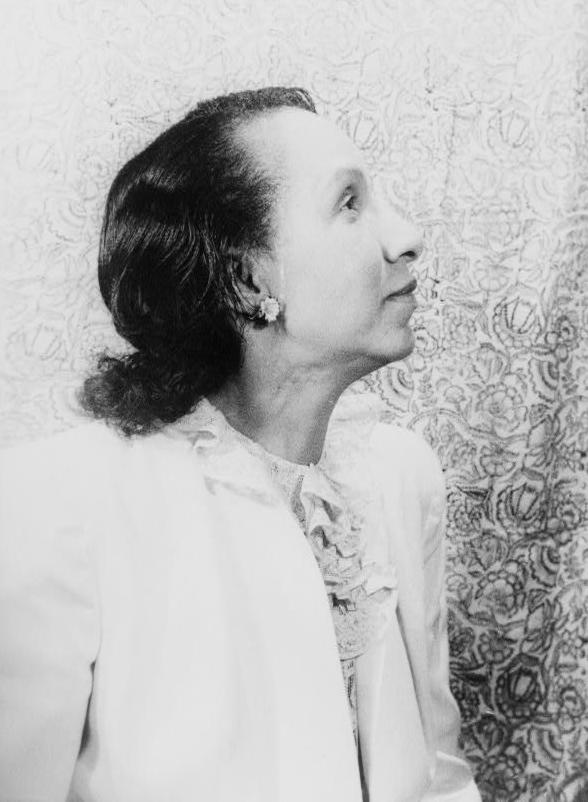
I was reading about Blackface Minstrelsy this morning, and reading about Mr Du Bois brought to mind his less famous but equally talented wife, Shirley. I owed the library blog a blogpost, so I put these various strands together …
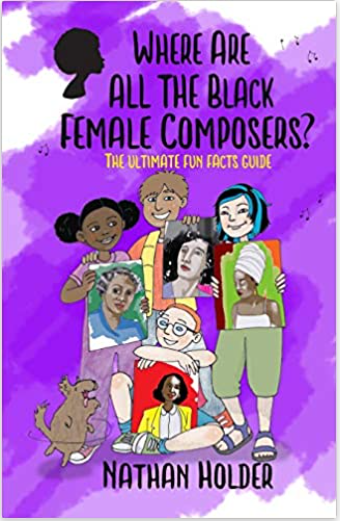
Born in Indianapolis into a religious and politically active family (her father was an African Methodist Episcopal Minister), Shirley Graham Du Bois was a writer, playwright, novelist, composer and an activist for black rights. The Harvard Radcliffe Institute has a page on this remarkable woman – and she features in Nathan Holder’s book for young adults, Where are all the black women composers?, which we have in the Whittaker Library.
Nathan Holder – Where are all the Black Women Composers?
Shirley studied composition and orchestration in France in her early thirties, and then studied music at Oberlin College in the United States, also beginning a PhD in English and Education at New York University. Nate Holder tells us that she worked for Morgan College…
Today saw the publication of my review essay of four new books on Robert Burns, in the Spring 2022 issue of Eighteenth-Century Scotland: The Newsletter of the Eighteenth-Century Scottish Studies Society.
It’s apparently embargoed for sharing until the newsletter goes online publicly in “a few months”, so no link to share just now. But if you subscribe to the newsletter, then keep a look-out for my piece! These are the titles I review:-
Ian Brown and Gerard Carruthers, ed., Performing Robert Burns: Enactments and Representations of the “National Bard”. Edinburgh: Edinburgh University Press, 2021. Pp. vi + 210.
Katherine Campbell and Emily Lyle, Robert Burns and the Discovery and Re-Creation of Scottish Song. Musica Scotica Historical Studies of Scottish Music Volume 4. Glasgow: Musica Scotica Trust, 2020. Pp. xi + 233.
The Oxford Edition of the Works of Robert Burns, Volume 4: Robert Burns’s Songs for George Thomson. Edited by Kirsteen McCue. Oxford: Oxford University Press, 2021. Pp. xcvi + 692.
(As an aside, it was quite a substantial piece of work – I am astonished that by some wizardry all those words fit 3 pages of pdf!)
Yes, folks, there really is going to be another book. Following on from my first one, date-wise, but with more social history, more about publishers, and more about amateur music making between 1880-1950.
Exciting? You bet!
Provisional Title
A Social History of Amateur Music-Making and Scottish National Identity: Scotland’s Printed Music, 1880-1950
Idly browsing Twitter whilst eating my Shreddies (edible cardboard, but good for me), I suddenly put down my spoon at the sight of something far more interesting. Here’s mention of a new book about intellectual property and plays in eighteenth-century Britain!
Literary Property and the Eighteenth-Century British Stage, by Jane Wessel
‘How playwrights, actors, and theater managers vied for control over the performance of popular plays after the passage of England’s first copyright law.’
Today, I’m working from home wearing my library hat, but I have august company on the desk beside me. My fingers itch to give these new personal acquisitions a closer inspection, but they have to wait until tonight. Meanwhile, I can just look, and gloat.
The British Students’ Song BookThe Sottish Students’ Song Book
LATER, MUCH LATER. How helpful! There’s a page at the back actually listing the history of editions of the Scottish Students’ Song Book. That saves me having to unpick the history from newspaper adverts.
Also interesting to note that Janey Drysdale contributed a couple of songs to the British Students’ Song Book, that were arranged by her late brother. Marjory Kennedy Fraser contributed a couple of songs too, the lyrics of which were by Dr Charles Kennedy, whilst she had arranged the musical settings. Neither woman contributed to the earlier Scottish book.
Students were, of course, mostly male. Marjory had been one of the first women to attend music lectures at Edinburgh University, but she didn’t graduate until she was awarded an honorary doctorate much later.
Now, there’s one burning question. Who was the third woman that contributed to the British Students’ Song Book? Yes, I need to know! I have a book to write.








 Karen McAulay, Musicologist