The last day in February, and Scotland grinds to a halt. I had places to go and people to see, not to mention a blissful research day ahead of me. Still, if we get Snowmageddon over and out of the way, then we can look joyously ahead to the Claimed From Stationers’ Hall research network’s impending workshop here in Glasgow on Monday 26th March.
Workshop Monday 26th March
We’ll be talking about the heritage collections of Georgian/Victorian legal deposit music up and down the UK, looking at ways to promote it, contemplating the many ways it sheds light on contemporary cultural and social history, pondering how we can improve access to it, whether by finding aids or digitisation, and considering how big data might be used to reveal stories hitherto untold. Representatives of almost all the old (and the current) legal deposit libraries will all be there. (This must be a first! Assuredly, there would not have been a nationwide meeting of university librarians in the late Georgian era. Nonetheless, the Scottish universities were certainly in touch with one another, if only to liaise about their London agents, working more or less effectively to secure the publications they were owed! Getting their fair share of sheet music was probably the lowest priority on the libraries’ agenda back then!)
We have a limited number of workshop places left, so if you’re working or researching in this field and can manage a day-trip to Glasgow, do get in touch to tell us about your interest and secure one of those places! Our recent February Newsletter tells more about it.
THE WHEEL COMES FULL CIRCLE
As you know, every week or so, I check Michael Kassler’s invaluable bibliography, Music Entries in Stationers’ Hall 1710-1818, and see if I can find a piece of music whose anniversary of copyright registration falls on that day. Sometimes the piece is good, sometimes deservedly forgotten, but all of them tell us something about musical tastes and trends at the time they were written.
Today, as I cool my heels (and my toes) at home on an enforced snow-day, I turned to 1798 to see whose anniversary it might be today. I found Stephen Storace’s ‘O Strike the Harp. For one, two or three voices, with an accompaniment for the harp or piano forte. The poetry from Ossian‘, which the publisher Joseph Dale registered on 28 February 220 years ago. As Kassler states, the song can be found in the British Library: GB Lbl G.352.(42.).
Could I find an image of this song, clearly inspired by the late 18th century trend for minstrelsy, and still drawing on Macpherson’s Ossian poetry, despite the fairly well-proven doubts about its authenticity?
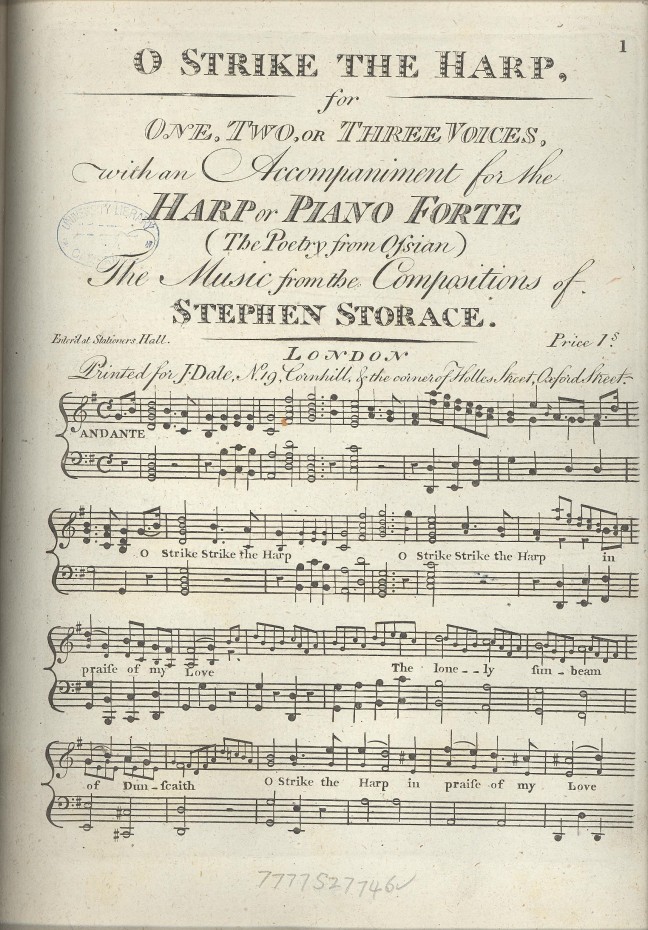 Well, yes! Coincidentally, I used an image of this very song in my write-up of Sandra Tuppen’s Big Data talk at IAML(UK & Ireland) 2015. See ‘ASW 2015: The Bigger, the Better – A Big Data History of Music’ https://iamlukirl.wordpress.com/2015/04/17/asw-2015-the-bigger-the-better-a-big-data-history-of-music/ (17 April 2015)
The wheel certainly does come full circle: in earlier research, I spent considerable time thinking about minstrelsy as it appears in national song collections, and here’s a song that’s not a “national song”, but certainly has links with literary literacy. I was beginning to get interested in big data, which is why Sandra’s research attracted my attention. And big data is one of the themes at our forthcoming workshop, with two of her colleagues in attendance. Isn’t it satisfying when links join into a chain?
Postscript. Today, I discovered that the song has also been referenced in a new book, Figures of the Imagination: Fiction and Song in Britain, 1790–1850, by Roger Hansford. He comments that the song is about relationships, and that the lyrics might have been written from a minstrel’s standpoint. Another book to go on my “must read some day” reading list!


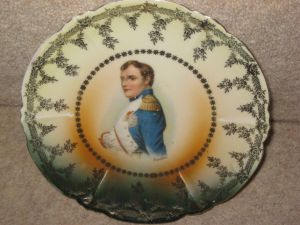 workshop, we mentioned some songs written by women during the Napoleonic era.
 Well, the arrangements are all in place. We have delegates, a board room to meet in, catering and other practicalities taken care of, and even lunchtime entertainment for our guests. I’m happy to say that we’ve made contact with ALL of the historical legal deposit libraries, and all but two of them will be represented at next Monday’s workshop, along with big data and digitisation experts and other interested scholars. I won an AHRC networking award last year, and here we have it – networking really bearing fruit. I’m so excited!
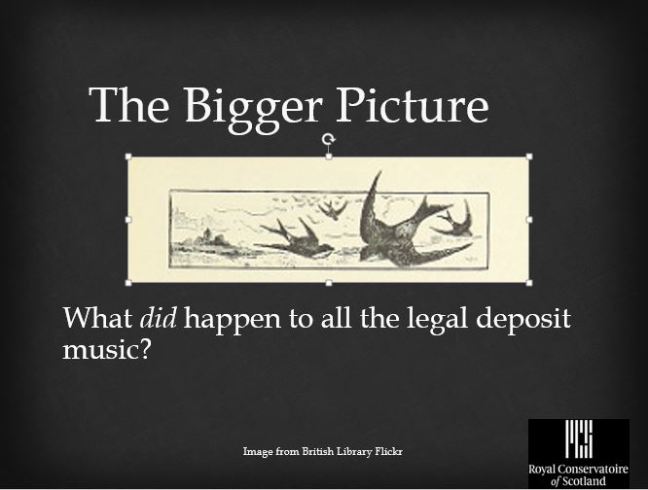 TWO YEARS … To think that it’s two years ago since I presented this slide at the IAML (UK and Ireland) Annual Study Weekend: things have moved on quite a bit since then!
 that day) 26th March 1818. It really is a typical cross-section of music publishing at the time! Just look – three arrangements of contemporary or near-contemporary operatic works for domestic consumptions (let’s not argue about who had the copyright in what! –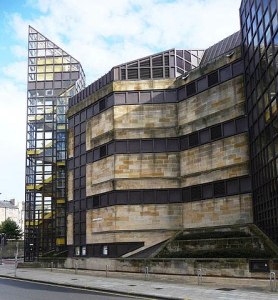


 Well, what else would you do if you were snowbound for a third day?! The bibliography has been updated considerably. This is not to say that I’ve read every single reference, which would be difficult in my part-time research existence, but hopefully there will be plenty of inspiration for anyone embarking on any aspect of the research network’s interests.
 The Claimed From Stationers’ Hall research network, whilst very well-represented in Scotland, is not actually focused on Scottish music. Nonetheless, we’re sharing this conference booking announcement for anyone who is working in that area.
 In the past month, I’ve been to Edinburgh, Cambridge and Oxford in connection with the Claimed From Stationers’ Hall research network. I’ve chatted with Almut Boehme in the National Library of Scotland, Elizabeth Lawrence and Jenny Nex at the University of Edinburgh, Margaret Jones and Jill Whitelock in Cambridge, and Martin Holmes and Giles Bergel in Oxford. We’ve talked about how different libraries stored and curated their legal deposit collections, attitudes towards music and cataloguing, and the influence of the British Museum’s mid-nineteenth century cataloguing rules. Several libraries began by categorising their music as instrumental or vocal – so to anyone wondering why our library does it that way – well, we’re following the Library of Congress, and they seem to have followed the British Museum too!
 and the lists of music – lists that came from Stationers’ Hall at regular intervals, and lists that were made of material as it was accessioned. Serendipity is a wonderful thing – Margaret looked out scores corresponding to material in the lists, and came up with a bound collection of various national songbooks – always a popular genre – not to mention an English opera that might have made no ripples in nearly two centuries, but certainly raised a few smiles in that meeting room in February 2018!
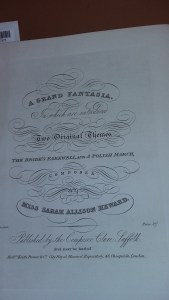 Meanwhile, Martin’s selection of scores included a composition by a young English woman whom I’d never heard of before – Sarah Allison Heward – and a network member in Germany has since unearthed a whole wealth of information about her and her musical family. Watch this space – there’s a blogpost coming up!
 If you’re signed up to our JISC mailing list, you’ll have just received the
  Karen McAulay, Musicologist