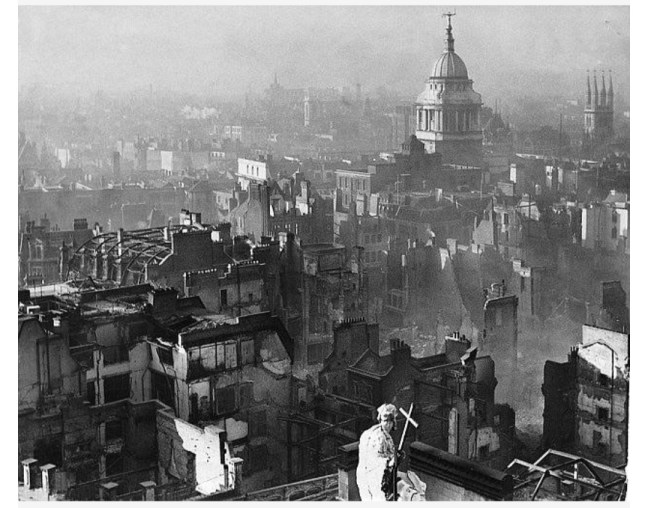
The Blitz – 85 Years ago, Tonight

This week in Scottish publishing history:-

There ain’t no Paternoster Row

Those were the words of a London Bobby (policeman) the following day, when someone asked about the bombing damage.

Luckily, Thomas Nelson had moved quite a few staff up to their Edinburgh offices at the start of the Second World War,  but some remained in London. But the London offices at 35-36 Paternoster Row were destroyed in the Blitz, on Sunday 29 Dec 1940. 

I find myself wondering how strange – indeed, traumatic – it must have been, to head into work the next morning and find first of all, that public transport was disrupted, and then later, by whatever means, to learn that the firm’s premises were flattened.

Temporary premises were found with another publisher, Duckworth at 3 Henrietta Street.  Not until 1954 were larger premises found for Nelson’s at 36 Park Street, in Mayfair.

Publishing in flames on Paternoster Row

Listen to the first episode of this series on Radio 3, 5th May 2025 (14 mins). Series: Books for Brighter Blackouts:- ‘As the BBC marks the 80th anniversary of VE Day, Professor Emma Smith uncovers five unexpected stories about how World War Two changed books, publishing and reading forever.’ The essay is about that very night of destruction. I was thrilled to find that Professor Smith interviews Professor Andrew Pettegree, an eminent authority in the University of St Andrews; and Liam Sims from the University of Cambridge; amongst other experts.
The Editor’s Boxing Day

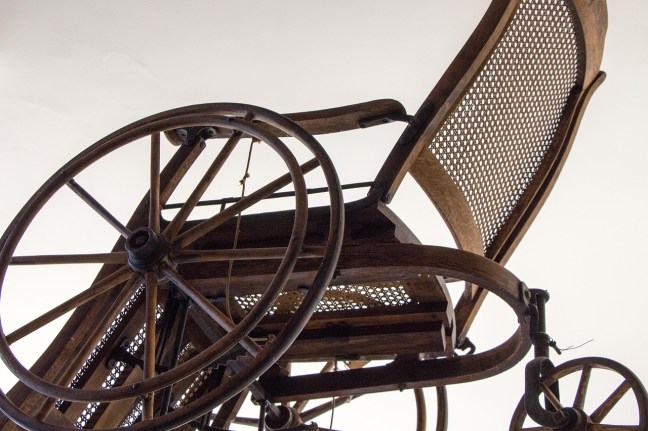
Old-fashioned wooden wheelchair

Followers of this blog will already know my penchant for anniversaries. This festive season, I’ve decided to indulge myself – and you, dear reader – with the kind of trivia that doesn’t make it into my research writing.

90 years ago today, Thomas Nelson editor Richard Wilson was languishing in hospital. (On Boxing Day – how miserable!) His daughter had been handling his correspondence whilst he was ill, so he could keep in contact with his boss.  But by Boxing Day, he’d been able to check the page proofs of the Music Guide (a teaching manual) from his hospital bed.

Now, I know he was a dedicated soul – but I also know that the series editor (not his boss) of the teaching series, ‘Music Practice’, was agitating to get these books published as soon as possible. Sooner, if at all feasible!

Let’s hope Wilson’s efforts didn’t delay his recovery …

Being a Fellow at IASH

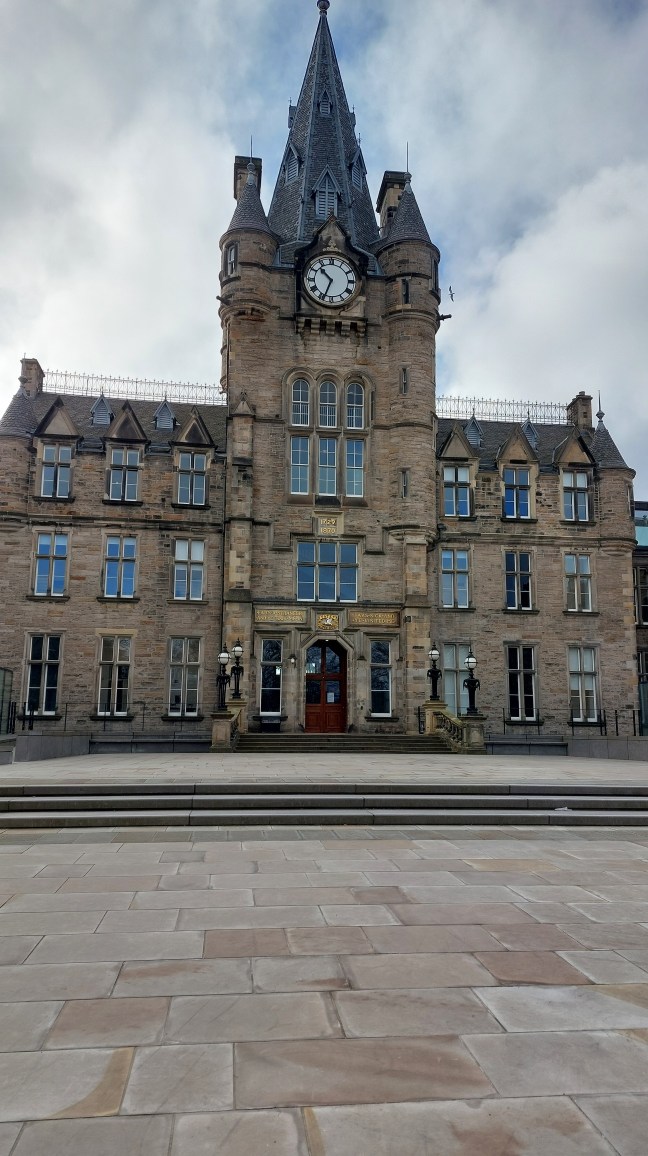
As I’ve already mentioned, I am currently a Heritage Collections Fellow at IASH – the Institute of Advanced Studies in the Humanities, at the University of Edinburgh. I’m halfway through my Fellowship, and (hopefully) halfway through my trawl of the Thomas Nelson publishers’ archives in search of correspondence about their music publications in the 1940s to 1950s.  The book I’m primarily interested in has presented me with a few surprises and thoughts of new directions to pursue, but I shall plough on through the archives until I am sure I’ve captured every whisper about these four little school books.

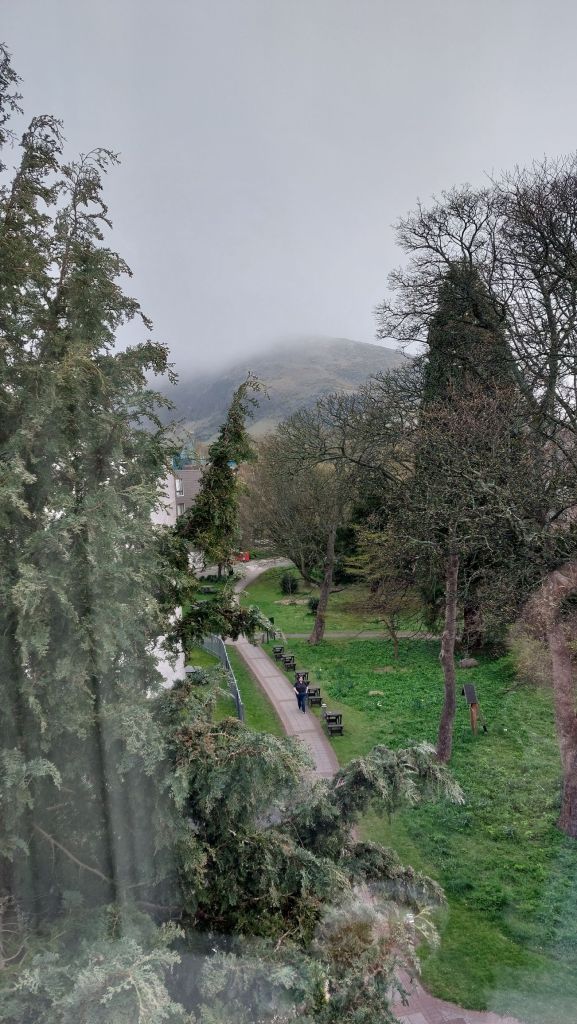
View from the Scholar Hotel

This week, we had the Institute’s 55th Anniversary celebrations, with a focus on Decoloniality. The Institute has just concluded a two-year project on this theme. There was also a session on motherhood and reproductive justice.

Now, you’d think, perhaps correctly, that my Scottish song book and music education focus has little connection with either decoloniality or motherhood. But I did put a lot of effort into broadening the scope of the music collection to include more music by women and composers of colour, whilst I was a Performing Arts librarian at the Royal Conservatoire of Scotland, so I was keen to find out what other scholars in more directly related disciplines have been doing.

I think it’s fair to say I felt a bit overawed! IASH is very interdisciplinary, so there were contributions from all corners of the humanities, and by scholars with far more extensive experience in their fields than I have in mine. But there were contributions from the performing arts, and from heritage collections and archives – I felt more comfortable in these areas, and a bit less out of my depth.

I stayed in Edinburgh overnight to make it less of a rush from Glasgow for the second morning.

In the final session, with contributions from past and present directors, I was impressed by the sheer reach and achievements of this amazing institution, and both proud and humbled to be a Fellow here.

O wad some Power the giftie gie us,

To see oursels as ithers see us!

In the context of Robert Burns’s poem, those lines are exhorting us not to get above ourselves, but taken in a different context, they perhaps offer reassurance that others see something in us that we can’t necessarily see ourselves.

‘They thought I was worthy to be a Fellow – in a very competitive application process?’, I mused. But yes, they did indeed select me, which is a vote of confidence in itself.  Sometimes, you need validation by others – it’s hard to be objective about oneself!

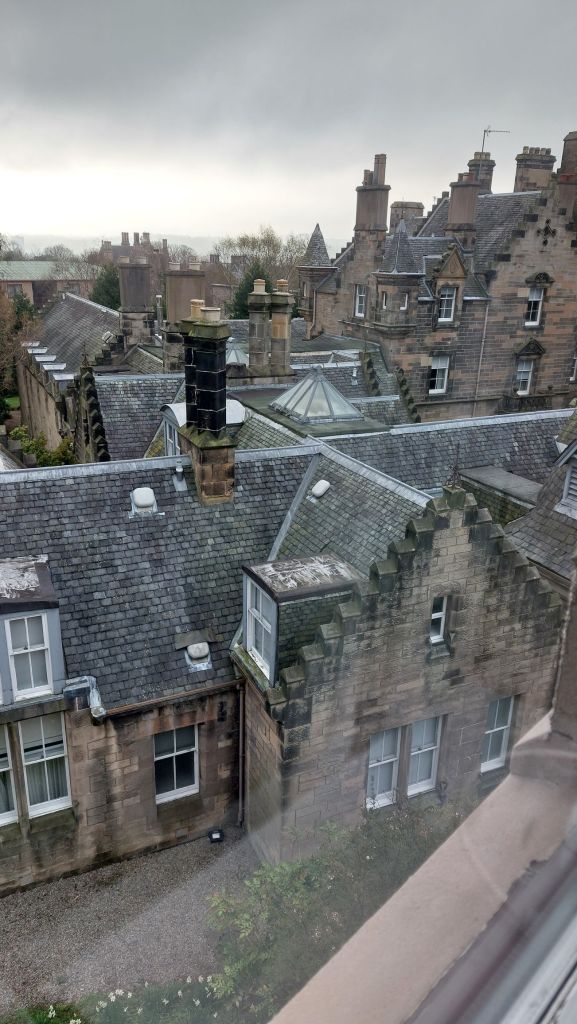
Another view from the Scholar Hotel

Image at top of post: The Edinburgh Futures Institute