

‘Imitation is the sincerest form of flattery’?
I wrote these words as a reflection, but then I wondered if other people might find them helpful. Maybe something like this – or worse (because I realise my experience was slight compared to someone whose whole article, story or book has been plagiarised) has happened to you? There might be folk who would shudder at the thought of laying bare their emotions, their gut reaction, to such a situation. As for me? My ‘words’ are my strength. If my words in the present posting make me look weak as an individual, be assured that I am fully aware of this. They also make me uniquely ‘me’, and who ever gets far by pretending to be other than themselves?
Meanwhile, my situation has been resolved, thankfully. I feel grateful. Grateful for the help. Grateful for the response and correction of the situation.
However, I feel utterly drained. I’m taking a day’s annual leave because it’s preferable to taking a day’s sick-leave for stress.
I initially headed this posting, ‘Thoughts on detecting plagiarism’. However, ‘on detecting plagiarism’ turns out already to be in the title of someone else’s blog post – Addressing the Inherent Biases in Automated Systems: On Detecting ‘Plagiarism’ (Lancaster University, Ref 2014 Impact Case Studies). I changed my heading. Do read the Lancaster post, if you’re interested. I commend it, even though it’s actually about detecting plagiarism in student submissions, rather than realising your words have been quoted without attribution. I read their blog post briefly last night, and I am not reading it again today. I took no notes, and I have no intention of borrowing anything that was there.
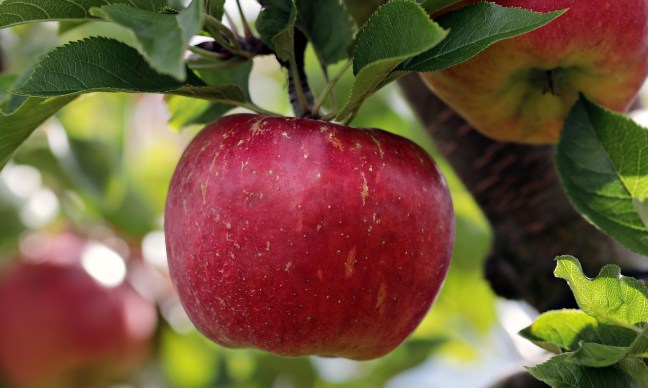
They were literally just a few words, but my own words, and the crux of a 21-page article written 12 years ago. The first full article on the topic. It hurt. And then I started questioning myself:- was I considered so unimportant that my authorship is insignificant? Because, PhD or not, I was ‘merely’ a librarian, hence unimportant? Because I’m now ‘just’ a postdoc research fellow? (That was actually a promotion, by the way!) Because I’m not very famous? Was it because I’m a woman? Because I’m older, and thus considered past it? Because, once published, the words were considered free for the taking? Because, significant or not, they were just a few words, and so temptingly apposite? Low-hanging fruit.
Mulling it over as I got ready for the day, I glanced in the mirror. There I was, an older woman – not ageing particularly stunningly or gracefully, short in stature and wide in figure. My garb was workaday (I was about to sit down to a solitary morning of research, 67 or not). I wore no makeup, and I haven’t been on the latest diet long enough – you wouldn’t notice me if I walked down the street. So there I was. I’m not publicly visible as a performer or composer, unlike a large number of my colleagues. And, as I mentioned, although as a librarian I achieved some visibility in the sectors I worked in – perhaps more visibility than many – librarians aren’t generally known for this quality. We exist to help other people. I’ve not been a librarian for a year now, but I think I probably still carry the aura of invisibility. And when you say ‘librarian’, not many people immediately think, ‘Ah! A researcher. An author. A public speaker.’ Well, there it is!

But although librarians might exist to help, to share, to facilitate, they aren’t ghostwriters. Even when they’ve retired from librarianship and are now employed solely as a postdoctoral research fellow.
‘It Says More about Them than it does about You’
And then I reminded myself (I think this is called cognitive reframing) that I didn’t actually know what they were thinking when they used my unattributed words. I can’t read other people’s minds. My identity may not have even been a consideration. And I recalled my latest mantra: that other people’s words and actions speak more about them than about me.
Trigger warning here. I am not preaching when I say that I’m a practising Christian; I’m declaring a fact, which probably does affect my philosophy. (I’m no Evangelical, though – I’m boringly conventional!) I found an intriguing article, ‘3 Reasons Pastors and ‘Authors’ Should Never Plagiarize‘ by David Kakish (12 July 2019). He does make the salient, human point that ‘Plagiarism Fails to Give Honor Where Honor is Due’. Be assured that I’ll be reading it, out of curiosity, but it doesn’t really help the person who has been plagiarised, so I’ll leave it until later! I did do a little web-searching to see if there was a Christian take on low self-esteem. However, I found nothing that resonated, except the grounding reminder that everyone is a unique person for a purpose, so we should embrace what we are rather than wish we were someone else.
I tried not to beat myself up about my own insecurities. I know what I’ve achieved, from a mid-career standing start, against the odds. My words are old enough to be irrefutably mine, regardless. And … well, I can always write some more!
Here are some useful links which I found last night
If your experience is on the more serious end of the scale, these might be helpful. I’m not proposing to offer guidance on dealing with such situations – I’m really not qualified to – but I would urge you to seek support.
Bailey, writing about author O’Hanlon’s dreadful experience, headed his post, ‘The Emotional Toll of Plagiarism’, and my own limited experience endorses that. In my case, a migraine and shall we say, gut reactions, were clearly telling me I was stressed. Symptoms can be treated, but how much nicer not to have had them at all!
- Addressing the Inherent Biases in Automated Systems: On Detecting ‘Plagiarism’ (Lancaster University, Ref 2014 Impact Case Studies)
- Badenhorst, Adam E, ‘How to handle being plagiarised’ (The Writing Cooperative, 2018)
- Bailey, Jonathan, ‘The Emotional Toll of Plagiarism‘
- Davison, Robert, Malcolm Munro and Detmar Straub, ‘Research. Guidelines for a Victim: Dealing with Plagiarism‘ (AIS [Association for Information Systems], 2003
- Kakish, David, ‘3 Reasons Pastors and ‘Authors’ Should Never Plagiarize‘ (12 July 2019)
- Zilberberg, Marya, ‘How does it feel to have your scientific paper plagiarized? And what can you do about it?‘ (Retraction Watch, 2012)


 Karen McAulay, Musicologist