Dr Karen McAulay explores the history of Scottish music collecting, publishing and national identity from the 18th to 20th centuries. Research Fellow at Royal Conservatoire of Scotland, author of two Routledge monographs.
Earlier this year, IASH blogged about an exciting book that Ben Fletcher-Watson and Jo Shaw would soon be releasing. And yesterday, I attended its launch – the third book of the Dangerous Women project:-
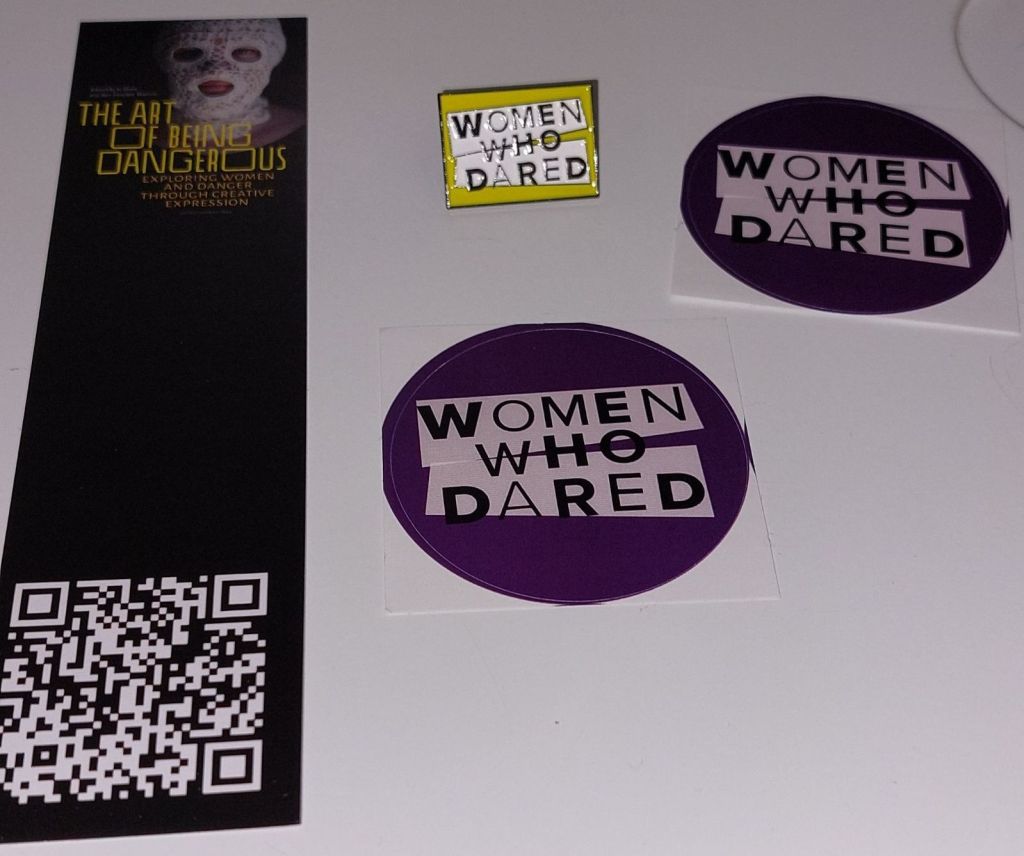
The Art of Being Dangerous: Exploring Women and Danger through Creative Expression (Leuven University Press, 2021) edited by Jo Shaw and Ben Fletcher-Watson
Dangerous Women: fifty reflections on women, power and identity (Unbound, 2022) edited by Jo Shaw, Ben Fletcher-Watson and Abrisham Ahmadzadeh
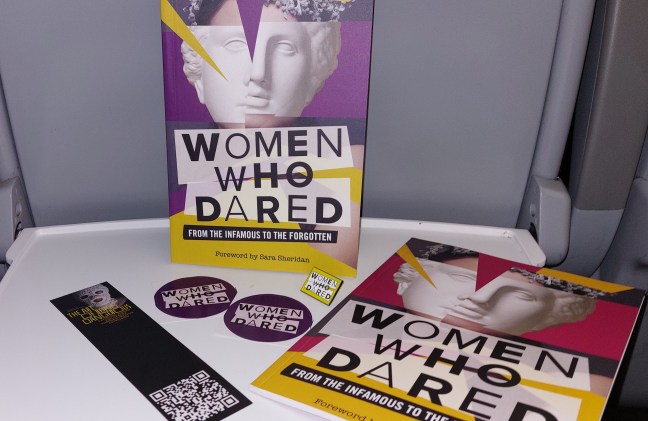
Women Who Dared: From the Infamous to the Forgotten (Edinburgh University Press, 2025) edited by Ben Fletcher-Watson and Jo Shaw
It was a lovely book launch, and we had excellent speakers, who had all contributed to the book: Jo Shaw, Sara Sheridan, Ruth Boreham and Jo Spiller.
Women who Dared is an anthology of short biographies – all of them historical ‘women who dared’. I chatted with the speakers afterwards, and enjoyed hearing more about their work. There are so very many women of note, whom history has entirely forgotten about, so books like this are both very welcome, and very necessary.
As I’ve already mentioned, I am currently a Heritage Collections Fellow at IASH – the Institute of Advanced Studies in the Humanities, at the University of Edinburgh. I’m halfway through my Fellowship, and (hopefully) halfway through my trawl of the Thomas Nelson publishers’ archives in search of correspondence about their music publications in the 1940s to 1950s. The book I’m primarily interested in has presented me with a few surprises and thoughts of new directions to pursue, but I shall plough on through the archives until I am sure I’ve captured every whisper about these four little school books.
View from the Scholar Hotel
This week, we had the Institute’s 55th Anniversary celebrations, with a focus on Decoloniality. The Institute has just concluded a two-year project on this theme. There was also a session on motherhood and reproductive justice.
Now, you’d think, perhaps correctly, that my Scottish song book and music education focus has little connection with either decoloniality or motherhood. But I did put a lot of effort into broadening the scope of the music collection to include more music by women and composers of colour, whilst I was a Performing Arts librarian at the Royal Conservatoire of Scotland, so I was keen to find out what other scholars in more directly related disciplines have been doing.
I think it’s fair to say I felt a bit overawed! IASH is very interdisciplinary, so there were contributions from all corners of the humanities, and by scholars with far more extensive experience in their fields than I have in mine. But there were contributions from the performing arts, and from heritage collections and archives – I felt more comfortable in these areas, and a bit less out of my depth.
I stayed in Edinburgh overnight to make it less of a rush from Glasgow for the second morning.
In the final session, with contributions from past and present directors, I was impressed by the sheer reach and achievements of this amazing institution, and both proud and humbled to be a Fellow here.
O wad some Power the giftie gie us,
To see oursels as ithers see us!
In the context of Robert Burns’s poem, those lines are exhorting us not to get above ourselves, but taken in a different context, they perhaps offer reassurance that others see something in us that we can’t necessarily see ourselves.
‘They thought I was worthy to be a Fellow – in a very competitive application process?’, I mused. But yes, they did indeed select me, which is a vote of confidence in itself. Sometimes, you need validation by others – it’s hard to be objective about oneself!
Another view from the Scholar Hotel
Image at top of post: The Edinburgh Futures Institute
I’m languishing with Covid right now. (The only placesI’ve been to catch it are buses and libraries!)
I don’t feel up to writing a blog post today. So instead, let me share an interesting post that I found on GoHenry, about women, property, and money. All useful information when I’m contemplating historical women music publishers!
When I’m not occupied as a researcher or a librarian, I’m the organist at Neilston Church of Scotland. I’m not exactly a serious composer, but I do compose occasional Christmas carols, both lyrics and music. This year, because the church choir is few in numbers, I felt that a bit of instrumental backup would help. The Salvation Army band led Wednesday night’s carol service, so I politely requested two cornets to accompany me on the organ. Wow! That certainly brightened things up.
Neilston Parish Church
By and large, the carol was well-received. Although I sensed from one comment that I need to make next year’s effort more upbeat! Someone else thought it sounded Scottish. I suppose there IS a gapped scale in the verse part of the melody, though I didn’t set out to use a Scottish idiom!
Women at the Inn in Bethlehem
My composition was inspired by my thoughts that the traditional story focuses on men – shepherds and wise men – but there must have been women in the Inn. There must! In Biblical times, women didn’t generally have a high profile. Who helped Mary give birth in the stable? Hard to imagine that Joseph manfully rolled his sleeves up to help, if there were women around.
Neilston used to be a weaving village, so my allusions to the warp and weft of fabric are a gentle reference to the past of our locality.
By the flickering light, they were led to the stable, In Bethlehem simply by order of Rome; Did the swaddling bands come from the innkeeper’s wife, Kindly showing compassion to a girl far from home? CHORUS Oh, sing for the maidservant fetching the linen, Oh, sing for the woman who’d worked at her loom, Their linen scraps swaddling the Christ-child so helpless, With the Virgin young mother at the inn with no room.
Not the greatest of starts, in a stable so lowly, The carpenter’s wife cradling Jesus with care, Such a fragile young life, and dependent on strangers, With shepherds and kings paying homage right there. CHORUS
For that flickering light lit a life so amazing, His radiance the whole world could not fail to see, And the linen bands foretold the grave-clothes they gave Him, Before on the third day, rising triumphantly. CHORUS
4. For the warp and the weft, Careful hands moving deftly, Made linen our Saviour to wrap and enfold, As we pause to reflect how the humblest endeavours Can be holy in ways that could scarce be foretold. CHORUS









 Karen McAulay, Musicologist