Dr Karen McAulay explores the history of Scottish music collecting, publishing and national identity from the 18th to 20th centuries. Research Fellow at Royal Conservatoire of Scotland, author of two Routledge monographs.
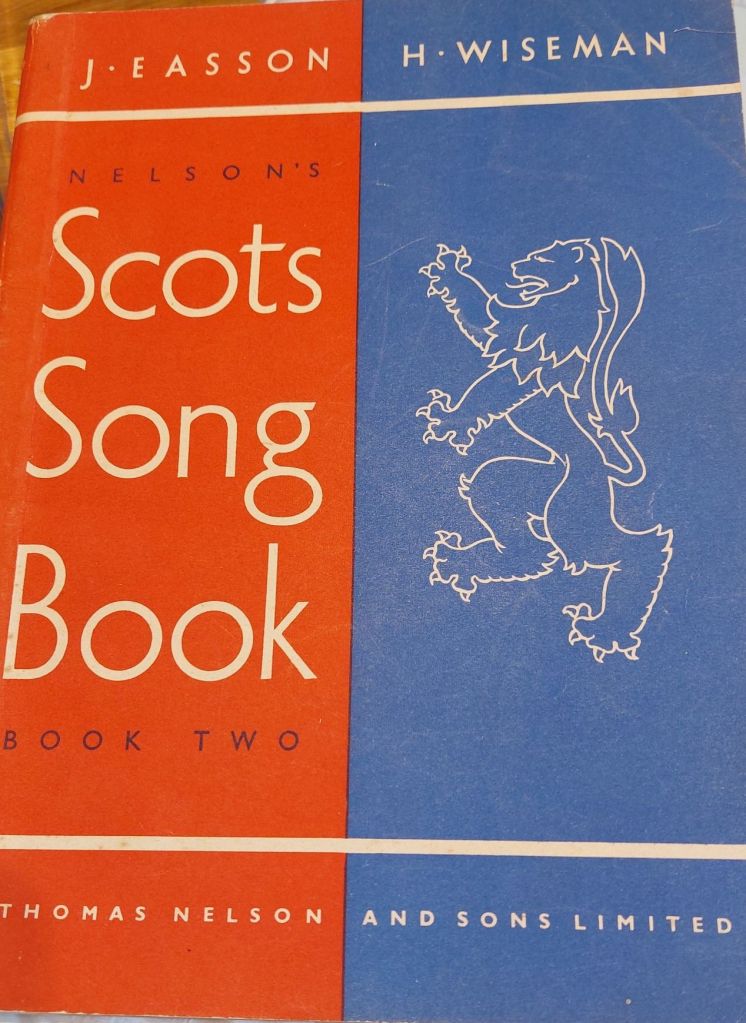
As regular readers will know, my IASH Fellowship concerns the history of the Nelson’s Scots Song Books.
I’ve seen all four of the teacher’s books in libraries; and possess one teacher’s edition of my own, plus one pupil’s edition – not the same volume number. And I’m going to some lengths to track down the other three of each edition. I want to be able to show them when I talk about them, so I simply must keep looking.
Today, I headed to town, feeling as though I ought to be riding a pony and tootling a hunter’s horn, to the sound of La Chasse or the William Tell Overture. (The heavens opened between subway and second-hand bookshop, somewhat spoiling my fantasy. Urghh!)
But hunting with a pack of hounds would have been no good at all, for you have to creep up on these rare beasts very, very softly. Pretend to be looking at something else, as you slowly extend your arm towards the shelf. And then, whilst it’s relaxed with its defences down, grasp it quickly and hold on tight.
Captured!
I examined it disbelievingly. Yes! I now have the teacher’s edition to go with my pupil’s edition of Vol.2. (Actually, I also found some other useful material that wasn’t published by Thomas Nelson.)
And then I turned round. On a table, if you please, there sat another Nelson music book that I’ve been reading about. Not a song book, but interesting just because it was published around the same time, by the same Nelson editors. It was as though it was waiting for me to find it.
Did I celebrate with a coffee? Now, what do you think!
There are times when scholarship doesn’t so much take a back seat, as slide over into the passenger seat. I’m still working on my research, but I may not blog as frequently for a short while.
Do you want any more Flora Woodman, or have I said enough?! I published an article earlier this year – same subject matter as my paper today, but certainly not the same piece of writing:-
‘The ‘Scottish Soprano’ and the ‘Voice of Scotland’: the Importance of Nationality to Flora Woodman and Robert Wilson’, History Scotland Vol.25 no.1 (Spring 2025), 74-81
Public library e-magazine apps may still provide access to the issue, though History Scotland is no longer published. I believe you can access it via the former publisher, too. Let me share the message I received from History Scotland a few weeks ago:-
“As you may know, the Spring 2025 issue of History Scotland will be the last issue of the magazine. Thank you so much for your support over the years.The good news is, we’ll still be exploring Scotland’s past in our expert webinars and our monthly history newsletter, and there is still a huge range of back issues of the magazine for you to enjoy…
“Visit the pocketmags.com website and you can download back issues going back to 2010. How to buy back issues:
I made a McKinnon tartan sash as a ‘prop’ for my talk. That was Flora’s mum’s family tartan, going back a few generations. Flora said it – I haven’t verified this! It also bears the Scottish Clans Association of London badge – oh, I take these things seriously! (If you are reading this after the event but missed it – I only wore the tartan sash for 15 seconds to show how it would be worn. Minimal cultural appropriation was committed.)
As we answered questions after the first three talks, something occurred to me. Flora had something significant in common with her Scottish Clans Association of London audiences. The vast majority of them were of Scottish descent, and – like Flora – quite a few of them would have been born outwith Scotland. To them, she was quite simply, Scottish, the same as they themselves were. No-one was going to accuse her of not really being Scottish, because that would negate their own sense of Scottishness too. If Scottish blood flows in your veins – you’re Scottish, wherever you are.
I know what I’m looking for: any mention of music-related publications from the erstwhile Edinburgh publisher, Thomas Nelson. I found the important things I was hunting down, so now I’m just looking for contextual detail.
These were just a small part of Nelson’s output, of course. So, my plan of action entails identifying likely boxes (or folders, or binders) and methodically going through them. As I go, I encounter tantalising threads that I must not be distracted by: John Buchan copyrights, letters from Enid Blyton and Arthur Ransome, and glimpses of the editors’ daily business.
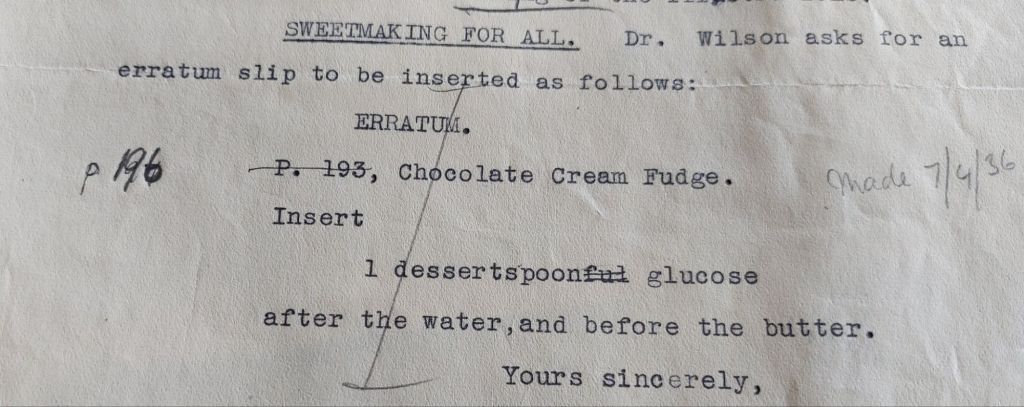
Sweets that would have been less Sweet
Imagine the author’s distress at realising that glucose had been omitted from their confectionery recipe:-
Wanderlust
Meanwhile, it seems Dr Wilson was the only person who could deal with a ‘peppery’ author, but explaining how a travel anthology had gone missing in transit between Bude and Edinburgh would challenge his diplomacy to the utmost. (You have to appreciate the irony.)
Naming no Names
And I was unimpressed by the managing director who had certain issues with women authors. Admittedly, this was the 1930s, but … really, Sir!
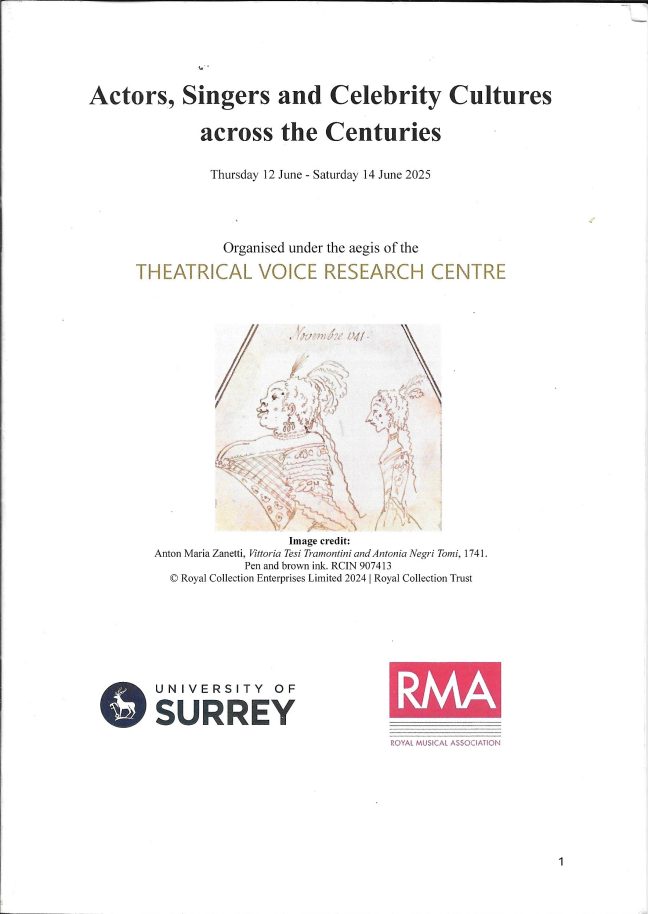
Anyway, I’m heading to the University of Surrey/ RMA conference in Guildford today, so all my editors and their authors can rest in peace until next week!
A strange coincidence occurred to me last week – I encountered conductor Landon Ronald in two quite different research contexts.
Firstly, I knew that soprano Flora Woodman appeared in at least a couple of concerts with Landon Ronald (1873-1938), Principal of the Guildhall School of Music. (Possibly more – but I was mainly focusing on her repertoire as I went through her logbook and scrapbooks.) However, I did note in her scrapbooks of press-cuttings, en passant, that she wished it to be clarified that she was not his protegee. Interesting – but there’s really nothing more to be said. If she wasn’t, she wasn’t.
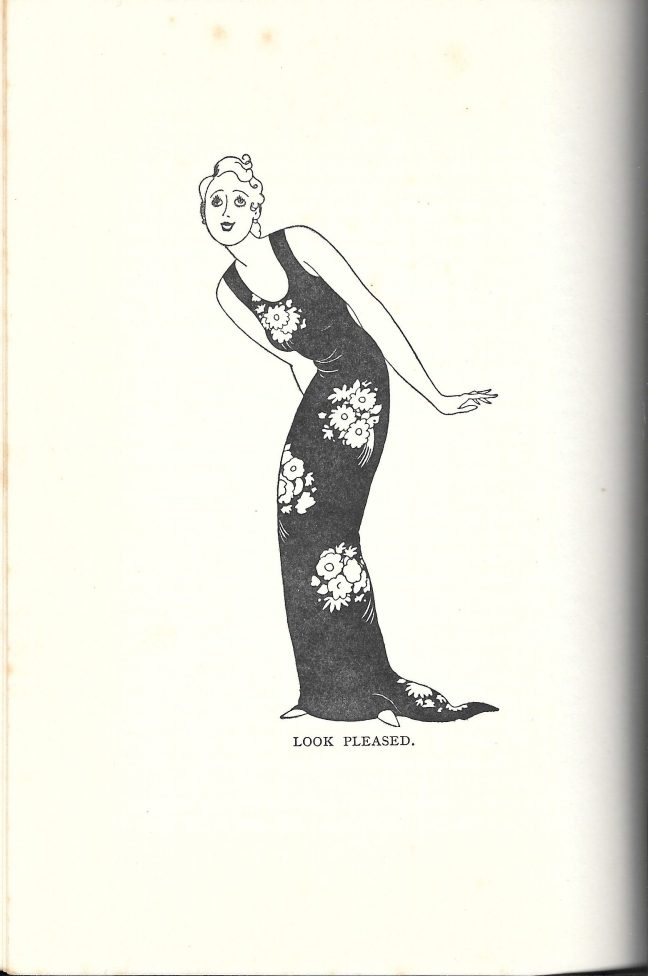
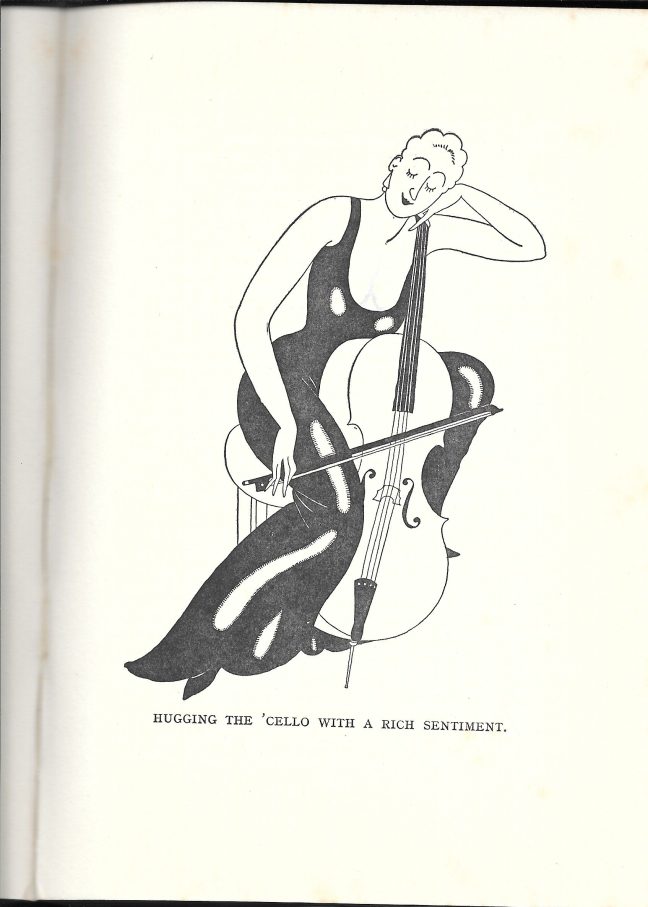
Nonetheless, I had also encountered Landon Ronald in a different context last week. In 1936, Thomas Nelson published a book, Let’s Get up a Concert by Rodney Bennett (1890-1948, father of composer Richard Rodney Bennett) and H. S. Gordon, with a preface by Sir Landon Ronald and Illustrations by Joyce Dennys. Landon Ronald again! Nothing to do with Woodman this time. Indeed, it may not have a great deal to do with Landon Ronald either. I’ve found no evidence that he didn’t author the preface, but I do have evidence that someone else paid a ‘big name’ to put their signature to a preface for another book, in full knowledge that the ‘big name’ could be mentioned in book promotions and would undoubtedly add appeal and authority to the book. If Thomas Nelson allowed one author to do this, who’s to say they didn’t with others too?
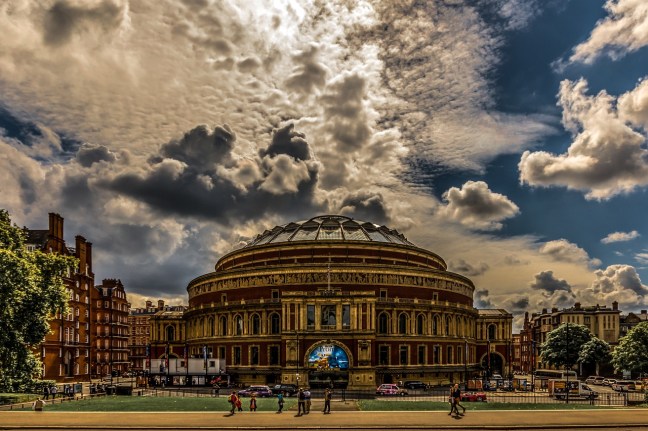
Now aged 63, Ronald was still Principal of Guildhall, but he says he no longer promotes concerts. He alludes to his experience of ‘hundreds of orchestral concerts in the Summer Season on Sunday evenings at that most democratic of all holiday resorts, Blackpool’ (yes, Flora performed in Blackpool too) – ‘and an unbroken series of four hundred Sunday afternoon orchestral concerts at the Royal Albert Hall.’ (Plenty more about him on the CHARM website, which is the AHRC Research Centre for the History and Analysis of Recorded Music.)
But back to Bennett’s book. Part Two consists of practical advice to performers: dealing with nervousness, platform technique –
However much you desire to pop off like a frightened rabbit, don’t.
‘Walk like a Dancer’
The eager would-be concert performer is advised to ‘learn from professionals’ (p.135) especially from foreign artists, whom Bennett says are more accomplished in this regard – and about ‘pleasing the eye’ (p.136). You must ‘walk like a dancer’, and ‘support [the man in charge*] with unfaltering loyalty’, whilst pianists should appear to be a ‘natural, kind-hearted, happy human being’.
In fact, dated as it seems in some respects, there’s a lot of useful advice in this book. I can only commend the individual who presented it to Penarth County Girls’ School* Library in 1946. It would have been helpful at the time, and a lot of it still is. The illustrations are decidedly tongue-in-cheek, but on the plus side, they don’t patronise the intended audience – advice is always easier taken if the advice giver uses a touch of humour! The artist, Joyce Dennys (1893-1991) was a cartoonist and illustrator. The book perfectly fits into Thomas Nelson’s lists, with their emphasis on providing self-improvement, self-educational material for the intelligent layperson. You might be a teacher needing more guidance on laying on concerts, a nervous and somewhat inexperienced performer, or an organiser of any number of different kinds of musical entertainment, and this title would have plenty of accessible, useful advice.
Of course, platform etiquette would have been second nature to a superstar like Flora Woodman, who would probably have needed little advice after her first few performances. (Neither, I imagine, would she have liked the suggestion that foreign artistes had more stage presence! My gut feeling is that she had it by the bucketful.) She was mixing with professionals of the highest calibre, in Britain’s best concert halls.
I’ve already posted details of some of her fabulous wardrobe, and it would become rather dull if I went on producing lists. But I noticed today how she liked to ring the changes with glamorous accessories. They wouldn’t be wise choices today, but hey, this was a century ago. So – I spotted white fox, ermine, beaver and swansdown, as well as velvet hats, black tulle, hydrangeas, lilacs, pink flowers, a wreath (garland?), and regular adornments of silver (silver what? she doesn’t say). Also, even within a couple of years, she updated her outfits, with ‘second editions’ of her black and white, and pink and pearl ensembles. (Once again, do use your imagination – I’ve given you plenty to work on!)
Meanwhile, excuse me whilst I browse through Rodney Bennett’s book a bit more …
*Yes, Bennett does talk about ‘the man in charge’. It was a different age – don’t shoot me!
Here is some more of soprano Flora Woodman’s concert attire, this time for 1916. I imagine she had a walk-in wardrobe for this collection. (Look back at my previous posting, to see which of her earlier outfits she was still using!) I’m quite sure her admiring mother would be sitting on the bed, nodding in approval, and maybe helping Flora tuck in a wisp of hair, adjust a shawl or the tilt of a hat in front of a full-length mirror before they set out.
In my mind’s eye, this blog post has multiple paper dolls wearing 1916 outfits, or little squares showing the colours of the outfits and hinting at the accessories – a hat here, a fox or ermine stole there (for this was decades before anyone hesitated about wearing fur), or a little sprig of flowers to coordinate with her frock. Sadly, I can’t rise to illustrations like that, so again, please use your imagination!
[illegible] with Blouse, White Fur & hat
Black & White Black hat, Fur Coat Black Velvet
Brown hat, pink jersey? (Presumably with a skirt!) Singing to wounded soldiers in hospital
Green coat & skirt, brown hat, white fox, a blouse Green Coat & Skirt, Pink
Mauve frock and white hat & shoes
Navy blue check and white hat
Pink & pearl Pink with hydrangea
White & pink watersilk White with black Tulle White with ermine
My oldies are giving cause for serious concern, and I’m distracted. These situations happen to most of us – I won’t elaborate. Suffice to say that research itself can be a distraction from the awfulness, but not entirely!
Young Disrupter
Take yesterday. I thought I’d find solace in our big city public library. First, I headed for the library café, but although the coffee was good, someone else’s screaming, beaker-flinging toddler didn’t make for a calming experience. I don’t blame the parent – it was just unfortunate.
Horrible old Technology!
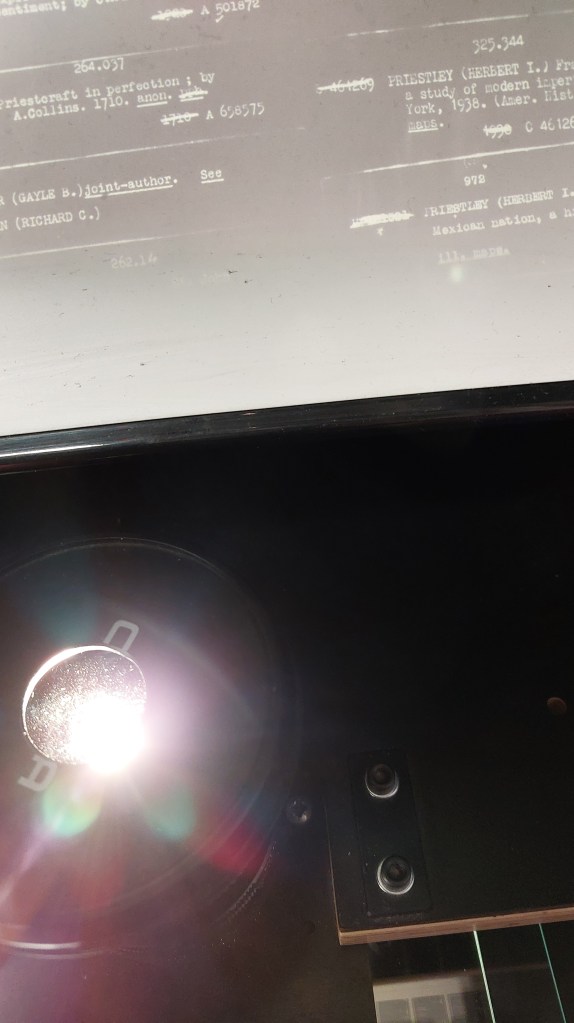
Then the microfiche reader screen was too high for my varifocals, so I had to stand to consult it; there was only just room and nowhere to plug in the laptop; and not enough room for my notebook unless I sat back down and balanced it on the edge of the table. I have never liked microfiches anyway! I disliked them in 1988 – nothing has changed.
Although I would like to have stayed longer – I didn’t complete my mission – I wasn’t entirely sorry to have to leave in order not to disappoint expectations that I’d be home to fix lunch.
Back at my own desk, I fiddled with my notes, checked out some details, and quickly checked in with relatives. No news.
Finally, giving in to temptation, I headed back to my happy place. Fabric. In this case, examining Flora Woodman’s concert wardrobe through her performance log! I’ve mentioned before that she logged every outfit worn. It’s a shame that the only outfits we can see, are those in publicity photos. Still, the log gives a good impression of the range of outfits, and some of her accessories. Let me share the concert attire worn by the emerging young star in her first couple of years. Obviously, there’s no indication of style or design, so you’ll need to visit a few historical costume websites for 1913-1915 and form your own imagined impressions.
(I’ve indicated the source of this blog picture below – it has nothing to do with Flora.) There’s also a Facebook page called Attire’s Mind, which gives plenty more food for thought.
1913-1914
Cream Lace Navy Blue White and Pink White Coat & skirt White Silk
1915
Black & White Blue (Spanish) Cream Lace Fur Coat & Pink Hat Navy Coat & Skirt & White Hat Pale Green & White Pink (blue sash) Pink Rose Silver, Pink & Mauve White Silk White (with Black Tulle, Ermine or Swansdown on different occasions)
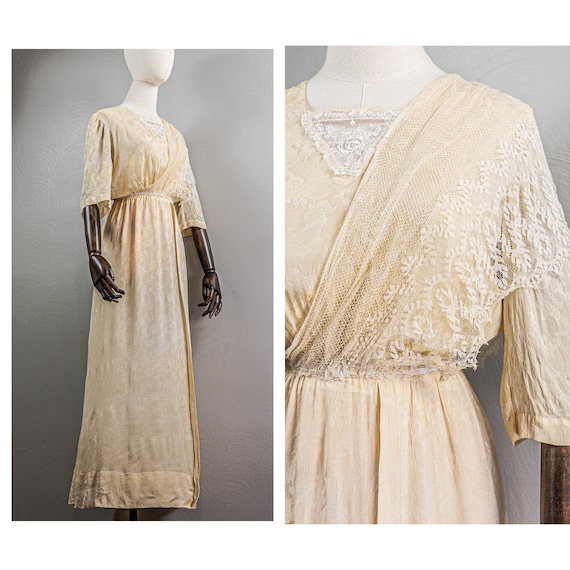
I found the most beautiful dress on The Romantiquary; in my imagination, this might have been one of Flora’s fabulous frocks. Meanwhile, I need to get a grip on myself and get back to the research proper. I’m not a historical costume expert!
PS. I could be persuaded to list more of Flora’s wardrobe later … ?!
It takes place from tomorrow, Thursday 12 to Saturday 14 June 2025, and is organised under the aegis of the University’s Theatrical Voice Research Centre.
My talk’s entitled, ‘Comparing the Career Trajectories of Two Scottish Singers: Flora Woodman and Robert Wilson‘.
The Gowns! The Kilts!
I could write plenty about their concert attire alone (think lace, diamonds and fluted frocks, or smart kilts and jackets) – but obviously, I can only just brush past that particular clothes rail, considering the more significant observations that I’m also making.
Boosey’s Ballads
Today, I’d like to share some audio that won’t be making it into my talk. Let’s call it ‘extra content’. I’ve recorded some of the Boosey-published ballads that Flora performed at their Royal Albert Hall concerts. Since I’m not a trained singer, I’ve done my best to convey an impression solely on the piano. (I’m not going to start singing here!) I also highlight some of the themes in these songs – captured hearts, broken hearts, the joys of spring and of youth. It’s surprising what you find, if you really look.
Some years ago, I wrote an article about bibliography and paratext – for a librarianship journal, The Library Review. Taking a marketing term, I discussed ways of trying to make bibliographic citation more ‘sexy’, ie, appealing to students.
Oh, how I regretted that article title. Too late, I feared no-one would take it seriously. All the advice says that an article title should say what it means, directly.
After all, if we’re going to be very ‘meta’ about it, what attracted you to this blog post? I said it was about article titles, and here I am, writing about them. It does what it says on the can, to use a colloquial expression. If you were looking for advice about entitling your article, you might conceivably have thought you’d arrived at the right place.
So, why hadn’t I just entitled that earlier article,
‘Getting undergraduates interested in library-based teaching: bibliographic citation and historical paratext’
But I didn’t. Library Review Vol. 64 Iss 1/2 pp. 154 – 161 is there for all to see, with that cringeworthy article title:-
‘Sexy’ bibliography (and revealing paratext)
I learned my lesson. Titles have to be plain and meaningful, so that everyone knows exactly what they’re about. No messing. Otherwise, the danger is that people looking for conventionally sexy and revealing material might stumble across my pedagogical peregrinations and feel cheated. Whilst pedagogues might not even find my article. (Which would be a shame.)
Today, however, my line manager was digging about in Pure, our institutional repository. And – well, I’m a bit stunned to find that my poor little article got far and away the most views. Over 8,700 views, to be precise!
If you’re interested in pedagogy, and specifically, in librarians teaching, then I commend it to you. It’s not a bad article. You can access it here.
However, if you’re expecting a sultry-looking librarian in an off-the shoulder chiffon number, then I’m afraid you are going to be bitterly, bitterly disappointed! I reveal only my experimentation in making bibliographic citation and historical paratext interesting to music undergraduates!
If I remember one comment from my doctoral viva, it was an observation about my writing.
You really bring the characters to life.
And I smiled inwardly, because for several years prior to that, I had published short stories and even a serial in a women’s magazine. I can write about people.
When it comes to research, though, the real people get so under my skin that I feel I almost know them personally. Yesterday, I found a few letters where an assistant editor was trying to hurry things along before she left for a new job. She explained this to her authors. Unusually, their replies were also there, so I looked eagerly for their well-wishing messages, or a word of thanks for her efforts – which had been considerable.
Nothing. Nada. Zilch.
I felt indignant on her behalf, but it was the 1950s. Maybe gentlemen didn’t thank lady assistant editors in those days? I like to think there might have been a tea-party in the office, at least. I know for a fact that the ladies’ tea-breaks were affectionately referred to as ‘the tea-party’, so hopefully someone baked a cake or some scones for her last day!
Maybe?
It is sometimes, however, possible to read too much into a situation. I was surprised to catch an author suddenly writing ‘Dear Madam’ and ‘Yours faithfully’ to someone he’d been writing to for months. And yes, the recipient accordingly responded, ‘Dear Sir’. I think it was a momentary blip. Maybe Sir’s secretary didn’t remember the recipient’s name. Anyway, friendly terms resumed after that, so all was well!













 Karen McAulay, Musicologist