Dr Karen McAulay explores the history of Scottish music collecting, publishing and national identity from the 18th to 20th centuries. Research Fellow at Royal Conservatoire of Scotland, author of two Routledge monographs.
‘All good things must come to an end’, as the saying goes. And an IASH Postdoctoral Research Fellowship is a thoroughly good thing. I handed back my keys with sadness today, but I have had a great year. (The Fellowship was technically six months, but I was graciously permitted to hang around, retaining the use of my office for the rest of the year, which was wonderful, and enabled me to continue data-gathering in the Library’s Heritage Collections.)
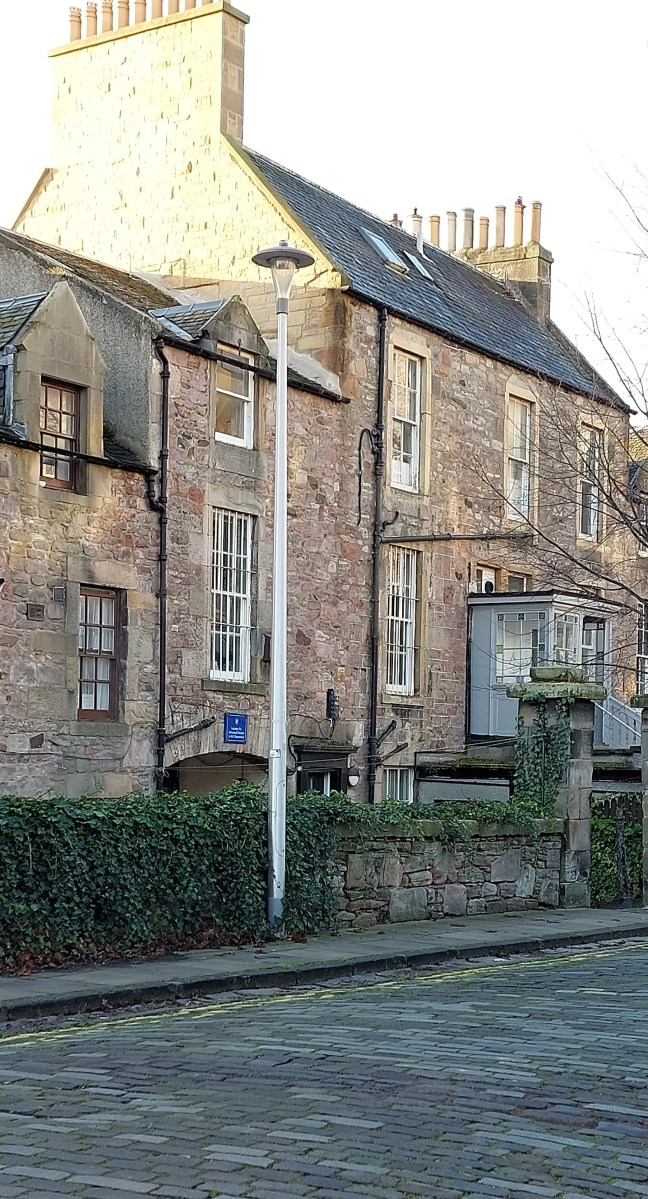
19th meets 20th century Looking back …Last glance from bus stop St Patrick’s Square
If you are looking for a next step after your PhD, or if like me, you’re making a change of direction – or need a spell concentrating on a particular research question in the Humanities – do consider applying.
I devoted my time to examining the archives of the Edinburgh publishers, Thomas Nelson. I initially entitled my project, ‘From National Songs to Nursery Rhymes, and Discussion Books to Dance Bands: investigating Thomas Nelson’s Musical Middle Ground’, but the nursery rhymes turned out to be poems, and weren’t what I had in mind! The rest? Yes, I researched them.
I found quite a bit of correspondence between Thomas Nelson’s editors, authors and compilers, which was gratifying. I was able to trace material in journals that I would not have had access to, had I not been in Edinburgh; there’s the excellent University Library collection of actual and digital resources, and the National Library of Scotland just down the road.
I have deferred commencing any significant written work until I had explored all the potentially relevant materials in the files. I believe I’ve now reached that point. As a result of conducting this research, I have ideas for extending my research in new directions, and I’m contemplating writing another book, so I need not only to explore potential audiences, but also to start working on a book proposal
However, I have also applied for and recently won an Athenaeum Award from the Royal Conservatoire of Scotland to enable me to conduct an oral history project. This work, to be conducted in 2026, will hopefully enable me to write a final chapter for my proposed monograph. (I’ll be blogging about this before too long, but there are things I need to do first, before I spill the beans!)
I have benefited from being part of a research community, hearing other scholars’ papers and discussing our research; and attending researcher development sessions. I was able to focus on my new direction as a researcher – important, after so many years as an ‘alt-ac’ researcher working in professional services. In this regard, I have also been in a position to submit some other unrelated work for publication, and I spoke at a conference at the University of Surrey in June, all of which gives me a sense that my research is gathering momentum.
Today, my last day, I took a cake to the University Library’s Heritage Collections; went to IASH’s Christmas lunch; and mulled over aspects of my ethical approval submission for my next project. (Oh, and drank quite a bit of coffee!)
Thank you so very much for a great year, IASH!
IASH (Institute for Advanced Studies in the Humanities)
I read some advice the other day (you’ll have seen it often enough):-
If you aren’t happy where you are working, then leave.
There’s another adage, which is similar on the face of it, which goes like this:-
If you keep on doing what you’ve always done, you’ll get what you’ve always got.
I know there’s value in the first suggestion, but it isn’t always possible, is it? You may be well aware that you’ve probably been in the same job too long, but personal circumstances mean you simply can’t leave. Or your role is so specialised that you would have to relocate, which might not be an option.
This is why I prefer the second adage. Sometimes you have to take a long view, and your Plan B might involve changing direction whilst sitting tight. Get ready for a new role, adjust your mindset accordingly, but accept that it’ll be a while before you make the move.
Alt-Ac-tually
I feel for people at the start of an academic career, with the struggle to get one foot on the ladder. Do you actively want an Alt-Ac career, or do you feel you have no choice?
I wanted to be an academic music librarian. That became my career, but later I regretted not having finished my first PhD and given academia a fair shot.
My Plan B began with getting a PhD. Afterwards, I was very fortunate to get partial secondment as a researcher for more than a decade, whilst remaining in librarianship for the bulk of my week.
Adjust Mindset
It’s not just a question of having the right qualifications. You need to ensure that you believe in yourself as a scholar, and that others see you as a serious academic.
Write the articles;
Publish the book (if appropriate) or chapters,
Attend conferences (partial attendance isn’t ideal but it’s better than non-attendance, if cost or time are problematical);
Give talks, whether scholarly or as public engagement;
Seek opportunities for career development. (I did a part-time PGCert a couple of years after the part-time PhD).
DO NOT, repeat DO NOT, write yourself out of a career option because you believe yourself incapable of it. (Aged 21, I believed I would never be able to stand in front of a class of students. And on what did I base that assumption? I’d just taught English to assorted European students for about a month. I did it. I planned lessons, and stood there, and did it. So who said I couldn’t?! And it gets worse. There weren’t many women doing music PhDs when I was 21. Guys told me it was incredibly hard to break into academia – and I just took their word for it. How naive WAS I?!)
Look instead for opportunities to practise the areas you feel need improvement. You may need to think laterally. Music librarians seldom teach music history, but they do deliver research skills training. Lots of it.
Today
Fast-forward to now. I left Glasgow at 7 am today, in subzero temperatures. Edinburgh is bright, clear and breathtakingly … well, breathtakingly cold as well as beautiful! A freezing cold early start might not sound like a luxury to the average retired librarian. I’ve never wanted to be conventional, though.
The Mercat Cross, Edinburgh
This is the first week in my IASH Heritage Collections fellowship. For the first time in my career, I’m NOT juggling librarianship and research. I’m part of a vibrant community of practice, and I have both the University Library and the National Library of Scotland just down the road. Thus, today, I saw a set of four Scottish song books that are remarkably hard to find as a set. (Three cheers for legal deposit!)
And last night, the year got off to an even better start, with an article being accepted. Just a few minor tweaks to do, which won’t be difficult.
It feels to me as though my long-term plan might be working out quite well!
My final days as a librarian are characterised by a combination of exhaustion and adrenaline. This cough is determined to flatten me, but I’m equally determined to plan ahead for pastures new!
I woke, coughing, at 3.30 am yesterday. In broad daylight, no less. I reflected grimly that, whilst I didn’t deny believers their joy at the summer Solstice, I personally would have preferred to have greeted the sun a couple of hours later. I coughed, made tea, and finally got up and read a book.
My decision came back and bit me in the heel later. I needed a wee power-nap at lunchtime. In the evening, I sat down to look at my new, 1951 catalogue (which came packaged in original 1966 wrapping, addressed to the last owner) in daylight … and woke to find myself sitting in the dark. No disrespect to the original compilers; I was just exhausted.
It wasn’t just the Coughing
I wasn’t just tired out by coughing and sleeplessness. I’d had so much excitement that I think I was just suffering from an excess of adrenaline followed by the inevitable slump at the end of the day!
All my chickens metaphorically hatched yesterday. I can now relate that, after a long time planning and waiting, I shall be starting my new, semi-retirement role with a new job title, and I couldn’t be happier. I have been promoted in semi-retirement!
Post Doctoral Research Fellow
As a Performing Arts Librarian, I was partially seconded as a postdoctoral researcher. But you can’t be seconded if you don’t hold the original post any longer, so when I retire, I will have a new part-time contract with a new title and job description. This pleases me enormously.
And in 2025, a Heritage Collections Fellowship at IASH
I’m extremely proud to have just accepted a six-month fellowship at the University of Edinburgh, at the Institute of Advanced Studies in the Humanities. Between January and June next year, I’ll be researching the archival collection of papers from Thomas Nelson, the Edinburgh publisher. There’s something singularly appropriate about a retired scholar librarian researching an archive in another academic library, particularly such an eminent collection. I’m particularly pleased because one of my strengths is in placing what I’m researching into its wider cultural and historical context, and this massive collection of papers certainly offers plenty of scope for that.
To begin with, there’s that new Audible book I bought the other day – nothing to do with Nelson, but hopefully giving me understanding about significant economic trends that would have impacted their trade. (Just let me stop coughing enough to listen to it …!)
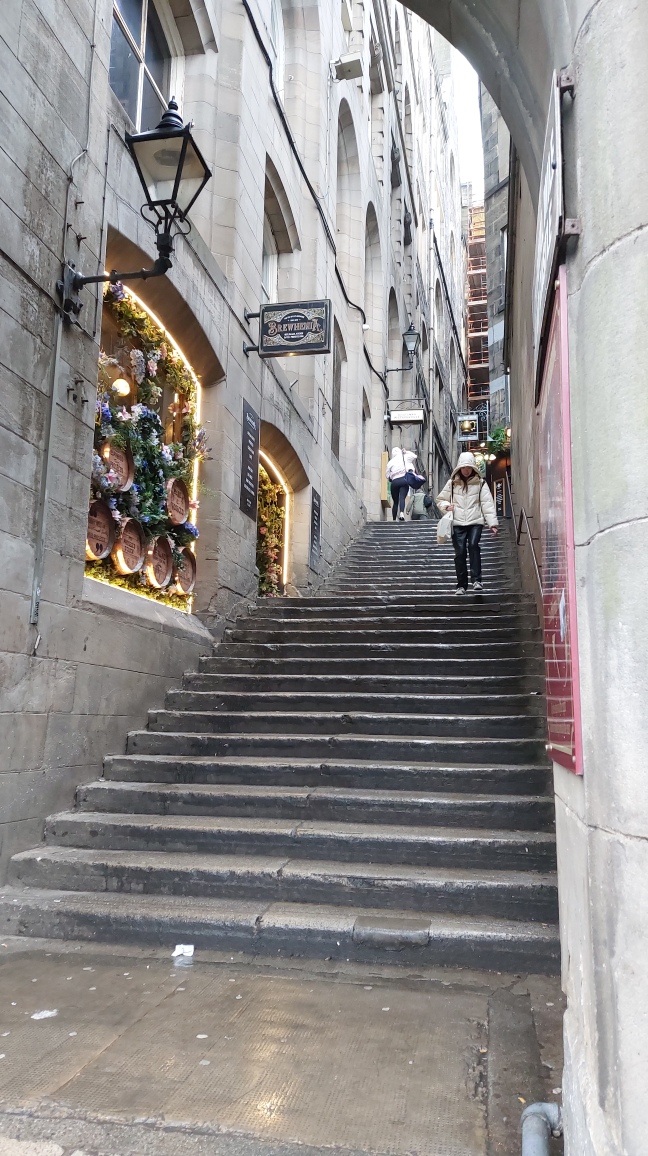
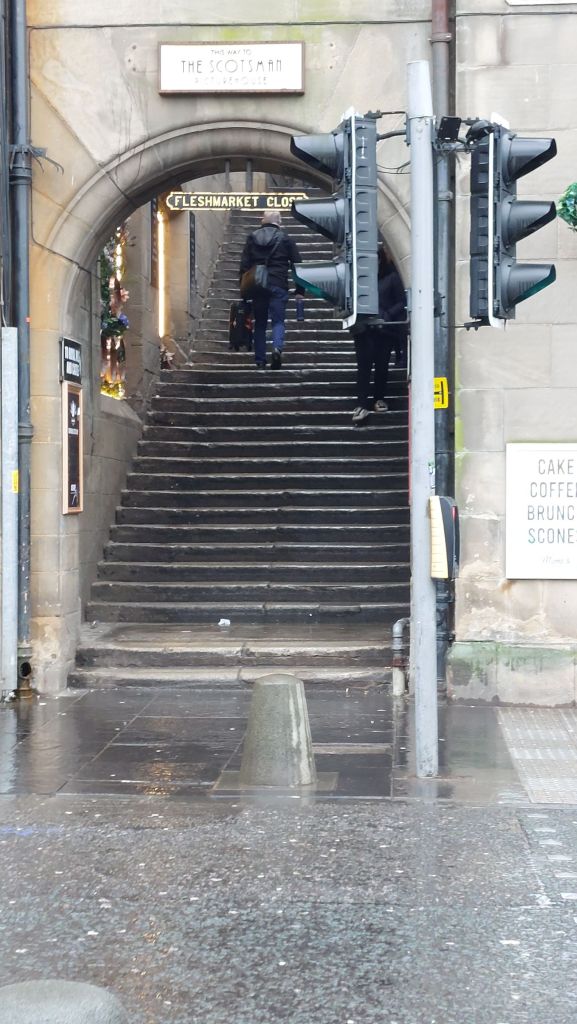
This is Fleshmarket Close in Edinburgh. It’s an absolute killer! I hadn’t ventured up those steps for some years – I swear they’ve got worse – and although my bags weren’t heavy, I was ready for a breather 1/3rd of the way up, and 2/3rd, not to mention at the top! Fitbit says I’ve put in my steps quotient, but annoyingly didn’t count how many flights of stairs I ascended, which is ironic.
But I was on a mission, and I did reward myself with a cuppa when I got to the University Library.
It’s good to go to a different place to study. (The library, I mean, not the cafe …) I think that in itself puts one in a frame of mind to come up with fresh ideas.
It was something of a scoping exercise. Now I need to sit and think about what I found, and its potential as a future research project. Tomorrow will doubtless see me writing away until I get my ideas in order.
I’ll leave you with a couple of publisher’s rejection letters – nothing to do with music or my research. I just stumbled across them, and smiled:-
Publisher to naive would-be authors:-
‘Dear Madam, […] For a book of merely 43 pages, 370 illustrations is excessive …’
Or this one:-
‘Thank you for offering a MSS on Cats and Reptiles. I regret that neither subject would be likely to suit our programme which is chiefly school and expository’.
I wonder if the author ever DID get their MS accepted somewhere?!
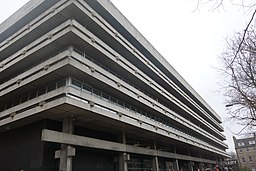
Edinburgh University Library (Wikimedia Commons image)
Readers of Brio (the professional journal of IAML UK and Ireland) will already have read the two-part contribution by Alastair Macdonald and Elizabeth Quarmby-Lawrence, which appeared in Autumn/Winter 2018 and Spring/Summer 2019. However, if you don’t subscribe or have access to that august journal, you might not have seen them. They’re a major contribution to the field, so it’s important that they’re publicised! And yes, they’ve been added to the Claimed From Stationers’ Hall network bibliography on the present website, too.
Alastair Macdonald and Elizabeth Quarmby-Lawrence, ‘From General Reid to DCRM(M): Cataloguing the Music Collections of Edinburgh University Library. Part 1, The Early Reid Professors and the First Catalogues, 1807-1941’, Brio, 55.2 (2018), 27–49
Alistair Macdonald and Elizabeth Quarmby-Lawrence, ‘From General Reid to DCRM(M): Cataloguing the Music Collections of Edinburgh University Library. Part 2, Professional Librarians and Automation, 1947-2019.’, Brio, 56.1 (2019), 62–83.
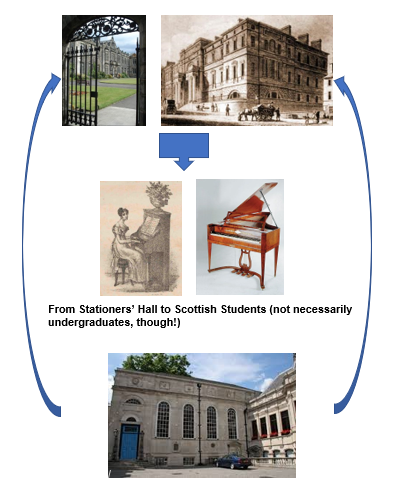
I’m looking forward to giving a talk to students at the University of Edinburgh this week. The University Library was one of the recipients of legal deposit materials during the Georgian era, before the law changed in 1836. Amongst all the learned tomes and textbooks, they received sheet-music too. The interesting question, of course, is what they did with it!
Now, as you know, I’m a bit of an enthusiast when it comes to bibliographies, but this time I’ve prepared a very minimal bibliography in a novel format. Should you wish to share it, here’s an easy URL to the same animated bibliography:-
In our research into the legal deposit music collected in British libraries during the Georgian era, a key thread is obviously the histories of individual collections between then, and now. Two hundred years is a long time, so contemporary evidence is significant.
For example, in 1826, the pseudonymous Caleb Concord wrote in the (short-lived) Aberdeen Censor that the students at Aberdeen’s Marischal College should be more concerned about what had happened to the legal deposit music that had been claimed by Aberdeen’s other higher education institution, King’s College. Corroborating this, Professor William Paul, who had once been librarian at King’s College, told an official commission in 1827, that he believed some of the music had been sold at some time before he went to the college, ie, before 1811. (Commissioners for Visiting the Universities and Colleges of Scotland, Evidence, Oral and Documentary, Taken and Received by the Commissioners … for Visiting the Universities of Scotland. Vol.4, Aberdeen (London: HMSO, 1837). There is evidence for Stationers’ Hall music having been sold at Edinburgh University in the late eighteenth century, too.
In St Andrews, by contrast, there are not only archival records documenting senate decisions about the library, but also the borrowing records, which I’ve written and blogged about quite a bit over the past couple of years – not to mention the handwritten catalogue by a niece of a deceased professor of the University. A payment was made to her in the 1820s, but the catalogue continued to be updated until legal deposits ceased to be claimed by the University in 1836, when the legislation changed. (Miss Lambert married and moved to London in 1832, so the later years were not completed by her.)
Bibliographic Control
In the middle few decades of the nineteenth century, some of the libraries began to attempt better control and documentation of their music. However, I don’t propose to write about every legal deposit library in this posting, because my main reason in writing today is to share a small but interesting excerpt from William Chappell’s first book about English national songs. Now, in my own doctoral thesis and subsequent book, I focused on Chappell’s later work, Popular Music of the Olden Time (1855-1859), and its later iteration, Old English Popular Music. I mentioned that PMOT had grown out of his earlier Collection of National Airs (1838-1840), and I highlighted a few key features of that work.
A Rare Find
Today, sifting through a library donation of largely 20th century scores, I was astonished to lift two obviously older volumes out of one of the boxes. We’re now the proud owners of the third set of Collection of National Airs known to be held in Scotland. Since I haven’t looked at this title for a decade or so, I leafed through both volumes briefly, to remind myself what they were like. (The volumes had belonged to a Mrs Chambers, and either she or a young relative had practised their drawing skills on the flyleaves, but we’ll overlook those for now!)
Chappell’s work is in two volumes: the first contains the subscriber’s list and a preface, with the rest of the volume devoted to the tunes themselves. The second volume contains commentary, winding up with a conclusion and then an appendix.
England has no National Music
The preface opens with the words which have echoed (metaphorically speaking) in my ears since I first read them:-
“The object of the present work is to give practical refutation to the popular fallacy that England has no National Music,- a fallacy arising solely from indolence in collecting; for we trust that the present work will show that there is no deficiency in material, whatever there may have been in the prospect of encouragement to such Collections.”
Of course, Chappell was preoccupied with national songs (“folk songs”) and ballads – as was I, at the time I first read it. So I hadn’t paid attention to a footnote later in the Preface. But, as I read on, there it was – William Chappell commenting on the legal deposit music in what is now the British Library! It is clear that the music – in Chappell’s eyes, at any rate – was in need of organisation. (We now know that it was much the same in Oxford, Edinburgh or Edinburgh’s Advocates’ Library – the forerunner of the National Library of Scotland.)
On page iv, Chappell named various key collections of British tunes, naming the British Museum (the forerunner of our British Library) as the repository for some of these collections. A footnote afforded him the chance to make an aside about the contemporary custodial arrangements there.
Attentive, Obliging … Inaccessible, Not Catalogued
“†It is to be hoped that the attention of the Trustees may be soon drawn to the state of the invaluable Library of Music in the British Museum; for whilst the publisher is taxed a copy of every work, it is but just that it should be open to inspection. At present, with the exception of a few works on Theory, which, being almost entirely letterpress, are included with the books, the Music is perfectly inaccessible, – not being catalogued or classed in any manner. No persons can be more attentive or obliging than the attendants in the Reading-room, but in this they are unable to render any assistance. It is not generally known that the manuscripts of the great Henry Purcell and many others are also in the Museum; but they are in the same state as the music, and are not to be seen.”
Changing the subject, it’s interesting for us as modern readers to note that Chappell’s conclusion at the end of the second volume winds up with a sorrowful observation about the decline in musical education, since an unspecified time when music was a key part not only of a young gentleman’s education, but also of young children’s.
Merry England
“The Editor trusts, however, that he has already satisfactorily demonstrated the proposition which he at first stated, viz. that England has not only abundance of National Music, but that its antiquity is at least as well authenticated as that of any other nation. England was formerly called “Merry England.”
Music taught in all public schools
“That was when every Gentleman could sing at sight;- when musical degrees were taken at the Universities, to add lustre to degrees in arts;- when College Fellowships were only given to those who could sing;- when Winchester boys were not suffered to evade the testator’s will, as they do now, but were obliged to learn to sing before they could enter the school;- when music was taught in all public schools, and thought as necessary a branch of the education of “small children” as reading or writing;- when barbers, cobblers and ploughmen, were proverbially musical;- and when “Smithfield with her ballads made all England roar.” Willingly would we exchange her present venerable title of “Old England,”, to find her “Merry England” once again.”
Chappell should read the commentary in today’s social media about the self-same topic!
Although, as we’ve seen, some Georgian legal deposit libraries didn’t actually want to retain music – after all, it wasn’t yet a university subject – the pattern of retention was varied to say the least. The University of St Andrews kept quite a bit of music. Meanwhile, the University of Edinburgh retained some but certainly not all that was on offer. However, there’s one category of musical material that seems to have been deemed worth keeping, and that was pedagogical material. I had already noticed quite a bit of it at the University of St Andrews, and I did a bit of research into who borrowed what kind of material. Bear in mind that an ability to play the piano was quite desirable for the well-bred young Georgian miss. When I started looking at the Edinburgh collection more recently, I was interested to see that music teaching books were popular there, too. I wonder if the Edinburgh professors ever borrowed music for their daughters and friends in the same way the St Andrews chaps did?
I plan to see what I can identify on the Edinburgh spreadsheets, and see how it maps across with the St Andrews collections, just to see if there’s much overlap. It’ll be a bit hit-or-miss, but a quick survey will tell me if there is an interesting story to be uncovered. Coincidentally, I did once wonder if any students at my workplace might be interested in the history of piano pedagogy. Little did I realise that I might eventually be the one getting interested in much earlier material in a research capacity!
If I got interested in all of the pedagogical material published between 1780 and 1840, it would be a bit like Alice disappearing down a rabbit-hole, so I’m inclined to focus on one category in particular: the teaching of “thorough bass” (aka “figured bass”) and harmony – in other words, on theory, more than instrumental technique. And if I were to find a few observations about teaching music theory to girls and women, then that would be an added bonus, wouldn’t it? You wouldn’t expect the approach to be different, but it would be interesting to notice any remarks made specifically to them.
Here’s a thought, to start with. After his opening preface, Latour’s thorough bass tutor is heavy on musical examples and light on text, which is a little disappointing given my predeliction for paratext. Nonetheless, in that opening preface, we learn that he aimed to teach “what a young Lady ought to know, viz: to be able to accompany the Voice with propriety, to play from a figured Bass, and to compose her own Preludes, Variations, &c.” From this, we can tell that the “young Lady” was not expected merely to be a performer, but to compose (or improvise?) as well. And the pages of examples that follow provide a good introduction to generating variations – perhaps on popular songs, such as the many sets of variations on national and operatic airs that abounded in the early nineteenth century.
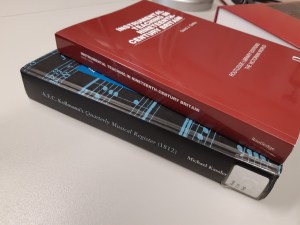
If one instructional treatise tells us this much, how much more might the others reveal?! I have a new book that I need to start reading: David J Golby, Instrumental Teaching in Nineteenth-Century Britain (Routledge, 2016 ) – originally an Ashgate imprint, 2004.
Followers of this blog will know that you can look at historical piano teaching materials in the libraries that hold legal deposit collections. Nowadays, there are a handful of big national and university libraries in the UK that still receive one copy of everything published, under statutory legislation. But there are other libraries – especially in Scotland – that also received this material, until the beginning of Queen Victoria’s reign.
Theodore Latour was pianist to King George IV – Victoria’s uncle. He taught privately and at girls’ schools, played and composed, and also wrote some piano tutor books. As it happens, Emily Bronte had music by Latour in her collection, including one of his books of progressive exercises, although I haven’t examined that particular publication. (Robert K. Wallace mentions it, in his Emily Bronte and Beethoven: Romantic Equilibrium in Fiction and Music.)
It’s possible to find copies of some of Latour’s works online via Google Books, IMSLP or Archive.org, so if you’re interested, we could point you in the right direction.
I have been experimenting with other ways of talking/writing about the Stationers’ Hall Georgian legal deposit music corpus. Here are my Saturday afternoon efforts. Have you tried any such audiovisual presentations in your own research? Do you find them helpful?
Hans Gal (1890-1987) catalogued Edinburgh University’s Reid Music Library during the summer and autumn of 1938, at the instigation of Sir Donald Tovey. The latter was keen to find work for the gifted composer and musicologist, who had emigrated from Vienna when Hitler annexed Austria. (Here’s a recording of his earlier Promenadenmusik for wind band, which he wrote in 1926. ) A grant from the Carnegie Trust enabled Gal’s catalogue to be published in 1941. When the Second World War ended, Gal joined the University music staff, and remained there beyond retirement age.
The reader is referred to the Hans Gal website for further biographical information (I am checking this weblink, which occasionally falters):- http://www.hansgal.org/
Gál, Hans, Catalogue of manuscripts, printed music and books on music up to 1850 : in the Library of the Music Department at the University of Edinburgh (Reid Library) (London, Edinburgh: Oliver and Boyd, 1941)
(Partially) catalogued by Gal
The catalogue is in three parts, listing manuscripts, printed music, and books on music. Gal did not list every individual piece of music in the library, but prioritised more serious classical music, whether vocal or instrumental. One might suggest that there were various reasons for Gal’s decision.
In his preface, he explains that, ‘for practical reasons I confined this catalogue to the old part of the library, namely the manuscripts, printed music and books on music up to 1850, which is the latest limit of issues that might be looked upon as of historical importance’. [Gal, vii]
However, this was not the only limitation placed on the listing. Gal omitted many of the pieces of sheet music that must have arrived as legal deposit copies during the Georgian era, until copyright legislation changed in 1836. The Reid music cupboards contained a number of Sammelbänder, or ‘binder’s volumes’, ie, bound volumes of assorted pieces of music. Occasionally Gal made oblique reference to these, eg, to cover the 44 items in volume D 96:-
“Songs, Arias, etc., by various composers (Th. Smith, D. Corri, Bland, R. A. Smith, Rauzzini, Davy, Kelly, Urbani; partly anon.) Single Editions by Longman & Broderip, Urbani, Polyhymnian Comp., etc., London (ca. 1780-1790). Fol. D 96″ [Gal, 44]
Longman & Broderip were prolific music publishers, amongst the most assiduous of firms making trips to Stationers’ Hall to register new works. They published a lot of theatrical songs and arrangements, and much dance music, as well as the more serious, ‘classical’ music repertoire. The catalogue entry cited above details some more commonly known composers of decidedly middle-of-the road, if not downmarket material. One does not need to speculate as to whether Gal considered such material less respectable, for he made no secret of his disdain for much of the music published in this era! In the preface, he asserts that,
“The gradual declining from Thomas Arne to Samuel Arnold, Charles Dibdin, William Shield, John Davy, Michael Kelly, is unmistakeable, although there is still plenty of humour and tunefulness in musical comedies such as Dr Arnold’s “Gretna Green”, Dibdin’s “The Padlock”, Shield’s numerous comic operas and pasticcios.
“After 1800 the degeneration was definitive, in the sacred music as well as in songs and musical comedy. […] It is hardly disputable that the first third of the nineteenth century, the time of the Napoleonic Wars and after, was an age of the worst general taste in music ever recorded in history, in spite of the great geniuses with which we are accustomed to identify that period.” [Gal, x]
Faced with several hundred of such pieces in a number of bound volumes, and quite possibly a limited number of months in which to complete the initial cataloguing, it is hardly surprising if Gal was content to make a few generic entries hinting at this proliferation of ‘bad taste’. (One might add as an aside, that Gal’s wife at one point observed that Gal ‘hated swallowing the dust in archives’, in connection with an earlier extended project in the late 1920s – clearly, he was able to overcome his distaste when the need arose! (See http://www.hansgal.org/hansgal/42, citing private correspondence of 10.10.1989)
Interestingly, it is evident that Edinburgh, like several other of the legal deposit libraries, must have been selective in what was retained, but it’s significant that national song books were certainly considered worth keeping. Gal, in turn, included some of the prominent titles in his listing.
Thus, Gal’s catalogue is another reminder to us that the history of music claimed from Stationers’ Hall under legal deposit in the Georgian era, actually and actively continues beyond the Georgian era, for the material has already been curated by musicologists and bibliographers prior to our own generation. In St Andrews, Cedric Thorpe Davie took an active interest, whilst Henry George Farmer was involved in curating the University of Glasgow collection.
Meanwhile, in connection with the current Claimed From Stationers’ Hall network research, the priority is to establish which volumes – formerly in the Reid School of Music cupboards, but now in the University of Edinburgh’s Centre for Research Collections – were received under legal deposit. Two spread-sheet listings enable us to examine the contents of different volumes, by volume:-
Where publication dates are not given in the spread-sheet, they can be looked up in Copac, and even if there are no decisive dates, then their presence in other legal deposit collections will suggest that these copies arrived by the same route. If music predates 1818, then works can be looked up in Michael Kassler’s Music Entries at Stationers’ Hall, 1710-1818, from Lists prepared for William Hawes, D. W. Krummel and Alan Tyson. (Click here for Copac entry.)
Essentially, the first task is to ascertain which volumes contain legal deposit music, and then to look not only at what survives, but whether there are any patterns to be discerned. In terms of musicological, book, library or cultural history, the question today is not whether the music was ‘degenerate’ or in ‘bad taste’, but to ask ourselves what it tells us about music reception and curation in its own and subsequent eras.
Postscript: as an interesting twist in the world of library and book history, my own copy of Gal’s catalogue was purchased secondhand – a withdrawn copy from a university library where the music department closed a few years ago. What goes around, comes around, as they say!







 Today, sifting through a library donation of largely 20th century scores, I was astonished
 to lift two obviously older volumes out of one of the boxes. We’re now the proud owners of the third set of Collection of National Airs known to be held in Scotland. Since I haven’t looked at this title for a decade or so, I leafed through both volumes briefly, to remind myself what they were like. (The volumes had belonged to a Mrs Chambers, and either she or a young relative had practised their drawing skills on the flyleaves, but we’ll overlook those for now!)
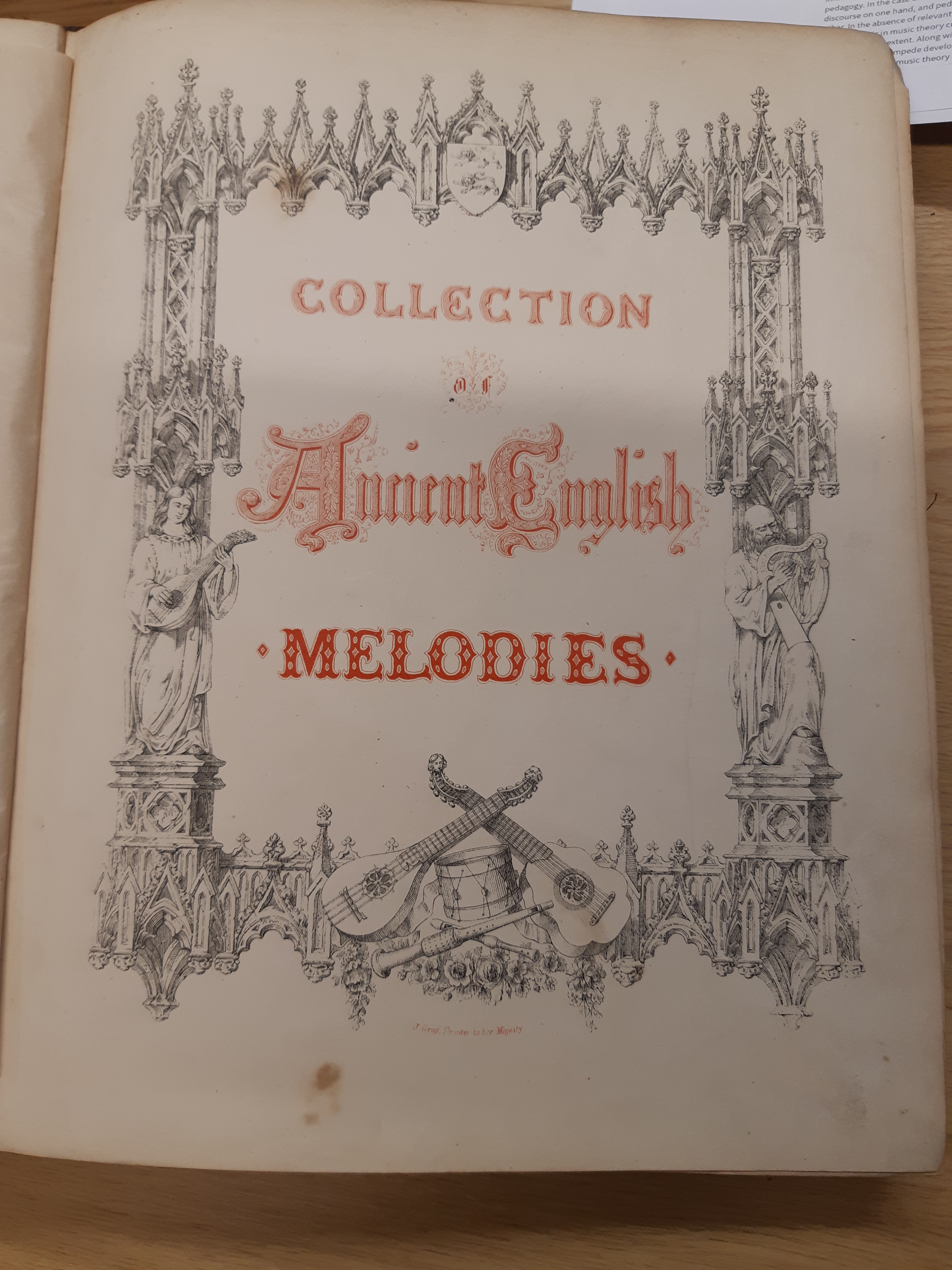 Chappell’s work is in two volumes: the first contains the subscriber’s list and a preface, with the rest of the volume devoted to the tunes themselves. The second volume contains commentary, winding up with a conclusion and then an appendix.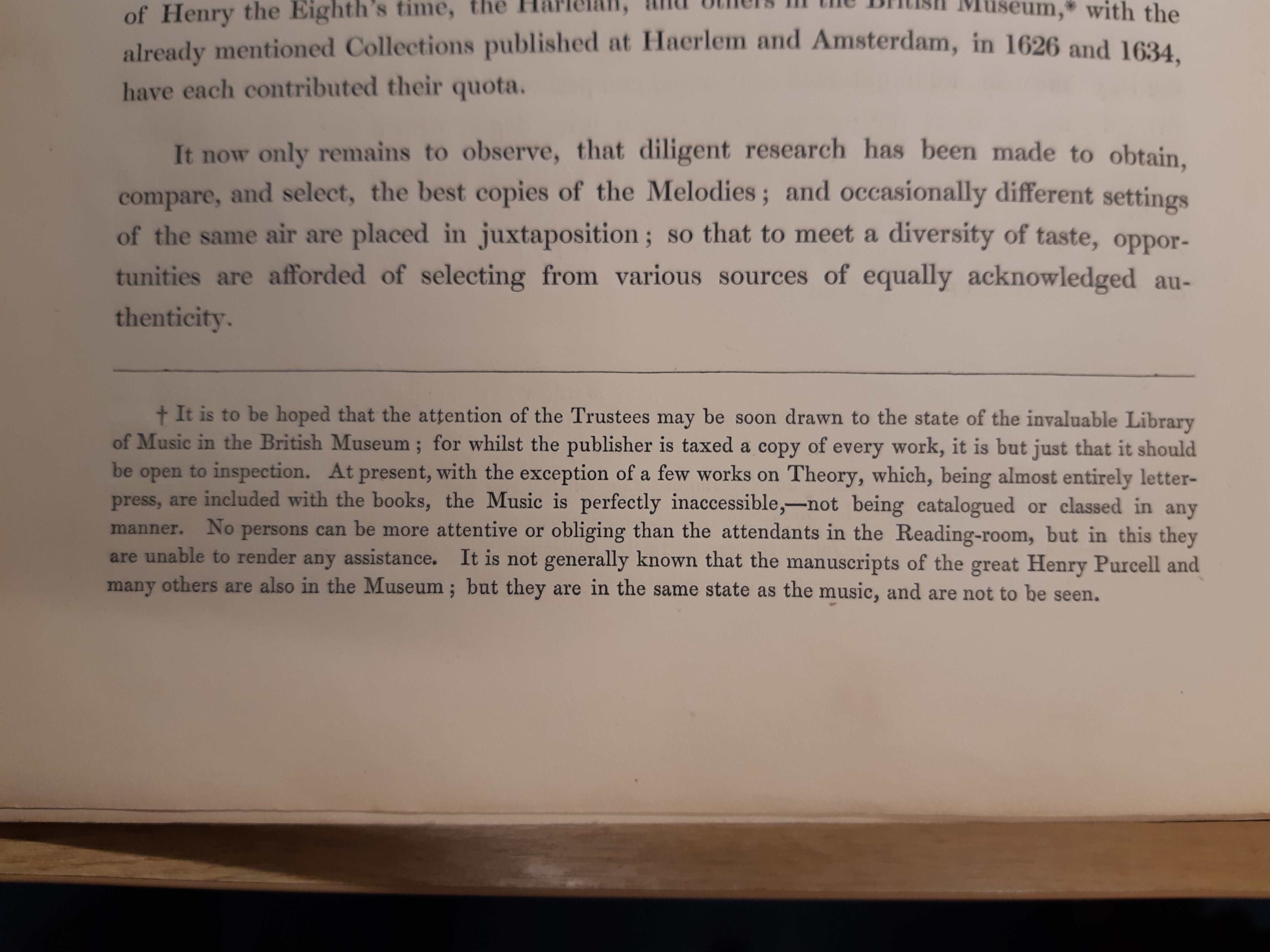
 I have a new book that I need to start reading: David J Golby, Instrumental Teaching in Nineteenth-Century Britain (Routledge, 2016 ) – originally an Ashgate imprint, 2004.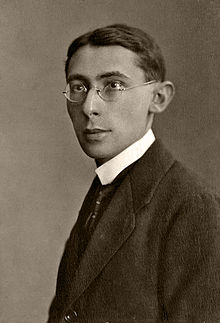

 Karen McAulay, Musicologist