Dr Karen McAulay explores the history of Scottish music collecting, publishing and national identity from the 18th to 20th centuries. Research Fellow at Royal Conservatoire of Scotland, author of two Routledge monographs.
The International Congress starts on Monday and runs until Friday. I am only going to be in Cambridge on Thursday, but I’ve been handling comms for the event, so I look forward to actually meeting all the people I’ve been reaching out to for the past couple of months! (Above, you see Don, the Congress mascot, hoping that the drive down won’t be as wet as it is tonight!!)
After concentrating with all that’s left of heart and soul on my monograph, it will be strange to be there with my ‘music librarian’ hat on, my research into Scottish music publishers largely irrelevant to anyone but myself! It’ll also be a bit strange, to hear everyone talking about the future of music librarianship, when my music librarianship will be a thing of the past by this time next year.
-0-0-0-0-0-0-0-
We were watching an old programme of Heartbeat last night – the one where Alf is told he’s retiring, and he comments that he feels as though he’s almost ‘not there’ already. I understand that feeling. I’ll hopefully still have my research existence. Maybe I’ll find another part-time existence somewhere else, too. But where? I have no secret plans – I’m just trusting that an irresistible opportunity will arise when I have time to pursue it!
I’m so pleased with this lovely post, arising from an email exchange with one of our dedicated new Royal Conservatoire of Scotland singing graduates. I posted this on the Whittaker Library blog, Whittaker Live. I hope you like it. I am very grateful to our graduate contributor.
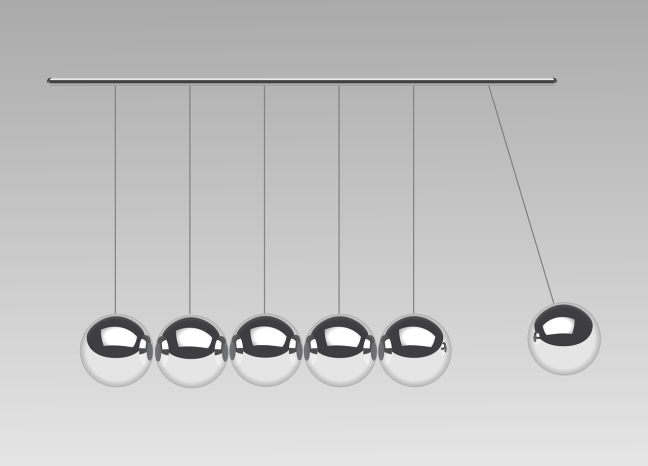
I’ll spend my 15 minute tea-break writing this – it won’t be a long read! Thinking about all the things I’ve got to do, the metaphor came into my mind of a pendulum. It’s supposed to swing in two dimensions – an arc, not an ellipse. But my mind is full of so many different ideas that it swings all over the place.
I’ve got a book to finish – but that’s when I have my Researcher hat on. I try not to think about it when I’m busy being a librarian.
I’m also promoting an international congress for my professional association – something else I do in my ‘spare’ time. So this morning, before I got started with the day-job, I took a photo of the mascot and dashed off a tweet.
Back to the day-job. I know what I intend to do this morning, and I open the websites and spreadsheets that I need to use. But incoming emails are inevitably a distraction – aren’t they always? Especially when we’re offered a book that relates to the topic of my book. It’s being offered to the library, not me personally, but as a researcher, oh how I’m bursting to see that book. Quick – check the catalogue, dash off an email …. Phew! The book will be ours. Then there’s mention of another conference … relevant? Or a distraction? No, I haven’t got time at the moment. I haven’t got time to attend, not whilst I have a book to finish!
But I’d better get back to the task in hand.
So I look on my list, look in the catalogue, look in commercial catalogues and at composers’ own websites, and check to see if they’re on Twitter.
The task in hand involves looking up works by the women composers who I’ve got on a long list, and seeing if they’ve composed anything for under-represented instruments. So, music for tuba, bagpipes, accordion, bassoon, double bass … because my goal at the moment is to provide plenty of good music by women composers, for our students to explore and incorporate into their repertoire. But if there’s not much for their instrument, that will be problematical. It’s my job to find it! (Well, not for every individual student, I hasten to add, but I do want to ensure there’s material in the library for them to find – and, more crucially, perform.)
(Oh, Twitter! says my overactive mind. Has anyone responded to the library recently? to the professional association’s conference site? Have our sponsors posted anything interesting?)
I metaphorically slap my own wrist and go back to the list of women composers. The woman composer I was looking up doesn’t seem to have a Twitter account anyway, so there won’t be anything informative about her there. The trouble is, it’s all very well finding out what they’ve composed. From my point of view as a music librarian, it’s whether we can buy the performance materials! Yes, some of it could be hired for a performance, but that’s not within my remit. What I want is scores on library shelves, accurately catalogued.
I Googled, “Balancing a pendulum”. I was being metaphorical, but of course Google took me literally, and told me how to balance a clock. Which doesn’t really help much! However, I do know that removing distractions is a good way to aid concentration. I’ll post this, close a few windows, and do some cataloguing to give my eyes a rest from spreadsheets.
I’ve mentioned before how, for the past four or five years, I’ve particularly focused on getting more music by women and composers of colour into the Whittaker Library. By the time I reach retirement age, there will be a good, up-to-date selection of such works for students to choose from. (I’ve also mentioned my rationale for this activity – if we introduce this music to today’s students, then whether they go out and perform it, or teach it, or combine these with other activities, there’s hope that they’ll pass on a wider, more receptive approach to repertoire-building to the students that follow on behind them.
Today, I was invited to attend a recital by one of our students. Two of the pieces were pieces by women composers, that their teacher had recommended us to acquire. It was a great recital – innovative, exciting and impressive. One particular piece involved a percussionist playing a counterpart on – wait for it – an assortment of carefully-chosen, differently pitched flower pots. You didn’t think flower pots were pitched? No, they aren’t deliberately tuned, but they can be chosen for the sound they make when you hit them! I bet you none of the audience had ever heard flower pots in a recital before, but it was great. Another piece had been written with piano accompaniment, but this time it was played on accordion. (From a personal point of view, this was of considerable interest. I got an accordion a few months before the pandemic, and a concertina a few weeks before. I get a lot of enjoyment out of my beginner’s attempts with two inexpensive instruments. But to sit and hear a truly excellent instrument in expert hands – and a “button box”, too; completely baffling to me! – well, that was something else. If you think accordions are just about ceilidhs and the good old days of Jimmy Shand, then believe me, you’ve missed so much.)
I and my colleagues even got a mention in the programme “credits”, for having obtained the music. It makes all the difference to feel that we were part of the programme-planning in our own small way. Sometimes, in a performing institution, it’s easy to feel that our hidden-away, behind-the-scenes work is really very insignificant and unnoticed. Obviously, we research and source the materials, catalogue and index them, then sit back and wait to see what happens. Our job is effectively done, one score or resource at a time, and the performers then go off and do the hard work, putting together a balanced programme and practising hard. We don’t always get to hear the results, though, which is why this morning’s recital was so lovely.
I have already expressed my opinion on – and weariness of – repetitive cataloguing. Processing CD after CD, all in the same genre and series, is mind-numbing. The mental exercise in cataloguing and indexing fresh, contemporary sheet music is definitely more enjoyable! Nothing can be ‘discovered’ in a library unless it has first been carefully catalogued, indexed and assigned the correct place on the shelves.
Seeing and hearing the results reminds me of the importance of music librarianship. A timely reminder!
News of a potentially interesting archival item triggers an attack of insatiable curiosity. I must confess that the musicologist is somewhat more triggered than the custodian!
So, I have a few questions that need answered. Where and when was the original owner born? When did they leave Scotland? What did their Scottish ancestry/identity mean to them?
And most importantly, was ‘Scottish’ music a significant part of their repertoire?
As I mentioned in earlier posts, my librarianship is amply qualified, and embodies four decades of expertise, but musicology and research came first. The musicologist is buried beneath the outer librarian, and can’t help bubbling to the surface when an intriguing possibility presents itself!
If I can answer these initial questions satisfactorily, then I’ll want to explore further. I think you can guess what I need to do this morning!
AND LATER …
Well, the original owner called themselves Scottish. But they were born in England of a Scottish mother. Should I order their birth certificate? It’s not cheap, and could arrive too late to be useful. But … !
The government moved the goalposts – when I started work, I imagined I’d have retired by now. Instead, I’ve worked an extra five years, with one more to go. I shall hit 66 in summer 2024. I don’t want to retire entirely, but I must confess I’m utterly bored with cataloguing music! (Except when it turns out to be a weird little thing in a donation, perhaps shining a light on music education in earlier times, or repertoire changes, or the organisation behind its publication – or making me wonder about the original owner and how they used it … but then, that’s my researcher mentality kicking in, isn’t it?!)
Status Quo: Stability and Stagnation
Everyone knows I’m somewhat tired of being a librarian. Everyone knows that my heart has always been in research. Librarianship seemed a good idea when I embarked upon it, and it enabled me to continue working in music, which has always been my driving force. But the downside of stability – and I’d be the first to say that it has been welcome for me as a working mother – has been the feeling of stagnation. No challenges, no career advancement, no extra responsibility. Climbing the ladder? There was no ladder to climb, not even a wee kickstep! (I did the qualification, Chartership, Fellowship, Revalidation stuff. I even did a PhD and a PG Teaching Cert, but I never ascended a single rung of the ladder.)
In my research existence, I get a thrill out of writing an article or delivering a paper, of making a new discovery or sorting a whole load of facts into order so that they tell a story. I love putting words on a page, carefully rearranging them until they say exactly what I want them to say. I’m good at it. But as a librarian, I cannot say I’m thrilled to realise that I’ve now catalogued 1700 of a consignment of jazz CDs, mostly in the same half-dozen or so series of digital remasters. (I’d like to think they’ll get used, but even Canute had to realise that he couldn’t keep back the tide. CDs are old technology.)
The Paranoia of Age
But what really puzzles me is this: when it comes to the closing years of our careers, is it other people who perceive us as old? Is age something that other people observe in us? Do people regard us as old and outdated because they know we’re close to retirement age?
Cognitive Reframing (I learnt a psychology term!)
Cognitive reframing? It’s a term used by psychologists and counsellors to encourage someone to step outside their usual way of looking at a problem, and to ask themselves if there’s a different way of looking at it.
So – in the present context – what do other people actually think? Can we read their minds? Of course not. Additionally, do our own attitudes to our ageing affect the way other people perceive us? Do I inadvertently give the impression that I’m less capable? Do I merely fear that folk see me as old and outdated because Iknow I’m approaching retirement age? A fear in my own mind rather than a belief in theirs?
How many people of my age ask themselves questions like these, I wonder?
Am I seen as heading downhill to retirement? Increasingly irrelevant? Worthy only to be sidelined, like the wonky shopping-trolley that’s only useful if there’s nothing else available?
Is my knowledge considered out-of-date, or is it paranoia on my part, afraid that I might be considered out of date, no longer the first port-of-call for a reliable answer?
When I queue up for a coffee, I imagine that people around me, in their teens and early twenties, must see me as “old” like their own grandparents. And I shudder, because I probably look hopelessly old-fashioned and fuddy-duddy. But is this my perception, or theirs? Maybe they don’t see me at all. Post-menopausal women are very conscious that in some people’s eyes, they’re simply past their sell-by date. I could spend a fortune colouring my hair, and try to dress more fashionably, but I’d still have the figure of a sedentary sexagenarian who doesn’t take much exercise and enjoys the odd bar of chocolate! (And have you noticed, every haircut leaves your hair seeming a little bit more grey than it was before?)
Similarly, I worry whether my hearing loss (and I’m only hard of hearing, not deaf) causes a problem to other people? Does it make me unapproachable and difficult to deal with? I’m fearful of that. Is it annoying to tell me things, because I might mis-hear and have to ask for them to be repeated? Or do I just not hear, meaning that I sometimes miss information through no fault but my own inadequate ears? Friends, if you thought the menopause was frightening, then believe me impending old age is even more so. I don’t want to be considered a liability, merely a passenger. And I know that I’m not one. But I torment myself with thoughts that I won’t really be missed, that my contribution is less vital than it used to be.
Gazing into the Future
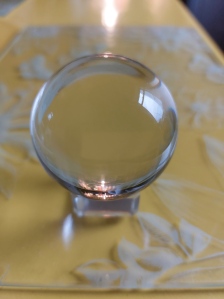
Crystal Ball Gazing
I wonder if other people at this stage would agree with me that the pandemic has had the unfortunate effect of making us feel somewhat disconnected, like looking through a telescope from the wrong end and perceiving retirement not so much a long way off, as approaching all too quickly? The months of working at home have been like a foretaste of retirement, obviously not in the 9-5 itself (because I’ve been working hard), but in the homely lunch-at-home, cuppa-in-front-of-the telly lunchbreaks, the dashing to put laundry in before the day starts, hang it out at coffee-time, or start a casserole in the last ten minutes of my lunchbreak. All perfectly innocuous activities, and easily fitted into breaks. But I look ahead just over a year, and realise that I’ll have to find a way of structuring my days so that I do have projects and challenges to get on with.
Not for me the hours of daytime TV, endless detective stories and traffic cops programmes. No, thanks! Being in receipt of a pension need not mean abandoning all ambition and aspiration. I want my (hopeful) semi-retirement to be the start of a brand-new beginning as a scholar, not the coda at the end of a not-exactly sparkling librarianship career. If librarianship ever sparkles very much!
I’m fortunate that I do have my research – I’m finishing the first draft of my second book, and looking forward to a visiting fellowship in the Autumn. As I wrote in my fellowship application, I want to pivot my career from this point, so that I can devote myself entirely to being a researcher, and stop being a librarian, as soon as I hit 66. And I want to be an employed researcher. I admire people who carve a career as unattached, independent scholars, but I’d prefer to be attached if at all possible!
Realistically, I will probably always be remembered as the librarian who wanted to be a scholar. At least I have the consolation of knowing that – actually – I did manage to combine the two.
Vol. 11 No. 1 (2023): Special Issue on Breaking the Gender Bias in Academia and Academic Practice
Special Issue of JPAAP exploring and addressing issues, dimensions and initiatives related to ensuring a greater gender parity and representation within academic institutions, academic and academic-related work, and related professional practices. Guest edited by Alexandra Walker and Keith Smyth. (Published:2023-02-22)
When I graduated with my PhD in 2009, there was a flurry of interest in me as a ‘mature’ postgraduate, and my ‘portfolio career’. There’s only one problem – it isn’t a portfolio career! I work in one place, full-time, on a full-time salary. I’m not self-employed, nor do I do a little bit of this and that for different employers. It’s correct that I spend 0.7 of my time as an academic librarian, and 0.3 of my time as a researcher. If I had any aspirations at the start of my librarianship career, it was to be a scholar librarian of some kind, and as you see, that IS where I’ve ended up. I don’t claim that it exactly reflects who I am now – in my head, I’m more scholar than librarian.
So, if I don’t consider myself a good example of a portfolio career, then here’s another conundrum: do I do interdisciplinary research? If at some times I’m writing about librarianship, and at other times I’m writing about nineteenth to twentieth-century music publishing, does that make my research interdisciplinary? I guess it probably does, even if the librarianship and the music publishing seldom meet! I’m often contemplating the social context of whatever I’m researching. And just occasionally – like my recent article about Clarinda Webster – I manage to mention librarianship, music publishing AND social history in one fell swoop.
At other times, my research finds its way into the librarianship quite naturally. This week, the RCS Library is having a series of events throwing a Spotlight on Diversity. I’ve written a short blogpost about Scottish Women Composers as one of my contributions. The names I’ve suggested are just a start – and I haven’t attempted to include every Scottish woman who wrote a tune, because I’m assuming our students are basically looking for recital repertoire. My research has led me to several more women who made their own unique contribution, but they’ll get a mention in the book I’m currently writing. Their pieces aren’t necessarily recital repertoire, or even easily sourced today.
When I’m sent an e-badge by my professional organisation, it would be churlish not to use it, wouldn’t it? But I wasn’t quite sure where to put it, so I’ll leave it here for now. I’m a Chartered Fellow of the Chartered Institute of Library and Information Professionals; a music librarian; and a musicologist.










 Karen McAulay, Musicologist