Fellow Amongst Kindred Spirits

Print Networks conference programme cover

Perhaps it’s not surprising to find more librarians and former librarians than usual at a research conference about book and print history and the book trade – but I was certainly in my element amongst the researchers at this week’s Print Networks conference in Newcastle. Indeed, I even found two more musicologists and a music practitioner amongst the kindred spirits, so I didn’t really need to try very hard to make my point that printed music history is indeed a branch of book history. Glasgow printers also got a look-in, so my talk about Glasgow music publishers wasn’t out on a limb geographically, either.

Then there were trade catalogues, book pirates, Stationers’ Hall, slave narratives, radical newspapers in Birmingham … just so many interesting papers!

Having spent the first part of the week in Newcastle, the last couple of days were ‘mine’, an agreeable blend of sociability, along with mundane catching-up at home, and (ahem!) more research.

A Lost Work, aka, a Ghost Publication

An old copy of a classical piece in a Mozart Allan edition raised some interesting questions – could I resist following them up? Indeed I could not. I’ve found another lost work – or as I prefer to call it, a ‘ghost’ publication. It would have been so very nice to have tracked this down. The advertisement absolutely reinforced a point I make in my forthcoming book. But it’s in neither Jisc Library Hub Discover, WorldCat, the British Newspaper Archive, Abe, Alibris, eBay, the Sheet Music Warehouse, Google Books nor Archive.org. There’s no mention of an editor or compiler for this collection, just a title. Oh, bother!

London suburbs

And a London Gent supplying Mozart Allan with Light Music?

It gets worse – another advert at the back of the same classical piano piece appears to suggest that a light-music composer who published almost exclusively with Ascherberg, Hopwood and Crew, also published a few early works with Mozart Allan – but using a different first name. Two of the works published by Mozart Allan also appear later with the first name he was mainly known by. This is interesting. I’ve spent several hours yesterday and today trawling eBay (and treating myself), whilst on the trail of this gent. Yes, I know the book is already in preparation. Anything I find won’t go in the book, but research doesn’t stop when a book is published, does it?!
Seeking Solace in the Library

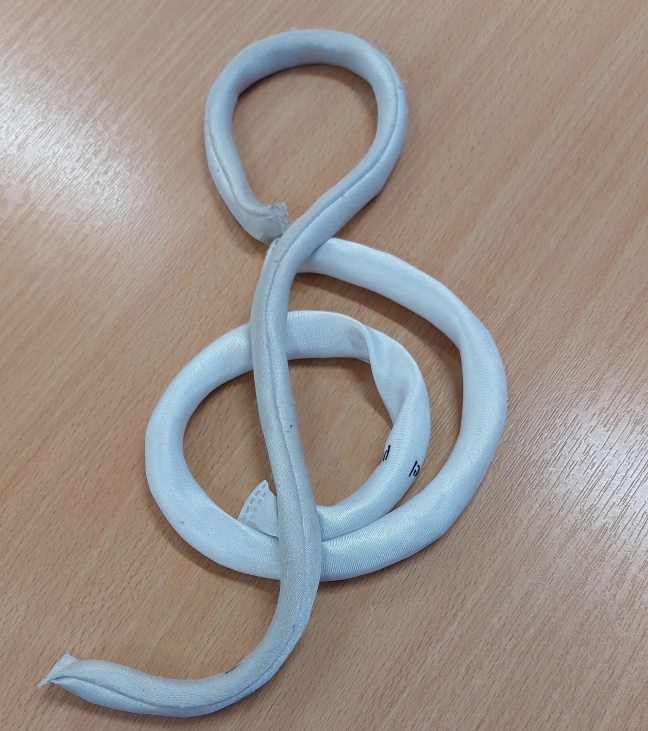
Archive book 'snake' weight

I’ve had a run of things going wrong!

  • Awaiting dishwasher parts for 2 months
  • Needing a stonemason
  • Storage heater malfunction
  • MOT cancelled on April Fool’s Day; it really was …

I took myself off on a library visit, looking for a peaceful, fruitful day. (Yes, yes, I know – I’m a librarian, and I already work in a library 3.5 days a week. However, researching in a different library is an entirely different experience.)

It was peaceful, though I could have done without the six miles’ walking in the rain! But –

I found nothing related to my research question!

The trouble was, I had to read a lot of stuff, to eliminate it. Having researched music for so long, however, I was enchanted to read about paper pulp, factories, shipping and personnel in Nairobi, Cape Town, India, Toronto … yes, it was 1946-7, and the links were strong.

Then there were paper and bookbinding cloth shortages. Lots of allusions to both.

But was it a wasted journey? On the face of it, I made no progress, but – as you see – I gathered contextual information. From now on, I won’t be parroting those facts, but alluding to situations I’ve witnessed through perusal of correspondence.  That does count for something.  And I learned a handful of names that I might one day encounter in a musical context.

Oh, and apart from getting drookit  (drenched) and walking six miles (thanks, Fitbit), I did get my peaceful day in a library.

HoPIN (History of the Printed Image Network): a new network to join

Last night I gave a lightening talk as one of eight speakers at the latest HoPIN webinar. It’s the History of the Printed Image Network, so my Scottish music collections were slightly off the beaten track, but you know me – my mission is to ensure that anyone picking up an old Scottish music volume knows exactly what they’re getting into! And it was certainly interesting to hear about other people’s research into different aspects of printing.

This link summarises the scope of topics, even if the event is past! HoPIN Webinar 11 (hosted by the University of Wolverhampton).

The next HoPIN webinars are on 15 September and 17 November.

HoPIN website:- https://www.cphc.org.uk/hopin-home

Music Engravers (a recap)

Six years ago, I wrote a wee blogpost about music engravers for Whittaker Live – the Whittaker Library had a Blogspot blog for many years, until I migrated it to WordPress last year.

Just in case it ever goes missing, I thought I’d reproduce that single posting here, now. The truth of the matter is that music librarians don’t generally spend a lot of time with really old volumes, whilst rare books librarians spend a lot of time with really old volumes … but music is only a small part of their remit. This means that things that are obvious to librarians with one specialism may not be obvious to their counterparts in a different library or department.

Can You Tell Your Scripsit From Your Sculpsit? (20 May 2015)

https://whittakerlive.blogspot.com/2015/05/can-you-tell-your-scripsit-from-your.html

Here’s a little bit of book history to broaden your mind!

If you’re looking at REALLY old music, sometimes you see tiny writing at the bottom of the title page – “Script” or “Sculpt”, and then a name.  Rudolf Rasch, who is a book historian, and Associate Professor of Musicology (Emeritus) at Utrecht University,  has kindly provided us with an explanation:-

“Script = scripsit = “he wrote”, normally this refers to the one who designed the engraving or made a drawing as a design for the engraving. This should refer to a title page only. [Typesetter is not a good description of this person.]
“Sculpt = sculpsit = “he sculpted”, refers to the engraver.

“If a title page is signed by a “sculpsit” one is not a priori certain that the same engraver did the music too. The best way to decide whether the engraver of the title page also engraved the music is too look at the form of the letters on the title page and on the music pages. In many situations title page and music are engraved by the same hand, but there may be cases where the publisher had different engravers work at the title page and the music.
“But please keep in mind: 18th-century indications are never full-proof. Never turn off common sense.”So now you know. Just a little advancement in knowledge every day …!  One day you might be grateful to Whittaker for sharing this little piece of book history with you!

If you enjoyed this, you’ll love a blogpost that Kelsey Jackson Williams wrote for this present blog, a few years ago. Here you are:-