Dr Karen McAulay explores the history of Scottish music collecting, publishing and national identity from the 18th to 20th centuries. Research Fellow at Royal Conservatoire of Scotland, author of two Routledge monographs.
So I decided to spend the afternoon at the Mitchell Library. Glasgow is so fortunate to have this wonderful collection!
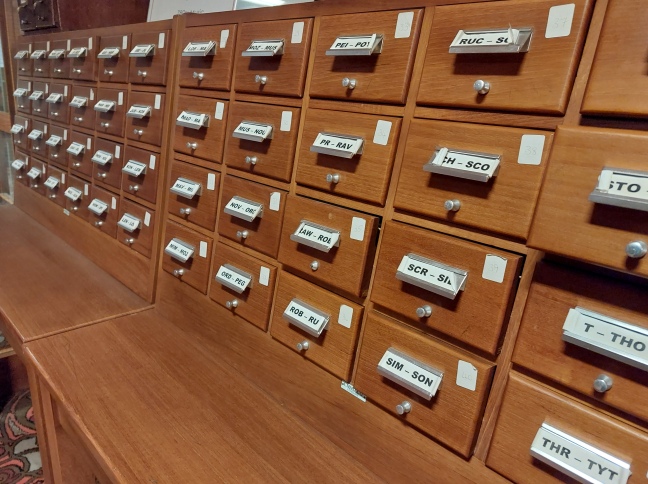
I saw the two publications I had in mind. I took notes. I even had time to look at the card catalogue. (Catalogues are great research tools, even though I am personally sick of actually cataloguing.)
And then I went home. It was only when I went over my notes that I realised I had missed at least one item in the bibliography of one book, which I thought I had been looking out for. I spent the next 24 hours kicking myself, determined to go back to find that elusive reference if it killed me.
And then my librarian self remembered the advice I often give students. If you have copied out a useful snippet, put it into Google Books, in speech marks. Like this:-
“Reader, I married him”
(Try for yourself – it’s a quote from Charlotte Bronte.)
Often enough, Google Books will retrieve 2-3 lines including the words you copied, telling you the book where it found the text – and the page number.
I searched on the book abbreviation for the missing reference, and found I’d missed three! However, I have now traced them, and all is well. All for research into a publisher who only caught my interest two weeks ago.
I’ve taken a couple of days’ leave whilst we’re having work done at home. I’m far too distracted by the banging and crashing around me to be able to sit and write scholarly thoughts. I just can’t!
‘Satan finds work for idle hands to do’ (Proverbs 16:27-29)
However, it appears I can quite easily go shopping on eBay. For some weeks, I’ve covetously watched a handful of old 78-rpm recordings, the sensible voice in one ear drowning out the sentimental voice in the other. The latter is whispering,
‘Look! He conducted that. You can listen to him actually conducting something he arranged! How cool would that be?’
Inner voice
That’s not the voice of a sensible, frugal scholar! Reader, I resisted the sentimental voice. I was being firm, resolute, and admirably sensible until a glorious thought occurred to me: when I’ve finished my book, publication will also entail a book-launch of some kind. And I’m sure to want to give talks about some aspect of the book topic. These records aren’t just artefacts – they’re multimedia soundfiles! Oh yes, indeed. How dreadful it would be, for my future self to remember the records that slipped through my fingers through misguided sensibility?
You also have to understand that my previous research was into an era when there were no sound recordings of any kind. So my present investigations into music between 1880 and 1950 mean stepping into the era when one could listen to recordings (gasp!), view projected slides and even access broadcast media. All very, very exciting at the time.
Broken Record
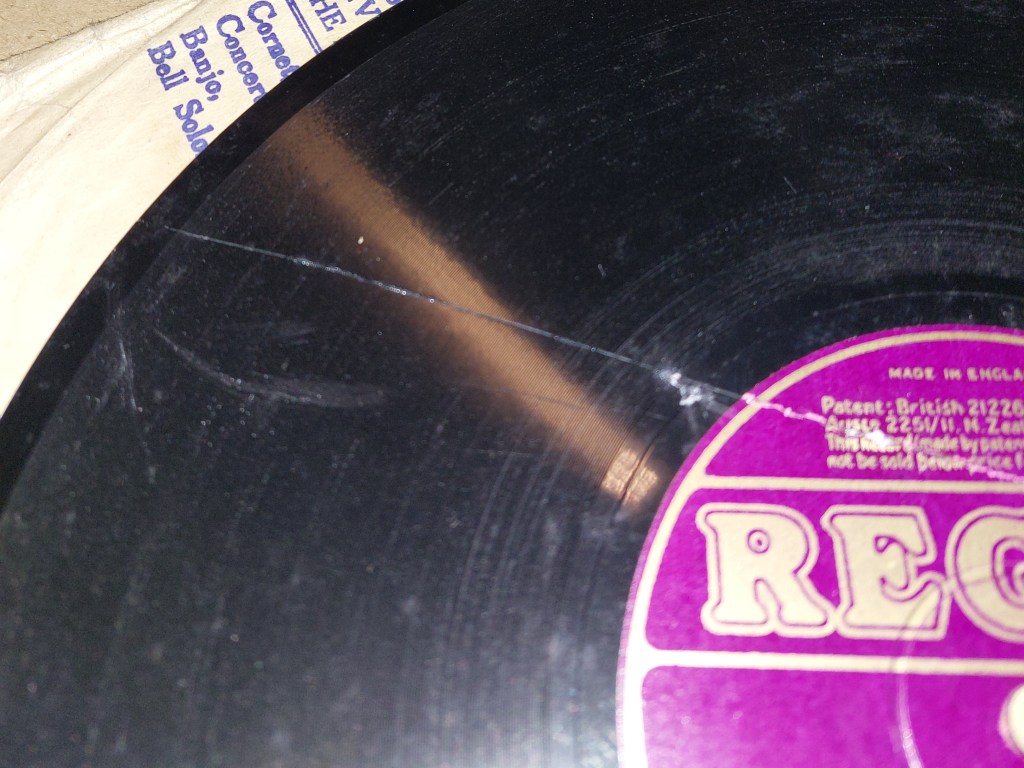
I did do a bit of bargaining, having resolved that I couldn’t have them unless I negotiated the price below a certain figure. The last shellac record I bought arrived in bits, so I hope that if these are travelling as a threesome, they might be a bit more robust – safety in numbers.
And I’m afraid I succumbed to a small music publication, too. (What am I going to do with all these scores when the book is written and they revert to being cheap, forgotten old titles again?!)
Having invested in my own personal domain, I thought I’d better make sure my bio was up-to-date. And then I remembered that my list of publications needed to be there too, so that became another page.
When I was contemplating a mid-career PhD way back in 2003, my then line-manager attended a meeting, and mentioned my intentions. An unnamed academic (luckily, I don’t know who!) thereupon enquired,
“What would a librarian want with a PhD?”
Anon
They didn’t know I was fulfilling an interrupted ambition of some twenty years earlier! (See my bio page.) But if the anonymous scholar saw my list of publications today, I like to think they’d agree I’ve made good use of the PhD …
I went on to get a postgrad Teaching in Higher Education certificate after that!
Quick update – you can now find this blog at KarenMcAulayMusicologist.blog. No adverts, and an easier hyperlink to remember. After all this excitement, I’ll go and put the kettle on. (We musicologists know how to enjoy ourselves!)
I was reading about Blackface Minstrelsy this morning, and reading about Mr Du Bois brought to mind his less famous but equally talented wife, Shirley. I owed the library blog a blogpost, so I put these various strands together …
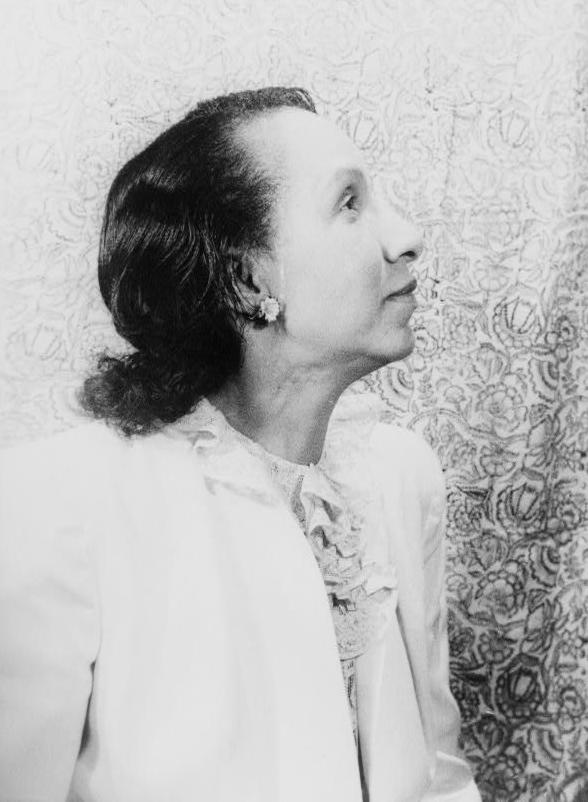
Born in Indianapolis into a religious and politically active family (her father was an African Methodist Episcopal Minister), Shirley Graham Du Bois was a writer, playwright, novelist, composer and an activist for black rights. The Harvard Radcliffe Institute has a page on this remarkable woman – and she features in Nathan Holder’s book for young adults, Where are all the black women composers?, which we have in the Whittaker Library.
Nathan Holder – Where are all the Black Women Composers?
Shirley studied composition and orchestration in France in her early thirties, and then studied music at Oberlin College in the United States, also beginning a PhD in English and Education at New York University. Nate Holder tells us that she worked for Morgan College…
Today saw the publication of my review essay of four new books on Robert Burns, in the Spring 2022 issue of Eighteenth-Century Scotland: The Newsletter of the Eighteenth-Century Scottish Studies Society.
It’s apparently embargoed for sharing until the newsletter goes online publicly in “a few months”, so no link to share just now. But if you subscribe to the newsletter, then keep a look-out for my piece! These are the titles I review:-
Ian Brown and Gerard Carruthers, ed., Performing Robert Burns: Enactments and Representations of the “National Bard”. Edinburgh: Edinburgh University Press, 2021. Pp. vi + 210.
Katherine Campbell and Emily Lyle, Robert Burns and the Discovery and Re-Creation of Scottish Song. Musica Scotica Historical Studies of Scottish Music Volume 4. Glasgow: Musica Scotica Trust, 2020. Pp. xi + 233.
The Oxford Edition of the Works of Robert Burns, Volume 4: Robert Burns’s Songs for George Thomson. Edited by Kirsteen McCue. Oxford: Oxford University Press, 2021. Pp. xcvi + 692.
(As an aside, it was quite a substantial piece of work – I am astonished that by some wizardry all those words fit 3 pages of pdf!)
Today, I’m working from home wearing my library hat, but I have august company on the desk beside me. My fingers itch to give these new personal acquisitions a closer inspection, but they have to wait until tonight. Meanwhile, I can just look, and gloat.
The British Students’ Song BookThe Sottish Students’ Song Book
LATER, MUCH LATER. How helpful! There’s a page at the back actually listing the history of editions of the Scottish Students’ Song Book. That saves me having to unpick the history from newspaper adverts.
Also interesting to note that Janey Drysdale contributed a couple of songs to the British Students’ Song Book, that were arranged by her late brother. Marjory Kennedy Fraser contributed a couple of songs too, the lyrics of which were by Dr Charles Kennedy, whilst she had arranged the musical settings. Neither woman contributed to the earlier Scottish book.
Students were, of course, mostly male. Marjory had been one of the first women to attend music lectures at Edinburgh University, but she didn’t graduate until she was awarded an honorary doctorate much later.
Now, there’s one burning question. Who was the third woman that contributed to the British Students’ Song Book? Yes, I need to know! I have a book to write.
I’m not sure if I’ll be able to contribute to this book, since I am researching a later era at the moment. (My latest heroine wasn’t even born by 1837, and she has just had a whole article written about her for another journal, so I haven’t much more to contribute at the moment.) Nonetheless, I share this for anyone who might be interested:-
Women’s Studies Group 1558 – 1837: Women’s and gender studies in the early modern period and long eighteenth century
Did we think we’d still be at this stage, now? With Delta still raging and Omicron striking fear and dread into many hearts? I worked from home until September 2021, then moved to a hybrid work-pattern (two days on campus, three at home) to add to my already hybrid 70% librarian, 30% researcher existence.
If I thought I’d done well in terms of visible, quantifiable outputs last year, this year has been far less successful. This is not a triumphant declaration of how much I have achieved, and anyone reading this can console themselves that they’ve probably done better!
THE UPS AND THE DOWNS
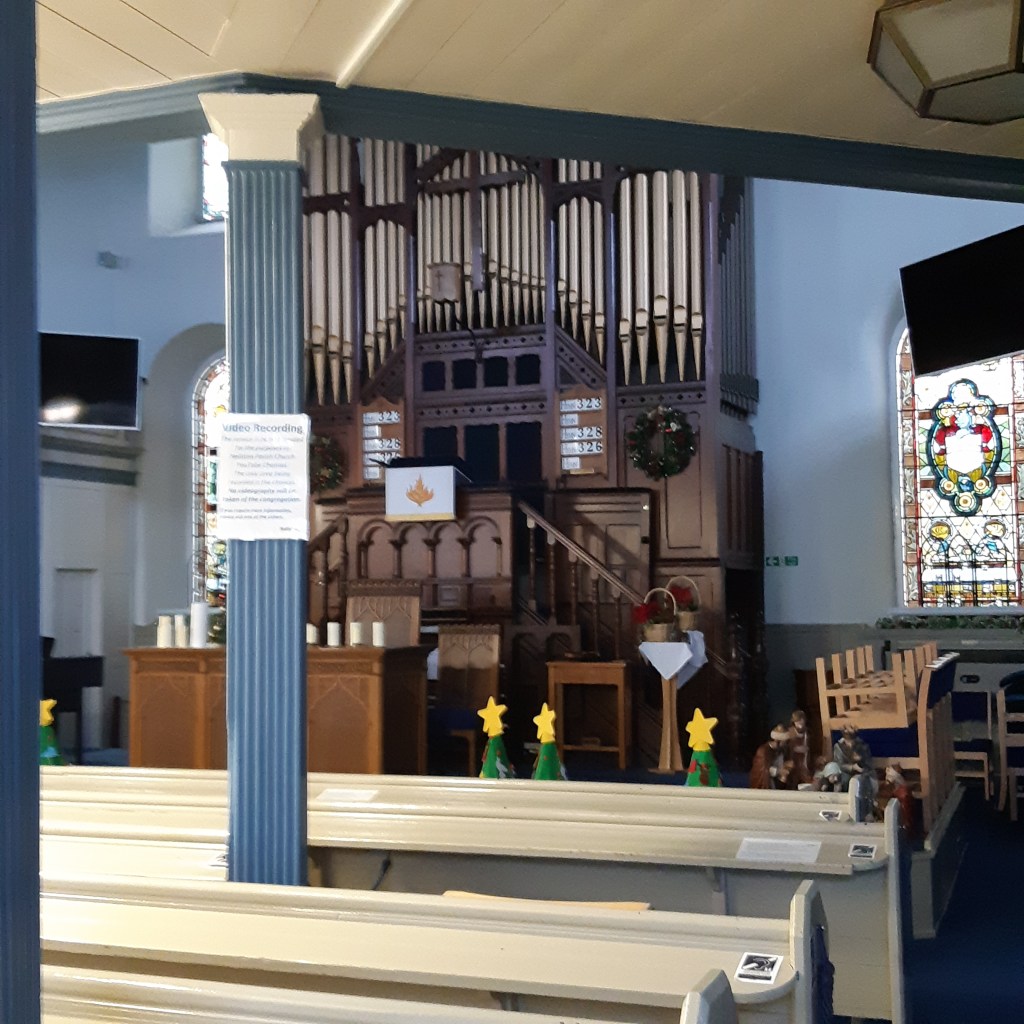
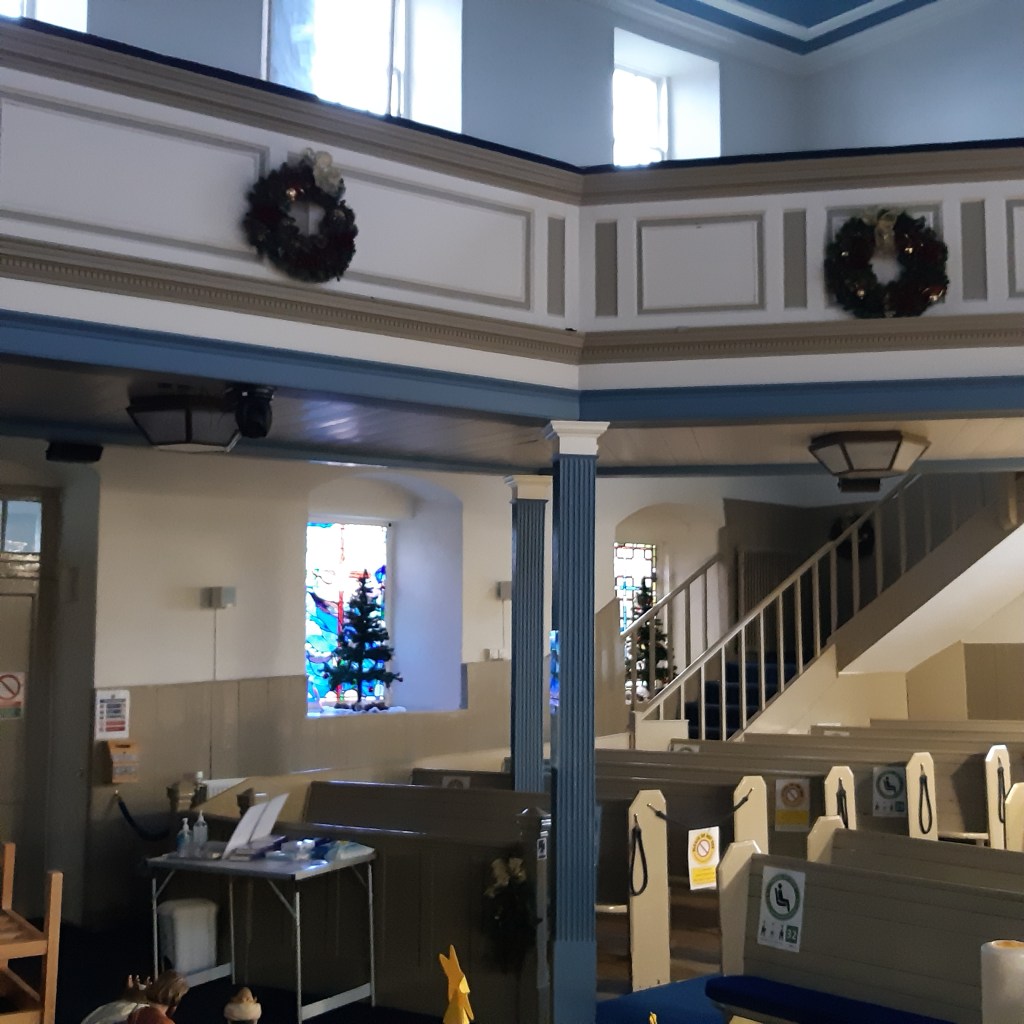
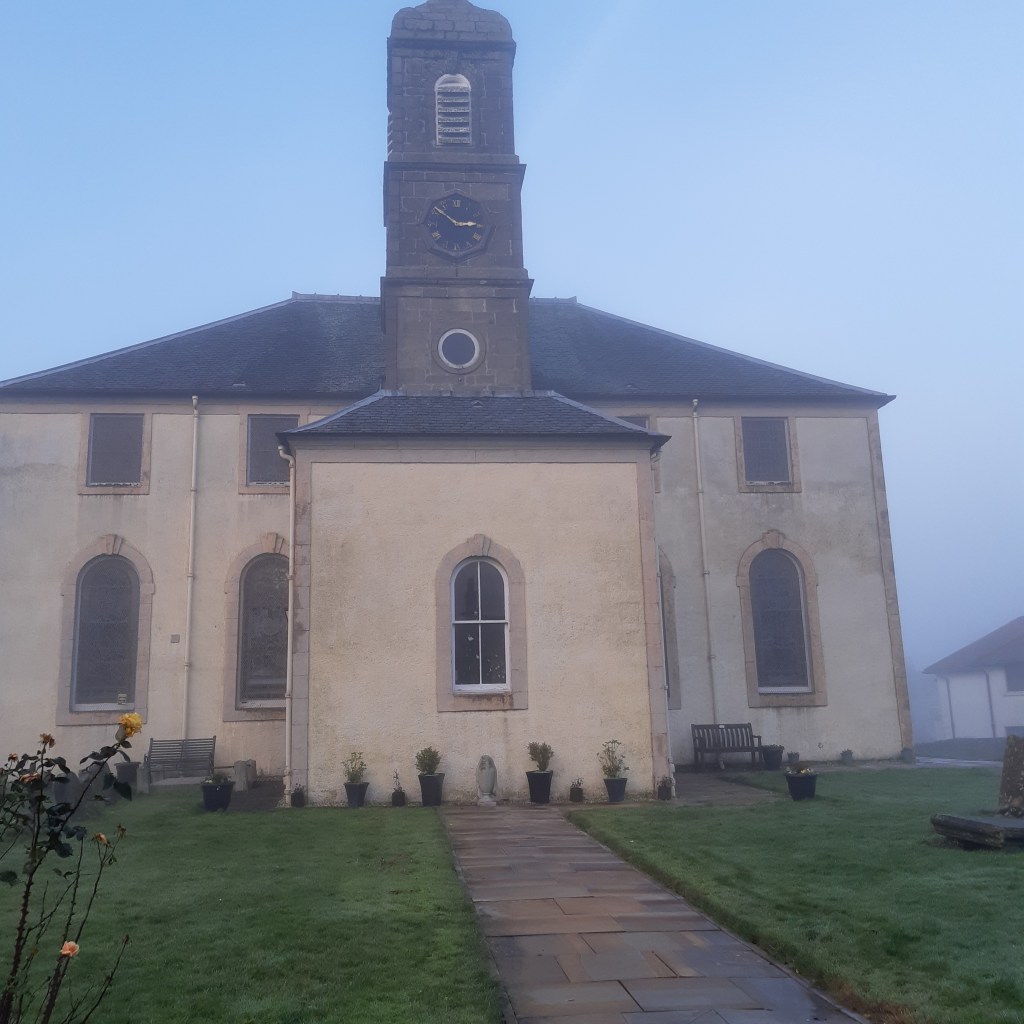
I should add to my annual round-up, the fact that changes to my role as church organist also caused me an enormous amount of stress this year. So, in terms of achievements, the fact that I struggled, resigned, and have recently found another happier organist post counts as a significant achievement in that area of my life. It will undoubtedly improve my mental health to play in a different environment. The other position was slowly breaking me. It took me many months to take the decisive step of resigning.
Neilston Parish Church – happy times ahead!
GRANT APPLICATIONS AND INVISIBLE WORK
I spent many hours writing and submitting a research grant application in the first half of 2021. Nearly one in three was successful. I was amongst the unsuccessful majority.
I’ve since spent as many hours again writing and submitting a second research grant application to a different body, but I won’t hear anything for a good few months yet. Since it was even more ambitious, I’m not raising my hopes.
Grant applications are soul-destroying. All the effort is completely unseen. To the outside eye, you have done nothing; and if you fail, you have achieved nothing apart from clarifying to yourself what you would have like to have done!
PUBLICATIONS & THE INVISIBLE WORK BEHIND THEM
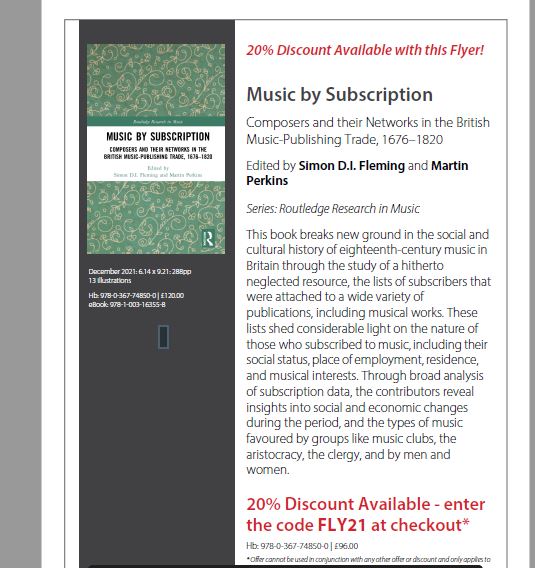
I spent innumerable hours working on a chapter about Scottish music subscribers in the late 18th to early 19th centuries, for a book which is due to appear at the end of 2021 or early 2022. I also published a book review in Brio – and more recently penned a mini-review of another book for a fellow alumna’s publishing house.
I have now drafted an introduction and two chapters for my next monograph, written an extensive literature review, and submitted the book proposal to a publisher towards the end of this year. Ah, the suspense, as I wait to hear if they’d like to publish it!
And I’ve written a fairly lengthy article for my professional journal – I’ve just sourced some great illustrations, and sent it to the editor the other day. It’ll probably be published next summer.
But if you’re looking for a list of actual publications, all I can offer is this pitiful list:-
James Porter, Beyond Fingal’s Cave: Ossian in the Musical Imagination (University of Rochester Press, 2019), reviewed in Brio Autumn/Winter 2020, Vol.57, no.2, pp.74-6
Leaving aside all the user education presentations, and a couple of guest lectures at my own institution, I haven’t much else to record. I did participate and present input in a IAML(UK & Irl) discussion about equality, diversity and inclusion in music libraries. But I haven’t been anywhere or spoken at any other conferences.
SOCIAL MEDIA – TOO VISIBLE!
I’ve written blogposts and Facebook page posts about my research. I’ve also rescinded a number of blogposts, when I realised I was sharing free research which I would later want to include in formal pieces of research output. My librarian-self believes strongly in sharing information. My research-self is beginning to learn that sharing is good, but over-sharing is counterproductive.
FORTHCOMING
The article I’ve just submitted for Brio;
An article is to be published out of a presentation about song-collector Alexander Campbell, which was given in 2020 (I just need to check it for footnote details etc);
A substantial essay reviewing four books;
A completely new conference paper about a somewhat unusual Scottish song collection;
Possibly chairing a conference session at a different conference;
I have submitted a proposal for yet another conference paper, this time about women’s compositions in libraries and reader development work on that subject, possibly also leading to a published article;
Continued work on the monograph.
At the end of the day, my output is pathetic in terms of a full-time academic – but I am not a full-time academic. What I achieve, research-wise, is done in 1.5 days a week. My research outputs are unusually significant for a librarian, though they go unnoticed in my library existence, where they don’t attract pats on the head!
It’s all my own fault. I walked away from a research career in 1984 when I abandoned my first PhD. I walked back into it in 2004 when I began research in my ‘spare time’ (in other words, time not spent doing a full-time job, being a parent, and being a church organist) for the PhD that I actually completed in 2009.
To anyone thinking of walking away from a PhD – stop, think! Ask yourself if there is any way you could somehow manage to finish it? I should have taken a part-time job and knuckled down to get that PhD done. Instead, I did a year as a graduate trainee in a university library, then trotted off to library school for a postgraduate diploma in librarianship. It was crazy to start another qualification in another discipline before finishing the doctorate. In my own defence, I wanted an occupational pension plan. And everyone (male – I hardly knew any women academics) said it was hard to get a job in academia. In the early eighties. (Aw, bless! How could it have been harder than it is today?)
Ask yourself if your future self might regret what you’re contemplating. I’m fiercely proud of what I have achieved in research terms, but I know I have underachieved compared to what I might have done in other circumstances. I think that what frustrates me is that I can’t put back what I didn’t do in those two missing decades. I really haven’t much to show for a career in librarianship – I might be a Fellow of my professional association, but I never climbed the career ladder in the slightest. I’ve selected good stock. I’ve done vast amounts of accurate cataloguing, helped with countless queries, and instructed hundreds if not thousands of students. Librarians are generally as invisible as pharmacists, quietly preparing the materials that their more high-profile academic/scientific colleagues depend on. And in a pandemic, we librarians become even more invisible!
Yes, I’m disappointed in myself. It becomes more depressing, the closer I get to retirement, because that will signify a time when I have to concede that for all I did, it hasn’t been enough.








 Karen McAulay, Musicologist