Not Research, exactly! The Organist Plays …

I was playing through some of the songs in Song Gems (Scots) last night. My attention was taken by a song here entitled ‘Mary in Heaven’, set to a tune called ‘Mary’s Dream’. This is a Scottish song – nothing whatsoever to do with the Annunciation in the Biblical New Testament. Rather, it’s a song written by John Lowe in the late 18th century, in which a bereaved Scottish girl has a visitation from her dead fiance’s ghost; it was written for a real person whose fiance had died. You can look it up – there are numerous instances of it in old Scottish song books. Antiquarian John Glen’s collection, now in the National Library of Scotland – and digitised – holds plenty of copies.ย  As well as collecting and writing about Scottish songs, Glen was a friend of the compilers of Song Gems (Scots).

Johnson’s Scots Musical Museum ,Vol.1

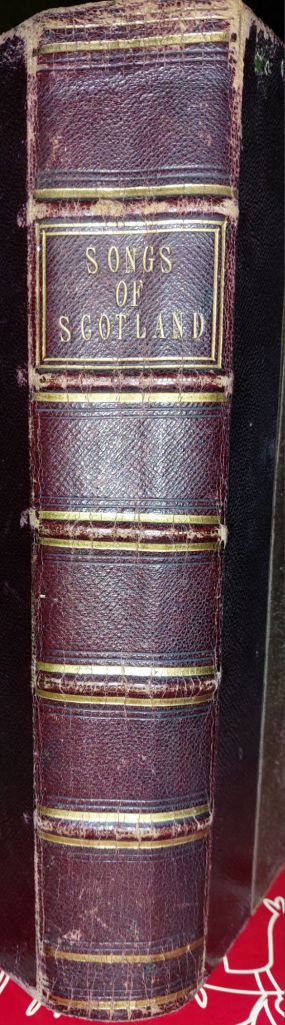
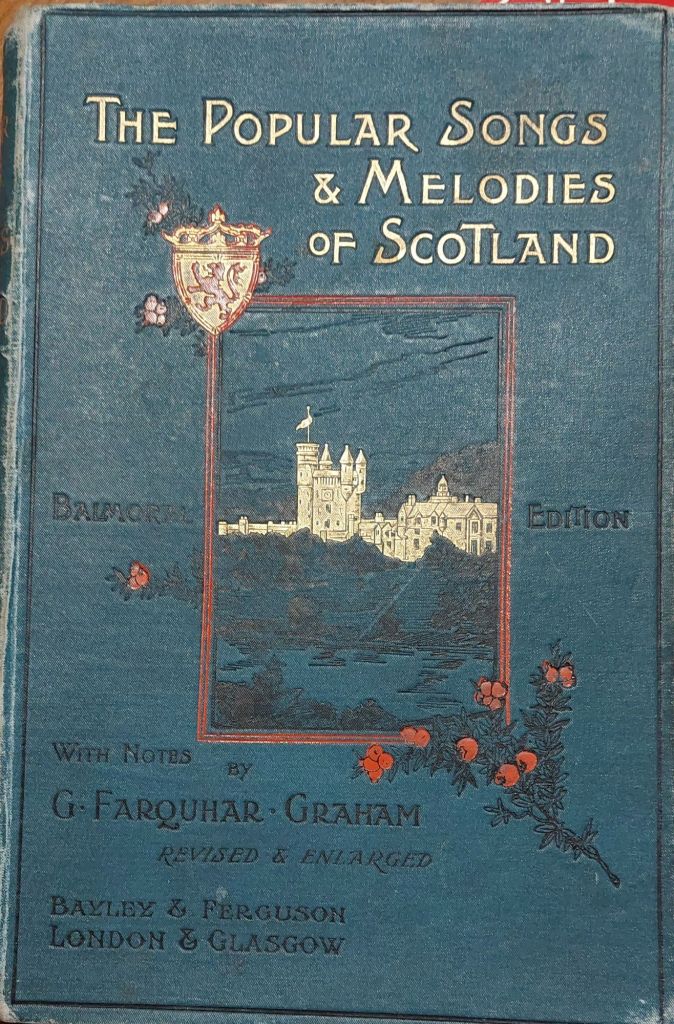
It was in James Johnson’ Scots Musical Museum, and George Farquhar Graham included it in his Songs of Scotland, published by John Wood  (latterly by Bayley & Ferguson as The Popular Songs and Melodies of Scotland).

Suffice to say, I fell in love with this tune! It begins in the minor, goes into the relative major and back, and dallies with the submediant in the second half – it’s beautifully constructed.  But how could I use it? I worked out the meter, and after a bit of digging, found the words of an old hymn in the same meter, which were eminently suitable for an introit.  I’ve added sparing choral harmonies, and obviously it won’t have soloistic ornamention. But I’m still quite pleased with the results.

And so it shall come about that ‘Mary in Heaven’ will most acceptably be sung in a Presbyterian church …


Here’s Anita Rosati’s gorgeous April 2026 recording of ‘Mary’s Dream’:-
Blog post image by bzimm3 from Pixabay

Q. Name a Scottish Song Collector who Features in Both my Books!

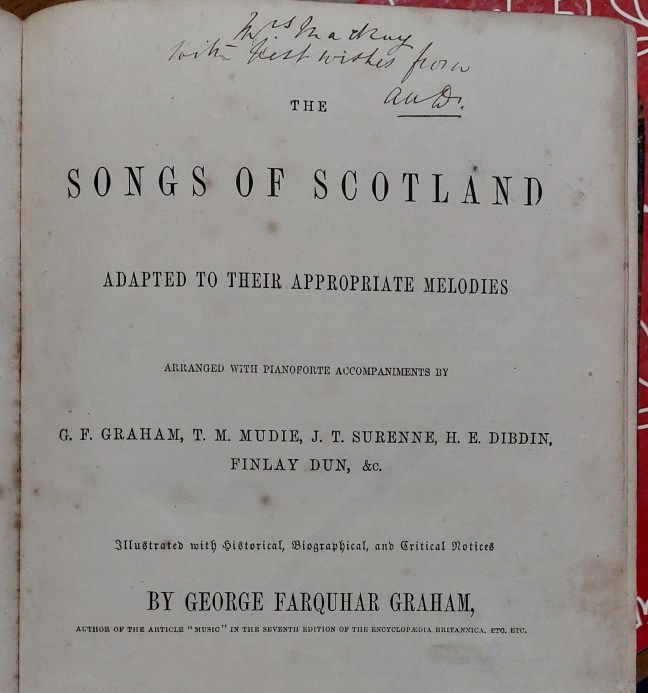
The Songs of Scotland edited by George Farquhar Graham et al. Title page
Songs of Scotland

I couldn’t find a nice anniversary for yesterday, but I certainly have one for today, 28th December.

Journo, music critic, and Scottish song compiler George Farquhar Graham (1789-1867) was the editor of John Muir Wood’s long-lived song collection,ย Songs of Scotland, first published in 1848.ย  As such, he featured heavily in my Our Ancient National Airs.ย  But the book enjoyed an afterlife as one of Bayley and Ferguson’s handsome reprints –ย The Popular Songs and Melodies of Scotlandย  – thus getting a mention in A Social History of Amateur Music-Making and Scottish National Identity, too.

Where’s all this going? Well, today is Graham’s 236th birthday – ‘Many happy returns,  Sir!’

The Popular Songs and Melodies of Scotland

‘Repugnant to Modern Feelings of Propriety’? The Most Beautiful Scottish Song

I’ve started listening to another Audible book, but it’ll take a while for me to finish it. To take a break from listening, I sidled over to the piano and played a one-eyed rendition of my favourite song.

Lady Anne Bothwell’s Lament (Baloo, my Boy)

My Song Gems (Scots), edited by James Wood and Learmont Drysdale (London: Vincent Music Co., 1908), is a nice big score that sits comfortably on the piano stand. This song is arranged by Finlay Dun, a Victorian arranger. As I squinted at the words, they didn’t look like what I remembered hearing sung from Cedric Thorpe Davie and George McVicar’s The Oxford Scottish Song Book (1969). What was going on? I suspected Davie and McVicar had taken their words from George Farquhar Graham and James Wood’s mid-Victorian Songs of Scotland. ‘You’ll see’, I told my bemused son. ‘The words will have been too smutty for Victorian ears, so Graham and Wood changed them.’

Davie used their words – which were perfectly acceptable for a collection intended both for classroom and adult use – but his musical setting is updated.

A Deserted Mother and Child

Graham and Wood’s collection revealed in the footnotes that it was an old ballad collected by Bishop Percy. However, Graham said that …

The Old Ballad, though poetically meritorious, is so coarse in most of its stanzas as to be repugnant to modern feelings of propriety. We have, therefore, adopted only the first stanza of it, the additional stanzas here given having been written by a friend of the Publisher.

Songs of Scotland (Edinburgh: Wood & Co., 1850), Vol.2, pp.30-31

Percy’s original version is in the National Library of Scotland’s Digital Gallery (Reliques of Ancient Poetry, 1767). Today, the lyrics are inoffensive!

And here’s the Cedric Thorpe Davie setting using Graham and Wood’s sanitized words:-

Kathleen McKellar Ferguson sings the Oxford Scottish Song Book version, divinely, here on YouTube

The Song Gems (Scots) version is in modern English and the text has been partially rewritten again –  it falls halfway between the original and the sanitized words! And the musical arrangement? Straight from Graham and Wood’s collection.

Percy, verse 3: Smile not as thy father did, to cozen maids, nay God forbid / Bot yett I feire, thou wilt gae neire Thy fatheris hart, and face to beire.

Wood and Drysdale, verse 2: Smile not as thy father did, to cozen maids, may God forbid / For in thine eye his look I see, The tempting look that ruin’d me …

Olde English or modern, take your pick!

As for Graham and Wood, or Thorpe and McVicar? Not a ruinous smile to be be seen! The lady may have been deserted, but no hint that she had first been seduced!