


For a number of years, I’ve given an annual talk to RCS students, about how different generations looked upon, collated and collected and published Scottish songs and tunes. The snappy, official title is ‘Transformations’, but when I was revising it for this year’s presentation, I decided to compile a list of all the people (and a few extra titles) that I would be mentioning. Forty of them! So, I’ve added a new, unofficial subtitle: Speed-Dating 40 Scottish Music Collectors in an Hour. Okay, not exacty forty people, but forty lines in the list. I was quite surprised. I would imagine the individuals themselves might have raised an eyebrow, too.
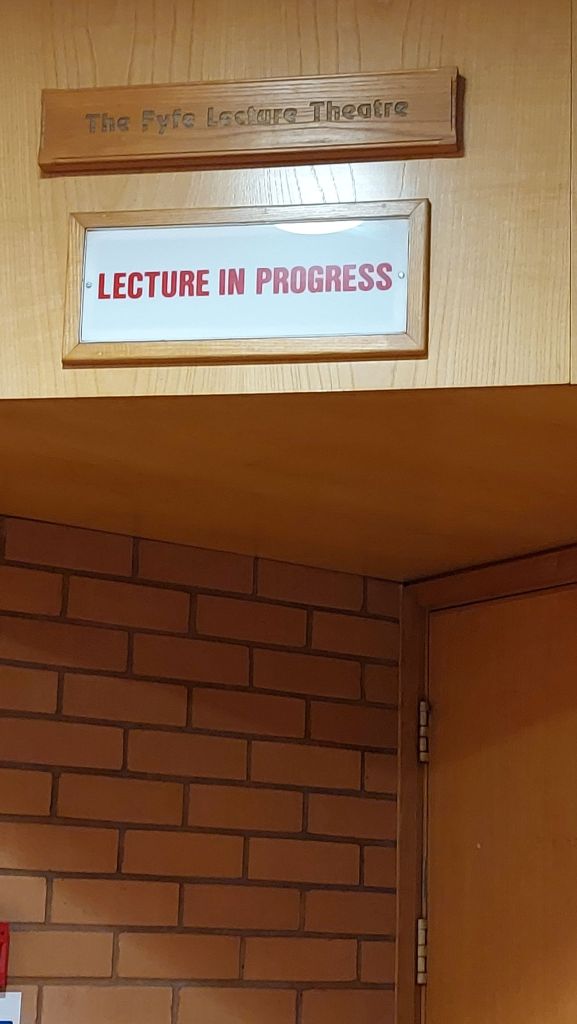
It was the last time I’d give a lecture as a Performing Arts Librarian. Admittedly, not the last time I hope to give a lecture as a researcher, but certainly the final one with a library hat on! The librarian accordingly played a tiny bit of Beethoven’s Johnnie Cope from memory, along with a few chords from Marjory Kennedy-Fraser’s Sleeps the Noon in the Deep Blue Sky (score open), and blithely announced that she saw no need to inflict her rendition of Debussy’s La Cathedrale Engloutie upon her audience for comparison.
The song-books are all in the library. (Yes, including Blackie’s Scottish Song: its Wealth, Wisdom and Social Significance, 1889, and a modern reprint of Chambers’ The Songs of Scotland prior to Burns, with the Tunes, originally 1862.)
More than anything, the lecture epitomises me as a hybrid. I’m a librarian – I acquire and curate these resources. As a scholar, I contextualise them into cultural history. It wouldn’t be the same talk if I occupied only one of these roles.
The subject of my forthcoming monograph – amateur music making and Scottish national identity – only actually got a brief mention. But it was there. Maybe I’ll need to do a more extensive revision at some point!
 Karen McAulay, Musicologist