Dr Karen McAulay explores the history of Scottish music collecting, publishing and national identity from the 18th to 20th centuries. Research Fellow at Royal Conservatoire of Scotland, author of two Routledge monographs.
An English publication caught my attention. I had to acquire it.
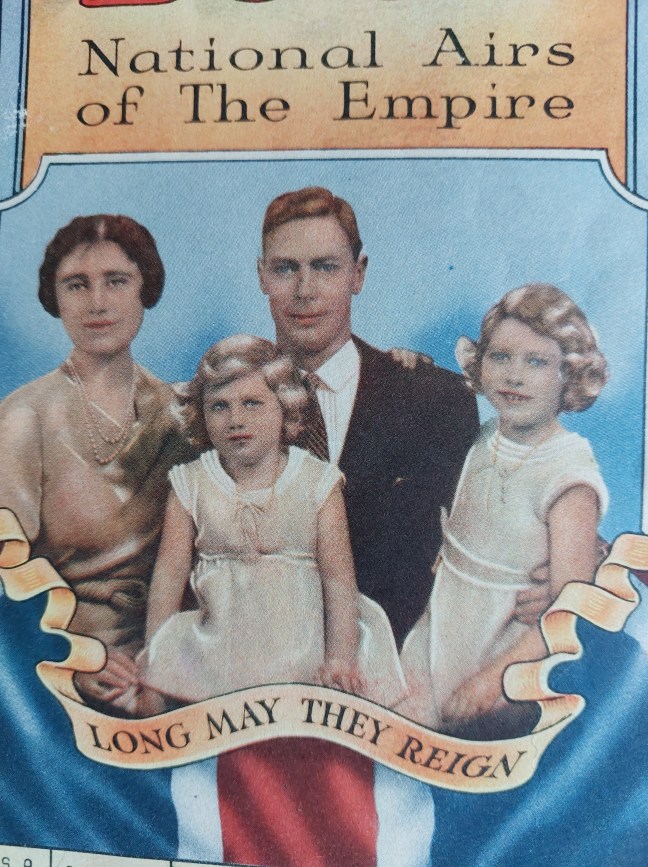
The paratext was pretty standard for the time …
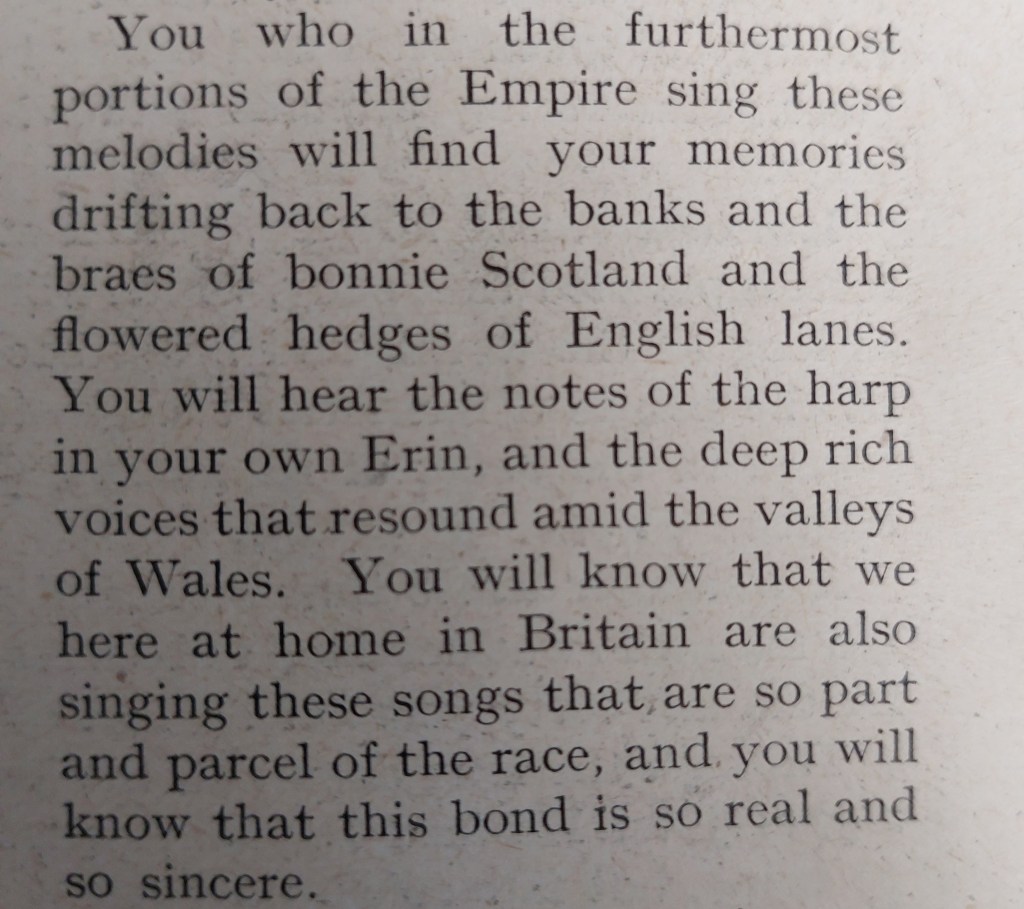
Introduction aimed at ex-pats
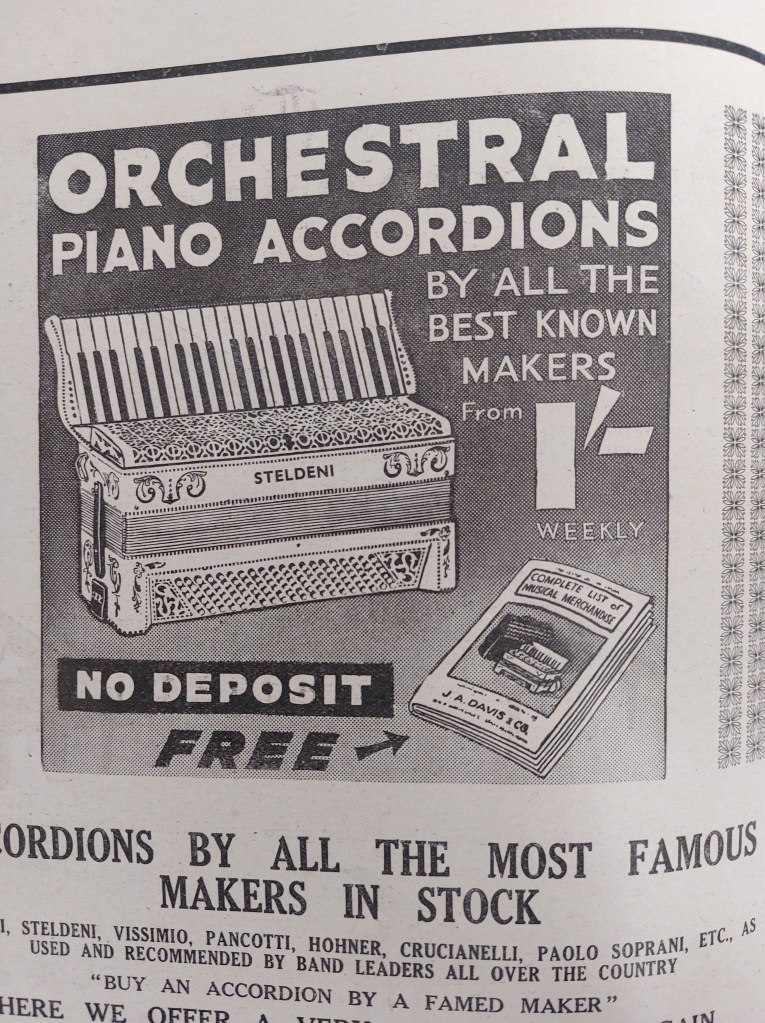
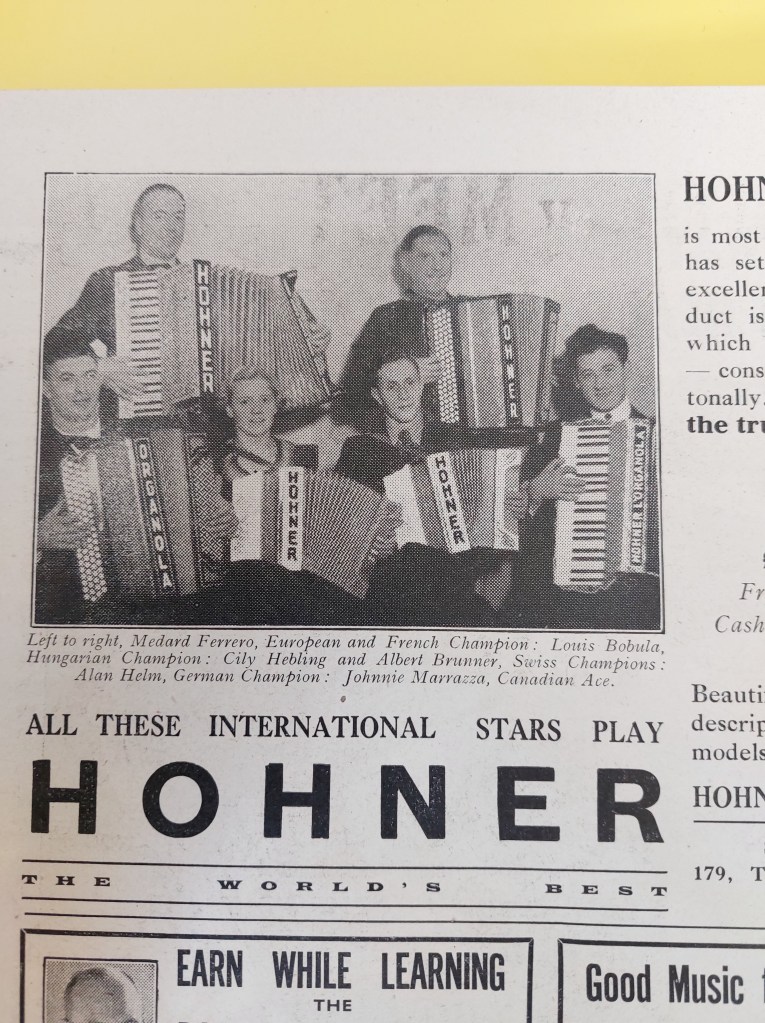
But the adverts were the best bit! Piano, or accordion – take your pick! The idea that you could ‘earn while learning’ amused me mightily. Would your audience appreciate having to pay you for your fumbling efforts?!
Musical instruments advertised in this London coronation song collection
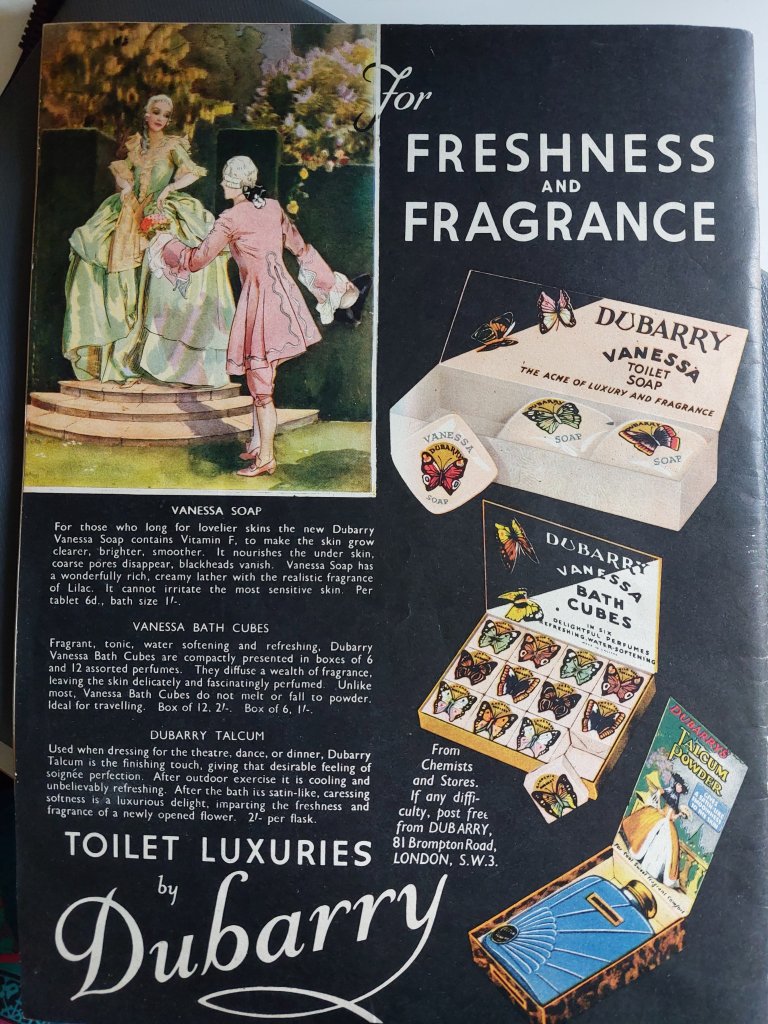
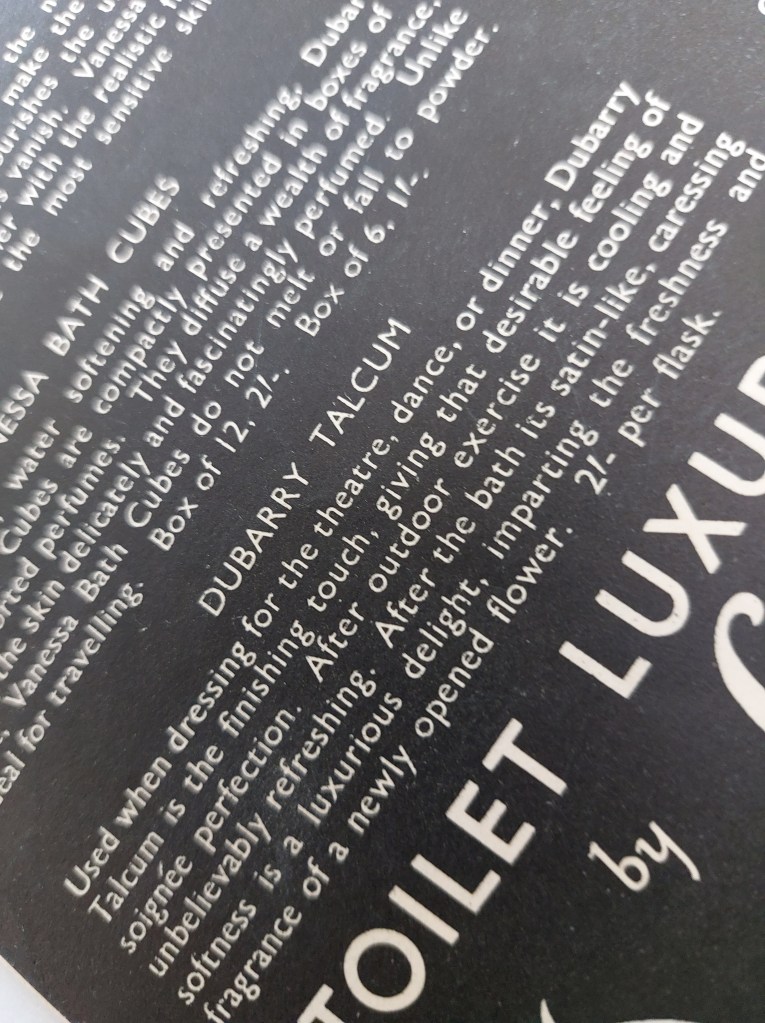
But at the end, a lovely colour advert for soap, bath cubes and talc. De luxe products, for sure:-
Since I’m currently working on a book about Scottish music publishers, I suppose it was inevitable that I’d ask myself just one question last night:-
Did 20th century Scottish music publishers publish any music to commemorate the four Coronations of their day?
Well, you’d have thought they might, wouldn’t you? There were militaristic books of marches and national songs in war-time, so why not patriotic books of national favourites when a new monarch acceded to the throne?
A couple of klaxon warnings should be sounded straight away.
It would be easy to say that Kerr and Mozart Allan never published anything related to coronations, but the truth of the matter is that I have plenty of evidence that what survives in libraries is certainly not the same as what was published in the first place. The more ephemeral the music, the slimmer the chance of its surviving. And, without putting too fine a point on it, a library might keep Mozart Allan’s book of songs by Robert Burns, but a flimsy, contemporary song of the music hall or variety performance kind, not designed for longevity, probably won’t have been added to a University Library’s stock at the time it was published, even if there might be scholars today eagerly seizing upon any lucky survivors. Similarly, a ‘Coronation Waltz’ or ‘Coronation March’ wouldn’t have been something studied by music undergraduates studying Palestrina or Mozart in a red-brick British University.
If you’ve been following social media or broadcast news recently, you’ll realise that some Scottish people are decidedly not Royalist in their leanings. However, it would be risky to say this was the reason for Kerr and Mozart Allan’s apparent lack of interest in publishing music on a coronation theme. There is no written evidence about their political views whatsoever.
I searched for pieces with ‘coronation’, ‘King’ or ‘Queen’ in the title. It was a quick and easy search, but certainly not a comprehensive one. (For example, if there was a song called ‘Westminster Pageantry’, without any of my search terms in the catalogue entry, then I would not have retrieved it.)
But the fact remains that music celebrating the coronation of a British monarch appears not to have been of interest to Kerr and Mozart Allan, the two popular music publishers holding sway in Glasgow for the first part of the twentieth century.
Edward VII and Alexandra’s Coronation, 1902
I found just one Scottish publication, the Glasgow and Galloway Diocesan Choral Association’s Book of the Music to be used at the sixth festival service in St. Mary’s Church, Glasgow on Saturday, June 28, 1902 (in connection with the coronation of His Majesty King Edward VII) etc. And that was it!
The English firm Bosworth, on the other hand, published Alexander Campbell Mackenzie’s Coronation March, op.63, in various formats: for piano, a full score, and arranged for piano duet by J B McEwen. Mackenzie (1847-1935) was Edinburgh born, but became Principal of the Royal Academy of Music in 1887. McEwen (1868-1948), another Scot, was professor of harmony and composition at the Royal Academy, and in time became their next Principal. Mackenzie’s Coronation March was dedicated to the King, and first performed at Crystal Palace with anything up to nine military bands. A march was an accessible genre, but the composer was very much part of the English musical establishment.
So, not much to see in 1902, then. But wait!
George V and Mary’s Coronation, 1911
Bayley and Ferguson had offices in Glasgow and London – and had done for some years. On the occasion of George V and Mary’s Coronation, they published Carlo F. Roberti’s The Crowning of our King & Queen; or, The Coronation Song of – Semper fidelis. I know nothing about Roberti, but someone at the Dundee Courier wrote in 1990 that his real name was Charlie Robertson, of Perthshire. (If you have access to the British Newspaper Archive, you can read how the readers responded to this snippet, on 8 February 1990. Robertson was a violin teacher. His song was taught to local schoolchildren at the time.)
The Scottish firm Paterson’s had offices in both Scotland and London, too. They published a Coronation song by a Durham man, Thomas Richardson, who had moved to Edinburgh to become organist at St Peter’s Episcopal Church in 1879, and singing-master at George Watson’s College in 1883. His song, ‘Mary’ had an alternative title, ‘Queen Mary. Coronation Song’, with words by K. Kelly, and was for some two decades popular as what people imagined to be a Scottish song. Which raises the interesting debate as to what makes a song ‘Scottish’!
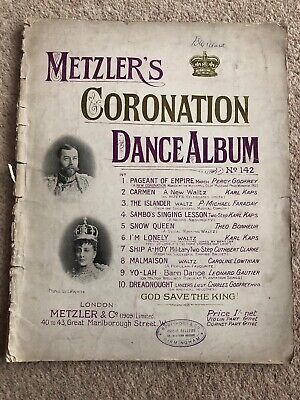
Metzler’s Coronation Dance Album (image from eBay)
Meanwhile in London, light music publisher Metzler published a book of tunes around this time, which included at least one piece composed for Edward’s Coronation: Metzler’s Coronation Dance Album. The precise date is uncertain: Metzler gives 1911 in Roman numerals, and (1909) in Arabic. Very helpful, Mr Metzler!
George VI and Elizabeth’s Coronation, 1937
Paterson’s was essentially a London firm by this time. J Michael Diack, one of the directors, had moved down south some years earlier. And that means that the only Coronation theme publications that I traced were either published in England, or overseas. Perhaps it was the advent of radio broadcasting that made people more enthusiastic about such things, but the outpouring of Coronation-related music was suddenly – well, remarkable! Many people got a wireless in time to listen to the Coronation – the first time such an event could be broadcast.
‘This Most Historic Event’
Which brings me to an advertisement in the Coatbridge Leader on Saturday 27 May 1937. F. Mills & Co sold pianos, organs and radios from his two shops in Coatbridge, a town about a quarter of the way between Glasgow and Edinburgh. (He also had a shop in Motherwell at some point – I haven’t checked dates.) If you bought a piano or organ before the Coronation, he would give you a free stool. If you bought a radio – to listen to the broadcast – then there was a discounted price.
Mr Mills didn’t mention sheet-music, but you’d be surprised how many English music publishers rushed to publish relatively lightweight music for popular consumption, whilst Paterson’s also offered a choral arrangement of a Handel anthem by one of Diack’s favourite composers:-
Let all the people rejoice : coronation anthem S.A.T.B. / Handel; arranged by W.F.R. Gibbs ; edited by J. Michael Diack. (Lyric collection of choral music, sacred. No. 1647) London: Paterson’s 1936
Paterson’s Coronation music book
Royal cavalcade : coronation march / Albert W. Ketelbey, in piano or orchestral score (Bosworth, 1937)
Chappell’s Coronation Album. A Musical Cavalcade, etc. [Marches and Songs.], 1937
The Coronation Waltz / Jimmy Kennedy (Peter Maurice, 1937)
Long live the King (Paxton, 1936)
The Coronation Song / Martin Silver (London: Silver’s, 1936)
Coronation March Album / Granville Bantock (London: Joseph Williams, 1936)
Slightly to my surprise – though it was obvious, when I thought about it, with emigration still high – I found publications from Australia, Canada and America too:-
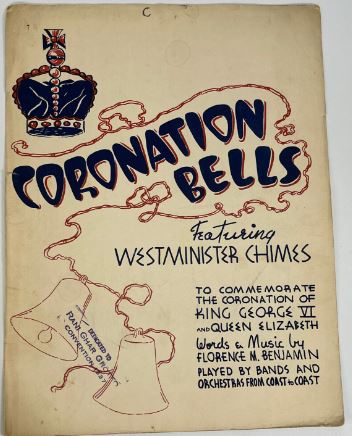
Coronation Bells – image from eBay
Sterling’s Coronation Community Album (1937?) Disappointingly, the contents of this publication from the Antipodes didn’t seem to have anything to do with the – erm, actual Coronation. But I suppose the word ‘Coronation’ would have been eye-catching.
In Toronto, Florence M Benjamin published her Coronation Bells in 1937
And in Chicago, Moissaye Boguslawski’s Coronation March: dedicated to their Majesties King George and Queen Elizabeth of England was published by Calumet Music in 1937
Elizabeth II’s Coronation in 1953
There was a rush to get television sets for Queen Elizabeth II’s Coronation, although comparatively few people in Scotland would have had them this early on. Francis, Day and Hunter published a new dance introduced on television for the Coronation.
However, despite now being basically an English firm, Paterson’s turned to their Scottish roots for their Coronation offerings, which had nothing to do with the television broadcast at all. Indeed, country dancing was very popular across Britain:-
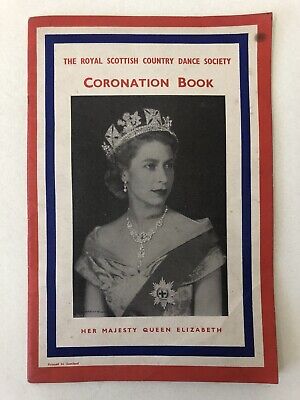
For the Royal Scottish Country Dance Society, Paterson’s published The Scottish country dance book. Book 17 : Coronation book / music arranged by Herbert Wiseman.
Paterson’s also published Pipe-Major William Ross’s The coronation bagpipe march… entitled “The coronation of Queen Elizabeth 1953”
The English Folk Dance and Song Society also published a book of dances: The Coronation Country Dance Book.
Many other publishers produced music in their own preferred genres, but I didn’t see anything from Kerr’s, Mozart Allan or Bayley & Ferguson.
From Bosworth came Coronation march album for piano solo, with music by Ketelbey and a variety of other composers.
Bosworth also published a Coronation Suite for piano by Barbara Kirkby-Mason, who was known for writing educational material.
Francis, Day and Hunter produced Francis & Day’s coronation album in 1952, along with
Archie Alexander’s The Coronation Polka, followed by
Kenneth Wright’s A Waltz For The Queen (Television’s New Coronation Dance), arranged by Sydney Thompson in 1953
The Northern Music Company – a London firm – published Coronation Waltz by Christine Hurst and George Warren, with words by Bill Tomlinson and Stanley Barnes. Reported in The Stage in October 1952, it was written by ‘four northern songwriters’ and received favourable reviews at its introduction in a Butlin’s holiday camp dance contest. If this makes you think of ‘Hi-de-Hi’, then you’re absolutely right – Butlin’s holidays were cheap, accessible, didn’t involve travelling abroad, and as we all know, dance contests have never gone out of favour!
Coronation Waltz- image from eBay
Last night, I was just idly searching to see if ‘my’ Scottish music publishers showed much interest in Coronation-themed publishing. On the face of it, those with an English office did make a token effort. Those based solely in Glasgow may not have done, with the caveat that they might have produced ephemeral material no longer traceable, and there could have been songs that my quick search didn’t reveal.
But I know a lot more about light music publishing in England around those times!
IMAGES: All from eBay!
If you enjoyed this blog post about popular printed music, then you might like to read another post about music with a more serious, ceremonial slant, that I wrote for our library blog, Whittaker Live: Tracing our Musical History through National Events.
Conference: Reading and Book Circulation, 1600-1800
I am just back from a fabulous library history conference at the University of Stirling. Even better still, I was the lucky recipient of a generous bursary from the CILIP Library History & Information Group, meaning my attendance was fully funded.
I had many pages of notes to read through and reflect upon before I wrote my report – so many excellent papers to think about. My AHRC networking grant not so long ago was about music in libraries ca.1790-1836, and although I’m currently writing about more recent music publications, it was very interesting to see what else was happening whilst “my” legal deposit library music was being accumulated in libraries in England, Ireland and Scotland.
‘Claimed from Stationers’ Hall’ frock makes a comeback for the conference!
And of course, there was the networking. After the pandemic, lockdown, working from home, hybrid working and so on, it was quite a treat to be able to spend time with kindred spirits for two whole days!
My report will appear in the LIHG Newsletter in June 2023 – it’ll appear online on the LIHG pages hosted by CILIP. This might mean that only members can read it, but maybe I can write a summary of it to share here, once the whole report has gone live.
Image of Stirling University Campus by 昕 沈 from Pixabay
You can tell when I’m using avoidance tactics on a writing day! But the pictures I’m about to share with you come from an old instrumental Scottish song medley, and it was in the pile of papers that simply had to be sorted out. It’s a library copy, so I can’t actually keep it – I thought I’d take a few snaps just to remind myself what it’s like.
THE HIGHLAND WREATH
Expressly for AMATEURS
It comes from a series of 48 medleys published by arranger Carl Volti for the London firm, Ascherberg, Hopwood and Crew. This is a series ‘arranged expressly for AMATEURS‘. Oh, what almost limitless fun the great-great aunties and uncles would’ve had, considering each contained at least four different ‘Scotch Airs’! Volti had other arrangements published by Scottish music publishers – but he clearly wasn’t prepared to limit himself to Scotland!
HiPP
Historically-informed performance practice is very much a buzz-word in music conservatoire circles. The more closely I looked at this piece of music, the more little hints I gleaned about the expectations around its performance.
Instrumentation – violin and piano, but also available with parts for a second violin, viola, cello, flute, ‘clarionet’ (no oboe, just clarinet), and cornet.
Intended for amateurs. The front cover quotes an approving review in the Musical Times, highlighting the suitability for amateur players of moderate ability. (I couldn’t find the review in JSTOR – this frustrates me, but it’s not hugely important.)
Instructions for simulating a bagpipe drone on a violin: ‘By lowering the D string four notes (to A) and bowing on two strings at the same time, a good imitation of the bagpipes can be produced.’
Indications where a violin solo appears, and at another point there’s an optional clarinet solo.
Some double-stopping for the fiddle
Instruction to play one section piano on the first time round, and forte when it’s repeated.
It goes against my principles to pay for private medical treatment, but when I developed a trigger thumb late last November, it didn’t take long to work out that if I didn’t do something about it, I’d be looking at sick-leave from organ-playing, and a car immobile out in the street. The NHS waiting list was long – it didn’t look promising. Within a couple of months, it was taking more than two hours before I could bend my thumb in the morning, and if I accidentally had a nap in front of the telly at night, my thumb was locked solid until the next morning. I was lucky enough to find private surgery which I could afford, locally, and the operation was early in February.
Today, I played Widor’s Toccata for the Easter Sunday service at the church where I’m organist. Needless to say, I’m very grateful to the surgeon who fixed my thumb, and even more grateful that it was probably one of the cheapest surgeries that he performs. (As I sat in the waiting-room, my eyes widened at the video showing procedures that were available – and their cost. Yikes! I was astonished at what some folk choose to do to themselves in the name of beauty.)
I still think it’s wrong that I was forced to go private. The under-funding of the NHS has had far worse impact on so many people, but this was my first experience of not being able to get the treatment I needed, when I needed it. But hey, I’m very grateful for the private surgeon’s skill, and there’s also a church that was spared my prolonged absence. They’ll be grateful too!
Exciting news. Thanks to CILIP’s Library and Information History Group, I shall be attending a fascinating conference in Stirling soon!
Books and Borrowing 1750-1830.
The conference is 17-18 April in Stirling, and the programme for ‘Reading and Book Circulation, 1650-1850’ is on their Events page:- borrowing.stir.ac.uk/events/
My interest in this topic
It’s of special interest to me because of my work on music borrowing at the University of St Andrews in the days of the old Copyright Libraries: I examined the borrowing habits of two particular women, Miss Elizabeth Lambert and Mrs Bertram, and contemplated the changing readership over the three and a half decades under examination. This work led into my successful application as Principal Investigator of an AHRC postdoctoral research network, the Claimed From Stationers’ Hall network (2017-2018) investigating music surviving from legal deposit in the old copyright libraries.
‘A Music Library for St Andrews: use of the University’s Copyright Music Collections, 1801-1849’, in Journal of Edinburgh Bibliographical Society, 15 (2020), 13-33.)
Here’s the big news I’ve been bursting to share! During Autumn 2023, I’m to be the first holder of the honorary Ketelbey research Fellowship in Late Modern History, in the University of St Andrews’ School of History. I’ll be there on Wednesdays and Thursdays for one semester, continuing to research and think about Scottish music publishers and other related topics, and enjoying the experience of being a research fellow in a very highly-rated university history department. St Andrews was rated the top UK university in the Times and Sunday Times Good University Guide last September, and the School of History came top in both the Times and Sunday Times rating, and the Guardian University Guide 2023 – so I’m dead chuffed! I’m an academic librarian and musicologist – I guess this means I can call myself halfway to being a historian, too.
The Fellowship is named after Doris Ketelbey (1896-1990), who was the first female academic in the School of History; a respected author; and had a phenomenal career for a woman of her times. Aileen Fyfe has written a blog post about her, which you can read here:-
Interestingly, Ketelbey taught at St Leonard’s School at one point. A few years ago, I wrote a blogpost for the EAERN Network about about the very first owner of a private school in the same premises, in the early 19th century: Mrs Bertram’s Music Borrowing. But the St Leonard’s that Ketelbey taught at would have been a more sophisticated institution than Mrs Bertram’s doubtlessly estimable establishment!
– and yes, she was the sister of composer Albert Ketelbey, who wrote an enormous quantity of lighter music and songs. I bet he was proud of his determined, high-achieving sister!
I’m honoured to be part of the Editorial Board on the re-launching ‘Review of Scottish Culture’. Exciting times!
I’ll share the link to the revamped website as soon as I can.
The Review of Scottish Culture emanates from the University of Edinburgh’s School of Literatures, Languages and Cultures – Celtic & Scottish Studies department.
In the 1900s, touring Scottish singer/entertainers turned up all over the world with their songs and anecdotes, and often wore the kilt. Men AND women, that is.
Overseas, this spelled ‘Scottish Highlands’, even if the singer was actually a Lowlander.
At home, opinions on women wearing short kilts were less polite. Like this:-
“Man, she’s a bit bonnie lassie, and has a gude pipe [= good voice]; but to see her puir porritch-sticks o’ legs keekin’ out below the kilt …’ [= her poor porridge-stirrer sticks of legs peeping out below the kilt] And here a spontaneous and hilarious burst of laughter completed the sentence.
This is not a spoiler alert! I haven’t finished yet; I’m just about at the end of Chapter 5, with two further chapters to go. I’m not about to reveal how it ends, either, because (a) I don’t want to spoil it for you and (b) what if the closing chapters end up in a different overall order?
I’m thinking about structure, really. When you’re writing about a subject that had a rise, a heyday and a decline, it’s going to be hard to end on a high. I’ve been pondering about which order to place the last three chapters in the book, and it came down to this:-
Option 1: Up-Down-Up (and Down)
Antepenultimate chapter: Hey look, they also did this!
Penultimate chapter: But they missed a trick here.
Ultimate chapter: Even though they also did THIS (and I find it so exciting), their heyday was over.
Option 2: Up-Up still Higher but Peaking – Down
Antepenultimate chapter: Hey look, they also did this!
Penultimate chapter: AND they engaged with this! It’s really exciting, but perhaps the writing was on the wall.
Ultimate chapter: And they didn’t do this. Would it have made a difference? Possibly not, in view of the wider context.
My instinctive feeling is that the Rise-Fall curve of the second option is going to be more satisfying for the reader. Indeed, as I was writing this post, I stumbled across a website about ‘story arcs’, with six different arc shapes being outlined. Admittedly, we’re only talking about my last three chapters, and I’m writing non-fiction, not a story with a plot. (In a previous existence, I wrote and published over thirty short stories, so I do have an interest in the genre, in a retrospective kind of way. But that’s irrelevant today.) Nonetheless, if we’re thinking about arcs, then …
My first option isn’t even described, so it can’t be a recommended option! Let’s call it the Tennis Ball Bounce. On the other hand, my second option is a classic ‘Icarus / Freytag’s Pyramid (rise then fall)’ arc.













 Karen McAulay, Musicologist