Dr Karen McAulay explores the history of Scottish music collecting, publishing and national identity from the 18th to 20th centuries. Research Fellow at Royal Conservatoire of Scotland, author of two Routledge monographs.
IASH (Institute of Advanced Studies in the Humanities), University of Edinburgh
Yesterday, I highlighted the 85th anniversary of the Blitz that destroyed Paternoster Row on Sunday 29th December 1940 – and with it, Thomas Nelson’s London premises.
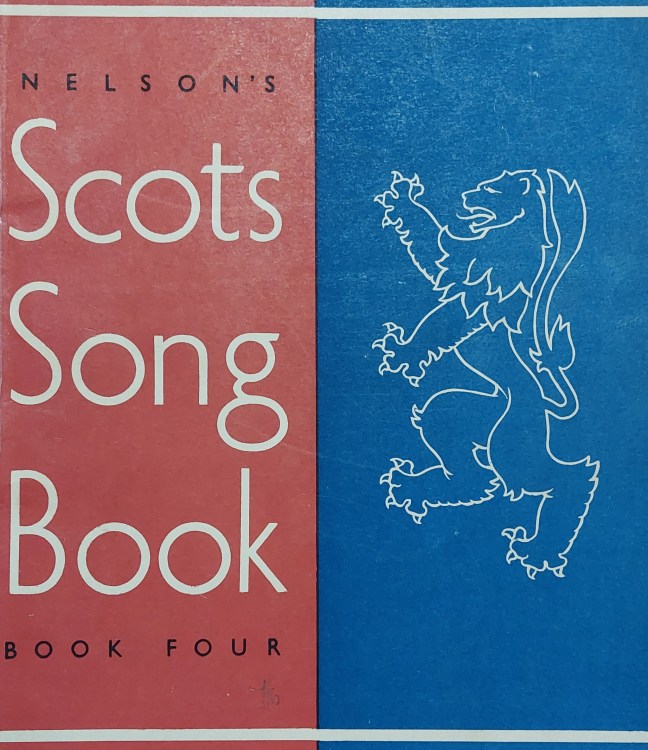
Today, 30th December, we leap forward to 1954. The Second World War had ended nine years earlier. The country was picking itself up again, and James Easson and Herbert Wiseman had published four books of Scottish songs in the series, ‘Nelson’s Scots Song Book, primarily for school use. I’ve done a lot of research into this series, during my Heritage Collections visiting Fellowship at IASH in the University of Edinburgh, so I’m sure you’ll understand that I won’t be saying much about it today – all will be revealed in due course! However, I can reveal that Easson seems to have written a letter to his editor on 30th December 1954, with the expectation of compiling a fifth book. The letter is no longer extant, but the carbon copy of their reply survives.
‘All good things must come to an end’, as the saying goes. And an IASH Postdoctoral Research Fellowship is a thoroughly good thing. I handed back my keys with sadness today, but I have had a great year. (The Fellowship was technically six months, but I was graciously permitted to hang around, retaining the use of my office for the rest of the year, which was wonderful, and enabled me to continue data-gathering in the Library’s Heritage Collections.)
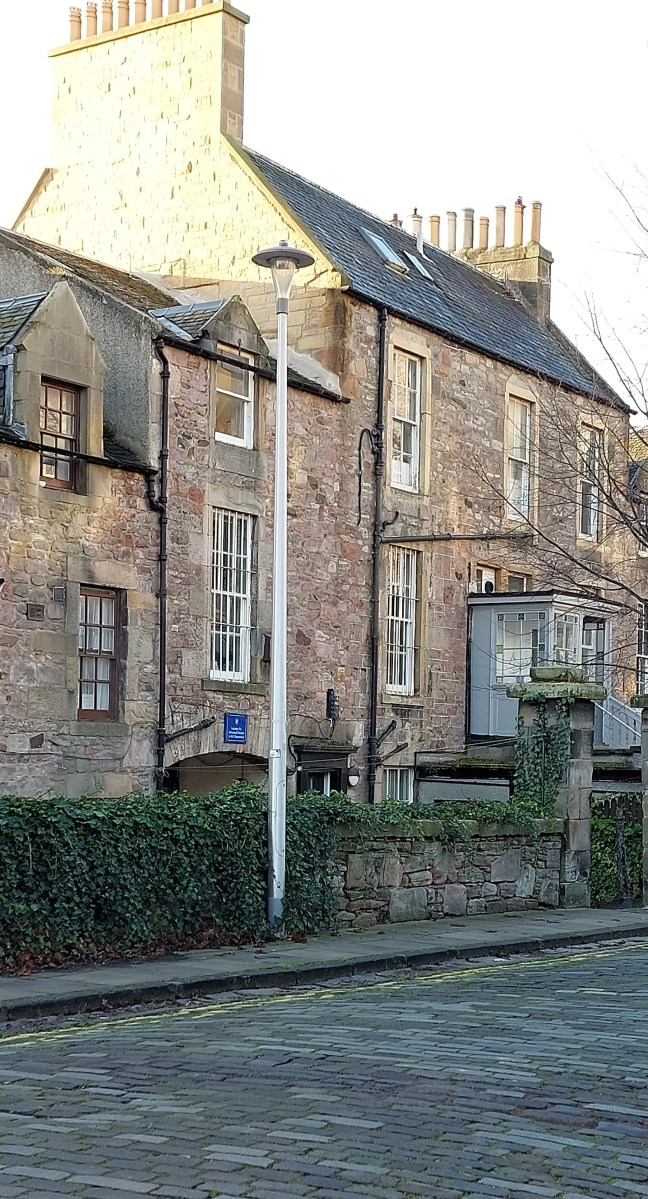
19th meets 20th century Looking back …Last glance from bus stop St Patrick’s Square
If you are looking for a next step after your PhD, or if like me, you’re making a change of direction – or need a spell concentrating on a particular research question in the Humanities – do consider applying.
I devoted my time to examining the archives of the Edinburgh publishers, Thomas Nelson. I initially entitled my project, ‘From National Songs to Nursery Rhymes, and Discussion Books to Dance Bands: investigating Thomas Nelson’s Musical Middle Ground’, but the nursery rhymes turned out to be poems, and weren’t what I had in mind! The rest? Yes, I researched them.
I found quite a bit of correspondence between Thomas Nelson’s editors, authors and compilers, which was gratifying. I was able to trace material in journals that I would not have had access to, had I not been in Edinburgh; there’s the excellent University Library collection of actual and digital resources, and the National Library of Scotland just down the road.
I have deferred commencing any significant written work until I had explored all the potentially relevant materials in the files. I believe I’ve now reached that point. As a result of conducting this research, I have ideas for extending my research in new directions, and I’m contemplating writing another book, so I need not only to explore potential audiences, but also to start working on a book proposal
However, I have also applied for and recently won an Athenaeum Award from the Royal Conservatoire of Scotland to enable me to conduct an oral history project. This work, to be conducted in 2026, will hopefully enable me to write a final chapter for my proposed monograph. (I’ll be blogging about this before too long, but there are things I need to do first, before I spill the beans!)
I have benefited from being part of a research community, hearing other scholars’ papers and discussing our research; and attending researcher development sessions. I was able to focus on my new direction as a researcher – important, after so many years as an ‘alt-ac’ researcher working in professional services. In this regard, I have also been in a position to submit some other unrelated work for publication, and I spoke at a conference at the University of Surrey in June, all of which gives me a sense that my research is gathering momentum.
Today, my last day, I took a cake to the University Library’s Heritage Collections; went to IASH’s Christmas lunch; and mulled over aspects of my ethical approval submission for my next project. (Oh, and drank quite a bit of coffee!)
Thank you so very much for a great year, IASH!
IASH (Institute for Advanced Studies in the Humanities)
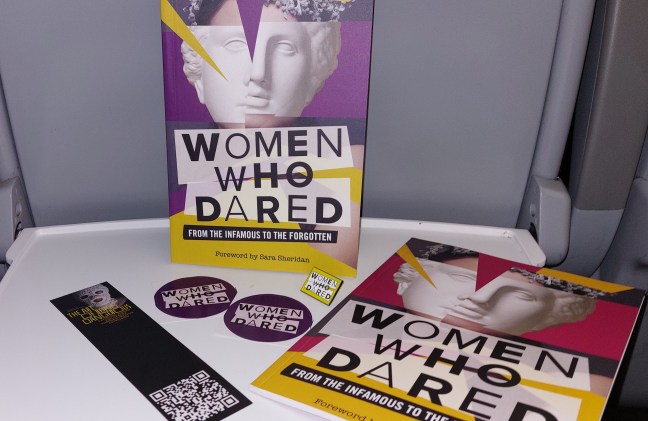
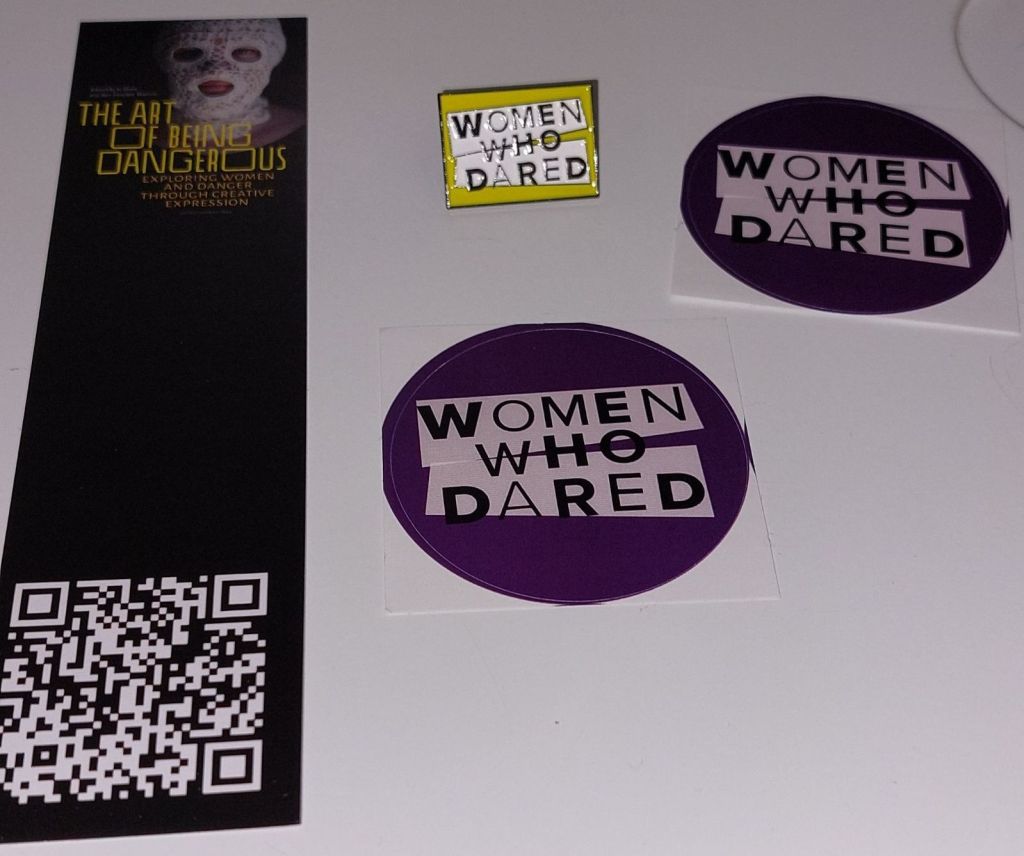
Earlier this year, IASH blogged about an exciting book that Ben Fletcher-Watson and Jo Shaw would soon be releasing. And yesterday, I attended its launch – the third book of the Dangerous Women project:-
The Art of Being Dangerous: Exploring Women and Danger through Creative Expression (Leuven University Press, 2021) edited by Jo Shaw and Ben Fletcher-Watson
Dangerous Women: fifty reflections on women, power and identity (Unbound, 2022) edited by Jo Shaw, Ben Fletcher-Watson and Abrisham Ahmadzadeh
Women Who Dared: From the Infamous to the Forgotten (Edinburgh University Press, 2025) edited by Ben Fletcher-Watson and Jo Shaw
It was a lovely book launch, and we had excellent speakers, who had all contributed to the book: Jo Shaw, Sara Sheridan, Ruth Boreham and Jo Spiller.
Women who Dared is an anthology of short biographies – all of them historical ‘women who dared’. I chatted with the speakers afterwards, and enjoyed hearing more about their work. There are so very many women of note, whom history has entirely forgotten about, so books like this are both very welcome, and very necessary.
As I’ve already mentioned, I am currently a Heritage Collections Fellow at IASH – the Institute of Advanced Studies in the Humanities, at the University of Edinburgh. I’m halfway through my Fellowship, and (hopefully) halfway through my trawl of the Thomas Nelson publishers’ archives in search of correspondence about their music publications in the 1940s to 1950s. The book I’m primarily interested in has presented me with a few surprises and thoughts of new directions to pursue, but I shall plough on through the archives until I am sure I’ve captured every whisper about these four little school books.
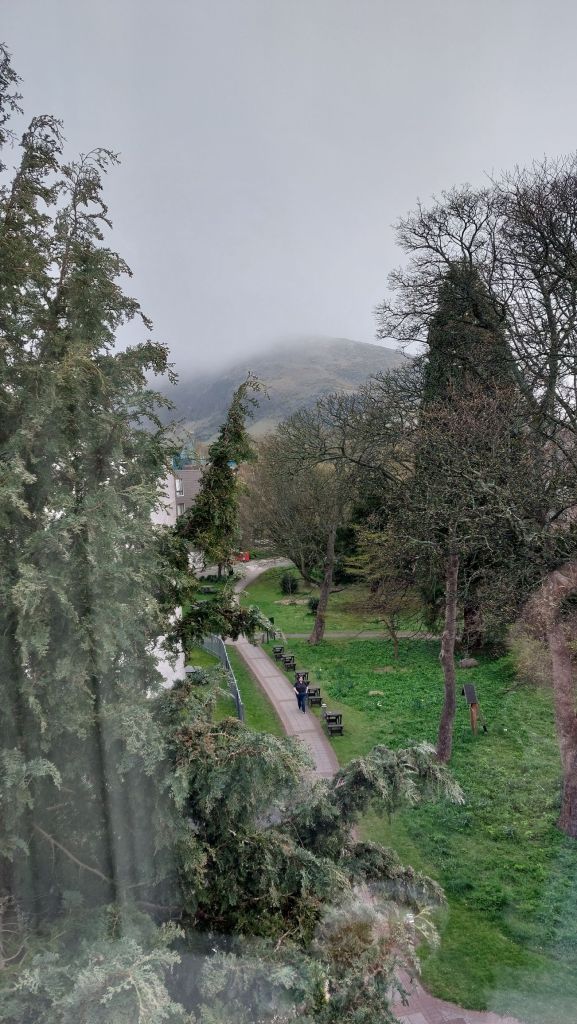
View from the Scholar Hotel
This week, we had the Institute’s 55th Anniversary celebrations, with a focus on Decoloniality. The Institute has just concluded a two-year project on this theme. There was also a session on motherhood and reproductive justice.
Now, you’d think, perhaps correctly, that my Scottish song book and music education focus has little connection with either decoloniality or motherhood. But I did put a lot of effort into broadening the scope of the music collection to include more music by women and composers of colour, whilst I was a Performing Arts librarian at the Royal Conservatoire of Scotland, so I was keen to find out what other scholars in more directly related disciplines have been doing.
I think it’s fair to say I felt a bit overawed! IASH is very interdisciplinary, so there were contributions from all corners of the humanities, and by scholars with far more extensive experience in their fields than I have in mine. But there were contributions from the performing arts, and from heritage collections and archives – I felt more comfortable in these areas, and a bit less out of my depth.
I stayed in Edinburgh overnight to make it less of a rush from Glasgow for the second morning.
In the final session, with contributions from past and present directors, I was impressed by the sheer reach and achievements of this amazing institution, and both proud and humbled to be a Fellow here.
O wad some Power the giftie gie us,
To see oursels as ithers see us!
In the context of Robert Burns’s poem, those lines are exhorting us not to get above ourselves, but taken in a different context, they perhaps offer reassurance that others see something in us that we can’t necessarily see ourselves.
‘They thought I was worthy to be a Fellow – in a very competitive application process?’, I mused. But yes, they did indeed select me, which is a vote of confidence in itself. Sometimes, you need validation by others – it’s hard to be objective about oneself!
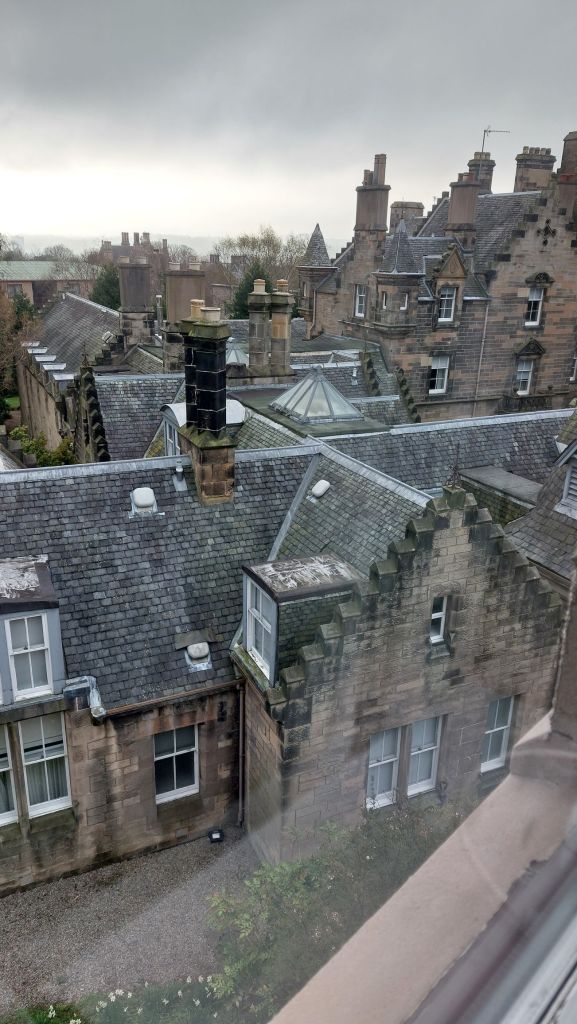
Another view from the Scholar Hotel
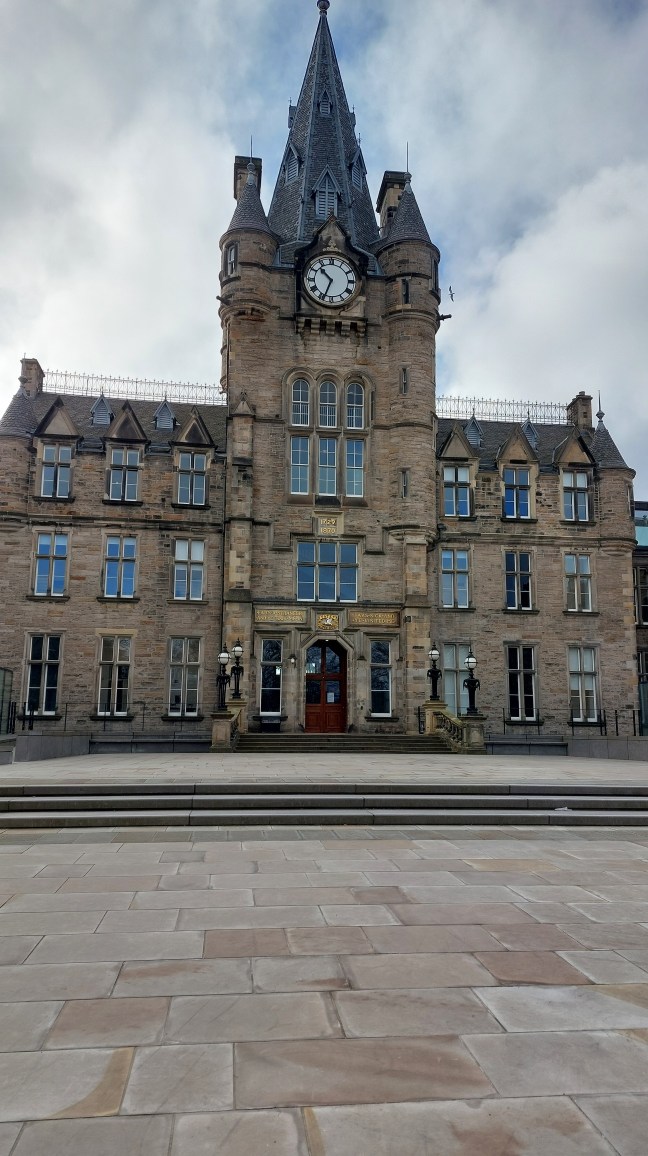
Image at top of post: The Edinburgh Futures Institute
As I’ve mentioned, I’m currently Heritage Collections Research Fellow at IASH, the Institute for Advanced Studies in the Humanities, at the University of Edinburgh. All guest fellows are invited to give a work-in-progress seminar, and it’s my turn on Wednesday 26 March at 1 pm. You can attend in person, or online – more details on the link below. The abstract tells you what my talk is about.
I’ll explain what I’m looking for, and introduce you to some of the individuals I’ve been finding out about. The one thing I can’t predict, is whether I shall by then have found the answer to my prime question!





 Karen McAulay, Musicologist