Women’s History Month 2024 – Musicians

Victorian or Edwardian woman descending stone staircase

I’ve written quite a bit about women in musical history, so I’m adding something to the top of this post every couple of days during Women’s History Month – mostly flashbacks to women musicians I’ve researched, but some other discoveries too. (I’ve been shifting things around to a more chronological order, but I’ve always added the new bit first!) You’ll find more musicians than composers in this posting, just because of my own recent research.

Sometimes I look at the history of women musicians from the point of view of good library provision for our readers, whilst at other times my own research interests are foremost.  It just depends on the day of the week, because I currently occupy two roles in the Royal Conservatoire of Scotland. For 3.5 days a week, I’m a librarian. For 1.5, a postdoctoral researcher.

15. The Ketelbey Fellowship

It’s a whole year since I learned that I had been awarded the first Ketelbey postdoctoral research fellowship at the University of St Andrews.  Scholar Doris Ketelbey was a significant figure in the history of the department.  I felt highly honoured to have been the first Ketelbey Fellow from September to December 2023.

14. Representation of Women Composers in the Library

I couldn’t resist adding the open access article I published about my EDI activity in our own Whittaker Library:-

‘Representation of Women Composers in the Whittaker Library’Journal of Perspectives in Applied Academic Practice. Vol. 11 No. 1 (2023): Special Issue on Breaking the Gender Bias in Academia and Academic Practice, 21-26. (Paper given at the International Women’s Day Conference hosted by the University of the Highlands and Islands, 2022.) DOI: https://doi.org/10.56433/jpaap.v11i1.533

Logo of the JPAAP https://jpaap.ac.uk/JPAAP

13. New Books for the Library

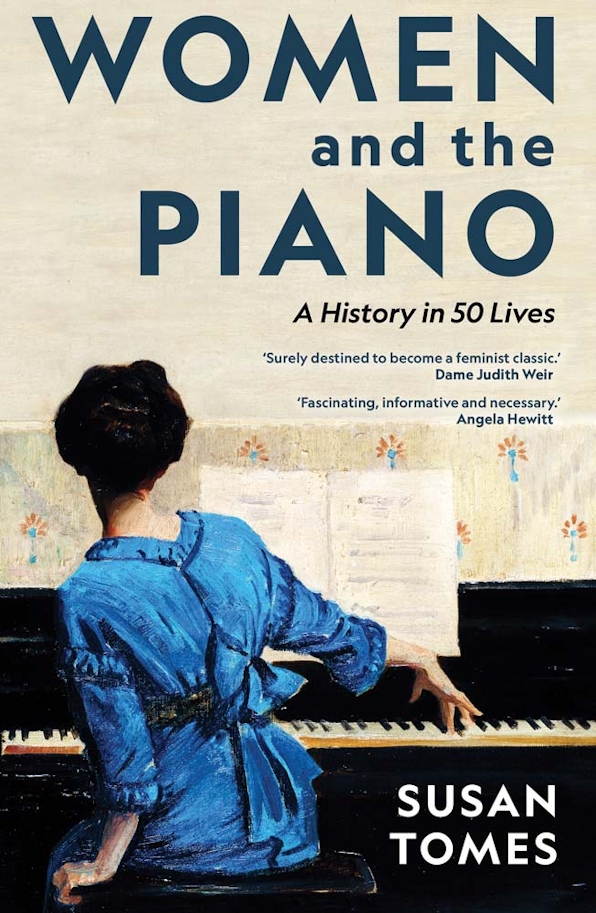
Susan Tomes – Women and the piano

It’s a privilege to shape a library collection, so I’m pleased to have just ordered and catalogued several relevant books this month.

  • Susan Tomes, Women and the Piano: a History in 50 Lives (Yale University Press, 2024) Read more about it on the publisher’s website, here. In actual fact, it’s the fourth title by this author that we now have in stock. So if readers like this, they might like the earlier three, too!
  • Margaret C. Watson, Women in Academia : Achieving our Potential. (Market Harborough : Troubadour, 2024). Not a book about women in history, but very much for women in the present day!
  • Gillian Dooley, She played and sang: Jane Austen and Music (Manchester University Press, 2024). Back to history again.
  • Women and Music in Ireland / ed. Jennifer O’Connor-Madsen; Laura Watson & Ita Beausang (Boydell Press, 2022)

Moreover, there’s a new Routledge book coming out this summer – I have ordered it for the Whittaker Library. Of course, I may have retired from the Library by the time it arrives. This just means I won’t need to catalogue it! I’ll still be a part-time researcher, so I’ll be able to read it:-

12. Jessy McCabe’s Petition

It’s some years now, since a single-minded schoolgirl decided action was necessary. In 2015,  Jessy McCabe noticed that Edexel had no women composers in the A-Level Music syllabus, and successfully petitioned to rectify this, via Change.org.  I found out about her impressive initiative when I was beginning to start serious work on building up our library collection to include more music – contemporary and  historical – by women and people of colour. 

Jessy is now a Special Needs teacher.  I’m sure she’ll go far.

11. Forgotten Women Composers
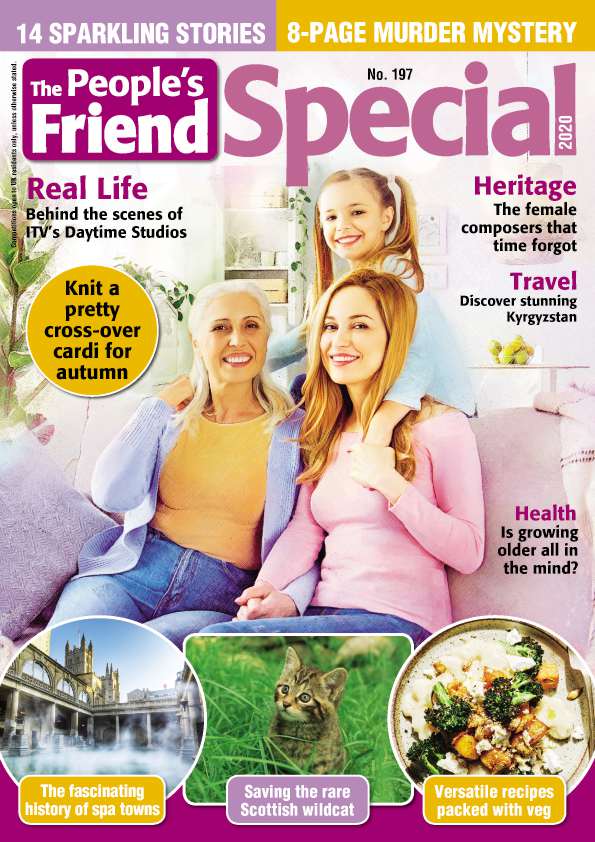
Part of academia entails sharing research outcomes beyond the ‘ivory walls’.  It’s called public engagement, and that’s the opportunity I seized when my old friend The People’s Friend magazine commissioned me to write a feature back in 2020.

  • The sound of forgotten music: Karen McAulay uncovers some of the great female composers who have been lost from history’, in The People’s Friend, Special Edition, 11 Sep 2020, 2 p. (Dundee : D C Thomson).  I blogged about it at the time (here).

10. Late Victorian Women Musicians

Torn pages of old music, some handwritten and some printed

Since my more recent research has focused on the late Victorian era and the first part of the twentieth century, you’ll not be surprised to find that I found some interesting Scottish women musicians of that era! They are forgotten today – but I’ve done my bit to raise their profiles!

9. In Praise of Music Cataloguers! Introducing Miss Elizabeth Lambert

Before I started the Claimed From Stationers’ Hall music copyright network, I had spent some months researching the wonderful late 18th and early 19th century music copyright collection at the University of St Andrews. A key resource was the handwritten catalogue in two notebooks, largely compiled by Miss Elizabeth Lambert (later to become Mrs Williams, when she married and moved to London.)

I just love the fact that this earnest young woman (I’m going out on a limb here, but I’m pretty sure she must have been earnest!) created a useful resource which would help everyone get maximum use out of the music repertoire that other libraries were less than impressed by. So we had Elizabeth cataloguing the collection, and numerous men and women, friends of the professors, making use of it. I blogged about her, and eventually wrote an article for the Edinburgh Bibliographical Society, mentioning her again.

8. Was there a Harp at St Leonard’s School?

Image by Sue Rickhuss from Pixabay

Some time ago, I blogged about an instruction manual for harp, which the Bertrams borrowed from St Andrews University Library:-

The library’s copyright collection of music was a boon for middling class women like headmistress Mrs Bertram, her teacher daughters and their pupils.  It does lead one to wonder if they had a harp at the school.  I checked their borrowing records for more evidence. They certainly borrowed several volumes which included harp music.

7. Students but not at University? Educating Young Women

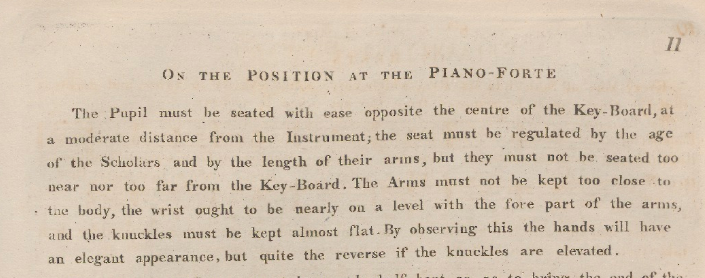
It’s time to turn to piano teacher Mr T. Latour. I’d like to refer you to my June 2018 blog post about women in St Andrews using pedagogical musical material in the early 19th century. Possibly the self-same young ladies attending, or having attended Mrs Bertram’s school?! The illustration features a young woman – probably just approaching or about marriagable age – at an upright piano. The abundant floral arrangement atop the piano (quite apart from sending shivers down the housekeeper’s spine every time the young pianist played too enthusiastically) suggests a well-to-do household. Following Latour’s instructions, the pianist has elegantly flat hands …..
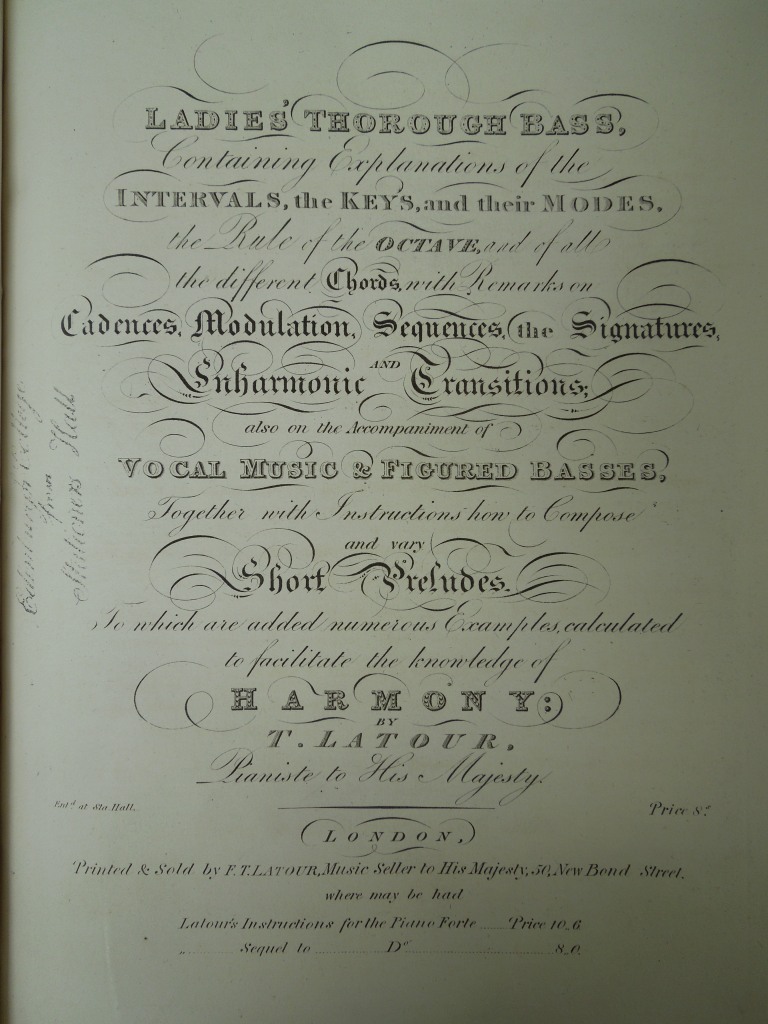
Title page of T. Latour's instruction manual, Ladies' Thorough Bass.
T. Latour – Ladies’ Thorough Bass
Instructions 'on the position at the piano-forte'
Latour advises on the seating position, and how to hold ones hands elegantly

6. Not my work – but very timely for WHM 2024]

I’m not posting anything relating to my work today, but I saw mention of a great new article by Dominic Bridge the other day, so I thought I’d share details here. It’s a fascinating read. The Journal for Eighteenth-Century Studies is part of the Wiley Online Library:-

5. Jointly authored with Brianna Robertson-Kirkland: ‘My love to war is going’: Women and Song in the Napoleonic Era

We published this article in the Trafalgar Chronicle, New Series 3 (2018), 202-212. My own observations were based on music I had found in the Legal Deposit Music at the University of St Andrews, whilst Brianna had already founded EAERN (Eighteenth-Century Arts Education Research Network) jointly with Dr Elizabeth Ford, funded by the Royal Society of Edinburgh.

4. Forgotten Female Composers

Back in 2018 when I was awarded the AHRC networking grant for the Claimed from Stationers Hall network, I drew up a list of women composers from the Georgian era. There were more than one might have expected – perhaps they only composed a handful of pieces, in many cases, but nonetheless – they composed. You can find the list on a separate page on this blog, here. And you can read more about it in the blogpost I wrote in July 2018,

3. Mrs Bertram

This lady ran a girls’ school at St Leonard’s in St Andrews. This was NOT the famous and long-established private school that has long stood there, but an earlier enterprise. And Mrs Bertram and her daughters subsequently moved to Edinburgh, to the disappointment of parents of daughters in St Andrews!

The photo portrays a Mrs Bertram of Edinburgh. Chronologically,  she could well be ‘our’ Mrs Bertram, and a scholarly bent is suggested by the pile of books at her hand.

2. The Accomplished Ladies of Torloisk

I almost forgot about the musical Maclean-Clephane ladies of Torloisk, which is a stately home on the island of Mull. But how could I forget about them, considering I published a lengthy article about them some years ago?! Luckily, a book of letters by Sir Walter Scott crossed my library desk, and even though it didn’t contain those particular letters, this did remind me of his musical friends in Torloisk!

1. Esteemed Academic introduces Composer Harriet Wainewright

Today, I’d like to introduce a woman composer who predates most of the individuals I’ve encountered. Professor James Porter applies his considerable intellect to produce this in-depth article:-

  • ‘An English Composer and Her Opera: Harriet Wainewright’s Comàla (1792)’, Journal of Musicological Research Feb, 2021. Published online: 16 Feb 2021.
Torn between Copyright Music and the East India Company!

I’m back from vacation with a vengeance, here.  I’ve thought of not one, but two future projects worth pursuing, so I am getting in touch with people whom I think might be interested.  One project is closely linked to the Claimed From Stationers’ Hall network, whilst the other idea could be said to tie together several strands from all the research I’ve done in the past decade or so.  Obviously, grant-writing time is approaching again!  Watch this space.

An interesting news snippet is my recent discovery that a librarianship student from Robert Gordon’s University has been doing a placement at the University of Aberdeen’s Library Special Collections – and looking at their Copyright Music collection!  This really is very exciting – I love to hear of people getting engaged with these materials, and I’m really happy to think that Aberdeen’s collection is attracting attention.  Retired music librarian and rare books cataloguer Richard Turbet did much work on it a few years ago, but it’s definitely time to be woken from its slumbers with some more close study!

So much for copyright music.  I still have more writing to do for a substantial journal article about the UK’s repertoire, amongst other things.  And we have the Brio journal issue to work towards, later this year, too. All this will be done!

Perso-Indica workshop on “John MacGregor Murray (1745-1822): Persianate and Indic Cultures in British South Asia” – Paris, May 28th 2019.

However, right now, I’m focusing on writing a paper for a seminar at the Sorbonne, which takes place at the end of May.  Sir John Macgregor Murray took an almost obsessive interest in Scottish and clan culture, but it appears he was as interested in Indian culture, commissioning translations and texts in Persian, on matters relating to Indian religion, festivals and agriculture.  His career was spent in the private army of the East India Company, so maybe we shouldn’t be too surprised that he took an interest in the customs of the land that was his home for more than two decades.  He did have a base in Scotland too, having bought Lanrick Castle in his mid-twenties, though I haven’t investigated how often he came home, or whether his wife and son ever stayed there without him.  (Much as I’d like to know, I have to remind myself that I’m interested in his cultural activities, not his entire biography!)

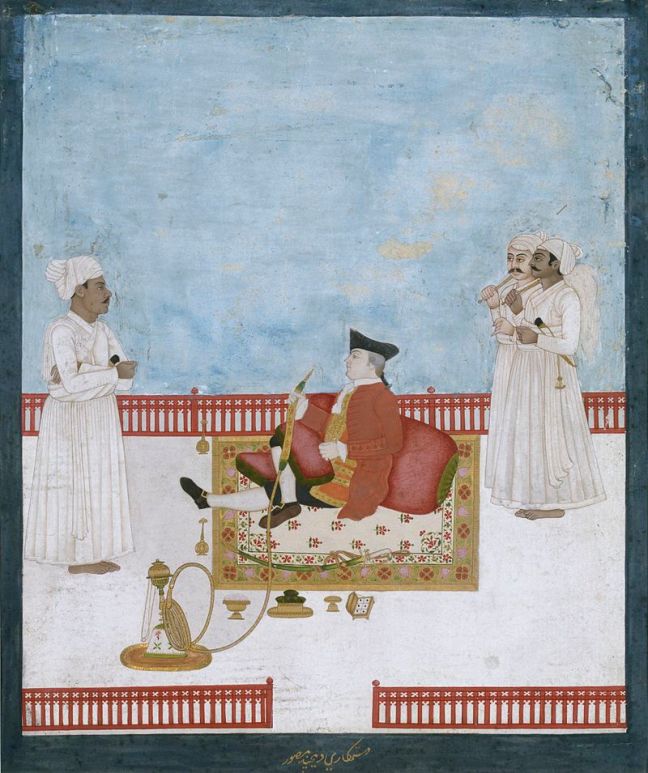
800px-Portrait_of_East_India_Company_official from VAM.ac.uk via wikipedia
By Dip Chand (artist) – https://collections.vam.ac.uk/item/O16731/painting-portrait-of-east-india-company/, Public Domain, https://commons.wikimedia.org/w/index.php?curid=18728491 from Wikipedia

(The above image is dated 1760, a bit before Sir John joined the East India Company, but it was so lovely, I just had to include it!)


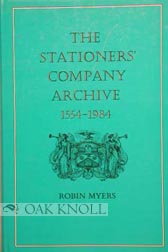
Invaluable Resource: The Stationers Company Archive 1554-1984, by Robin Myers

robin myers book coverBy and large, this book is aimed at book and publishing historians – it enumerates the contents of the Stationers’ Company Archive from 1554-1984, at Stationers’ Hall. The compiler, Robin Myers, was for a long time Honorary Archivist there. (She has the status of Liveryman at the Stationers’ Company.)


Not the first attempt at documenting this complex body of material, but certainly the most comprehensive, I commend especially the Preface (xiii-xiv) and Introduction xvii-xxxvii), which gives an overview of the history of the Archive. Significantly, the creation of a proper muniment room in 1949 made visits more convenient for researchers, and also saw the awakening interest of musicologists looking for first London editions by famous composers.

Next, cast your eye over the Contents, and in particular Section I – the Entry Books of Copies & Register Books 1557-1842; Registers of Books Sent to Deposit Libraries 1860-1924; a Cash Book & Copyright Ledger Book 1895-1925; and Indexes of Entry Books 1842-1907 appear between pp.21-30. The Entry Books cover several years at a time for the earliest period, and a couple of years at a time for the era that our project has been covering. As I may have mentioned already, I’m quite interested in the book commencing June 1817, and we find in the listing that the wording, ‘Published by the author and his property’ “begins to appear not infrequently in this volume.” This would seem to imply a greater sense of intellectual property, although there may be another more technical explanation of which I’m not aware!

Much of the rest of the book concerns leases, freedoms, wardens’ vouchers and other documentation which are maybe of little concern to the average musicologist, but it would do no harm to glance through the contents if only so that you know what else is there. A complicated web of documentation of which many of us are blissfully unaware!

Myers, Robin (ed.) The Stationers’ Company Archive 1554-1984 (Winchester: St Paul’s Bibliographies, 1990) ISBN 0906795710

The records of the Stationers’ Company are now available as digital images via publisher Adam Matthew: Literary Print Culture: the Stationers’ Company Archive, 1554-2007. As well as the records themselves, there’s also a wealth of background information, including commentary by Robin Myers. You can view a short YouTube video here.

The Stationers’ Company to 1775: Tempting Course in Philadelphia

I’m delighted to introduce today’s blogpost by Andrea Cawelti, who is the Ward Music Cataloger at Houghton Library, Harvard University.  Andrea attended a course at the American Rare Book School a couple of years ago, and is keen for everyone to know what a wonderful opportunity it would be for anyone who could attend this year’s course.  I shared a link to Andrea’s reflections on the course, which she authored for the Houghton Library blog last year – you’ll find the link in the posting below.  Now you can read more about it – if you manage to get there, do please consider sharing your own experiences here!

philadelphia-3659417_1280
Philadelphia skyline (Pixabay image)

Fellow readers of Claimed from Stationers’ Hall may be aware that the American incarnation of Rare Book School has offered a course on the Stationers’ Hall since Peter Blayney, one of the stalwart fathers of research on the Stationers, taught the course in the 1990s.  But I see that applications have been opened today for this summer coursenow taught by Professor Ian Gadd, so I’d like to share a bit about my excellent experience in taking this course in 2016, as prompt applications are usually the most successful. 

This term, as in 2016, the course will be held in Philadelphia, June 2-7, at the Kislak Center for Special Collections, Rare Books and Manuscripts at the University of Pennsylvania, with reasonably-priced and comfortable dorm space available within easy walking distance through the picturesque Penn campus.  As this course represented my first experience at the Kislak Center, I was delightfully surprised by our genuine welcome, and helpful assistance by the staff, both of the library and those in attendance from the Rare Book School, even though this wasn’t their turf.  The Center holds significant hand-press material for examination and project fodder, and Penn Libraries holds a complete set of microfilms of the Stationers’ Company registers and archives, which we consulted extensively for our work. 

As with all RBS courses, ample opportunities are presented for individual discussion, questions, and networking, including regular morning and afternoon breaks, lunches, and receptions.  Evenings often include programmed activities from lectures to film presentations, and during my course, there was an excellent presentation by Lynne Farrington, senior curator at the Kislak, on American subscription publishers and their German-American readers.  Dr. Farrington provided a fascinating overview of the American subscription publishing industry, and how it was utilized for foreign-language titles to be sold through the subscription network.  The lecture was accompanied by a hand-on exploration of subscription samples from several of the Kislak’s collections.

Enough of that, you may say, what about the course itself?!?!?!  Well, first of all, I should mention that I arrived with a specific agenda, which was to familiarize myself with the Registers, what was in them of a music format, and to learn how to use the microfilms most effectively (Harvard, too, holds a complete set of these microfilms).

Like many of you I’m sure, I’ve had cases where I’d hoped to find a specific date in the 18th century when something had been published, or to establish some kind of sequence for several publications, and had been frustrated by my inability to harness these resources.  Now of course, newer products are available, including the Literary Print Culture online access, which Professor Gadd has now incorporated into the course.  Still, the navigation of this product isn’t straightforward, and one really needs to know what one is doing before attempting to use, or it is easy to get completely lost. 

andrea cawelti image 1
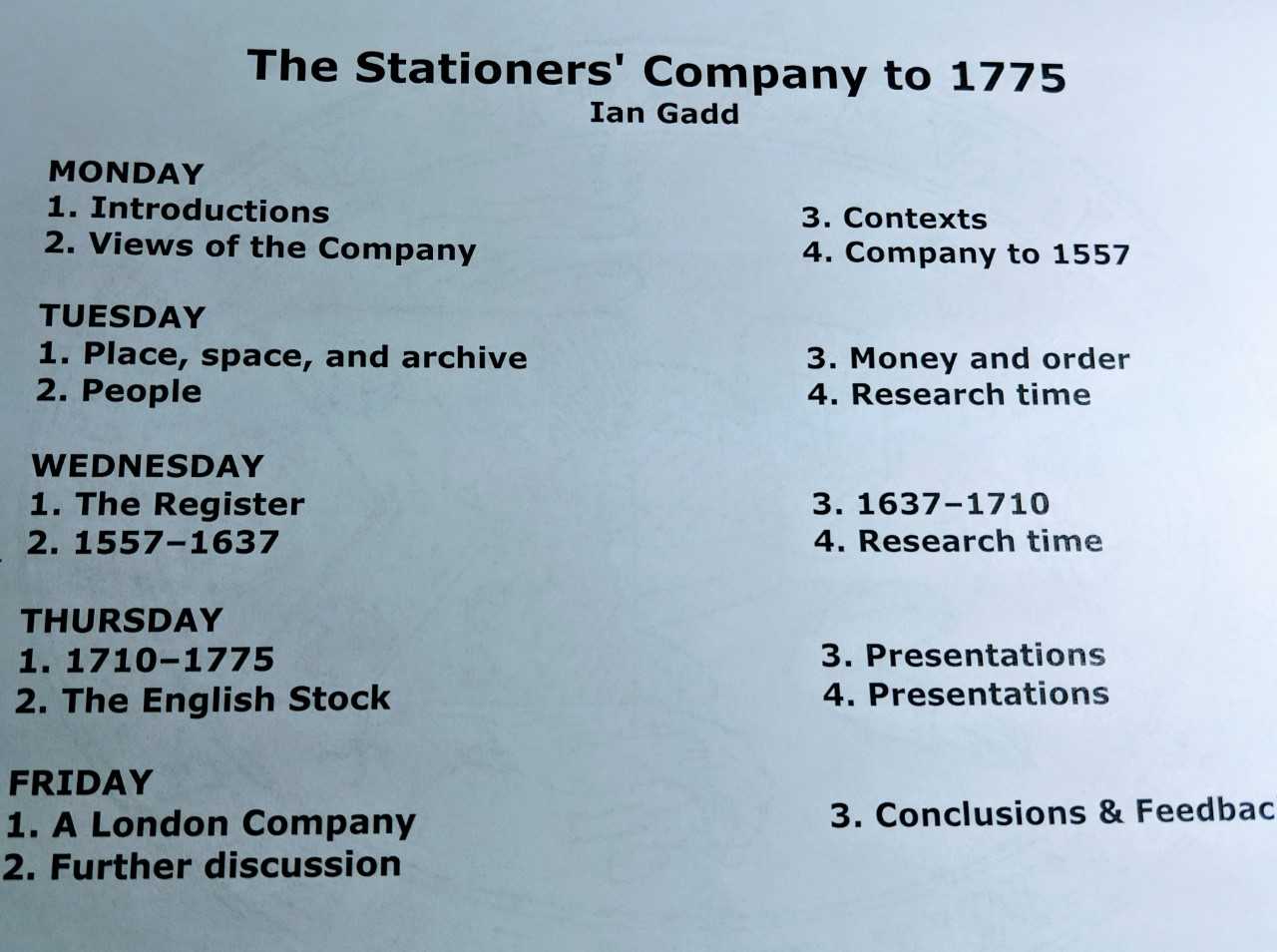
Course schedule

As you can see, the schedule was laid out to allow us a proper introduction to the history of the company and its archives: Professor Gadd offered spirited presentations on each aspect, as well as providing references to online and printed documentation which would be of use later in our explorations.  Each of us was then tasked to research and present on some topic of particular interest to us (see “research time” and “presentation time” in the daily schedule).  I chose a particular segment of time and explored all of the Registers chronologically to gain an idea of what music was being brought to the Stationers for registration between 1799 and 1804.  Several of my discoveries ended up in our Houghton Blog, which presents a bit more information for those who are interested. 

I had honestly come into this course completely unaware of how extensive the Stationers’ archives were apart from the Registers!  Learning more about the “people” documentation was particularly eye-opening, and quite helpful in my cataloging.  The online index to the London Book Trades for instance, based on the Stationers’ archives is great for finding more information on printers when researching, creating authority records, or for investigating connections between people.  As always, Professor Gadd provided helpful hints: don’t use the “search” box, just go directly to the “index – names”.  There were so many trails of bread crumbs offered to us, that who could remember them all (certainly not I!)  Knowing this, the professor provided us with an extensive workbook to take home, complete with bibliography and most useful for me after the fact, an overview of the most important copyright legislation affecting just what was registered with the Company.

andrea cawelti image 2
Workbook table of contents

While this course only goes up to 1775, and consequently doesn’t cover some of the most influential music-related legislation, suggested readings within provide an appendix as it were, and after going through the history before 1775, reading forward into the 1790s was not difficult.  Additional revealing segments covered what species of books were included in the English Stock and why this was important, and an introduction to Edward Arber’s term catalogues – keyword-searchable, and covering (among others and appendices) periods into the 18th century.  A mind-boggling amount of work, which doesn’t include that much music but is well worth a look.

Two and a half years later, am I glad I took the course?  You bet I am; it has proved to be perhaps one of the most useful courses I’ve taken at RBS.  Possibly more so for me, because I was essentially ignorant of so many details of the Stationers’ history, but I would heartily recommend this to anyone preparing to work with, or already working with 17th to 18th century music.  The context will provide you with an invaluable overview of how printing functioned in Britain, and how and why and what was registered.  I hope that I’ve given something of the flavor of the course, and if anyone has questions about how RBS works, please do ask the RBS:-

https://tinyurl.com/RBS-ApplyTo-Courses

There are links throughout the site, and you’ll find that the RBS is prompt and efficient in their communications.

  • Rare Book School homepage
  • If you’re considering attending, you can find out more about the RBS on their website.  The homepage explains, “Rare Book School provides continuing-education opportunities for students from all disciplines and skill levels to study the history of written, printed, and digital materials with leading scholars and professionals in the field.”
  • Be quick! The early bird catches the worm, as they say.
     

Good luck and good researching!

Andrea Cawelti 
Ward Music Cataloger 
Houghton Library 
Harvard University 

A Snapshot of a Day at Stationers’ Hall: 19 December 1818

William Hawes (1785-1846) was a singer, conductor and composer in a variety of high-profile institutions, beginning with his appointment as a chorister at the Chapel Royal.  Work as a deputy lay vicar at Westminster Abbey was followed by his becoming a Gentleman of the Chapel Royal, later becoming Master of the Choristers at St Paul’s and Master of the Children at the Chapel Royal. He was also an associate of the Philharmonic Society, a leading light in the Regent’s Harmonic Institution, a lay vicar of Westminster Abbey, conductor of the Madrigal Society, and organist of the Lutheran Chapel. And then there was his work with the operatic scene, too.  He was clearly quite an important person on the contemporary London musical scene.

(The potted biography shared above, summarises the entry in Oxford Music Online:- W.H. Husk, Bernarr Rainbow and Leanne Langley (2001), Oxford Music Online https://doi.org/10.1093/gmo/9781561592630.article.12598)

For some reason, William Hawes had the Stationers’ Hall music registrations from 1789 to 1818 copied into a manuscript, A List of Music Entered at Stationers’ Hall, from January 1 1789, to January 1, 1819.  1818 had seen the inception of the Regent’s Harmonic Institution, and Krummel suggests in Kassler’s edition of Music Entries at Stationers’ Hall 1710-1818 (2004) that the manuscript was probably connected with establishing when music would go out of copyright (after twenty-eight years), becoming legally reprintable. (Kassler, ix)

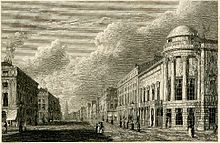
220px-Regent_Street_(with_the_Argyle_Rooms)
By Charles Heath, after William Westall

You can read more about the Regent’s Harmonic Institution in Oxford Music Online. It’s an institution I’d like to learn more about in due course:-

“Regent’s Harmonic Institution [ Royal Harmonic Institution ] English firm of music publishers . It was founded in London in 1818 as a joint-stock company of 23 (then 21) professional musicians, including Attwood, Ayrton, J.B. Cramer, William Hawes, Ries, George Smart, Thomas Welsh and Samuel Wesley, to finance reconstruction of the Argyll Rooms, Regent Street…”    Leanne Langley (2001)

https://doi.org/10.1093/gmo/9781561592630.article.42367

You may also like to visit Leanne Langley’s website, where you can read about the ‘Taking Stock’ project:- http://www.leannelangley.com/projects/taking-stock/ 

But I digress.  When Kassler produced his edition of Music Entries, he combined his own transcriptions from the Registers with those of Don Krummel and Alan Tyson, as far as the year 1810, but used Hawes’ transcription for the years 1811-1818.  This became the cut-off point for Kassler’s edition, in order to restrict the work to one volume.

Now, I should like to extend transcriptions forward to 1836. That’s the year when new legislation changed the legal deposit stipulations, reducing the number of legal deposit libraries and for those that lost their privilege, instituting a new system of granting library book-budgets instead.  How to make my idea happen is the question that is exercising me at the moment!

On this day … ballads, rondos, anthems, glees and variations on operatic themes

19th December 2018 is a significant day in Claimed From Stationers’ Hall terms, because the very last transcribed entries in William Hawes’ manuscript were those originally entered exactly 200 years ago.  And it was a good day for music, albeit a busy one for warehouse keeper Mr Greenhill – no less than sixteen musical entries.  Five from publisher Goulding, followed by six from Power, two from Birchall, one that may have been from Chappell alone (it’s hard to tell in Copac), one from Clementi, and one published by both Clementi and Chappell. This last isn’t in Copac, but a copy can be traced in Berlin via WorldCat.

Goulding

Samuel Webbe, Jr’s Edward, a ballad – surviving in the most likely copyright libraries:- Aberdeen, the Bodleian, the British Library, Glasgow and St Andrews.

Ferdinand Ries’ When the wind blows, rondo, no.1, op.84, surviving in Aberdeen, the British Library and Glasgow.

Ries’ Popular French air with variations, no.4, op.84 – the same five libraries above.

Henry Rowley Bishop’s I have kept the ways of the Lord, anthem (in memory of Queen Charlotte [died 17.11.1818]) – same five libraries, and also in Edinburgh (whose copy isn’t yet catalogued online)

Bishop’s Hark! The solemn, distant bell (again, in memory of Queen Charlotte [died 17.11.1818]) – same five libraries, and in Edinburgh (as above)

Power

Thomas Simpson Cooke’s The dandy beau: a song – Aberdeen, British Library, Glasgow and St Andrews

Thomas Attwood’s Her hands were clasp’d (a Thomas Moore text from Lalla Rookh) – Aberdeen, British Library, Glasgow and St Andrews

John Clarke’s The Peri pardoned (song from Lalla Rookh) – Aberdeen, Bodleian, British Library and St Andrews

Frances L Hummell, or Hunnell’s My love is like the red, red rose – only in the Bodleian and the British Library

Joseph William Holder’s La belle Hariette [Henriette] with variations – Aberdeen, British Library and St Andrews

Thomas Howell’s Six progressive sonatinas for piano forte – Aberdeen, the Bodleian, the British Library, Glasgow and St Andrews

Birchall

Carlo Michele Alessio Sola’s – Amabili Britanne, canzonetta – the same five libraries

Sola’s Amor possente amore, canzonetta – the same five libraries

Chappell?

Ries’ La charmante Gabrielle, with variations [cannot trace Ries’s piece in Copac, but maybe it could be a piece indexed as by Onslow, published by Chappell]

Clementi

Ries’ Venetian air, with variations – Aberdeen and the British Library

Clementi, Cheapside, and Chappell, New Bond Street

Ries’ Air from Griselda (by Ferdinand Paer) with variations [again not in Copac but in Worldcat we find: A favorite air from Paer’s Celebrated Opera Griselda. Can only trace in the Berlin Staatsbibliothek – and digitised under the auspices of the Europeana project.

Considering what was registered, it’s not surprisingly a very typical collection of pieces for the era.  I’ve found the library locations of surviving copies listed online, generally using Copac but occasionally also resorting to WorldCat – but this doesn’t mean that a few more might not yet turn up in collections not fully catalogued online to date. I wonder if anyone would like to check their card catalogues?!  You’ll observe that there’s a fairly clear pattern of which libraries kept their legal deposit music.  In the ensuing 200 years, it isn’t too surprising that the numbers of surviving copies varies just a little. Indeed, I find it quite remarkable that as many copies do survive!

Once Upon a Year: 1817

Kings’ Inns guardbook catalogue

A few weeks ago, I had what was effectively a week-long fieldtrip.  Well, two short ones – first to Dublin, then to London.  I’ve already blogged about the trips to King’s Inns and Trinity College Libraries, where  I was hunting down national songbooks – neither expecting to find, nor actually finding, very many Georgian-era music scores or textbooks, but chancing across a few surprises, and also discovering that balladry – poetry – was rather more popular.  I should explain that collecting policies in Trinity at that time are known to have precluded much music being kept, whilst one would not perhaps expect any music to turn up in a law library unless it was donated!- but there was still a literary interest in the words of national ballads, in both institutions.

Anyway, back I flew to Glasgow, did a day’s work and an evening rehearsal, then got the overnight sleeper to London so that I could visit Stationers’ Hall, meet my music librarian opposite number at the British Library, and speak at the English Folk Dance and Song Society Conference.

I hadn’t had the opportunity to visit Stationers’ Hall before.  It’s very grand – used as a venue for conferences and weddings – but I was there to visit the archivist, and to have my first look at one of the Georgian era registers.

Faced with the choice of many years’ Stationers’ Hall registers, I had to make a choice.  My time was limited, and there was no hope of looking at more than one or two volumes.  I made my choice based on the fact that Kassler’s Music Entries at Stationers’ Hall lists full entries from 1710 to 1810, but the appendix (based on William Hawes’ summary listing for 1810-1818) gives much less information – most noticeably, no publication details and no library locations.  If I was going to spend a few hours looking at anything, I would look at a volume from the later era, to see how easy it was to spot music entries, and to get a bit more information about anything I found. 

1817*

I was also curious to see how long it would take to glean this information.  I wondered about actually transcribing the entries, but once I saw them, I realised that this was going to get me a limited amount of information with which I could do very little – I’d get more by taking a broad sweep.  Accordingly, I took my own copy of Kassler, and annotated the entries from June 27, 1817 to June 24, 1818 – this was a full year from the start of one of the register volumes, and also conveniently encompassed some royal events that I already knew were memorialised in song – the deaths first of Princess Charlotte of Wales in 1817, and then of her grandmother Queen Charlotte the following year.  I was able to note the publishers, look out for anything surrounding these events that I had not yet spotted in Hawes’ abbreviated listing, and I also spotted another royal event – Queen Charlotte’s visit to Bath, literally a couple of days before her grand-daughter died in childbirth.  Seeing the music in the context of all the other entries showed me just how much literature proliferated to commemorate the deaths in particular – elegies, other poems, a multitude of published sermons … if you remember the outpourings of grief when Diana, Princess of Wales died, then you can imagine similar outpourings back in 1817-18, using the media that was available at the time.

Stationers’ Hall

But an equally interesting discovery was the realisation that Mr Greenhill the warehouse keeper also recorded how many copies of any particular title were handed in.  Chappell always handed in just one copy, whether or not the legislation required eleven.  One assumes that the libraries requested his works from the lists that Greenhill sent them, because (although I’ve only checked a handful of titles from June to early July so far) they did actually get the music, presumably collected via agents rather than directly from Greenhill at Stationers’ Hall.  Other publishers might hand in one copy, or the full eleven, and I begin to think that the smaller publishers or self-publishers might have tended to hand in the latter. 

Here’s the challenge – a whole year’s music is quite a lot of music!  From the little I’ve checked so far, the libraries that I expected to have a lot of the registered music, had nearly all of it.  Those that I thought would have less, do indeed seem to have less.  But – I’ve only checked in Copac.  Until we check the “not catalogued online” holdings, we will not have the full picture.  So the next challenge is  a logistical one: how to get the checking done!  This might require another grant application.  Certainly, it requires more conversation with network members!

I’m toying with the idea of creating a Mendeley bibliography of the whole year’s output.  It’s a lot of work, but it might help at a later stage in the project: a decent bibliographic listing will have so much more information, even if a parallel Excel spreadsheet offers different benefits by way of comparing library holdings.

* Incidentally, the idea of taking one year and researching its story has already been done, albeit not in musical terms: a couple of years ago, Turtle Bunbury published 1847: A Chronicle of Genius, Generosity and Savagery  – so when I found out about it last week, I ordered a copy.  I’m really looking forward to reading it.  But finding out that someone else has not only had the same idea as me, but published it, doesn’t mean there isn’t mileage in exploring 1817.  Indeed, I would argue it just goes to show that the idea is a good one!

And What Next?

The next challenge, of course, is what to do with the data.  At the very least, it would indicate what survives for one notable year.  And there are other questions, too:-

  • Is there a pattern as to which publishers deposited single or multiple copies?
  • Is there a pattern as to what was more likely to be retained, in those libraries that retained less?
  • Out of interest, how much of what was submitted, was composed by women?
  • How many compositions/publications were  prompted by significant occasions of whatever kind?
  • Would anyone be interested in a performance opportunity based on the output of that particular year? Or in facilitating a workshop locally?
  • If we then took another year later in the century – possibly after the Queen Anne copyright act had been superceded – could we compare repertoire patterns, perhaps also comparing what survived in Oxford and Cambridge, or looking for pedagogical material?
  • Lastly , of course, there is the possibility of creating further bibliographical listings.  At the moment, the Adam Matthews’ digital offering is beyond our means.  It offers digital images, not full-text searching capabilities, but further grant funding might make it possible to create listings using the digital substitute, rather than having to travel to London to consult the registers themselves.

There’s a lot to think about, isn’t there?  As always, all comments and suggestions are very welcome!

Caught Up With Mr Greenhill At Last!

St Pauls Silhouette

It’s about a year since I visited Lambeth Palace and the British Library, making a minor detour via St Paul’s and Stationers’ Hall (virtually in the shadow of St Paul’s) on the off-chance of making an impromptu visit to the Hall. I wasn’t surprised to be disappointed on that occasion; I hadn’t expected to have time to drop by, which is why I hadn’t made an appointment.

Today, I had booked an appointment in advance, and had the pleasure of poring over one of Mr Greenhill’s registers – I’d chosen the one that began at the end of June 1817, and I just had time to look at the records for one year. For all the complaints about Mr Greenhill and his inefficiency or inability to collect all the legal deposit copies for the receiving libraries, I now have one thoroughly good thing to say about him: his handwriting is beautifully legible! Everything nicely spaced out, not sprawling or squidged into the end of a line or bottom of a page. Indeed, there were some days when he must have done little else than sit or stand and carefully inscribe book details into his ledgers – there were so many detailed entries, even two hundred years ago!

If you’ve used Kassler’s index of Stationers’ Hall music, you’ll know that the last few years are less detailed, because they came from a different source – William Hawes’ abbreviated copy from the registers for 1811-1818. This is why I wanted to see a register from this era, because I guessed there would be more to see. There was!

I was also curious to know how long it might take to transcribe the music entries from 1819-1836. I didn’t try timing myself, though, because I got interested in other aspects of the registration process. It’s lucky I had taken my own copy of Kassler with me – the pages for late June 1817-1818 are now carefully annotated in pencil, and I have work to do when I get back to Glasgow. I’ve had an idea! More of this very soon. I might have found the data-slice that the network has been looking for – it fits in rather nicely with some other threads I’ve been pursuing.

This afternoon, I also paid a visit to my opposite number in the British Library to mull over possible future directions for the Claimed From Stationers’ Hall research network. Whilst “Big Data” is appealing, there are also other ideas worth considering – which might indeed help acquire the big data that we need. We’ll see!

Illustration
Tomorrow, I’m spending the day at the EFDSS (English Folk Dance and Song Society) conference, and giving a paper about national airs in Georgian British Libraries. It gives me a great deal of pleasure to have the opportunity to combine my doctoral interests in national song collecting, with my postdoctoral interest in repertoires and library collections on a national scale. Here’s my Powerpoint: National Airs in Georgian British Libraries(You’ll also find it listed on the Calendar page of this website.)

No archival pictures today, I’m afraid. I was far too busy annotating my copy of Kassler’s Hawes appendix! But, since a posting is dull without a picture, I’ve shared a familiar outline – and the image from the conference website – with you …. !

National Songs and Georgian Legal Deposit Locations

This week I’ve been focusing on my paper for the EFDSS conference, Traditional Folk Song: Past, Present & Future, on Saturday 10 November, 9:30am – 5:00pm at Cecil Sharp House, London. I’ll be talking about ‘National Airs in Georgian British Libraries’, and particularly focusing on the collections in St Andrews and Edinburgh.  I’ll also be alluding to that old nineteenth century irritation – the allegation that England had no national music!

As it happened, I needed to take a day’s annual leave for a non-work related reason yesterday, but I hoped that for most of the day I would be free to concentrate on my presentation.  Well, it didn’t work out quite that way, but I did start writing in the evening.  Today, I spent the first couple of hours teaching library research skills, then it was back to the laptop in the research room for the rest of the day.

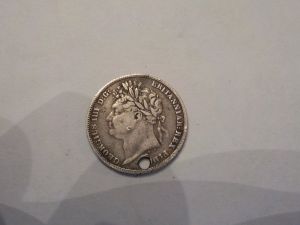
  By the end of the working day, I had written just over 4,000 words and felt I deserved a treat: I left my papers on the desk and came home to spend the evening sewing!  (Better still, another little indulgence had arrived in the post for me: a silver sixpence dating1821 George IV sixpence holed from 1821, the year of George IV’s coronation, and with a hole pierced in it by a previous owner so that it could be worn on a ribbon.  As of course I already am!)

The conference will actually be the culmination of a particularly busy week for me: I’ll be visiting the two Irish Georgian legal deposit libraries in Dublin earlier in the week, and Stationers’ Hall and the British Library on the day before the conference. One of my choir-members looked somewhat surprised when I remarked that I’d be fitting in choir practice between Dublin and the overnight sleeper between Glasgow and London!
I’m particularly looking forward to this conference because it will be a completely different audience to those at the conferences I’ve already been to this year. I’m intending to give a fairly wide-ranging paper. If I unearth any surprises in Dublin, then there will be last-minute tweaking to add them into the mix!

NB  If you liked this, you might like a post I wrote on a related topic, earlier this year – essentially a continuation of the story after the period that I’ll be describing in my latest conference paper:- England has no National Music? Chappell Set Out to Refute This

Summertime at Stationers’ Hall

BenchI’m currently taking annual leave, and although I’m covertly pushing ahead with a couple of queries I’ve set myself, strictly speaking there should be a silence whilst I’m on holiday!

Polite Request

However, if any followers of this blog were to feel inspired to author a blogpost in some way connected with historical Georgian legal deposit music, or indeed, on any aspect of music legal deposit, then please do email me at the Royal Conservatoire of  Scotland.  I’m glancing at my emails intermittently, and I won’t be able to resist an intriguing subject heading!

Thanks in advance ….

Stationers’ Hall, Stationers’ Hall Court

Stationers Hall coloured image Thomas Shepherd 1831

The image I’ve been using?  I now have my own engraved, coloured antique print.  It dates from 1831, was drawn by Thomas H. Shepherd, and engraved by W. Watkins.  I treated myself to the print after our successful workshop last week.  You must admit it looks lovely in colour!