Dr Karen McAulay explores the history of Scottish music collecting, publishing and national identity from the 18th to 20th centuries. Research Fellow at Royal Conservatoire of Scotland, author of two Routledge monographs.
Librarian. Time mainly spent cataloguing and working on the library equality and diversity project. In connection with this, I’m commited to giving a talk next month, and to submitting a librarianship-related journal article arising from a talk I gave earlier this year.
Musicologist. [2nd] book proposal submitted. Already committed to producing two book chapters for essay collections being edited by other folk.
Librarian meets Musicologist. Article straddling both worlds, due out in the next month or so. Also giving a talk in Edinburgh in June, in my capacity as Honorary Wighton Librarian.
If only I had a garden big enough for a secluded Writing Shed!
SHAMELESSLY sharing this call for papers, word for word. Maybe one of the Claimed From Stationers Hall networkers might feel inspired to talk for five minutes?
“Speaking at a conference is a big step on your career journey & lightning talks are an ideal way to dip your toe in the water. We’re searching for speakers for 5-min lightning talks CILIP’s Copyright Conference (18 May, online).”
There comes a time in every funded researcher’s year, when they have to upload evidence of writings and speakings and anything else that may have emanated from their funded research.
Research Fish – as imagined
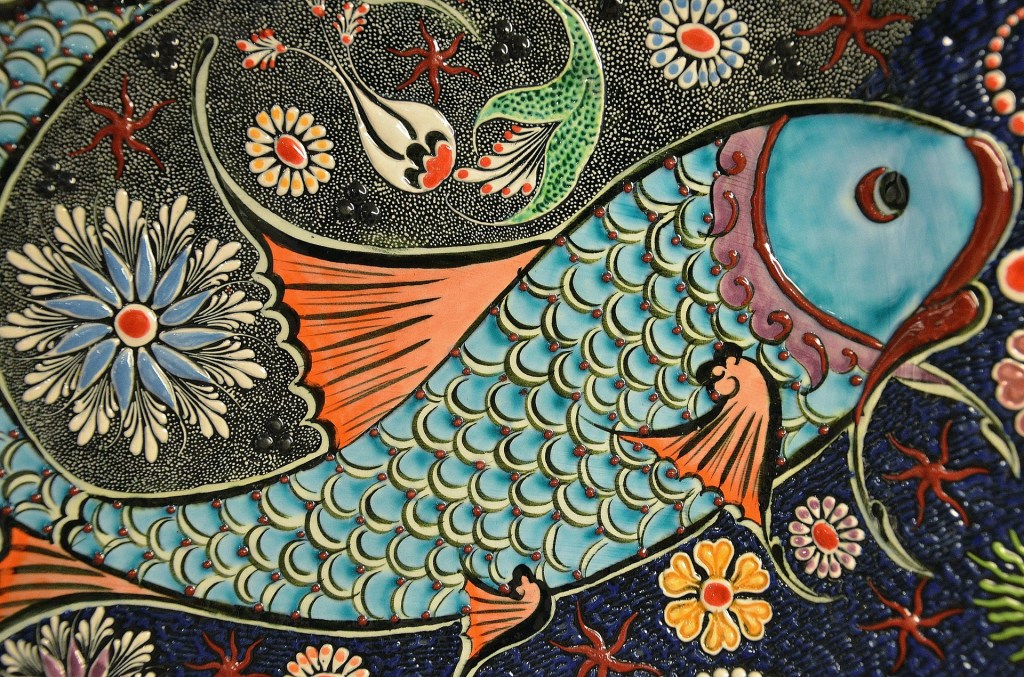
I struggled this month. There didn’t seem to be much to report, given that I’ve been focused largely on my present writing project, which is not (currently/yet, depending on optimism) funded. Nonetheless, I did it. And cheerfully tweeted my relief that it was done. I shared my favourite image of a fish mosaic on social media to celebrate.
Today, imagine my surprise – ResearchFish actually SENT me a Research Fish! I shall treasure this gesture.
Outreach and engagement
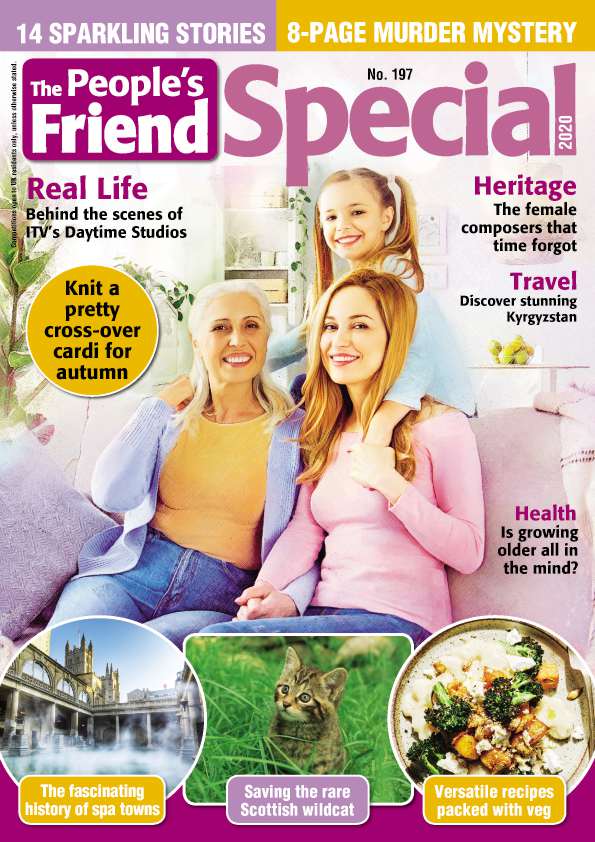
(On a slightly more serious note, this is possibly the first time an article in The People’s Friend has been cited as a research output – it counts as outreach!)
It’s just a wee song written by a 1950s Scottish comedian – ‘Let Scotland Flourish’, by Alec Finlay. Yes, published by Mozart Allan (who else?!)
I found a picture of the cover – oh, yes! But I really would like to see inside, and also the back of it! There’s every probability it’s just a “variety theatre” kind of song – it may have a Scottish flavour. But I’d still like to see for myself …
I’m not sure if I’ll be able to contribute to this book, since I am researching a later era at the moment. (My latest heroine wasn’t even born by 1837, and she has just had a whole article written about her for another journal, so I haven’t much more to contribute at the moment.) Nonetheless, I share this for anyone who might be interested:-
Women’s Studies Group 1558 – 1837: Women’s and gender studies in the early modern period and long eighteenth century
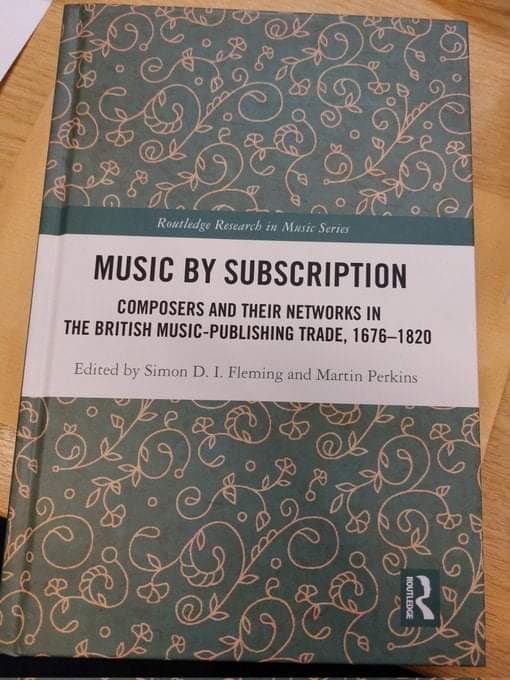
I have just catalogued a book containing my chapter on music subscribers to published strathspey and reel collections in the late 18th to early 19th centuries. (Not every author gets to catalogue what they contributed to! Still, it means it’s now available in the library at RCS.
Here it is:-
Chapter 10. ‘Strathspeys, Reels, and Instrumental Airs: A National Product’
And the book itself:
Music by subscription : composers and their networks in the British music-publishing trade, 1676-1820 / edited by Simon D.I. Fleming, Martin Perkins. (Routledge, 2022)
I wrote my research retrospective. Published it, then (as I always do) thought of a bit more I wanted to add this morning. This is what I added:-
It was crazy to start another qualification in another discipline before finishing the [first attempt at a] doctorate. In my own defence, I wanted an occupational pension plan. And everyone (male – I hardly knew any women academics) said it was hard to get a job in academia. In the early eighties. (Aw, bless! How could it have been harder than it is today?)
Previous blogpost
And then I went for a shower, and it was there (unsurprisingly) that I had my lightbulb moment. What had I just written? “I hardly knew any women academics.”
When I was an undergraduate in Durham (1976-79), there was only one woman lecturer, a doctoral candidate in composition. I believe she went to join the BBC – so, that would have been a move out of academia.
Off I went to Exeter for my first attempt at a doctorate. (As I explained in the last blogpost, I didn’t finish that attempt because I changed direction too soon. In fact, I wrote up a Master’s thesis and changed topic for my PhD, which is why I ran out of funded time, resulting in my second change of direction to librarianship, before I had actually written my thesis.) Were there any women academics in the music department at Exeter? I don’t recall any. I was the only female doctoral candidate. (1979-1982). I couldn’t imagine myself in front of a class of undergraduates, and was offered no teaching opportunities, though I can’t say whether I was giving off “Don’t you dare ask me” vibes at the time! I don’t know if any of the guys got teaching opportunities – I suspect not, to be honest. Another missed opportunity to try out the role, in any case.
Then, people were saying that it was virtually impossible to get an academic post in a British university in any case. My guess it that it was easier than it is today! But who were the ‘people’ who were saying? Male people, in all probability. I didn’t know that many women doctoral candidates, apart from those I shared accomodation with, who were in different disciplines. We didn’t talk about our research.
I listened to ‘people’ and decided that actually, the librarianship idea wasn’t such a bad idea after all. I could still be scholarly, but not be a lecturer, and that sounded fine. In fact, even at CLW (College of Librarianship Wales) for my postgraduate diploma, I don’t remember there being many female lecturers, though there may have been one or two. I’m surprised that this has only just dawned on me. I had been to a girls’ school where the majority of teachers were women, and now here I was in yet another higher education institution, where there were barely any women lecturing at all! Where were my women role models? Conspicuous by their absence!
So here I am. I did get a PhD eventually. I understand that when I wanted to study for that second attempt at a doctorate, someone in my present institution was heard to declare, “What does a librarian want with a PhD anyway?” Well, I funded myself and studied in my spare time, and I like to think I’ve proved the answer to that, at any rate. I have published quite a bit, and I have done some lecturing, on a small scale – spasmodically. I could have done more of it, given different circumstances – of course I could. But I could definitely have done with a push in the right direction when I was in my 20s.
So what is the point of this diatribe? Girls need role-models, and they need encouragement. Despite my early 1970s education in a ‘girls can do anything’ environment, this didn’t carry through to higher education. I had the same educational opportunities, but I definitely could have done with a nudge to fulfil my potential. To tell me that I could, when I didn’t believe myself. And I wish there had been role models to act as mentors.
I’m here where I am, approaching retirement as a librarian. Not next year or the year after, but it’s approaching. What can we do to help the next generation of girls get their equal share of self-belief and opportunities? Because nothing else will do!
Did we think we’d still be at this stage, now? With Delta still raging and Omicron striking fear and dread into many hearts? I worked from home until September 2021, then moved to a hybrid work-pattern (two days on campus, three at home) to add to my already hybrid 70% librarian, 30% researcher existence.
If I thought I’d done well in terms of visible, quantifiable outputs last year, this year has been far less successful. This is not a triumphant declaration of how much I have achieved, and anyone reading this can console themselves that they’ve probably done better!
THE UPS AND THE DOWNS
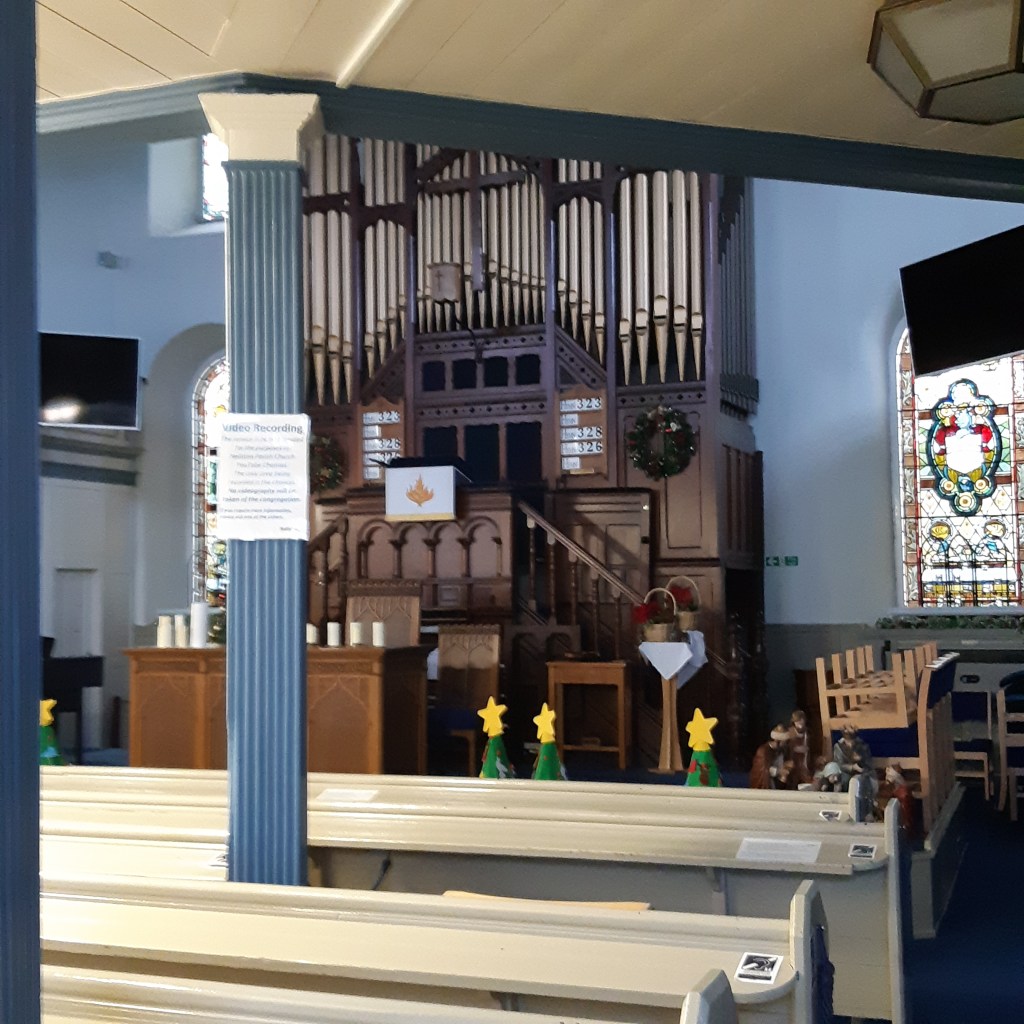
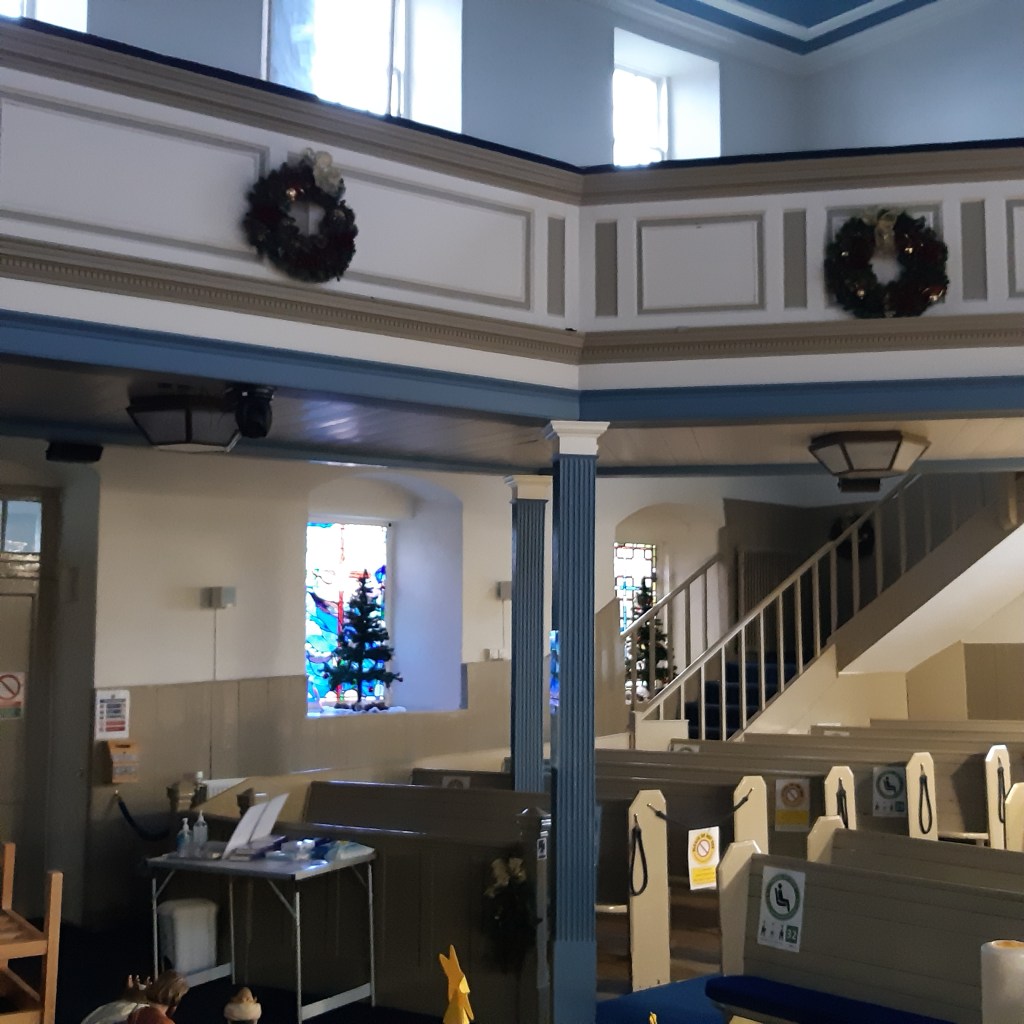
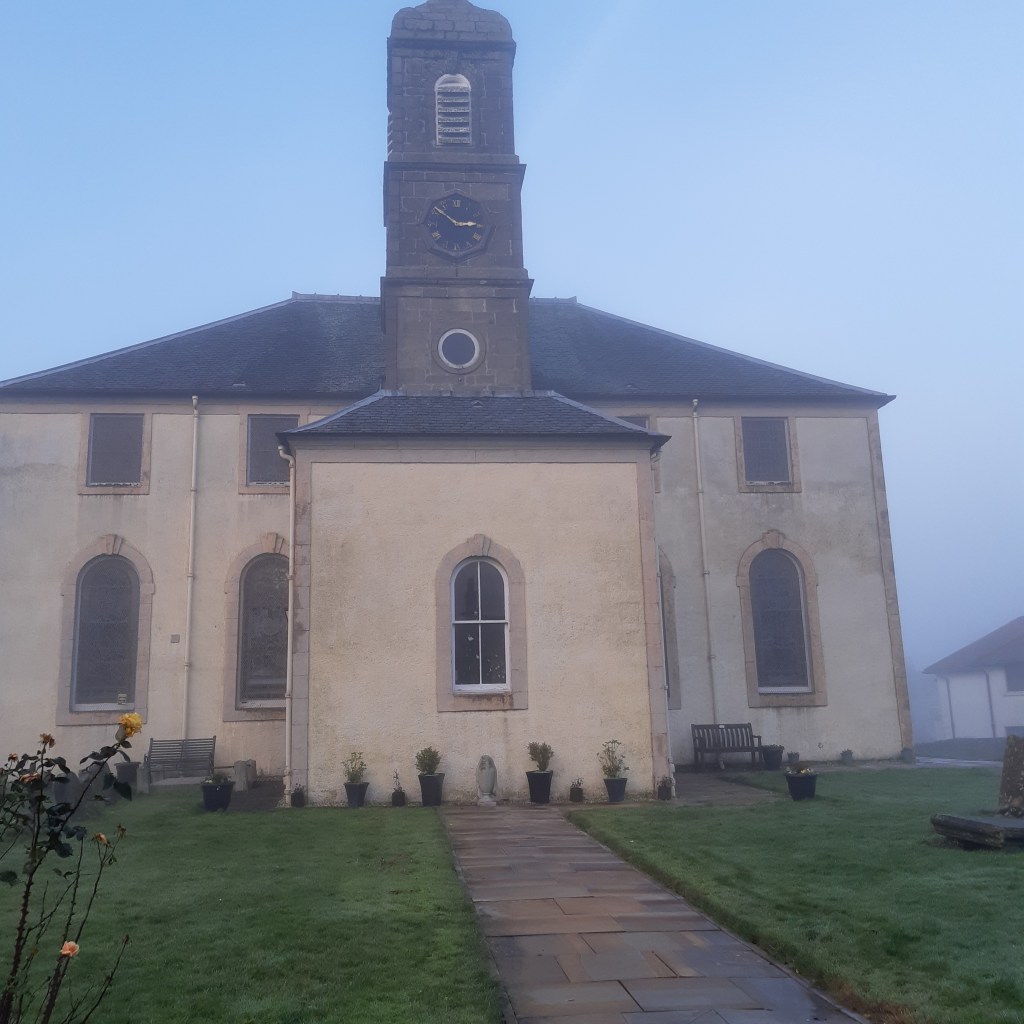
I should add to my annual round-up, the fact that changes to my role as church organist also caused me an enormous amount of stress this year. So, in terms of achievements, the fact that I struggled, resigned, and have recently found another happier organist post counts as a significant achievement in that area of my life. It will undoubtedly improve my mental health to play in a different environment. The other position was slowly breaking me. It took me many months to take the decisive step of resigning.
Neilston Parish Church – happy times ahead!
GRANT APPLICATIONS AND INVISIBLE WORK
I spent many hours writing and submitting a research grant application in the first half of 2021. Nearly one in three was successful. I was amongst the unsuccessful majority.
I’ve since spent as many hours again writing and submitting a second research grant application to a different body, but I won’t hear anything for a good few months yet. Since it was even more ambitious, I’m not raising my hopes.
Grant applications are soul-destroying. All the effort is completely unseen. To the outside eye, you have done nothing; and if you fail, you have achieved nothing apart from clarifying to yourself what you would have like to have done!
PUBLICATIONS & THE INVISIBLE WORK BEHIND THEM
I spent innumerable hours working on a chapter about Scottish music subscribers in the late 18th to early 19th centuries, for a book which is due to appear at the end of 2021 or early 2022. I also published a book review in Brio – and more recently penned a mini-review of another book for a fellow alumna’s publishing house.
I have now drafted an introduction and two chapters for my next monograph, written an extensive literature review, and submitted the book proposal to a publisher towards the end of this year. Ah, the suspense, as I wait to hear if they’d like to publish it!
And I’ve written a fairly lengthy article for my professional journal – I’ve just sourced some great illustrations, and sent it to the editor the other day. It’ll probably be published next summer.
But if you’re looking for a list of actual publications, all I can offer is this pitiful list:-
James Porter, Beyond Fingal’s Cave: Ossian in the Musical Imagination (University of Rochester Press, 2019), reviewed in Brio Autumn/Winter 2020, Vol.57, no.2, pp.74-6
Leaving aside all the user education presentations, and a couple of guest lectures at my own institution, I haven’t much else to record. I did participate and present input in a IAML(UK & Irl) discussion about equality, diversity and inclusion in music libraries. But I haven’t been anywhere or spoken at any other conferences.
SOCIAL MEDIA – TOO VISIBLE!
I’ve written blogposts and Facebook page posts about my research. I’ve also rescinded a number of blogposts, when I realised I was sharing free research which I would later want to include in formal pieces of research output. My librarian-self believes strongly in sharing information. My research-self is beginning to learn that sharing is good, but over-sharing is counterproductive.
FORTHCOMING
The article I’ve just submitted for Brio;
An article is to be published out of a presentation about song-collector Alexander Campbell, which was given in 2020 (I just need to check it for footnote details etc);
A substantial essay reviewing four books;
A completely new conference paper about a somewhat unusual Scottish song collection;
Possibly chairing a conference session at a different conference;
I have submitted a proposal for yet another conference paper, this time about women’s compositions in libraries and reader development work on that subject, possibly also leading to a published article;
Continued work on the monograph.
At the end of the day, my output is pathetic in terms of a full-time academic – but I am not a full-time academic. What I achieve, research-wise, is done in 1.5 days a week. My research outputs are unusually significant for a librarian, though they go unnoticed in my library existence, where they don’t attract pats on the head!
It’s all my own fault. I walked away from a research career in 1984 when I abandoned my first PhD. I walked back into it in 2004 when I began research in my ‘spare time’ (in other words, time not spent doing a full-time job, being a parent, and being a church organist) for the PhD that I actually completed in 2009.
To anyone thinking of walking away from a PhD – stop, think! Ask yourself if there is any way you could somehow manage to finish it? I should have taken a part-time job and knuckled down to get that PhD done. Instead, I did a year as a graduate trainee in a university library, then trotted off to library school for a postgraduate diploma in librarianship. It was crazy to start another qualification in another discipline before finishing the doctorate. In my own defence, I wanted an occupational pension plan. And everyone (male – I hardly knew any women academics) said it was hard to get a job in academia. In the early eighties. (Aw, bless! How could it have been harder than it is today?)
Ask yourself if your future self might regret what you’re contemplating. I’m fiercely proud of what I have achieved in research terms, but I know I have underachieved compared to what I might have done in other circumstances. I think that what frustrates me is that I can’t put back what I didn’t do in those two missing decades. I really haven’t much to show for a career in librarianship – I might be a Fellow of my professional association, but I never climbed the career ladder in the slightest. I’ve selected good stock. I’ve done vast amounts of accurate cataloguing, helped with countless queries, and instructed hundreds if not thousands of students. Librarians are generally as invisible as pharmacists, quietly preparing the materials that their more high-profile academic/scientific colleagues depend on. And in a pandemic, we librarians become even more invisible!
Yes, I’m disappointed in myself. It becomes more depressing, the closer I get to retirement, because that will signify a time when I have to concede that for all I did, it hasn’t been enough.
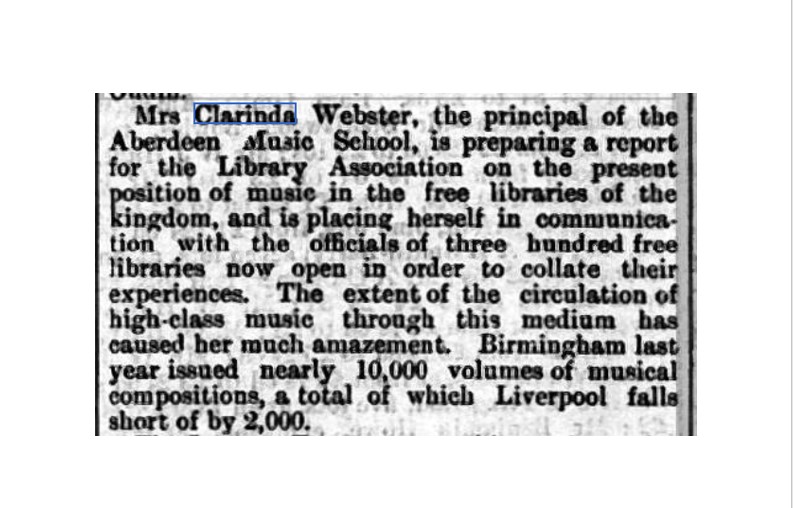
This remarkable Aberdeen music teacher, in 1894, was collating info about music libraries for the Library Association! I’ve done a bit of research and shall be publishing an article in Brio, hopefully in summer 2022. The lady was more remarkable than even this newscutting suggests, and her biography is – though I say it myself – quite something! But I won’t pre-empt the big reveal – all will become clear next year!






 Karen McAulay, Musicologist