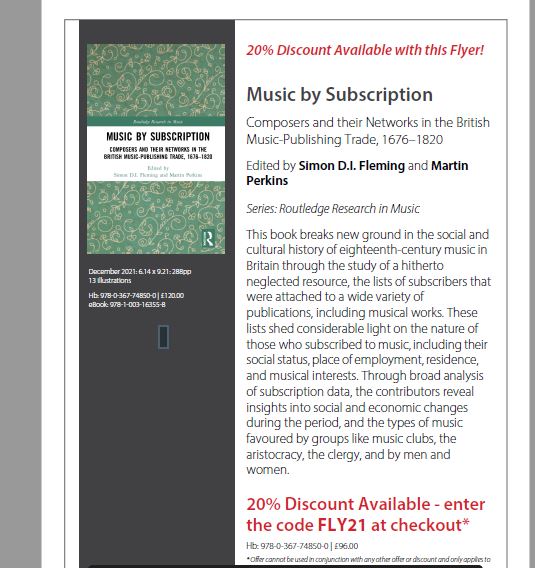
Get a Discount on Music by Subscription (forthcoming book of essays)


Dr Karen McAulay explores the history of Scottish music collecting, publishing and national identity from the 18th to 20th centuries. Research Fellow at Royal Conservatoire of Scotland, author of two Routledge monographs.

I’ve been busy! The first draft of Chapter 2 is now done, and that meant I had to move on to my next task – to write a book proposal. My first book was an enlarged version of my PhD thesis, so – although I put quite a bit more work into it to turn it into a book, it wasn’t a book ‘from scratch’.
This time has been completely different. A new topic, and a book proposal which began on a blank page, by comparison with the last one. And a literature review which developed a life of its own!
I was quite surprised to find that I was nervous about hitting ‘send’. You feel quite exposed, sending your ‘baby’ out into the world on its own. I hope it fares well.
Anyway, whilst I’m waiting to hear how it gets on, I suppose I’d better think about Chapter 3. Here goes ….
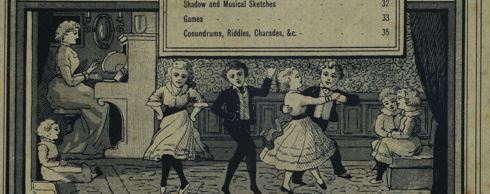
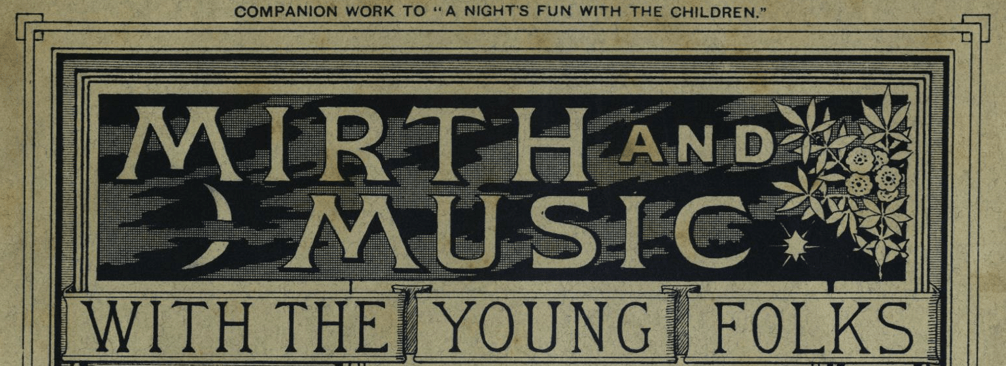

I’m only able to share this with you thanks to the kindness of the Victoria and Albert Museum, who snatched some scans for me. When David Swan ceased his publishing activities, Mozart Allan added this collection to his own catalogue. Interestingly, Swan used an Edinburgh printer rather than Glasgow’s own Aird and Coghill, but then again, Swan did come from Edinburgh originally.
Another interesting feature is the wee poem that he has quoted on the front cover – it is by a female poet, and appeared in periodicals in the mid-19th century. Not that it’s a particularly noteworthy piece, but it’s nice to think that Swan thought it worth quoting, some three decades after it first appeared. (It would have been civil had he attributed it to the lady, though!) I haven’t yet found out anything about her apart from her name, but give me time ….

Back in 2013, I authored a blogpost for the Journal of Victorian Culture Online. Today, the Journal has been having a “Throwback Monday” of some kind, as they’ve found it in the archive and shared the link again. I had almost forgotten I’d written it, so it was nice to see it still considered of value.
Here it is again, first published 29 August 2013. ‘Teaching Cultural History Through National Song‘ by me, Karen McAulay (Royal Conservatoire of Scotland).
You’ll remember that last year, I gave some talks about Scottish song-collector Alexander Campbell and his tour round the Hebrides in 1815.
James D Hobson has just posted a great blogpost, A Guide to the Georgian Coaching Inn. Read about the kind of experience Alexander Campbell may have had, on the occasions he travelled by coach or stayed at an inn! (I’ve added this link to my own earlier blogpost so readers will have another chance of finding it, too.) Congrats, James – it’s a wonderful read.
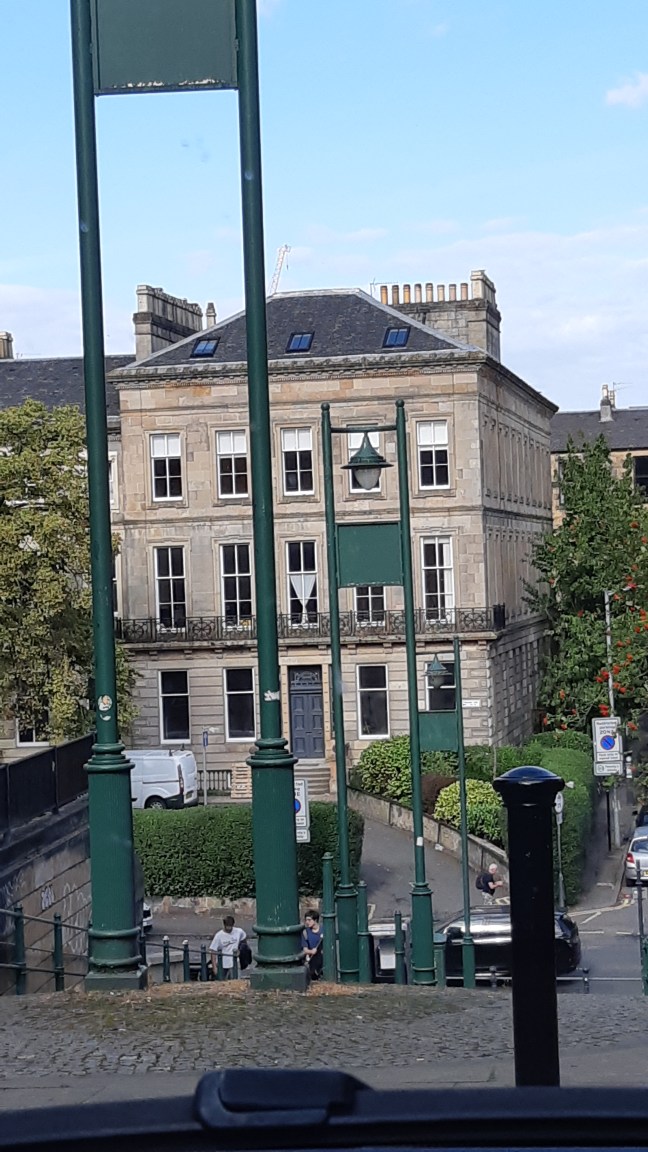
It was a lovely sunny afternoon, and we felt like going out.
Let me show you the Glasgow & West of Scotland Conservatoire of Music (1889-1892). Musician Julius Seligmann had been running a girls’ school in the premises for some years. Aged 72, he reinvented it as the Glasgow & West of Sotland Conservatoire of Music! It only survived three years – it has absolutely no connection with today’s Royal Conservatoire of Scotland.
After that he went on teaching not only from his home (not far away) but he and his son also taught in the new Athenaeum School of Music. That institution did survive, eventually becoming the Royal Conservatoire of Scotland where I work today.
And does Mr Seligmann have anything to do with Glasgow music publishers? Not a lot, to be honest. But he did write a review for James S. Kerr’s Pianoforte Tutor.

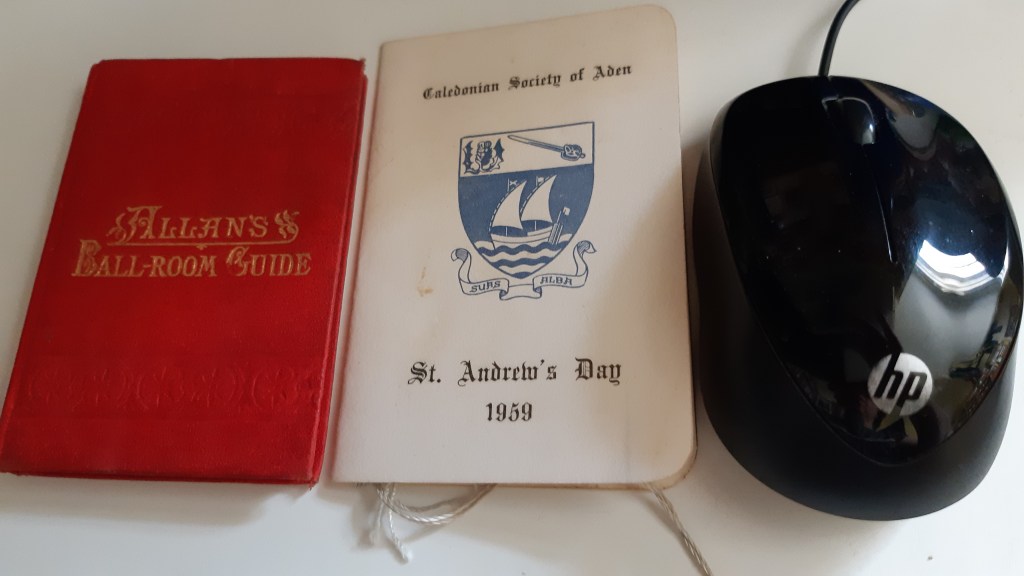
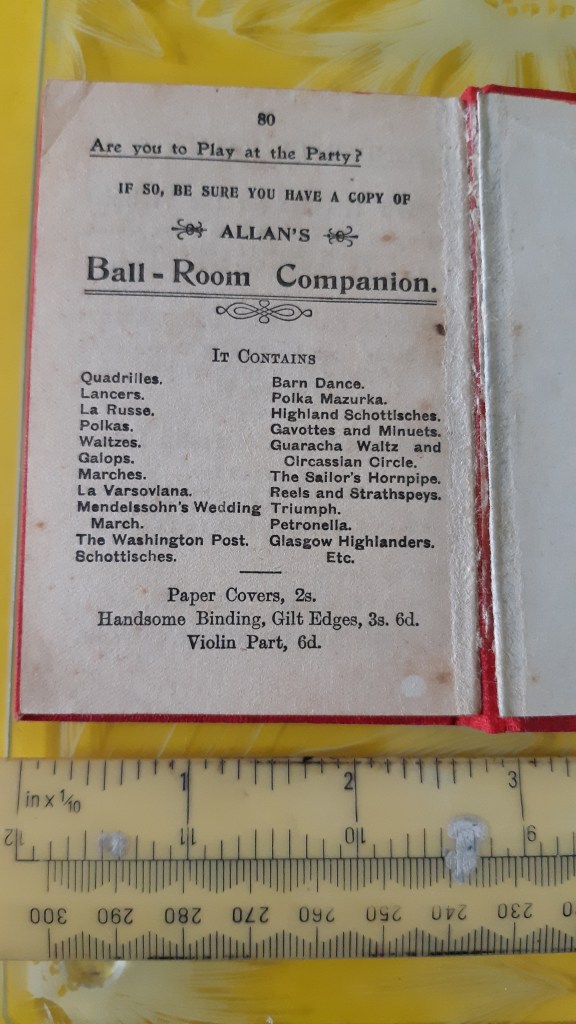

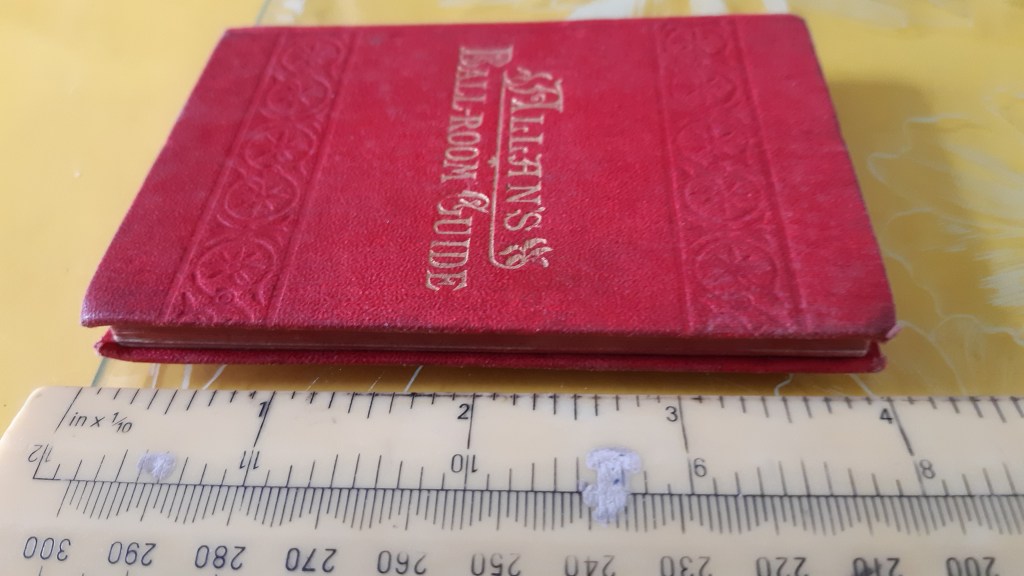


Mind you, the Society had a very traditional programme of dances, didn’t it? Mozart Allan would’ve known at least half the dances listed!
(Featured top image: No spitting on the carpet, please, gents – it’s a sure sign of low breeding!)
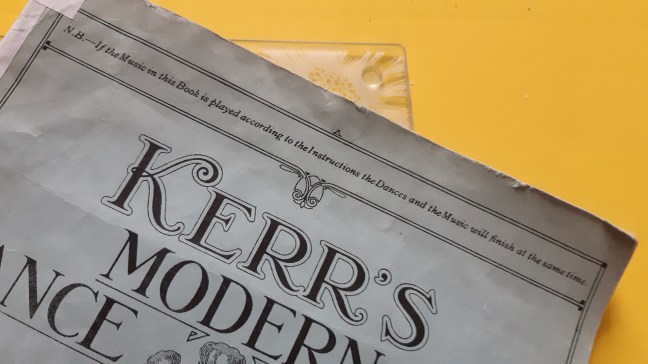

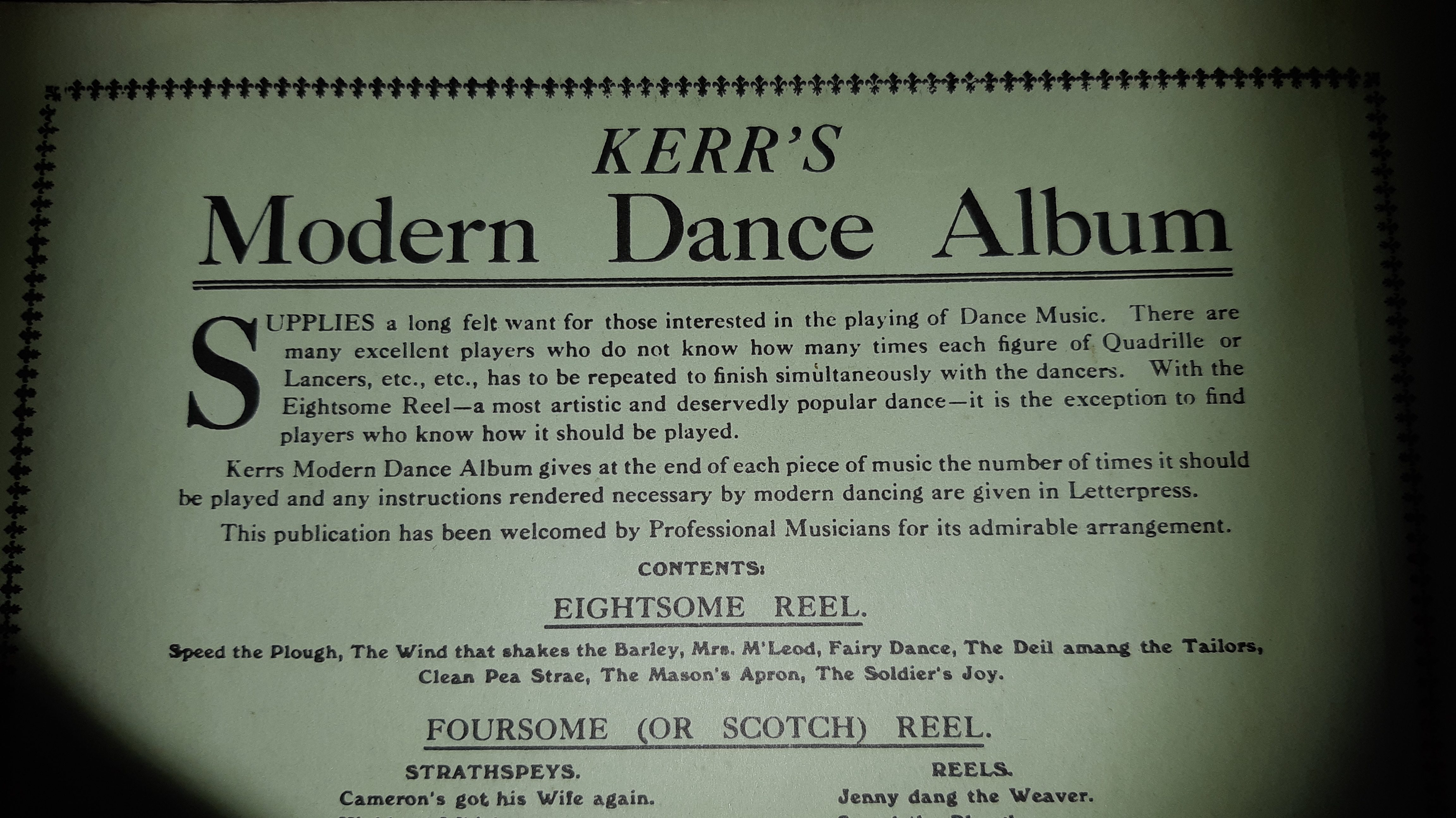
I’ve been looking at some of the dance music published by James Kerr and Mozart Allan, to see how much instruction they gave either to the musician, or to the dancers.
Having diligently tabulated my findings onto a spreadsheet – after all, that’s just what I do! – it dawned on me that I’ve been at it again – ignoring the tunes, I’ve homed in on the paratext. In a sense, they were still obsessing about ‘getting it right’ and authenticity, just the same as the song and tune collectors a century earlier.
Just think how much fun I’ll have when I get Mozart Allan’s actual published dancing manual. It’s on its way from the USA at the moment.


We’ve found a leaflet with three dances composed by Dr A. K. Tulloch for the Students’ Celebrations of Glasgow University Fifth Centenary back in 1951. Yes, I know – dated 9th January 1951, the Commemoration Ball is nine days beyond my research cut-off date of 1950! Still, it was held at the City Chambers, and A. K. Tulloch wrote a jig, strathspey and reel for the occasion.

Who was A. K. Tulloch? Sandy (Alexander) Tulloch (1918-2006) was an eye consultant in Dundee. An accordion player, he was a good friend of Jimmy Shand’s. He even named the commemoration reel after him. You can read all about Sandy in the Box and Fiddle Archive, which has a page based on an interview with him in 1988, and an obituary from 2006. (I was all set to share one of the tunes, but it’s still in copyright, so I’ll respect that!)
But although it makes sense that the jig would be called (or dedicated to) Glasgow’s patron Saint, St Mungo – and I’ve already mentioned the reel named for Jimmy Shand – I haven’t personally come across the name of Peter Dewar was, for whom the strathspey is named. He may have had a Glasgow significance, maybe even a University connection, or a person particularly important to the student body.
We’re notifiying the University Library of our find – so really, I could put it aside now – but I was curious, so I went on searching. There’s information about the quincentenary on Archives Hub, but no immediate reference to the ball in the City Chambers. This doesn’t mean to say the archival materials themselves don’t hold anything relevant, but Archives Hub only indexes what documents are there and maybe a rough idea of what they’re about.
There are also a few newspaper announcements in the British Newspaper Archive.
Looking up Dr Tulloch, however, is far more interesting. A couple of years later, In 1953, he wrote to the Dundee Courier in defence of accordions. Bravo, Sandy!


And a couple of weeks later, he wrote to the paper again – clearly the argument had continued to rage. But Sandy wasn’t going to let it drop! Indeed, we do still play accordions, but they’re perhaps not quite as fashionable as they were in their heyday.

British Newspaper Archive. Same newspaper, Saturday 10th October 1953


 Karen McAulay, Musicologist