Ramsay’s ‘The Gentle Shepherd’ Songs

Reaching the end of my recent cataloguing project – the gift of a number of books of old Scottish music – I must confess I left what looked like the most miscellaneous, worn, unbound pieces until last. Late on Friday afternoon, I had observed that one such piece had a pencil note at the head – ‘Music for The Gentle Shepherd, Foulis edition, 1788’. Now, this is a famous ballad opera by Allan Ramsay.  It was so popular that my colleague Brianna Robertson-Kirkland writes that there were 86 editions of  The Gentle Shepherd, 66 of them the ballad opera. Initially, the songs only indicated the name of the tune to use, and different editions have more or less songs. The 1788 edition contains a full vocal score of the songs, and that’s what we’ve got. My guess is that the last owner bought the 18 pages which someone had previously separated from the back of the larger original volume.

I haven’t made a study of it myself, but I do recognise the opera and its songs as very significant in the history of Scottish music – and this edition has particular importance.  So, if this gathering of pages was so important, it would benefit from a  decent catalogue entry.

The pages are numbered 1-18.  With no title-page, still less a cover, to give me further clues, it wasn’t a task for 4.30 on a Friday afternoon, but it very definitely was one for a Monday morning.

A bit of digging around soon found me another library’s catalogue record of Ramsay’s ballad opera in that very edition – a particularly significant edition, because it’s the most lavish, quite apart from having the complete vocal score section. RCS lecturer Brianna Robertson-Kirkland has researched the work in detail and written an article about it, which is on one of her class reading-lists. Dr David McGuinness, with whom I worked on the HMS.Scot AHRC-funded project a few years ago, has also recently published a book about it,  with Steve Newman.
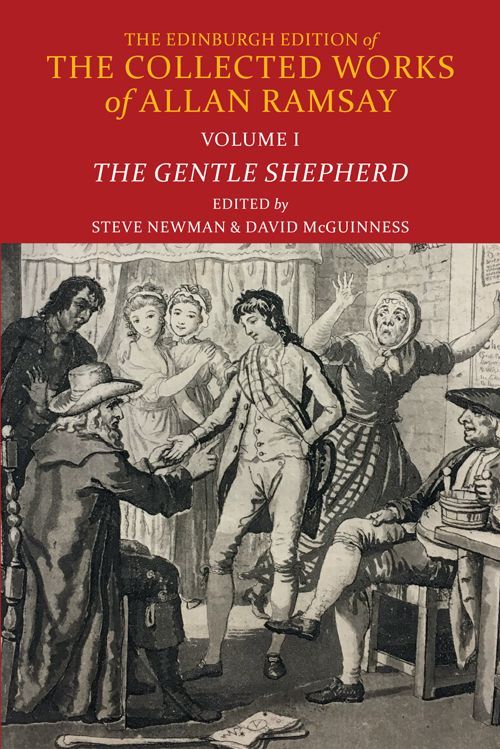
The new Edinburgh Edition of The Gentle Shepherd

But the catalogue record didn’t exactly fit my purpose, because what I had in my hand was the appendix at the end of the book, containing all the songs. We didn’t have the text of the ballad opera at all.

No problem – I downloaded the catalogue record and adapted it to reflect what we did have. I made sure the words ‘Scottish songs’ appeared in the catalogue record, and I indexed every one of those songs. The appendix is only eighteen pages long – it wasn’t that arduous a task. I’m really happy that we’ve been given this, because – even though it’s fragile and will have to be handled with extreme care – it means the students will now be able to see the music that Brianna has written about, and lectures about.  (It still needs a nice stout card folder, and a secure storage space – but they’ll be sorted out soon.)

Informed Cataloguing

There’s one strange thing, though. It appears no other cataloguer has catalogued each song in The Gentle Shepherd – not in Jisc Library Hub, at any rate.  Well, although we at RCS might not have the whole magnificent text, a title page or a cover, we HAVE now got a catalogue record which indexes all the songs. Hooray!

Contents:-

  • The wawking of the fauld (1st line: My Peggy is a young thing)
  • Fy gar rub her o’er wi’ strae (1st line: Dear Roger, if your Jenny geck)
  • Polwart on the Green (1st line: The dorty will repent)
  • O dear mother, what shall I do (1st line; O dear Peggy, love’s beguiling)
  • How can I be sad on my wedding day (1st line: How shall I be sad when a husband I hae?)
  • Nansy’s to the green-wood gane (1st line: I yield, dear lassie)
  • Cauld kail in Aberdeen (1st Line : Cauld be the rebels cast)
  • Mucking o’ Geordie’s byre (1st line: The laird, wha in riches)
  • Carle, an’ the king come (1st line: Peggy, now the king’s come)
  • The yellow-hair’d laddie (1st line: When first my dear ladie gade to the green hill)
  • By the delicious warmness of thy mouth
  • Happy Clown (1st line: Hid from himself)
  • Leith Wynd (1st line: Were I assur’d)
  • O’er Bogie (1st line: Weel, I agree ye’re sure o’ me)
  • Kirk wad let me be (1st line: Duty, and part of reason)
  • Woe’s my heart that we shou’d sunder (1st line: Speak on, speak thus)
  • Tweed Side (1st line: When hope was quite sunk in despair)
  • Bush aboon Traquair (1st line: At setting day and rising morn)
  • The bonny grey-ey’d morn
  • Corn-Riggs (1st line: My Patie is a lover gay)

I struggled to explain to my family just how gratifying I find this.  But I think it’s really important not only that Brianna’s students can see which songs are in Foulis’s edition of The Gentle Shepherd, but also, anyone looking for one of those song titles will be able to see that it was one of the songs used in the famous ballad opera.

As a matter of interest, we do also have some items going back to the era when Cedric Thorpe Davie put on a performance of the opera. Anyone checking our catalogue will spot those too!

‘Repugnant to Modern Feelings of Propriety’? The Most Beautiful Scottish Song

I’ve started listening to another Audible book, but it’ll take a while for me to finish it. To take a break from listening, I sidled over to the piano and played a one-eyed rendition of my favourite song.

Lady Anne Bothwell’s Lament (Baloo, my Boy)

My Song Gems (Scots), edited by James Wood and Learmont Drysdale (London: Vincent Music Co., 1908), is a nice big score that sits comfortably on the piano stand. This song is arranged by Finlay Dun, a Victorian arranger. As I squinted at the words, they didn’t look like what I remembered hearing sung from Cedric Thorpe Davie and George McVicar’s The Oxford Scottish Song Book (1969). What was going on? I suspected Davie and McVicar had taken their words from George Farquhar Graham and James Wood’s mid-Victorian Songs of Scotland. ‘You’ll see’, I told my bemused son. ‘The words will have been too smutty for Victorian ears, so Graham and Wood changed them.’

Davie used their words – which were perfectly acceptable for a collection intended both for classroom and adult use – but his musical setting is updated.

A Deserted Mother and Child

Graham and Wood’s collection revealed in the footnotes that it was an old ballad collected by Bishop Percy. However, Graham said that …

The Old Ballad, though poetically meritorious, is so coarse in most of its stanzas as to be repugnant to modern feelings of propriety. We have, therefore, adopted only the first stanza of it, the additional stanzas here given having been written by a friend of the Publisher.

Songs of Scotland (Edinburgh: Wood & Co., 1850), Vol.2, pp.30-31

Percy’s original version is in the National Library of Scotland’s Digital Gallery (Reliques of Ancient Poetry, 1767). Today, the lyrics are inoffensive!

And here’s the Cedric Thorpe Davie setting using Graham and Wood’s sanitized words:-

Kathleen McKellar Ferguson sings the Oxford Scottish Song Book version, divinely, here on YouTube

The Song Gems (Scots) version is in modern English and the text has been partially rewritten again –  it falls halfway between the original and the sanitized words! And the musical arrangement? Straight from Graham and Wood’s collection.

Percy, verse 3: Smile not as thy father did, to cozen maids, nay God forbid / Bot yett I feire, thou wilt gae neire Thy fatheris hart, and face to beire.

Wood and Drysdale, verse 2: Smile not as thy father did, to cozen maids, may God forbid / For in thine eye his look I see, The tempting look that ruin’d me …

Olde English or modern, take your pick!

As for Graham and Wood, or Thorpe and McVicar? Not a ruinous smile to be be seen! The lady may have been deserted, but no hint that she had first been seduced!

Bruce, Clements and Co.

This is another posting that I put on the Facebook Glasgow Music Publishers page a couple of days ago. I wonder if anyone can provide any pointers to this firm, currently a bit of a mystery to me?!

A QUESTION FOR EDINBURGHERS!

My study of historical Glasgow music publishers may need to embrace other Scottish music publishers too. (A metaphorical, socially distanced embrace, obviously.)

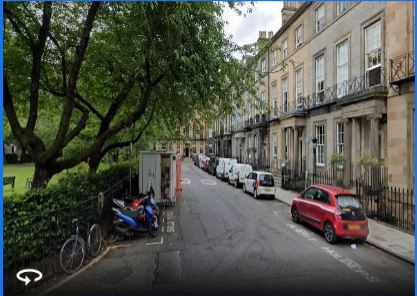
So. The first question is, who WERE Bruce, Clements & Co, who traded in Edinburgh circa 1921-1937, published quite a bit by W. B. Moonie and a significant work – Dirge for Cuthullin – by Cedric Thorpe Davie? I’ve only looked at Jisc Library Hub Discover and the British Newspaper Archive so far, but although I can find out what they published, I don’t know who they were – sometimes they called themselves Bruce Clements & Co., and other times Bruce, [COMMA!] Clements & Co. – though I do know they traded from 30 Rutland Square.

W. B. Moonie – YouTube of “Perthshire Echoes” played by pianist P. Sear

I don’t have access to Post Office Directories in Libraries – and they’re too “modern” to be in the National Library of Scotland Digital Gallery – though appropriate directories might yet tell me more about Mr Bruce or Mr Clements! At the moment, it’s just a question arising from my insatiable curiosity, but I should still like to know, because you never know what connections firms had with other firms or individuals.

I have had a couple of responses – Jack Campin tells me that Davie’s son was Tony Davie, computer scientist at the University of St Andrews.  And I am sure there will be plenty of material about Cedric Thorpe Davie himself at St Andrews’ research repository, so that could be an interesting angle to pursue.

Meanwhile, another respondent pointed me in the direction of a couple of directories available via the Internet Archive, so I now have their address, (You’d be surprised how many firms I’ve traced at Rutland Square, which plainly housed more than one company at a time. The Boy Scouts Association were there, for starters. But I digress!

Interestingly, Thorpe Davie’s choral work, Dirge for Cuthullin, published in 1937 and admired by Vaughan Williams (four letters survive at VaughanWilliams.uk), was subsequently taken over by Oxford University Press in 1946. (See notes on manuscripts at St Andrews University Library.) I have a feeling Bruce, Clements and Co published very little, if anything else, by Thorpe Davie, and I believe the firm fizzled out in the very early 1940s. (I’d still like to know who they were!)

We’re a research network! (And Scroll Down for the Pixis Variations Challenge!)

Pixis Hommage a Clementi TP
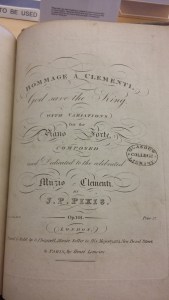
Title page of Hommage a Clementi, by Pixis. Image from copy in Glasgow University Library Collection, with thanks

It feels like time for a quick update, so I’ll spend the last few minutes of the working day doing just that.  Here’s a quick reminder of what the Claimed From Stationers’ Hall music research network is all about:-

The project is investigating the music deposited in the former British Copyright Libraries under the Queen Anne Copyright Act and subsequent legislation up to 1836, when most university libraries lost their legal deposit entitlement, receiving book grants instead. The repertoire largely dates from the late 1780s (when legal action clarified the entitlement of music to copyright protection) through to 1836.

The project aims to establish what exactly has survived; whether there are interesting survival patterns; and the histories of the music’s acquisition, curation and exploitation, not just in during that era, but also subsequently. It also aims to raise the profile of the material and to foster more engagement with it, both within and outwith academia; and the repertoire can be used to inform historical cultural perceptions which often became embedded into contemporary writings; for example, an idea very prevalent during the 19th century was that the English had no national music; and yet collections of national songs were very popular.  Thus, both the  fact that these books were popular, and our close reading of the paratext within individual volumes can be used to inform our modern-day understanding.  But a nation’s music is not just “national songs”, of course – it’s the whole repertoire of music published within that country.

To date, I’ve visited the University Libraries of St Andrews, Edinburgh and Glasgow.  I’ve been in touch with retired scholars from Aberdeen, and I’ve visited the National Library of Scotland.  Next, I need to spread my wings south of the border, and hopefully after a few more such meetings, we’ll have a clearer idea of what we’d like to talk about when we plan a study day to be held in Spring 2018.

The exciting, and yet tantalising part of all these visits is the realisation that there is a lot to explore, but not being able to stop and do all the research then and there!  For example, there are undoubtedly pieces of legal deposit music at the University of Edinburgh that aren’t labelled as such, but that appear in other copyright libraries and therefore probably arrived by the same means.  I so long to find them all, or to encourage other people to find them!  Similarly, the University of Glasgow has a very generous collection of copyright music – alluded to by the late 19th century author, W. P. Dickson amongst “works of fiction, juvenile literature, fugitive poetry, and music … issued yearly from the press” – but previously summarised by Divinity Professor Dr McGill in 1826 as “a great many idle books”.   (Dickson, The Glasgow University Library, 1888 p.16)  I’m eager to see if I can work out which volumes they might have been in before they were re-bound into their present volumes!  Meanwhile, the National Library of Scotland has an online catalogue, a card catalogue, but also “the Victorian catalogue”.  This I must see!

It is interesting to reflect that earlier musicologists have also had a hand in the arrangement and preservation of these materials.  Cedric Thorpe Davie in St Andrews disbound some volumes, and moved pieces to different places in the library.  Fourth Reid Professor Donaldson got involved with the Advocates’ collections in Edinburgh; Hans Gal had a go at listing some of the Edinburgh University Library Collections; and Henry Farmer spent some time in what for anyone else would have been retirement, as a music librarian at Glasgow University Library – one of the many careers in his portfolio! – and yes, he did some sorting out and rearranging, too.  Whilst we sigh over the thought of original sources being shuffled, we also owe these chaps a debt of gratitude for taking care of them and ensuring that they were preserved at all.

The Pixis Variations Challenge

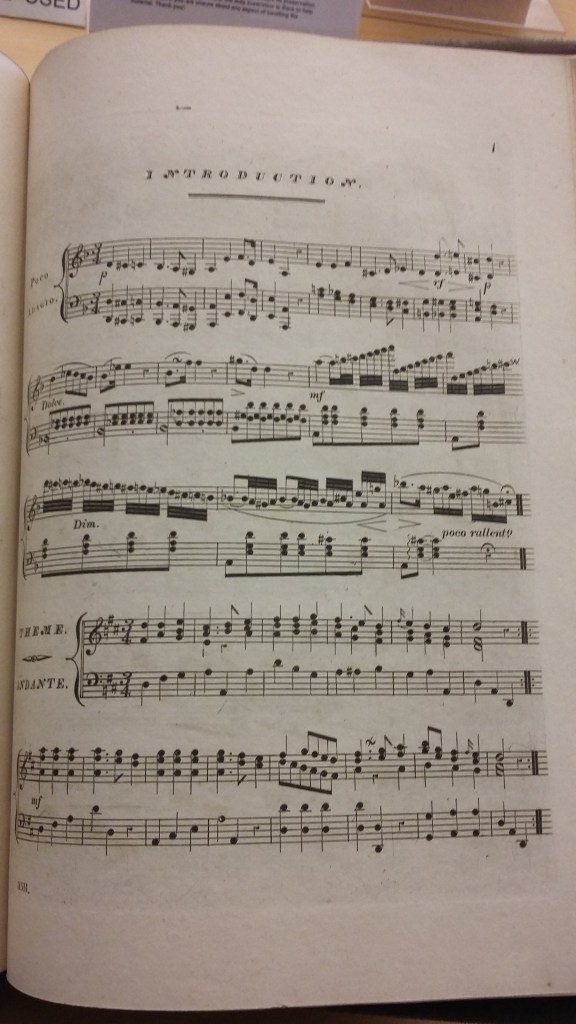
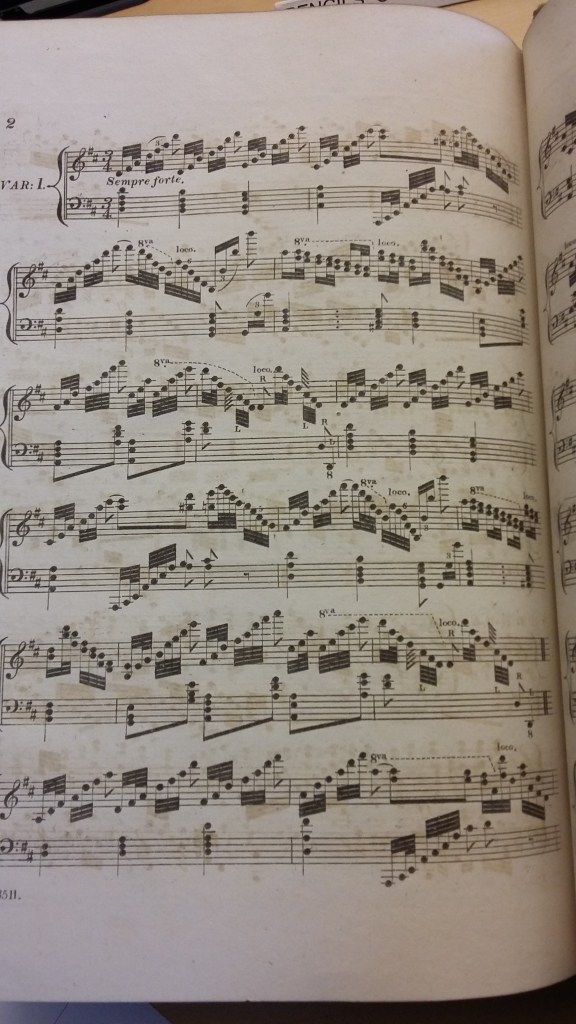
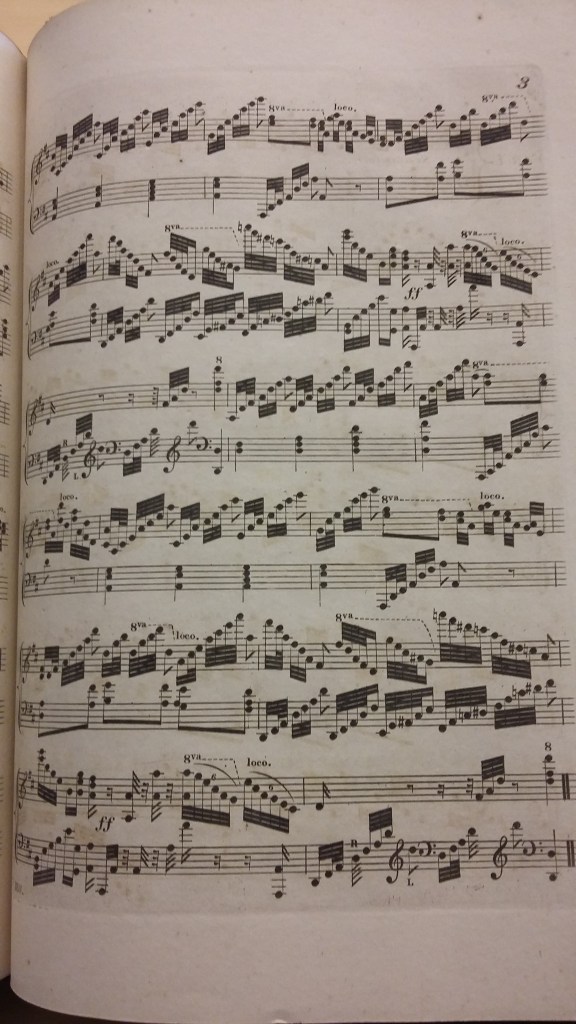
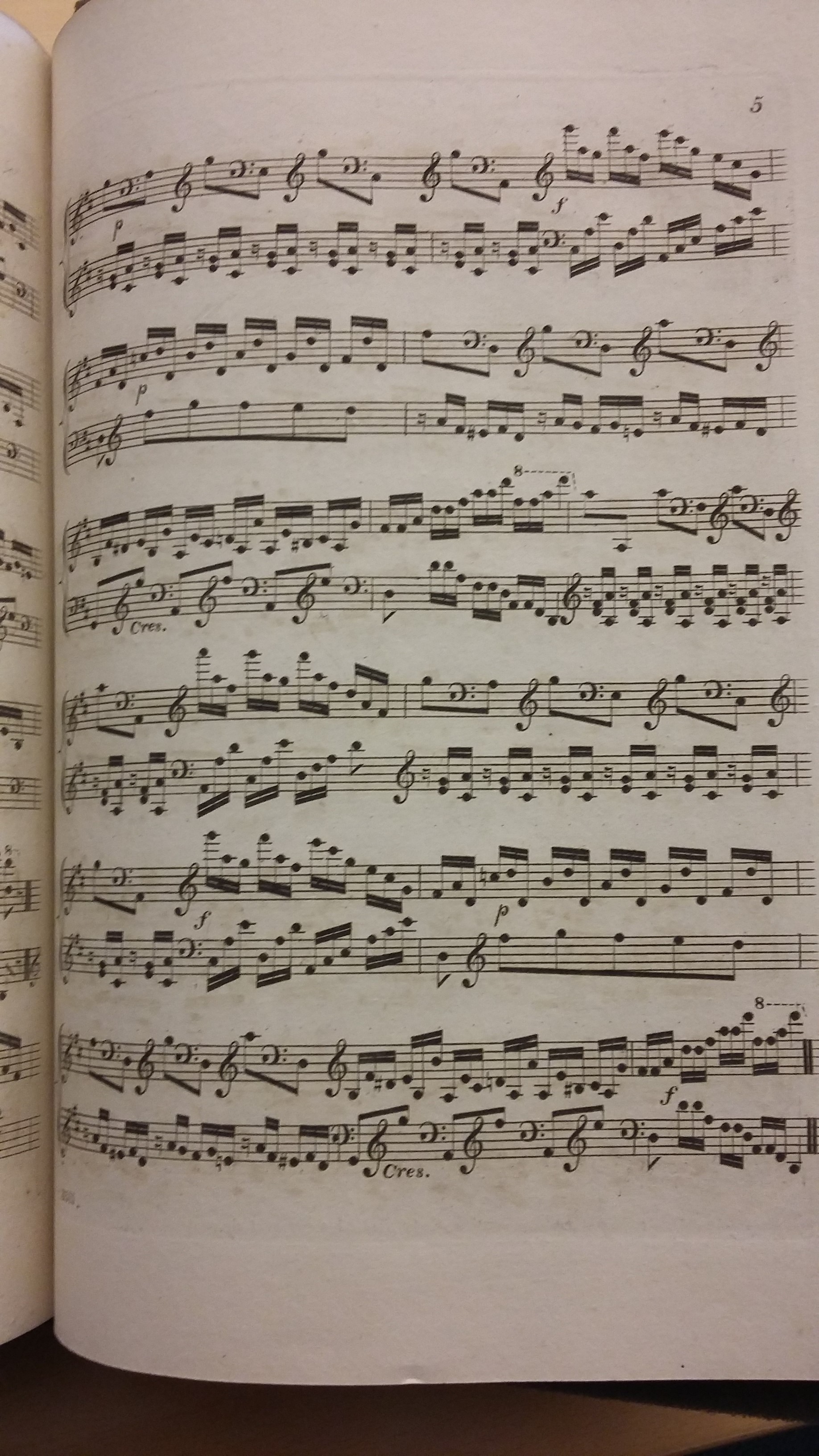
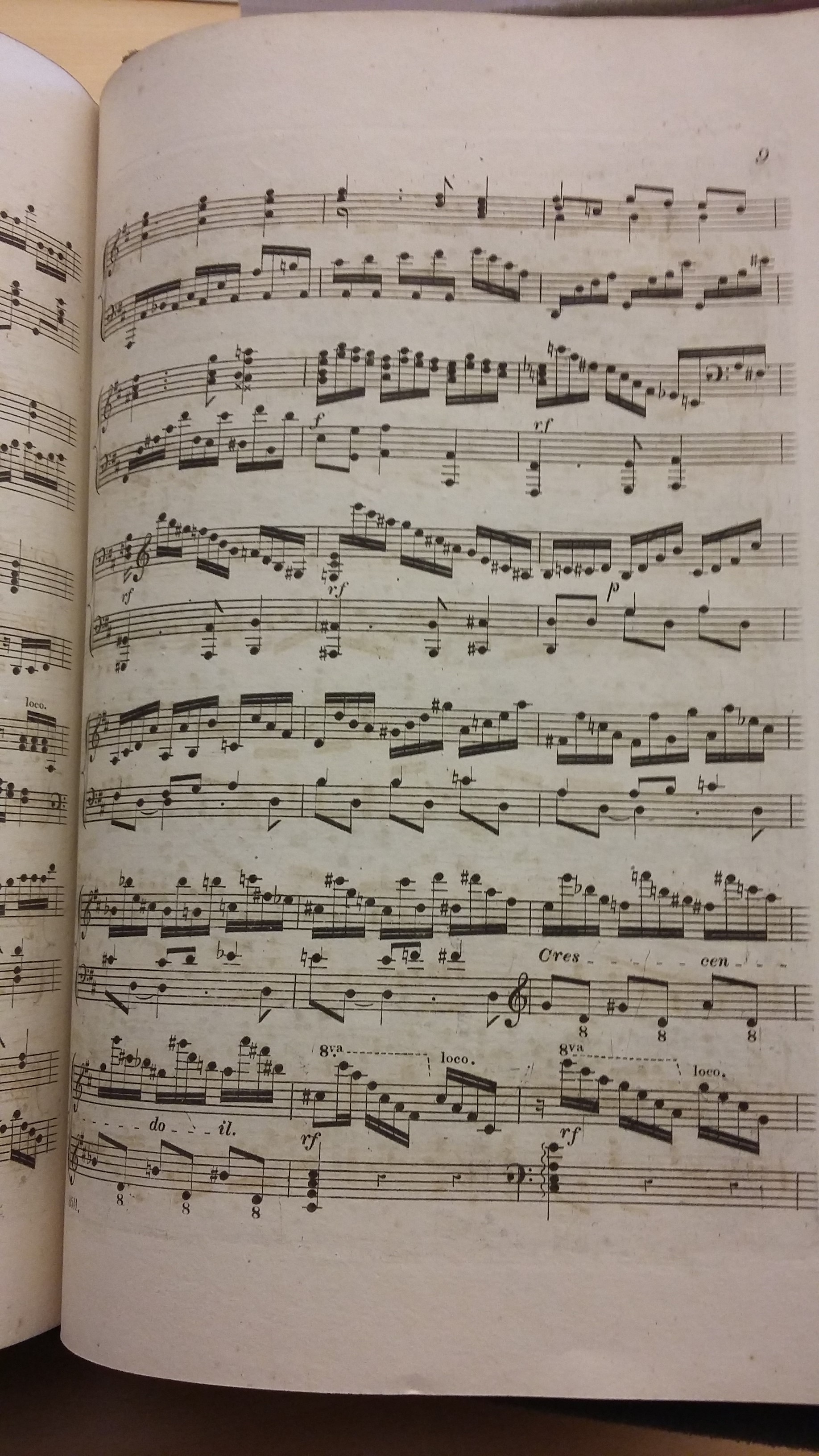
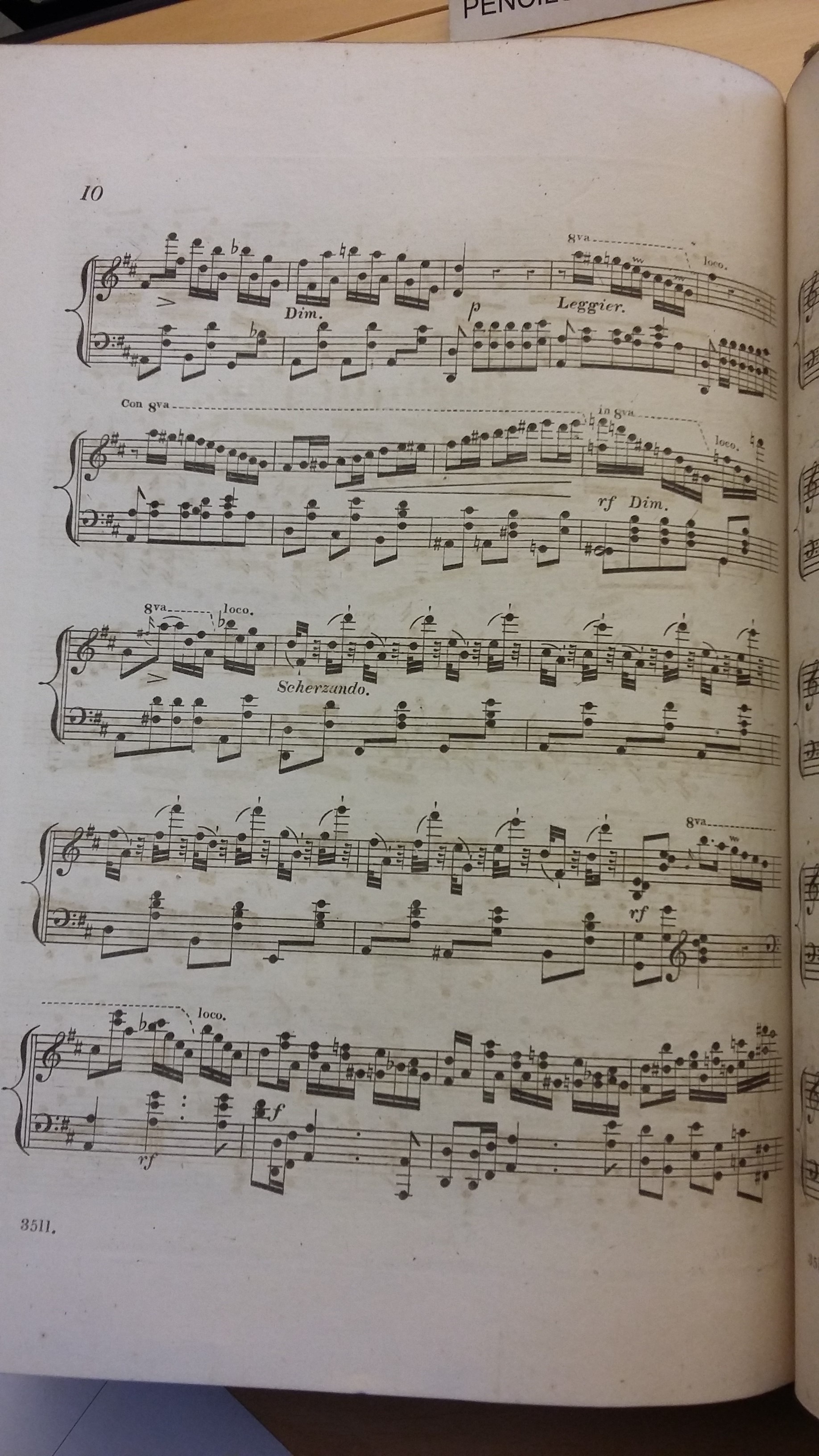
I long to play, or hear performed, some of these long-forgotten treasures.  I’ve been generously allowed by the Special Collections department of Glasgow University Library, to share a set of piano variations by the now forgotten German composer, Pixis:  Hommage a Clementi, which are actually based on the National Anthem, ‘God Save the King’.   I’m putting them on our Twitter feed and Facebook page, one page at a time.  At page 3, my pianistic skills are already being stretched beyond their comfort zone!  I wonder if anyone will get to the end …. ?  PLEASE let us know if you do!

Other pieces were undeniably less interesting.  I tweet “on this day” posts about some of the pieces that were registered, just to give a flavour of what was being published.  These references come with no value-judgements whatsoever!  Luckily for me, I don’t have instant access to all these pieces, so I would only go out of my way to hunt down something that looked particularly intriguing.

Here, for the record, is the start of Pixis’s variations – I’ll add the rest in due course.  Please do keep following the blog!  And I’m pleased to say that it’s not long before the first of our guest postings will appear – a welcome change of “voice” and a fresh insight into a different aspect of this fascinating topic.

Pixis Hommage a Clementi p1

Pixis Hommage a Clementi p2


Pixis Hommage a Clementi p3Pixis Hommage a Clementi p4Pixis Hommage a Clementi p5Pixis Hommage a Clementi p6Pixis Hommage a Clementi p7Pixis Hommage a Clementi p8Pixis Hommage a Clementi p9

Pixis Hommage a Clementi p10Pixis Hommage a Clementi p11