Dr Karen McAulay explores the history of Scottish music collecting, publishing and national identity from the 18th to 20th centuries. Research Fellow at Royal Conservatoire of Scotland, author of two Routledge monographs.
Today was the final day of the Women and Musical Histories conference at the Royal Academy of Music. It has been both enjoyable, and highly informative, and there was enough live music to make it feel like a real treat. Presentations and performances alike were of a very high quality.
My presentation was in the final session, so I had two days of debating with myself as to whether I’d play that musical example.
PROS
It would quite possibly be the first performance since the 1940s, if not before.
No-one will have heard Rose’s music before
It’s lovely
It has THE most wonderful, powerful ending.
CONS
I once played a simple example (on home ground), made a tiny slip, and someone sniggered.
I’m a scholar, not ‘a performer’.
Dare I reveal my shortcomings within the hallowed walls of another conservatoire?
I had brought a scanned copy of Rose Smith’s last verse, as a precaution against losing it in transit. Since I may have the only privately-owned copy, I couldn’t risk bringing it with me. This turned out to have been a wise precaution, because a torrential downpour rendered my scanned copy very soggy round the edges! Nonetheless, it dried out enough that I couldn’t use the sogginess as an excuse.
I heard someone warming up for a lecture recital, and almost took fright. Who did I think I was?!!
‘Tell the audience you were a librarian’, a friend advised me. Well, that was a better idea than confessing that I didn’t rate myself very highly. I know better than to put an audience off by sowing seeds of doubt in their minds!
Finally, I convinced myself. A bit like when I was deciding whether to have another go at a PhD, back in 2003, I asked myself the question that usually helps me make up my mind.
Will I regret it if I don’t do this?
I took a deep breath. ‘I used to be a librarian, not a performer’, I stated. ‘But I’m going to play you an example of Rose’s music.’
It was an absolutely fabulous piano! Quite exhilarating.
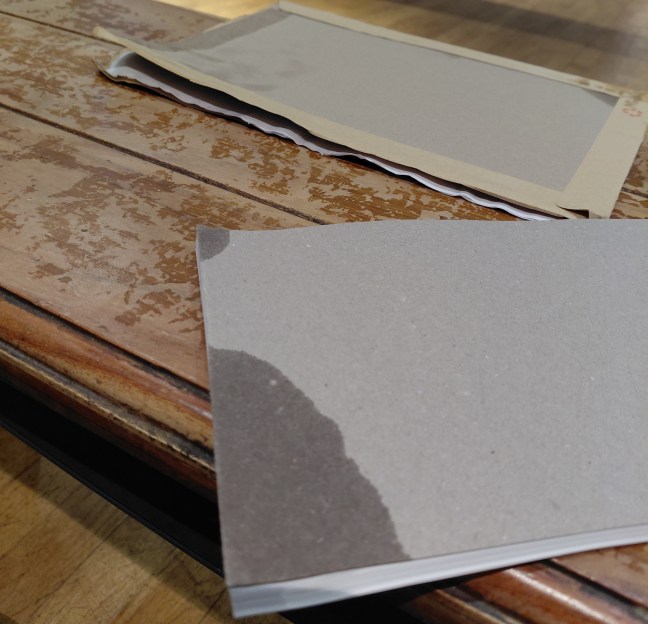
Reaching the end of my recent cataloguing project – the gift of a number of books of old Scottish music – I must confess I left what looked like the most miscellaneous, worn, unbound pieces until last. Late on Friday afternoon, I had observed that one such piece had a pencil note at the head – ‘Music for The Gentle Shepherd, Foulis edition, 1788’. Now, this is a famous ballad opera by Allan Ramsay. It was so popular that my colleague Brianna Robertson-Kirkland writes that there were 86 editions of TheGentle Shepherd, 66 of them the ballad opera. Initially, the songs only indicated the name of the tune to use, and different editions have more or less songs. The 1788 edition contains a full vocal score of the songs, and that’s what we’ve got. My guess is that the last owner bought the 18 pages which someone had previously separated from the back of the larger original volume.
I haven’t made a study of it myself, but I do recognise the opera and its songs as very significant in the history of Scottish music – and this edition has particular importance. So, if this gathering of pages was so important, it would benefit from a decent catalogue entry.
The pages are numbered 1-18. With no title-page, still less a cover, to give me further clues, it wasn’t a task for 4.30 on a Friday afternoon, but it very definitely was one for a Monday morning.
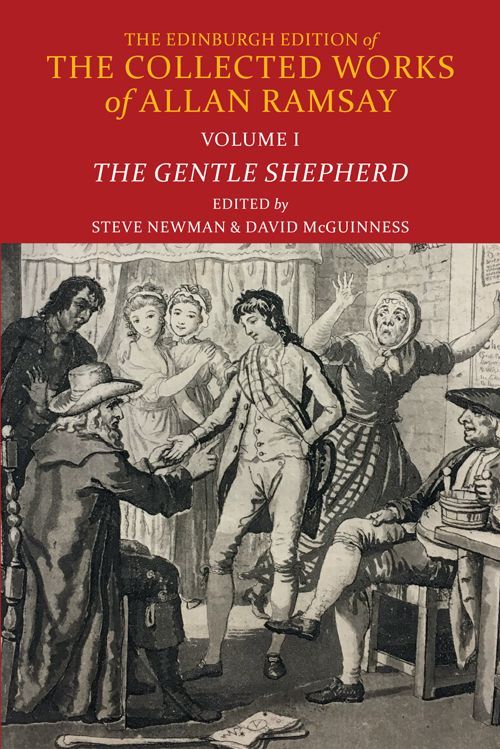
A bit of digging around soon found me another library’s catalogue record of Ramsay’s ballad opera in that very edition – a particularly significant edition, because it’s the most lavish, quite apart from having the complete vocal score section. RCS lecturer Brianna Robertson-Kirkland has researched the work in detail and written an article about it, which is on one of her class reading-lists. Dr David McGuinness, with whom I worked on the HMS.Scot AHRC-funded project a few years ago, has also recently published a book about it, with Steve Newman.
The new Edinburgh Edition of The Gentle Shepherd
But the catalogue record didn’t exactly fit my purpose, because what I had in my hand was the appendix at the end of the book, containing all the songs. We didn’t have the text of the ballad opera at all.
No problem – I downloaded the catalogue record and adapted it to reflect what we did have. I made sure the words ‘Scottish songs’ appeared in the catalogue record, and I indexed every one of those songs. The appendix is only eighteen pages long – it wasn’t that arduous a task. I’m really happy that we’ve been given this, because – even though it’s fragile and will have to be handled with extreme care – it means the students will now be able to see the music that Brianna has written about, and lectures about. (It still needs a nice stout card folder, and a secure storage space – but they’ll be sorted out soon.)
Informed Cataloguing
There’s one strange thing, though. It appears no other cataloguer has catalogued each song in The Gentle Shepherd – not in Jisc Library Hub, at any rate. Well, although we at RCS might not have the whole magnificent text, a title page or a cover, we HAVE now got a catalogue record which indexes all the songs. Hooray!
Contents:-
The wawking of the fauld (1st line: My Peggy is a young thing)
Fy gar rub her o’er wi’ strae (1st line: Dear Roger, if your Jenny geck)
Polwart on the Green (1st line: The dorty will repent)
O dear mother, what shall I do (1st line; O dear Peggy, love’s beguiling)
How can I be sad on my wedding day (1st line: How shall I be sad when a husband I hae?)
Nansy’s to the green-wood gane (1st line: I yield, dear lassie)
Cauld kail in Aberdeen (1st Line : Cauld be the rebels cast)
Mucking o’ Geordie’s byre (1st line: The laird, wha in riches)
Carle, an’ the king come (1st line: Peggy, now the king’s come)
The yellow-hair’d laddie (1st line: When first my dear ladie gade to the green hill)
Kirk wad let me be (1st line: Duty, and part of reason)
Woe’s my heart that we shou’d sunder (1st line: Speak on, speak thus)
Tweed Side (1st line: When hope was quite sunk in despair)
Bush aboon Traquair (1st line: At setting day and rising morn)
The bonny grey-ey’d morn
Corn-Riggs (1st line: My Patie is a lover gay)
I struggled to explain to my family just how gratifying I find this. But I think it’s really important not only that Brianna’s students can see which songs are in Foulis’s edition of The Gentle Shepherd, but also, anyone looking for one of those song titles will be able to see that it was one of the songs used in the famous ballad opera.
The Gentle Shepherd / Allan Ramsay ; edited by Steve Newman, David McGuinness.
As a matter of interest, we do also have some items going back to the era when Cedric Thorpe Davie put on a performance of the opera. Anyone checking our catalogue will spot those too!
The Gentle Shepherd: a pastoral comedy / by Allan Ramsay ; abridged and adapted for performance at Edinburgh International Festival by Robert Kemp [bound photocopy, 47 p.]
I’ve been cataloguing a Sammelband (a bound compilation) of some early nineteenth-century songs, and my attention was caught by the amount of applause resounding between the title pages. The audiences’ hands must have been tingling after so many – ahem – superlative performances of such outstanding compositions. So, I ask you, how should we work out which was most popular …?!