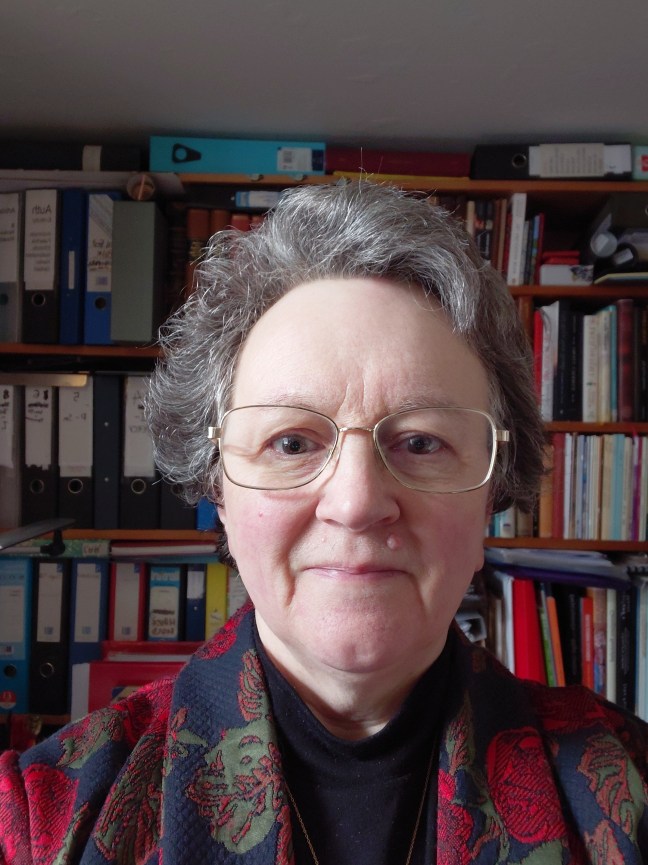
Who is this Woman Researching the Dundee Leng Medal Competition? Introducing Dr Karen McAulay

If you’ve found a link to my brief questionnaire on Facebook, and wondered who I am and what I’m up to, then maybe I should introduce myself properly?

So … McAulay is my name, but as soon as you speak to me, you’ll realise I’m not Scottish.  I’m the only member of our household that isn’t! However, I’ve lived in Glasgow since 1988 – more than half my life. 

I do have a connection with Dundee through the Friends of Wighton – I’m Honorary Librarian of the Friends of Wighton, who promote the Wighton Collection in the Central Library. It’s a very old, historical collection of Scottish music publications, and I’m just available in an advisory capacity – I’m not in any way employed by the city of Dundee. I do enjoy this connection with Dundee, though. I have often consulted the old music books since before I even started my PhD, so I appreciate their significance. I’ve written about them, and about Andrew Wighton, who was their original collector.

Since I started my career in a public library – in South Shields on Tyneside, as a music librarian – I rather like having this loosely continued connection with public libraries, too.

I do have another link with Dundee, through my writing.   I’ve written both fiction and non-fiction, and the fiction was for D. C. Thomson’s The People’s Friend, during my earlier years in Glasgow.  But since getting started on my research, I’ve only really written about music and social history (and occasionally, libraries!).


I’m a research fellow at the Royal Conservatoire of Scotland in Glasgow. For most of my career, I was a music librarian at the Conservatoire, but I did a mid-career doctorate at the University of Glasgow, and a few years after getting my PhD, I started being seconded to the Conservatoire’s research department – basically, I split my time between the library and a research desk elsewhere.

Nowadays, I’m just doing the research part of my role – I retired from the library.

My research has always been into Scottish printed music of one kind or another – songs, fiddle music, old music in libraries, publishers who published Scottish music or Scottish publishers who published music.

My most recent research has been into Thomas Nelson’s, the Edinburgh publishers.  They published a set of four Scots Song books for school use, and one of the editors was in charge of music in Dundee schools – so not surprisingly, these books were used a fair bit! Anyway, that’s how I got interested in the Leng Scots Song prizes.  I’m keen to know what competitors remember of their experiences, and if they continued singing Scottish songs later in life.

I’ve had a great response so far. I’ll start having chats with people soon.  But if you would still like to get in touch, it’s not too late. Please just visit this link!
https://tinyurl.com/LengMemories

Now, About a Fifth Book of Scottish Songs?

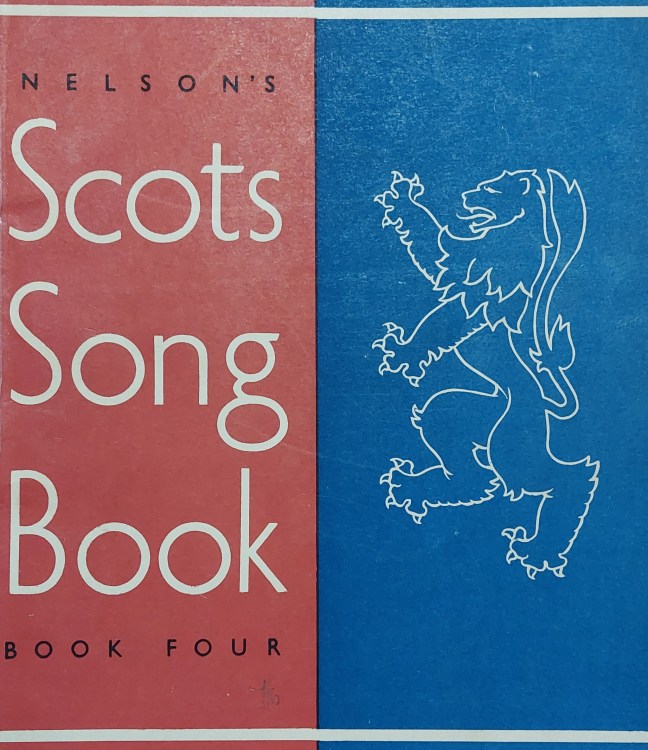
Nelson's Scots Song Book, Book Four. The last in the series.

Yesterday, I highlighted the 85th anniversary of the Blitz that destroyed Paternoster Row on Sunday 29th December 1940 – and with it, Thomas Nelson’s London premises.

Today, 30th December, we leap forward to 1954. The Second World War had ended nine years earlier. The country was picking itself up again, and James Easson and Herbert Wiseman had published four books of Scottish songs in the series, ‘Nelson’s Scots Song Book, primarily for school use. I’ve done a lot of research into this series, during my Heritage Collections visiting Fellowship at IASH in the University of Edinburgh, so I’m sure you’ll understand that I won’t be saying much about it today – all will be revealed in due course! However, I can reveal that Easson seems to have written a letter to his editor on 30th December 1954, with the expectation of compiling a fifth book. The letter is no longer extant, but the carbon copy of their reply survives.

There was no fifth book.

Singing in Public? New to me!

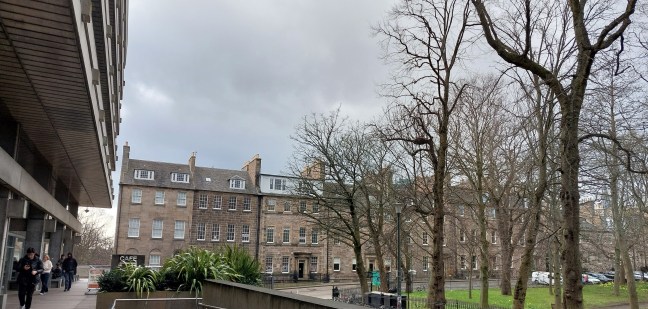
George Square Edinburgh University

A few weeks ago, I led a community ‘Scottish song’ event. I found myself singing a solo – well, to say ‘found myself ‘ is inaccurate, because I HAD planned and rehearsed it with a pianist.

But it seemed to go down well enough, so, emboldened by this, I sang a couple of examples from Nelson’s Scots Song Book at my Work in Progress talk on Wednesday.  This time, I prerecorded my accompaniment myself. (Three cheers for the decent mic I had purchased during lockdown!)

I reminded myself that my esteemed audience were a mixture of musicians and non-musicians, and I was there as a researcher rather than a star turn, so hopefully they’d listen kindly rather than critically! 

And it was fine. I suppose the more often you do something, the easier it gets. I have played in public, conducted in public, and sung in a choir numerous times, but singing solo? That’s something new.

I have another talk coming up in a few weeks.  Of the two songs I sang this week, I much preferred one to the other  – the range was more comfortable. So I looked through NSSB4 again last night, and hit upon a favourite – ‘I’ll aye ca’ in by yon toun.’ I took it to the piano for a first play through. Yes, I like Easson’s setting.  It’s reasonably modern, and playable.

At this point  – just as I’d finished the chorus – I was obliged to stop.

‘But, I was  …’

You’d be alarmed at how routine governs my activities.  No point causing upset by continuing to play, so the song will wait for another time. Supper couldn’t wait!

However, I thought I’d look for a YouTube rendition, to accompany my breakfast this morning, and what did I find, but a Topic recording of Jean Redpath performing it in the American Serge Hovey’s setting.  I never heard Jean sing live, but she got an honorary DMus from the University of Glasgow (my Alma Mater), and her enthusiasm for Scottish song was influenced by her time at the University of Edinburgh – as I sit with a cuppa in the Library cafe, I’m literally looking out at the School of Scottish Studies building where she’d have talked with Hamish Henderson.

I’ll aye ca’ in by yon toun

Having heard Redpath’s beautiful singing, I am less sure that my singing is a good idea, but there’s only one way I can share Easson’s setting, and that’s by playing it. Which, without a singer, wouldn’t work at all. I’d better get practising!