A Week with a Difference – and only Halfway Through

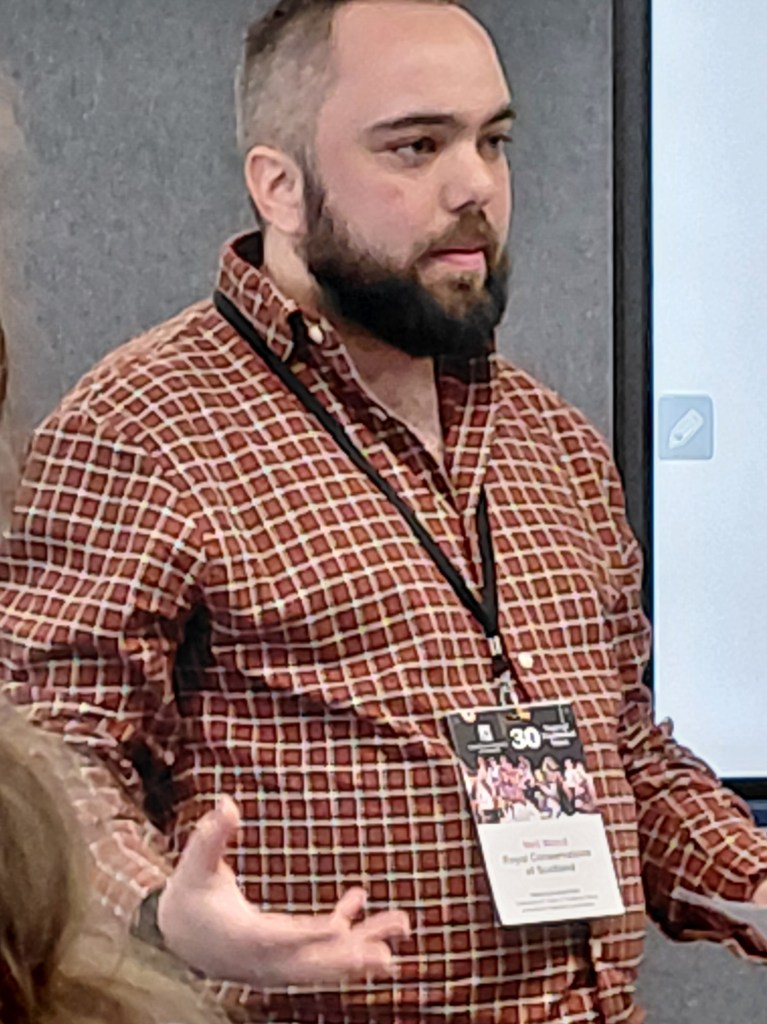
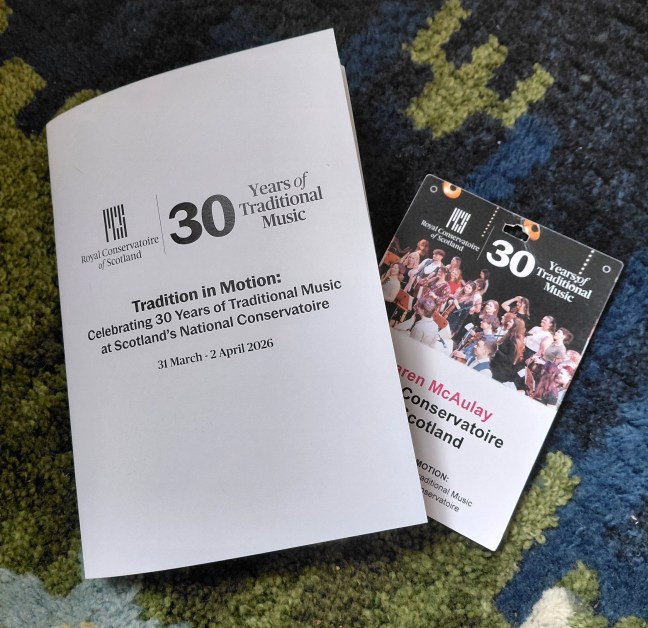
Programme and delegate tag for Tradition in Motion conference at RCS

I started my Leng Medal Memories interviews this week. What a pleasurable experience this is turning out to be! Two of my interviewees still have their silver medals, fifty-odd years later. I subsequently asked the Facebook group, Dundee Pals, and found that lots more people there still have their medals, too. It just goes to show how significant winning the medals actually was to the school pupils who took part.

Anyway, I thought I’d re-share the link to my questionnaire about Dundee Leng Medal memories, in case anyone finds this post and would like to participate in my research project:- https://tinyurl.com/LengMemories

Tradition in Motion
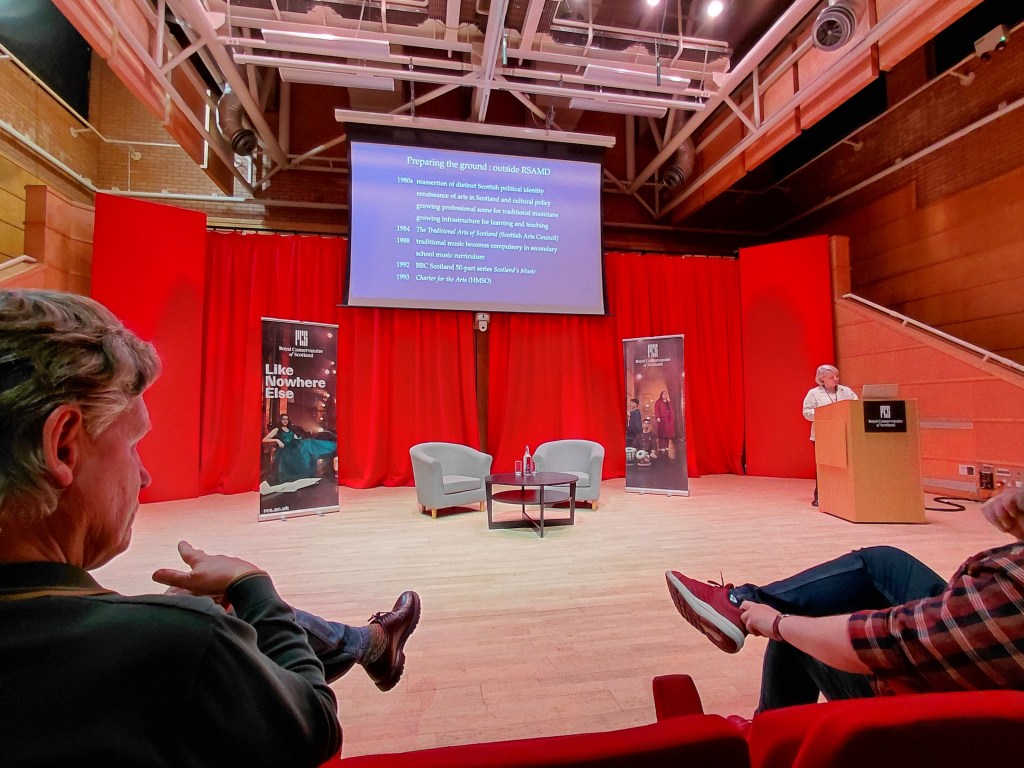

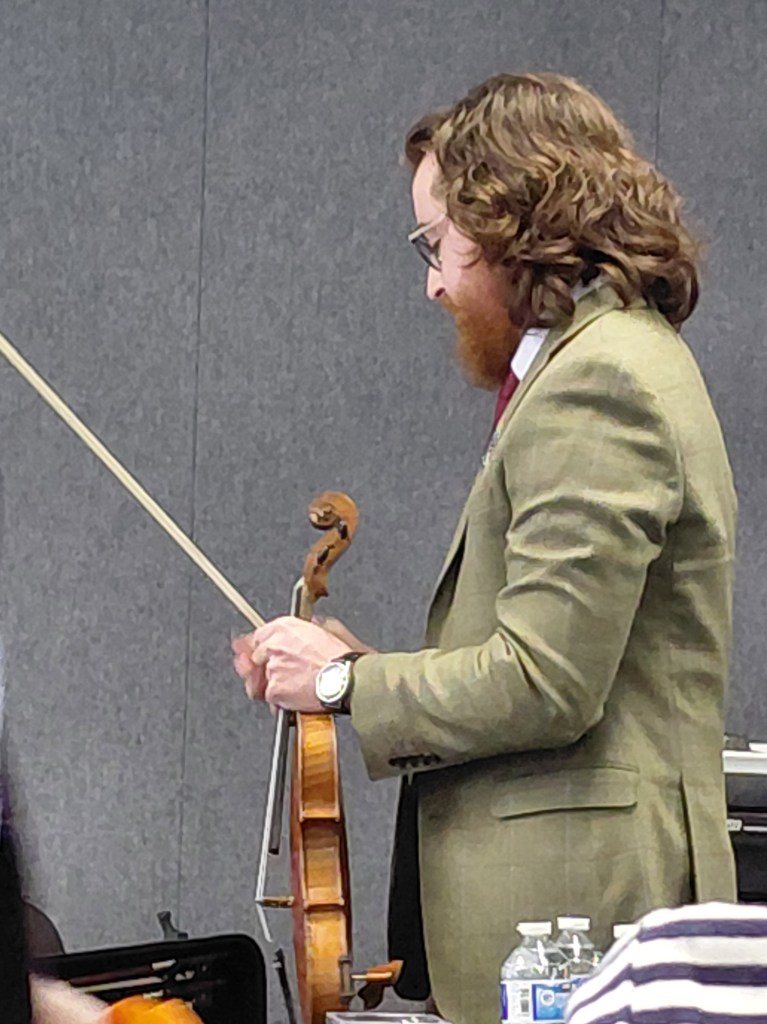
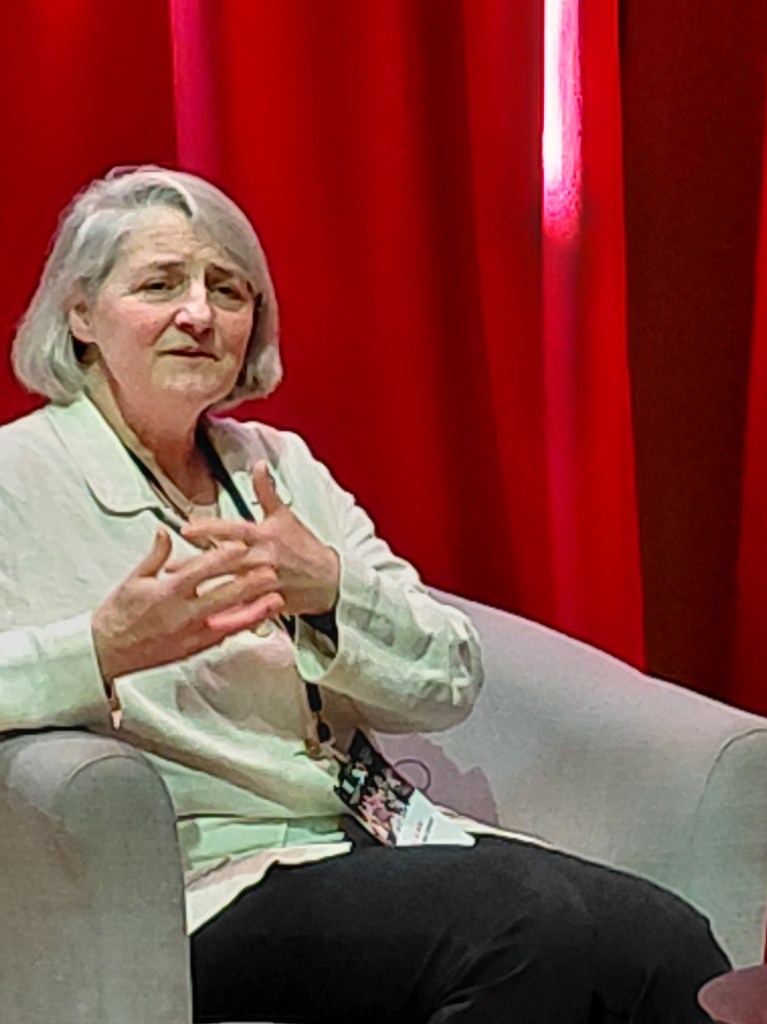
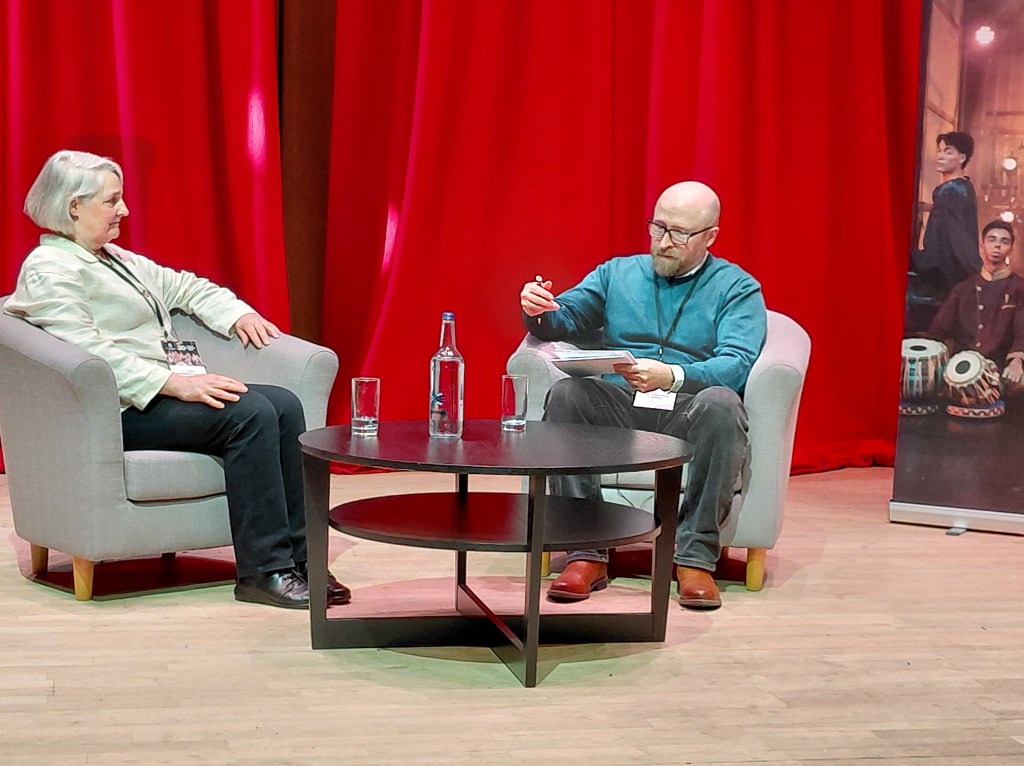
On a different note, yesterday (Tuesday) saw me as a delegate attending the first day of an Royal Conservatoire of Scotland conference, which was celebrating thirty years of traditional music at RCS. The keynote speaker was Dr Jo Miller, one of the co-founders of the Scottish Music degree. As she spoke, her slides showing the chronology of those early years, I realised that when I arrived at what was then RSAMD in 1988, this was just as trad music teaching was getting off the ground.

In 1988, I had no idea that I’d end up recommencing my doctoral studies fifteen years later – little did I know! – forsaking mediaeval polyphony to focus on Scottish songs. My choice of subject was very much influenced by the thought that I’d at least be studying something that might be useful and relevant to students on that course. It took me a little bit longer before I realised that what I was researching counted as ancient history – certainly relevant background, but a very different kind of Scottish song to what today’s contemporary musicians really want to focus on! The songs – their tunes and authors – are still important. But the harpsichord, and subsequently the piano arrangements that I was looking at, represented the soundscape of another world entirely. By contrast, yesterday I heard a paper about sounding Scottish in modern harp-playing; another about the use of traditional Scottish music in videogames; and a third talking about Robert Burns and Hamish Henderson. So many different aspects of Scottish traditional music!

No more interviews or meetings for me this week, but next week I’ll resume my researches. Meanwhile, I need to create another ‘Microsoft Forms’ online form. To think that when I was first a doctoral researcher, I took typing lessons so that I wouldn’t be dependent on paying a typist – as I had done for my Masters dissertation.

By the time I finished my second attempt at a PhD, we had email and PCs. Social media and all the extra Microsoft offerings were still in the future.

And now – I couldn’t even do this present research without Teams, Bookings and Forms. Times change!
Forgotten Local Heroine Margaret Wallace Thomson

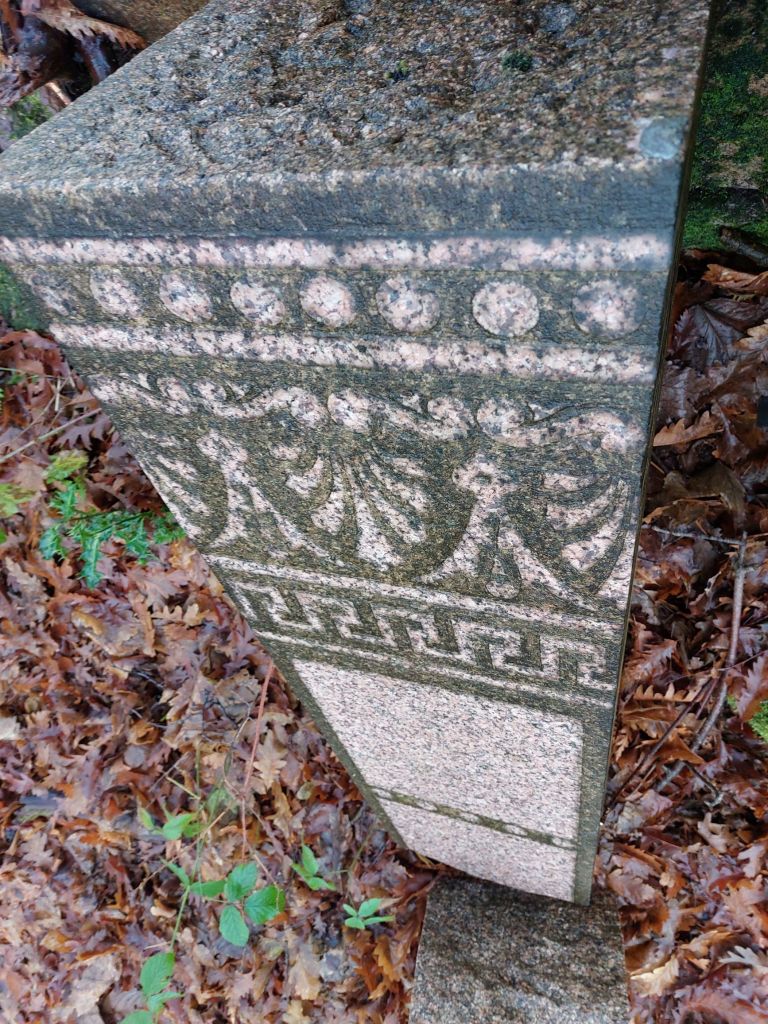
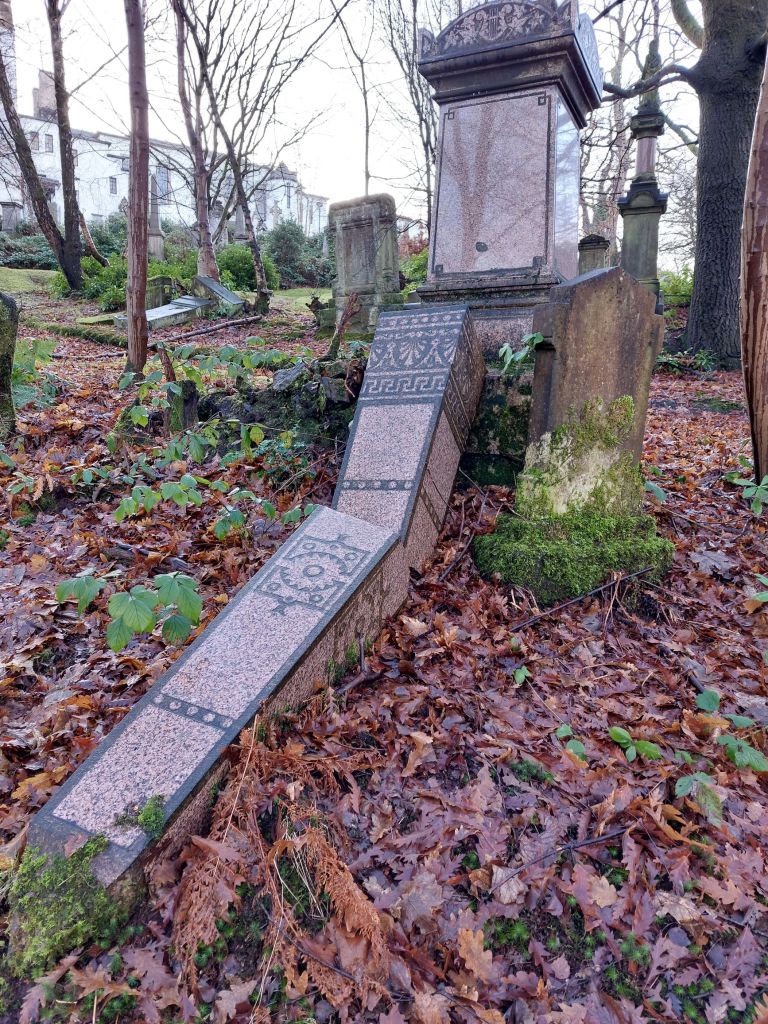
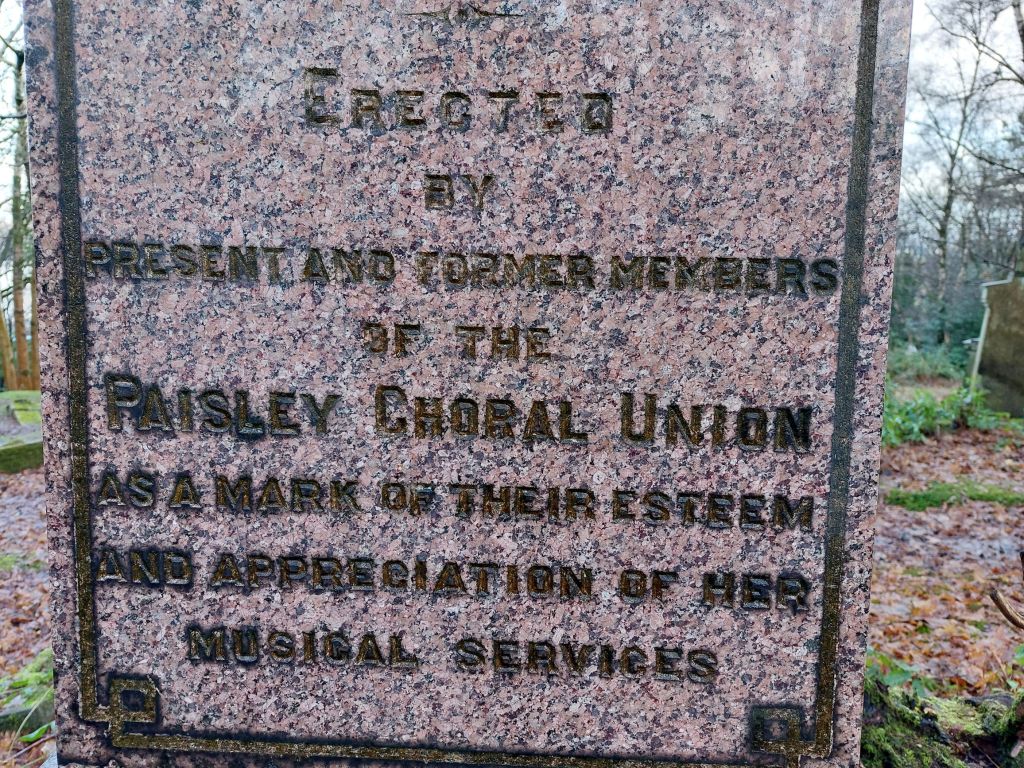
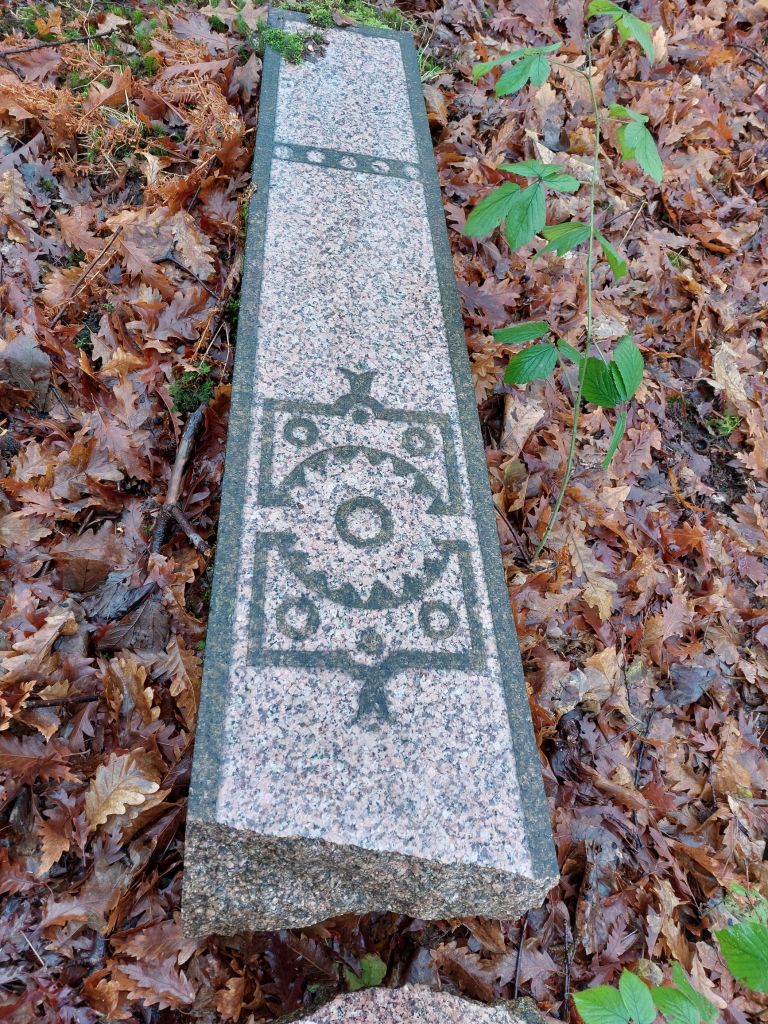
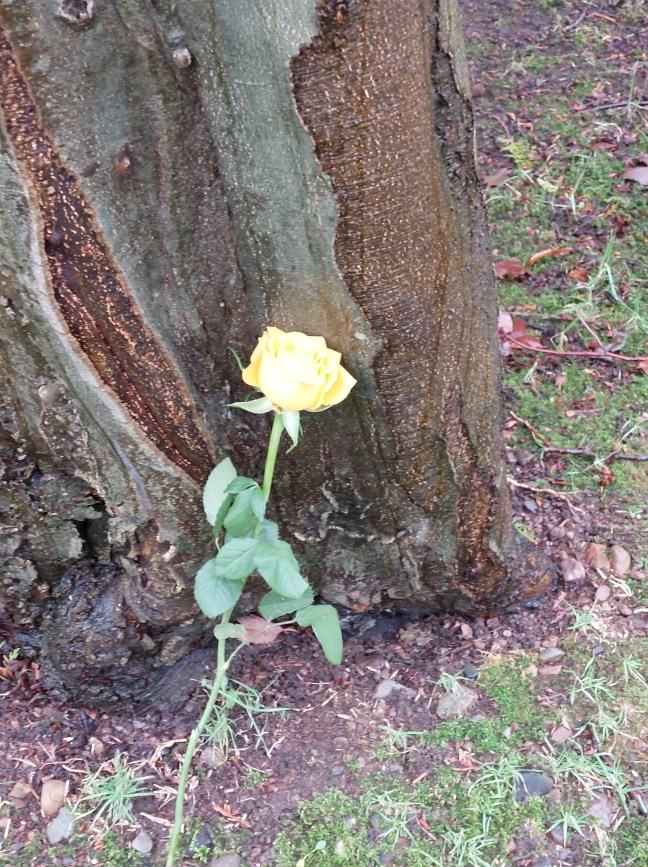
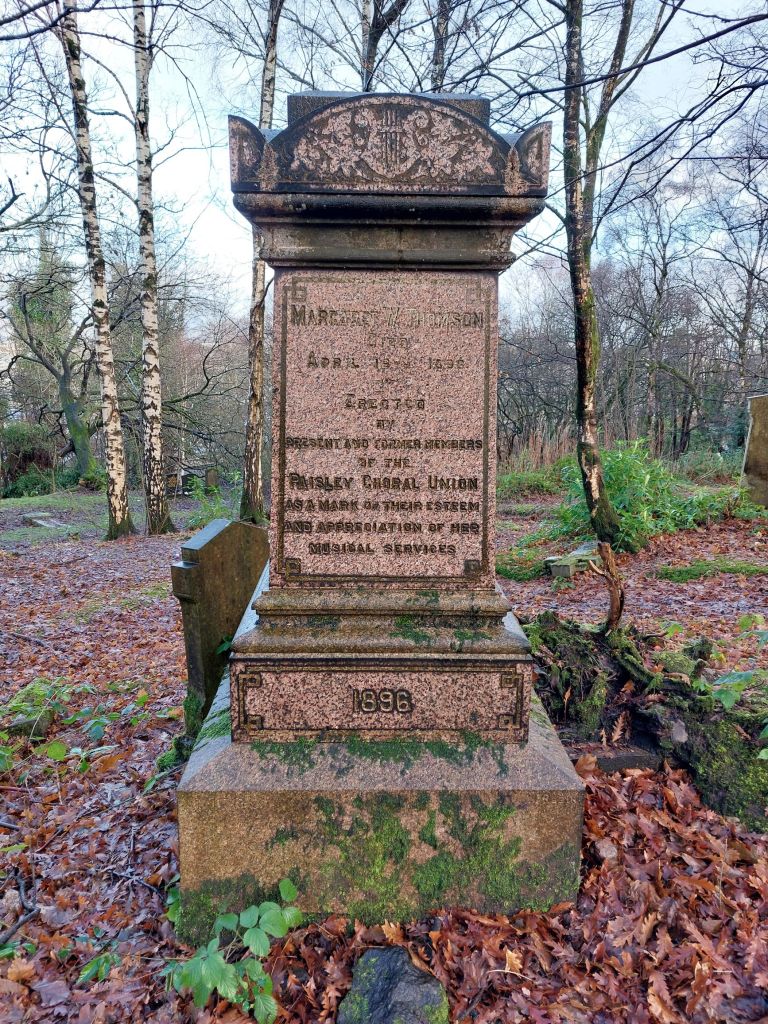
On this day, 3 January 2023, I went in search of this late Victorian lady’s grave in a Paisley cemetery.  She’d been a noted local celebrity, reputed to be the best accompanist in the town.  Sadly, she lost her mind to grief after her mother’s death,  and died in an asylum.

The gravestone was extravagantly impressive – even though the obelisk has sadly been taken down for health and safety reasons.

Nonetheless, her story is interesting and moving, and her connection with Paisley publisher Parlane ensured her a mention in my book. 

I also wrote a more detailed biographical article for the Glasgow Society of Organists, and reproduced it in this blog.

Postscript. I went on another 3rd January expedition this afternoon.  More of that another day!

Bag a Bargain! Routledge has a Black Friday Sale

It would be remiss of me not to point out that Routledge’s Black Friday sale makes the e-book version of my book very affordable! (Maybe someone might even buy you it for Christmas?).

Those preferring to read a hard copy might point out to their library that there’s no time like the present…

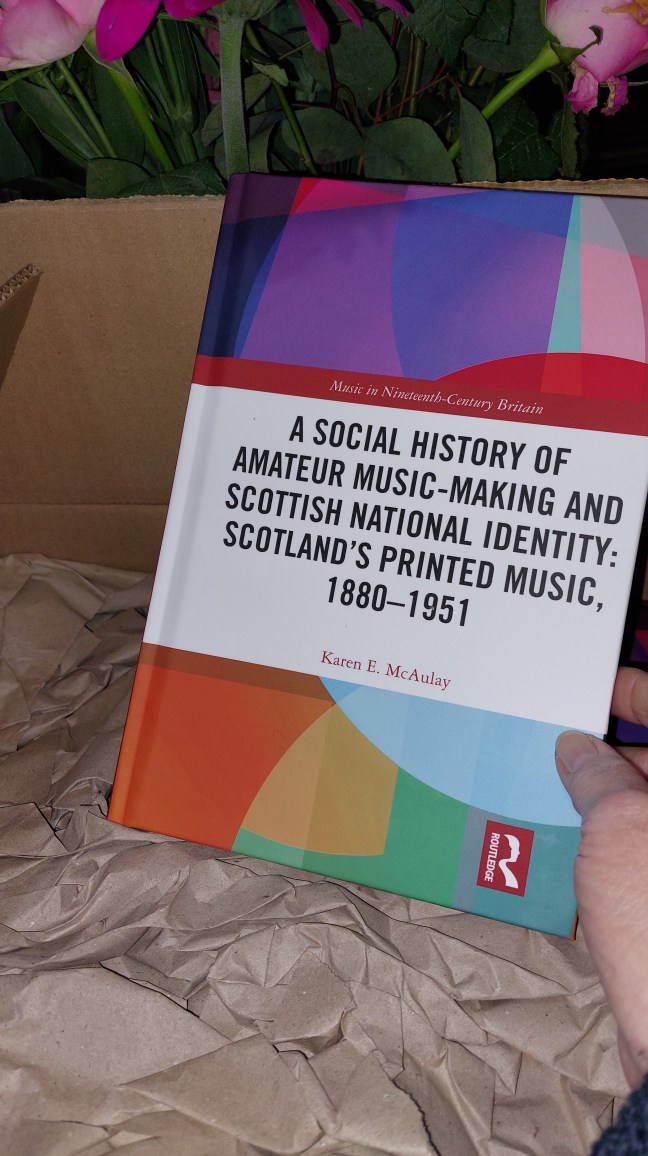
A Social History of Amateur Music-Making and Scottish National Identity: Scotland’s Printed Music 1880-1951

Its forerunner, Our Ancient National Airs, is also in the sale. 

There! Your Christmas reading is sorted.

Book: A Social History of Amateur Music-Making and Scottish National Identity

Wavy lines of music and an artistic interpretation of a fiddle

Folks, I’ve just noticed Routledge has a 20% summer sale on at the moment.ย  So, if you or your library could use a copy, this might be a good time to get it!ย  (All books and e-books are 20% off until 1 August 2025.)

The accent is on social history and Scotland – and music-making, obviously. I’m keen to hear what readers think of it.ย (If you are a reviews editor, do get in touch with Routledge. There’s a link on the website.)

  • Amateur music making
  • Scottish music publishing
  • Scottish and Irish songs
  • Fiddle tunes and dance music
  • Preserving the heritage and passing it on
  • Nostalgic Scots abroad
  • Newfangled technology

Routledge link

Karen E McAulay,  A Social History of Amateur Music-Making: Scotland’s Printed Music 1880-1951 (Routledge, 2005) 

ISBN 9781032389202
220 Pages
Published October 30, 2024 by Routledge

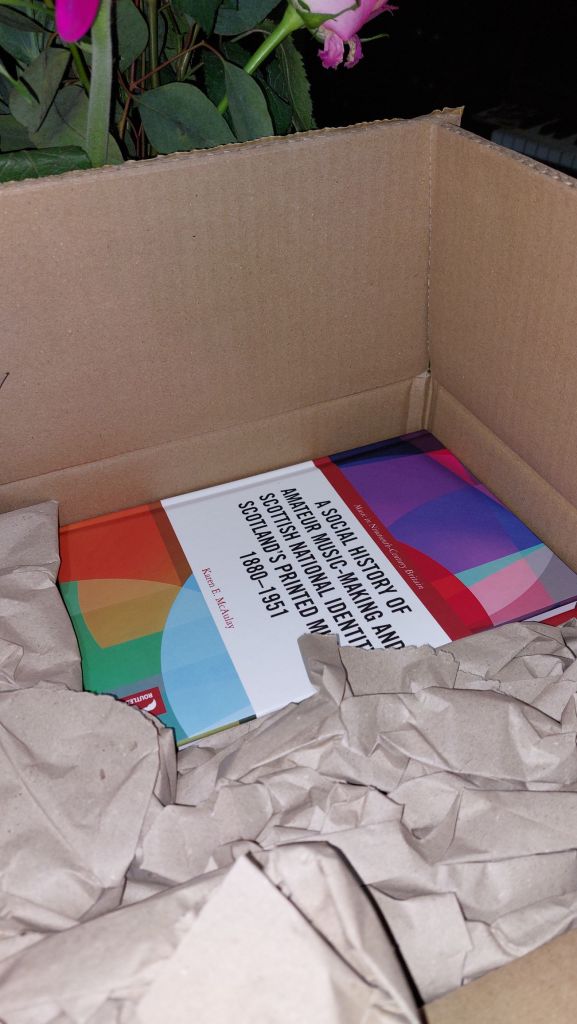
Exciting Day – my Book Arrived!

Writing a second book has felt quite different from the first time round.  The first one developed out of my PhD, so I had my supervisor supporting me as I wrote the original thesis.

Going Solo

But this one? All my own, unsupervised work, arising originally from the thought that someone really ought to write a book about the music published by Scottish publishers in the late Victorian era and the early twentieth century.  No-one had written one, so I researched and wrote it myself. I was grateful for my peer-reviewers’ feedback on the first draft, and I know that the final product benefited from the subsequent edits that I made during my Ketelbey Fellowship at St Andrews.  

This time, I did my own indexing, too.  That was a new experience for me.

Now, to start planning a book launch! Watch this space – I have an idea. Provisional date Monday 11th November, but the details have yet to be finalised!

It’s Happening! Order ‘A Social History of Amateur Music-Making and Scottish National Identity’ … with a Discount Code

Friends, my forthcoming book, A Social History of Amateur Music-Making and Scottish National Identity: Scotland’s Printed Music, 1880-1951, can now be ordered!ย 

It’s a proud day – I’m so excited.  (Amazon even recommended it to me the other day, which I found quite amusing!)

Table of Contents

(from the book – and the Routledge website)

  • Introduction
  • 1 An Era of Opportunity for James S. Kerr and Mozart Allan
  • 2 Nights Out Dancing and Evenings with the Children: Enduring Kerr and Mozart Allan Titles
  • 3 The Saleability of Scottish (and Irish) Songs
  • 4 Education, Preservation, Organisation
  • 5 Expanding Horizons
  • 6 Multimedia Technology, from Magic Lanterns to Recordings and Broadcasts
  • 7 Publishing โ€˜Classicalโ€™ Music in Scotland
  • Conclusion

Description

(again, from the Routledge website)

Late Victorian Scotland had a flourishing music publishing trade, evidenced by the survival of a plethora of vocal scores and dance tune books; and whether informing us what people actually sang and played at home, danced to, or enjoyed in choirs, or reminding us of the impact of emigration from Britain for both emigrants and their families left behind, examining this neglected repertoire provides an insight into Scottish musical culture and is a valuable addition to the broader social history of Scotland.

The decline of the music trade by the mid-twentieth century is attributable to various factors, some external, but others due to the conservative and perhaps somewhat parochial nature of the publishersโ€™ output. What survives bears witness to the importance of domestic and amateur music-making in ordinary lives between 1880 and 1950. Much of the music is now little more than a historical artefact. Nonetheless, Karen E. McAulay shows that the nature of the music, the song and fiddle tune booksโ€™ contents, the paratext around the collections, its packaging, marketing and dissemination all document the social history of an era whose everyday music has often been dismissed as not significant or, indeed, properly โ€˜oldโ€™ enough to merit consideration.

The book will be valuable for academics as well as folk musicians and those interested in the social and musical history of Scotland and the British Isles.

Headline News! Book Progress

A Social History of Amateur Music-Making and Scottish National Identity: Scotlandโ€™s Printed Music, 1880-1951

I’ve just heard I should get the proofs of my second monograph by the end of July.

It looks as though the start of semi-retirement is going to be action-packed, doesn’t it? You might almost think I’d planned it that way, but in truth, it’s just how things have worked out.ย  Any planning was really no more than my thinking, ‘yes, that will probably work out rather nicely’.

I need to start thinking about indexing.ย  Indeed, I have made a partial start, but so far only focusing on one aspect.

Let me just stop coughing and get this beastly flu-bug out of the way, and then I’ll roll my sleeves up!

Image by Pete Linforth from Pixabay