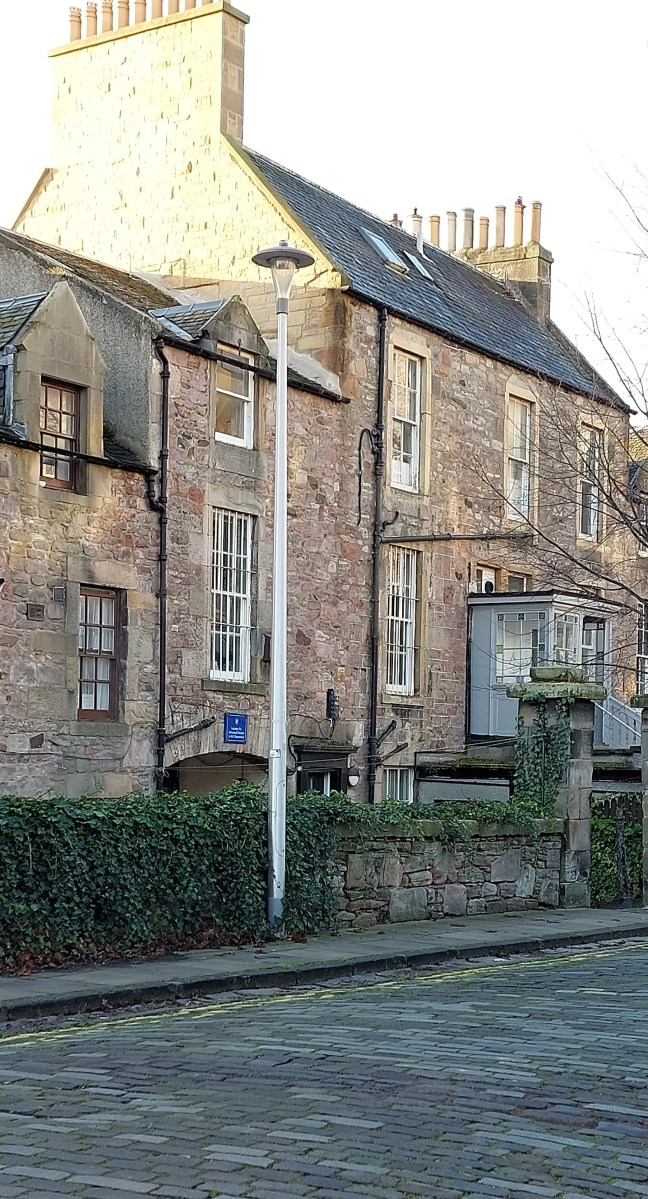
My IASH Fellowship Ends …

IASH - Institute for Advanced Studies in the Humanities

‘All good things must come to an end’, as the saying goes. And an IASH Postdoctoral Research Fellowship is a thoroughly good thing.  I handed back my keys with sadness today, but I have had a great year. (The Fellowship was technically six months, but I was graciously permitted to hang around, retaining the use of my office for the rest of the year, which was wonderful, and enabled me to continue data-gathering in the Library’s Heritage Collections.)

If you are looking for a next step after your PhD, or if like me, you’re making a change of direction – or need a spell concentrating on a particular research question in the Humanities – do consider applying.

I devoted my time to examining the archives of the Edinburgh publishers, Thomas Nelson.  I initially entitled my project, ‘From National Songs to Nursery Rhymes, and Discussion Books to Dance Bands: investigating Thomas Nelson’s Musical Middle Ground’, but the nursery rhymes turned out to be poems, and weren’t what I had in mind! The rest? Yes, I researched them.

I found quite a bit of correspondence between Thomas Nelson’s editors, authors and compilers, which was gratifying. I was able to trace material in journals that I would not have had access to, had I not been in Edinburgh; there’s the excellent University Library collection of actual and digital resources, and the National Library of Scotland just down the road.

I have deferred commencing any significant written work until I had explored all the potentially relevant materials in the files. I believe I’ve now reached that point.  As a result of conducting this research, I have ideas for extending my research in new directions, and I’m contemplating writing another book, so I need not only to explore potential audiences, but also to start working on a book proposal

However, I have also applied for and recently won an Athenaeum Award from the Royal Conservatoire of Scotland to enable me to conduct an oral history project. This work, to be conducted in 2026, will hopefully enable me to write a final chapter for my proposed monograph. (I’ll be blogging about this before too long, but there are things I need to do first, before I spill the beans!)

I have benefited from being part of a research community, hearing other scholars’ papers and discussing our research; and attending researcher development sessions. I  was able to focus on my new direction as a researcher – important, after so many years as an ‘alt-ac’ researcher working in professional services. In this regard, I have also been in a position to submit some other unrelated work for publication, and I spoke at a conference at the University of Sussex in June, all of which gives me a sense that my research is gathering momentum.

Today, my last day, I took a cake to the University Library’s Heritage Collections; went to IASH’s Christmas lunch; and mulled over aspects of my ethical approval submission for my next project. (Oh, and drank quite a bit of coffee!)

Thank you so very much for a great year, IASH!
IASH (Institute for Advanced Studies in the Humanities)

Hello to All New Visitors! I’m a Research Fellow

I haven’t been posting much this summer, for personal reasons. So – after more than a week of total blog silence, imagine my surprise to find I have had hundreds and hundreds more visitors since yesterday. What’s happened?!

Even if it’s some kind of blip, it gives me the opportunity to introduce myself. I’m a postdoctoral research fellow at the Royal Conservatoire of Scotland and also, for a few weeks more, at IASH at the University of Edinburgh. I research all sorts of cool stuff (well, it’s cool to me) about Scottish music publishers, with a distinct interest in national song collections, and in early 20th century music education in Scotland.

My second book was published at the end of 2024:-

A Social History of Music-Making and Scottish National Identity: Scotland’s Printed Music, 1880-1951.

That might look like a strange date-range, but my previous book covered Scottish song-collecting up to the 1880s, so this kind of continues in a slightly different way from that point onwards. The 1951 cut-off date is because that was the year of the Festival of Britain. And it was also a good place to stop because I touched upon magic lanterns, gramophones and the wireless, but I really didn’t feel I was the right person to write about early television in Scotland! By stopping in 1951, I conveniently sidestepped early television. There are plenty of people more knowledgeable than me on that front.

My current Edinburgh research entails examining archival records of the Thomas Nelson publishing house, an old Edinburgh firm. The British side of this company has ceased trading – it’s an American firm now – but I’ve found plenty to interest me in the documents up the early 1950s. Education became their focus during the era I’m researching.  Whilst my book mostly covers publishers specialising in music, Thomas Nelson really only published music that would be used in schools – though they hoped a few titles would also attract the general public. (The problem being that if you mention ‘school’ or ‘classroom’ in a title, it will turn off the ordinary member of public looking at books in a bookshop!)

Will there be a third book? Possibly! I’m still pondering.  September is earmarked for concentrated thought about that!

If this sounds interesting, please do come back and visit this site again.

How Can I be a Fellow? Let me Count the Ways

Elizabeth Barrett Browning would probably kill me for misappropriating her memorable poetical line! However, I’m only now realising the very many different ways in which one can achieve Fellowship.

A Disappointing Start

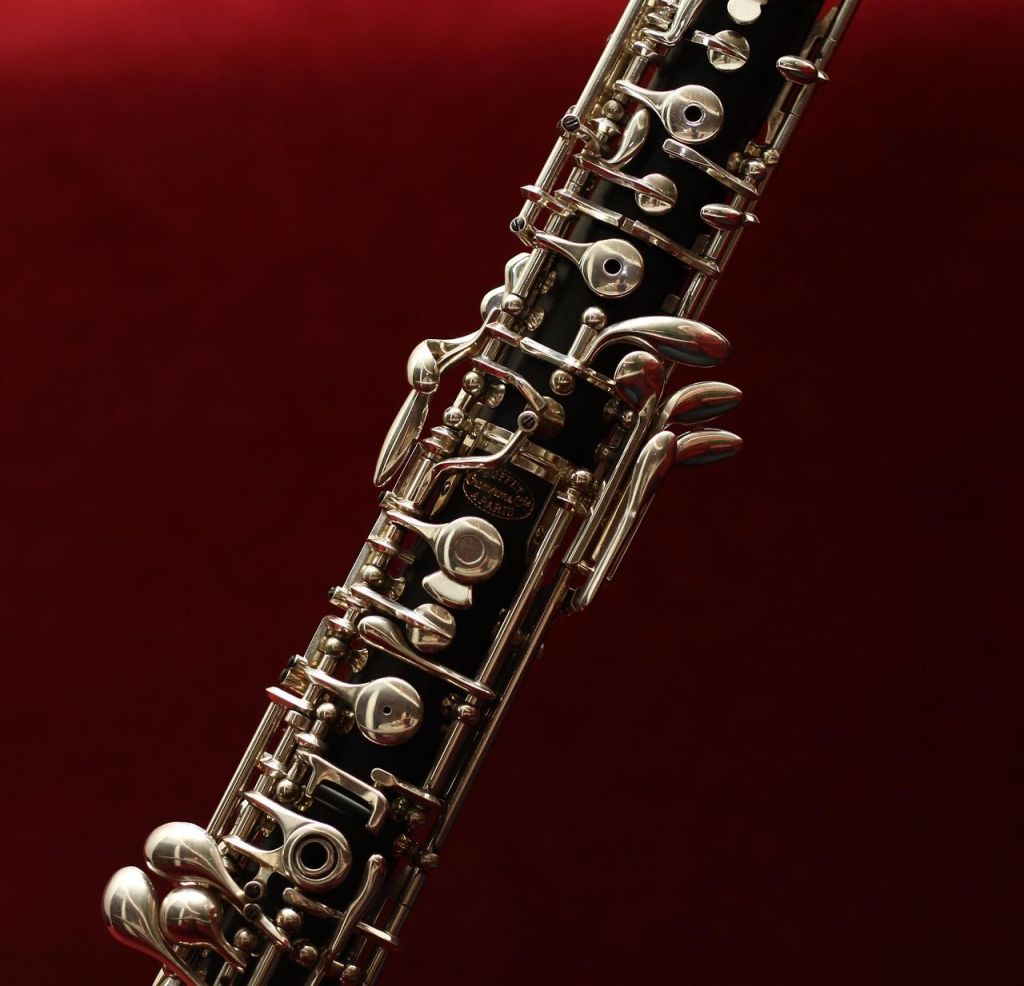
Many years ago, I tried to achieve a Fellowship of Trinity College London, in oboe performance. I’m afraid I didn’t succeed, remaining a Licentiate to this day – but I no longer call myself an oboist in any case; I haven’t played for years.  To think that at one point, I couldn’t imagine myself not playing it!

An Early Dalliance

Professional

I was more successful in librarianship.  I attained Fellowship of CILIP (the Chartered Institute of Library and Information Professionals) in 2010, only relinquishing it (my decision) when I stopped being a librarian.  I was also made a Fellow of IAML(UK & Irl) as I approached the end of my career in music librarianship.  (My official role was Performing Arts Librarian, but I was, essentially, a music librarian.)

Research

A couple of years ago, I enjoyed a Ketelbey Fellowship semester in the School of History at the University of St Andrews, and I’m currently a Fellow at IASH, University of Edinburgh.

I’m continuing my research activities as a postdoctoral research fellow at the Royal Conservatoire of Scotland  – that’s my permanent part-time role.  Would I cause confusion by mentioning that I was also awarded Fellowship of the Royal Conservatoire of Scotland in Autumn 2024? 

And Today … FRHistS

I was delighted to learn that I’ve just been elected a Fellow of the Royal Historical Society.  This is a worldwide organisation with a long and distinguished history, so Fellowship really is an honour.  I’m one of 78 new Fellows this summer. Since I’ve taken the greatest interest and pleasure in historical research in the latter part of my career – as evidenced by my publications record  –  this news is a source of quiet satisfaction. 

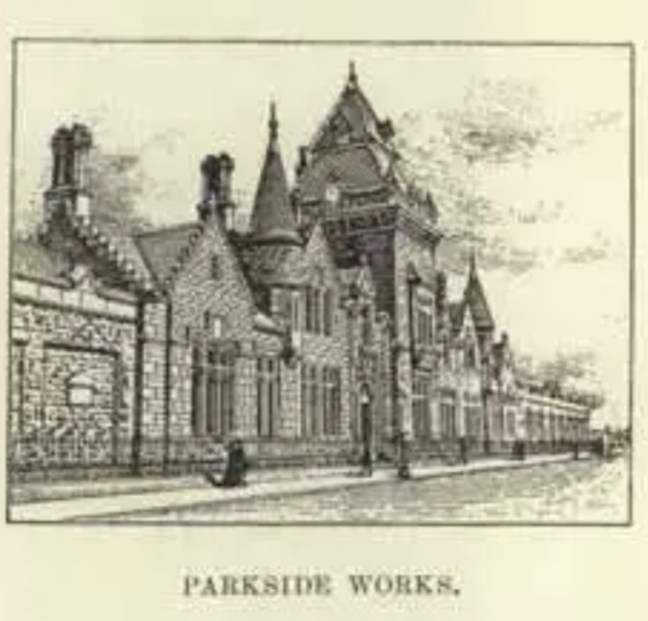
Seminar, Weds 26 March, 1pm:- Perusing the Papers from Thomas Nelson and Sons’ Parkside Works (Research into Nelson’s Scots Song Book – Work in Progress)

Through the archway into the courtyard at IASH

As I’ve mentioned, I’m currently Heritage Collections Research Fellow at IASH, the Institute for Advanced Studies in the Humanities, at the University of Edinburgh. All guest fellows are invited to give a work-in-progress seminar, and it’s my turn on Wednesday 26 March at 1 pm. You can attend in person, or online – more details on the link below. The abstract tells you what my talk is about.

Abstract and Zoom link

I’ll explain what I’m looking for, and introduce you to some of the individuals I’ve been finding out about.  The one thing I can’t predict, is whether I shall by then have found the answer to my prime question!

Nelson's Parkside Works - old engraving
Hope Park Square, home of IASH
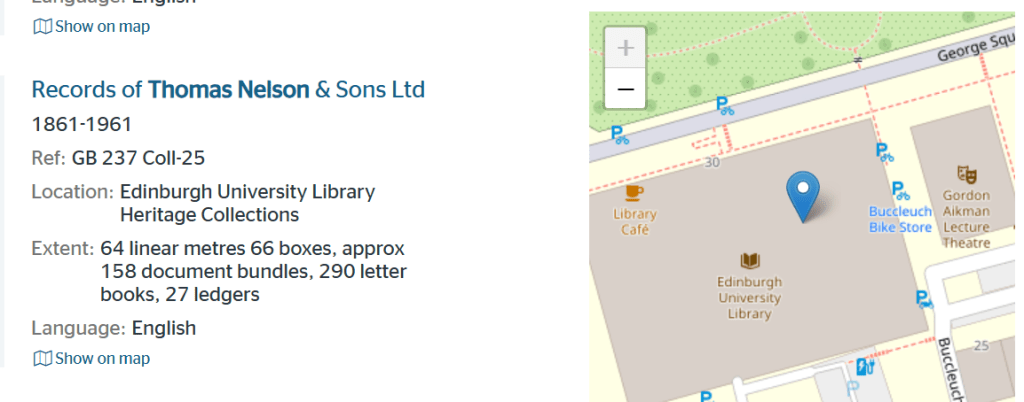
The ArchivesHub entry for the collection

The Plan is Working

I read some advice the other day (you’ll have seen it often enough):-

If you aren’t happy where you are working, then leave.

There’s another adage, which is similar on the face of it, which goes like this:-

If you keep on doing what you’ve always done, you’ll get what you’ve always got.

I know there’s value in the first suggestion,  but it isn’t always possible, is it? You may be well aware that you’ve probably been in the same job too long, but personal circumstances mean you simply can’t leave. Or your role is so specialised that you would have to relocate, which might not be an option.

This is why I prefer the second adage. Sometimes you have to take a long view, and your Plan B might involve changing direction whilst sitting tight.  Get ready for a new role, adjust your mindset accordingly, but accept that it’ll be a while before you make the move.

Alt-Ac-tually

I feel for people at the start of an academic career, with the struggle to get one foot on the ladder.  Do you actively want an Alt-Ac career, or do you feel you have no choice?

I wanted to be an academic music librarian. That became my career, but later I regretted not having finished my first PhD and given academia a fair shot.

My Plan B began with getting a PhD.  Afterwards,  I was very fortunate to get partial secondment as a researcher for more than a decade, whilst remaining in librarianship for the bulk of my week.

Adjust Mindset

It’s not just a question of having the right qualifications.  You need to ensure that you believe in yourself as a scholar, and that others see you as a serious academic.

  • Write the articles;
  • Publish the book (if appropriate) or chapters,
  • Attend conferences (partial attendance isn’t ideal  but it’s better than non-attendance, if cost or time are problematical);
  • Give talks, whether scholarly or as  public engagement;
  • Seek opportunities for career development.  (I did a part-time PGCert a couple of years after the part-time PhD).
  • DO NOT, repeat DO NOT, write yourself out of a career option because you believe yourself incapable of it. (Aged 21, I believed I would never be able to stand in front of a class of students. And on what did I base that assumption? I’d just taught English to assorted European students for about a month.  I did it. I planned lessons, and stood there, and did it. So who said I couldn’t?!  And it gets worse.  There weren’t many women doing music PhDs when I was 21.  Guys told me it was incredibly hard to break into academia – and I just took their word for it.  How naive WAS I?!)
  • Look instead for opportunities to practise the  areas you feel need improvement.  You may need to think laterally.  Music librarians seldom teach music history, but they do deliver research skills training. Lots of it.

Today

Fast-forward to now. I left Glasgow at 7 am today, in subzero temperatures. Edinburgh is bright, clear and breathtakingly … well, breathtakingly cold as well as beautiful! A freezing cold early start might not sound like a luxury to the average retired librarian.  I’ve never wanted to be conventional, though.

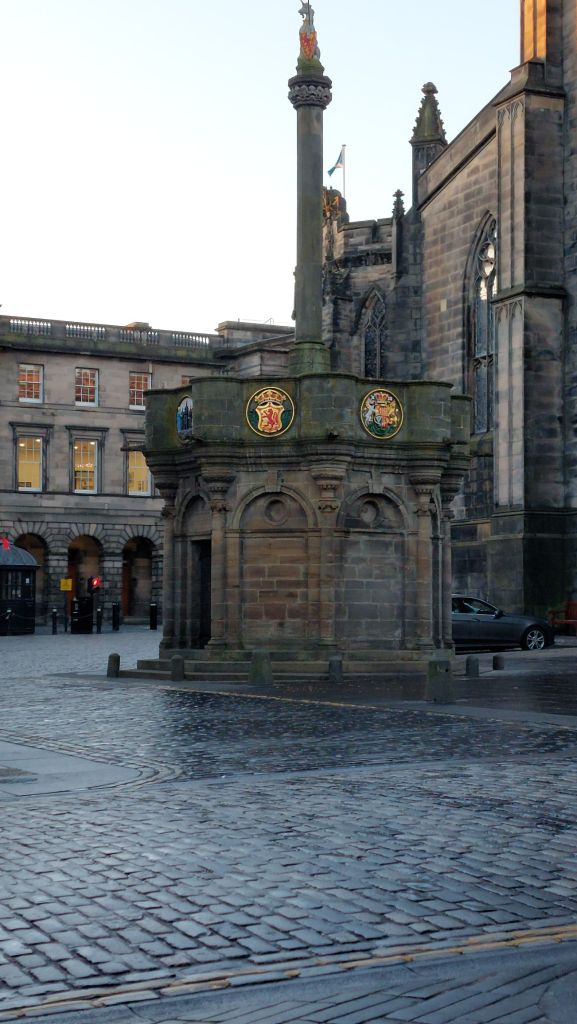
The Mercat Cross, Edinburgh

This is the first week in my IASH Heritage Collections fellowship.  For the first time in my career, I’m NOT juggling librarianship and research.  I’m part of a vibrant community of practice, and I have both the  University Library and the National Library of Scotland just down the road. Thus, today, I saw a set of four Scottish song books that are remarkably hard to find as a set. (Three cheers for legal deposit!) 

And last night, the year got off to an even better start, with an article being accepted.  Just a few minor tweaks to do, which won’t be difficult.

It feels to me as though my long-term plan might be working out quite well!

Annual Review of 2024

Probably the most eventful year I’ve ever reported, 2024 saw plenty of action. However, I’d like to add a few words of explanation before I go any further. Firstly, everyone’s different and everyone’s circumstances are different. (You know the old saying about how you have to ‘walk a mile in someone’s shoes’ before you understand their experiences and challenges?) I’ve spent far too long on introspection, measuring myself unfavourably against high-achievers. It gets you nowhere, apart from feeling inadequate. You will know what is possible in your own situation; please don’t feel I’ve set myself up as an example. I’ve done it my way.

If you’re on the tenure track hamster wheel elsewhere in the world, you may read this and wonder at how little I’ve achieved. On the other hand, if you’re not employed as an academic, you might be surprised at how much. If you’re fully retired, you may think I’ve lost my marbles, but if you’re semi-retired, you might understand! Similarly, everyone’s personal circumstances at home are different too.

For full disclosure, my research career has been what you’d now call alt-ac (alternative academic); I have had 10½ paid hours a week on research for over a decade, but my main career has been in music librarianship.  (I’ve never been a full-time academic,  and my outputs were achieved in less than one third of my working week.)  As you’ll see, I recently gave a keynote about being ‘alt-ac’, and I’d certainly be open to further bookings of this kind, if your institution or network was interested. (I’m in the UK.)

Highlights

  • I had successful eye surgery in February. 
  • I retired from librarianship at the end of June.
  • I was promoted to part-time postdoctoral research fellow in July (10½ hours a week).
  • I’ve had the opportunity to do some teaching cover.
  • My second monograph was published. (It has a 2025 imprint, but actually came out in autumn 2024.)
  • I was elected a Fellow of IAML (UK & Ireland) in the spring, and of the Royal Conservatoire of Scotland in November.
  • I was keynote speaker for the ECRN Alt-Ac Showcase at the University of Birmingham.
  • I successfully applied for a research fellowship at IASH (the Institute for Advanced Study in the Humanities) at the University of Edinburgh, which I shall be taking up between January and June 2025.
  • I received the Mervyn Heard Award from the Magic Lantern Society in December, for research into Bayley and Ferguson’s service of song  publications.

Four fellowships of various kinds is quite an impressive number, however you look at it, so I must remind myself of this before I start beating myself up about my relatively modest upward progress!

Publications

  • A Social History of Amateur Music-Making and Scottish National Identity: Scotland’s Printed Music, 1880-1951 (Routledge, 2025)
  • Book Review: Gun Sireadh, Gun Irraidh: The Tolmie Collection (Folk Music Journal Vol.12 no.5, pp.127-9; my review of a new edition of the Tolmie Collection, a significant Gaelic song anthology, here re-edited by Kenna Campbell and Ainsley Hamill)
  • [Article withdrawn due to pressures of time, but published on this blog: ‘The Exhilaration and Exasperation of Hybridity: Third-Space Professionalism in the Library’]
  • 2 accepted chapters pending publication.
  • 2 articles recently submitted, pending peer review. [February 2025 update: one got through peer review, has been revised, edited and I’ve approved the proofs. The other got through peer review and now awaits the revisions. Nonetheless, satisfactory progress!]

Speaker

  • Exchange Talk, Royal Conservatoire of Scotland, Jan 2024, ‘From Magic Lantern to Microphone: the Scottish Music Publishers & Pedagogues inspiring Hearts & Minds through Song’
  • NAG (National Acquisitions Group) Talk, April 2024, ‘Redressing the Balance: Getting Historically Under-Represented Composers and Contemporary Environmental Concerns into Library Stock’
  • Print Networks, conference held at University of Newcastle, July 2024, ‘‘Music for All’: the Rise and Fall of Scottish Music Publishing, 1880-1964’
  • Exchange Talk, Royal Conservatoire of Scotland, Nov 2024, ‘The Glory of Scotland’ (it’s the title of a Scottish song book published for the 1951 Festival of Britain)
  • Keynote for ECRN Alt-Ac Showcase at the University of Birmingham, Nov 2024, ‘My Alt-Ac Life’

Other Activities

  • BBC Scotland: ‘Good Morning Scotland’ interview
  • Book launch
  • Fellowships of IAML(UK) and RCS
  • Mervyn Peak Award, Magic Lantern Society
  • New job title: Post Doctoral Research Fellow
  • Peer reviews for AHRC and a scholarly journal
  • Providing teaching cover
  • Successful application: Heritage Collections Research Fellowship, IASH (Institute for Advanced Studies in the Humanities at the University of Edinburgh), for Jan-June 2025.
Edinburgh University Library from The Meadows (Wikipedia image)

Forward Planning

My IASH Fellowship will allow me the opportunity to explore the former Edinburgh publisher, Thomas Nelson’s archives, to find out more about their publishing in the music field. There wasn’t a great amount, but I aim to explore correspondence and find out how it fits into the wider range of their activities. I’ll be spending more of my time on research than I ever have since 1982!

Meanwhile, I’ve been working on an article for a history publication; I want to get that finished in the near future, so that I can turn my attention to another article on a different topic. What I do after that will probably depend on how the IASH Fellowship research goes, and what interesting possibilities reveal themselves to me. There’s bound to be enough for an article. But could I expand it to something book-length? I’ll have to wait and see!