Even doing Patchwork, my Mind seeks Patterns!

To end the holiday, I started some patchwork, which will end up as a jacket.  I had some fabric remnants given to me by my elderly mother, and I picked out colours and designs that went well together.  Because it’s inspired by the Victorian crazy patchwork style, my challenge is to ensure that the different fabrics appear random, but are fairly evenly distributed across each piece.

As I went along, I was thinking about my ‘random pattern’, and making connections:  ‘See, if I have this HERE, then I need that THERE, but not there … ‘

I feared I needed more fabric, and the hunt online was harder than I expected.  Mum’s fabric was tastefully collected, and I  couldn’t ruin the thing with cheap, uninspiring ‘ditsy’ prints. I dislike even the word, ditsy! What I was looking for was something the right colour, available almost immediately, and (crucially) that made my heart sing.

I found it! (Eventually.)

http://Jukway Cotton Fabric by The… https://www.amazon.co.uk/dp/B0CJNRMHKW?ref=ppx_pop_mob_ap_share

The whole exercise made me think of my research. I look at the information I’ve found, and try to find patterns.  When I’m hunting down more detail, again,  I’m looking for the ‘aha! That’s it!’ moment, when something fits into what I know, or hopefully augments it.

Here I have this singer and her repertoire. What did she sing? When? How often? Are there times when she sang more of one genre than another?

I’ve been down so many rabbit holes this week.  If she sang THIS song, then did she know the lyricist (probably not, though their lives had interesting parallels), or did the lyrics mean more to her because of their subject matter? Did she know the individual for whom it was written? She did, at least by name!  (They sang at the same concert.)  Some parallels in their lives, too.  Did she sing the song that was referenced within the song? Yes!  (It’s a bit ‘meta’, I must admit, but I find it interesting.)  It’s just one song, not by a composer I’d expected to encounter,  but the connections are intriguing.

So far, so good.  But there was still the question of another song she sang literally a couple of hundred times. In looking for a pattern, I got myself into a whole new-to-me subject area.  Does it make my heart sing?  I can’t say, yet.  There’s still something I need to know.  It might be significant, or it could be a red herring.

Maybe I should do some more patchwork, to calm myself down.

But there’s another parallel. I may not need quite as much extra fabric as I’ve ordered. (Or as much data …?)

A Happy and Healthy New Year – Here’s Hoping!

Through sheer bad luck, all the men in my house had flu between Christmas and New Year. Call it Casa Influenza, if you will. I’ve been downing zinc, echinacea, and multivitamins with cod-liver oil – providing room service whilst wearing a mask, and cursing my FitBit for suddenly deciding to pass daily comment on my own levels of activity. It’s not counting the stairs, which I consider a very bad show considering how many times I’ve been up and down them. Then, after the first day of my Florence Nightingale gig, it observed I’d been overdoing it and should take a rest. So, I tried to rest the next day (as much as I could), whereupon it observed that I really needed to increase my cardio load. The third day, I walked to the postbox to increase my step-count, but this still wasn’t enough for FitBit. Stupid device!

Bah, humbug!

Only One Resolution!

Left to myself downstairs for several days, I couldn’t help myself doing a little bit of research in between fetching and carrying coffee, soup and meals on demand. However, having done absolutely nothing about seeing the new year in last night, I decided that if I was going to make one resolution this year, then it would be to do something more relaxing than searching databases on a public holiday. Moreover, I had woken up early – again – and couldn’t get back to sleep. I reached for my headphones and settled down to an audiobook.

My book review of Sue Watson’s, Our Little Lies (2018)

(10 hours and 8 minutes, narrated by Katie Villa.)

An absolutely gripping psychological thriller with a brilliant twist.

I settled down under my duvet, ready to be psychologically thrilled. Although it began pleasantly enough, I must confess that I was too cosy, and I fear I may have been a bit drowsy through a couple of the chapters near the beginning. This didn’t promise to be as exciting as I’d hoped. It seemed like rather a slow, pedestrian start. On the other hand, maybe I’d have got on better if I’d been sitting up in a chair, or doing something else at the same time, rather than nearly falling back to sleep! When I woke up properly again, I didn’t feel as though I’d missed much.

Having said that, I took my phone round the house with me today, and listened to the entire story enjoyably enough, interrupted only when one of my invalids needed sustenance to be supplied! It did get better as it went on. The heroine was believable, and the anti-hero’s determination to gaslight her, accusing her of madness and psychological instability, grew more and more chilling as the tale unfolded. Her husband was a serial adulterer, a manipulative bully, psychologically and sometimes physically abusive.

As you listen (or read), you really do feel the heroine is caught in a trap, where her husband would do anything to make her feel guilty, whether literally finding fault where there was none, or for genuinely pathetic infringements (not folding the throws tidily enough, not tidying up crumbs off the sofa, or allowing the twins to watch TV) – or for serious tragedies for which she was in no sense to blame.

Marianne was certainly obsessive. But her husband Simon, who was a brilliant and ambitious surgeon, convinced her GP to prescribe heavy tranquillisers, and you were left wondering (as Marianne did) whether she was going mad, losing her memory, losing her ability to cope or becoming paranoid – or was the medication causing side-effects?

Admittedly, at one point, I wanted to yell, ‘For pity’s sake, you need to leave him, taking your kids with you!’, but of course, she had no-one to go to; even her so-called new friend turned out to be disloyal in the extreme.

The final chapters were very clever. Marianne arranged a party in which she would reveal her husband (and his lover) in their true colours. There was a murder a couple of days later, and because she couldn’t recall exactly what had happened, she was arrested and held for a number of hours before being released. However, the denouement was not as straightforward as it would have appeared, and – as in the best whodunnits, the culprit eventually turned out to be someone else entirely.

It’s not a detective novel, or even a crime story as such – emotional and domestic abuse underpin the novel, but the murder comes near the end of the book and – as I said – there’s a twist in the last ten minutes.

I closed my Audible book feeling that I had actually chosen just the right book for a lazy New Year’s Day. I’d recommend it.

‘Una Voce Poco Fa’ (a Voice a Little While Ago) – a Hit for Two Centuries

The aria, ‘Una Voce Poco Fa’ from Rossini’s Il Barbiere di Siviglia (The Barber of Seville) may have been composed in 1816, but it remains popular to the present day – a showpiece for coloratura sopranos.  It was certainly an often-performed solo in recitals by the early 20th century star about whom I’m writing at the moment.  In the context of the original opera, it’s sung by Rosina, whose overbearing guardian wants to marry her. Of course, Rosina’s sights are set on a handsome young suitor. (Eventually the barber sorts it all out. Of course!) 

The Lyric Opera of Chicago gives you the relevant details on a handy page about the work, here.

You can find a translation on the Opera Arias Database.

But what, exactly, draws both singers and audiences to this amazing piece?  Jenna Simeonov has written a guide for sopranos learning the aria, on the Schmopera website, and her introduction gives a few clues as to why it would have appealed to a talented young soprano:-

This is a cornerstone aria for many young mezzos, and one of the few chances they have to show off coloratura and play a girl. It’s also an aria full of options.

‘How-to Aria Guides: Una Voce Poco Fa (14 October, 2015)

Sure enough, the woman I’m researching was very young, so the role of Rosina would have felt like one she could empathise with.

Simeonov gives a great deal of useful advice on singing the later coloratura part of the aria, helpfully with a marked-up score to show what she’s talking about.  She gives more insight into singing it, from a  performer’s point of view, than I could possibly have hoped for, but in her opening words, also advises working with a singing teacher.

The fast part

As we get into the coloratura bits, I can offer some general, if incomplete, advice. Help yourself by always finding the larger tune within the string of sixteenth notes, and stay nice and light. For more specifics, get thee to thy voice teacher.

Looking at the score – my goodness, talk about vocal acrobatics! Swooping scales, trills and other ornamentation, high notes, tricky fast passages that would challenge any soloist – and that’s before the conductor tries to keep an orchestra in synch with ‘Rosina’.  Or it’s up to the pianist, in a recital context.  No wonder ‘my’ singer was in the habit of noting if her allocated accompanist was good, bad or indifferent!

Here’s Kathleen Battle singing the aria – a beguiling, and impeccable performance:-

(Kathleen Battle – Rossini: ‘Una voce poco fa’, from the opera Il Barbiere di Siviglia by Gioacchino Rossini.  Recorded in Antwerpen December 1984.  From the TV show: Rene Kollo – Ich lade gern mir Gäste ein.

So, it really is completely understandable why it’s such a well-loved piece of the repertoire, isn’t it?!

Cover image from IMSLP: Editor Castil-Blaze (1784-1857)
Pub. Info. Paris: La Lyre moderne, n.d. Plate 346.
Copyright: Public Domain
Misc. Notes Biblioteca Fondazione Rossini Pesaro

Annual Review of 2024

Probably the most eventful year I’ve ever reported, 2024 saw plenty of action. However, I’d like to add a few words of explanation before I go any further. Firstly, everyone’s different and everyone’s circumstances are different. (You know the old saying about how you have to ‘walk a mile in someone’s shoes’ before you understand their experiences and challenges?) I’ve spent far too long on introspection, measuring myself unfavourably against high-achievers. It gets you nowhere, apart from feeling inadequate. You will know what is possible in your own situation; please don’t feel I’ve set myself up as an example. I’ve done it my way.

If you’re on the tenure track hamster wheel elsewhere in the world, you may read this and wonder at how little I’ve achieved. On the other hand, if you’re not employed as an academic, you might be surprised at how much. If you’re fully retired, you may think I’ve lost my marbles, but if you’re semi-retired, you might understand! Similarly, everyone’s personal circumstances at home are different too.

For full disclosure, my research career has been what you’d now call alt-ac (alternative academic); I have had 10½ paid hours a week on research for over a decade, but my main career has been in music librarianship.  (I’ve never been a full-time academic,  and my outputs were achieved in less than one third of my working week.)  As you’ll see, I recently gave a keynote about being ‘alt-ac’, and I’d certainly be open to further bookings of this kind, if your institution or network was interested. (I’m in the UK.)

Highlights

  • I had successful eye surgery in February. 
  • I retired from librarianship at the end of June.
  • I was promoted to part-time postdoctoral research fellow in July (10½ hours a week).
  • I’ve had the opportunity to do some teaching cover.
  • My second monograph was published. (It has a 2025 imprint, but actually came out in autumn 2024.)
  • I was elected a Fellow of IAML (UK & Ireland) in the spring, and of the Royal Conservatoire of Scotland in November.
  • I was keynote speaker for the ECRN Alt-Ac Showcase at the University of Birmingham.
  • I successfully applied for a research fellowship at IASH (the Institute for Advanced Study in the Humanities) at the University of Edinburgh, which I shall be taking up between January and June 2025.
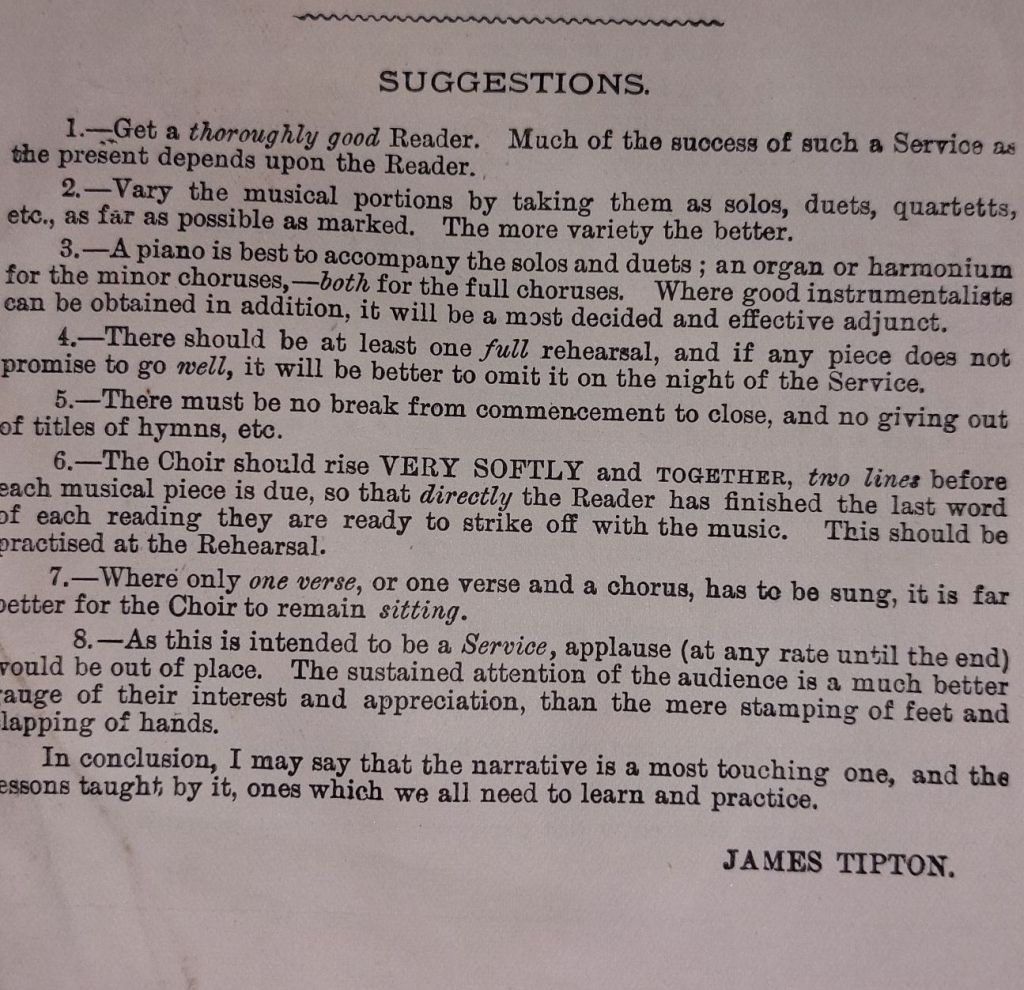
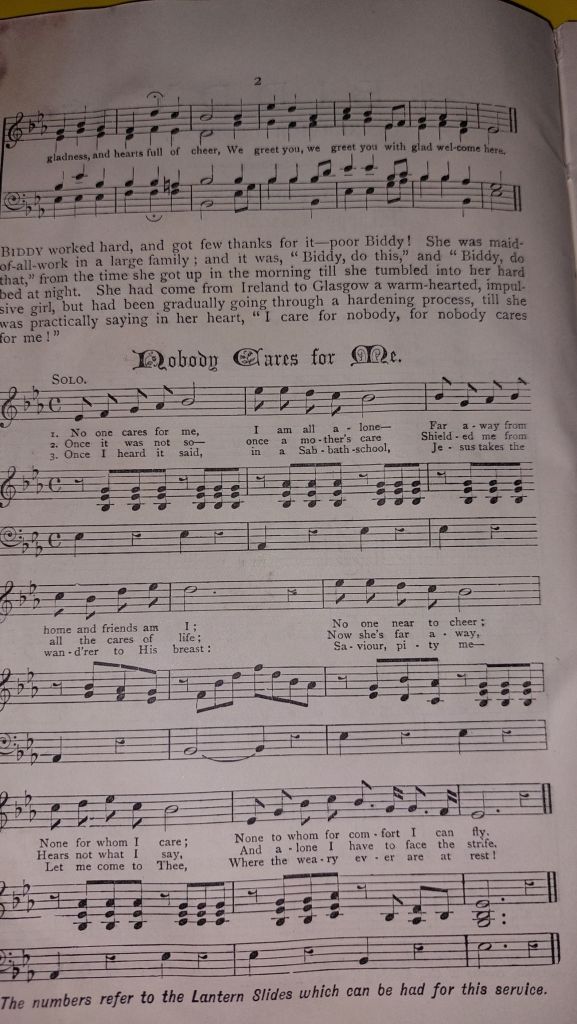
  • I received the Mervyn Heard Award from the Magic Lantern Society in December, for research into Bayley and Ferguson’s service of song  publications.

Four fellowships of various kinds is quite an impressive number, however you look at it, so I must remind myself of this before I start beating myself up about my relatively modest upward progress!

Publications

  • A Social History of Amateur Music-Making and Scottish National Identity: Scotland’s Printed Music, 1880-1951 (Routledge, 2025)
  • Book Review: Gun Sireadh, Gun Irraidh: The Tolmie Collection (Folk Music Journal Vol.12 no.5, pp.127-9; my review of a new edition of the Tolmie Collection, a significant Gaelic song anthology, here re-edited by Kenna Campbell and Ainsley Hamill)
  • [Article withdrawn due to pressures of time, but published on this blog: ‘The Exhilaration and Exasperation of Hybridity: Third-Space Professionalism in the Library’]
  • 2 accepted chapters pending publication.
  • 2 articles recently submitted, pending peer review. [February 2025 update: one got through peer review, has been revised, edited and I’ve approved the proofs. The other got through peer review and now awaits the revisions. Nonetheless, satisfactory progress!]

Speaker

  • Exchange Talk, Royal Conservatoire of Scotland, Jan 2024, ‘From Magic Lantern to Microphone: the Scottish Music Publishers & Pedagogues inspiring Hearts & Minds through Song’
  • NAG (National Acquisitions Group) Talk, April 2024, ‘Redressing the Balance: Getting Historically Under-Represented Composers and Contemporary Environmental Concerns into Library Stock’
  • Print Networks, conference held at University of Newcastle, July 2024, ‘‘Music for All’: the Rise and Fall of Scottish Music Publishing, 1880-1964’
  • Exchange Talk, Royal Conservatoire of Scotland, Nov 2024, ‘The Glory of Scotland’ (it’s the title of a Scottish song book published for the 1951 Festival of Britain)
  • Keynote for ECRN Alt-Ac Showcase at the University of Birmingham, Nov 2024, ‘My Alt-Ac Life’

Other Activities

  • BBC Scotland: ‘Good Morning Scotland’ interview
  • Book launch
  • Fellowships of IAML(UK) and RCS
  • Mervyn Peak Award, Magic Lantern Society
  • New job title: Post Doctoral Research Fellow
  • Peer reviews for AHRC and a scholarly journal
  • Providing teaching cover
  • Successful application: Heritage Collections Research Fellowship, IASH (Institute for Advanced Studies in the Humanities at the University of Edinburgh), for Jan-June 2025.
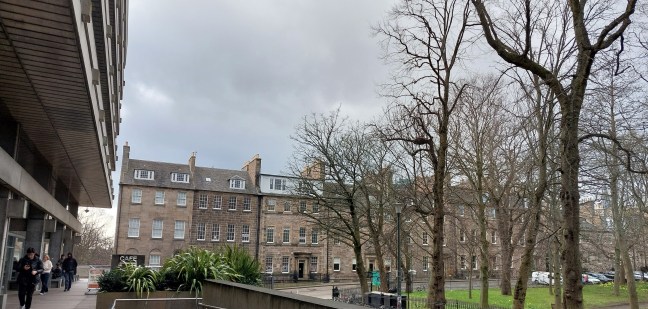
Edinburgh University Library from The Meadows (Wikipedia image)

Forward Planning

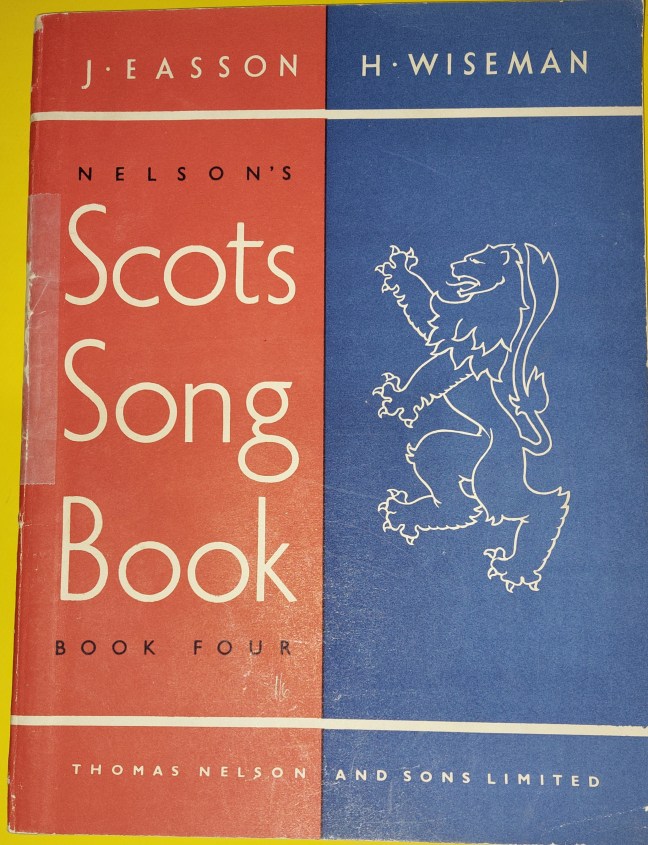
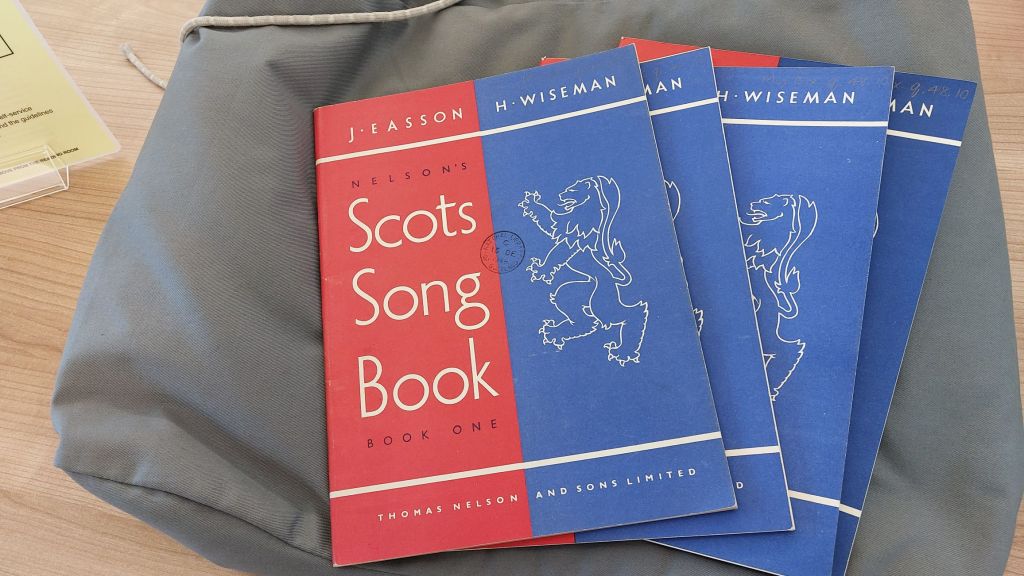
My IASH Fellowship will allow me the opportunity to explore the former Edinburgh publisher, Thomas Nelson’s archives, to find out more about their publishing in the music field. There wasn’t a great amount, but I aim to explore correspondence and find out how it fits into the wider range of their activities. I’ll be spending more of my time on research than I ever have since 1982!

Meanwhile, I’ve been working on an article for a history publication; I want to get that finished in the near future, so that I can turn my attention to another article on a different topic. What I do after that will probably depend on how the IASH Fellowship research goes, and what interesting possibilities reveal themselves to me. There’s bound to be enough for an article. But could I expand it to something book-length? I’ll have to wait and see!

Season’s Greetings! Even Research Fellows Take a Break …

So, the book was published. What next, you ask? Well, I’ve recently submitted a couple of articles, one about some women related to Scottish music publishers, and one about an 18th-19th century supporter of Highland culture. I’m patiently waiting to hear if either article finds a home – and impatiently waiting to see if the book gets decent reviews! I see a couple of libraries have already got it in stock, which is comforting.

Now, I have an article to write (about two famous Scottish singers) and then in January I’m off on a postdoctoral research fellowship at the University of Edinburgh. These are exciting times!

Twirling like a Top?

However, first it’s time for the crescendo of Christmas to reach its peak, and then a few days of diminuendo and rallentando to a graceful pause. I generally find that after I’ve recovered from organising the family festivities, I’m raring to get going on some writing, so hopefully I’ll get that article at least drafted before I embark on the Edinburgh adventure.

Meanwhile, I hope everyone gets just the right balance of rest, relaxation and fun. If it’s a quiet or subdued time for you, then I hope that you’ll find solace in the small things, and the comfort and companionship of friends.

Back soon!

A Gift Idea? A Social History of Amateur Music-Making

Stumped for a present for your Scottish music enthusiast? My new book is affordable as an e-book! (Just sayin’ …)

A Social History of Amateur Music-Making and Scottish National Identity: Scotland’s Printed Music 1880-1951

Why did Scottish music publishers produce so many songbooks and dance tunes? Who took Scottish music overseas to the diaspora? How did classical composers interact with local publishers?

I’ve discussed all this and more. Full details on the publisher’s page, link above.

The Doctor’s Dilemma: the ‘Healthy’ Christmas Cake

It’s Monday  – a semi-retirement day, and an appropriate day to bake the Christmas cake.  Abandon any ideas of little old ladies cosily enveloped in warm, Christmassy smells as they briskly bake a time-honoured recipe.

Oh, I’ve researched this cake.  ‘Himself’ was told he was pre-diabetic a while ago.  More recently, it appeared this wasn’t quite right – he’s pre-pre-diabetic. (A term I’ve probably  invented – you’re welcome!)  Anyway, a huge, hugely calorific and sugar-laden Christmas cake didn’t sound very sensible.  You can imagine the glee with which he contemplated a Christmas without treats.

One of my first career ideas, aged 13, was to be a nutritionist. That went by the board when I realised I’d need to take biology.  Who’d have thought I’d end up devising pre-pre-diabetic Christmas cakes in semi-retirement!

I took to the internet for recipes. Oh, I found diabetic fruitcakes, all right. But I couldn’t see how something baked with carrot, banana, courgette and apple would keep as long as something with dried fruit. I reflected ruefully that Mrs Patmore, the fictional Downton Abbey’s cook, probably never saw such an apparently bizarre ingredient list! (Indeed, the real, fin de siècle Scots whom I’ve been researching might not even have had a Christmas cake – Scots Presbyterians made virtually nothing of Christmas, but had a right good knees-up at Hogmanay – New Year’s Eve.)

Back to the drawing board.  More of the dried fruit with lower sugar content (marginally!). Cut out the treacle.  Splenda instead of sugar.  Rapeseed oil instead of butter.  Wider tin so we get more, smaller portions  …

I left the fresh fruit and veg in the fridge. Another time! 

Working with two recipes, one of them using American cup measurements, posed its own problems.   How much butter is a cupful, and how much oil replaces it?  Google sorted that out.  I measured water into various cups before realising I could use the measuring jug itself.  Hey-ho.

Meanwhile Himself, almost (albeit reluctantly) resigned to a no-cake Christmas, has agreed fairly willingly to a new concept:-

Portion control.

(I was going  to say, watch this space! But the scoundrel has just beetled off to demolish a KitKat …)

Mother and Son both Routledge Authors

Book cover: Street-by-Street Retrofit

Our talented son, Scott McAulay, has just shared with us an image of his latest triumph – a foreword in another Routledge book. (He’s less than half my age, so who knows how much he’ll have published by the time he reaches my advanced years!)

So, this year, between us we’ve had a hand in three Routledge books, or four if you include the paperback edition of one I contributed to earlier:-

Scott McAulay (foreword), in Mike McEvoy, Street-by-Street Retrofit: A Future for Architecture (2024)

Karen E. McAulay, A Social History of Amateur Music-Making and Scottish National Identity: Scotland’s Printed Music, 1880-1951 (2024)

Scott McAulay (chapter and a co-authored chapter) in The Pedagogies of Re-Use: The International School of Re-Construction (2024), ed. Duncan Baker-Brown, Graeme Brooker

Karen E. McAulay (chapter) in new paperback edition of Music by Subscription: Composers and their Networks in the British Music-Publishing Trade, 1676–1820 (2024, hardback 2022)

The Height of Madness? Top F in Donizetti’s ‘Mad Scene’

Donizetti – Ardon gl’incensi

I’m a little bit obsessed by this aria. It’s one of the arias in the so-called ‘Mad Scene’ in Donizetti’s Lucia di Lammermoor. It was the popular showpiece of a soprano whom I’m currently researching, and she performed it numerous times within just a few years, in the late 1920s. She never sang it in an operatic context, just in concerts, and she didn’t record it – but several women did. I wanted to know what it was like, and why she might have been drawn to it. I was keen to hear an earlier recording, to get chronologically closer to ‘my’ singer. This one goes too far the other way, dating from 1907 – it’s Luisa Tetrazzini on a Gramophone recording:-

The aria has been analysed and written about. There’s much about female madness and female agency. (The heroine has been deceived into marrying someone else, to keep her from marrying the man whom she wants to marry, and of course the ‘jilted’ lover is furious that she appears to have done the dirty on him. So, realising she’s been tricked, she murders her new, unwanted spouse. Then goes downstairs and tells the guests …)

It’s based on Sir Walter Scott’s The Bride of Lammermoor. I got very excited about this, thinking that ‘my’ soprano must have been drawn to it for its Scottish content. However, so many people were singing it, that I am forced, pragmatically, to conclude that she probably just thought it was a great showpiece aria which would suit her high soprano coloratura voice. Moreover, when the opera was premiered in the UK in 1838, there were comments that it couldn’t be much less ‘Scottish’, with just a couple of characters in Scottish costume and nothing more to hint at the origin of the story.

Oh, all right! You’d like to hear it in a better recording than the 1907 one? No offence to Tetrazzini, it’s not her fault that recording techniques were quite primitive in 1907! Here you are, have a listen to Joan Sutherland in 1959. No-one would blame you if you played this several times over – I think it’s fantastic!

The question of glass harmonica or flute as obbligato instrument is another entirely. Donizetti’s glass harmonicist walked out, so he used a flautist – as in the Sutherland recording. There’s a very nice recording of Jessica Pratt singing it with glass harmonica, which is a longer version than in the Sutherland performance:-

I’m not going to delve any further into the history of the aria. It’s fascinating, but not really part of my research!

Now, what do I do with these observations? Ah, well, I have a piece of writing to do. I do tend to sweep the net wide when I’m researching a topic, because it helps me to see the central subject in context. Whether I start writing this side of Christmas is another question entirely. It may turn out to be the writing blitz that tends to overcome me somewhere between the fourth and twelfth days of Christmas!

Buja, Maureen, ‘Who’s the Maddest of them All? Lucia di Lammermoor’, Interlude, April 2nd, 2023. https://interlude.hk/whos-the-maddest-of-them-all-best-performances-donizetti-lucia-di-lammermoor/

Metropolitan Opera, ‘Madly in love’

https://www.metopera.org/discover/education/educator-guides/lucia-di-lammermoor/madly-in-love/

Parker, Roger, ‘Lucia di Lammermoor’s mad tragedy in Donizetti’s mad life’, The Guardian, Jan 28th, 2010. https://www.theguardian.com/music/2010/jan/28/lucia-di-lammermoor-donizetti

Smart, Mary Ann, ‘The Silencing of Lucia’, Cambridge Opera Journal, Vol. 4, No. 2 (Jul., 1992), pp. 119-141

Main image from Pixabay

The Research Plan

I attended a meeting about grant applications, today. There was lots of good advice, including the development of a five-year career plan. A very sound suggestion. However, most early career researchers are really at the start of their research career, whilst I? I’ve done less research in my research career than a full-time researcher – obviously, as I got my PhD aged 51, and since then I’ve mostly been a 0.3 researcher – and my research development has thus been spread over a longer period. Similarly, I do have some teaching experience, but not an enormous amount. So …

In planning the next five years, young researchers have different parameters (making a good start, developing their strengths, possibly more able to relocate geographically, possibly without family responsibilities), whilst old ones are trusting they’ll still be fit and well in five years’ time; might not be able to relocate; and might well have family or caring responsibilities. (Should the plan also have the equivalent of a runaway truck ramp or escape lane, in case personal circumstances change unexpectedly?!)

Over the Hill? Which Hill?!

Maybe over one hill, but there are other hills to climb!

Five years at the start of a working life are  different from five years somewhere nearer the end. I want to go on forever!  Realistically, that’s impossible.  (I might live another three decades, but who can say if I’ll still be researching at 96?!) 

However, I read a posting the other day about the use of metaphors in health care, and I can see a parallel for scholars here; they talk about a journey with an illness, whilst we use metaphor to talk about our research journey.

To continue with the journeying, travelling metaphor: I climbed the librarianship hill as far as I could get.  I didn’t reach the top, but I made reasonable progress.  Looking around, I saw other hills I’d like to climb. You could say I’ve used the state retirement age as an opportunity to come down from the library hill, so I can spend more time climbing elsewhere.

I’d like to write another book. But I’ve only just published my second; I need at least three or four more years to do enough research into a new topic to merit a book. And I haven’t decided what exactly it will be about yet, though this might well become apparent in the next year or so.

Despite all this, a five-year research plan does seem desirable.  I must apply myself to devising it!