Competition? It’s not a Competition!

At the end of last year, I wrote a Year-end Review, and told myself firmly that it was not for the purpose either of blowing my own trumpet, or making adverse comparisons of my own output with that of other people. I discovered that the best way was to reflect on successes, failures, and what I would do differently next time.

So, what happens? The first time I read someone’s justifiably proud summary of a few weeks’ outstanding triumphs, I creep into my little hole and bemoan the fact that I haven’t achieved half as much.

I am predominantly a Librarian (0.7 FTE)

That means I catalogue stuff, answer queries, and – at present – engage in discussions with a younger colleague so that the handover goes smoothly this summer. (It also means I’m NOT contracted to do scholarly stuff for 70% of my working hours. If I achieve less as an academic, this is the reason – it’s not disinclination or lack of application.)

  • My library line manager pointed me towards a CFP for an open-access journal, and in January, I researched, wrote, and submitted an article for it. I haven’t yet heard if it’s been accepted – it’s too soon.
  • I shall be co-delivering a workshop about the library’s holdings of music by underrepresented composers, in March. That’s something I need to plan out fully in February.

I’m also a Postdoctoral Researcher (0.3 FTE)

Bearing in mind that I have 10.5 hours a week as an academic, I am pleased with my own efforts in January. Even though I had to take annual leave, to get some more research hours:-

  • Second book revised and resubmitted – too soon to expect a response
  • Abstract submitted for September conference
  • Abstract submitted for July conference
  • BBC Scotland: Good Morning Scotland interview
  • Completed an AHRC Peer-Review
  • Delivered an Exchange Talk at RCS: ‘From Magic Lantern to Microphone: the Scottish Music Publishers and Pedagogues inspiring Hearts and Minds through Song’
HERE – TONIC SOL-FA IS MUCH PRETTIER IN COLOUR!!

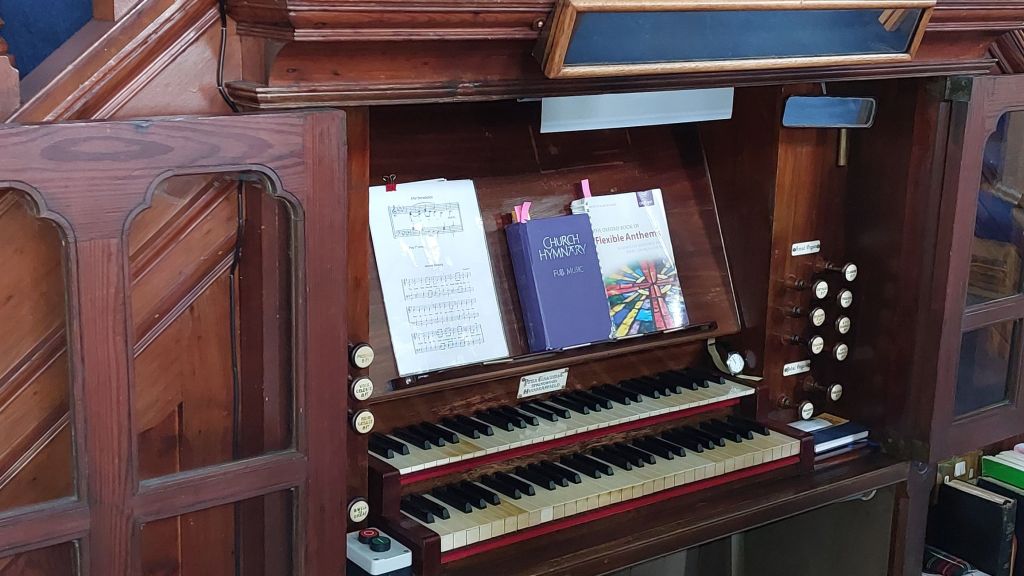
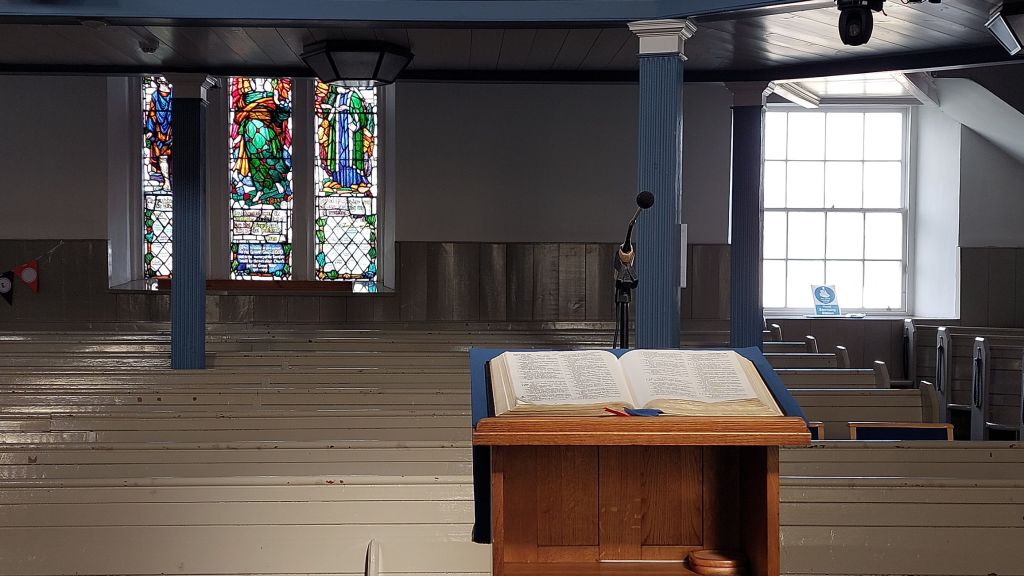
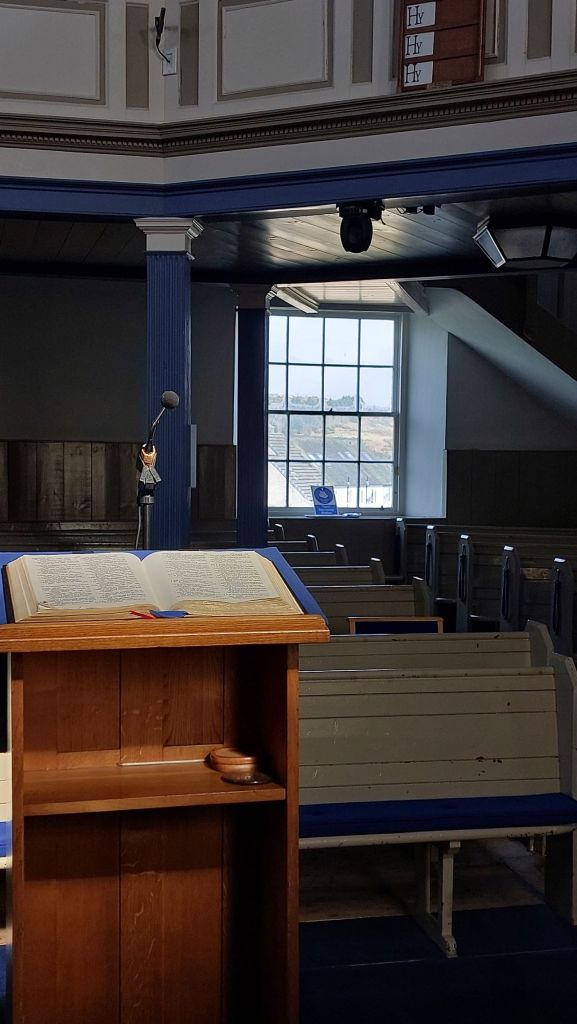
And I’m an Organist

No need to summarise what I’ve done. I play, practise, schedule music and rehearse the choir.

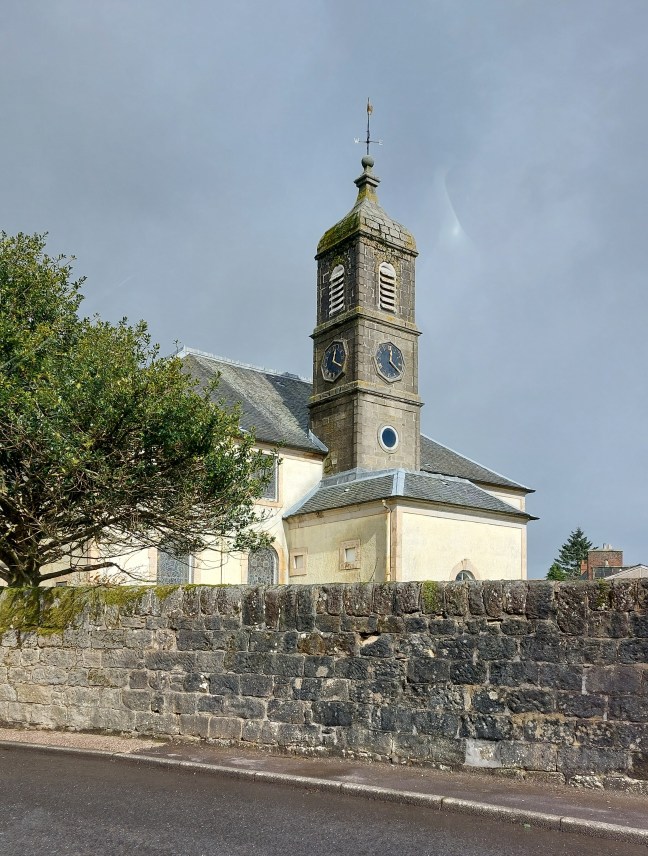
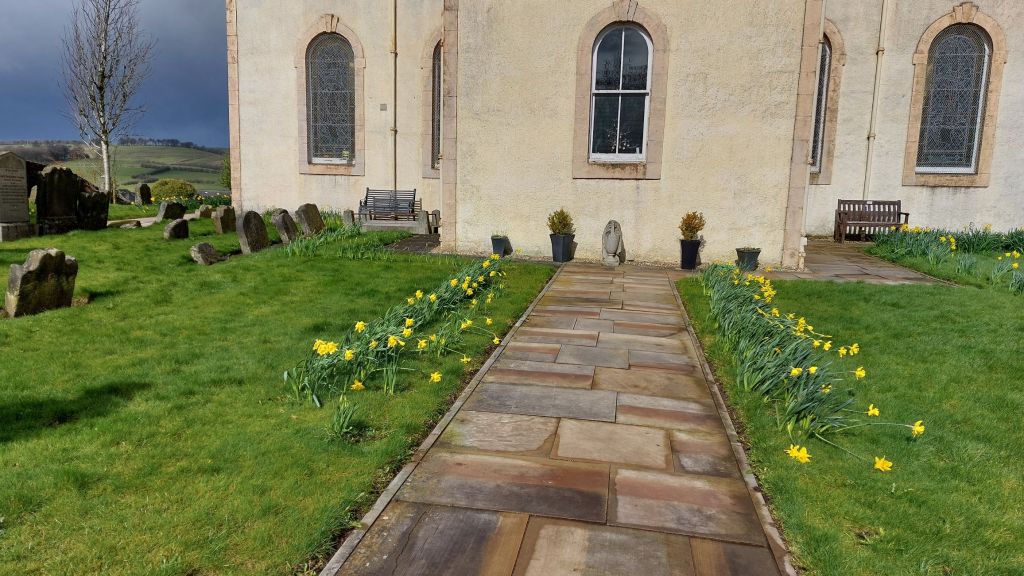
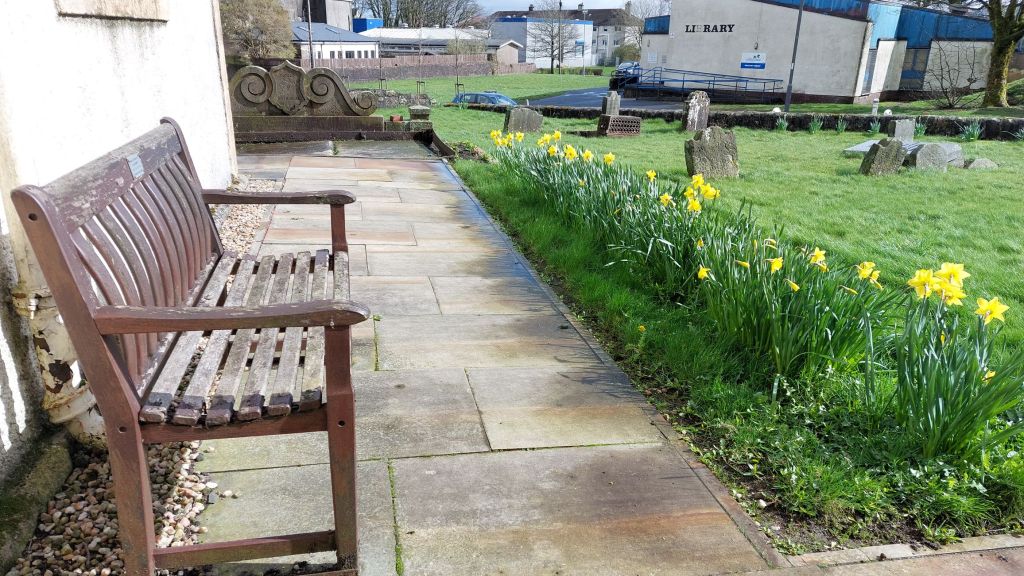
NEILSTON PARISH CHURCH

I Compose

  • My Extinction Calypso, performed in Edinburgh last year, is set to be performed twice by a choir in a church down in Buckinghamshire in April this year. I’m ecstatic!
  • I’m just writing the finishing touches to another choral piece with an extinction theme, for an event in Edinburgh towards the end of February – Edinburgh Composers’ Choir Workshop, Sunday 25 February at 14.00

I get on with other aspects of my life

In January, I took steps to clarify my future research existence after I’ve retired from the library this summer. It has been massively stressful, actually, but I have taken steps, and look forward to further progress.

I have commitments in February which means I won’t be posting as often on this blog. However, there will be plenty of thinking time, listening time and perhaps some fiddling about on the piano and squeezeboxes later on in the month.

YouTube video of my recent RCS Exchange Talk

I’ve linked to this on my Publications page as a permanent record, but if you’re interested, you can see my talk on YouTube now:-

Engagement activity: RCS Exchange Talk, Monday 29 January 2024: ‘From Magic Lantern to Microphone: the Scottish Music Publishers and Pedagogues inspiring Hearts and Minds through Song’ – YouTube recording

Appreciative Applause?

I’ve been cataloguing a Sammelband (a bound compilation) of some early nineteenth-century songs, and my attention was caught by the amount of applause resounding between the title pages. The audiences’ hands must have been tingling after so many – ahem – superlative performances of such outstanding compositions. So, I ask you, how should we work out which was most popular …?!

  • with the most unbounded applause
  • unbounded applause
  • great approbation
  • with enthusiastic applause
  • with universal applause
  • Sung with great applause
  • the greatest applause
  • with distinguished applause
Overwhelmingly wonderful performances?!

See the catalogue entry for yourself!

We’ve been Spoiled! (Virtually)

It’s Sunday evening, when anyone with any sense is sitting with their feet up, relaxing before the next week starts. So what do I do? I attempt to sort the vacuum cleaner and order it some new filters; eye the ironing basket balefully; and try but fail to contact the dishwasher warranty people. Yes, I know – it’s a Sunday – but the website categorically said there was someone to help me from 8 am to midnight every day of the week. They didn’t say that the ‘someone’ was a bot, who would advise me to phone a particular number, which in turn would require me to answer loads of questions and then tell me they were closed. Technology and online services are conspiring against me tonight.

So, I thought, I’d go over tomorrow’s talk one more time. Inevitably, even though I’ve successfully given my talk once ‘in real life’, I still found things I thought I could improve upon. The only problem was, I’m sitting at home, and what I needed was neither on my shelves nor available digitally.

  • A three-volume book of Scottish songs, which I can see in the library at RCS tomorrow. But there’s only one ‘pupil edition’ book of ONE of the volumes available for purchase anywhere online, and I rather think I’d like the whole set of the teacher’s edition, for myself. In my dreams!
  • So … I had already worked out that the title hadn’t made much of a stir in the contemporary press. Indeed, I think I’ve returned to this question several times, so I needn’t have imagined I would reach a different conclusion today. I searched again. I failed again. We’re not used to searching and not coming up with results!
  • Ah, of course. There’s a particular magazine which might have a review in it. I have a rare copy of the first issue, which I found on eBay a couple of years ago. But my copy is a bit too early to hold the review I’m hoping for. Where is this magazine to be found? One library, in Edinburgh.
  • Not to be found in electronic format.
  • And … no direct trains to Edinburgh this week – they’re clearing up after last week’s storms – whilst I’m tied up all February.
  • So … A couple of desperate emails on the off-chance that they might yet be in other libraries, albeit not in an online catalogue. And I wait. Because it’s Sunday night, isn’t it? And I hope they’re nowhere near their laptops!

When I think that, doing doctoral studies the first-time round, I would have looked things up in books and journals in the library, or gone home and written a letter to ask if I could visit another library half-way across the country – then waited for a reply – and even the second, completed doctoral attempt was fitted in around full-time employment – I can’t help feeling a little guilty that I’ve become so impatient. In any case, the paper is good enough. I changed a few words, and I’ll print it out again tomorrow. 

(Moreover, in my early postgrad student days I washed things up in a wash-hand basin, so dishwasher repairs weren’t even on my radar! There are advantages to being in employment.)

Some things don’t change, though. I still need to do the ironing. Gah!

Image by Capucine from Pixabay

Postcards from the Past

Old postcards of Jamaica Bridge and Glasgow docks

As I pursued my research for my latest book, I accumulated quite a few postcards and other ephemera which might not, at first sight, appear to have had much to do with the subject in hand.  Indeed, when I decided to sort out my box file, I was initially a bit surprised just how much of this stuff I had acquired!  However, much of the work was done during the pandemic, when eBay was actually a very sensible way of getting hold of things … and you could argue (hark at me, justifying myself) that I spent less on those postcards than two or three hot drinks at the RCS café-bar each day I’m on site!

Did Mozart Allan use printers Aird & Coghill? They printed a lot of music in Glasgow!

Sifting through my treasure-trove was so enjoyable that I eventually realised I wasn’t in the least bit ashamed of my guilty secret.  I have a contemporary postcard of the very respectable-looking Glasgow street where James S. Kerr first lived.  (The neighbourhood is less upmarket now, and both his first home AND his shop are now gone.)  And there’s a postcard of the shop that Frank Simpson had on the corner of Sauchiehall Street before the shop and adjacent church were knocked down to make room for British Home Stores.  I also have a card of the view Mozart Allan would have seen every time he stepped outside his shop.  (HIS shop building is still standing, just along from the Courts, beside the River Clyde.) 

Pretty much the view from the shop doorstep!

I have pictures of the docks, as they were then, conveniently close for Kerr and Mozart Allan’s trading activities, and a picture of the boat on which Kerr’s successor sailed to America on one occasion.  I like to be able to imagine what a place was like when the person I’m writing about, actually lived there.

I’ve also got odd bits of commercial ephemera – an advertising brochure; a business postcard; a couple of letters.  The business postcard set me on the track of the individidual who took over Kerr’s business after Mrs Kerr died.  It was only last weekend, long after I’d acquired it, that I realised there was a woman’s name written across the top left corner.  A colloquial diminutive for the new owner’s wife’s first name, in fact.  So – maybe she worked in the shop, too?  It’s not musicological research, but I would like to find out.  I enjoy finding women working in the music publishing/retail business, in eras when fewer women worked outside the home.

Another bunch of postcards trace the tartan-mania which spilled over from cards to coffee-table song-books and miniature souvenir books.  Talking of souvenirs, I have travel guides, maps, an embroidery canvas of a commemorative map of the British Isles – it was unworked, but I’ve since done the stitching and had it framed – and a reproduction of an early PanAm poster.  I’ve written quite a bit about Scottish songs in the memory of expats, both overseas and over here.

And there are a few photos of children having music lessons; of women sitting at the piano; a magic lantern slide; a stereoscope of (apparently) happy workers on a cotton plantation – in my book, I’ve written about the racism in plantation songs.

A whole load of sol-fa booklets of various kinds.  They have a wee box of their own.

There’s also a photo of an Edinburgh railway bridge.  Why?  I was hunting down a particular song-book editor, and a musician with the right name lived just beside that bridge.  I don’t think it was the right man, but it’s a nice photo, so I’ve kept it anyway!

A wee Saturday Expedition: The Librarian-Researcher’s Afternoon Outing

After diligently doing my organ practice this morning, I felt like an outing this afternoon. Only a librarian/musicologist would decide to go library-visiting! However, I knew that Paisley has a new, exciting public library building in the High Street, and I also wanted to find out about an old Paisley publication, so where else would I go? The image above is one I found on Renfrewshire Libraries’ website.

Sean McNamara’s enthusiastic tweet about the library, on 23 November 2023.

The library is bright and modern, on three floors. The ground floor has a large children’s section at the back of the floor, with places for parents and children to sit, and steps the children could go up and down – very cheerful and user-friendly.

There are also facilities for making a hot drink. Whatever next?! Very nice, but an unexpected surprise for an old-school librarian who last worked in a public library, erm, 36 years ago! 

Plainly there wasn’t going to be anything of the kind I was looking for, on the ground floor. I headed up to the next floor, and the next. Places for computer use, an array of different seating arrangements, non-fiction …..

I asked, but I discovered that if I would find what I wanted anywhere in Paisley, then it was not here. I need to go the Heritage Centre (aka “the archives”), elsewhere in the city. That’s a trip for another day, since it’s not open at the weekend.

Shop front, Paisley High Street
Parlane’s former offices in Paisley High Street. Book sculpture right above the top dormer window.

All was not lost. I also wanted to find out where Parlane’s offices had been. I knew that they, too, were in the High Street – and they were two doors away, in fact. They looked a bit sorry for themselves. I took a photo, but a string of twinkly lights (not illuminated by day) obscured a decent photo of the book sculpture at the top of the building. 

Maybe I’ll find a better one online somewhere. Messrs Parlane might have been pleased to find a new library as their next-door-but-one neighbour, but I fear they would have been sad to see the High Street today. It wasn’t exactly bustling on a Saturday mid-afternoon.

Home I came, and spent several hours making lists of things I’d like to see at the Heritage Centre. (I hope they’re as welcoming as the website suggests, or they’ll find me a bit of a nuisance with my long list!!)

Most Memorable Scottish Songs Today (Library Perspective!)

Preparing for my Good Morning Scotland interview the other day, as I mentioned, I drew up something halfway between a mind-map and a spreadsheet to clarify in my mind how old the songs were, and who they were associated with. I had also – ever the librarian – looked up which of the Whittaker Library songbooks actually contained the songs in question. I wasn’t looking for every copy we had, just a rough overview. I thought you might be interested to see what our library patrons have access to. 

It is significant that there are only two genuinely old songs – the last two, by Sir Walter Scott and Robert Burns. Otherwise, they’re popular songs that are Scottish, but folksongs? Not exactly traditional or old, but certainly much beloved today. So, will there still be popular songs in fifty years’ time? Yes, of course – but maybe they haven’t even been written yet! 

Here is the list – in order of popularity – that Visit Scotland compiled from their recent survey:-

The Singing Kettle, book 2
  1. You cannae shove yer grannie aff a bus – it’s in Cilla Fisher and Artie Tresize’s second Singing Kettle music book (1989). Also in Ewan McVicar’s One Singer, one Song (1990) and his Scottish Songs for Younger Children (a words-only book, 2002); and in Traditional Folksongs and Ballads of Scotland Vol.3 (1994).
  2. Donald, where’s your Troosers? Sung by Calum Kennedy and published by our friends Mozart Allan in 1959, and by Andy Stewart, published by Kerr’s in 1960. We listened to Andy’s rendition at home last night – and it still makes us laugh.
  3. Coulter’s Candy – (hint: it’s pronounced ‘Cooters’) in Singing Kettle [book 1]; Katherine Campbell and Ewan McVicar’s Traditional Scottish Songs and Music (St Andrews: Leckie & Leckie, 2001); and Ewan McVicar’s Scottish Songs for Younger Children.
  4. Wee Willie Winkie – I know it, and we have it in the library, but not in the version I know!
  5. Skinny Malinky – in Wilma Paterson and Alasdair Gray’s Songs of Scotland (1996)
  6. Three Craws – in the second Singing Kettle book; and Jimmie McGregor’s Singing our Own (1970)
  7. The Jeely Piece Song – the library has Adam McNaughtan’s CD, The Words that I used to know (Greentrax, 2000). It’s also known as The Skyscraper Wean and can be found in Morag Henriksen and Barrie Carson Turner’s Sing Around Scotland (1985).
  8. Bonnie wee Jeannie McColl – first sung by Will Fyffe in 1929, and more recently by the Alexander Brothers, it appears in 100 Great Scottish Songs (Dublin: Soodlum,1986)
  9. An oldie: Walter Scott’s, Scots wha’ ha’e – it’s in many, many collections! I found it in Traditional Folksongs and Ballads of Scotland Vol.3; and Wilma Paterson’s Songs of Scotland.
  10. Another oldie; Robert Burns’s My heart’s in the Highlands. People probably know the version sung by Karine Polwart in 2001, and Fara in 2014. There are much earlier versions in printed books, of course, but I suspect not what today’s enthusiasts are looking for!

This is a YouTube link to Karine Polwart’s, ‘My heart’s in the Highlands.

Wilma Paterson’s Songs of Scotland, illustrated by Alasdair Gray
Traditional Folksongs & Ballads of Scotland Vol.3

Changing Styles

In the closing pages of my second monograph (currently at the publishers, pending approval of the revisions and then copy-editing), I comment on the changing approaches to folk music in the late 1950s and 60s. So, when a colleague presented me with a pile of music which used to be in the library, but needed recataloguing (don’t ask!), my immediate reaction to this book was, ‘Aha, see, I was right. Look how different this is to Mozart Allan, James Kerr’s and Bayley & Ferguson’s folk song collections!’ 

As a scholar, I smiled with satisfaction as I noted that even the COVER of Folk Sing: A Handbook for Pickers and Singers was more modern – huge white letters on a half-black, half-red background. As for ‘pickers and singers’: well, we didn’t have ‘pickers’ in any of the dozens of Scottish publications that I’ve been writing about! Guitar/accordion chords as an addition, assuredly, but not usually melody, chords and no keyboard line. And as for the term, ‘pickers’? No. A more savvy friend informs me that the book came at the end of the skiffle revival, which according to Oxford Music Online was particularly strong in the UK:-

“While the skiffle revival of the 1950s embraced the USA and Germany, it gained most ground in Great Britain. […] Donegan and his imitators enjoyed considerable popularity until about 1959, when skiffle gave way, both in the USA and Europe, to ‘beat’ music and to rock and roll.”

Oxford Music Online (2001). Skiffle. Grove Music Online. Retrieved 19 Jan. 2024, from https://www.oxfordmusiconline.com/grovemusic/view/10.1093/gmo/9781561592630.001.0001/omo-9781561592630-e-0000025930.

This song book was published in New York by Hollis Music in 1959, but distributed by Essex Music (4 Denmark Street) in London, and this particular copy was actually sold from a shop in Aberdeen. Notwithstanding this, it mainly contains American repertoire with just a few British songs and a single French one for good measure.

I examined it inside-out and backwards, observing contentedly that they indicated the names of the composer/arranger/lyricist above each song, along with which publishers owned the original copyright.

Then I sighed. This morning I had noted with pleasure that already this month, I’ve submitted a revised manuscript for my book, written a librarianship-ish article and two musicology abstracts, done a peer-review and a radio interview, with a research talk coming up to round off the month. That was my research-self.

But what I was supposed to be doing now, was cataloguing this anthology, not studying it. 

‘Recataloguing’ means that I have already catalogued the book at some stage in the past … yawn!

The librarian part of me spent half this afternoon re-cataloguing it and copy-typing 150+ song titles from the contents list. It’s certainly useful – it means people will be able to find the songs – but it’s not nearly as rewarding!

Folk Sing: a Handbook for Pickers and Singers, containing traditional and contemporary folk songs / edited by Herbert Haufrecht (New York: Hollis Music; London: Essex Music, 1959)

Do note and admire the contents lists!

Scottish Songs Today: Airing my Opinions!

Yesterday was a bit unusual. I gave a talk about research using library resources – nothing unusual there. Then I sorted out arrangements for the Exchange Talk I’m giving online from the Royal Conservatoire of Scotland on 29th January.  It’s all about how new educational and technological innovations affected the Scottish music publishing industry ca.1880-1951.

We’ll come back to the phone-call that I so nearly mistook for a cold call (luckily, I didn’t!), and then I finalised details for another lecture in the spring. this time about Scottish song books over an even longer era.

FOUR ‘appearances’ (or arrangements for appearances) in one day? Librarians don’t often get that.  But as it happens, only the first of them was really library related.  I wrote an article about my hybrid role, over the weekend, and yesterday simply underlined the truth of it.

The ‘cold call’ turned out to be from the BBC! Just before 7 am today, I was a guest of BBC Radio Scotland for their Good Morning Scotland programme, talking about the top ten most popular Scottish songs in Visit Scotland’s recent survey. You should have seen me last night, surrounded by song-books much more recent than my usual fare! I needed to get an idea of the chronology of that ‘top ten’. I now have a beautiful document, halfway between a mind-map and a spreadsheet, which I stared at until I had memorised an overview of what I might find myself talking about.

Here’s a link where the programme can be replayed. My bit is from 53:01 to 1:00:09.

The Evening Times published the top-ten list last night. One Burns song (‘My heart’s in the Highlands’), and one by Walter Scott – ‘Scots wha’ ha’e’. Visit Scotland’s recent survey rest were much more modern, but almost all combined a catchy tune and a humorous ‘story’.

Top Ten Tweeted by the Evening Times

Visit Scotland’s recent survey as reported in the Evening Times.