Thoughts about Experiencing Plagiarism

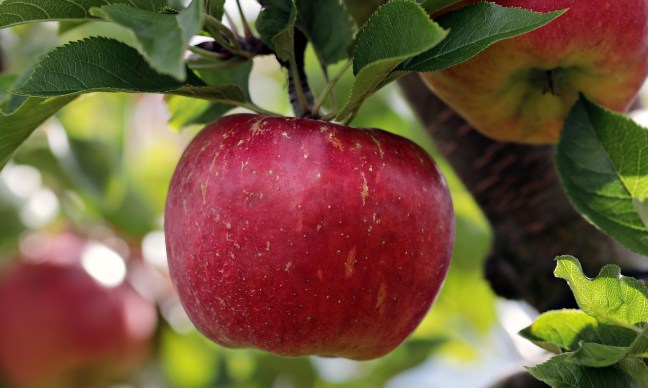
Beautiful red apple hanging from tree, ready to be picked

‘Imitation is the sincerest form of flattery’?

I wrote these words as a reflection, but then I wondered if other people might find them helpful. Maybe something like this – or worse (because I realise my experience was slight compared to someone whose whole article, story or book has been plagiarised) has happened to you? There might be folk who would shudder at the thought of laying bare their emotions, their gut reaction, to such a situation. As for me? My ‘words’ are my strength. If my words in the present posting make me look weak as an individual, be assured that I am fully aware of this. They also make me uniquely ‘me’, and who ever gets far by pretending to be other than themselves?

Meanwhile, my situation has been resolved, thankfully. I feel grateful. Grateful for the help. Grateful for the response and correction of the situation.

However, I feel utterly drained.  I’m taking a day’s annual leave because it’s preferable to taking a day’s sick-leave for stress.

I initially headed this posting, ‘Thoughts on detecting plagiarism’. However, ‘on detecting plagiarism’ turns out already to be in the title of someone else’s blog post – Addressing the Inherent Biases in Automated Systems: On Detecting ‘Plagiarism’ (Lancaster University, Ref 2014 Impact Case Studies). I changed my heading. Do read the Lancaster post, if you’re interested. I commend it, even though it’s actually about detecting plagiarism in student submissions, rather than realising your words have been quoted without attribution. I read their blog post briefly last night, and I am not reading it again today. I took no notes, and I have no intention of borrowing anything that was there.


They were literally just a few words, but my own words, and the crux of a 21-page article written 12 years ago. The first full article on the topic. It hurt. And then I started questioning myself:- was I considered so unimportant that my authorship is insignificant? Because, PhD or not, I was ‘merely’ a librarian, hence unimportant? Because I’m now ‘just’ a postdoc research fellow? (That was actually a promotion, by the way!) Because I’m not very famous? Was it because I’m a woman? Because I’m older, and thus considered past it? Because, once published, the words were considered free for the taking? Because, significant or not, they were just a few words, and so temptingly apposite? Low-hanging fruit.

Mulling it over as I got ready for the day, I glanced in the mirror. There I was, an older woman – not ageing particularly stunningly or gracefully, short in stature and wide in figure. My garb was workaday (I was about to sit down to a solitary morning of research, 67 or not). I wore no makeup, and I haven’t been on the latest diet long enough – you wouldn’t notice me if I walked down the street. So there I was. I’m not publicly visible as a performer or composer, unlike a large number of my colleagues. And, as I mentioned, although as a librarian I achieved some visibility in the sectors I worked in – perhaps more visibility than many – librarians aren’t generally known for this quality. We exist to help other people. I’ve not been a librarian for a year now, but I think I probably still carry the aura of invisibility. And when you say ‘librarian’, not many people immediately think, ‘Ah! A researcher. An author. A public speaker.’ Well, there it is!

Image by Bruno from Pixabay

But although librarians might exist to help, to share, to facilitate, they aren’t ghostwriters. Even when they’ve retired from librarianship and are now employed solely as a postdoctoral research fellow.

‘It Says More about Them than it does about You’

And then I reminded myself (I think this is called cognitive reframing) that I didn’t actually know what they were thinking when they used my unattributed words. I can’t read other people’s minds. My identity may not have even been a consideration. And I recalled my latest mantra: that other people’s words and actions speak more about them than about me.

Trigger warning here. I am not preaching when I say that I’m a practising Christian; I’m declaring a fact, which probably does affect my philosophy. (I’m no Evangelical, though – I’m boringly conventional!) I found an intriguing article, ‘3 Reasons Pastors and โ€˜Authorsโ€™ Should Never Plagiarize‘ by David Kakish (12 July 2019). He does make the salient, human point that ‘Plagiarism Fails to Give Honor Where Honor is Due’. Be assured that I’ll be reading it, out of curiosity, but it doesn’t really help the person who has been plagiarised, so I’ll leave it until later! I did do a little web-searching to see if there was a Christian take on low self-esteem. However, I found nothing that resonated, except the grounding reminder that everyone is a unique person for a purpose, so we should embrace what we are rather than wish we were someone else.

I tried not to beat myself up about my own insecurities. I know what I’ve achieved, from a mid-career standing start, against the odds. My words are old enough to be irrefutably mine, regardless. And … well, I can always write some more!


Here are some useful links which I found last night

If your experience is on the more serious end of the scale, these might be helpful. I’m not proposing to offer guidance on dealing with such situations – I’m really not qualified to – but I would urge you to seek support.

Bailey, writing about author O’Hanlon’s dreadful experience, headed his post, ‘The Emotional Toll of Plagiarism’, and my own limited experience endorses that. In my case, a migraine and shall we say, gut reactions, were clearly telling me I was stressed.  Symptoms can be treated, but how much nicer not to have had them at all!

Image by NoName_13 from Pixabay

Fruitful Days

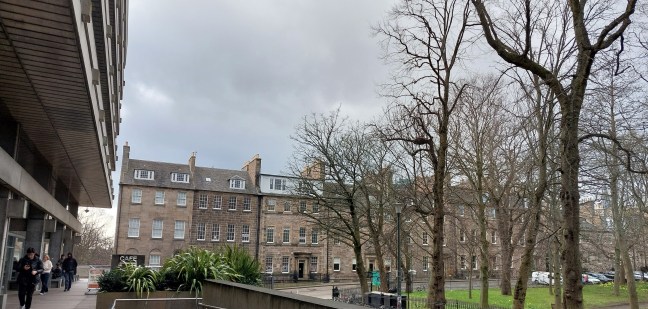
George Square Edinburgh University

Friday

  • Applied for a grant.
  • Wrote a blogpost.
  • Started to update my blog bio.

I think that will do for one day!

Weekend Activity

Who said weekends were restful?! Apart from the usual domesticity, and the organ-playing, I put in some more work on this blog.

  • Finished radically updating my Bio page to better reflect my two career strands.
  • Balanced my historical copyright page (Claimed from Stationers’ Hall) with a new one: Copyright Today. My career trajectory means I take a keen interest in copyright, intellectual property, plagiarism and so on. I might as well keep useful material handy, for myself or anyone else stumbling across this blog.

Two Ladies and a Harp: the Maclean-Clephane Sisters of Torloisk on Mull (and Edinburgh)

You know how you buy a new car, and suddenly everyone seems to be driving the same white Fiat 500? It’s the same with research topics.

“Enthusiastic collectors of Gaelic songs and Irish harp tunes”

I researched Gaelic song-collectors Anna and Margaret Maclean-Clephane as part of my PhD (2009).

  • I blogged about the sisters as far back as 2012 in my librarian days, when the Whittaker Library was using Blogspot:- How Far Can a Song Travel? (Author Karen McAulay, Whittaker Live blog, Wednesday, 23 May 2012);
  • and of course they later made it into my book (Our Ancient National Airs, 2013).
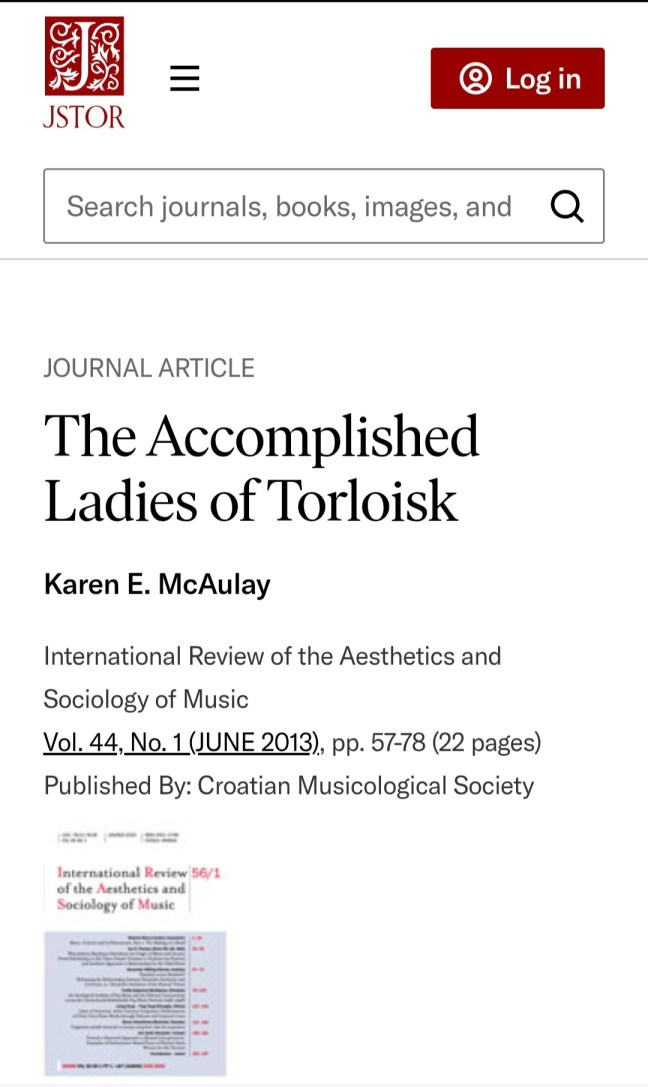
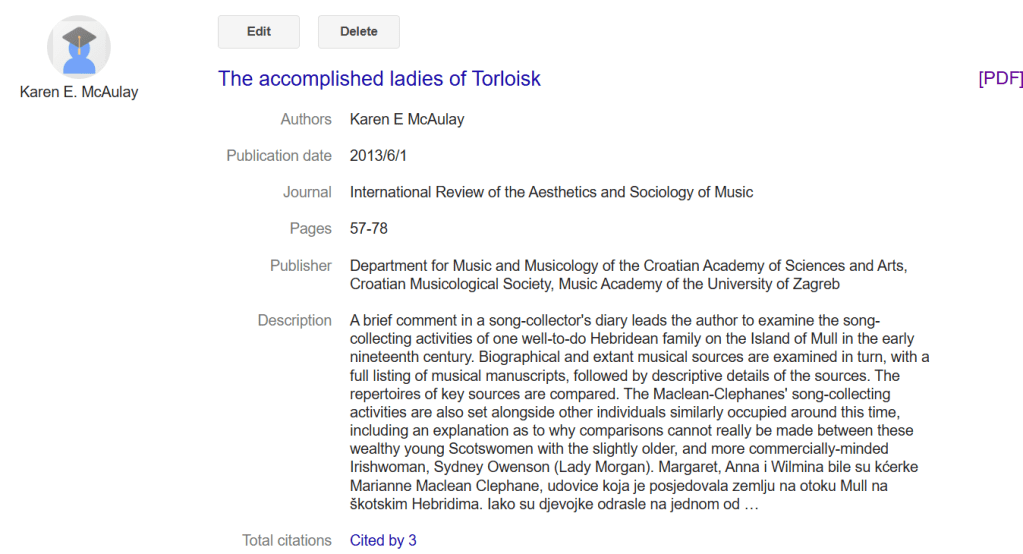
  • I followed up with an extended article about them (also in 2013). See this excerpt from the article:-

Naturally, the Maclean Clephane sisters are in my Pure institutional repository at the Royal Conservatoire of Scotland. I coined the above phrase, ‘enthusiastic collectors of Gaelic songs and Irish harp tunes’, using it both in my book (p.92) and my article (p.62), both in 2013.

‘While they were still in their teens’

The sisters had a book ‘printed but not published’ while they were still in their teens – you can read about it in my article, p.58. I have to say, the arrangements in their book were – well, okay, but not artistically stylish!

Margaret had a harp – there is actually a Raeburn portrait of Margaret with her harp – see below.   Alexander Campbell did say the sisters played, but there’s no portrait of Anna with a harp, so we can’t prove it either way. He didn’t meet them. (There was in fact a third sister, though her musical interest didn’t seem to carry through to adulthood. ) Indeed, Anna wasn’t that hot on the piano, as I recall.  They grew up on the Isle of Mull. I’ve driven past the house, Torloisk. It’s massive!

I just love researching and writing about people, particularly musicians! If they’re women musicians, then that’s all the more interesting – so it’s hardly surprising I was drawn to them, and went looking at materials in the National Library of Scotland and the School of Scottish Studies in Edinburgh, and even visiting a manuscript that’s now down in London. (Blog post Women’s History Month 2024. Musicians, this present blog.)

Details of my article

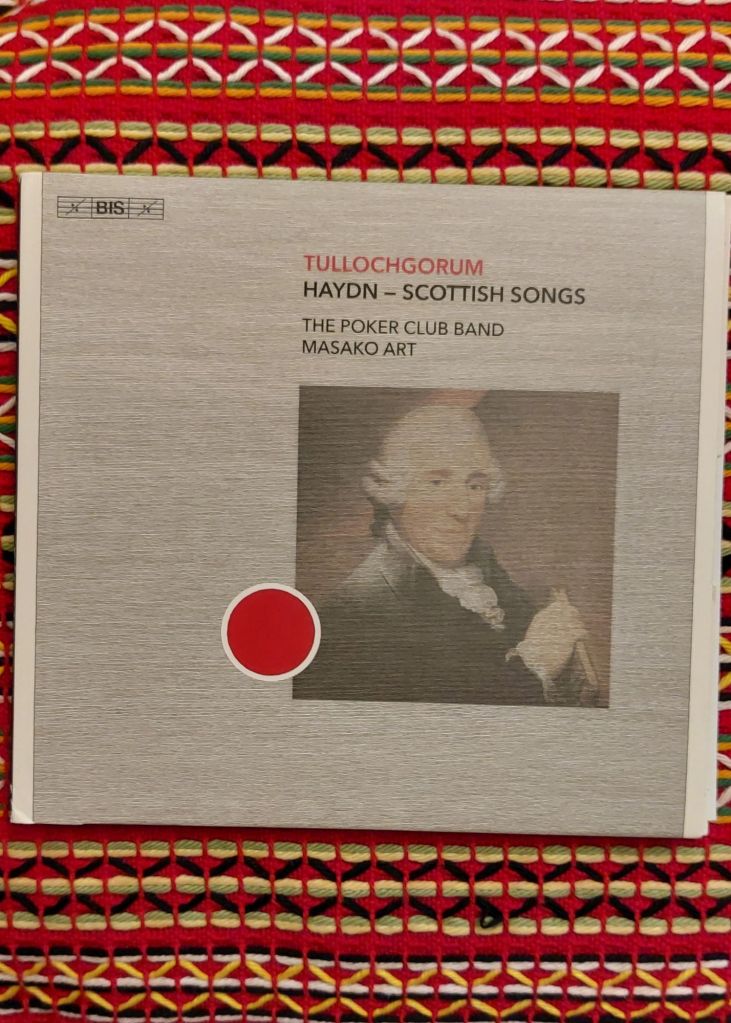
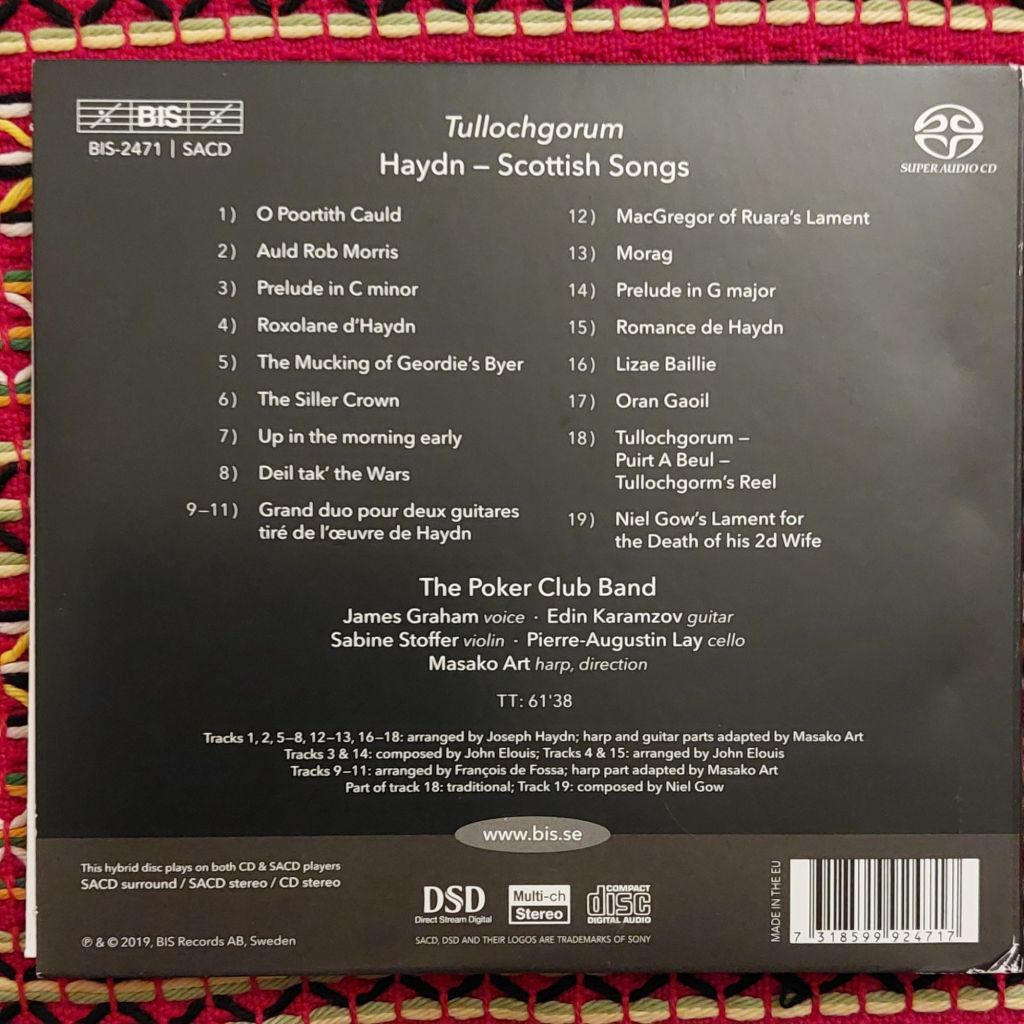
But ever since, these fascinating and talented ladies keep cropping up in my social media feeds. People who’ve read my writings also contact me from time to time. Thanks to the miracles of modern technology, I get notifications that people have consulted my stuff, too … and there’s also a CD whose notes cite me, too:-

Tullochgorum – Haydn – Scottish Songs, by The Poker Club Band and Masako Art (BIS-2471 | SACD

Tullochgorum – Haydn  – Scottish Songs

The harpist, Masako, asked if she could cite my work – I was very appreciative that she went to the trouble of asking me.

Correctly cited ๐Ÿ˜€
Margaret Clephane … and Masako Art

I spent so long with my early nineteenth-century heroines, but eventually my research took different directions. Not being a Gaelic scholar was just one of the problems I’d encountered! I attended classes in speaking it, at the Conservatoire. I signed up to local authority evening classes at the Gaelic School in Glasgow. But somehow, I never really had time to give it enough attention, despite having been considered good at languages at school and possessing school certificates in – well, several European languages. I understand when someone agrees with me in Gaelic, and can pronounce ‘Torloisk’, for sure, but Gaelic remains beyond me!

But look – now the music is going to be played. That’s exciting!

What A Day!

Untitled design from Canva. Silhouetted heads and geometric shapes
Could you hear the cogs turning?!

Right, my two proofs (an article and a contributed chapter), and the final version of another article, have all been returned to their editors. It has actually been quite interesting revisiting recent and not so recent research, after some time away fromย  it.ย  Such revisitations help consolidate things in one’s mind, and keep the topics alive and vivid.

The Big Idea

Tomorrow, by contrast, is a day for looking ahead: I need to start a book proposal and apply for some funding. Storm Amy will determine which desk, on which side of the country, I might be using. Waterproofs at the ready, but I don’t think I’ll take an umbrella! Scottish wind can invert the hardiest of specimens.

One Book. One Story – about the Book itself

Woman reader looking up thoughtfully

(Do I live in the 1950s these days?!) I’ve been tracing a woman who briefly worked for publisher Thomas Nelson in Edinburgh in the mid-1950s. Yesterday, I found a memo from her to one of the managing directors. Instructed to throw a book away if she couldn’t find a use for it, she promptly did find a use for it, giving it to the library of the Glasgow training college where she had previously worked.

I admired her honesty in telling him, because there was probably no need to report back on what happened to a book that was clearly regarded as inconsequential. It came from the Toronto branch of Nelson’s, and was about important Canadian educationalists; I can see why it might not have been much use in the Edinburgh office. (She had, in fact, travelled back from Montreal at the age of 16 – I have no idea how long she’d been there – so maybe he knew this, and thought she’d be interested in this combination of a country she’d visited, as well as a topic she knew well.)

Nonetheless, she did tell him, and reported that not only did the college librarian thank her, but her former boss at the college had commented that it was a title she’d actually been looking for. My interest was piqued, and I checked Jisc Library Hub Discover. Sure enough, the college has since been absorbed into a university, but the university library still has that book – the only copy in the UK. It has survived 72 years and at least one library relocation. I wondered if it had subsequently been borrowed by that senior training college lecturer – the one who had been looking for it?

Apparently not! The book has no trace of ever having been borrowed. Let’s hope she at least sat and read it in the library!

Image by Bianca Van Dijk from Pixabay

Scholarly Rejection? Get Back in the Saddle!

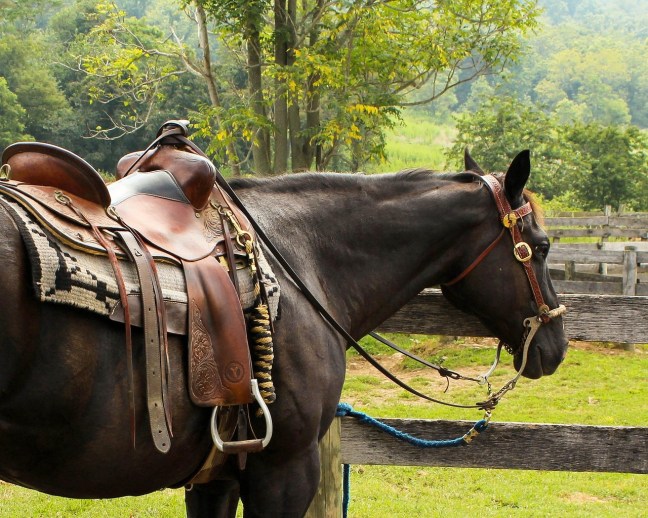
Brown horse with empty saddle.

Today, after submitting an article to a journal, I suddenly realised that I hadn’t added to my ‘activity log’ for a while. It has been a sombre summer; I went down south twice; did nothing scholarly at all for some five weeks of the summer; and promptly went down with some virus or other when I got back to Glasgow for the second time – so it’s hardly surprising if I took my eye off the ball. Nonetheless, I decided there was no harm in looking out the activity log and updating it. I got quite a surprise. The two rejections earlier this year, coming close after one another, had hurt. I feel a bit sore about the piece I had genuinely thought was accepted one or two years ago, but more recently turned out to be very much not so; and even more sore about the piece that was requested and then kindly but firmly declined. I felt misunderstood!

But it appears that this scholarly year hasn’t been as bad as I thought, notwithstanding those two knocks. I’ve had an article published; and I’ve given a conference paper and two talks. To any ambitious American academic, this probably seems like pathetically small beer, but I’m a British musicologist, I’m 67, and I’m not trying to secure tenure in terms of a full-time academic contract, so it’s all okay. (I could get a dozen articles published in a year, and it would make no difference to my age or status.)

I have a book chapter and a couple more articles accepted and pending publication. Another article accepted subject to revisions, which I’ve submitted – fingers crossed this time! And today’s article just submitted. That doesn’t seem too bad to me. I now have a couple of half-promised articles which I really ought to get on with; another idea for a collaborative article; and the conundrum of a possible third book. (I’m nowhere near writing this illusive thing, but I do have angles to explore, before I can formulate a precise way forward.)

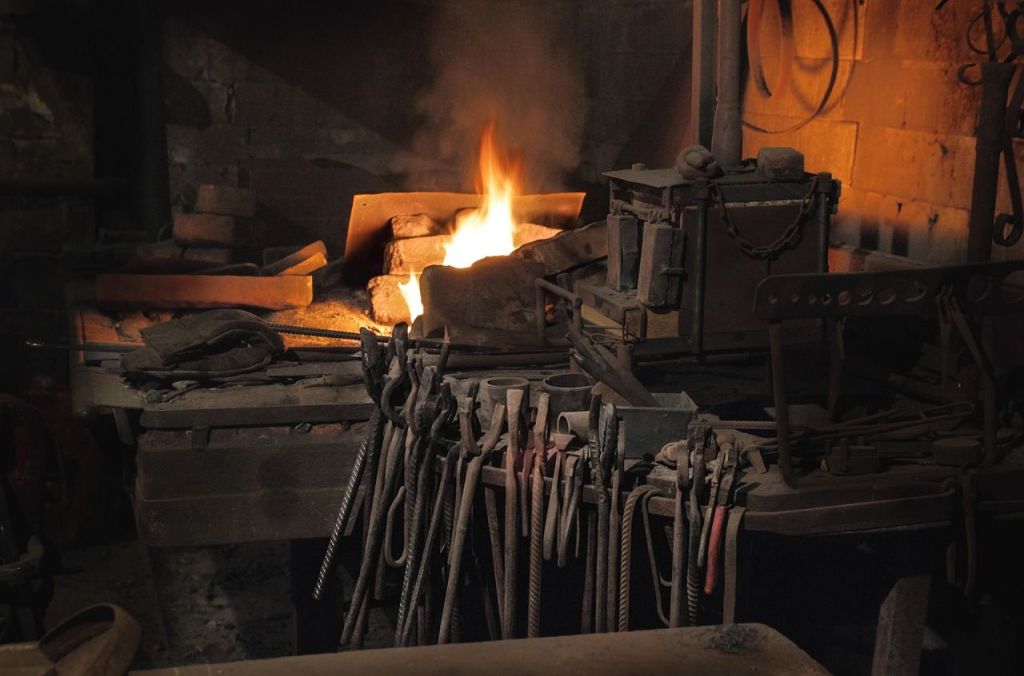
But what I do know, is that the more irons I have in the fire (yes, more cliches – sorry!), the less I mind about the rejections. Maybe I just directed them to a subject area more dissimilar to my own than I realised, so didn’t hit the targets that were expected? In any case, having other things submitted and under consideration at least offers the hope that next time I might be successful.

More irons in the fire …

I wonder what my activity log will look like by the end of the year?!

Image by JamesDeMers from Pixabay

‘You should find that the system is very user-friendly …’

I wrote an article. Revised it. Revised the revisions. I have no problem with this – it’s all intended to make it a better article, and hopefully it is now better. However, I feel less positive about the mechanics of submitting it! You have to use a platform called Manuscript Central. Manuscript Central is a product of the ScholarOne platform.  (It was owned by Thomson Reuters, then Clarivate and is now owned by Silverchair.  Still with me?) I Googled it, and one journal publisher described it as user-friendly.

I’ve used it before. Indeed, I’ve uploaded revisions before.ย  But today, I couldn’t work out how to do all my re-revisions within the platform. After much huffing and puffing, I did submit a manuscript. I’m less confident as to whether I submitted it correctly! And I dislike feeling thwarted by technology. It doesn’t encourage me!

Confused – but no hair was torn out!

On the positive side – I normally have the greatest difficulty stopping research activity when I stop being a part-time researcher for the day, but today I was more than happy to close the document. Gently, if metaphorically shutting the door behind me!

On Thursday, I’ll turn to the next article for submission.  Hmm, which platform for this one …?

A Year as a Research Fellow

River Clyde

It’s a whole year since I retired from librarianship, and started my new contract as a part-time postdoctoral fellow at the Royal Conservatoire of Scotland. Do I miss librarianship? No, I’m afraid I don’t! And am I going to give a step-by-step account of my first year not being a librarian, able to focus entirely on research? No! (I’ve blogged so much about my research that you, dear reader, have already read countless highlights.)

Along with my research, I did a little maternity cover supervising some undergraduate dissertations – that was interesting and enjoyable, and I was proud to see ‘my’ students graduate this week. (Humour me – I’ve never been able to talk about ‘my’ students before, even if it was only for one module.)

And I took up my IASH Heritage postdoctoral fellowship at the University of Edinburgh in January. Originally planned to be for six months, it has been extended over the summer, so I’m certainly not done yet with Thomas Nelson’s educational music publishing activities.

Help me Determine my Prospective Audience?

Indeed, I’m contemplating what exactly I shall do with all the information I’ve gathered – do I write a scholarly article? Keep going and consider a book as research output? And for whom would it be written? Educational historians? Social historians? Musicologists? If you’re any of these categories – or indeed, some other category – say, a historian of publishing – it would be immensely helpful if you could respond via this blog and let me know in what way it would interest you. Any feedback will help me determine my prospective audience. I’d be really grateful.

I have two follow-on ideas which I am going to pursue this summer, along with some more archival research.

But first – I need a holiday!

I’ve saved up the bulk of my annual leave so that I could take the next four weeks off this July. Family concerns mean I’m not able to consider ‘a holiday’ abroad, or indeed staying away anywhere that involves significant outlay, just in case I had to come back hastily – but a break is called for. Last summer – partial retiree or not – I had a book to nurse through to completion, and the Christmas break was a disaster, with everyone around me succumbing to flu. (I didn’t. But I’m really no Florence Nightingale, so it was tough.) Yes, I definitely need a break.

Know When to Take a Break

I should put my research hat aside for the next four weeks. Apart from the ongoing concerns, my sleeping patterns are messed up with the early rising needed for my Edinburgh research days, and I am beset with insufficient sleep, broken nights and weird dreams.

Burning the Candle at both Ends?

When I finally wake in the morning and it’s time to get up, almost my first thought is consumed by whatever I’ve been thinking about the previous day.

But who WAS she?

So, this morning’s question was:- ‘But who WAS she?’ Some sneaky Googling turns into a lengthy trawl of deep and darkly forgotten corners of art and music history to track down the composer of some tunes for early years classes. Until it really is time to do something real (the family laundry). And as I get on with daily chores, the little voice says, ‘No, you know some people she was associated with. And that she was a composer. Isn’t that enough? It isn’t. How did Thomas Nelson the publishers know about her, for a start?’ She’s not a major player in my cast list, but I’m still curious about her. Am I capable of forgetting about her until August? I’m not sure that I am!

Meanwhile…

I need to spend some time researching fun things to do that aren’t research-based!

Singing in Public? New to me!

George Square Edinburgh University

A few weeks ago, I led a community ‘Scottish song’ event. I found myself singing a solo – well, to say ‘found myself ‘ is inaccurate, because I HAD planned and rehearsed it with a pianist.

But it seemed to go down well enough, so, emboldened by this, I sang a couple of examples from Nelson’s Scots Song Book at my Work in Progress talk on Wednesday.  This time, I prerecorded my accompaniment myself. (Three cheers for the decent mic I had purchased during lockdown!)

I reminded myself that my esteemed audience were a mixture of musicians and non-musicians, and I was there as a researcher rather than a star turn, so hopefully they’d listen kindly rather than critically! 

And it was fine. I suppose the more often you do something, the easier it gets. I have played in public, conducted in public, and sung in a choir numerous times, but singing solo? That’s something new.

I have another talk coming up in a few weeks.  Of the two songs I sang this week, I much preferred one to the other  – the range was more comfortable. So I looked through NSSB4 again last night, and hit upon a favourite – ‘I’ll aye ca’ in by yon toun.’ I took it to the piano for a first play through. Yes, I like Easson’s setting.  It’s reasonably modern, and playable.

At this point  – just as I’d finished the chorus – I was obliged to stop.

‘But, I was  …’

You’d be alarmed at how routine governs my activities.  No point causing upset by continuing to play, so the song will wait for another time. Supper couldn’t wait!

However, I thought I’d look for a YouTube rendition, to accompany my breakfast this morning, and what did I find, but a Topic recording of Jean Redpath performingย it in the American Serge Hovey’s setting.ย  I never heard Jean sing live, but she got an honorary DMus from the University of Glasgow (my Alma Mater), and her enthusiasm for Scottish song was influenced by her time at the University of Edinburgh – as I sit with a cuppa in the Library cafe, I’m literally looking out at the School of Scottish Studies building where she’d have talked with Hamish Henderson.

I’ll aye ca’ in by yon toun

Having heard Redpath’s beautiful singing, I am less sure that my singing is a good idea, but there’s only one way I can share Easson’s setting, and that’s by playing it. Which, without a singer, wouldn’t work at all. I’d better get practising!

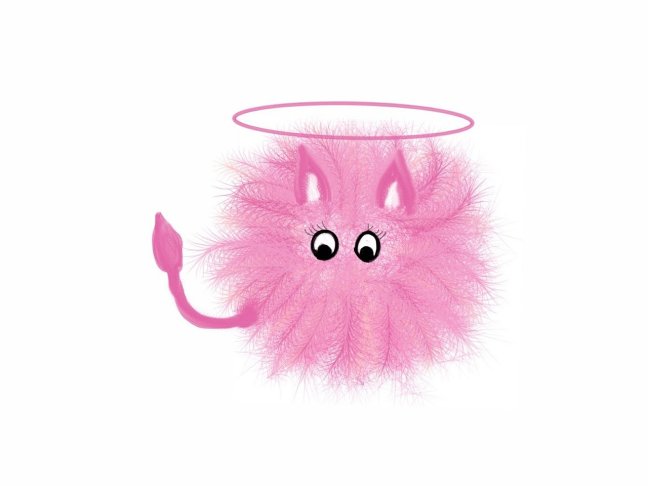
Scholarly Satan: a Sneaky Devil

Pink fluffy devil with halo

Dutifully, I booked a morning off because we were anticipating the advent of a roofer at home, and I didn’t want to be torn between roofing conversations and research work. The afternoon was my own, apart from a couple of rescheduled meetings at the end of the day. (There wouldn’t be anyone on the roof by then, surely.)

‘Anticipating’ was the word I just used, and it was just that. The storms a few weeks ago played havoc with more roofs than our own. Anyway, here I sat, two laptops in front of me, nothing happening on our roof, and Scholarly Satan started tugging at my conscience.

  • “You could sort out your timesheets, you know.”
  • “You can reschedule that tutorial. Do It Now.”
  • “You’ve got to update your CV, haven’t you? You LOVE formatting documents and getting the bullet-points and punctuation just right.”
  • “Oooh, look, you can action that email straight away – wouldn’t it feel good to be so on-the-ball?”

And then came his masterstroke.

“This is Scholarly Stuff, you know. There’s nothing sinful about Scholarly Stuff.” Which is true, of course, apart from the fact that I wasn’t meant to be working! Anyway, it’s now 4 pm, and I propose to walk away from the laptops for half an hour, until the last and only official duties of the day. I fear I’m too old to mend my ways now.