Fellow Amongst Kindred Spirits

Print Networks conference programme cover

Perhaps it’s not surprising to find more librarians and former librarians than usual at a research conference about book and print history and the book trade – but I was certainly in my element amongst the researchers at this week’s Print Networks conference in Newcastle. Indeed, I even found two more musicologists and a music practitioner amongst the kindred spirits, so I didn’t really need to try very hard to make my point that printed music history is indeed a branch of book history. Glasgow printers also got a look-in, so my talk about Glasgow music publishers wasn’t out on a limb geographically, either.

Then there were trade catalogues, book pirates, Stationers’ Hall, slave narratives, radical newspapers in Birmingham … just so many interesting papers!

Having spent the first part of the week in Newcastle, the last couple of days were ‘mine’, an agreeable blend of sociability, along with mundane catching-up at home, and (ahem!) more research.

A Lost Work, aka, a Ghost Publication

An old copy of a classical piece in a Mozart Allan edition raised some interesting questions – could I resist following them up? Indeed I could not. I’ve found another lost work – or as I prefer to call it, a ‘ghost’ publication. It would have been so very nice to have tracked this down. The advertisement absolutely reinforced a point I make in my forthcoming book. But it’s in neither Jisc Library Hub Discover, WorldCat, the British Newspaper Archive, Abe, Alibris, eBay, the Sheet Music Warehouse, Google Books nor Archive.org. There’s no mention of an editor or compiler for this collection, just a title. Oh, bother!

London suburbs

And a London Gent supplying Mozart Allan with Light Music?

It gets worse – another advert at the back of the same classical piano piece appears to suggest that a light-music composer who published almost exclusively with Ascherberg, Hopwood and Crew, also published a few early works with Mozart Allan – but using a different first name. Two of the works published by Mozart Allan also appear later with the first name he was mainly known by. This is interesting. I’ve spent several hours yesterday and today trawling eBay (and treating myself), whilst on the trail of this gent. Yes, I know the book is already in preparation. Anything I find won’t go in the book, but research doesn’t stop when a book is published, does it?!

Change: If you do what you’ve always done, you’ll get what you’ve always got …

Woman walking on footpath, approaching crossroads

I’m conscious that my blog posts in recent months have been on several recurring themes. Since they reflect my preoccupations over this period, I don’t regret this focus. However, this week feels a bit like a turning point. (One giant turning point for the country, as it turns out, but also an unrelated turning point for one recently retired small librarian.)

So, following the maxim at the head of this post, now is a time for looking forward rather than back.

  • My librarianship career was sandwiched between two periods of doctoral study – the one I didn’t complete before proceeding to librarianship training, and the one I worked for part-time in my spare time, a quarter of a century later. That led to the long-term partial secondment to Research and Knowledge Exchange. I have often blogged both about my own expectations of myself; about other people’s expectations and perceptions; and about the perils of making comparisons with other people.
  • I was an academic librarian throughout my whole career, but since 2012, I combined librarianship with postdoctoral research. Many of my blog posts have mused on the challenges of combining two roles.
  • I have blogged about looking back over this double-stranded career, my achievements and disappointments.
  • I’ve blogged about things I’ve discovered during my research.
  • I’ve blogged about practical processes – like working on a monograph, using Zotero, researching using databases, and instructing students in library-based research methodology.
  • I’ve blogged about fellowships and other forms of recognition.
  • I’ve also blogged about library initiatives, such as my work in diversifying the library collection to include more music by women composers and composers of colour.

All Change!

Temple of Janus, the Greek god of new beginnings

It is very, very tempting to look around for ‘things to do’. For groups to join, and possibly opportunities to volunteer for. At the same time, I realise that there’s a risk of taking on too much, too soon. There’s also something very appealing about just waiting for new opportunities to present themselves in their own good time. One might already have done so – time will tell.

People have asked if I’ve got a holiday planned at all. I’m sure this would be a sensible thing to think about, especially considering that last summer’s annual leave was spent finishing the first draft of a book! But I need to know that the finalised book, edited and indexed and all, is on its way to the printers before I can take off on vacation. So – no, nothing planned as yet. August, maybe!


Officially, Post Doctoral Research Fellow

AI generated phoenix from Pixabay

Starting today, that’s my new official title. Prior to my retirement from the Whittaker Library at the Royal Conservatoire of Scotland, I was seconded part-time to Research and Knowledge Exchange. Today, after a brief break, I return as a post doctoral research fellow, since I plainly can’t be seconded from a role I no longer hold.

Reincarnated / ReinKarenated

It’s strange. Today, I sit at my working-from-home desk – same desk, same research work to do, same hours – outwardly, nothing has changed, and yet everything has changed, because I retired from Professional Services and returned to Academic Services. Research is now my sole role, not a small chunk cut out of my 9-5 library existence, and I’m a Research Fellow rather than a Researcher. It’s what I’ve always wanted.

Karen has been reinKarenated, you could say.

What’s in a Name?

‘That’s not how you say my name!’

If I explain the embarrassment of my name, the pun will make more sense. My family pronounces my name ‘Kar’ to rhyme with car, rather than the conventional ‘Kar’ to rhyme with carry. Don’t blame me!

I stopped trying to correct people a very long time ago – it’s not other folks’ fault that my parents decided to pronounce my name distinctively differently. If you’d spent several decades being thought prickly for insisting on an unusual pronunciation, you’d understand why I’ve given up on that!

Call me what you like – I’m a research fellow, and I’d better get on with indexing my monograph ….

Comfort Zones were Stretched Today

Whilst I was going through archival materials today, looking for music-related documentation, I came across all sorts of non-musical correspondence. I wasn’t surprised. Sometimes, it’s rather nice to see what falls out of Pandora’s box, after all. All the ‘extra’ material vastly enriches the ultimate narrative. And other tidbits just raise a smile:-

  • I found one publisher offering to order whisky from an Inverness wine-dealer for another publisher holidaying in Raasay. Very fraternal!
  • I found someone looking forward to ‘frizzling in Paris’. (Considering Glasgow’s set to be 4 degrees Celsius tonight -in mid June – I can empathise!)
  • Then there was a job application letter. No clues as to the manager’s selection rationale – things were very different then – just, pencilled across the top – NO.
  • I found a terse letter from a professor who was distinctly unimpressed by the unavailability of a book (no, not a music book) that he wanted to purchase:-
Perturbed Professor

‘It’s damnable that such a valuable, well-written & cogent book should be off the market.’

But in 1947-1948, Britain was in economic crisis. There were restrictions on business activities, and if a publisher decided a reprint was non-viable then that, dear Professor, was that. Tough.  (I wanted to tell him that eBay and Alibris would have helped alleviate his evident distress.)

I found travelling salesmen being asked if they wanted any books from a particular series. Music-related ones, even? I sat up straight at that, until I realised that the subtext was probably, ‘these books aren’t selling terribly well, old chaps.’

It wasn’t until I got home that I got myself into deep water:-

I looked up what was happening to the British economy in 1947-1948. I knew there WAS a crisis. Britain was in recession.  I had never heard of ‘convertibility’ in the economic sense, and I find myself only slightly the wiser after a bit of Googling!  World War II had taken its  toll, and on top of this, the US had insisted on convertibility, it seems, and we very quickly descended into an almighty mess.  However, such a simplistic summary doesn’t sound exactly satisfactory.

I’m undecided whether I need an Oxford Short Introduction, or can I get by with a more basic understanding?  Oh well, plenty of time to ponder on that! (But if you’re a modern historian reading this, and you can think of something that would give me an intelligent layperson’s overview of post-war economics, then please do get in touch. Thank you!)

READING LIST?

  • Complete Idiot’s Guide to Economics
  • The Economics Book: Big Ideas Simply Explained 
  • Economics for Dummies
  • Rough Guide to Economics

Funnel or Estuary? Where’s your Research Going?

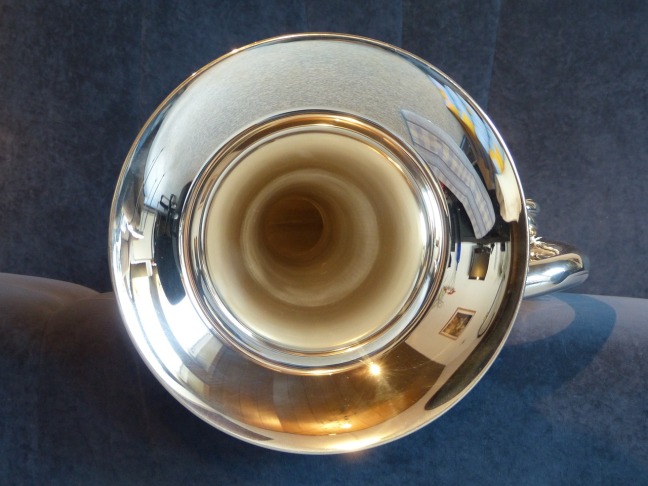
When I am thinking about research directions, in my mind I have an image of a funnel. Getting further and further into an ever-narrowing topic can be enthralling, but I worry that such a narrow topic might not interest a wide enough audience. 

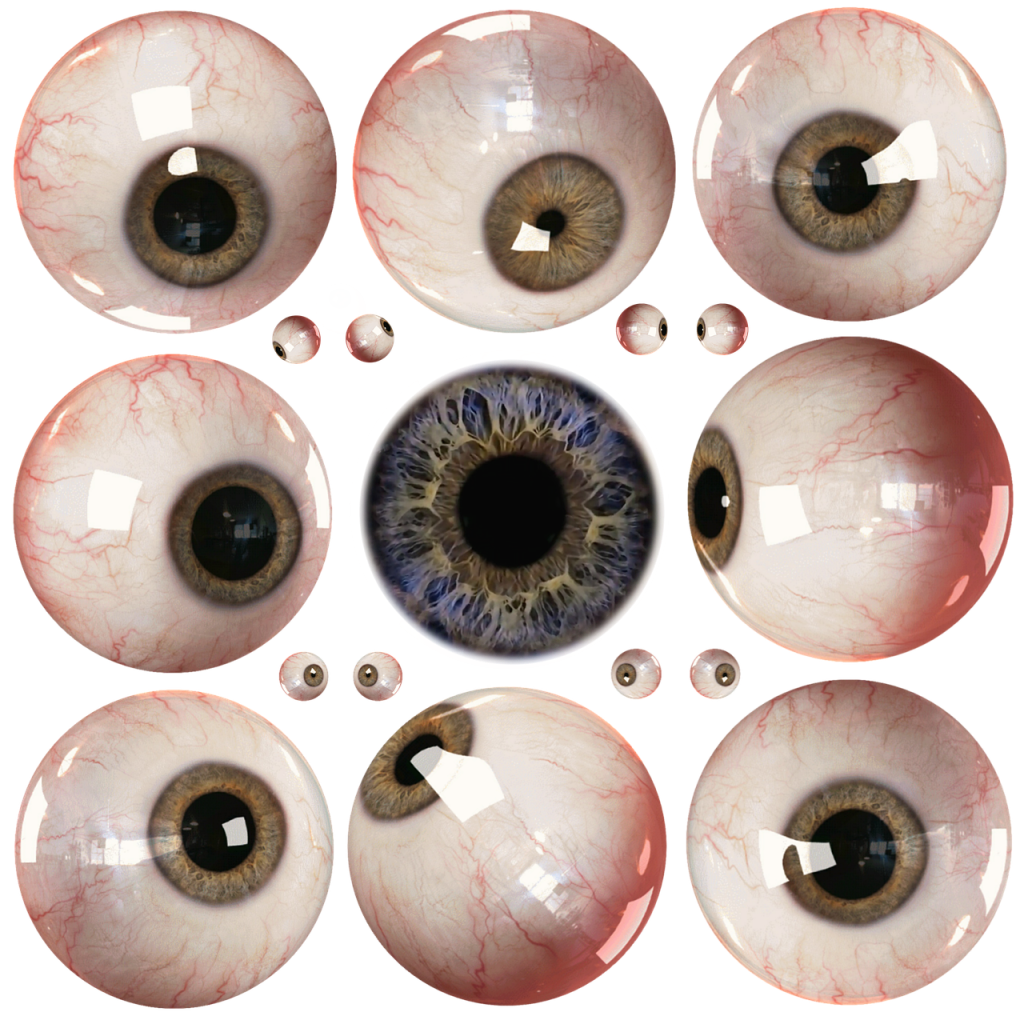
Admittedly, there are circumstances when narrow specialism is exactly what you need. An eye surgeon who specialises in one particular part of the eye, is exactly what any prospective patient would hope for.

Three cheers for absolute specialists!

However, a broader field in my own kind of subject means I am likely to engage with an interdisciplinary audience. It offers more places to share my findings, and more people to interact with. At this stage in my career, I find this quite appealing. I wouldn’t want to end my career as the woman who was the expert in just one songbook, just one singer, or music in one closely defined location.

Estuary

So, the closest antonym (opposite) that I’ve found to a funnel, is an estuary. I like my research to fan out into different strands over a broader area.  For me, I find I’m more likely to generate impact this way.  But it’s an estuary, not a garden hosepipe spray! That would be altogether too messy. In other words, research might lead in various different directions, but I try to focus my ultimate writing on one particular aspect at a time.  The book currently at the publisher’s has given rise to papers about post-war tourism, Scottish music in the diaspora, and the impact of technology on music publishing for an amateur customer base…

How do you visualise potential research topics? Does consideration of how narrow or  broad something is, form part of your deliberations?

Edinburgh, Glasgow, Paisley?

I have various ideas to pursue, all starting somewhere in Scotland, but my most promising one is the one that extends beyond Scottish music, and beyond Scotland. Possibly even beyond the UK. Another idea isn’t quite as broad, in one sense, but might throw up some new comparisons. I’m still mulling over this one!  The others would be interesting, but don’t offer the same breadth. One in particular is probably too niche to risk giving my full attention to.

Today, my research has been into the first of these ideas.  Delving into unlisted source materials has meant a whole DAY not really finding much with any musical connection. On the other hand, the amount of context I’ve discovered is immense.  I find it very helpful to know about what was going on beyond the publication of a few specific books. It IS relevant to collect data that tells me who the key protagonists were.

However, I’ll have to try to avoid following up intriguing stories that really DON’T concern me. The lovely old man who chased up the progress of his book in an admirably gentle, diplomatic way? It got to the editing stage, but didn’t seem to get published – no trace of it. But it wasn’t music-related, and has no place in my research. I really must not succumb to the temptation to explore the back story of every human interest story I encounter!

Speed-Dating 40 Scottish Music Collectors in an Hour

For a number of years, I’ve given an annual talk to RCS students, about how different generations looked upon, collated and collected and published Scottish songs and tunes. The snappy, official title is ‘Transformations’, but when I was revising it for this year’s presentation, I decided to compile a list of all the people (and a few extra titles) that I would be mentioning. Forty of them! So, I’ve added a new, unofficial subtitle: Speed-Dating 40 Scottish Music Collectors in an Hour. Okay, not exacty forty people, but forty lines in the list. I was quite surprised. I would imagine the individuals themselves might have raised an eyebrow, too.

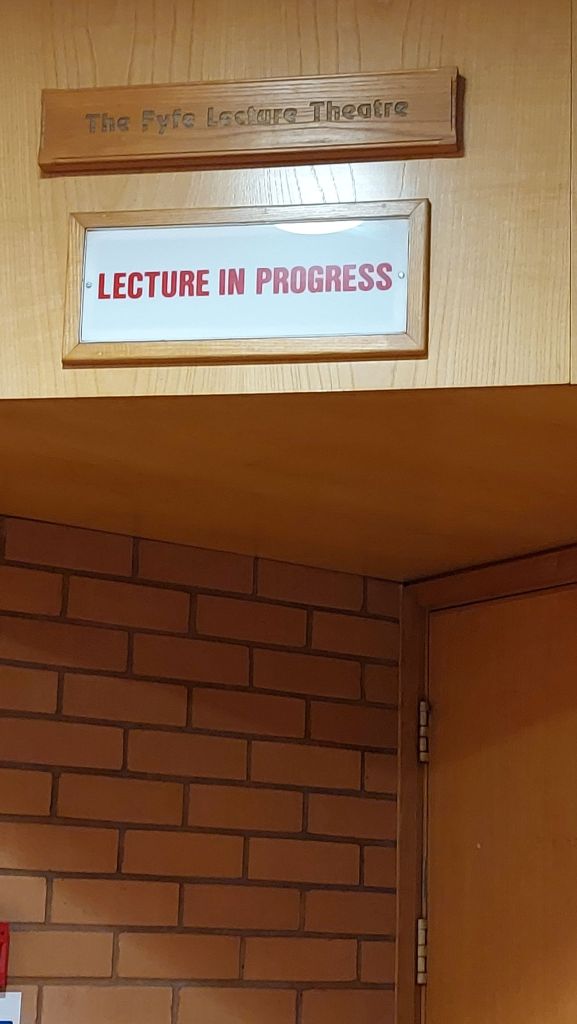
It was the last time I’d give a lecture as a Performing Arts Librarian. Admittedly, not the last time I hope to give a lecture as a researcher, but certainly the final one with a library hat on! The librarian accordingly played a tiny bit of Beethoven’s Johnnie Cope from memory, along with a few chords from Marjory Kennedy-Fraser’s Sleeps the Noon in the Deep Blue Sky (score open), and blithely announced that she saw no need to inflict her rendition of Debussy’s La Cathedrale Engloutie upon her audience for comparison.

The song-books are all in the library. (Yes, including Blackie’s Scottish Song: its Wealth, Wisdom and Social Significance, 1889, and a modern reprint of Chambers’ The Songs of Scotland prior to Burns, with the Tunes, originally 1862.)

More than anything, the lecture epitomises me as a hybrid. I’m a librarian  – I acquire and curate these resources. As a scholar, I contextualise them into cultural history.  It wouldn’t be the same talk if I occupied only one of these roles. 

The subject of my forthcoming monograph  – amateur music making and Scottish national identity – only actually got a brief mention. But it was there. Maybe I’ll need to do a more extensive revision at some point!

Becoming Unshackled from the Shelves

Friday was a great day. Or should I say, Friday afternoon was a great afternoon?

A short research visit to the Mitchell Library was followed by discussion of my forthcoming RCS research contract – to enable me to continue researching part-time after I leave the library – followed by a trip to Glasgow Uni for the launch of the Books and Borrowing Database.  It’s a fantastic resource, and I’ve watched the project with interest.  (website: https://borrowing.stir.ac.uk/)

A bit of networking over a glass of wine and some cheese straws, then I headed home with a distinct lightness in my step. It wasn’t just the glass of wine! I felt as though I’m finally adjusting myself into who I’m meant to be.

I like to think I’ve been a good librarian. I do believe I have.  But if I am honest, I chose librarianship because I couldn’t see myself as an academic.  I am an object lesson in not writing oneself off at the age of twenty-four.  If you’re like I was, or you know someone like I was, tell yourself/them to have more self-belief.

I’m giving my annual lecture on Scottish song books tomorrow.  Just shows that I can lecture.  Indeed, I’ve read countless papers over the past two decades. 

Just think how many books I needn’t have catalogued, if I’d been braver and more determined at twenty-four.   (I’m still cataloguing them – feeling a bit pressured, if I’m honest!)

On the other hand, how many intriguing enquiries I’d have missed, not to mention unexpected surprises amongst the book and music donations … there have been some advantages.

Image: Wikipedia picture of Hereford Cathedral Chained Library

Applications: Read the Instructions!

How often are we told this? Starting with school exams, in fact ….

So I’m here to remind you of this basic advice. Even if you think you’ve got it right, read it again, and then re-read it. Sometimes things aren’t what they seem on first reading. (Said she, having carefully copied out the instructions, broken them down into separate sub-instructions, compiled a beautiful submission … only to discover that A included B and C, and my word-count would have to be reduced by 40% as a consequence. Computers can tell when your uploaded document is too long!)

I blame myself. I jumped to the wrong conclusion. However, I was pleasantly surprised to discover how easily I lost those surplus words. Anyone need a ruthless editor …?

What are Weekends for, if not for Applications?

Focus on the Positive

Well, this has been an interesting weekend. It has encompassed both the sublime (filling in a Fellowship application) and the ridiculous. Completing an application turned out to have been exactly the right thing to have done, in the circumstances, because it put the unrelated storm-in-a-teacup properly into perspective.  It even banished a migraine  – quite remarkable! The expression, ‘Focus on the positive’ has a lot to be said for it.

Not, I hasten to add, that I have submitted the application yet – but at least I’ve written what needs writing.  I am NOT planning on turning to daytime TV in my 66th year – I can’t think of anything worse. So, plainly I need engrossing things to do, once I’ve had the dreaded birthday.

When it comes to filling in online forms, the best thing is to print them out for easy reference, and then to draft answers to the various questions.

Headings

That way, you can write under headings reflecting the different parts of each question; ensure nothing gets omitted; AND keep count of how many words you have used. I’m getting quite good at condensing down sentences and simplifying wording where my first response would have been just too wordy.

So, I’ve made up a title for my proposed project (I did that when I woke at 5.40 am and couldn’t get back to sleep!);

Composed a 50-word summary (that fitted the time between getting ready for church and actually setting off);

and answered all the questions, in between cooking Sunday dinner, eating it, and supper-time.

However, there’s another question I must ask myself: as well as writing under all the headings that the form requires, I also need to ensure I’ve showcased anything that I feel relevant.  That’s a task for Monday night!

I feel as though I’ve had a busy day, but I’m happy with what I’ve achieved. 

What will next week bring?!

Seeking Solace in the Library

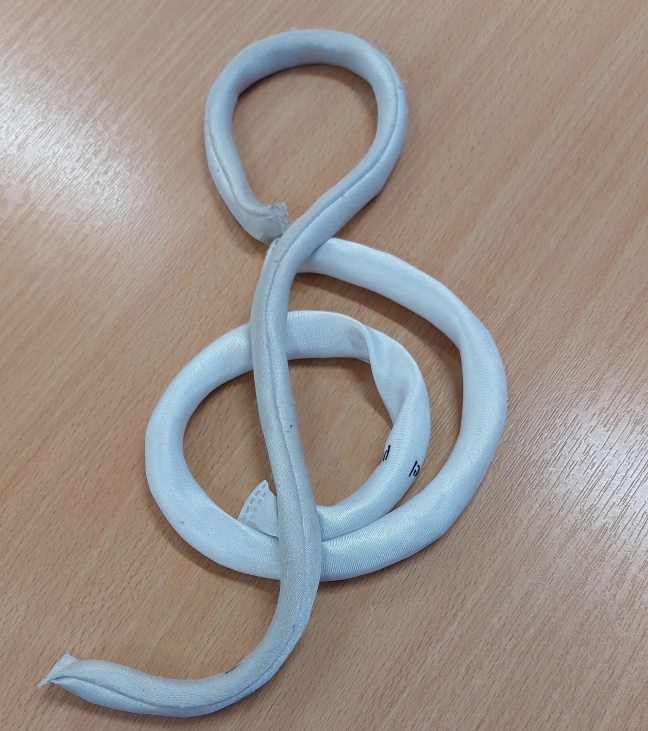
Archive book 'snake' weight

I’ve had a run of things going wrong!

  • Awaiting dishwasher parts for 2 months
  • Needing a stonemason
  • Storage heater malfunction
  • MOT cancelled on April Fool’s Day; it really was …

I took myself off on a library visit, looking for a peaceful, fruitful day. (Yes, yes, I know – I’m a librarian, and I already work in a library 3.5 days a week. However, researching in a different library is an entirely different experience.)

It was peaceful, though I could have done without the six miles’ walking in the rain! But –

I found nothing related to my research question!

The trouble was, I had to read a lot of stuff, to eliminate it. Having researched music for so long, however, I was enchanted to read about paper pulp, factories, shipping and personnel in Nairobi, Cape Town, India, Toronto … yes, it was 1946-7, and the links were strong.

Then there were paper and bookbinding cloth shortages. Lots of allusions to both.

But was it a wasted journey? On the face of it, I made no progress, but – as you see – I gathered contextual information. From now on, I won’t be parroting those facts, but alluding to situations I’ve witnessed through perusal of correspondence.  That does count for something.  And I learned a handful of names that I might one day encounter in a musical context.

Oh, and apart from getting drookit  (drenched) and walking six miles (thanks, Fitbit), I did get my peaceful day in a library.