Dr Karen McAulay explores the history of Scottish music collecting, publishing and national identity from the 18th to 20th centuries. Research Fellow at Royal Conservatoire of Scotland, author of two Routledge monographs.
Am I a listophile? I started the list to end all lists, on Saturday evening. (Yes, I know. Sad, isn’t it? It’s surely better than the Saturday night trips to the laundry in my student days, though.) I’m going through my book manuscript, tracking EVERY sheet music title that I’ve mentioned.
I should already have them in my epic Zotero bibliography, but for this exercise, I’m also checking off which chapters they appear in. It could be handy when I’m indexing the book in due course. Not only that – if I encounter any date discrepancies, at least I will have the chance to put them right.
But have I created a Monster?
This, dear reader, truly is turning out to be a mega-list. I’m approaching the end of my trawl through Chapter 3 now, and the list is already quite lengthy. On the other hand, since I am likely to be the most knowledgeable authority about publications and publication dates for these particular Scottish publishers, there surely must be some value in this.
And – there are just a few ‘lost books’ amongst them. What could be nicer but more tantalising for a librarian/musicologist/book historian?
As I pursued my research for my latest book, I accumulated quite a few postcards and other ephemera which might not, at first sight, appear to have had much to do with the subject in hand. Indeed, when I decided to sort out my box file, I was initially a bit surprised just how much of this stuff I had acquired! However, much of the work was done during the pandemic, when eBay was actually a very sensible way of getting hold of things … and you could argue (hark at me, justifying myself) that I spent less on those postcards than two or three hot drinks at the RCS café-bar each day I’m on site!
Did Mozart Allan use printers Aird & Coghill? They printed a lot of music in Glasgow!
Sifting through my treasure-trove was so enjoyable that I eventually realised I wasn’t in the least bit ashamed of my guilty secret. I have a contemporary postcard of the very respectable-looking Glasgow street where James S. Kerr first lived. (The neighbourhood is less upmarket now, and both his first home AND his shop are now gone.) And there’s a postcard of the shop that Frank Simpson had on the corner of Sauchiehall Street before the shop and adjacent church were knocked down to make room for British Home Stores. I also have a card of the view Mozart Allan would have seen every time he stepped outside his shop. (HIS shop building is still standing, just along from the Courts, beside the River Clyde.)
Pretty much the view from the shop doorstep!
I have pictures of the docks, as they were then, conveniently close for Kerr and Mozart Allan’s trading activities, and a picture of the boat on which Kerr’s successor sailed to America on one occasion. I like to be able to imagine what a place was like when the person I’m writing about, actually lived there.
I’ve also got odd bits of commercial ephemera – an advertising brochure; a business postcard; a couple of letters. The business postcard set me on the track of the individidual who took over Kerr’s business after Mrs Kerr died. It was only last weekend, long after I’d acquired it, that I realised there was a woman’s name written across the top left corner. A colloquial diminutive for the new owner’s wife’s first name, in fact. So – maybe she worked in the shop, too? It’s not musicological research, but I would like to find out. I enjoy finding women working in the music publishing/retail business, in eras when fewer women worked outside the home.
Another bunch of postcards trace the tartan-mania which spilled over from cards to coffee-table song-books and miniature souvenir books. Talking of souvenirs, I have travel guides, maps, an embroidery canvas of a commemorative map of the British Isles – it was unworked, but I’ve since done the stitching and had it framed – and a reproduction of an early PanAm poster. I’ve written quite a bit about Scottish songs in the memory of expats, both overseas and over here.
And there are a few photos of children having music lessons; of women sitting at the piano; a magic lantern slide; a stereoscope of (apparently) happy workers on a cotton plantation – in my book, I’ve written about the racism in plantation songs.
A whole load of sol-fa booklets of various kinds. They have a wee box of their own.
There’s also a photo of an Edinburgh railway bridge. Why? I was hunting down a particular song-book editor, and a musician with the right name lived just beside that bridge. I don’t think it was the right man, but it’s a nice photo, so I’ve kept it anyway!
Well, folks, I have a preface, revised introduction, seven revised chapters and a revised conclusion … all in a zip file. I finished my revised book manuscript last night, ready to go off this morning. And it feels – Strange. I wondered if I’d feel triumphant when I clicked ‘Send’. But, at the moment, it’s cautious relief with a side of exhaustion. Let’s put the kettle on.
I did my PhD part-time, in my spare time, between 2004-09. Then there was more spare-time work turning it into a monograph, published in 2013.
From 2012-15, I was part-time RA to a major AHRC grant (but still 80% a librarian), and then – there’s a common thread here – I was awarded an AHRC networking grant (which I did part-time) on a different topic, before my hybridity changed to 85% librarian as I started research for this, my second monograph. The initial draft was submitted last summer, a decade after the first book was published.
It was with some envy that I read about an academic starting their research leave this year. I’m sure it’s well-deserved. I’m just wistful, because, apart from being allowed a month for writing up my PhD (yes, I know – we all know – it took much longer than that!), I’ve basically taken annual leave whenever I needed it. That’s what happens when you are more of a librarian than a researcher.
Apart from a brief visit home last summer, I didn’t take a proper break, because I was writing. I only took a week’s pause for Christmas, before jumping back into book revisions. It’s not surprising I’m knackered.
I can’t pretend I’m a full-time academic. I cannot, and should not, compare myself with people in a fully academic role. I’m mostly a librarian – admittedly, an academic librarian – but I’ve been a research fellow (part-time plus some annual leave), and I’ve just finished writing a second scholarly monograph (ditto). Given the time constraints, and the fact that I can’t be researching or writing when I’m being a librarian, I’m modestly proud of that.
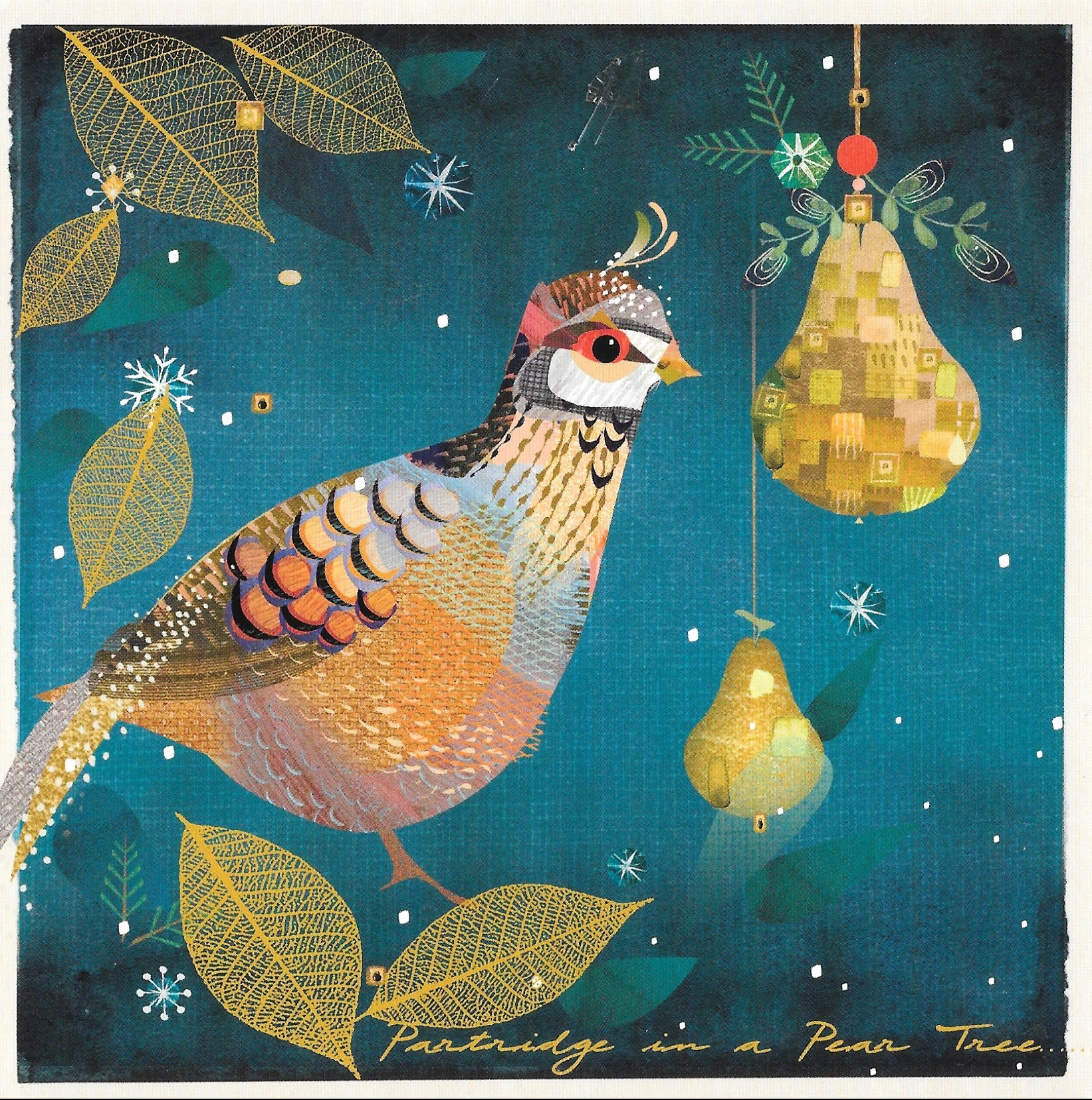
Never Mind the Partridge …
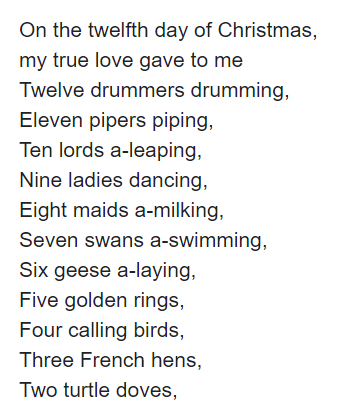
Exhausted but provisionally exhilarated … it’s the Twelfth Day of Christmas. After the obligatory drummers drumming, etc, etc, never mind the partridge!
Partridge in a Pear Tree (greetings card from Motor Neurone Association, image courtesy of Advocate Art)
Seriously, why do we do year-end reviews? To show the world what we’re most proud of? Quite possibly. To convince ourselves – and the world – that really, we’ve been very busy and deserve a pat on the back? Perhaps so. I took to the internet to find out why businesses do reviews, and why a career-minded individual might do one of their own.
Consulting the Experts
Braze.com said that year-end reviews offer the chance to ‘create distinctive content’; to ‘build loyalty’ and to remind the world what your particular business does best. To that end, obviously you log milestones, achievements and events. You use multimedia formats, and draw upon customer data. This all makes sense, although I don’t know that I, as an individual, can do all these things. (No customers, for a start!)
I tried again, and found a Harvard Business Review posting about, ‘How to create your own “Year in Review“. There’s plenty of sound advice here, suggesting that I should pause and reflect upon successes and failures; lessons learned; proudest achievements; who has helped me most; how my strengths have helped me to succeed; and whether there’s anything I wish I’d done differently. This is much more introspective, and certainly valuable advice. Whether I’d want to blog about all these headings is a moot point, though.
For me, I have an extra conundrum. I shall be retiring from the Whittaker Library at the beginning of July. I hope to continue the research element of my work, though. So – in one sense I’m writing a career-end review, as far as librarianship is concerned, but it’s not a career-end review for me as a researcher.
The Harvard Business Review suggests using your diary to capture key events on which to reflect. I spent a few minutes doing just that, yesterday. Immediately, I realised that there’s one thing I’m proud of over everything else, and that is that although I spend 85% of my time as an academic librarian, my 15% as a postdoctoral researcher is actually highly productive.
What do I do best? I get things done.
‘She’s a Librarian’
I confess, I don’t like hearing this! It makes me feel as though my research activity is dismissed as dilettantism – that I don’t do badly, considering research isn’t my main role. On the other hand, a fly on the wall would point out that yes, I do spend the majority of my time as a librarian.
Jazz CDs – not a Highlight
So, what did my diary exercise reveal? I’ve catalogued a lot of jazz CDs. This causes me to feel quite a bit of resentment, because I know our readers don’t generally listen to CDs as a format, so all my efforts are to very little avail indeed. Maybe that’s one of the things that I wish I’d done differently. It’s not a high-priority task; however, I am conscious that I don’t want to leave the backlog to my successor. And that’s why I do this dreadfully tedious and repetitive activity!
Retrospective Post Script: that jazz CD cataloguing was indeed a waste of time. I did it because the promise had been made that those CDs (thousands of them) would be catalogued. I didn’t make the promise, but I did feel the obligation to fulfil the promise. My resentment was because it used so little brainpower and expertise, provided so very little fulfilment in the moment, and so little benefit in the long-term.
Equality and Diversity: Stock Development
What I’m more proud of is my efforts to get more music by women and composers of colour, into the library, and most particularly, to ensure that our staff and students know just how much of it there now is in our stock. With a colleague from the academic staff, I’m concocting a plan to raise the profile of this material.
I also suggested maybe there might be a prize for diverse programming …
And I just heard – there is going to be such a prize – it really is happening. A red letter day!
For me, a particularly proud moment was being invited to attend a Masters student’s final recital in June, at which one of these new pieces was played. It was a piece requested by a member of staff – I don’t think it was me that actually stumbled across it – but I certainly sourced it, catalogued and listed it. Whilst I’m heartily sick of cataloguing, I do take pleasure in stock development, and in ensuring there are ample means of discovering the music once we have it.
In September, I was gratified that one of our performance departments reached out to me to request more materials by under-represented composers – a sign that the message is getting through, and that staff appreciate that the library really is trying to help.
Since October, I’ve also been broadening the stock of music inspired by climate change and ecology, including songbooks for school-children, since we have a number of music education students. That pleases me, too.
What else? Dealing with donations to the library, some eagerly received and others needing sifting through. Weeding stock to ensure there’s room for new material, and ensuring that tatty material is removed or replaced depending on how much it’s likely to be used.
User Education
Some things are cyclical – most particularly providing initial library introductions, and later talking to different year-groups about good library research practice. In June, I gave a talk about bibliography to the Scottish Graduate School of Arts and Humanities, which attracted far more of an audience than I’d ever dreamt of!
Queries, and Research-Related Activity
I’ve also dealt with queries – such as one from a Polish librarian, or another from an elderly enquirer wanting to trace music remembered from childhood. And I talked about my research activities at a library training session, even though I was rather afraid of wasting colleagues’ time going on about something that might not feel very relevant. (This autumn, I also obtained and catalogued – in detail – a book of Scottish songs that I have written a book chapter about. It would be dreadful, wouldn’t it?, if someone read the chapter but couldn’t find the song-book in the library!)
Professional Activity
Professionally, I managed the comms for the IAML Congress in Cambridge this summer (with a little bit of help from mascots Cam, Bridge and Don and a couple of fellow IAML (UK & Ireland) librarians, and I think it went quite well. The stats for the blog and Twitter (“X”) rose gratifyingly during this period. I went to a couple of days in Cambridge, but I didn’t speak this time.
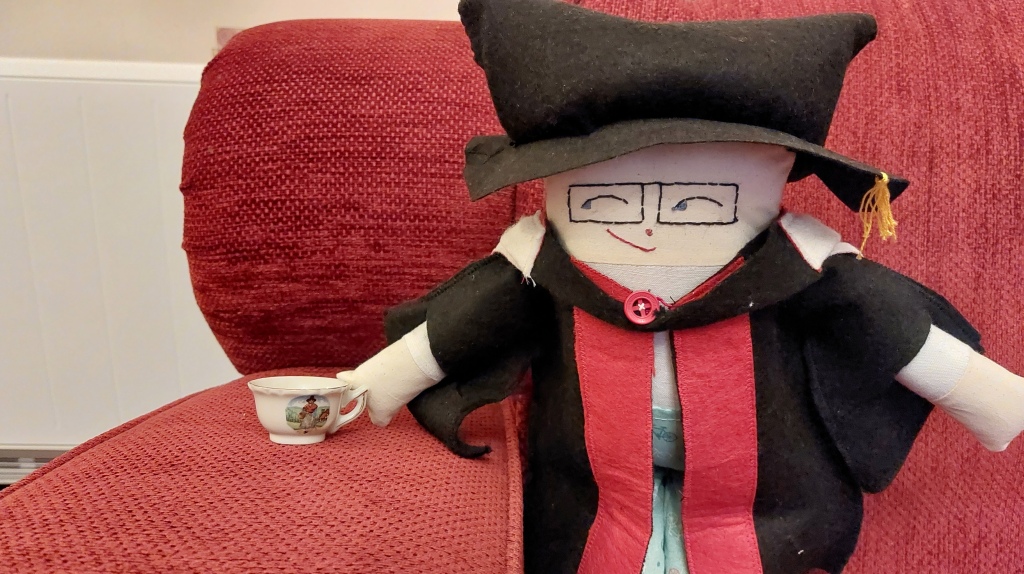
IAML Congress mascot Don
A Researcher with Determination
Early on in 2023, I was gratified to receive an LIHG (Library and Information History Group) Bursary to attend a conference at the University of Stirling between 17-19 April, which was about Reading and Book Circulation 1650-1850. This was to be the first of two major successes this year, for I was also elected the inaugural Ketelbey Fellow in the Institute of Scottish Historical Research at the University of St Andrews. I’ve written extensively about this experience in other blog-posts, so I won’t duplicate it here. However, I can’t resist reminding myself of highlights!
Researching key documents in Martyrs’ Kirk Reading Room
Attending both fortnightly research lectures, and ISHR pub lunches on alternating weeks
Many enjoyable hours concentrating on my book revisions – with a view of the sea!
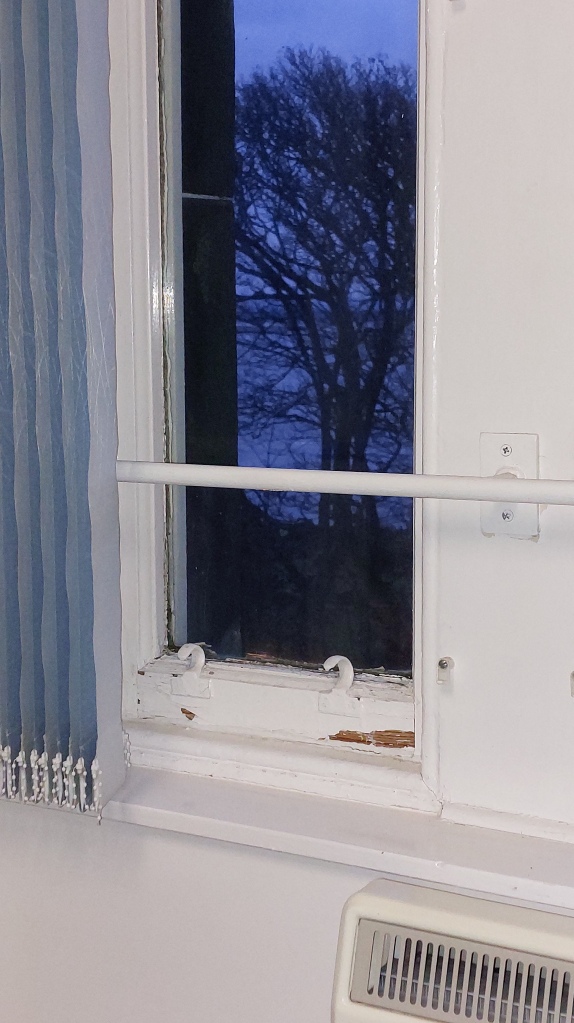
Twilight from my window, St Katharine’s Lodge, St Andrews
We’re not going on a (sniff!) Summer Holiday …
Being a researcher for 15% of the time is not easy – there simply isn’t the time to do all I want to do. Far from ‘dabbling’ in research, I take this side of my work very seriously indeed. I might have been a librarian most of the time, but I have devoted far more than the designated 10.5 hours a week to my research activity! I took annual leave in the summer to get my book draft completed, and took more annual leave to enable me to spend two, rather than 1.5 days researching in St Andrews. I’m doing it again next week; the book revisions must be completed and submitted very soon, and if the only way I can do it is by taking holiday, then that is what I must do.
In January, I wrote an article for the Glasgow Society of Organists, about a Paisley woman organist and accompanist whom I’d discovered during research over Christmas 2022. Even though it wasn’t for a scholarly journal, it was research done to my usual standard, and I’ve drawn upon that research in one of the chapters in my forthcoming monograph.
I’ve peer-reviewed an article, a book manuscript and a grant application. Considering all that I’ve had on my plate this year, I’m quite proud that I did manage to do these things. I don’t attend reading groups, and I’m not always able to attend research-related events that fall in ‘library time’ – I don’t want to give the impression I’m skiving off library work! But I do want to feel part of the research community, and that was precisely what was so magical about my Fellowship in St Andrews. For those two days a week, I was a researcher, pure and simple.
Roll on 2024! What am I going to do differently?
I’m looking forward to the summer. I feel I’ve been a librarian long enough. I’ll miss doing the user education, and rising to the challenges posed by unexpected or unusual queries. I shan’t be sorry to quit cataloguing, particularly jazz CDs!
I don’t actually have any ‘retirement’ plans as such. Apart from having more time to spend on my role as Honorary Librarian of the Friends of Wighton in Dundee. Whilst I live on the other side of Scotland, at least I shall have more opportunities to leap on a bus or train to get to Dundee Central Library to look after the repertoire that I love.
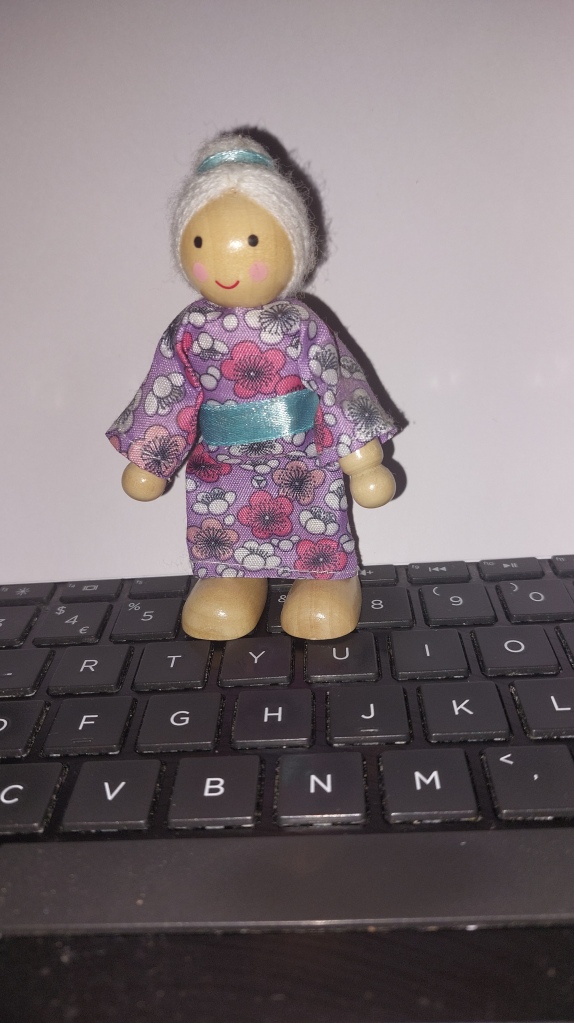
Little old lady? Not me!
Not Entirely Retiring!
I don’t feel remotely like a little old lady! I hope I’ll continue as a postdoctoral researcher in my present institution, but I’m also keeping my eyes open for any other part-time opportunities that I could pursue alongside that. ’Actively looking’, is the phrase, I think.
With a colleague in another institution, we’re cautiously planning a new research idea. And I also have strands of research that I commenced for my book, but hope to pursue in greater depth once this book is safely further along the publication process. Watch this space.
I never really understood Flow State Theory, beyond knowing that it has something to do with being deeply immersed in what you’re doing, and achieving your best work as a result. (People will have written theses and books about it, but I’m afraid that’s the extent of my understanding of it.) It certainly means having a calm and single-minded focus, in an environment without distractions. Concentration was easy in St Andrews, which is why the Fellowship was such a delight.
Anyway, there I sat at home in my alcove yesterday afternoon, working away at my book revisions and getting on just fine – in the flow, you could say – when Someone sat down beside me and started watching this:-
My state of flow screeched to a halt. Static. To say I felt traumatised and misunderstood is hardly an overstatement. ’Surely you’re not so easily distracted?!’, scoffed the perpetrator. But when you’re trying to weave in links between chapters, and to strengthen a historical thread, you do need all your wits about you, and all your concentration on the task in hand.
I regret to say that, with all the other festive domesticity needing attention, I think my state of flow had diverted itself elsewhere. I wonder if I’ll find it again this side of Christmas?
The bus got delayed in traffic today. (Significantly so. My journey was 4.75 hours from door to door!) This did reduce the time I had for book revisions, but I still managed a productive afternoon. I’ve revised the Introduction and created a Preface.
I had already done more work on my literature review, so I worked through the reviewer’s suggestions until I was pretty sure I’d addressed them all. I start with their suggestions and my responses. Once dealt with, each point is ticked off, and digitally ‘crossed out.’
So far, so good. Just a small matter of giving all the chapters the same treatment. I’ll get there eventually.
And because a mild, damp morning turned into a mild, dry afternoon, I even managed a walk by the sea. What could be nicer? (I didn’t quite get onto the sand, but next time, if I’m in trainers! …. )
Late lunchtime in St AndrewsUpstairs & downstairs flats with outside stairs
It occurred to me that many folk with a recently finished PhD or some other significant piece of research, must wonder whether to publish it as a book. Now my second monograph has moved to the revision stage, I thought I’d share a few thoughts on the process.
Everyone will arrive at this point with different prior experiences. In my case, I’ve written in a variety of formats and contexts. All writing experience is useful, even if you have to adopt different styles and protocols.
30+ short stories for The People’s Friend
Serial for The People’s Friend (short stories and serial both great experience in telling a story, building a character, and writing to be understood.)
Countless book reviews
Blogging
Magazine articles
Journal articles
20k word BA dissertation
60k word MA dissertation
100k word PhD dissertation, which became a
First monograph (= scholarly book)
So, here I am, revising the draft of my second monograph. And it’s different. It’s like swimming – eventually you take off your armbands, do a few lengths of the pool, and at some point, head for the sea. I can’t talk about writing a non-academic book, but I can certainly outline what’s likely to happen with a scholarly one.
You pitch your book idea to a suitable publisher. They’re likely to want chapter abstracts, a sample chapter, and an indication of the likely audience. Also some kind of literature review, proving the need for a book like yours to fill the gap.
Your pitch goes to peer reviewers. It may well take a while to get a response. They’re busy academics, after all.
They may suggest changes. Assuming the reviewers’ reports are generally favourable and recommend publication, you finally get a contract – and a deadline to finish writing the book.
Months pass. You get the book written and submitted – and then you wait. The full manuscript now gets reviewed, and eventually you receive the email you’ve been half-dreading. Changes may be suggested.
You respond to their reviews and indicate what you’re going to change. (Or perhaps, you will decide not to change something that you can defend just as it is!) With a second or subsequent book, these folk are the closest you’ll get to the kind of advice your tutors/doctoral supervisor offered – try to receive it gratefully and graciously, unless you really feel misunderstood!
You then wait for the go-ahead to make the agreed revisions, and agree a new deadline. It’s Scheduling Time! My calendar for the rest of 2023 is all mapped out.
I do know what will come next! The copy editor will be let loose on it. I’ll get to see and agree to the suggested edits, usually just small matters of style, or inconsistencies. Meanwhile, I will either have to produce an index, or pay an indexer.
A cover is agreed on. My book is part of a series, so there may not be much choice here.
The exciting part is when it’s just about ready to go to press; you are notified of the publication date, and can start planning that book launch.
And then – if it hasn’t happened already – someone utters the dreaded words,
Caffeine, carbs, codeine and a lunchtime walk restored me to near normality, so I did some reading in preparation for the book revisions, and continued the task today. But migraines are very draining, so I’m tired!
Sea view
I have taken annual leave in order to spend my Thursday afternoons researching, to maximise the time I have in St Andrews. So I settled down to do what needs doing, but STILL I received emailed queries. I spent as little time as I could, but readers shouldn’t be kept waiting. Anyway, back to the research ….
Having a finite amount of time certainly concentrates the mind. Is this relevant? Useful? How does it help the argument?
It pays to get an oversight of a book’s chapter structure, and to make use of the index. If something is in digital format, searching for keywords certainly gives an indication as to whether it’s worth spending time on.
And home-time!
From Magic Lantern to Microphone
Next week, I’m giving another talk, this time to the Institute of Scottish Historical Research. It’s all written, so I just need to read the whole thing out loud to myself between now and then, to ensure there are no tongue-twisters to trip me up!
Crucial to the talk ….
And after carrying far too much to last week’s talk, be assured that I won’t make the same mistake again! My props will be no larger than will fit in a pocket.
My book report arrived today. Yes, there are some revisions to be made, but I don’t mind. That was to be expected. Being ‘beautifully written’ is such a very lovely compliment. 😍









 Karen McAulay, Musicologist