Jobs for Girls and Boys in the 1950s

Yes, I’m afraid I have been distracted in my archival search for the editor of some teaching materials.  I identified a run of box files for the right years, but it turns out not to be from the editorial team. The sales department was obviously crucial, once the books were ready to market and sell, but if my present quarry had only had any evident input into one solitary published title, then frankly those boxes probably don’t concern me in my present research.

Nonetheless, I inspected four boxes fairly closely, before deciding to stop looking at the boxes from 1953. 

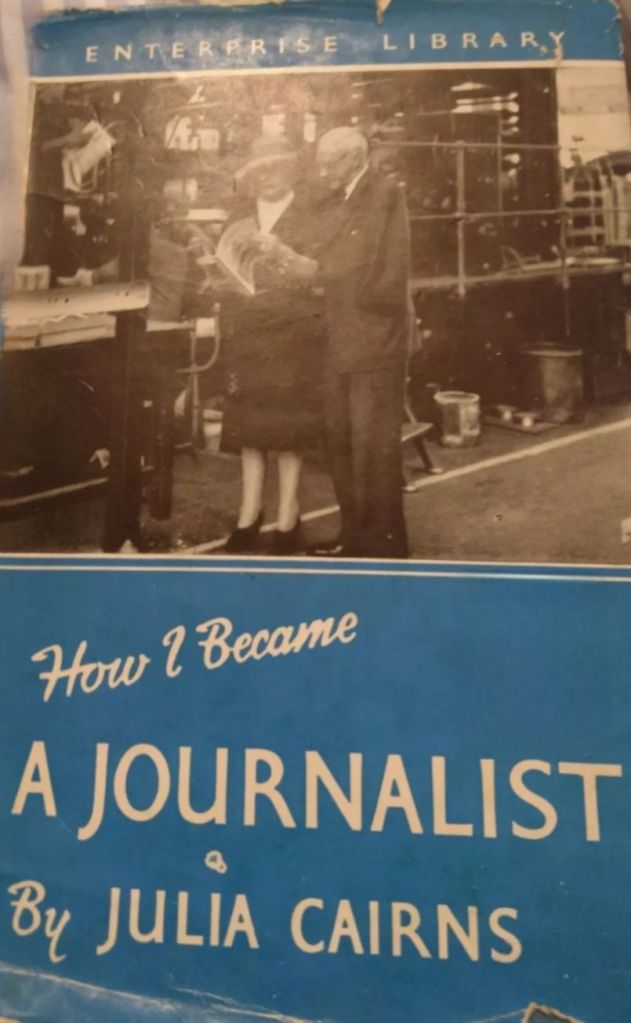
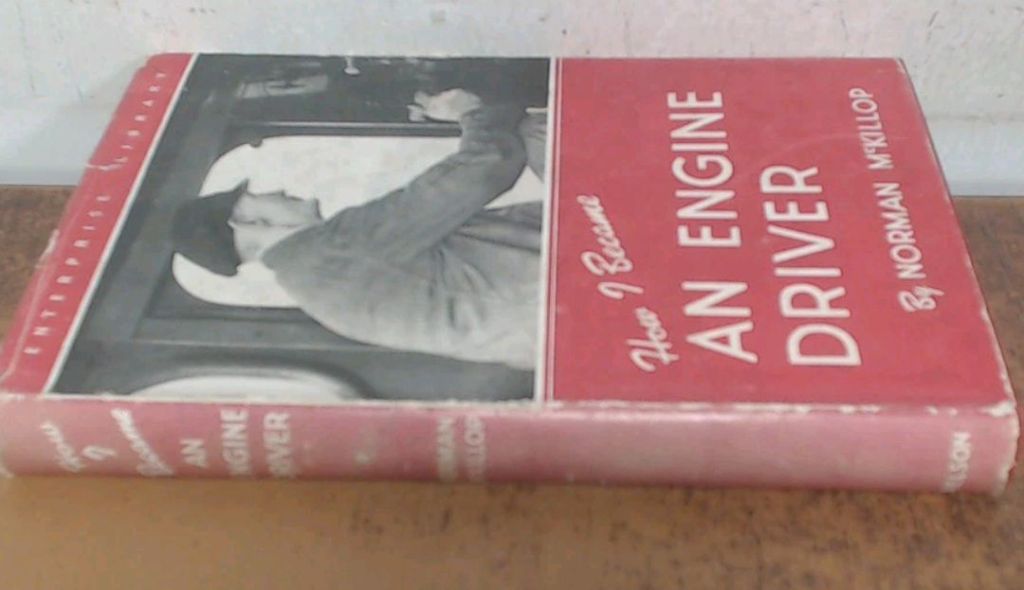
In passing, in the ‘Nelson Juniors’ series, I  encountered some careers-related books from the 1950s. The choices – apart from that of journalist – are rather stereotyped! On the other hand, the girls seem to have more choices … curious, that! Maybe they meant to publish more titles, before the series rolled to a halt with the ‘engine driver’ in 1960.

Found on eBay!
Yes, also on eBay

How I became a … (by women authors)

  • Ballet dancer
  • Fashion model
  • Journalist
  • Librarian
  • Nursing Sister
  • Air Stewardess

How I became a … (by male authors)

  • Cricketer
  • Detective
  • Engine Driver
Also on eBay!

The first and last of these seem to have attracted some interest! The ballet book was reviewed in an American dance magazine – Dancing Star, by the editor of a British magazine called Ballet Today. The Ballet Annual wanted to review it. (A lot of announcements were sent to relevant organisations and individuals.) Moreover, The Psychologist Magazine wanted to review both the ballet book and How I became a Nursing Sister. (Nursing, I can understand. But reviewing a children’s book about the career of ballet dancer? Was it to gain insight into a young ballerina’s mind …?)

And even if nowadays, it looks pretty mundane, Meccano Magazine and The Model Engineer both requested review copies of How I became an Engine Driver.  The Stephenson Locomotive Society were also sent a review copy, along with 2750: Legend of a Locomotive, and they promised to publish a review in the Society’s Journal. Indeed, Thomas Nelson sent a presentation copy of the book to the Lord Reay Maharashtra Industrial Museum in Bombay in response to a request for books for the museum library being set up there – just that one book!

Image by Alana Jordan from Pixabay

Volte Face: Never Think You Can’t Change Direction

We drove south last week. No, I drove us south. I missed one turning and mistook another. I’ll never hear the end of it, and I never want to see Pontefract again.  (It did give a certain person the opportunity to deride my own lack of any sense of direction, and proudly show off their own.)

As for me? I am so accustomed to getting it wrong that I just regard it as part of the journey. I get there in the end.  If this sounds like a metaphor for your own career path,  then read on. You’re in good company.

I found a photo last week that revealed my career has been a bit like that, too.  I’ve told my story often enough, so I’ll keep it brief today.

So Young!!
  • Aspiring to a research career, I completed a research Masters then switched topic for a PhD. First mistake.
  • Took fright at the thought of trying to become an academic, and trained as a librarian – without finishing the PhD. Second (big, big) mistake.
  • First (temporary) post in academic library.
  • 2nd post in public library (who says you can’t change sector? Anyway, I needed a permanent job) – and got Chartered.
  • 3rd post in academic library (another switch, see?). This was where I wanted to be: an academic music librarian. The closest (I imagined) I’d get to being a scholar librarian.
  • Boredom set in. I wasn’t very happy. Here’s where the LinkedIn career coaches say you should walk away. Listen, a breadwinner can’t just walk away! Hang in there. Plan, prepare.
  • Mid-career PhD done, whilst working full-time with dependents. Did folk think me crazy? Assuredly!
  • Partial research secondment.
  • Retire from library, hang onto the research – no longer a secondment but a new part-time position. Onwards and upwards.

I look at that old news clipping (why did Mum keep it? I thought she found my latter research career an embarrassment! All those letters after my name – so immodest) – and I wonder what 22-year old me would have said if she knew how my zigzag career would pan out?

  • Then, not many people did Masters’ degrees. Now, a lot of people do. 
  • Mediaeval plainsong? Completely unrelated to anything I’ve done since 1984! No use in the library.
  • Fifteenth-century English polyphony? Ditto. Although I do feel a bit guilty that I baled out before it was done.

Don’t Look Back

Admittedly, I do wonder what I’d have done if I’d finished the first PhD, and found work as an academic. But there’s absolutely no point in playing “What if?”.  We take the decisions that feel right at the time.

I wouldn’t dare to suggest that I had the model career.  I didn’t aim high enough, lacking self-confidence to a chronic degree; got stuck where I was (see above); and had one helluva struggle rectifying the  situation. Quite a ride! But I did demonstrate both flexibility and determination. I did get what I really wanted all along – eventually.

It all just goes to show that there’s more than one way to get there – if that’s where you want to go. And a few false turns aren’t the end of the road.

How Can I be a Fellow? Let me Count the Ways

Elizabeth Barrett Browning would probably kill me for misappropriating her memorable poetical line! However, I’m only now realising the very many different ways in which one can achieve Fellowship.

A Disappointing Start

Many years ago, I tried to achieve a Fellowship of Trinity College London, in oboe performance. I’m afraid I didn’t succeed, remaining a Licentiate to this day – but I no longer call myself an oboist in any case; I haven’t played for years.  To think that at one point, I couldn’t imagine myself not playing it!

An Early Dalliance

Professional

I was more successful in librarianship.  I attained Fellowship of CILIP (the Chartered Institute of Library and Information Professionals) in 2010, only relinquishing it (my decision) when I stopped being a librarian.  I was also made a Fellow of IAML(UK & Irl) as I approached the end of my career in music librarianship.  (My official role was Performing Arts Librarian, but I was, essentially, a music librarian.)

Research

A couple of years ago, I enjoyed a Ketelbey Fellowship semester in the School of History at the University of St Andrews, and I’m currently a Fellow at IASH, University of Edinburgh.

I’m continuing my research activities as a postdoctoral research fellow at the Royal Conservatoire of Scotland  – that’s my permanent part-time role.  Would I cause confusion by mentioning that I was also awarded Fellowship of the Royal Conservatoire of Scotland in Autumn 2024? 

And Today … FRHistS

I was delighted to learn that I’ve just been elected a Fellow of the Royal Historical Society.  This is a worldwide organisation with a long and distinguished history, so Fellowship really is an honour.  I’m one of 78 new Fellows this summer. Since I’ve taken the greatest interest and pleasure in historical research in the latter part of my career – as evidenced by my publications record  –  this news is a source of quiet satisfaction. 

The Plan is Working

I read some advice the other day (you’ll have seen it often enough):-

If you aren’t happy where you are working, then leave.

There’s another adage, which is similar on the face of it, which goes like this:-

If you keep on doing what you’ve always done, you’ll get what you’ve always got.

I know there’s value in the first suggestion,  but it isn’t always possible, is it? You may be well aware that you’ve probably been in the same job too long, but personal circumstances mean you simply can’t leave. Or your role is so specialised that you would have to relocate, which might not be an option.

This is why I prefer the second adage. Sometimes you have to take a long view, and your Plan B might involve changing direction whilst sitting tight.  Get ready for a new role, adjust your mindset accordingly, but accept that it’ll be a while before you make the move.

Alt-Ac-tually

I feel for people at the start of an academic career, with the struggle to get one foot on the ladder.  Do you actively want an Alt-Ac career, or do you feel you have no choice?

I wanted to be an academic music librarian. That became my career, but later I regretted not having finished my first PhD and given academia a fair shot.

My Plan B began with getting a PhD.  Afterwards,  I was very fortunate to get partial secondment as a researcher for more than a decade, whilst remaining in librarianship for the bulk of my week.

Adjust Mindset

It’s not just a question of having the right qualifications.  You need to ensure that you believe in yourself as a scholar, and that others see you as a serious academic.

  • Write the articles;
  • Publish the book (if appropriate) or chapters,
  • Attend conferences (partial attendance isn’t ideal  but it’s better than non-attendance, if cost or time are problematical);
  • Give talks, whether scholarly or as  public engagement;
  • Seek opportunities for career development.  (I did a part-time PGCert a couple of years after the part-time PhD).
  • DO NOT, repeat DO NOT, write yourself out of a career option because you believe yourself incapable of it. (Aged 21, I believed I would never be able to stand in front of a class of students. And on what did I base that assumption? I’d just taught English to assorted European students for about a month.  I did it. I planned lessons, and stood there, and did it. So who said I couldn’t?!  And it gets worse.  There weren’t many women doing music PhDs when I was 21.  Guys told me it was incredibly hard to break into academia – and I just took their word for it.  How naive WAS I?!)
  • Look instead for opportunities to practise the  areas you feel need improvement.  You may need to think laterally.  Music librarians seldom teach music history, but they do deliver research skills training. Lots of it.

Today

Fast-forward to now. I left Glasgow at 7 am today, in subzero temperatures. Edinburgh is bright, clear and breathtakingly … well, breathtakingly cold as well as beautiful! A freezing cold early start might not sound like a luxury to the average retired librarian.  I’ve never wanted to be conventional, though.

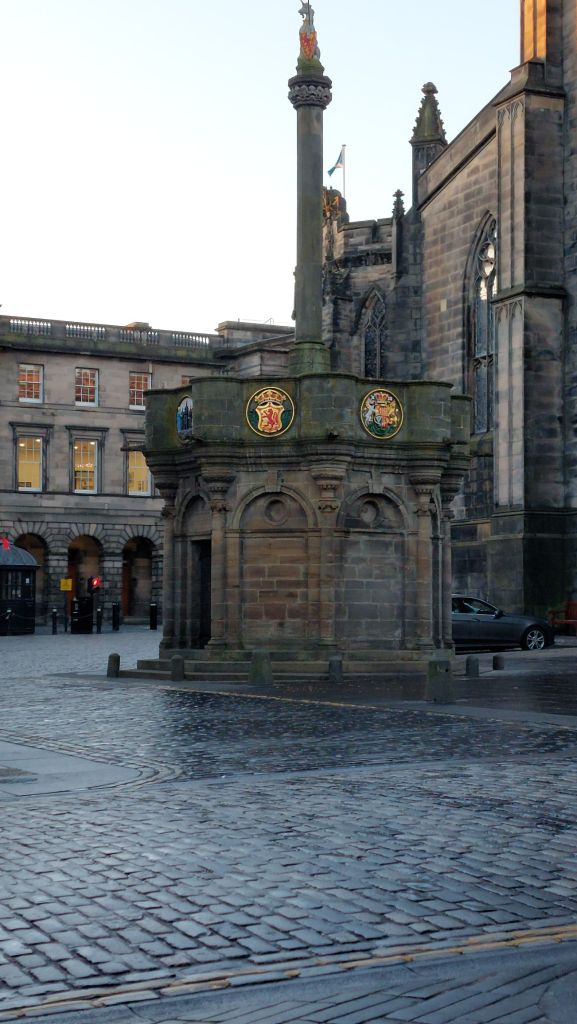
The Mercat Cross, Edinburgh

This is the first week in my IASH Heritage Collections fellowship.  For the first time in my career, I’m NOT juggling librarianship and research.  I’m part of a vibrant community of practice, and I have both the  University Library and the National Library of Scotland just down the road. Thus, today, I saw a set of four Scottish song books that are remarkably hard to find as a set. (Three cheers for legal deposit!) 

And last night, the year got off to an even better start, with an article being accepted.  Just a few minor tweaks to do, which won’t be difficult.

It feels to me as though my long-term plan might be working out quite well!

Annual Review of 2024

Probably the most eventful year I’ve ever reported, 2024 saw plenty of action. However, I’d like to add a few words of explanation before I go any further. Firstly, everyone’s different and everyone’s circumstances are different. (You know the old saying about how you have to ‘walk a mile in someone’s shoes’ before you understand their experiences and challenges?) I’ve spent far too long on introspection, measuring myself unfavourably against high-achievers. It gets you nowhere, apart from feeling inadequate. You will know what is possible in your own situation; please don’t feel I’ve set myself up as an example. I’ve done it my way.

If you’re on the tenure track hamster wheel elsewhere in the world, you may read this and wonder at how little I’ve achieved. On the other hand, if you’re not employed as an academic, you might be surprised at how much. If you’re fully retired, you may think I’ve lost my marbles, but if you’re semi-retired, you might understand! Similarly, everyone’s personal circumstances at home are different too.

For full disclosure, my research career has been what you’d now call alt-ac (alternative academic); I have had 10½ paid hours a week on research for over a decade, but my main career has been in music librarianship.  (I’ve never been a full-time academic,  and my outputs were achieved in less than one third of my working week.)  As you’ll see, I recently gave a keynote about being ‘alt-ac’, and I’d certainly be open to further bookings of this kind, if your institution or network was interested. (I’m in the UK.)

Highlights

  • I had successful eye surgery in February. 
  • I retired from librarianship at the end of June.
  • I was promoted to part-time postdoctoral research fellow in July (10½ hours a week).
  • I’ve had the opportunity to do some teaching cover.
  • My second monograph was published. (It has a 2025 imprint, but actually came out in autumn 2024.)
  • I was elected a Fellow of IAML (UK & Ireland) in the spring, and of the Royal Conservatoire of Scotland in November.
  • I was keynote speaker for the ECRN Alt-Ac Showcase at the University of Birmingham.
  • I successfully applied for a research fellowship at IASH (the Institute for Advanced Study in the Humanities) at the University of Edinburgh, which I shall be taking up between January and June 2025.
  • I received the Mervyn Heard Award from the Magic Lantern Society in December, for research into Bayley and Ferguson’s service of song  publications.

Four fellowships of various kinds is quite an impressive number, however you look at it, so I must remind myself of this before I start beating myself up about my relatively modest upward progress!

Publications

  • A Social History of Amateur Music-Making and Scottish National Identity: Scotland’s Printed Music, 1880-1951 (Routledge, 2025)
  • Book Review: Gun Sireadh, Gun Irraidh: The Tolmie Collection (Folk Music Journal Vol.12 no.5, pp.127-9; my review of a new edition of the Tolmie Collection, a significant Gaelic song anthology, here re-edited by Kenna Campbell and Ainsley Hamill)
  • [Article withdrawn due to pressures of time, but published on this blog: ‘The Exhilaration and Exasperation of Hybridity: Third-Space Professionalism in the Library’]
  • 2 accepted chapters pending publication.
  • 2 articles recently submitted, pending peer review. [February 2025 update: one got through peer review, has been revised, edited and I’ve approved the proofs. The other got through peer review and now awaits the revisions. Nonetheless, satisfactory progress!]

Speaker

  • Exchange Talk, Royal Conservatoire of Scotland, Jan 2024, ‘From Magic Lantern to Microphone: the Scottish Music Publishers & Pedagogues inspiring Hearts & Minds through Song’
  • NAG (National Acquisitions Group) Talk, April 2024, ‘Redressing the Balance: Getting Historically Under-Represented Composers and Contemporary Environmental Concerns into Library Stock’
  • Print Networks, conference held at University of Newcastle, July 2024, ‘‘Music for All’: the Rise and Fall of Scottish Music Publishing, 1880-1964’
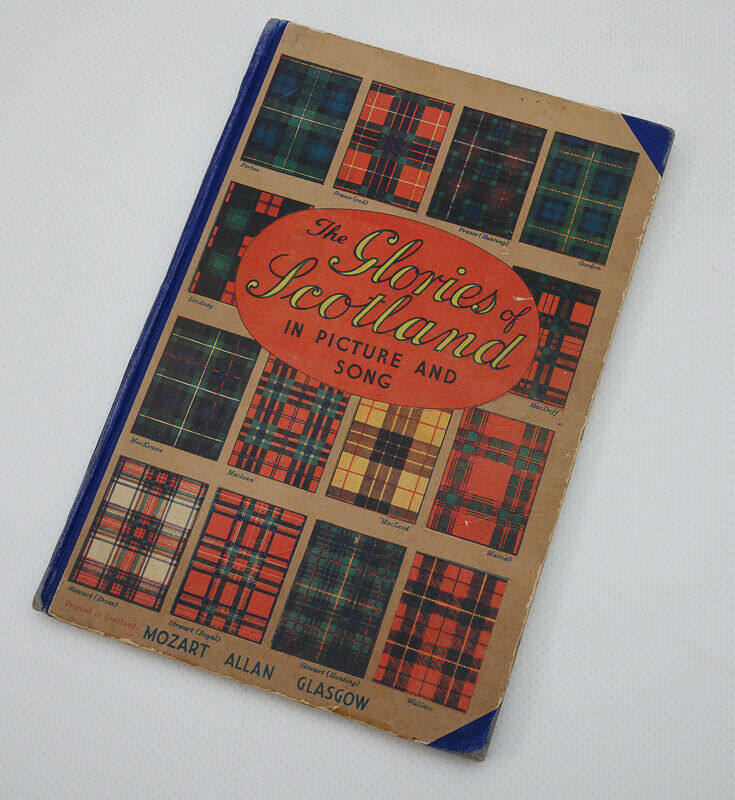
  • Exchange Talk, Royal Conservatoire of Scotland, Nov 2024, ‘The Glory of Scotland’ (it’s the title of a Scottish song book published for the 1951 Festival of Britain)
  • Keynote for ECRN Alt-Ac Showcase at the University of Birmingham, Nov 2024, ‘My Alt-Ac Life’

Other Activities

  • BBC Scotland: ‘Good Morning Scotland’ interview
  • Book launch
  • Fellowships of IAML(UK) and RCS
  • Mervyn Peak Award, Magic Lantern Society
  • New job title: Post Doctoral Research Fellow
  • Peer reviews for AHRC and a scholarly journal
  • Providing teaching cover
  • Successful application: Heritage Collections Research Fellowship, IASH (Institute for Advanced Studies in the Humanities at the University of Edinburgh), for Jan-June 2025.
Edinburgh University Library from The Meadows (Wikipedia image)

Forward Planning

My IASH Fellowship will allow me the opportunity to explore the former Edinburgh publisher, Thomas Nelson’s archives, to find out more about their publishing in the music field. There wasn’t a great amount, but I aim to explore correspondence and find out how it fits into the wider range of their activities. I’ll be spending more of my time on research than I ever have since 1982!

Meanwhile, I’ve been working on an article for a history publication; I want to get that finished in the near future, so that I can turn my attention to another article on a different topic. What I do after that will probably depend on how the IASH Fellowship research goes, and what interesting possibilities reveal themselves to me. There’s bound to be enough for an article. But could I expand it to something book-length? I’ll have to wait and see!

ECRN Alt-Ac Showcase: Keynote Speaker

A first for me, today: I was the keynote speaker for an Early Career Research Network event jointly organised with CALt-Ac at the University of Birmingham.  That’s the College of Arts and Law’s network for people with ‘alternative academic’ roles, rather like mine when I was in the library 3.5 days a week, and seconded to research for 1.5.  Not a full-time academic,  in other words.

Yes, yes, you’re correct in pointing out that I’m not exactly ‘early-career’ myself!  I was invited to share my own ‘Alt-Ac’ story, since it transpires that I have actually been an Alt-Ac since before the term was devised.

Everyone was very kind and appreciative; it’s been a lovely day.  I heard interesting and informative contributions, and chatted to a number of people. There was a mix of subject-related presentations, and others which, as I did, shared their own way of making the alt-ac existence work for them.

The ‘Queen of Alt-Ac’ (not my words) declares herself happy (if abashed by the epithet), and is now being conveyed back to Glasgow in her carriage, Avanti West Coast.

My next post will share a summary of my talk. Are you ready …?!

Third Space Professionalism in the Library: the Exhilaration and Exasperation of Hybridity

CONTEXTUAL EXPLANATION
This article was written for a peer-reviewed journal. Owing to personal circumstances and commitments, I was unable to make requested amendments in time for the deadline, and I withdrew my submission. Nonetheless, I’d like to share it, since I don’t foresee myself writing much more on librarianship in future. I present it here in the same shape in which it was originally written, give or take a few tweaks to sentences (and reversion to the first person in a few places).

Abstract

It is fair to note that ‘third space’ has a variety of meanings within librarianship circles, with the liminality of the literal physical library space attracting perhaps more contemporary commentary than the idea of a ‘borderland’ where silos break down and different professions meet.

Nonetheless, although recent writing about third space professionals has focused on individuals with administrative roles in academia, it prompts me to argue that academic librarianship similarly occupies a third space role, and the arguments for valuing and increasing the visibility of third space professionals are equally applicable.

I briefly describe the typical career path of those attaining librarianship qualifications.

There follows a reflective case-study on my own third-space professionalism, having attained librarianship and teaching qualifications, and a mid-career PhD. (I’m posting this article a short while after retiral from the library, as I embark on the next stage of my career.)

Best practice in the context of a third-space career in librarianship is outlined, suggesting that it is arguably just as applicable for achieving success and fulfilment in a third-space role anywhere in higher education.

___________________________________________________________________________

Introduction

Whilst authorities such as Emily McIntosh, Diane Nutt and Celia Whitchurch have researched and published various aspects of third-space roles in higher education, the focus appears largely to have been upon more obviously administrative roles such as student success professionals, or what reviewer Agnete Vabø describes as the ‘new administration class’. (Whitchurch and Society for Research into Higher Education, 2012; Vabø, 2013, p.646; McIntosh and Nutt, 2022, p.1)

In discussions within the library community, ‘third space’ or ‘third place’ has been construed more in terms of a physical space where different communities meet, whether students from a variety of backgrounds; or students alongside librarians; or a ‘third space’ rather like a bookshop or coffee-shop – a space that is neither home nor work, where patrons meet with various expectations, and where librarians occupy roles ranging from curatorial, through pedagogical, to something akin to a guide to the resources within. These and other constructions of the concept were extensively explored by American Associate Professor of Library and Information Science, James K. Elmborg, just over a decade ago.(Elmborg, 2011)

Image by StockSnap from Pixabay

In terms of the status of library staff occupying roles somewhere between administrative, professional and academic, discourse amongst American librarians has tended more to focus on what a recent report has referred to as ‘Academic librarian faculty status’, but this is not exactly applicable in the British context, where librarians are seldom described either as ‘faculty’ or ‘tenure-track’. (Wertheimer, 2023) This makes the concept of a professional ‘third space’ particularly appealing The present opinion piece argues that academic librarians have, in a sense, occupied a third-space position for years. I describe the nature of academic librarianship, outlining some of the pleasures and pitfalls of such a career, and addressing some of the misconceptions that students and academic staff sometimes hold about librarians.

Drawing upon personal experience, I posit that individuals occupying more than one role also find themselves in a yet another uniquely ‘third space’ of their own, and I highlight some of the challenges that this raises.

Lastly, I suggest some best-practice pointers towards making such careers as rewarding as they have the potential to be.  I believe this demonstrates the overlap between all the different kinds of career in these hybrid professional roles.

Becoming an Academic Librarian

Whilst educational administration and student success-related work has in recent decades become a largely graduate profession, there has been a professional framework for librarianship for much longer. It may therefore not be immediately obvious that there are significant similarities between library work in higher education, and other third-space professional roles.

In British librarianship today, graduates from other disciplines often take a postgraduate Master’s in Library and Information Science, in much the same way that a graduate aspiring to teaching might now take a Master’s in Education. (Only a few decades ago, a postgraduate diploma was considered sufficient in both librarianship and teaching.)  Indeed, mirroring our transatlantic cousins, an academic librarian might already have a Master’s in their own discipline before pursuing a Master’s in librarianship. Thereafter, there are various routes to becoming a Chartered Librarian, and optionally, in due course, a Fellow of CILIP. (Chartered Institute of Library and Information Professionals website, no date) 

Those occupying library assistant roles are equally likely to have a first degree, but may not necessarily have completed vocational training, unless their ultimate goal is a more advanced professional role. Conversely, some qualified librarians go on to acquire teaching qualifications as well, particularly when involved in library or research skills instruction. Teaching is a particularly relevant competency for librarians, in terms of assisting patrons.

Whilst librarianship in the UK is still a profession in which professional qualification and/or registration is desirable rather than compulsory, there is nonetheless an emphasis on gaining proficiency in a variety of key skills, with CPD encouraged both by librarianship organisations, and employers. Chartered Librarians or Fellows can choose to submit for revalidation after a while, but this is not essential.  (However, both the Charter and the Fellowship do require continued membership of the awarding body, otherwise one may no longer use the postnominals.) 

Subject librarians in academic libraries depend on subject knowledge as much as their professional skills. In-depth understanding of a discipline makes one better able to acquire the right library stock, whilst subject analysis enables one to create a more helpful catalogue to aid future discovery by readers. There’s little point in creating beautiful catalogue entries, if you don’t understand what a student is actually asking for. Having studied a subject to degree or postgraduate level, one can better understand queries and requests from both students and lecturers, but this also opens up opportunities for collaboration with teaching staff, when both parties appreciate the skills that the other brings to the task in hand.

Librarians are very much hybrids in that third space between professional and academic staff. For a start, we not only help students find resources for their assignments, but also advise on how to discern what is an appropriate or acceptable resource to use. That’s a bit more than being a pen-pusher, and indeed, is as key to a student’s ultimate success as the work done by our professional colleagues in student success roles.

Correcting Misconceptions

There are, however, misconceptions about what it takes to be an effective library worker. At times, patrons seem to regard our professionalism as little more than being an efficient office worker. Indeed, serving at an issue or enquiry desk is to some readers clear evidence that one’s main purpose is to stamp and shelve books.  This is untrue for most library workers!  To be dismissed as ‘just a librarian’ does tend to betray this viewpoint. 

‘You’re actually quite bright, aren’t you?’ an undergraduate observed, after a resource had been located for them. (They didn’t know that I’d walked away from doctoral studies to train as a librarian some years earlier. Ruefully, I reflected that an incomplete PhD – a “Ph” without the “D” – was no use at all.)  But, ‘What does a librarian want with a PhD?’, an academic once asked.

When a Librarian embraces Research

Much midnight oil was burned, before eventually – a quarter century later – I had a PhD on a different topic, self- funded and studied for in my ‘spare time’ alongside full-time work and raising a family. The knowledge I’d gained doing the doctorate was directly related to one of the subjects we teach at my place of work.

I followed the PhD by secondment as a Research Assistant to a major AHRC grant, publishing a monograph, taking a PGCert in Teaching in Higher Arts Education, getting an AHRC networking grant in my own right, and more recently being awarded an honorary research fellowship at another institution. Oh, and writing quite a bit more. Moreover, as a hybrid, third-space professional, it turned out I was very well-suited to helping with academic writing and referencing!

Occupying More than one Role: another Take on Hybridity

Whilst librarians certainly provide academic support, hybridity by its very nature can take different forms. Being a librarian with an element of teaching (we call it ‘user education’) is one thing. Being a librarian with an element of research – for twelve years, I was seconded to be a researcher 1.5 days a week – is another. Or try being a postdoctoral fellow at another institution whilst keeping the home-fires burning as a librarian at the same time. It’s not so much occupying one role in a ‘third space’, as occupying multiple roles and finding oneself a hybrid professional as a consequence.

Academics get research leave. I resorted to taking odd half-days of annual leave.

Carving out a Role in the Third Space

Approaching the end of my librarianship career, I inevitably reflected upon successes and failures. With a ‘year-end’ review, one does a similar exercise, but there is more expectation that certain things will be done differently, or better in future, in an effort to become one’s best, most efficient self.  However, I’ve chosen to focus on research, with a new part-time research role since retiring from the library – I’m leaving the third space for other people to make their own.

Nonetheless, these observations may be helpful to younger colleagues carving their careers as ‘hybrids’, somewhere between academia and the professional office – in whatever professional capacity. Taken in the following order, the mnemonic ‘CARVE’ seems appropriate:-

Collaboration and networking are by far the best way to experience fulfilment in a hybrid role. McIntosh and Nutt underline that, ‘One way to find a place is through participating in knowledge networks.’  (McIntosh and Nutt, 2022, p.5)  Librarians are fortunate to have a variety of librarianship organisations and interest groups with which to engage, and networking became even more important when I acquired other research-based roles:-

  • As an AHRC Research Assistant, I brought research skills, extensive experience in cataloguing music, and my existing engagement with appropriate library networks. Our small team was developing a database of digitised resources, entailing much comparison of sources and amassing critical metadata. (University of Glasgow et al, 2015)
  • With my AHRC Networking grant, I established a network of third-space professionals and scholars, as we explored printed music surviving from the eighteenth and early nineteenth centuries. Librarians and scholars met on a level footing. (‘Brio, Special issue: “Claimed from Stationers” Hall’: papers from an AHRC-funded network project’, 2019)
  • Before, during and since the pandemic, I devised a project of my own, acquiring more music by women composers and composers of colour, to improve equality, diversity and inclusion for our own library. Here, I was undeniably acting as a librarian, but I found myself networking with composers, museum professionals, librarians in other institutions, and educationalists at conferences, as I outlined what I was trying to achieve. (McAulay, 2023)  Indeed, the research I conducted proved useful in a variety of contexts. I’ve shared my findings with interested students, and proudly attended a Master’s student’s final recital, in which one of the newly-acquired works was performed. In future, there is also going to be a prize for diversity in recital programming – the initial idea was mine, even if I wasn’t in the space where the decisions were made.

Achieving a qualification, publishing something, or completing a project (within the department, or inter- departmentally) merits praise. In any role, there is plenty of mundane slogging, but it’s bearable if third-space achievements are noted and greeted with approval.

Recognition is important, and distinct from visibility (see below). Without recognition, success can be lonely. McIntosh and Nutt cite work by J. Hall arguing that ‘one of the challenges for those working “in-between “ is the lack of recognition and validation for this work.’  McIntosh and Nutt, 2022, p.2 citing (Hall, 2022)  Line managers can signal to other members of the department that achievements are a valuable part of the departmental success story. Without reinforcing this message, there’s the risk of causing resentment that one is pushing too hard against the glass ceiling, an upstart with ambitions above one’s station.  

Visibility is similarly crucial. It is entirely appropriate that a noteworthy achievement  should be disseminated – not just internally, but perhaps also sectorally. This boosts confidence and a sense of both autonomy and authority. Blogging and social media are invaluable, and journals are there for disseminating ideas.

Energy is required, to achieve the exhilaration of a successful third-space career. It can be exhausting, particularly in the effort both to maintain visibility and be an effective self-advocate. If, in a library, there is often a perception amongst patrons, whether staff or students, that librarians simply issue materials, send out overdue notices and catalogue things, then it must be very similar in the registry, faculty support office or IT department. Combatting misconceptions with a smile can be very wearing, but is there a choice?  However, backing from line-managers goes a long way to making the task easier and more fulfilling. Indeed, it’s crucial.

Conclusion

Librarians talking about libraries as a ‘third space’ tend more often to mean the physical space in which they operate, but there is also value in discussing the third-space nature of the librarian’s role.

It is important that the concept of the ‘third space’ or ‘hybrid’ professional should be more widely understood by those whose roles are more conventional.  Whether a professional in student success work; the library; or some other academic support role; or indeed, the individual wearing a multiplicity of professional ‘hats’, many workers in higher education support roles are striving to make a difference in a more modern, blended way. With appropriate departmental support, this can only make us more rounded as individuals, confidently offering a wider range of strengths and skills than hithertofore.

_______________________________________________________

Bibliography

‘Brio, Special issue: “Claimed from Stationers” Hall’: papers from an AHRC-funded network project’ (2019) Brio, 56(2).

Chartered Institute of Library and Information Professionals (no date) CILIP accredited qualifications – CILIP: the library and information association, CILIP: the Library and Information Association. Available at: https://www.cilip.org.uk/page/Qualifications (Accessed: 10 January 2024).

Elmborg, J.K. (2011) ‘Libraries as the Spaces Between Us: Recognizing and Valuing the Third Space’, Reference & User Services Quarterly, 50(4), pp. 338–350.

Hall, J. (2022) ‘Understanding and debating the third space: achieving strategy’, in The impact of the Integrated Practitioner in Higher Education: Studies in Third Space Professionalism, ed. E. McIntosh and D. Nutt. Routledge, pp. 26–32.

McAulay, Karen (2023) ‘Representation of Women Composers in the Whittaker Library’, Journal of Perspectives in Applied Academic Practice, 11(1), pp. 21–26. Available at: https://doi.org/10.56433/jpaap.v11i1.533.

McIntosh, E. and Nutt, D. (2022) ‘The Impact of the Integrated Practitioner: Perspectives on Integrated Practice to Enhance Student Success’, Student Success Journal, 13(2). Available at: https://studentsuccessjournal.org/ (Accessed: 18 December 2023).

University of Glasgow, University of Cambridge, Royal Conservatoire of Scotland (2015) HMS.Scot: Historical Music of Scotland. Available at: http://hms.scot/ (Accessed: 3 September 2024).

Vabø, A. (2013) ‘Review of In the space between administration and academia. Reconstructing Identities in Higher Education. The Rise of Third Space Professionals’, Higher Education, 66(5), pp. 645–647.

Wertheimer, A. (2023) ‘Review of Academic librarian faculty status: CLIPP # 47 (2022)’, The International Journal of Information, Diversity, & Inclusion, 7(1/2), pp. 1–3.

Whitchurch, C. and Society for Research into Higher Education. (2012) Reconstructing identities in higher education: the rise of ‘third space’ professionals. 1st ed. New York, NY: Routledge. Available at: http://ebookcentral.proquest.com/lib/aston/detail.action?docID=1075438 (Accessed: 18 December 2023).

Cover Image by Joe from Pixabay

36 years today

We sedated the cat, loaded the car, waved the removal van off, and left Tyneside for Glasgow.

From public to academic librarianship. But also in time, to three sons, and a second attempt at a PhD (this time successfully completed).

I know, I said I must stop looking back. But I haven’t forgotten where we started!

May 1988 … Shields Gazette

LinkedIn Wrote about Changing Jobs

Changing Jobs? It’s emotional‘, says Jennifer Ryan, Segment Editor at LinkedIn. I settled down to read her posting, which collates what a number of people have said about the challenge of leaving a job you’ve held for a very long time. A lot of their comments made sense.

Retirees, This is Not About You

But then, just when I was thinking, ‘this is helpful’, Ryan threw a curveball:-

It’s one thing to retire after a decades-long career, relishing a chapter successfully concluded, say authors Dorie Clark and Natalie Nixon, PhD. However, leaving a job you’ve held for years in order to start your own venture or go to another company is “a different emotional and practical experience altogether”.

However, I AM retiring.  And rather than starting my own venture, I am just continuing part-time with the interesting research element of my job, that has hitherto been a partial secondment

Don’t Look Back

What I must do, I’ve decided, is STOP LOOKING BACK. Remember the Biblical story of Lot’s wife? She turned to look over her shoulder and turned to a pillar of salt.

Relishing a Chapter Successfully Concluded?

So, I need to make a concerted effort to stop kicking myself for opportunities I didn’t get, things I didn’t achieve, and disappointments I could do nothing about.

After all, I got a PhD whilst working full-time. I raised a family, ditto. I was a Fellow of CILIP, my professional association, until I decided to let the fellowship go, now that I’m ceasing to be a librarian. I’ve been an honorary Fellow at the University of St Andrews, and I’ve been elected an honorary Fellow of IAML (UK & Ireland) – my other professional association. And my second monograph is at the publisher’s.

Who cares if I’ve catalogued so many jazz CDs that my brain-cells have practically ossified? (They haven’t, or I wouldn’t be capable of writing books etc.) In five and a half weeks, it won’t matter how many of the things are still waiting to be catalogued, because I won’t be cataloguing them.

Maybe I should start repeating this mantra:-

Don’t Look Back (Boston)

(I was 20 when this song was written.  And I only stumbled across it tonight!)

Diversity in the Concert Programme

Below, you’ll find a blog post that I have just written for the Whittaker Library blog. In my library career, I haven’t changed the world, but I have bought and catalogued quite a lot of music.  (Why be modest? Mountains of it!) In the past five years, I’ve focused particularly on equality and diversity – I put a huge amount of effort into it, and I hope it has made a difference to our users.  Perhaps one day, there will be an event to raise awareness of all this music.  I tried, but I have done all I can.  I wish it had been more, and I wish it could have ended more triumphantly.

In an era that’s all about impact and engagement, it can be an up-hill struggle for a librarian to make a significant difference, and even harder to blow one’s own trumpet metaphorically when surrounded by genuine stars in the making, deservedly blowing their own actual trumpets!

Whilst repertoire lists might not seem the most exciting topic in the world, if they’re important to recitalists and other people planning concert programmes, then they’re important to us. We would like to remind everyone that the Whittaker Library does have a lot of music by women and/or BIPOC composers. We’ve committed a fair chunk […]

Diversity in the Concert Programme