Dr Karen McAulay explores the history of Scottish music collecting, publishing and national identity from the 18th to 20th centuries. Research Fellow at Royal Conservatoire of Scotland, author of two Routledge monographs.
Okay, you would think that I would take a good long holiday at the point when I retired from librarianship, and before I started my new research contract.
I didn’t.
I had a monograph to proof-read and index, and at one point it looked as though I might have to dash down south for family reasons.
Having completed the book demands, I headed south for a brief visit. Not a dash after all, but still needed. So, here I am.
No research will be done this week, and no preparation for two planned articles or anything else!
I still owe myself a proper vacation – in my head, there’s an imaginary “IOU”. But where or when? I’ve no idea!
I was bemoaning my many failings yesterday, when I was told (firmly) that I should be more positive and regard myself as a success-story. Unfortunately, I grew up being made so aware of my deficiencies that I’m kind of pre-programmed to look on the dark side. I’ve never quite matched up to expectations!
There’s no Pleasing Some People
Mind you, the criticisms have changed over the years:-
You’re clumsy, untidy and hopeless at sport’;
‘Don’t be disappointed if you fail your 11-plus exam’;
‘You need a secretarial qualification – in case your research doesn’t get you a job’;
‘that “Dr” on your address-labels looks like showing-off’,
‘So-and-so says all those qualifications are ridiculous’,
Are you writing another boring book?’
Which just goes to show that some people are never happy, and maybe I should disregard the comments altogether. For what it’s worth, my books are fascinating! And I rather like my ostentatious “Dr”. Liking my ‘letters’ is probably a failing too.
Being a Successful Woman in the Early 20th Century
Tools of the trade?
However, when I consider how much harder it must have been to be a successful woman a hundred years ago, I’m mightily impressed by the women I’ve encountered during my researches into Scottish music publishing. I’m contemplating writing an article about them, but they are often ridiculously modest and very hard to track down, which presents a would-be writer with quite a few problems!
So, who have I got? No, I’m not going to name them just yet. Suffice to say, I have two ladies whose death certificates mention music publishing. And a piano teacher who wrote and self-published a handful of really rather good songs, along with raising three children. And the entertainer’s mother who arranged some Scottish hits. (So far, I’ve only traced documentation of her up to her marriage and the birth of her first child – so frustrating!)
Best of all – and I’ve only recently started researching this in more depth, so she gets the most passing of mentions in my forthcoming book – an incredible lady whose father-in-law started up the business, but who very definitely eventually ran the business herself, with her husband helping her (not the other way round). At the same time, she was a much sought-after conductor with her own orchestra. Wow! Impressive. She didn’t have children. In those days, I can’t imagine how she’d have done what she did, if there was a whole brood of Edwardian children with all their white frilly laundry to do, and no convenience foods! One maidservant? Or two?
I’ve encountered another woman, a singer, whose life looks equally fascinating in different ways. Not a publisher, this time, though. She needs a different article written about her.
Only this weekend, I was reading a blogpost which said that there weren’t really that many women booksellers in the Victorian era, which I think makes it all the more remarkable that these late Victorian and early-twentieth century Scotswomen were quietly forging careers in the music business. So, I shall carry on quietly digging away to find out what I can about them all, and at some point, one, or hopefully two interesting articles will emerge. Watch this space!
Not all research materials are scholarly journals (obviously), and in the Arts and Humanities, not everything is online. Nonetheless, I needed to read a substantial magazine article, and the nearest copy was in our renowned Mitchell Library.
I woke this morning to grey skies and steady, insistent rain. My first thoughts were that the seedlings planted last night had had a good start to their grown-up garden life, and then (on a different train of thought), that I was going to get rather wet going through to Edinburgh’s Morningside this afternoon.
Then I remembered that article in the Mitchell.
Researching in the Rain
Did I feel like another soaking in one day? No matter. It’s a research morning, and this is research. Indeed, I found useful information that’s immediately relevant, so I’m glad I made the effort. I did get rather wet, but I got the feature copied, rewarded myself with a takeaway latte, and headed home. It’s a salutary reminder that not all research is high-flying or glamorous; that there’s worthwhile data in non-scholarly publications as well as historical old sources – and after all, there’s plenty of time to dry out before the next outing!
NB. Scotland isn’t kind to neat, efficient-looking collapsible umbrellas, but my large, pink golfing umbrella is going to have an airing later. Glamorous, me? No!
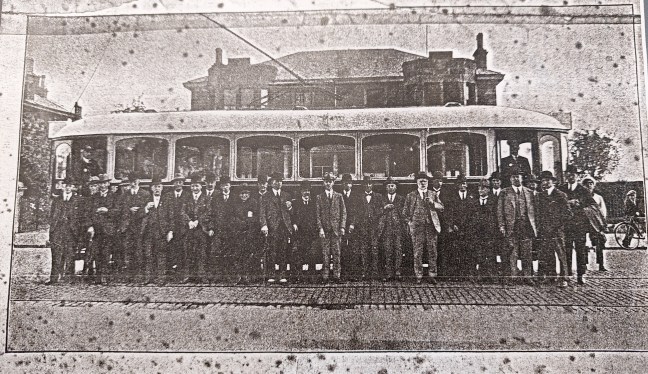
At least a couple of decades ago – long before I was interested in the social history of amateur music-making in Scotland – I came across a curious piece of sheet music. Knowing that my other half is more than a little interested in Glasgow trams, I made a photocopy and kept it safe. Every so often, we would joke that I’d get someone to sing it when it came to ‘final curtains’ time. (It would make a nice change from ‘Abide with me’ and the 23rd Psalm, after all!)
My Insatiable Curiosity
I hadn’t looked at ‘Glasgow’s Tuppenny Tram’ in years, but whilst I was proofreading my forthcoming book, I decided I really should look to see who had published that song. James S. Kerr? Mozart Allan? Galbraith’s in Renfield Street? Certainly not Bayley & Ferguson or Paterson’s. So I looked. The song was self-published in 1926 by the author and composer, an entertainer called R. F. Morrison. The song was actually arranged by Carleton H. Smyth, who was secretary and treasurer of the Glasgow Masonic Burns Club. (You’ll see that Morrison was also the author of ‘Just a wee Deoch-an-Doris’ and ‘Suvla Bay’. Which is interesting, since Harry Lauder’s songsheet of ‘A Wee Deoch-an-Doris’ seems not to mention Morrison at all – but I couldn’t access Morrison’s version without going to the British Library, so I shall have to remain mystified.)
There’s no’ much wrang wi’ Glasgow, auld Glesca on the Clyde; St Mungo’s name is known to fame, ower a’ the world wide. There’s bonnie places roon aboot, that thousands never see, You need no ship to make the trip, so be advised by me. CHORUS. Take a trip on a tuppenny tram, and happy you will be, From daylight till dark, there’s many a park, awaitin’ for you & me, Don’t use your hoard for a Daimler or Ford, Like the workers of Uncle Sam, Since Maister Dalrymple made motorin’ simple, wi’ Glasgow’s Tuppenny Tram.
Glasgow’s Tuppenny Tram / R F Morrison, 1926
‘Since Maister Dalrymple made motorin’ simple, wi’ Glasgow’s Tuppenny Tram’
Whilst we remembered the closing lines of the song (after all, we knew that Mr Dalrymple was a significant name in the history of Glasgow’s tram system, until he disappeared off to Sao Paulo in Brazil as a transport consultant), it’s fair to say we hadn’t looked properly at the whole song.
I’ll spare you the second verse! It lists a number of places you could visit by tram. (As the chorus says – see above – no need to waste money on a car!) Meanwhile, the back page is a large advertisement reminding you that there are 32 parks to visit in Glasgow (and still get home in time for tea), and reminds the reader to take care crossing the road …
It’s rubbish! It does incorporate some bits of Scottish song-tunes, but Carleton H. Smyth’s setting was very humdrum. Only one actual mistake in a chord, to be fair. My book is missing NOTHING AT ALL by not referencing this song.
Oh well, it’s a nice reminder of what Glaswegians would do on a sunny Sunday afternoon, or during Fair Fortnight if they had a bit more time. (Apart, of course, from going to variety concerts to hear the likes of R. F. Morrison! I wonder what the other acts were like?)
Meanwhile, I have now been positively beggednot to have the song performed when it comes to the final curtain! What’s it worth … ?!
The book I’m getting published later this year is not my first.
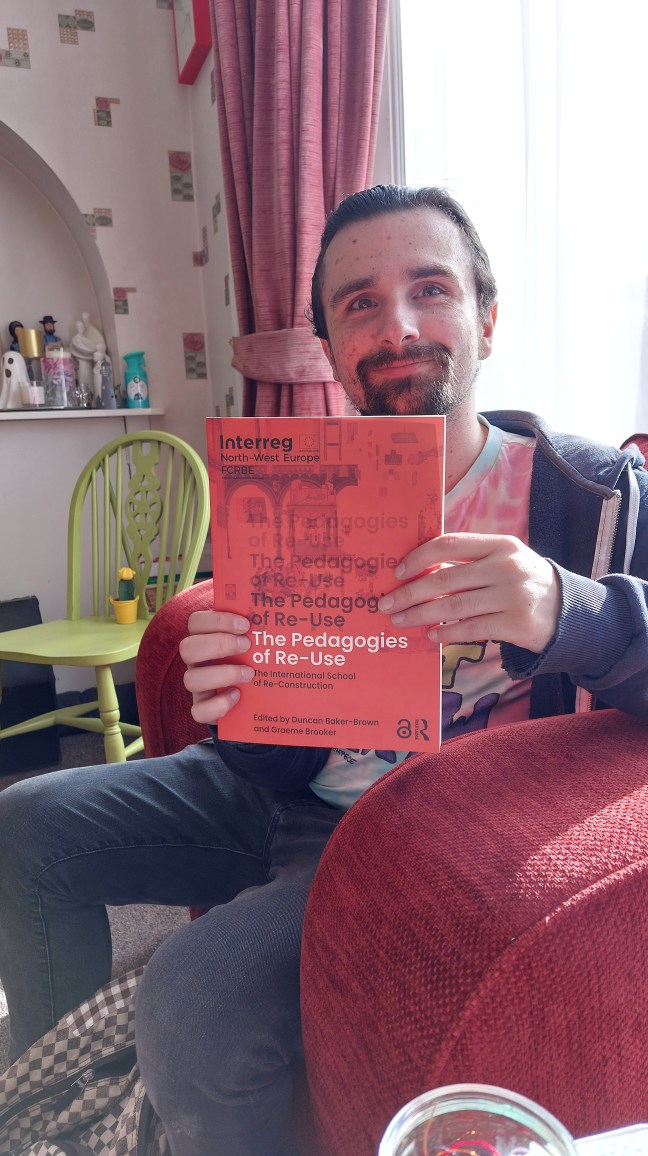
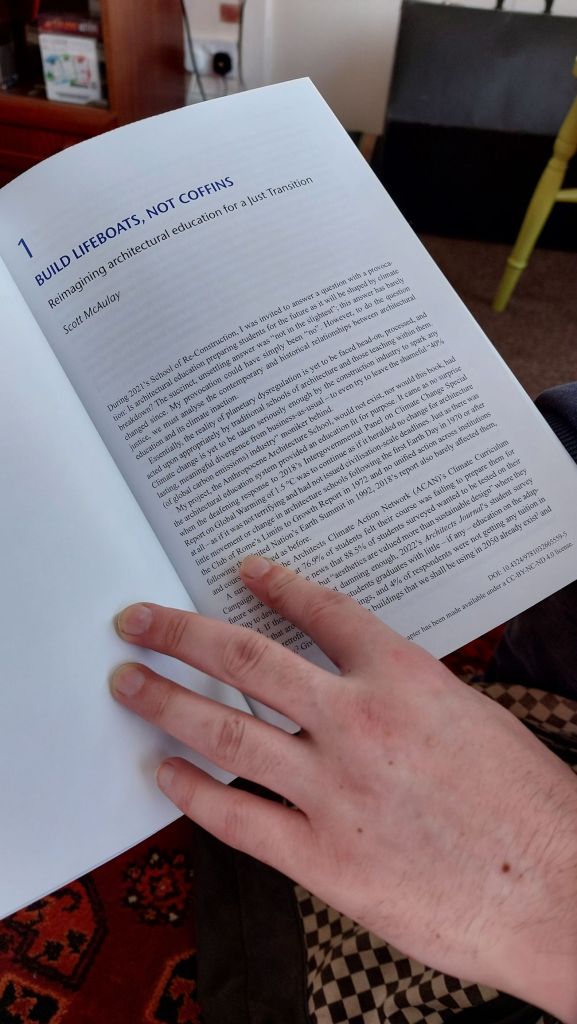
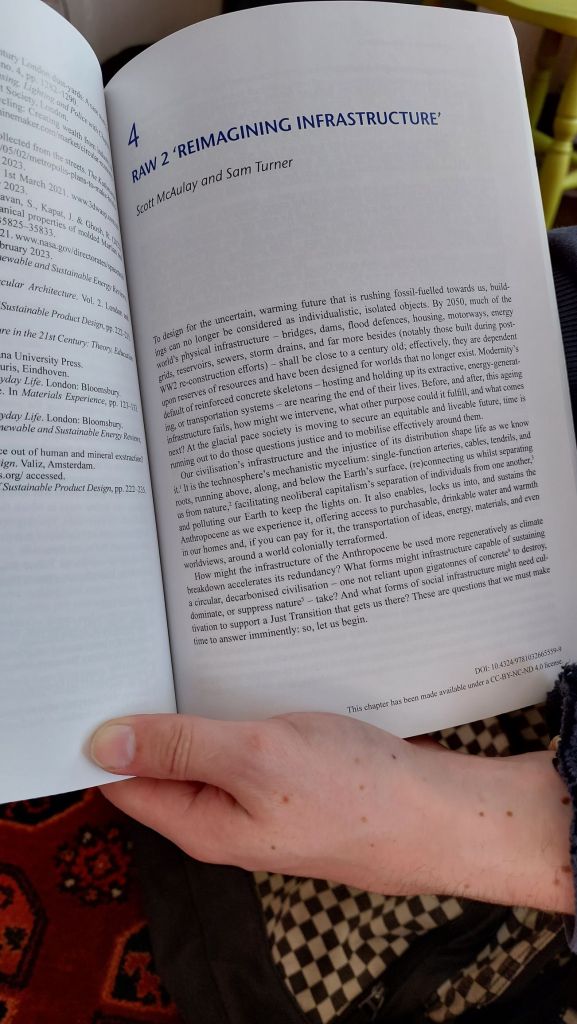
But our son Scott McAulay has beaten me to it, in being the first to see a Routledge publication this year – two chapters in this essay collection. And I understand he’s in another collection, too. Scott has an architectural background – we have very different specialisms! I’m a proud mum.
The Pedagogies of Re-Use
One of Scott’s illustrations is by his older brother, by the way!
I’ve been extraordinarily busy. Today (a ‘retirement’ day), I’ve put in a full day’s proofreading and indexing work, topped by an evening stint. I have an imminent deadline!
Not a problem – but things went a bit awry this evening. Sorry, I have no words of wisdom today, just a reflective poem of sorts! You could almost say it’s Kailyard style. (‘Kale yard’ is a homely form of Scottish literature from an earlier era. It’s not high art.)
I checked my proofs (I went through twice), and tweaked what needed tweaking. My husband cooked the dinner (yay!); our son refrained from speaking.
I laboured hard at indexing, with one ear on the gate – the Sainsbury’s van was imminent; I hoped he’d not be late.
A rattled bolt – I shot outside to greet my “daily bread”, but to my horror, there I faced a lanky Glasgow ‘ned’.
The Author yelled – the Ned jumped back, then leapt up on the wall. He AND his mates seemed pure gob-smacked – thank God they didn’t fall.
I used some words not in my book, then fled back safe inside. The ‘Polis’ were awaiting, but no Neds achieved a ride.
The Sainsbury’s man turned up at last – I put the stuff away. Then back to indexing again – oh, what a fun-filled day!
Thistle ‘vibe’ – local.
AI intruder image from Pixabay. My visiting Ned was probably 6 ft, but not nearly soimpressive!
To anyone starting out on their research journey, visiting an unfamiliar library can be intimidating. Here are some tips to help you prepare.
Know what you’re looking for. (1) Have you been able to check the catalogue online and get the shelf references?
Know what you’re looking for. (2) Have you got all the bibliographical details to hand? You might need them to look something up once you’re on site, in a card, microfiche or some other retro catalogue format. You also might need to ask someone to fetch items for you – reference libraries don’t have all their stock on open access, and special collections/archives never do – so it’s only reasonable to have as much info as possible to share with the staff who’re going to help you.
Know what you’re looking for. (3) Be clear in your own mind as to why you’re going to see these resources, what you’re intending to look out for, how much you can reasonably get through, and what it will take for you to feel you’ve had a successful day. This is crucial!
Practicalities (1) If you have to order things up in advance, be sure you’ve allowed enough time between your request and your visit.
Practicalities (2) Check travel arrangements and book in advance if necessary.
Practicalities (3) Have a pencil, rubber and ruler. Pens may not be permitted. Take your laptop cable. Find out about wifi access.
Practicalities (4) Ask if you can use your phone to take photos. There could be a form to fill in.
Be prepared for different rules and procedures. Answering your phone with a whisper might be okay in your usual library, but an absolute faux-pas somewhere else! Last week, I answered my phone in a public library, and had just started to explain that I couldn’t speak because I was in a lib …. (you’ve guessed the rest. Shhhhh! My own fault for answering it in the first place.)
Have an open mind. Be prepared for unexpected finds! If it looks useful, note it. AND note the page you found it on! Don’t scribble something so cryptic that you’ll never remember why you wrote it.
Get there early, if possible. Have a leisurely coffee before you start, because there’s always the chance you’ll be so engrossed or busy that you won’t want to waste precious time later on!
On your way home, try to go through your notes. Highlight anything you need to follow up.
I had a great trip to Edinburgh yesterday. The sun shone; I made it up the 122 News Steps to the Royal Mile without ending up completely out of breath; and I was so early that I was able to have a very leisurely coffee indeed in the sunshine, before heading to George IV Bridge. I had only ordered four actual items to look at, but I was looking at them quite intensively, so that was exactly right for the time I had available.
‘Lost Works’, meaning No Known Library Holdings at all
I took notes and photos, found a couple of extra unexpected features (evidence of ‘lost works’, no less – that’s a book history term meaning that we know the title did exist, but no copies are extant in libraries today), and on the way home, I was able to email another library with a question about their own edition of a piece of music I’d just been looking at.
Sadly, I can’t assure you that every research visit will be as sunny or as successful as mine was – but at least you’ll have given yourself the best chance!
Completely unrelated to my research – I just liked it!
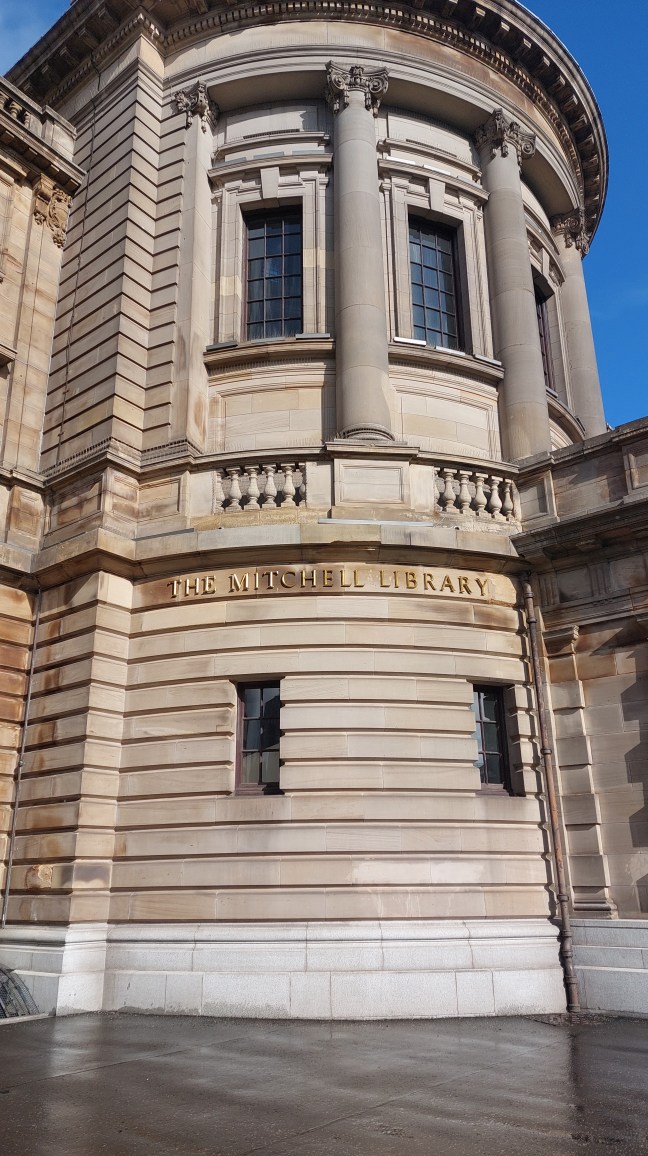
I went back to the Mitchell Library in my continuing search for old (historically old) lady music publishers. Floor 5 was temporarily operating from Floor 3, but the books I needed could thankfully still be got out for me.
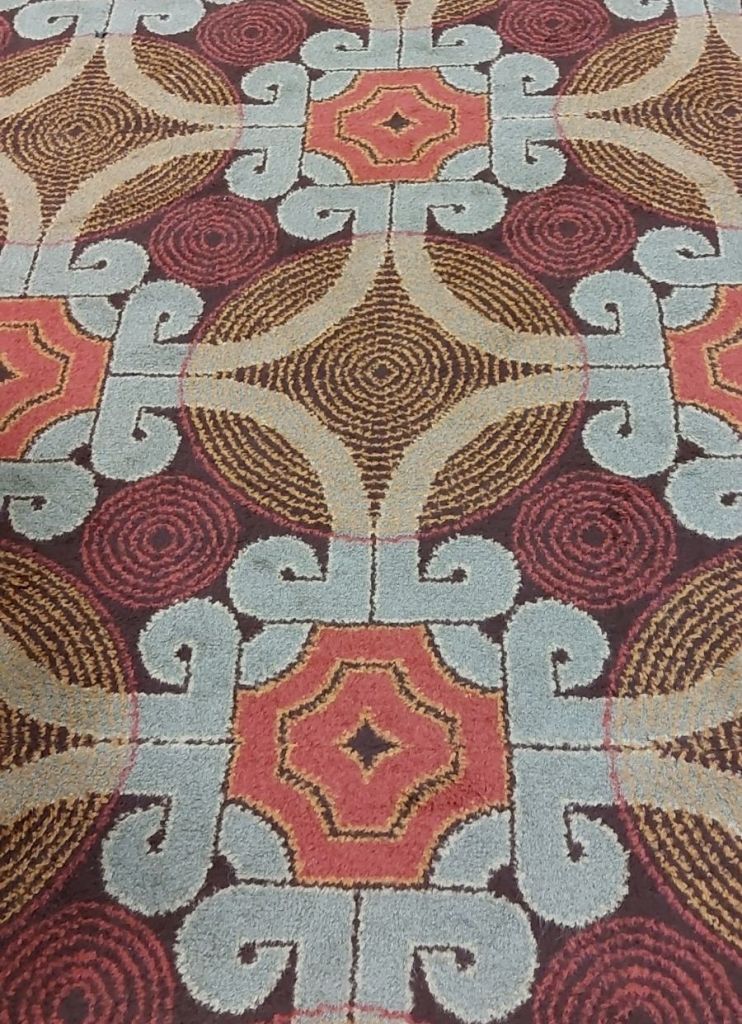
The Mitchell’s epic carpets. Glasgow logo.
The ladies were nowhere to be seen in the book documenting the Glasgow Society of Musicians. Nor was there any hint of them in another book about live music for Victorian Glaswegians. (Although I did, whilst I was still in the library, get an Ancestry message from one of the ladies’ descendants!)
Floor 4 for the Music 🎶 Catalogue
Undeterred, I headed for Floor 4, to have another look in the old card music catalogue – a really useful resource. Again, I only found two of one composer’s pieces. I already own one of them, but that still means one find. And I also spotted a couple of issues of a journal that interested me. A quick flick through, allowed me to note potentially interesting pages, even if they don’t relate to the present theme. I was in my element.
Closing my laptop, I decided to round off the morning with a coffee downstairs …
Then the fire alarm went off. Everyone filed out, and I looked down the street. Would I find a café?
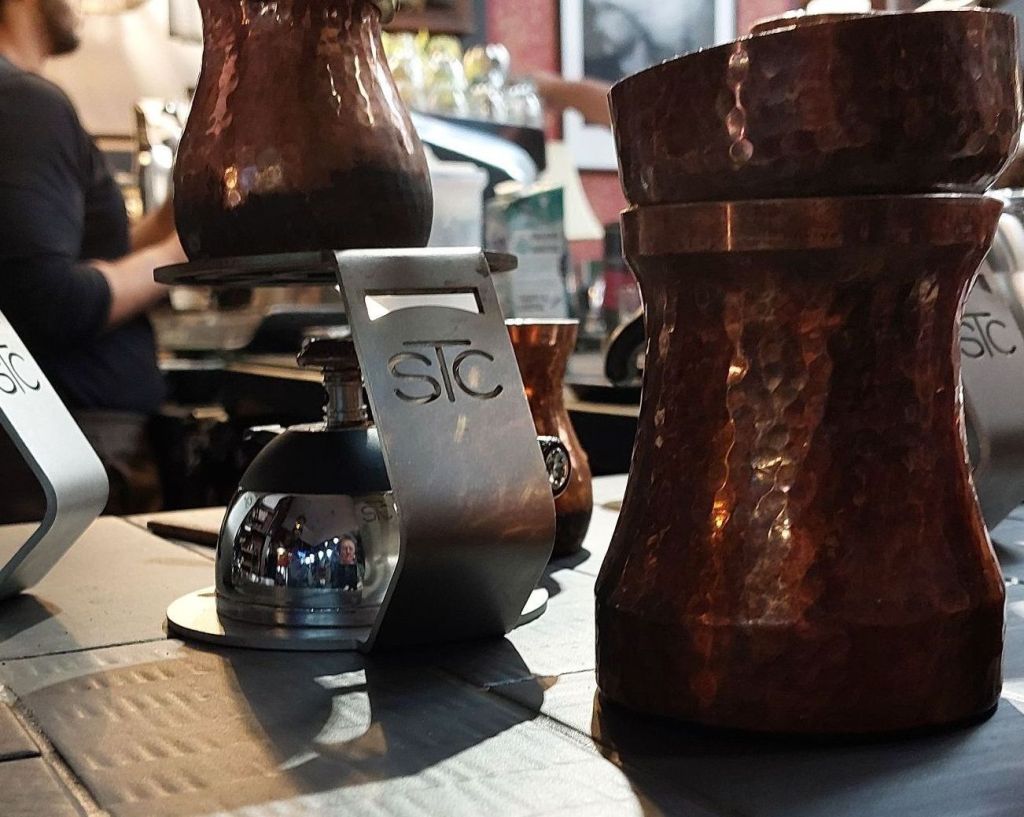
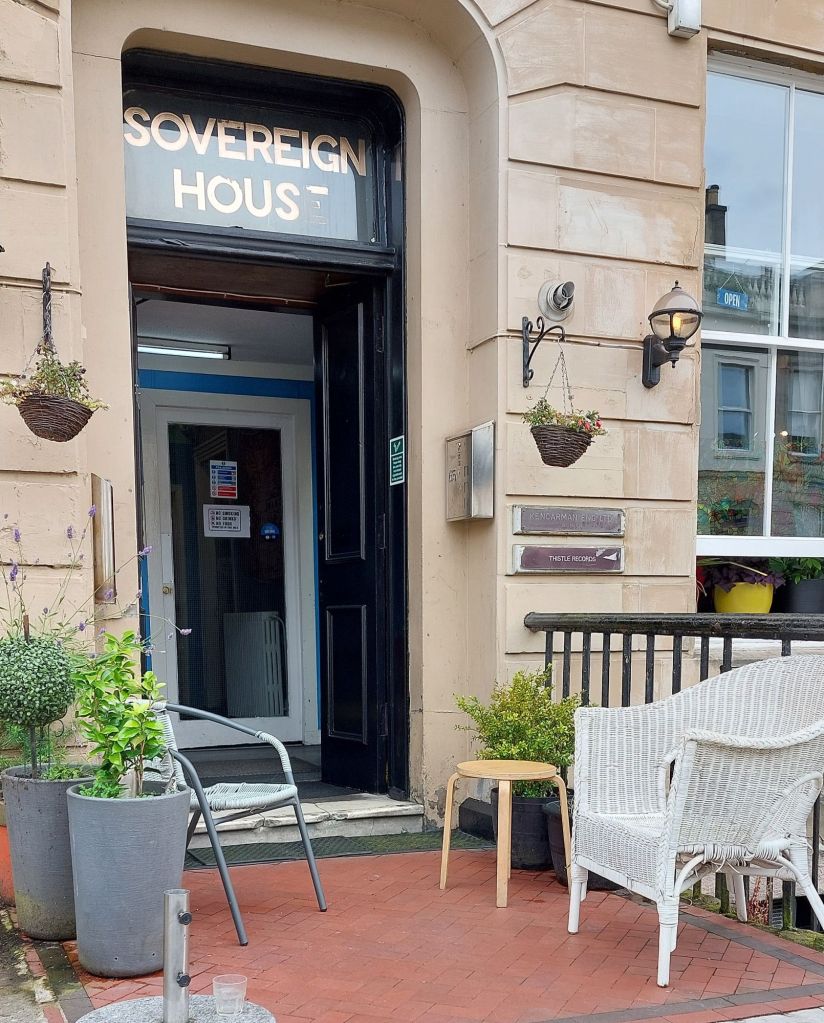
Turkish coffee potsThe erstwhile Thistle Records in Sovereign House. Name plaque still there.
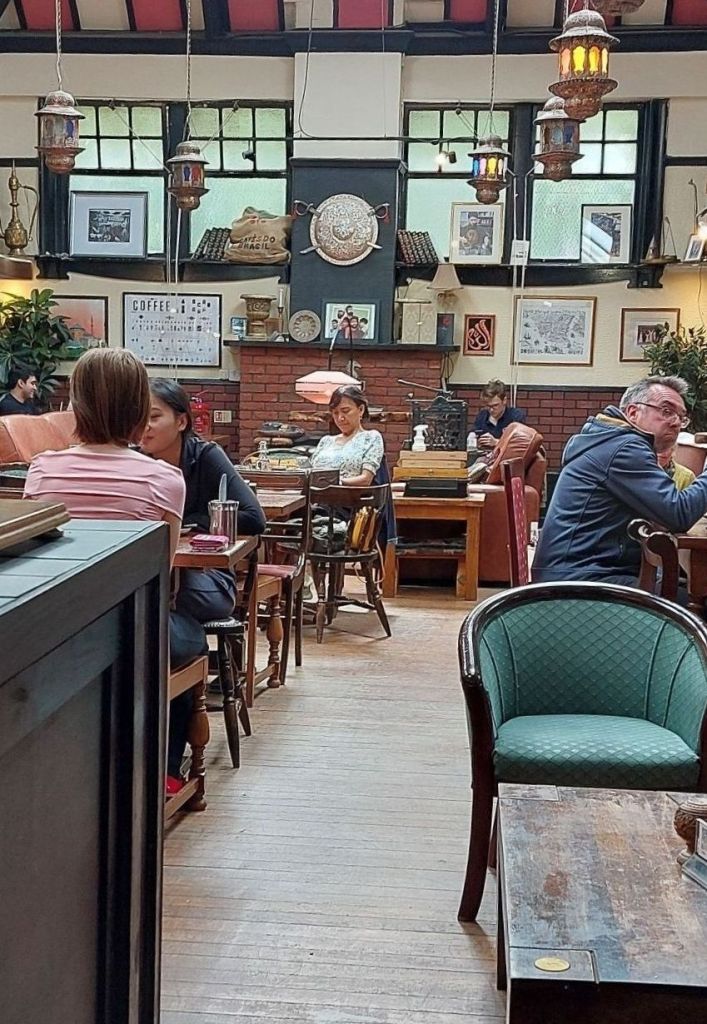
Believe it or not, the Turkish cafe in between what had been Thistle Records, and Kerr’s Music Corporation (Glasgow Music Centre), was in another building with a historical past: no less than the Glasgow Society of Musicians, about which I had just been reading. I got my latte, also snapping a picture of the interior – clearly once the Musicians’ Concert Room – and the art-nouveau front door.
Where once they heard piano trios …You can just see the arched ceiling …Mission accomplished!
Another time, I’ll make sure I have a coffee ‘to sit in’ rather than takeaway! Glasgow’s most eminent musicians would have enjoyed performances there … whether or not the ladies ever got a look-in!
Yesterday, I set out to track down some music. It’s light music, not great music – almost ephemeral, you could say – but together, it tells a story.
I also wanted to find out more about the life of one of these fin-de-siecle Glasgow woman music publishers.
It’s not that easy. The music is scattered round our legal deposit libraries; the cataloguing isn’t completely consistent; and fin-de-siecle ladies, whether single, married, childless or proud mothers, didn’t leave much record of their daily lives. They’re hidden in the shadows of family members, and, whilst I imagine they knew one another, let me stress that this is NOT a tale of a female publishing cooperative!
I had a nice chat with a local history librarian, making an acquaintance who is now equally keen to find out more; then I headed home – as yet, none the wiser – to devise a complex spreadsheet of music titles. I’m visualising a pinboard with strings criss-crossing between ladies, libraries and work-lists.
So complex, indeed, that I still haven’t planned how best to get to SEE the music.















 Karen McAulay, Musicologist