My IASH Fellowship Ends …

IASH - Institute for Advanced Studies in the Humanities

‘All good things must come to an end’, as the saying goes. And an IASH Postdoctoral Research Fellowship is a thoroughly good thing.  I handed back my keys with sadness today, but I have had a great year. (The Fellowship was technically six months, but I was graciously permitted to hang around, retaining the use of my office for the rest of the year, which was wonderful, and enabled me to continue data-gathering in the Library’s Heritage Collections.)

If you are looking for a next step after your PhD, or if like me, you’re making a change of direction – or need a spell concentrating on a particular research question in the Humanities – do consider applying.

I devoted my time to examining the archives of the Edinburgh publishers, Thomas Nelson.  I initially entitled my project, ‘From National Songs to Nursery Rhymes, and Discussion Books to Dance Bands: investigating Thomas Nelson’s Musical Middle Ground’, but the nursery rhymes turned out to be poems, and weren’t what I had in mind! The rest? Yes, I researched them.

I found quite a bit of correspondence between Thomas Nelson’s editors, authors and compilers, which was gratifying. I was able to trace material in journals that I would not have had access to, had I not been in Edinburgh; there’s the excellent University Library collection of actual and digital resources, and the National Library of Scotland just down the road.

I have deferred commencing any significant written work until I had explored all the potentially relevant materials in the files. I believe I’ve now reached that point.  As a result of conducting this research, I have ideas for extending my research in new directions, and I’m contemplating writing another book, so I need not only to explore potential audiences, but also to start working on a book proposal

However, I have also applied for and recently won an Athenaeum Award from the Royal Conservatoire of Scotland to enable me to conduct an oral history project. This work, to be conducted in 2026, will hopefully enable me to write a final chapter for my proposed monograph. (I’ll be blogging about this before too long, but there are things I need to do first, before I spill the beans!)

I have benefited from being part of a research community, hearing other scholars’ papers and discussing our research; and attending researcher development sessions. I  was able to focus on my new direction as a researcher – important, after so many years as an ‘alt-ac’ researcher working in professional services. In this regard, I have also been in a position to submit some other unrelated work for publication, and I spoke at a conference at the University of Sussex in June, all of which gives me a sense that my research is gathering momentum.

Today, my last day, I took a cake to the University Library’s Heritage Collections; went to IASH’s Christmas lunch; and mulled over aspects of my ethical approval submission for my next project. (Oh, and drank quite a bit of coffee!)

Thank you so very much for a great year, IASH!
IASH (Institute for Advanced Studies in the Humanities)

Archival Truths: the Reality of Archival Research

White puzzle with black gap where the missing piece should be.

I can say this very succinctly!

That which you seek may not be there.

Indeed,

That which you seek may not exist.

You can look as hard as you like, for as long as you like, with as much concentration and determination as you can muster from every inch, every fibre of your body … but not everything you want to find, will have survived to the present day, whether in archives or attics, boxes or basements.

Thus, the Thomas Nelson archive may have a handlist, but even the handlist (a second or third version of a handlist made by unknown hands at some point in the past) may document items that no longer exist. I struck lucky with my searches for correspondence about the four Nelson Scots Song Books (1948-1954). Of course, I still don’t know if there was further correspondence between the song book editors (by which I mean the compilers), as well as that between the compilers and Nelson’s in-house editors. But I found enough to be interesting, and to document the general story of their coming to fruition. It is possibly significant that they were published post-war, by the educational department editors, who had all been in Edinburgh for years by now.

However, for the past few weeks, I’ve been looking for correspondence between the author of a 1935 (ie, pre-war) book aimed at the general reader, and Nelson’s in-house editors. There was correspondence as early as 1932 – I know that much, but I can’t find it. Not only have I completely failed to find it, but we’ve discovered at least half-a-dozen boxes are missing. I bet you anything the missing correspondence is (was) in one or more of those missing boxes! Now, Nelson had offices in Edinburgh and London. The editorial staff for educational materials seemed to have been based in Edinburgh before the Second World War, whilst some – but not all – of the other editorial staff joined them from London’s Pater Noster Row at the start of the war. Thus, my 1935 book – not a school textbook – may have been edited from the London office, not in Edinburgh. Hold onto that knowledge.

Missing in Enemy Action?

When the London offices were bombed, the remaining London editorial staff, including the juvenile literature department, were found temporary office accomodation with another publisher. If my missing correspondence was lost either during a move to Edinburgh, or during the London raids, or in the general upheaval that followed, then they will never be found.

Ironically, when I was researching in the British Museum for my Masters degree, there was a particular Augustinian plainsong manuscript that I desperately needed to see – I’d travelled from Exeter to see it. But I filled in the paper slip (this was 1980 – that’s how you did it) – and got the slip back, marked ‘Missing in Enemy Action’. I rather think I have come up against the same problem again!

And the handlist? The original copy could even have been made by Nelson’s own staff, maybe in Edinburgh, but incorporating letters that had come up from London.

There remain four ‘temporary boxes’ at the end of the sequence, which may contain my prey. And a handful of other boxes that I can’t look at until the next time I’m in Edinburgh. But I’m preparing myself to accept the almost inevitable. In this particular instance,

That for which I search may not exist at all.

Imperial War Museum image (copyright © The Family Estate (Art.IWM ART 16123) – I can only share the link).

Good Days and Bad Days in the Archives

Anyone who has spent any length of time on archival research will agree with me that there are days when nothing of interest really turns up! This week has been a case in point.

On the positive side (and this relates to research time beyond the archives), I used to have ONE spreadsheet listing all the significant names – and relevant dates – of the individuals I’ve encountered over the past year or so, be they Thomas Nelson editors, authors, or connected in some other capacity. I now have a second spreadsheet, charting the weird and wonderful departmental codes appearing on letters and memos to/from the Parkside (Edinburgh) and Pater Noster Row (London) offices; I’ve again listed names associated with those offices. This is likely to be of interest to me, but little interest to anyone else. Still, there’s a quiet satisfaction in having clarified who did what, where and when. Whilst I was working on that, I  discovered that one of the earlier editors had previously been an HMI before joining Nelson’s. That was a gratifying discovery, even if he had been a geographer, and had nothing to do with publishing music education materials.

I’ve also continued reading a book about an individual who published a book with Nelson’s in 1935; I’ve borrowed another; and recommended a useful e-book to my home institution library. It hasn’t been a wasted week.

But, glancing through my archival notes and social media postings, there weren’t any significant discoveries. I had a long list of boxes to trawl, in my hunt for interesting correspondence with one particular author, but on Tuesday I realised I’d already seen all that was worth seeing in two boxes, whilst the third box contained ‘the editor regrets’ letters to would-be authors. (A whole boxful of dashed hopes for dozens of would-be authors, ninety-odd years before my own disappointment in an unproductive, rainy day.)

Dutifully Flicking through Pages (FOMO)

Back I went to Edinburgh yesterday, eagerly anticipating fresh discoveries. Did I find the sought-after correspondence? No. There was plenty to amuse, but I can’t say I learned anything more about music education publishing. For example, my curiosity was piqued by a book proposal for a collection of prayers. The editor wrote to a colleague that he didn’t think they wanted any prayers, but he would decide finally when he saw how the would-be author had prayed. I wish I knew what he decided!

I shook my head sorrowfully at the rather naive author who wrote to Nelson’s asking if they published a particular genre of material. I suppose in the 1930s, it was less easy to find out, but could they not have gone into a library or bookshop and ASKED? Again, there was no copy of a response.

Another book proposal that presumably foundered, was the one  unappealingly entitled, ‘The Unamiable Child’. I don’t think they offered the author a contract. (More recently, wasn’t the Horrid Henry series so beloved by children and their parents, about precisely such a child?  Maybe the earlier hopeful author was just ahead of their time.)

Queen Margaret University / Edinburgh College of Domestic Science

I did, however, come across some correspondence which might be of interest to a historian of domestic science education. It appears to be a long time since anyone seems to have published anything about one of QMU’s earlier forerunners, the Edinburgh College of Domestic Science. (Tom Begg wrote a book, The Excellent Women: The Origins and History of Queen Margaret College, in 1994.) But if you know anyone currently researching it, then I can advise them that 1933 saw a run of correspondence with Thomas Nelson about a book they were producing. I can let them know which folder to consult, if they’d like to follow this up!

Time for Tea

As I approached the end of my second day in the archives, one final memo made me smile. (Again, this had absolutely nothing to do with music – I was just dutifully flicking through pages to ensure I hadn’t missed anything.) A memo was sent to three of Thomas Nelson’s Edinburgh managers in July 1956. They were warned that they might have to entertain a couple of visitors from Melbourne whilst their colleague was away. There were a couple of points that they needed to be aware of. I didn’t read past the first of these!

‘It might be wise to point out that Mr C is a teetotaller’.

Let’s hope they remembered. Reading between the lines, ‘hospitality’ was clearly not always a cup of tea and a scone!

Tray containing tea and scones
Hospitality

Image by Dayoung Seo from Pixabay

Jobs for Girls and Boys in the 1950s

Yes, I’m afraid I have been distracted in my archival search for the editor of some teaching materials.  I identified a run of box files for the right years, but it turns out not to be from the editorial team. The sales department was obviously crucial, once the books were ready to market and sell, but if my present quarry had only had any evident input into one solitary published title, then frankly those boxes probably don’t concern me in my present research.

Nonetheless, I inspected four boxes fairly closely, before deciding to stop looking at the boxes from 1953. 

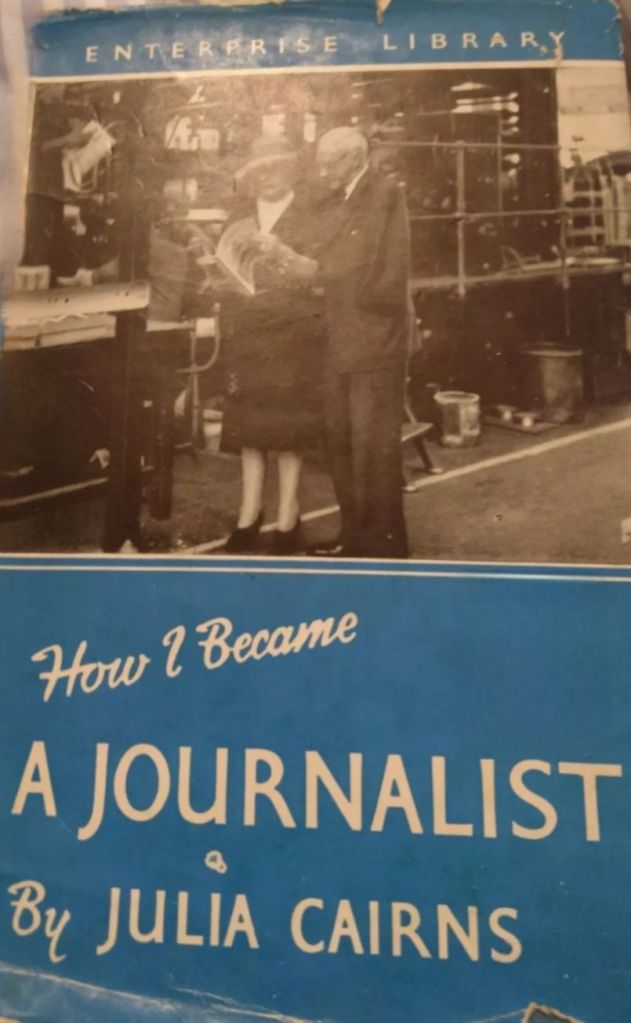
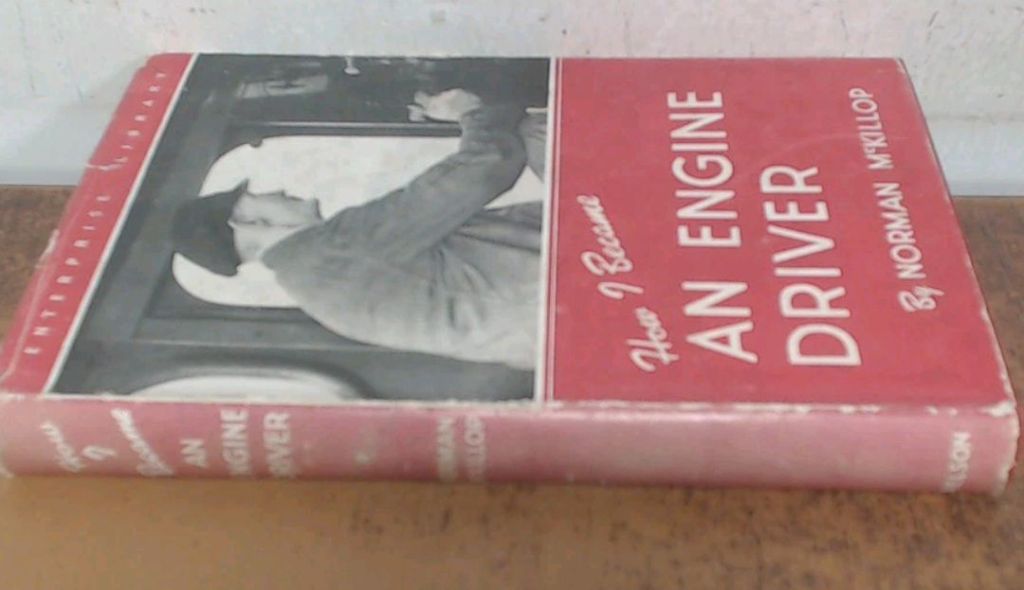
In passing, in the ‘Nelson Juniors’ series, I  encountered some careers-related books from the 1950s. The choices – apart from that of journalist – are rather stereotyped! On the other hand, the girls seem to have more choices … curious, that! Maybe they meant to publish more titles, before the series rolled to a halt with the ‘engine driver’ in 1960.

Found on eBay!
Yes, also on eBay

How I became a … (by women authors)

  • Ballet dancer
  • Fashion model
  • Journalist
  • Librarian
  • Nursing Sister
  • Air Stewardess

How I became a … (by male authors)

  • Cricketer
  • Detective
  • Engine Driver
Also on eBay!

The first and last of these seem to have attracted some interest! The ballet book was reviewed in an American dance magazine – Dancing Star, by the editor of a British magazine called Ballet Today. The Ballet Annual wanted to review it. (A lot of announcements were sent to relevant organisations and individuals.) Moreover, The Psychologist Magazine wanted to review both the ballet book and How I became a Nursing Sister. (Nursing, I can understand. But reviewing a children’s book about the career of ballet dancer? Was it to gain insight into a young ballerina’s mind …?)

And even if nowadays, it looks pretty mundane, Meccano Magazine and The Model Engineer both requested review copies of How I became an Engine Driver.  The Stephenson Locomotive Society were also sent a review copy, along with 2750: Legend of a Locomotive, and they promised to publish a review in the Society’s Journal. Indeed, Thomas Nelson sent a presentation copy of the book to the Lord Reay Maharashtra Industrial Museum in Bombay in response to a request for books for the museum library being set up there – just that one book!

Image by Alana Jordan from Pixabay

Hello to All New Visitors! I’m a Research Fellow

I haven’t been posting much this summer, for personal reasons. So – after more than a week of total blog silence, imagine my surprise to find I have had hundreds and hundreds more visitors since yesterday. What’s happened?!

Even if it’s some kind of blip, it gives me the opportunity to introduce myself. I’m a postdoctoral research fellow at the Royal Conservatoire of Scotland and also, for a few weeks more, at IASH at the University of Edinburgh. I research all sorts of cool stuff (well, it’s cool to me) about Scottish music publishers, with a distinct interest in national song collections, and in early 20th century music education in Scotland.

My second book was published at the end of 2024:-

A Social History of Music-Making and Scottish National Identity: Scotland’s Printed Music, 1880-1951.

That might look like a strange date-range, but my previous book covered Scottish song-collecting up to the 1880s, so this kind of continues in a slightly different way from that point onwards. The 1951 cut-off date is because that was the year of the Festival of Britain. And it was also a good place to stop because I touched upon magic lanterns, gramophones and the wireless, but I really didn’t feel I was the right person to write about early television in Scotland! By stopping in 1951, I conveniently sidestepped early television. There are plenty of people more knowledgeable than me on that front.

My current Edinburgh research entails examining archival records of the Thomas Nelson publishing house, an old Edinburgh firm. The British side of this company has ceased trading – it’s an American firm now – but I’ve found plenty to interest me in the documents up the early 1950s. Education became their focus during the era I’m researching.  Whilst my book mostly covers publishers specialising in music, Thomas Nelson really only published music that would be used in schools – though they hoped a few titles would also attract the general public. (The problem being that if you mention ‘school’ or ‘classroom’ in a title, it will turn off the ordinary member of public looking at books in a bookshop!)

Will there be a third book? Possibly! I’m still pondering.  September is earmarked for concentrated thought about that!

If this sounds interesting, please do come back and visit this site again.

The Man who Turned up Everywhere!

Yesterday was my first day back in the archives. My phone was crawling with messages (an ongoing family situation). Then came a phone-call, which I couldn’t answer without running out to where I could talk. That led to another, and another. And another. Back and forth I went.  I can’t tell you what a day it was!

However, I did get through several folders of Thomas Nelson papers.  I’m in search of the first mention of a particular individual who was very influential in Nelson’s educational music output.  I found him mentioned a couple of times in yesterday’s papers, once quite unexpectedly. I need to see how this sits in my timeline.  Honestly, I didn’t expect to find him urging an organist’s wife to submit a book proposal on … elocution!  It didn’t look like choral speaking (yes, that was a thing, which was quite in vogue a little later on). Indeed, a Nelson editor specifically advised his boss that it was about elocution, so I don’t need to wonder.

Nelson’s rejected the lady’s proposal. She found another publisher.  I briefly wondered how the Englishman who basically ended up acting as music advisor to the Nelson editors, came to know a Scottish organist and his wife, quite early on in his professional career? But I think they probably met at a course or conference.

Sifting through Papers in the Archive

I know what I’m looking for: any mention of music-related publications from the erstwhile Edinburgh publisher, Thomas Nelson.  I found the important things I was hunting down, so now I’m just looking for contextual detail.

These were just a small part of Nelson’s output, of course.  So, my plan of action entails identifying likely boxes (or folders, or binders) and methodically going through them.  As I go, I encounter tantalising threads that I must not be distracted by: John Buchan copyrights, letters from Enid Blyton and Arthur Ransome, and glimpses of the editors’ daily  business.

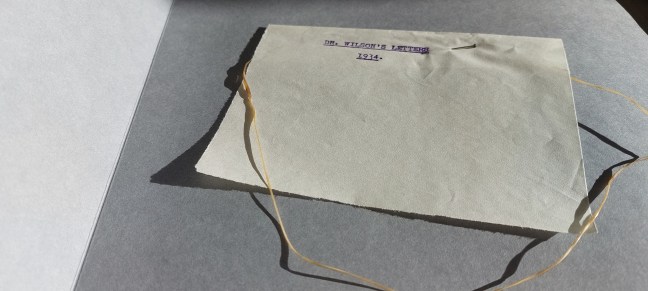
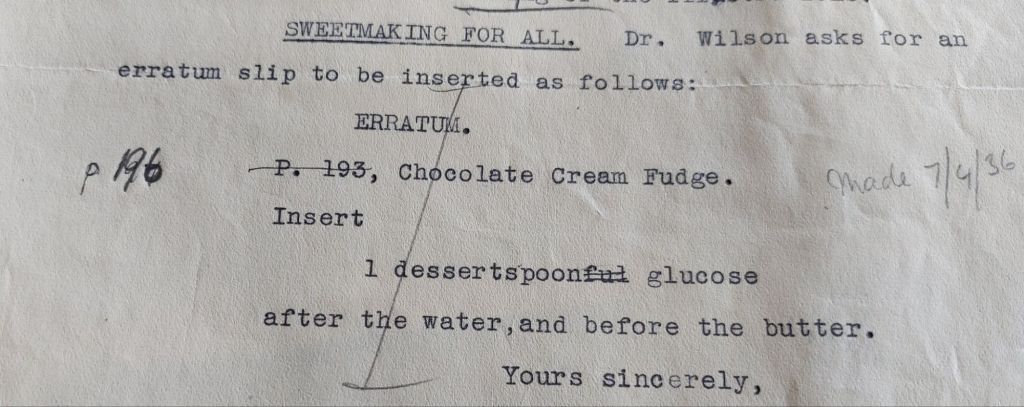
Sweets that would have been less Sweet

Imagine the author’s distress at realising that glucose had been omitted from their confectionery recipe:-

Wanderlust

Meanwhile, it seems Dr Wilson was the only person who could deal with a ‘peppery’ author, but explaining how a travel anthology had gone missing in transit between Bude and Edinburgh would challenge his diplomacy to the utmost. (You have to appreciate the irony.)

Naming no Names

And I was unimpressed by the managing director who had certain issues with women authors. Admittedly, this was the 1930s, but … really, Sir!

Anyway, I’m heading to the University of Surrey/ RMA conference in Guildford today, so all my editors and their authors can rest in peace until next week!

I’m open to new inspiration!

Actors, Singers and Celebrity Cultures across the Centuries

(I blogged about this a few days ago.)

I Struck Gold!

Since January, I have leafed through thousands of cc’d letters concerning the publishing activities of the former Edinburgh publisher, Thomas Nelson & Son Ltd.  Their four Scots Song Books were published 1948-54, so I focused on those years, a little before and a little after.  You might struggle to imagine just how many boxes and file books were filled in such a comparatively short timescale – yards of them – but it was a big, commercially active firm.

And I have indeed found documents about the song books, but I’ve still harboured a sneaky suspicion that there had to be more.  I made further lists of files I ought probably to check, just in case.

Today, I captured my prey! Two whole folders dedicated to these books,  spanning several years but sitting quietly in the middle of one single year  … with a handwritten note saying where they should be filed.  (The ultimate, unattained destination is immaterial, considering the books and boxes now live in an archive rather than the demolished Parkside Works.)

These two grey folders are packed with letters and memos, and – unusually – there are quite a lot of incoming  letters as well as the expected carbon copied outgoing mail. Very nice indeed. (I wanted to hug them, but that might have looked a bit weird!)

There’s nothing for it – I’m listing every sheet of paper, in chronological oder (thanks, Microsoft), with sender, addressee  and a summary of content. Or a transcription, if appropriate.  Data protection means no photos of anything from 1950 onwards, but photos aren’t a very good way of remembering the content in detail, so I don’t really mind.

Unexpected Treasure

Mind the Gap! A Hiatus in the Research Process? Don’t Panic

I was going to add another exclamation mark there, but one exclamation mark is enough. Otherwise, it looks panicky, and that’s not what I want.

Over the years, I have come to realise that when you feel you’ve reached a block of some kind, it’s time to take a deep breath, go and do something else, and wait for inspiration to strike.  This profound truth falls into two parts.  The first key thing is to stop thinking about the block. (I’ll come to the second shortly!)  If you’ve just completed a huge project  – or a thesis  – you might need a significant break. In my present project, it wasn’t on that scale.  I just needed to step back for a weekend.

Is That It?

So, here I am, realising that soon I’ll have looked at most of the roughly contemporaneous archives relating to the Nelson’s Scots Song Books, meaning that I won’t be able to extract much more quotable content from these papers.  And oh, I do enjoy the thrill of the chase! I can continue trawling through papers – or databases – for hours, if I’m hunting for particular details. An initial feeling of disappointment – no more discoveries? – left me wondering if I should start writing up what I do know, now?

But There Is More!

This is the second key thing.  Don’t assume that you’ve ground to a halt. And try to avoid doom predictions; don’t fall into the trap of thinking you’ll never manage to get back on track again.  Instead,  regard the hiatus as a time to regroup (if an individual can be said to regroup) and permit new ideas to surface.

I remind myself that I do have a couple of new ideas to pursue, leading on from what I’ve unearthed so far.  This is certainly not the end.

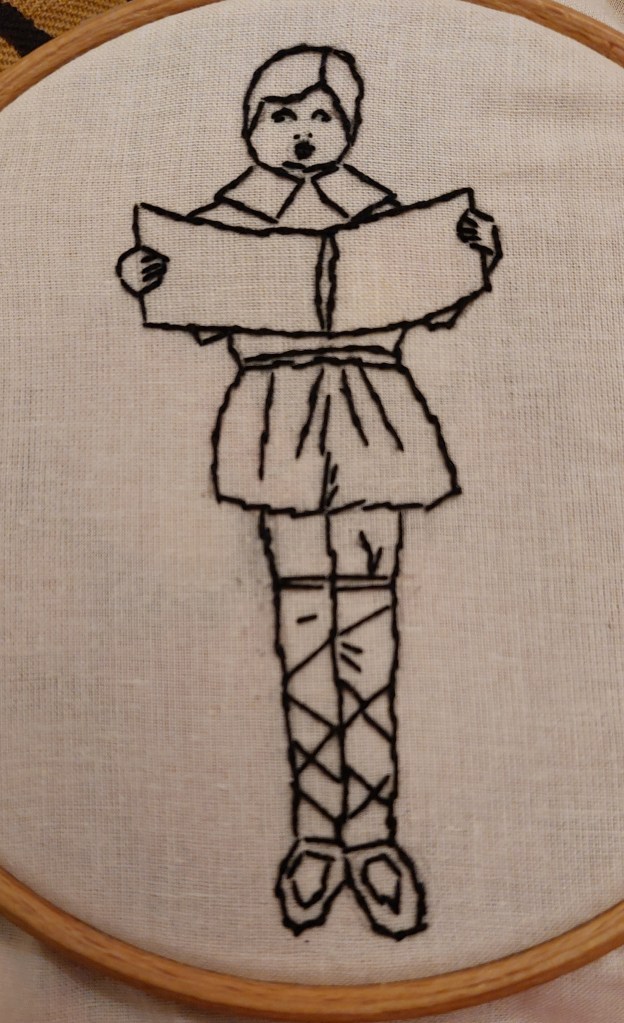
Embroidered copy of child singing from book

Moreover, as I picked up my embroidery needle for some weekend distraction, the sewing project itself reminded me that I haven’t yet explored every angle that I wanted to cover whilst I have access to the archives.

Weekend Pause for Reflection

Remember the little engraving of a child singing from a book? It was used for several of Nelson’s song books, although I think not for the Scots ones. (Only the four Scottish pupils‘ books have illustrations, and they tend to illustrate the songs they accompany – whereas the singing child is just that – a child singing.) I like it, though, and I decided to see if I could reproduce it in stitched form.

And that set me thinking about MacMahon’s New National and Folk Song Books – which include just a few Scots songs. Not to mention the other music books I’ve encountered along the way. 

Actually, that’s another piece of advice.   Take a long, hard look at your initial plan, and ask yourself if you’ve done all you intended to do. There may be other angles that have slipped to the back of your mind.

Looking back at my avowed intentions, at the start of this project, there are several more books I’d like to do a little research into. Not as much as I’ve done into the Scots books, but certainly, to see if I can find any more interesting detail around the times when these other titles were being published. I went back to see what I had written for my Fellowship page on the IASH website. Look:-

Project title: From National Songs to Nursery Rhymes, and Discussion Books to Dance Bands: investigating Thomas Nelson’s Musical Middle Ground

So, how could I NOT devote some thought to nursery rhymes or aspiring amateur dance musicians? Even if it’s only a quick look?

“My recently-published monograph focused mainly on specialist music publishers, but I also made some comparisons with output by contemporary Scottish book publishers, including Thomas Nelson’s.  Exploring the extensive Nelson archive will offer me the opportunity to investigate Nelson’s modest music-related output in depth.  

“The Edinburgh publisher Thomas Nelson’s historical output can be broadly characterised into four categories:- religious; educational; attractive reprints of literary classics; or series for the intelligent layman.  In this project, I shall explore the publishing histories of Nelson’s comparatively limited catalogue of music books and scores, to determine how these titles justified their existence in predominantly non-musical lists.  I’m curious about the publishing histories of all Nelson’s music titles, whether notation or text; and the relative success of different titles.  I’m also interested in the working relationships with compilers and authors.”

Well, I said it there!

  • “The publishing histories of all Nelson’s music titles, whether notation or text.” I can’t compile extensive histories for all of them – there’s more than I thought – but I can certainly explore some that caught my attention. As I have for a couple already, as it happens.
  • As for the relative success of different titles? Well, I can already name a few successful ones, and one a little less successful!
  • And the working relationships? I have plenty of detail, but exploring a few more titles might yield other, unexpected discoveries – all the more reason to keep going!

“I’ll be exploring the background to Nelson’s national song collections, also contemplating their educational music materials in the era ca. 1927-40; books specifically aimed at the layman; and music publications for the Commonwealth.”

  • So – yes, I can justify a bit more time spent looking for the months before MacMahon’s book was published.
  • Maybe I can’t be as thorough as I have been in the 1948-55 era, but I should certainly dip my toes in the water!
  • And – music publications for the Commonwealth? Yes, I can amplify what I know there, too. (Indeed, I’ve just reached out to a college in Nigeria, although it relates to a quest for a picture, rather than anything to do with music.)

So – am I finished? Far from it! I just need to shine a light on different parts of the archive.

(Meanwhile, I’ve finished my wee embroidery – I have no idea what I’ll do with it. But it did get me thinking.)

IASH courtyard, May blossom at its best!

One Side of a Conversation

From the 56 or so files I’ve examined up to now, the Thomas Nelson archives generally save copies of the letters that went out from the offices – but not the incoming replies.  They reveal one side of a conversation.

So today, I was able to read letters to James Easson and Herbert Wiseman about the third and fourth Scots Song Books, but I couldn’t see how they reacted or responded.  I need to look at the finished books again, but I may not necessarily be able to determine if they took on board the impeccably polite and respectful points raised about the texts they had used.  I haven’t got the annotated proofs that were sent to Easson,  or his reply. 

As you will see from the enclosed, there are certain discrepancies, mostly small ones, between your text and the text as given in the various authorities. 

I wonder if he had anticipated the lengths to which his new editor would go – visiting libraries and consulting authoritative editions – to ensure the texts were accurate?! Lengths, I might add, which are entirely consistent with what I’ve learned about the editor!

What is clear, though, is that these books were very carefully compiled, and just as painstakingly edited.

I am very anxious to get these points settled now before the MS goes for setting.

I still have a number of files to examine – and until I see them, I won’t know which departments they are from. I wonder when I’ll catch up with the meticulous editor again?!

Image by Peter H from Pixabay