Dr Karen McAulay explores the history of Scottish music collecting, publishing and national identity from the 18th to 20th centuries. Research Fellow at Royal Conservatoire of Scotland, author of two Routledge monographs.
I’ve been extraordinarily busy. Today (a ‘retirement’ day), I’ve put in a full day’s proofreading and indexing work, topped by an evening stint. I have an imminent deadline!
Not a problem – but things went a bit awry this evening. Sorry, I have no words of wisdom today, just a reflective poem of sorts! You could almost say it’s Kailyard style. (‘Kale yard’ is a homely form of Scottish literature from an earlier era. It’s not high art.)
I checked my proofs (I went through twice), and tweaked what needed tweaking. My husband cooked the dinner (yay!); our son refrained from speaking.
I laboured hard at indexing, with one ear on the gate – the Sainsbury’s van was imminent; I hoped he’d not be late.
A rattled bolt – I shot outside to greet my “daily bread”, but to my horror, there I faced a lanky Glasgow ‘ned’.
The Author yelled – the Ned jumped back, then leapt up on the wall. He AND his mates seemed pure gob-smacked – thank God they didn’t fall.
I used some words not in my book, then fled back safe inside. The ‘Polis’ were awaiting, but no Neds achieved a ride.
The Sainsbury’s man turned up at last – I put the stuff away. Then back to indexing again – oh, what a fun-filled day!
Thistle ‘vibe’ – local.
AI intruder image from Pixabay. My visiting Ned was probably 6 ft, but not nearly soimpressive!
It is clear that I haven’t quite mastered the art of part-time working yet. I have collated a list of keywords for the first, general index, and that’s just waiting for when I get to see the proofs. The next step was to get the copy-edited book manuscript back to the copy-editor. I cheerfully threw myself into that task too. Domesticity was forced into spare minutes. I have no idea how long I spent – but I did it. I made all my little tweaks and corrections to the manuscript, and off it went. Now, all that remained was to collate a list of music titles for the second index of historical Scottish publications. Between Friday and today, I did that, too. It’s a long, long list!
Do we have a Crisis? Or don’t we?
There was a problem, though. Whilst we live in Glasgow, most of my relatives are hundreds of miles away, and when a family concern raises its head, I immediately go into ‘prepare for a crisis’ overdrive.
Distractions!
My car went to the garage for a once-over, just in case I needed to drop everything. Back home, and back to indexing. It’s strange, trying to concentrate on something super-important, whilst wondering if you’ll still be at home in two hours, two days or two weeks …
Thinking of the family in Glasgow, I ordered ready-meals online from a different supermarket to my usual one, simply because they could deliver them quicker. This worked – reasonably well – but with some reservations. (I had to go out this evening, to buy things that I’d missed …)
Messages have flown between Glasgow and ‘down south’, in between checking 19th century publication dates and deciding where cross-references might be needed. It’s a bit disorientating!
I had a trip to Dundee on Saturday, grateful to be going somewhere else and doing something different for a few hours, and then – yup, back to indexing again. Organist duties on Sunday. More indexing. Dinner prepared and consumed. Still more indexing. And so on!
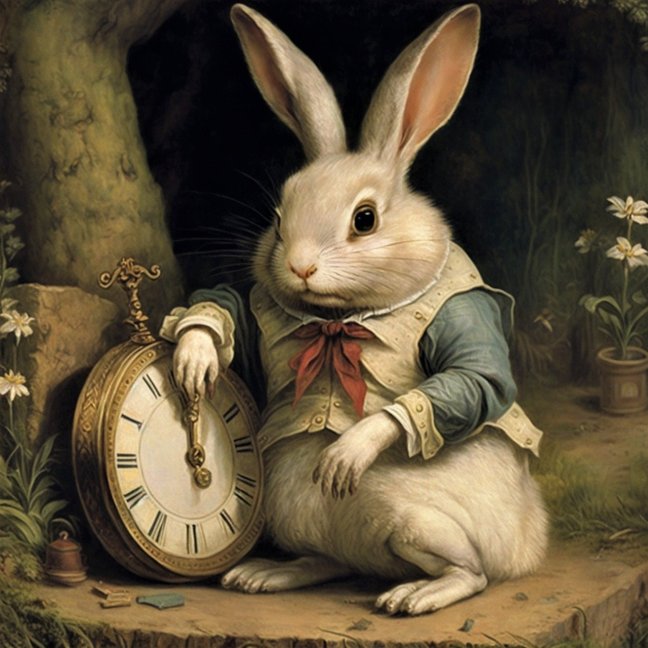
Because of the nature of the potential crisis, it all felt very much like Alice-in-Wonderland, where nothing seemed logical or predictable. Indeed, Alice’s rabbit-hole might have seemed a calm and welcoming place by comparison.
‘Late, Late, for a Very Important Date?’ Not Me!
Image from Pixabay
My main concern was that I had to get the book to a point where I literally could go no further, pending receipt of the proofs for adding page-numbers to the two indices. If the potential crisis proves to be an actual one, that means I can shove the laptop and printouts into a bag and take them with me. My book-writing is an unfathomable mystery to most of my English family, who aren’t up-to-date with what I get up to, and consider me really somewhat eccentric and excessive in what interests me, but even in a crisis, I don’t want to hold up the publishing process!
I think I’m now at the point where I can do no more. I should probably do something completely different, away from the laptop, tomorrow. There will assuredly be family messages which I can pick up on my phone, but I cannot do any more to the book. Maybe I should sew something. Oh, and get the hedges cut, just in case I have to desert them in a hurry …
If I’m still in Glasgow on Wednesday, I can turn my attention to future research-planning. It’ll feel more like a research day if I’ve had a relaxed day before it!
I returned my edited, copy-edited manuscript to the publisher today, and turned back to the small matter of my second index. One index wasn’t enough for Yours Truly – I needed to index all the historical publications that I’ve alluded to, which is not at all the same as a list of modern references – it includes lost works amongst those that are still extant.
I did make the list a couple of months ago, but I realised now that it wasn’t in the most useful order. Worse still, I had used tabs rather than a properly formated table, making it just a bit more fiddly to manipulate.
Hey-ho, time for a reorganisation exercise. So I got started … I do quite like bibliographical lists, but this one’s quite an undertaking.
I sat at that laptop so long today that my eyes are dry and scratchy (hello, eyedrops) whilst my neck twinges when I move my head. Owch. I tried a heated oat-pack, and eventually opted for Voltarol gel. Here’s hoping!
I haven’t remotely finished the task yet – it’ll have to wait now until I’ve been to Dundee tomorrow. The trip will probably be a welcome break.
If, like me, you’ve written a book and find yourself having to index it, you may well wonder just where to begin. My second monograph, like the first, is being published by Routledge. They supply you with general instructions. However, having been through my entire text looking for index terms, I found myself fretting that I might have over-indexed it. (Let’s face it, in my whole career as a librarian, cataloguing a book entailed picking a handful of subject-entries to cover the whole book. On the other hand, indexing – a different task entirely – means picking index terms for every topic covered in each page or chapter, never mind the whole book.)
So, I have a great deal of respect for indexers. My biggest concern is that I may have indexed ‘passing mentions’. This is A Bad Thing in indexing terms. Nicola King’s blog post, Reviewing an Index, offers lots of good advice. Nicola explains here, how to recognise and avoid indexing a passing mention.
“Passing mentions are an item or concept mentioned incidentally in the text but lacking worthwhile information about the item or concept itself. Mere mentions of the existence of something that does not provide at least one fact should be avoided in an index. Generally I try not include locators where no substantial information is provided.
“Passing mentions typically fall into four main types:
examples (Many marsupials, including possums and bilbies, are nocturnal – entry would be marsupials or nocturnal animals, not possums or bilbies),
lists of things or people (the group subject is the entry if it needs one)
asides (as my predecessor, Dr Jones, might have done – no entry for Jones)
scene setting may include passing mentions that are not followed up with what follows.
Nicola’s Reviewing an Index blog post also gives further links to useful web-pages from the Society of Indexers (by Lyndsay Marshall and Ruth Martin respectively), telling you what makes an index good, or bad. Again, we find passing mentions on the bad list!
Passing mentions
As the name suggests, a passing mention is a topic or entity that is mentioned by the author in passing. There is little or no substantive information provided in the text, and so it does not merit an entry in the index. Determining what is, and what is not, a passing mention is another core indexing skill.
I also found a pdf of Indexing Best Practices from the Institute of Certified Indexers. A useful hint that jumped out at me was about cross-references. As a librarian, I know all about See references as opposed to See also references, but I didn’t know that double-posting is preferred in certain indexing instances. So, this is very helpful to know, and I’ll have to go back through my embryonic pre-index document to make sure none of my cross-references might have led users ‘to an entry with a single locator’:-
Cross-references do not lead users to an entry with a single locator (in such instances double-posting should be used instead of cross-referencing).
Wish me luck! I can see I haven’t quite finished yet …
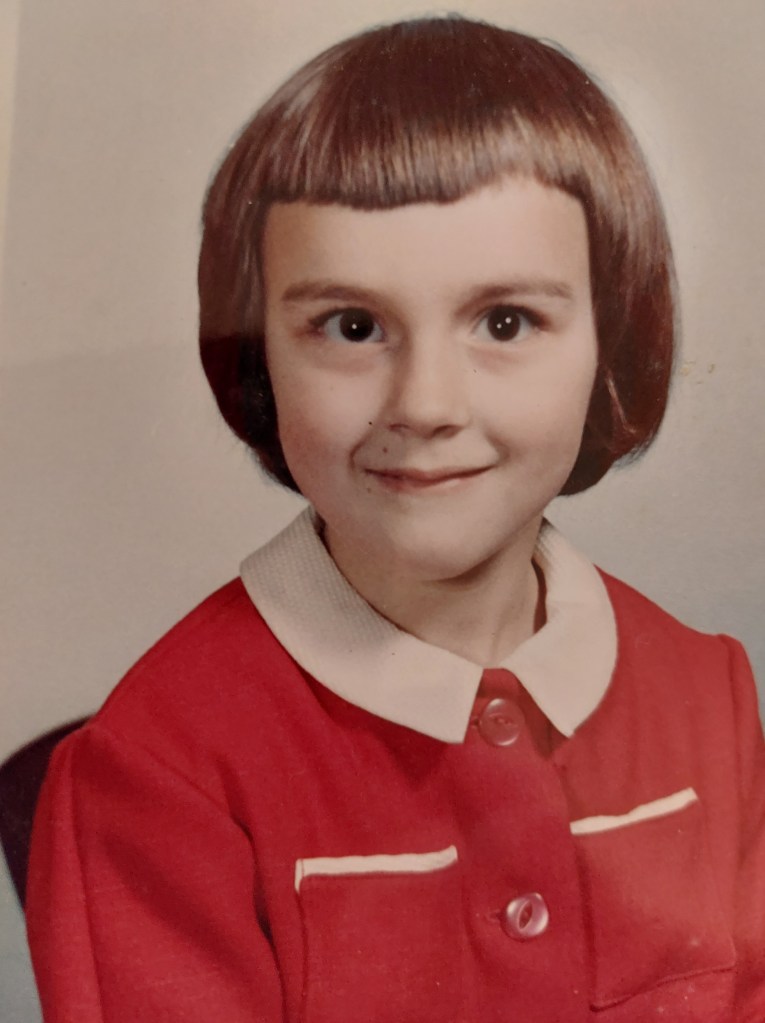
Starting today, that’s my new official title. Prior to my retirement from the Whittaker Library at the Royal Conservatoire of Scotland, I was seconded part-time to Research and Knowledge Exchange. Today, after a brief break, I return as a post doctoral research fellow, since I plainly can’t be seconded from a role I no longer hold.
Reincarnated / ReinKarenated
It’s strange. Today, I sit at my working-from-home desk – same desk, same research work to do, same hours – outwardly, nothing has changed, and yet everything has changed, because I retired from Professional Services and returned to Academic Services. Research is now my sole role, not a small chunk cut out of my 9-5 library existence, and I’m a Research Fellow rather than a Researcher. It’s what I’ve always wanted.
Karen has been reinKarenated, you could say.
What’s in a Name?
‘That’s not how you say my name!’
If I explain the embarrassment of my name, the pun will make more sense. My family pronounces my name ‘Kar’ to rhyme with car, rather than the conventional ‘Kar’ to rhyme with carry. Don’t blame me!
I stopped trying to correct people a very long time ago – it’s not other folks’ fault that my parents decided to pronounce my name distinctively differently. If you’d spent several decades being thought prickly for insisting on an unusual pronunciation, you’d understand why I’ve given up on that!
Call me what you like – I’m a research fellow, and I’d better get on with indexing my monograph ….
I was all set to blog about the Librarian’s Last Tuesday, but my lunchtime discovery makes all that stuff about library owl mascots and jazz CDs seem rather trivial!
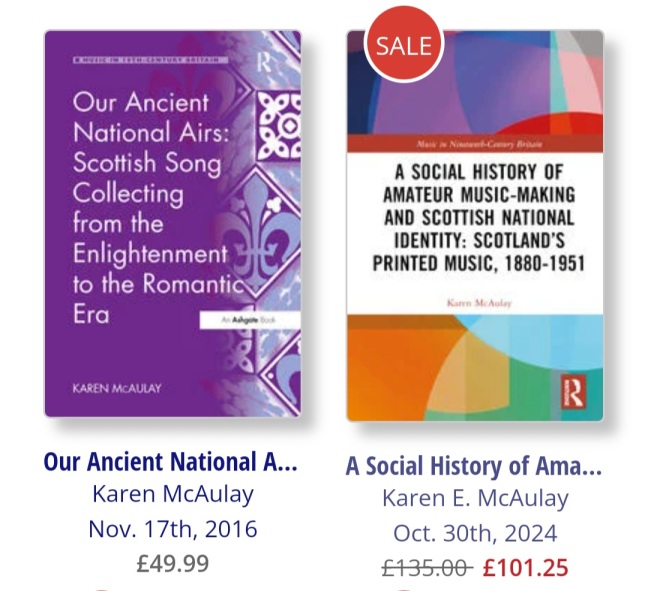
There I sat, half-heartedly eating my sushi, when it occurred to me that I hadn’t yet looked to see if my forthcoming book is advertised on the publisher’s website yet. I practically dropped the sushi in surprise (it wasn’t Boots’s best effort) when…
There was my book looking at me! It’s the first time I’ve seen the title on the cover that I chose a few weeks ago.
I haven’t even seen the proofs yet, and I’m still indexing it, but it’s really exciting to see its outward appearance.
Okay, it was the Performing Arts Librarian’s Last Tuesday. But it was also the last Tuesday before I cease to be a partially-seconded researcher. In eight days I’ll be a part-time Post Doctoral Research Fellow. Still indexing the forthcoming monograph!
A Social History of Amateur Music-Making and Scottish National Identity: Scotland’s Printed Music, 1880-1951
I’ve just heard I should get the proofs of my second monograph by the end of July.
It looks as though the start of semi-retirement is going to be action-packed, doesn’t it? You might almost think I’d planned it that way, but in truth, it’s just how things have worked out. Any planning was really no more than my thinking, ‘yes, that will probably work out rather nicely’.
I need to start thinking about indexing. Indeed, I have made a partial start, but so far only focusing on one aspect.
Let me just stop coughing and get this beastly flu-bug out of the way, and then I’ll roll my sleeves up!
Below, you’ll find a blog post that I have just written for the Whittaker Library blog. In my library career, I haven’t changed the world, but I have bought and catalogued quite a lot of music. (Why be modest? Mountains of it!) In the past five years, I’ve focused particularly on equality and diversity – I put a huge amount of effort into it, and I hope it has made a difference to our users. Perhaps one day, there will be an event to raise awareness of all this music. I tried, but I have done all I can. I wish it had been more, and I wish it could have ended more triumphantly.
In an era that’s all about impact and engagement, it can be an up-hill struggle for a librarian to make a significant difference, and even harder to blow one’s own trumpet metaphorically when surrounded by genuine stars in the making, deservedly blowing their own actual trumpets!
Whilst repertoire lists might not seem the most exciting topic in the world, if they’re important to recitalists and other people planning concert programmes, then they’re important to us. We would like to remind everyone that the Whittaker Library does have a lot of music by women and/or BIPOC composers. We’ve committed a fair chunk […]
Am I a listophile? I started the list to end all lists, on Saturday evening. (Yes, I know. Sad, isn’t it? It’s surely better than the Saturday night trips to the laundry in my student days, though.) I’m going through my book manuscript, tracking EVERY sheet music title that I’ve mentioned.
I should already have them in my epic Zotero bibliography, but for this exercise, I’m also checking off which chapters they appear in. It could be handy when I’m indexing the book in due course. Not only that – if I encounter any date discrepancies, at least I will have the chance to put them right.
But have I created a Monster?
This, dear reader, truly is turning out to be a mega-list. I’m approaching the end of my trawl through Chapter 3 now, and the list is already quite lengthy. On the other hand, since I am likely to be the most knowledgeable authority about publications and publication dates for these particular Scottish publishers, there surely must be some value in this.
And – there are just a few ‘lost books’ amongst them. What could be nicer but more tantalising for a librarian/musicologist/book historian?











 Karen McAulay, Musicologist