Dr Karen McAulay explores the history of Scottish music collecting, publishing and national identity from the 18th to 20th centuries. Research Fellow at Royal Conservatoire of Scotland, author of two Routledge monographs.
Well, after all my Stationers’ Hall research a few years ago, you won’t be surprised to see me say that!
The Edinburgh Companion to Women in Publishing, 1900-2020 (Edinburgh University Press, 2024)
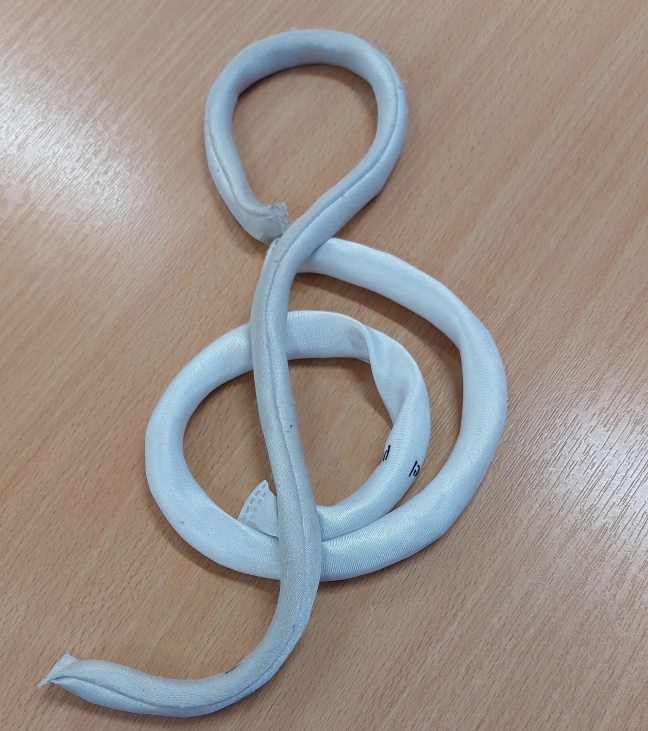
But I had reason to be grateful again today, when I needed to consult an expensive new book of essays from Edinburgh University Press. Only a few universities have it in electronic format (not accessible to external readers, for licensing reasons), but there was ONE printed copy in Scotland – presumably the legal deposit copy. A trip to the National Library of Scotland was called for. (I am so used to going upstairs to the rare books reading room, with all the book cushions and stands, weighted ‘book snakes’ and fragile volumes, that it was quite a novel experience to be heading to the general reading room to see a shiny new book in all its glory!)
From a drizzly start in Glasgow, it turned into a glorious warm and sunny autumn day, showing Edinburgh at its best. (Which is more than can be said for Glasgow, sulking in the rain upon my return!)
And the book was fascinating, despite seemingly not referencing anything related to music. It was wide-ranging in subject-matter and chronological coverage. (120 years is a long time in book-publishing.) I read a couple of chapters, making a mental note that I might have reason to come back to it again next year.
Sometimes, you need to look at a book, just to make sure you haven’t missed anything! I can finish my article now, reassured that I haven’t overlooked any unexpected new commentary. It was a long shot!
It’s a proud day – I’m so excited. (Amazon even recommended it to me the other day, which I found quite amusing!)
Table of Contents
(from the book – and the Routledge website)
Introduction
1 An Era of Opportunity for James S. Kerr and Mozart Allan
2 Nights Out Dancing and Evenings with the Children: Enduring Kerr and Mozart Allan Titles
3 The Saleability of Scottish (and Irish) Songs
4 Education, Preservation, Organisation
5 Expanding Horizons
6 Multimedia Technology, from Magic Lanterns to Recordings and Broadcasts
7 Publishing ‘Classical’ Music in Scotland
Conclusion
Description
(again, from the Routledge website)
Late Victorian Scotland had a flourishing music publishing trade, evidenced by the survival of a plethora of vocal scores and dance tune books; and whether informing us what people actually sang and played at home, danced to, or enjoyed in choirs, or reminding us of the impact of emigration from Britain for both emigrants and their families left behind, examining this neglected repertoire provides an insight into Scottish musical culture and is a valuable addition to the broader social history of Scotland.
The decline of the music trade by the mid-twentieth century is attributable to various factors, some external, but others due to the conservative and perhaps somewhat parochial nature of the publishers’ output. What survives bears witness to the importance of domestic and amateur music-making in ordinary lives between 1880 and 1950. Much of the music is now little more than a historical artefact. Nonetheless, Karen E. McAulay shows that the nature of the music, the song and fiddle tune books’ contents, the paratext around the collections, its packaging, marketing and dissemination all document the social history of an era whose everyday music has often been dismissed as not significant or, indeed, properly ‘old’ enough to merit consideration.
The book will be valuable for academics as well as folk musicians and those interested in the social and musical history of Scotland and the British Isles.
I was bemoaning my many failings yesterday, when I was told (firmly) that I should be more positive and regard myself as a success-story. Unfortunately, I grew up being made so aware of my deficiencies that I’m kind of pre-programmed to look on the dark side. I’ve never quite matched up to expectations!
There’s no Pleasing Some People
Mind you, the criticisms have changed over the years:-
You’re clumsy, untidy and hopeless at sport’;
‘Don’t be disappointed if you fail your 11-plus exam’;
‘You need a secretarial qualification – in case your research doesn’t get you a job’;
‘that “Dr” on your address-labels looks like showing-off’,
‘So-and-so says all those qualifications are ridiculous’,
Are you writing another boring book?’
Which just goes to show that some people are never happy, and maybe I should disregard the comments altogether. For what it’s worth, my books are fascinating! And I rather like my ostentatious “Dr”. Liking my ‘letters’ is probably a failing too.
Being a Successful Woman in the Early 20th Century
Tools of the trade?
However, when I consider how much harder it must have been to be a successful woman a hundred years ago, I’m mightily impressed by the women I’ve encountered during my researches into Scottish music publishing. I’m contemplating writing an article about them, but they are often ridiculously modest and very hard to track down, which presents a would-be writer with quite a few problems!
So, who have I got? No, I’m not going to name them just yet. Suffice to say, I have two ladies whose death certificates mention music publishing. And a piano teacher who wrote and self-published a handful of really rather good songs, along with raising three children. And the entertainer’s mother who arranged some Scottish hits. (So far, I’ve only traced documentation of her up to her marriage and the birth of her first child – so frustrating!)
Best of all – and I’ve only recently started researching this in more depth, so she gets the most passing of mentions in my forthcoming book – an incredible lady whose father-in-law started up the business, but who very definitely eventually ran the business herself, with her husband helping her (not the other way round). At the same time, she was a much sought-after conductor with her own orchestra. Wow! Impressive. She didn’t have children. In those days, I can’t imagine how she’d have done what she did, if there was a whole brood of Edwardian children with all their white frilly laundry to do, and no convenience foods! One maidservant? Or two?
I’ve encountered another woman, a singer, whose life looks equally fascinating in different ways. Not a publisher, this time, though. She needs a different article written about her.
Only this weekend, I was reading a blogpost which said that there weren’t really that many women booksellers in the Victorian era, which I think makes it all the more remarkable that these late Victorian and early-twentieth century Scotswomen were quietly forging careers in the music business. So, I shall carry on quietly digging away to find out what I can about them all, and at some point, one, or hopefully two interesting articles will emerge. Watch this space!
The book I’m getting published later this year is not my first.
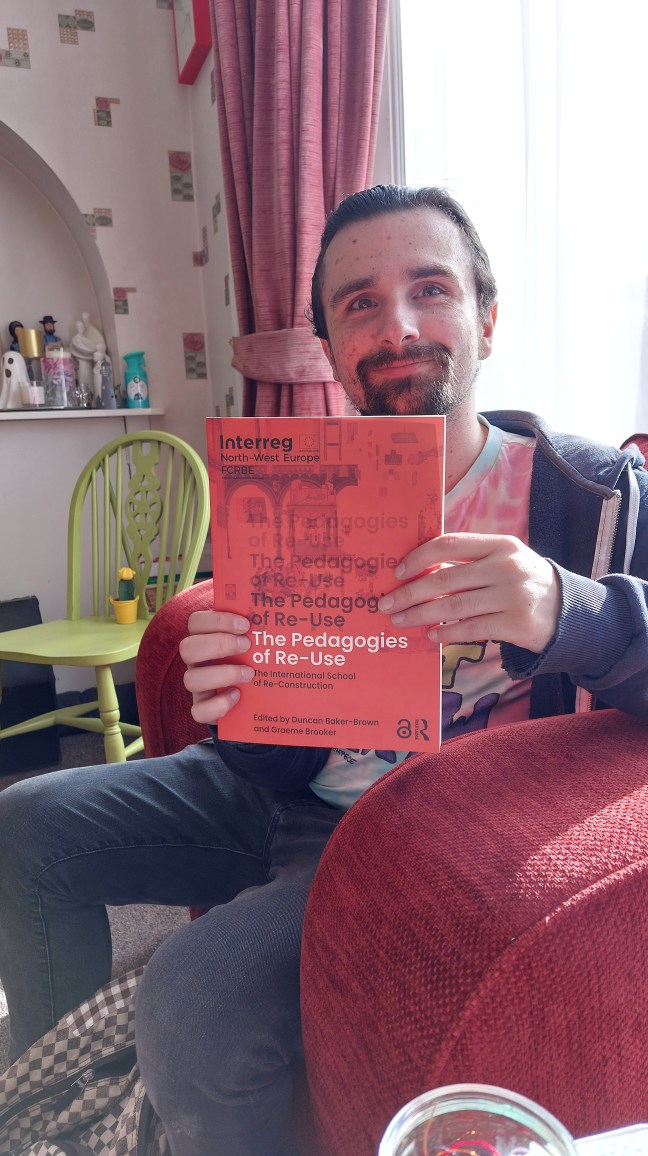
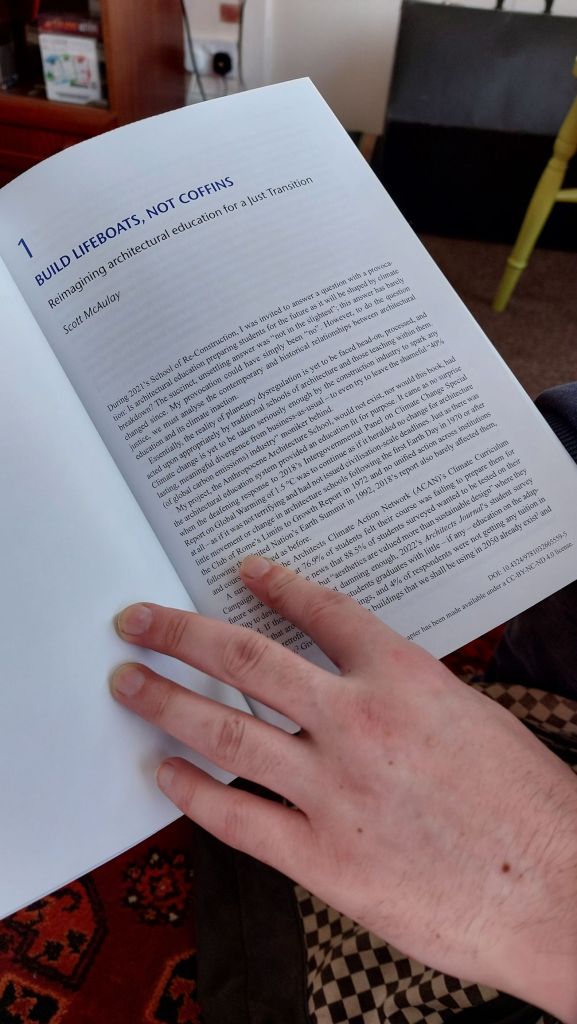
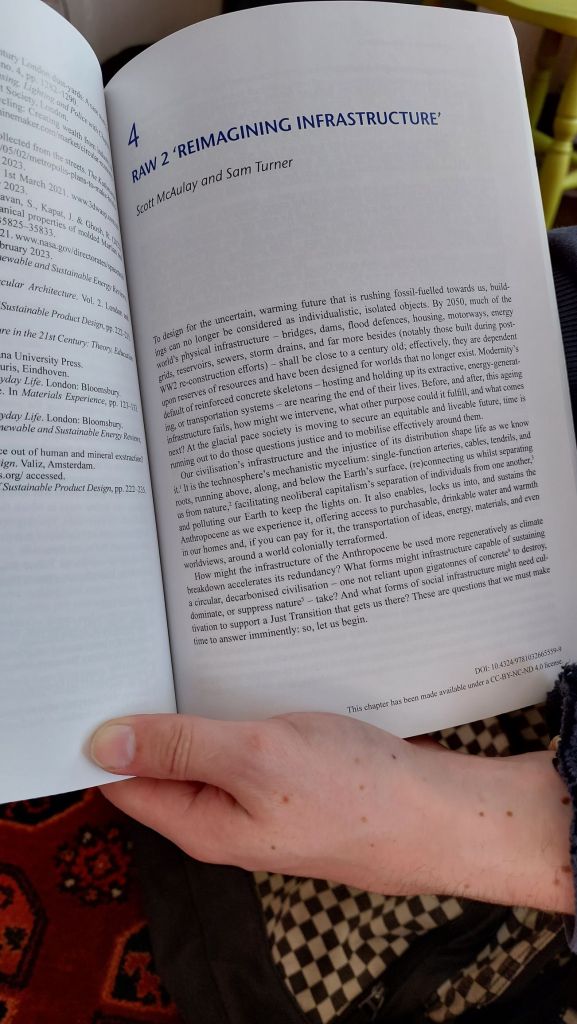
But our son Scott McAulay has beaten me to it, in being the first to see a Routledge publication this year – two chapters in this essay collection. And I understand he’s in another collection, too. Scott has an architectural background – we have very different specialisms! I’m a proud mum.
The Pedagogies of Re-Use
One of Scott’s illustrations is by his older brother, by the way!
Yesterday, I set out to track down some music. It’s light music, not great music – almost ephemeral, you could say – but together, it tells a story.
I also wanted to find out more about the life of one of these fin-de-siecle Glasgow woman music publishers.
It’s not that easy. The music is scattered round our legal deposit libraries; the cataloguing isn’t completely consistent; and fin-de-siecle ladies, whether single, married, childless or proud mothers, didn’t leave much record of their daily lives. They’re hidden in the shadows of family members, and, whilst I imagine they knew one another, let me stress that this is NOT a tale of a female publishing cooperative!
I had a nice chat with a local history librarian, making an acquaintance who is now equally keen to find out more; then I headed home – as yet, none the wiser – to devise a complex spreadsheet of music titles. I’m visualising a pinboard with strings criss-crossing between ladies, libraries and work-lists.
So complex, indeed, that I still haven’t planned how best to get to SEE the music.
I was all set to blog about the Librarian’s Last Tuesday, but my lunchtime discovery makes all that stuff about library owl mascots and jazz CDs seem rather trivial!
There I sat, half-heartedly eating my sushi, when it occurred to me that I hadn’t yet looked to see if my forthcoming book is advertised on the publisher’s website yet. I practically dropped the sushi in surprise (it wasn’t Boots’s best effort) when…
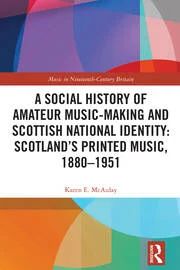
There was my book looking at me! It’s the first time I’ve seen the title on the cover that I chose a few weeks ago.
I haven’t even seen the proofs yet, and I’m still indexing it, but it’s really exciting to see its outward appearance.
Okay, it was the Performing Arts Librarian’s Last Tuesday. But it was also the last Tuesday before I cease to be a partially-seconded researcher. In eight days I’ll be a part-time Post Doctoral Research Fellow. Still indexing the forthcoming monograph!
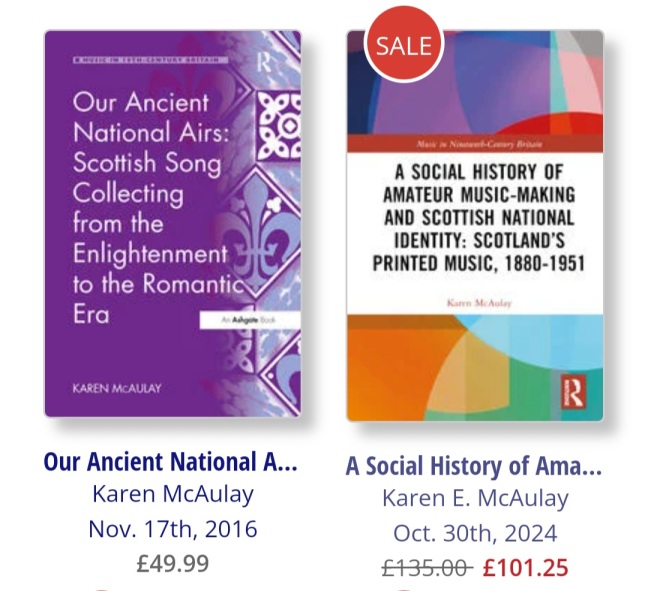
A Social History of Amateur Music-Making and Scottish National Identity: Scotland’s Printed Music, 1880-1951
I’ve just heard I should get the proofs of my second monograph by the end of July.
It looks as though the start of semi-retirement is going to be action-packed, doesn’t it? You might almost think I’d planned it that way, but in truth, it’s just how things have worked out. Any planning was really no more than my thinking, ‘yes, that will probably work out rather nicely’.
I need to start thinking about indexing. Indeed, I have made a partial start, but so far only focusing on one aspect.
Let me just stop coughing and get this beastly flu-bug out of the way, and then I’ll roll my sleeves up!
MOT cancelled on April Fool’s Day; it really was …
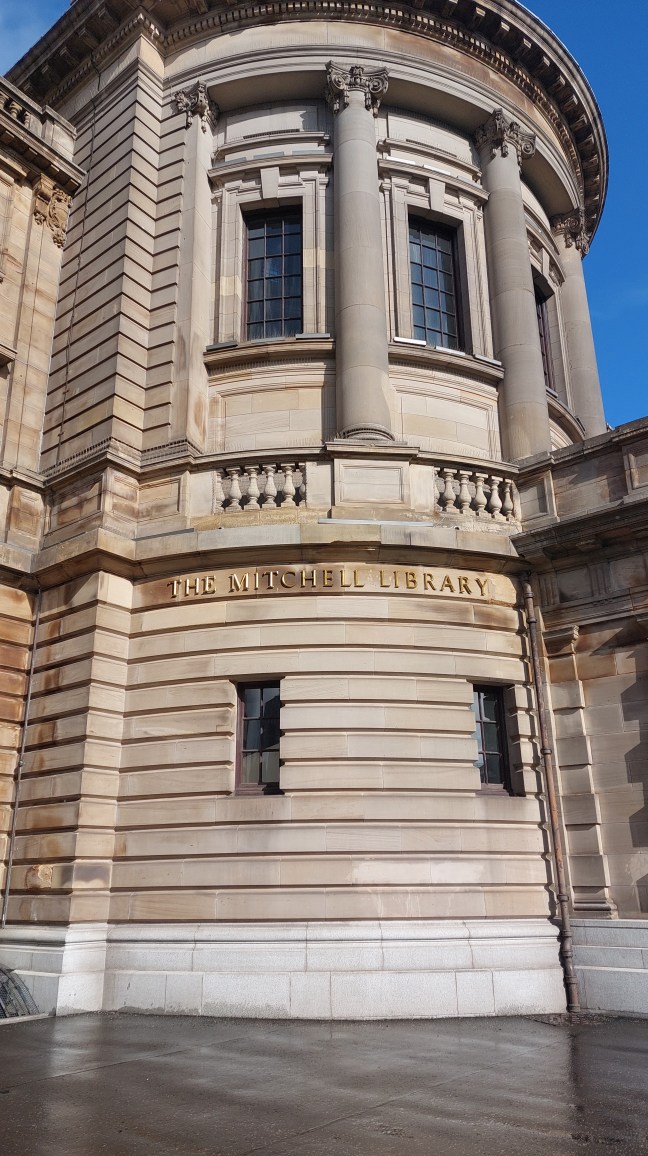
I took myself off on a library visit, looking for a peaceful, fruitful day. (Yes, yes, I know – I’m a librarian, and I already work in a library 3.5 days a week. However, researching in a different library is an entirely different experience.)
It was peaceful, though I could have done without the six miles’ walking in the rain! But –
I found nothing related to my research question!
The trouble was, I had to read a lot of stuff, to eliminate it. Having researched music for so long, however, I was enchanted to read about paper pulp, factories, shipping and personnel in Nairobi, Cape Town, India, Toronto … yes, it was 1946-7, and the links were strong.
Then there were paper and bookbinding cloth shortages. Lots of allusions to both.
But was it a wasted journey? On the face of it, I made no progress, but – as you see – I gathered contextual information. From now on, I won’t be parroting those facts, but alluding to situations I’ve witnessed through perusal of correspondence. That does count for something. And I learned a handful of names that I might one day encounter in a musical context.
Oh, and apart from getting drookit (drenched) and walking six miles (thanks, Fitbit), I did get my peaceful day in a library.
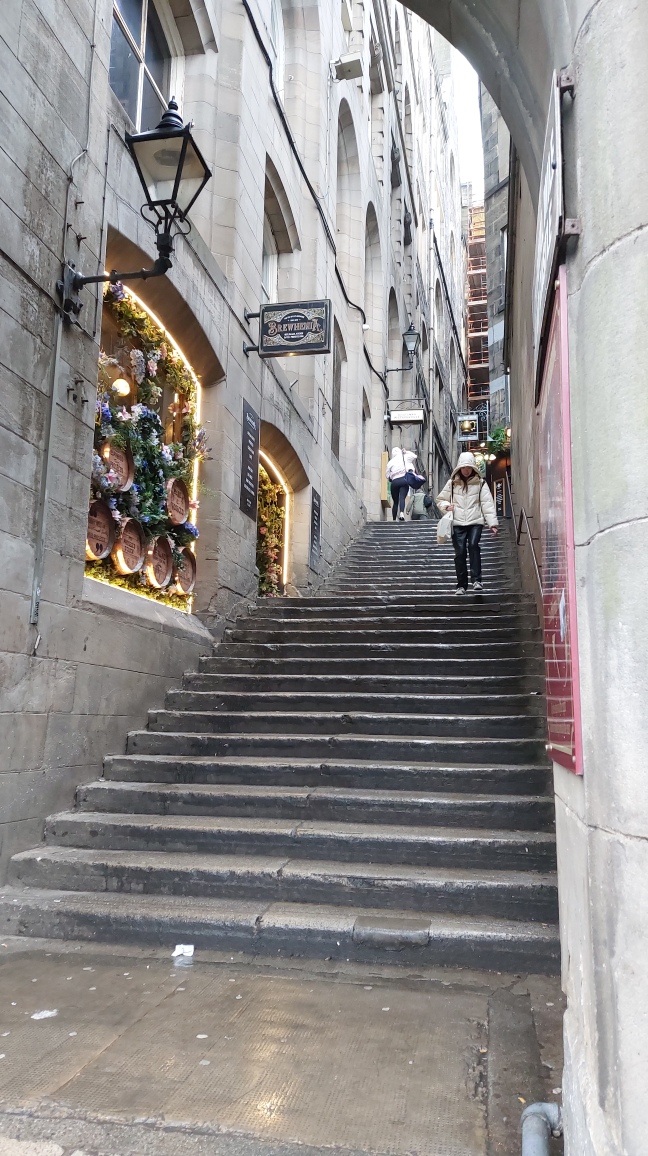
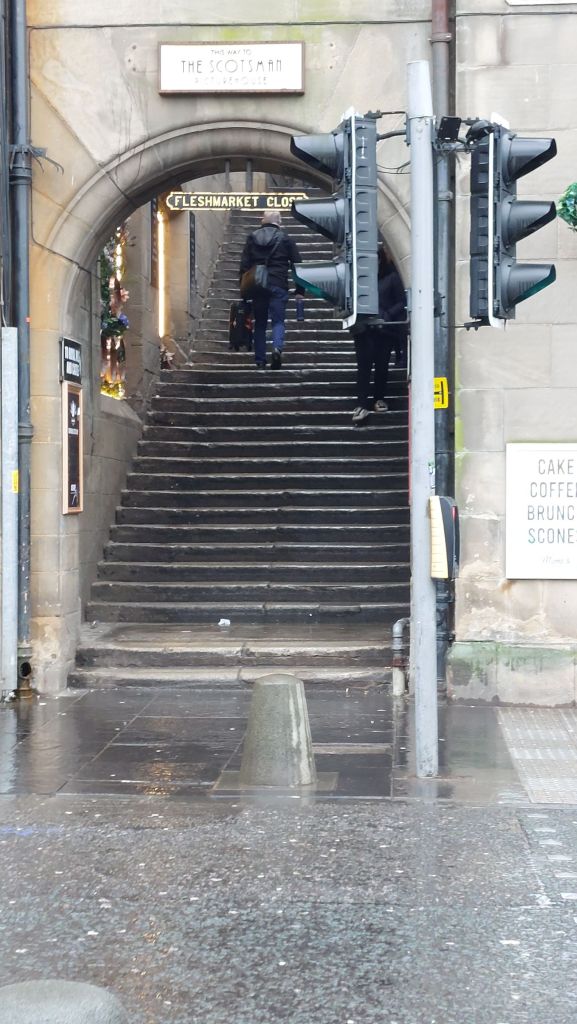
This is Fleshmarket Close in Edinburgh. It’s an absolute killer! I hadn’t ventured up those steps for some years – I swear they’ve got worse – and although my bags weren’t heavy, I was ready for a breather 1/3rd of the way up, and 2/3rd, not to mention at the top! Fitbit says I’ve put in my steps quotient, but annoyingly didn’t count how many flights of stairs I ascended, which is ironic.
But I was on a mission, and I did reward myself with a cuppa when I got to the University Library.
It’s good to go to a different place to study. (The library, I mean, not the cafe …) I think that in itself puts one in a frame of mind to come up with fresh ideas.
It was something of a scoping exercise. Now I need to sit and think about what I found, and its potential as a future research project. Tomorrow will doubtless see me writing away until I get my ideas in order.
I’ll leave you with a couple of publisher’s rejection letters – nothing to do with music or my research. I just stumbled across them, and smiled:-
Publisher to naive would-be authors:-
‘Dear Madam, […] For a book of merely 43 pages, 370 illustrations is excessive …’
Or this one:-
‘Thank you for offering a MSS on Cats and Reptiles. I regret that neither subject would be likely to suit our programme which is chiefly school and expository’.
I wonder if the author ever DID get their MS accepted somewhere?!
My research has been on hold whilst I recover from eye surgery. Firstly, a UK ‘fit note’ says you’re unfit to work (and research is work); and secondly, my good eye soon tells me if I’ve placed too many demands on it. It’s weird to look at a computer screen when one eye is compensating for the other one (that doesn’t fully focus and has an obstruction in the form of a black gas bubble).
So, no research reading, though I have bought a couple of books for later. But that doesn’t stop me thinking. I can’t help doing that.
The other evening, I started a very short list of potential research directions. I can’t proceed with any of them until (a) I am back at work, (b) I can get to various libraries and archives, and (c) I get the go-ahead to drive.
Each potential direction requires me to venture along the path to see what’s round the corner. Not just, whether there’s enough to research, but whether there might be an interested audience for it. For example, there are two Scottish women musicians I’d like to know more about – a Victorian and an Edwardian. One never was a big name, except in her locality. The other did enjoy fame, but she is virtually forgotten today.
Or, two Scottish music publishers with religious inclinations. Does anyone care today, apart from me? I’m interested in what exactly they published; and whether they ever interacted in any way. But is anyone else interested? (I had these hesitations about my mediaeval music research, decades ago. It was possibly one of the reasons it foundered.)
In any of these topics, I have to place the subjects into their social and cultural context, if I am to demonstrate relevance or significance in the grander scheme of things. My motivation is to examine what these individuals and firms’ music and activities tell us about the era in which they lived and worked.
But then there’s the question of impact. I don’t have to so much as open my laptop, let alone a book, to start worrying that I haven’t yet come up with a mind-blowing angle that will knock the world’s socks off! Moreover, there is no conceivable way I can make any of my research relate to climate change; saving the earth’s resources; social good or benefit to health.
And so I sit, blurrily gazing into the middle distance, reflecting! I have the go-ahead to return to work on Monday. Blurrily!











 Karen McAulay, Musicologist