Dr Karen McAulay explores the history of Scottish music collecting, publishing and national identity from the 18th to 20th centuries. Research Fellow at Royal Conservatoire of Scotland, author of two Routledge monographs.
At the end of last year, I wrote a Year-end Review, and told myself firmly that it was not for the purpose either of blowing my own trumpet, or making adverse comparisons of my own output with that of other people. I discovered that the best way was to reflect on successes, failures, and what I would do differently next time.
So, what happens? The first time I read someone’s justifiably proud summary of a few weeks’ outstanding triumphs, I creep into my little hole and bemoan the fact that I haven’t achieved half as much.
I am predominantly a Librarian (0.7 FTE)
That means I catalogue stuff, answer queries, and – at present – engage in discussions with a younger colleague so that the handover goes smoothly this summer. (It also means I’m NOT contracted to do scholarly stuff for 70% of my working hours. If I achieve less as an academic, this is the reason – it’s not disinclination or lack of application.)
My library line manager pointed me towards a CFP for an open-access journal, and in January, I researched, wrote, and submitted an article for it. I haven’t yet heard if it’s been accepted – it’s too soon.
I shall be co-delivering a workshop about the library’s holdings of music by underrepresented composers, in March. That’s something I need to plan out fully in February.
I’m also a Postdoctoral Researcher (0.3 FTE)
Bearing in mind that I have 10.5 hours a week as an academic, I am pleased with my own efforts in January. Even though I had to take annual leave, to get some more research hours:-
Second book revised and resubmitted – too soon to expect a response
Abstract submitted for September conference
Abstract submitted for July conference
BBC Scotland: Good Morning Scotland interview
Completed an AHRC Peer-Review
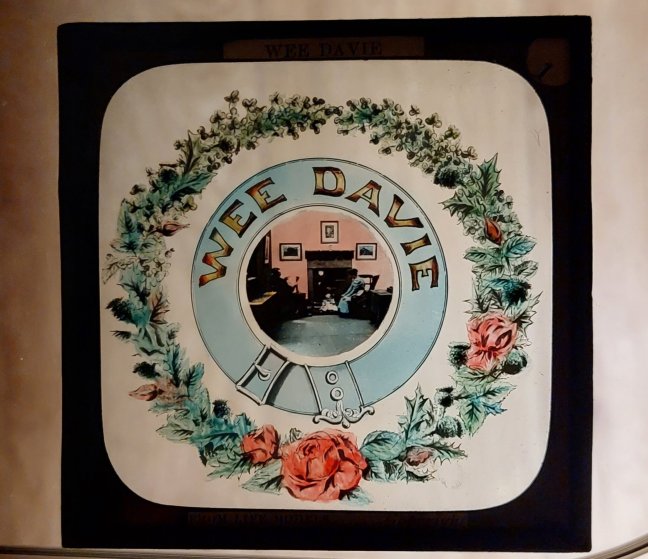
Delivered an Exchange Talk at RCS: ‘From Magic Lantern to Microphone: the Scottish Music Publishers and Pedagogues inspiring Hearts and Minds through Song’
HERE – TONIC SOL-FA IS MUCH PRETTIER IN COLOUR!!
And I’m an Organist
No need to summarise what I’ve done. I play, practise, schedule music and rehearse the choir.
NEILSTON PARISH CHURCH
I Compose
My Extinction Calypso, performed in Edinburgh last year, is set to be performed twice by a choir in a church down in Buckinghamshire in April this year. I’m ecstatic!
In January, I took steps to clarify my future research existence after I’ve retired from the library this summer. It has been massively stressful, actually, but I have taken steps, and look forward to further progress.
I have commitments in February which means I won’t be posting as often on this blog. However, there will be plenty of thinking time, listening time and perhaps some fiddling about on the piano and squeezeboxes later on in the month.
It’s Sunday evening, when anyone with any sense is sitting with their feet up, relaxing before the next week starts. So what do I do? I attempt to sort the vacuum cleaner and order it some new filters; eye the ironing basket balefully; and try but fail to contact the dishwasher warranty people. Yes, I know – it’s a Sunday – but the website categorically said there was someone to help me from 8 am to midnight every day of the week. They didn’t say that the ‘someone’ was a bot, who would advise me to phone a particular number, which in turn would require me to answer loads of questions and then tell me they were closed. Technology and online services are conspiring against me tonight.
So, I thought, I’d go over tomorrow’s talk one more time. Inevitably, even though I’ve successfully given my talk once ‘in real life’, I still found things I thought I could improve upon. The only problem was, I’m sitting at home, and what I needed was neither on my shelves nor available digitally.
A three-volume book of Scottish songs, which I can see in the library at RCS tomorrow. But there’s only one ‘pupil edition’ book of ONE of the volumes available for purchase anywhere online, and I rather think I’d like the whole set of the teacher’s edition, for myself. In my dreams!
So … I had already worked out that the title hadn’t made much of a stir in the contemporary press. Indeed, I think I’ve returned to this question several times, so I needn’t have imagined I would reach a different conclusion today. I searched again. I failed again. We’re not used to searching and not coming up with results!
Ah, of course. There’s a particular magazine which might have a review in it. I have a rare copy of the first issue, which I found on eBay a couple of years ago. But my copy is a bit too early to hold the review I’m hoping for. Where is this magazine to be found? One library, in Edinburgh.
Not to be found in electronic format.
And … no direct trains to Edinburgh this week – they’re clearing up after last week’s storms – whilst I’m tied up all February.
So … A couple of desperate emails on the off-chance that they might yet be in other libraries, albeit not in an online catalogue. And I wait. Because it’s Sunday night, isn’t it? And I hope they’re nowhere near their laptops!
When I think that, doing doctoral studies the first-time round, I would have looked things up in books and journals in the library, or gone home and written a letter to ask if I could visit another library half-way across the country – then waited for a reply – and even the second, completed doctoral attempt was fitted in around full-time employment – I can’t help feeling a little guilty that I’ve become so impatient. In any case, the paper is good enough. I changed a few words, and I’ll print it out again tomorrow.
(Moreover, in my early postgrad student days I washed things up in a wash-hand basin, so dishwasher repairs weren’t even on my radar! There are advantages to being in employment.)
Some things don’t change, though. I still need to do the ironing. Gah!
In the research part of my role (the 1.5 days a week when I am seconded to be a researcher), my path was very clear before Christmas – I was revising my monograph. Having submitted the revisions (on the Twelfth Day of Christmas, no less), what’s next?
Easy, I thought to myself. Whilst I wait for feedback, I’ll just put in a couple of article proposals, then get on with some more research about some interesting elements that I focused on in my book. I have a book to review. And in due course, there’ll be copy-editing and indexing – that’ll keep me occupied! Not to mention looking for grants for which to apply.
Things are Seldom what they Seem!
Four days later, and I now also have two peer-review tasks to do within the next three weeks, and I need to make a recording of my Exchange Talk, just as a back-up in advance of what I hope will be a live Zoom event …
I have 5.5 days in which to do all this. It’s just possible that anything without a deadline might get put to the end of the queue!
Well, folks, I have a preface, revised introduction, seven revised chapters and a revised conclusion … all in a zip file. I finished my revised book manuscript last night, ready to go off this morning. And it feels – Strange. I wondered if I’d feel triumphant when I clicked ‘Send’. But, at the moment, it’s cautious relief with a side of exhaustion. Let’s put the kettle on.
I did my PhD part-time, in my spare time, between 2004-09. Then there was more spare-time work turning it into a monograph, published in 2013.
From 2012-15, I was part-time RA to a major AHRC grant (but still 80% a librarian), and then – there’s a common thread here – I was awarded an AHRC networking grant (which I did part-time) on a different topic, before my hybridity changed to 85% librarian as I started research for this, my second monograph. The initial draft was submitted last summer, a decade after the first book was published.
It was with some envy that I read about an academic starting their research leave this year. I’m sure it’s well-deserved. I’m just wistful, because, apart from being allowed a month for writing up my PhD (yes, I know – we all know – it took much longer than that!), I’ve basically taken annual leave whenever I needed it. That’s what happens when you are more of a librarian than a researcher.
Apart from a brief visit home last summer, I didn’t take a proper break, because I was writing. I only took a week’s pause for Christmas, before jumping back into book revisions. It’s not surprising I’m knackered.
I can’t pretend I’m a full-time academic. I cannot, and should not, compare myself with people in a fully academic role. I’m mostly a librarian – admittedly, an academic librarian – but I’ve been a research fellow (part-time plus some annual leave), and I’ve just finished writing a second scholarly monograph (ditto). Given the time constraints, and the fact that I can’t be researching or writing when I’m being a librarian, I’m modestly proud of that.
Never Mind the Partridge …
Exhausted but provisionally exhilarated … it’s the Twelfth Day of Christmas. After the obligatory drummers drumming, etc, etc, never mind the partridge!
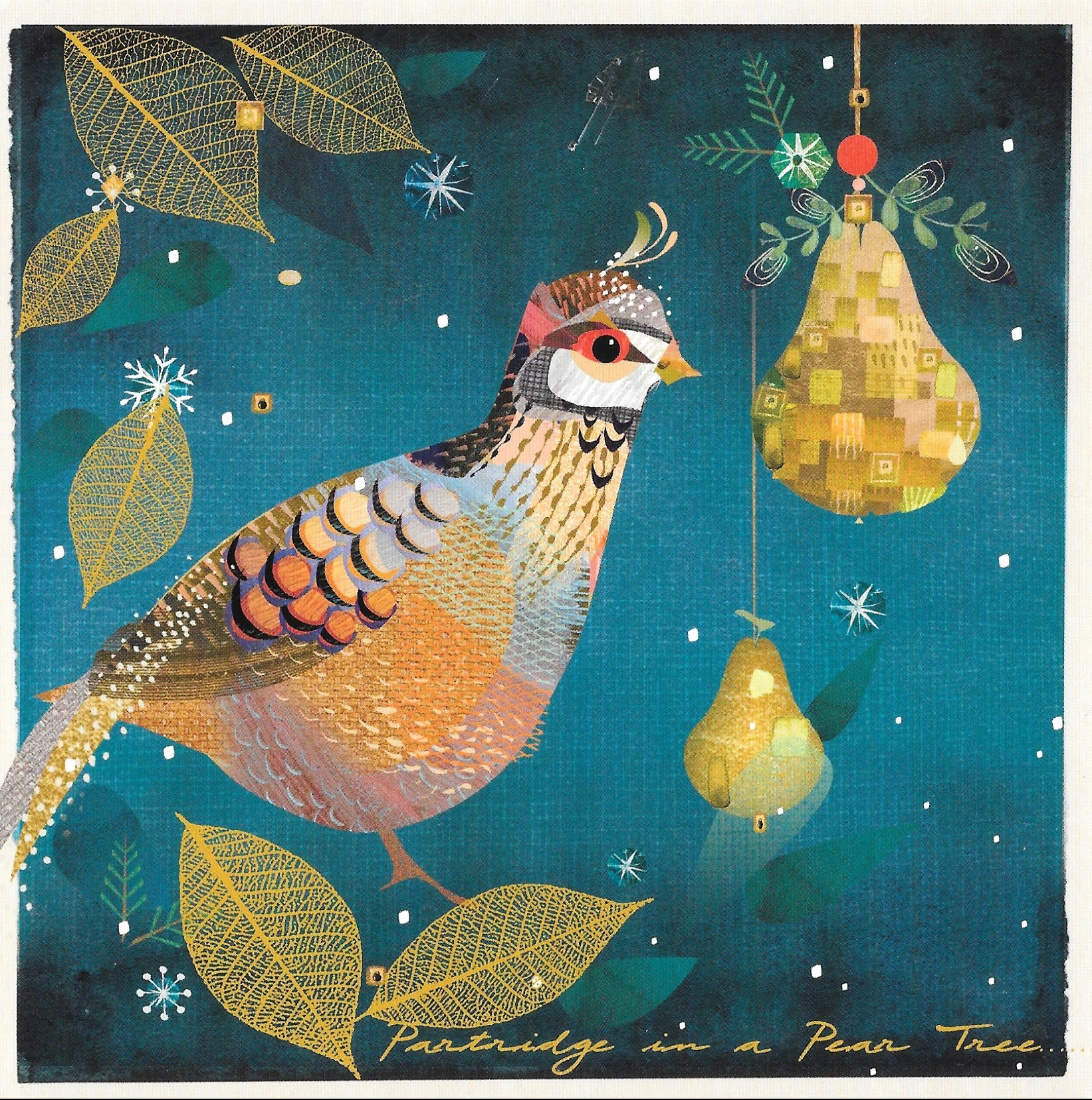
Partridge in a Pear Tree (greetings card from Motor Neurone Association, image courtesy of Advocate Art)
Seriously, why do we do year-end reviews? To show the world what we’re most proud of? Quite possibly. To convince ourselves – and the world – that really, we’ve been very busy and deserve a pat on the back? Perhaps so. I took to the internet to find out why businesses do reviews, and why a career-minded individual might do one of their own.
Consulting the Experts
Braze.com said that year-end reviews offer the chance to ‘create distinctive content’; to ‘build loyalty’ and to remind the world what your particular business does best. To that end, obviously you log milestones, achievements and events. You use multimedia formats, and draw upon customer data. This all makes sense, although I don’t know that I, as an individual, can do all these things. (No customers, for a start!)
I tried again, and found a Harvard Business Review posting about, ‘How to create your own “Year in Review“. There’s plenty of sound advice here, suggesting that I should pause and reflect upon successes and failures; lessons learned; proudest achievements; who has helped me most; how my strengths have helped me to succeed; and whether there’s anything I wish I’d done differently. This is much more introspective, and certainly valuable advice. Whether I’d want to blog about all these headings is a moot point, though.
For me, I have an extra conundrum. I shall be retiring from the Whittaker Library at the beginning of July. I hope to continue the research element of my work, though. So – in one sense I’m writing a career-end review, as far as librarianship is concerned, but it’s not a career-end review for me as a researcher.
The Harvard Business Review suggests using your diary to capture key events on which to reflect. I spent a few minutes doing just that, yesterday. Immediately, I realised that there’s one thing I’m proud of over everything else, and that is that although I spend 85% of my time as an academic librarian, my 15% as a postdoctoral researcher is actually highly productive.
What do I do best? I get things done.
‘She’s a Librarian’
I confess, I don’t like hearing this! It makes me feel as though my research activity is dismissed as dilettantism – that I don’t do badly, considering research isn’t my main role. On the other hand, a fly on the wall would point out that yes, I do spend the majority of my time as a librarian.
Jazz CDs – not a Highlight
So, what did my diary exercise reveal? I’ve catalogued a lot of jazz CDs. This causes me to feel quite a bit of resentment, because I know our readers don’t generally listen to CDs as a format, so all my efforts are to very little avail indeed. Maybe that’s one of the things that I wish I’d done differently. It’s not a high-priority task; however, I am conscious that I don’t want to leave the backlog to my successor. And that’s why I do this dreadfully tedious and repetitive activity!
Retrospective Post Script: that jazz CD cataloguing was indeed a waste of time. I did it because the promise had been made that those CDs (thousands of them) would be catalogued. I didn’t make the promise, but I did feel the obligation to fulfil the promise. My resentment was because it used so little brainpower and expertise, provided so very little fulfilment in the moment, and so little benefit in the long-term.
Equality and Diversity: Stock Development
What I’m more proud of is my efforts to get more music by women and composers of colour, into the library, and most particularly, to ensure that our staff and students know just how much of it there now is in our stock. With a colleague from the academic staff, I’m concocting a plan to raise the profile of this material.
I also suggested maybe there might be a prize for diverse programming …
And I just heard – there is going to be such a prize – it really is happening. A red letter day!
For me, a particularly proud moment was being invited to attend a Masters student’s final recital in June, at which one of these new pieces was played. It was a piece requested by a member of staff – I don’t think it was me that actually stumbled across it – but I certainly sourced it, catalogued and listed it. Whilst I’m heartily sick of cataloguing, I do take pleasure in stock development, and in ensuring there are ample means of discovering the music once we have it.
In September, I was gratified that one of our performance departments reached out to me to request more materials by under-represented composers – a sign that the message is getting through, and that staff appreciate that the library really is trying to help.
Since October, I’ve also been broadening the stock of music inspired by climate change and ecology, including songbooks for school-children, since we have a number of music education students. That pleases me, too.
What else? Dealing with donations to the library, some eagerly received and others needing sifting through. Weeding stock to ensure there’s room for new material, and ensuring that tatty material is removed or replaced depending on how much it’s likely to be used.
User Education
Some things are cyclical – most particularly providing initial library introductions, and later talking to different year-groups about good library research practice. In June, I gave a talk about bibliography to the Scottish Graduate School of Arts and Humanities, which attracted far more of an audience than I’d ever dreamt of!
Queries, and Research-Related Activity
I’ve also dealt with queries – such as one from a Polish librarian, or another from an elderly enquirer wanting to trace music remembered from childhood. And I talked about my research activities at a library training session, even though I was rather afraid of wasting colleagues’ time going on about something that might not feel very relevant. (This autumn, I also obtained and catalogued – in detail – a book of Scottish songs that I have written a book chapter about. It would be dreadful, wouldn’t it?, if someone read the chapter but couldn’t find the song-book in the library!)
Professional Activity
Professionally, I managed the comms for the IAML Congress in Cambridge this summer (with a little bit of help from mascots Cam, Bridge and Don and a couple of fellow IAML (UK & Ireland) librarians, and I think it went quite well. The stats for the blog and Twitter (“X”) rose gratifyingly during this period. I went to a couple of days in Cambridge, but I didn’t speak this time.
IAML Congress mascot Don
A Researcher with Determination
Early on in 2023, I was gratified to receive an LIHG (Library and Information History Group) Bursary to attend a conference at the University of Stirling between 17-19 April, which was about Reading and Book Circulation 1650-1850. This was to be the first of two major successes this year, for I was also elected the inaugural Ketelbey Fellow in the Institute of Scottish Historical Research at the University of St Andrews. I’ve written extensively about this experience in other blog-posts, so I won’t duplicate it here. However, I can’t resist reminding myself of highlights!
Researching key documents in Martyrs’ Kirk Reading Room
Attending both fortnightly research lectures, and ISHR pub lunches on alternating weeks
Many enjoyable hours concentrating on my book revisions – with a view of the sea!
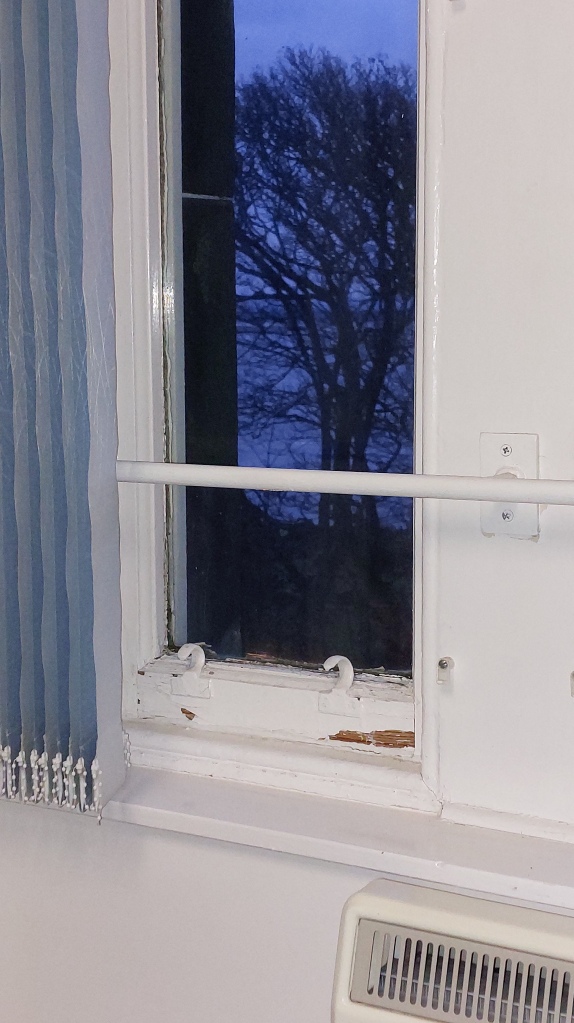
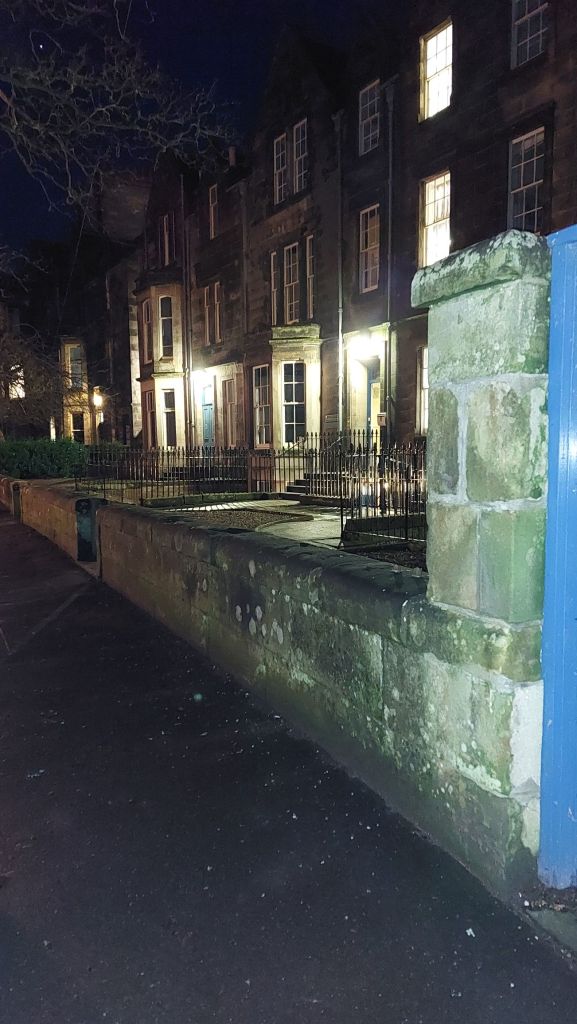
Twilight from my window, St Katharine’s Lodge, St Andrews
We’re not going on a (sniff!) Summer Holiday …
Being a researcher for 15% of the time is not easy – there simply isn’t the time to do all I want to do. Far from ‘dabbling’ in research, I take this side of my work very seriously indeed. I might have been a librarian most of the time, but I have devoted far more than the designated 10.5 hours a week to my research activity! I took annual leave in the summer to get my book draft completed, and took more annual leave to enable me to spend two, rather than 1.5 days researching in St Andrews. I’m doing it again next week; the book revisions must be completed and submitted very soon, and if the only way I can do it is by taking holiday, then that is what I must do.
In January, I wrote an article for the Glasgow Society of Organists, about a Paisley woman organist and accompanist whom I’d discovered during research over Christmas 2022. Even though it wasn’t for a scholarly journal, it was research done to my usual standard, and I’ve drawn upon that research in one of the chapters in my forthcoming monograph.
I’ve peer-reviewed an article, a book manuscript and a grant application. Considering all that I’ve had on my plate this year, I’m quite proud that I did manage to do these things. I don’t attend reading groups, and I’m not always able to attend research-related events that fall in ‘library time’ – I don’t want to give the impression I’m skiving off library work! But I do want to feel part of the research community, and that was precisely what was so magical about my Fellowship in St Andrews. For those two days a week, I was a researcher, pure and simple.
Roll on 2024! What am I going to do differently?
I’m looking forward to the summer. I feel I’ve been a librarian long enough. I’ll miss doing the user education, and rising to the challenges posed by unexpected or unusual queries. I shan’t be sorry to quit cataloguing, particularly jazz CDs!
I don’t actually have any ‘retirement’ plans as such. Apart from having more time to spend on my role as Honorary Librarian of the Friends of Wighton in Dundee. Whilst I live on the other side of Scotland, at least I shall have more opportunities to leap on a bus or train to get to Dundee Central Library to look after the repertoire that I love.
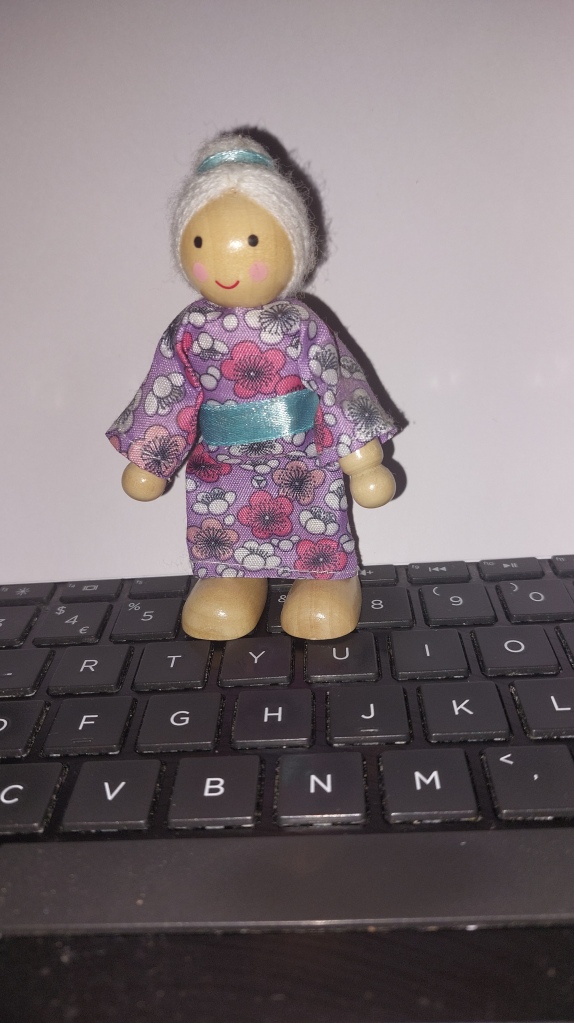
Little old lady? Not me!
Not Entirely Retiring!
I don’t feel remotely like a little old lady! I hope I’ll continue as a postdoctoral researcher in my present institution, but I’m also keeping my eyes open for any other part-time opportunities that I could pursue alongside that. ’Actively looking’, is the phrase, I think.
With a colleague in another institution, we’re cautiously planning a new research idea. And I also have strands of research that I commenced for my book, but hope to pursue in greater depth once this book is safely further along the publication process. Watch this space.
Being a Fellow has been a sheer delight. I’ve met a lot of interesting people; heard interesting research papers; given a public paper (in the Laidlaw Music Centre) and a research paper for the Institute of Scottish Historical Research (ISHR); and availed myself of the invaluable resources of the University Library. As a result, I’ve been able to explore a couple of specific aspects of my research topic – resulting in facts and findings that I’ve incorporated into my book revisions.
Desk cleared …
I said I would get on with monograph revisions, and I have done so – I’ve written a new Preface, and revised the Introduction and first four chapters. There are three more to go, but I’ve broken the back of it, because Chapters 2, 3 and 4 are the longest ones.
Those are tangible outputs. But for me personally, the Fellowship has also been an opportunity to embrace my research scholar identity a bit more, before I retire from the Whittaker Library in July 2024 and become solely a (part-time) researcher. The experience has in that sense given me a powerful sense of endorsement: that another insitution has embraced me as a scholar, and given me a chance to enjoy that status. For that I am very grateful indeed.
Farewell to St Katharine’s Lodge
Here for the final day, I’ve nipped into the Martyr’s Kirk Research Library to look at a couple more old classroom music texts. (I had a little argument with myself about the dates of a few titles advertised on the back of one particular text, but finally concluded that the date of a preface inside a book doesn’t mean that everything advertised on the back outside cover was available at that date. The copy in my hand could, after all, have been printed several years after the text itself came out, and the adverts might well have reflected the later date when the copy was printed, not the date when the text was published.)
I was looking for Scottish song texts, whether ‘folk songs’ or fin-de-siecle songs written for educational purposes. I must confess, I expected to find more than there actually were in these two sources. Still, with glee, I pounced upon ‘My heart’s in the Highlands’.
Too soon. The compiler had set it to … a tune by Mozart! (Very curious, considering the patriotic attitudes of that particular compiler! Why ever did they think that was a good idea?)
I met a colleague and one of their friends for lunch, to discuss a research idea.
And (besides taking my library books back), I started a preliminary check of Chapter 4 of my book, which has grown a little during its revisions.
Soon, very soon, all will be revealed! It’s been quite a quiet year, as far as publications go. Very quiet. But I have had one article and two chapters waiting at their publishers, and this weekend will at least see the article published in History Scotland. Featured on the cover, too.
Logically, it should make no difference where we sit to work on our research. A laptop, a table and chair – that’s it, isn’t it?
However, my concentration is undeniably better in St Andrews, and I’m convinced it’s because of the circumstances. For a start, it’s a seven hour round trip by bus. If I spend that much time just getting there, I’m certainly going to make the most of every hour whilst I’m there.
Secondly, I sit in quiet, comfortable surroundings with no distractions, whether it’s the office-with-a-view, or Martyrs’ Kirk reading room. That’s a privilege.
Time is neither carved up into obligatory breaks at specific times, nor do I need to stop one thing to do something else unrelated but unavoidable. Another luxury!
But most of all, there’s the feeling that being a guest fellow is an honour, so I want to squeeze as much as I can into the time available.
This week, I’ve written half of one of the two talks I’ve agreed to do, and spent a couple of hours at Martyrs’ Kirk. Sadly, one of the books I wanted to see, turned out not to be the sort of book I’d expected. Knowing the author’s prime focus, I thought that it would be a Victorian school book, but this one wasn’t. (At least I hadn’t bought it on eBay!) Maybe it means I’ll think of him as a more rounded individual, though, so perhaps it was worth having a look for that alone.
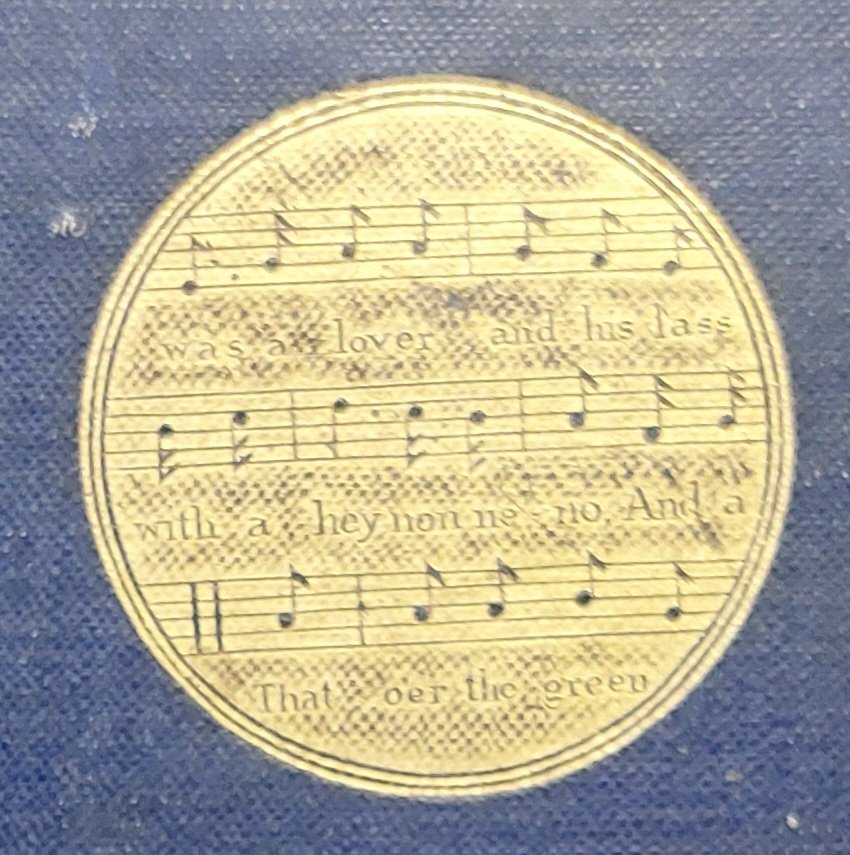
Hullah in staff notation mode!
But that’s another good thing about visiting St Andrews. It’s five minutes from my desk to a library. To look at the same thing in Glasgow would take up a whole chunk of a day, by the time I’d got from home to town. (And when I’m at my own library, I’m just a worker bee – neither a researcher, nor do we have the same resources.)
Mind you, having ruled out Hullah’s national songbook, there’s nothing for it – the next book on my list IS in Glasgow. You win some, lose some, I guess!
This week in Fellowship research, I continued looking at late Victorian sources. I identified a cataloguing glitch – as a librarian/researcher, I’m consistently and annoyingly good at this – and borrowed another armload of library books. But did I make any outstanding discoveries? Not really.
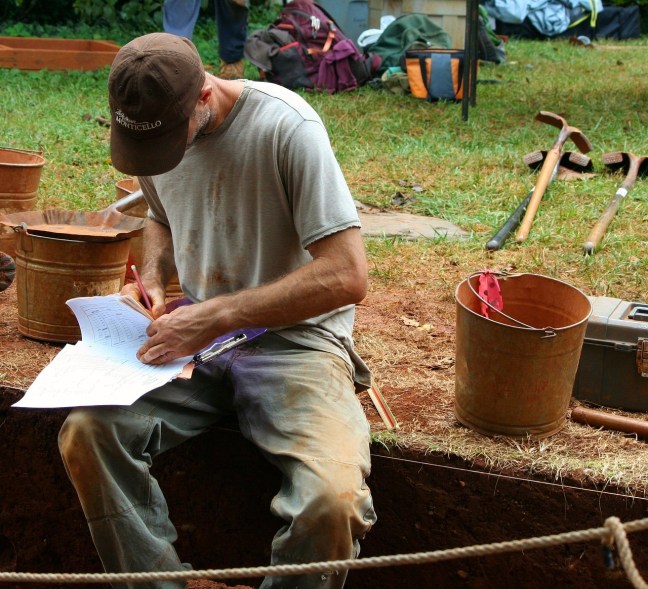
It’s probably a bit like being an archaeologist – you have to sift through a lot of ‘stuff’ to find a precious relic, and sometimes there is nothing to find. But you keep on sifting! Actually, I think I have it better than an archaeologist, because I know I’m looking at the right kind of material, and the more I examine, the more chances of seeing patterns.
In any case, it would be inaccurate to say I discovered nothing. Looking at more publications by one individual enabled me to confirm how enlightened his approach was, compared to another author. This is the latter one:-
Those poor mid-Victorian kids! Can you imagine working-class children in industrial Glasgow enjoying something like this?!
It also gave me another idea which I need to pursue, both in my historical research and in thinking about library acquisitions ‘at home’.
And additionally, researching in St Andrews gives me access to mainstream materials that we just don’t have in our specialist Conservatoire library. That’s invaluable!
But back to my original heading:-
When you think you’re getting nowhere, but you know you’re on the right track – keep going.
If you’re detecting patterns – keep looking.
If you have the tiniest idea about a new research question, write it down.
Did anyone ever make a breakthrough discovery in less than a month of looking? Probably. Maybe they were a genius, or maybe they were lucky with what they found. Maybe they knew exactly where to look. But there’s a lot to recommend the hard slog, too. After all, it would be tragic to be so close to a result, and not to achieve it. And I should know. I’ve mentioned before that I didn’t finish my first doctoral studies. This definitely proved to be a life lesson – I had realised how important it was to persevere, and how unsatisfactory it was to feel that you had left unfinished work and had nothing to show for it! My second thesis did get submitted – on time, to the day. So, more recently, did my second book. I like to think that persistence is one of my better characteristics!









 Karen McAulay, Musicologist