Singing in Public? New to me!

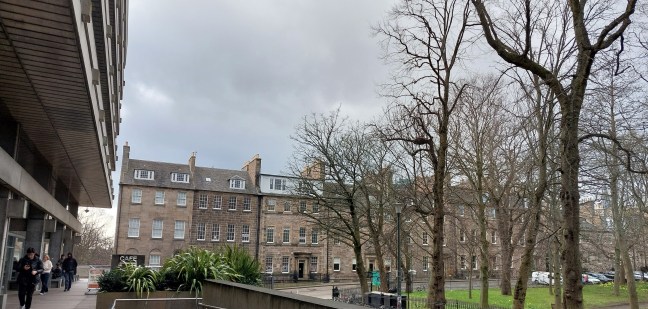
George Square Edinburgh University

A few weeks ago, I led a community ‘Scottish song’ event. I found myself singing a solo – well, to say ‘found myself ‘ is inaccurate, because I HAD planned and rehearsed it with a pianist.

But it seemed to go down well enough, so, emboldened by this, I sang a couple of examples from Nelson’s Scots Song Book at my Work in Progress talk on Wednesday.  This time, I prerecorded my accompaniment myself. (Three cheers for the decent mic I had purchased during lockdown!)

I reminded myself that my esteemed audience were a mixture of musicians and non-musicians, and I was there as a researcher rather than a star turn, so hopefully they’d listen kindly rather than critically! 

And it was fine. I suppose the more often you do something, the easier it gets. I have played in public, conducted in public, and sung in a choir numerous times, but singing solo? That’s something new.

I have another talk coming up in a few weeks.  Of the two songs I sang this week, I much preferred one to the other  – the range was more comfortable. So I looked through NSSB4 again last night, and hit upon a favourite – ‘I’ll aye ca’ in by yon toun.’ I took it to the piano for a first play through. Yes, I like Easson’s setting.  It’s reasonably modern, and playable.

At this point  – just as I’d finished the chorus – I was obliged to stop.

‘But, I was  …’

You’d be alarmed at how routine governs my activities.  No point causing upset by continuing to play, so the song will wait for another time. Supper couldn’t wait!

However, I thought I’d look for a YouTube rendition, to accompany my breakfast this morning, and what did I find, but a Topic recording of Jean Redpath performing it in the American Serge Hovey’s setting.  I never heard Jean sing live, but she got an honorary DMus from the University of Glasgow (my Alma Mater), and her enthusiasm for Scottish song was influenced by her time at the University of Edinburgh – as I sit with a cuppa in the Library cafe, I’m literally looking out at the School of Scottish Studies building where she’d have talked with Hamish Henderson.

I’ll aye ca’ in by yon toun

Having heard Redpath’s beautiful singing, I am less sure that my singing is a good idea, but there’s only one way I can share Easson’s setting, and that’s by playing it. Which, without a singer, wouldn’t work at all. I’d better get practising!

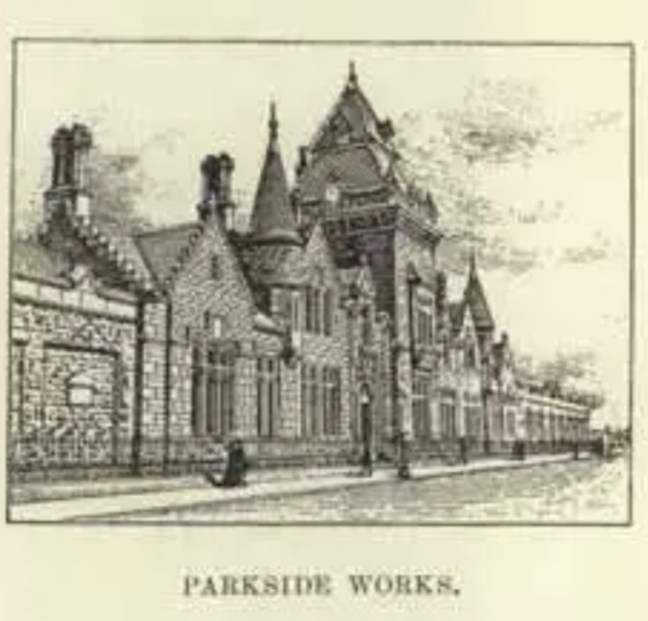
Seminar, Weds 26 March, 1pm:- Perusing the Papers from Thomas Nelson and Sons’ Parkside Works (Research into Nelson’s Scots Song Book – Work in Progress)

Through the archway into the courtyard at IASH

As I’ve mentioned, I’m currently Heritage Collections Research Fellow at IASH, the Institute for Advanced Studies in the Humanities, at the University of Edinburgh. All guest fellows are invited to give a work-in-progress seminar, and it’s my turn on Wednesday 26 March at 1 pm. You can attend in person, or online – more details on the link below. The abstract tells you what my talk is about.

Abstract and Zoom link

I’ll explain what I’m looking for, and introduce you to some of the individuals I’ve been finding out about.  The one thing I can’t predict, is whether I shall by then have found the answer to my prime question!

Nelson's Parkside Works - old engraving
Hope Park Square, home of IASH
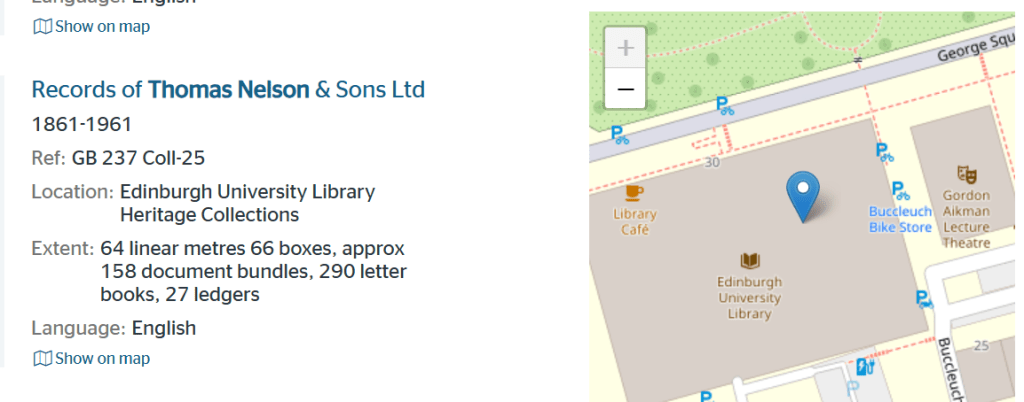
The ArchivesHub entry for the collection

Sheeps Heads? The Mind Boggles!

One sheep peeps over the backs of the rest of the flock

I have literally thousands of typed carbon copies to wade through, in my current research.  I’m looking for gems relating to a handful of music titles that this publisher produced.

Going through archives, it’s not uncommon to find wee gems – like the author who left his swimming trunks behind after a morning swim … (don’t ask!)

Or someone that an editor thinks his colleague might like to meet:-

You will find him uncommonly intelligent and possibly useful […]

Not to mention a rejected manuscript, described as,

The Scots description “cauld kale het again”. [Translation available on request.]

But today we have another conundrum. The publishing editor for the juvenile list decided not to proceed with a book that apparently combined music and art in some way, declaring that,

‘I felt that sheep’s heads are better in broth than served up eight to a bar.’

Or did she mean, eight to a baa-aa?

If only I could see the rejected manuscript to see what she meant! However, this was 1947, and the book went unpublished. I don’t think the author had any more luck elsewhere!

Eyes on Stalks: a Day with the Archives

Last Friday, I submitted an article.  Yesterday, I did the minor edits for an accepted article and dispatched that, too.

And today, I headed to Edinburgh and resumed my archival pursuits.  The city was initially bathed in golden sunshine, though this didn’t even last until lunchtime.  It is certainly a very beautiful city.

Nearly spring in Edinburgh?

Unless you’ve experienced it, you can’t imagine how many brown folders of thin carbon copies will fit into an archival box. Carbon copies are as thin as airmail writing paper.  The bulk of this particular box consists of NINETEEN folders of rejection letters just for one year,  1948.

You might think I didn’t need to concern myself about books they didn’t publish,  but you never know what snippets about publishing policy or the economic climate – or anything else! – might turn up.  (And you’d be surprised at the number of would-be authors who didn’t take a definite refusal AS a definite refusal, but kept writing to argue their case!)

‘Do Forward the Bathing Costume’

That was an unexpected postscript, in one of the letters that wasn’t a rejection.  The publisher and author had evidently gone to the swimming baths, and the author went home without his trunks! Irrelevant, but it’s undoubtedly evidence they were on friendly terms, isn’t it?

I did discover – unneccessarily, but amusingly – that in the late nineteenth century, the managing director of this publishing house used to go open-air swimming in Leith before work in the summer. Clearly the tradition had either continued, or been revived, with the opening of the Portobello open-air pool in 1936 …

Highland Archive Centre – Conan Bridge School, 1880s

Another Covid-ridden short from me today. See if you can see what excited me about these images of Conan Bridge School inventory …

Highland Archive Centre Facebook Posting 31 Aug 2024

Comfort Zones were Stretched Today

Whilst I was going through archival materials today, looking for music-related documentation, I came across all sorts of non-musical correspondence. I wasn’t surprised. Sometimes, it’s rather nice to see what falls out of Pandora’s box, after all. All the ‘extra’ material vastly enriches the ultimate narrative. And other tidbits just raise a smile:-

  • I found one publisher offering to order whisky from an Inverness wine-dealer for another publisher holidaying in Raasay. Very fraternal!
  • I found someone looking forward to ‘frizzling in Paris’. (Considering Glasgow’s set to be 4 degrees Celsius tonight -in mid June – I can empathise!)
  • Then there was a job application letter. No clues as to the manager’s selection rationale – things were very different then – just, pencilled across the top – NO.
  • I found a terse letter from a professor who was distinctly unimpressed by the unavailability of a book (no, not a music book) that he wanted to purchase:-
Perturbed Professor

‘It’s damnable that such a valuable, well-written & cogent book should be off the market.’

But in 1947-1948, Britain was in economic crisis. There were restrictions on business activities, and if a publisher decided a reprint was non-viable then that, dear Professor, was that. Tough.  (I wanted to tell him that eBay and Alibris would have helped alleviate his evident distress.)

I found travelling salesmen being asked if they wanted any books from a particular series. Music-related ones, even? I sat up straight at that, until I realised that the subtext was probably, ‘these books aren’t selling terribly well, old chaps.’

It wasn’t until I got home that I got myself into deep water:-

I looked up what was happening to the British economy in 1947-1948. I knew there WAS a crisis. Britain was in recession.  I had never heard of ‘convertibility’ in the economic sense, and I find myself only slightly the wiser after a bit of Googling!  World War II had taken its  toll, and on top of this, the US had insisted on convertibility, it seems, and we very quickly descended into an almighty mess.  However, such a simplistic summary doesn’t sound exactly satisfactory.

I’m undecided whether I need an Oxford Short Introduction, or can I get by with a more basic understanding?  Oh well, plenty of time to ponder on that! (But if you’re a modern historian reading this, and you can think of something that would give me an intelligent layperson’s overview of post-war economics, then please do get in touch. Thank you!)

READING LIST?

  • Complete Idiot’s Guide to Economics
  • The Economics Book: Big Ideas Simply Explained 
  • Economics for Dummies
  • Rough Guide to Economics

Librarian in the Archives

There was a time long ago, whilst I was doing a postgraduate librarianship diploma in Aberystwyth, when we all had to go on a week’s study tour. I went to Sheffield, staying with friends, and visiting various libraries with my classmates.

A visit to some archives enchanted me. I can’t remember if they were regional archives or university ones, but those heavy bindings, scrolls, and all the modern accoutrements of white tapes, book cushions and weighted ‘snakes’ – not to mention the questions of conservation and  restoration – certainly seemed irresistible in that moment. I would love to have known that conservation was in itself a career.  I didn’t know.

On the other hand, I was forced to acknowledge that more legal conveyancing and inheritance documents survive than mediaeval music manuscripts.  And some materials looked unmistakably grubby when they reached the archive.  Besides, I was already on track for librarianship rather than archives.

Dusty Old Deans

I was half-amused, half-annoyed by a pearl of parental wisdom:-

You don’t want to be an archivist, dear. All you’ll meet is Dusty Old Deans.

Admittedly, I had not so long before been researching mediaeval music and visiting cathedral libraries. I hadn’t encountered a Dean, dusty or otherwise, whom I hadn’t found charming.

So many archives, so little time!

Anyway, I had no reason to visit archives for a couple of decades, until I recommenced researching. I’m no longer a mediaevalist. But Victorian and early 20th century archival materials have turned out to hold their own appeal. Archival correspondence is intriguing, even when it’s conveniently in legible typescript. The biggest attraction of retirement from librarianship  is the opportunity of far more research, and hopefully many more hours in archives. 

I wonder if there’s anywhere I could learn to do conservation  …. ?

Georgian Mending

A Syncopated Sensation

https://wp.me/p99Vwa-167

Here’s a story on the Dundee City Archives blog, involving our friends, Dundee music firm Methven Simpson in 1921. And a very special and innovative jazz band!

Two Worlds Meet

News of a potentially interesting archival item triggers an attack of insatiable curiosity. I must confess that the musicologist is somewhat more triggered than the custodian!

So, I have a few questions that need answered. Where and when was the original owner born? When did they leave Scotland? What did their Scottish ancestry/identity mean to them?

And most importantly, was ‘Scottish’ music a significant part of their repertoire?

As I mentioned in earlier posts, my librarianship is amply qualified, and embodies four decades of expertise, but musicology and research came first. The musicologist is buried beneath the outer librarian, and can’t help bubbling to the surface when an intriguing possibility presents itself!

If I can answer these initial questions satisfactorily, then I’ll want to explore further. I think you can guess what I need to do this morning!

AND LATER …

Well, the original owner called themselves Scottish. But they were born in England of a Scottish mother. Should I order their birth certificate? It’s not cheap, and could arrive too late to be useful. But … !

Sharing details of a cataloguing vacancy

Remember, my project into Stationers’ Hall copyright music included the erstwhile library of Sion College?

Anything surviving in that library went to Lambeth Palace, which now has a splendid new library building. Well, I have just seen this advert for a cataloguer posted. Knowing how little music is there, it’s a job for a rare books cataloguer really, but I can’t NOT share details, since I feel a tenuous connection with the library through our research project! AND if you scroll down, there’s another digital job, too …

Here goes – and good luck! :-

Project Cataloguer (Sion College Library) Lambeth Palace Library

Fixed term (two years) £26,954 p.a. rising to £28,983 p.a. after probation

Lambeth Palace Library, founded in 1610, is the historic library and record office of the Archbishop of Canterbury. Following the merger with the Church of England Record Centre in 2020 it is now the principal repository for the archives not only of the Archbishop of Canterbury but also of the National Church Institutions in London.

We are looking for a new team member to support the vision and mission of the Library by describing, developing, interpreting and promoting the Library’s collections for the benefit of readers, particularly the pre-1850 printed collections of Sion College Library (founded 1629).

Using your previous experience of cataloguing printed material and your understanding of cataloguing standards, you will create high-quality catalogue records for early printed books and other printed material, to agreed targets and standards.

Engaging with our readers and researchers, you will promote the use of the collections, answering enquiries and participating in outreach and engagement activities to support the Library’s vision to be accessible to all.

This post is offered on a fixed term contract expected to last for two years. Interviews are expected to be held on Tuesday 31st August 2021.For further details and to apply, please visit: https://pathways.churchofengland.org/…/project…. Informal enquiries may be made to archives@churchofengland.org.

Digital Officer, Lambeth Palace Library. Secondment/fixed-term contract until August 2022

Salary: £26,954 rising to £28,983 per year after probation (pro rata)

This is an excellent opportunity to join Lambeth Palace Library, the National Library and Archive of the Church of England. The post is offered on a secondment/fixed-term contract expected to last until the beginning of August 2022.

You will provide copies of manuscript, archive and printed materials in digital formats for users of the Library and for outreach and preservation purposes and administer the service on a day-to-day basis, keeping accurate records of orders and payments. You will also maintain the digital image bank, storing new images with standard metadata according to agreed procedures.

To be successful, you will need ability and experience in digital photography as well as strong customer service and IT skills. We’re also looking for someone who is able to prioritise, and work accurately and methodically, handling material with due care for preservation and security.

This is a part-time role, working 21 hours per week.

To arrange an informal discussion about the role, please contact krzysztof.adamiec@churchofengland.org

Interviews will be held the week commencing 6th September 2021. For further details and to apply, please visit: https://pathways.churchofengland.org/job/pathways/2579/digital-officer