Two Ladies and a Harp: the Maclean-Clephane Sisters of Torloisk on Mull (and Edinburgh)

You know how you buy a new car, and suddenly everyone seems to be driving the same white Fiat 500? It’s the same with research topics.

“Enthusiastic collectors of Gaelic songs and Irish harp tunes”

I researched Gaelic song-collectors Anna and Margaret Maclean-Clephane as part of my PhD (2009).

  • I blogged about the sisters as far back as 2012 in my librarian days, when the Whittaker Library was using Blogspot:- How Far Can a Song Travel? (Author Karen McAulay, Whittaker Live blog, Wednesday, 23 May 2012);
  • and of course they later made it into my book (Our Ancient National Airs, 2013).
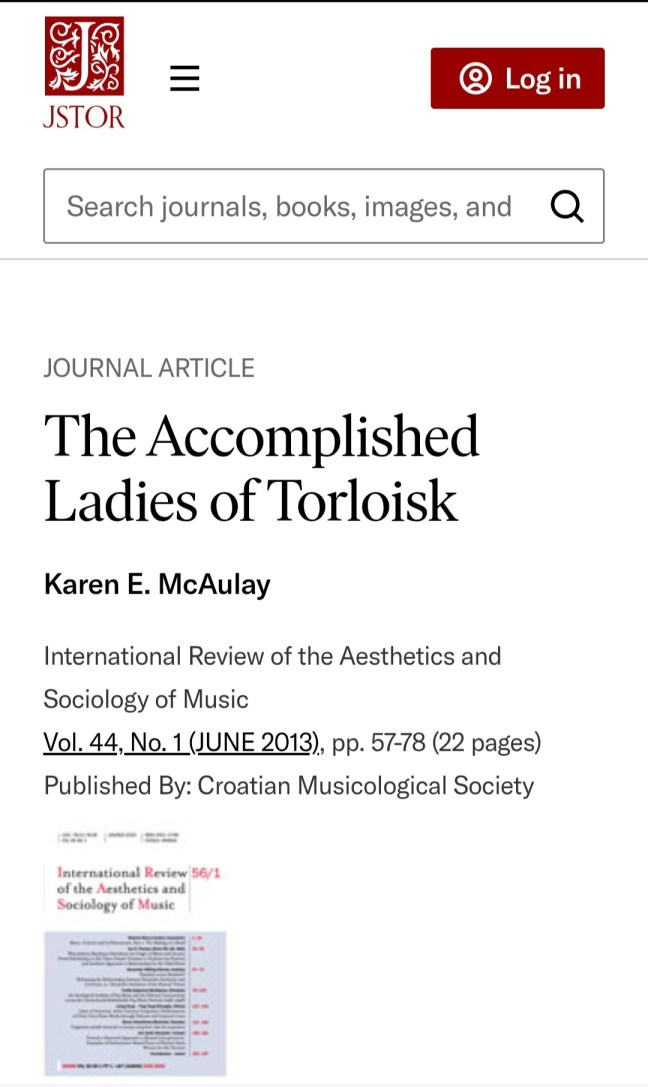
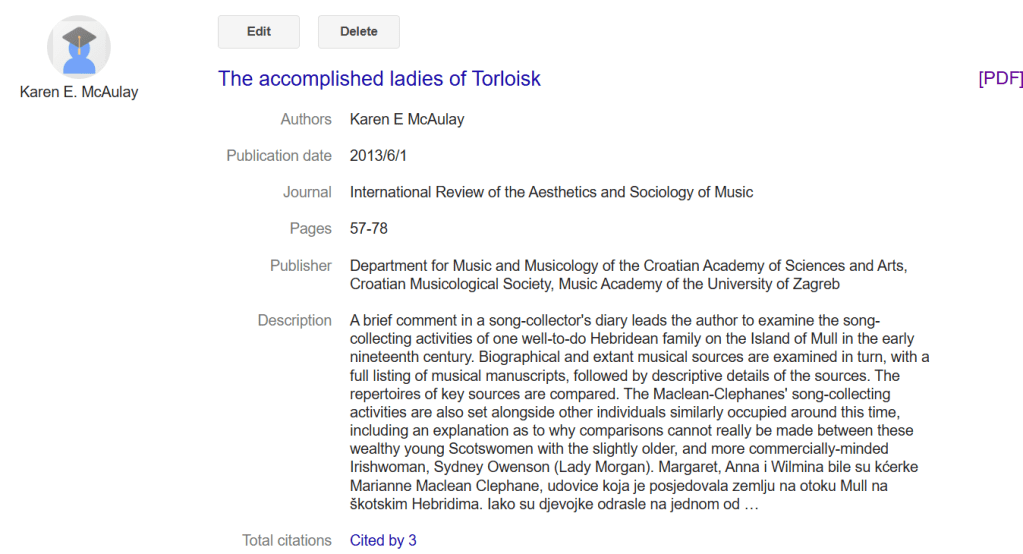
  • I followed up with an extended article about them (also in 2013). See this excerpt from the article:-

Naturally, the Maclean Clephane sisters are in my Pure institutional repository at the Royal Conservatoire of Scotland. I coined the above phrase, ‘enthusiastic collectors of Gaelic songs and Irish harp tunes’, using it both in my book (p.92) and my article (p.62), both in 2013.

‘While they were still in their teens’

The sisters had a book ‘printed but not published’ while they were still in their teens – you can read about it in my article, p.58. I have to say, the arrangements in their book were – well, okay, but not artistically stylish!

Margaret had a harp – there is actually a Raeburn portrait of Margaret with her harp – see below.   Alexander Campbell did say the sisters played, but there’s no portrait of Anna with a harp, so we can’t prove it either way. He didn’t meet them. (There was in fact a third sister, though her musical interest didn’t seem to carry through to adulthood. ) Indeed, Anna wasn’t that hot on the piano, as I recall.  They grew up on the Isle of Mull. I’ve driven past the house, Torloisk. It’s massive!

I just love researching and writing about people, particularly musicians! If they’re women musicians, then that’s all the more interesting – so it’s hardly surprising I was drawn to them, and went looking at materials in the National Library of Scotland and the School of Scottish Studies in Edinburgh, and even visiting a manuscript that’s now down in London. (Blog post Women’s History Month 2024. Musicians, this present blog.)

Details of my article

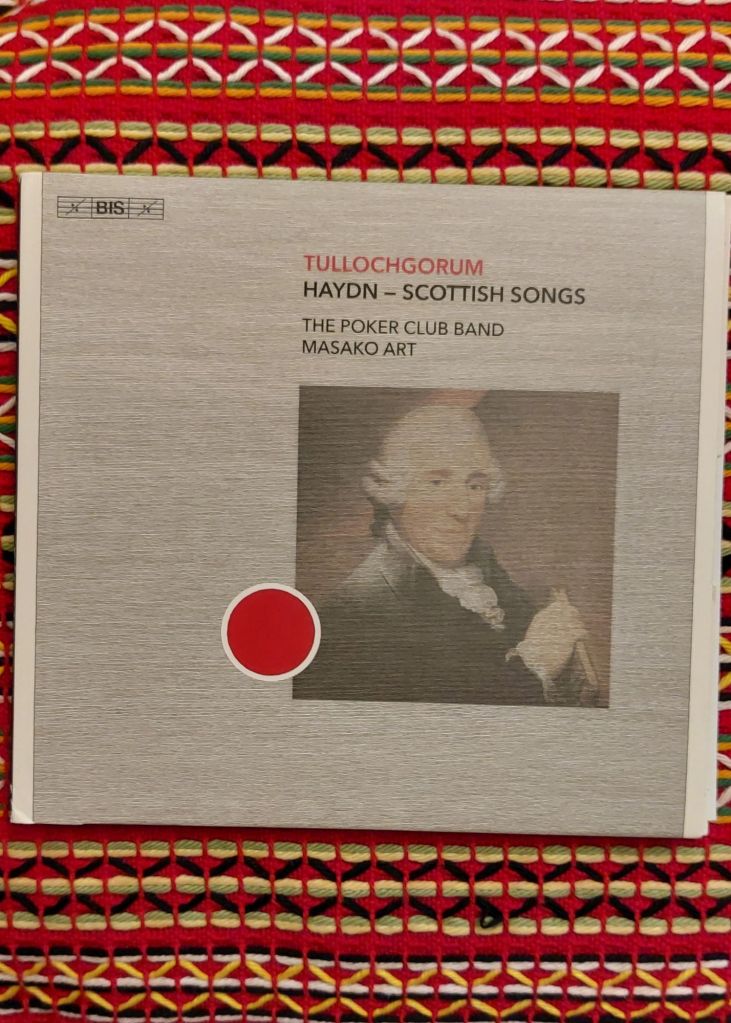
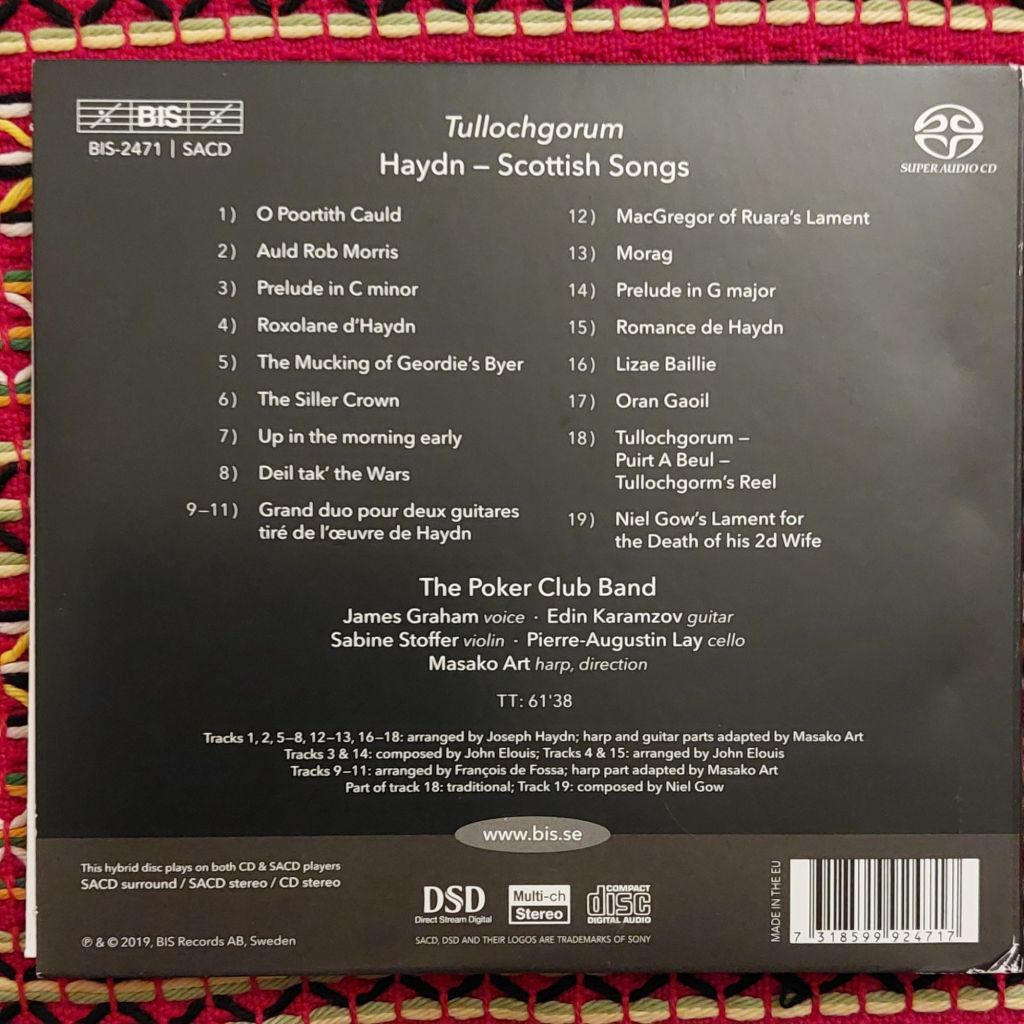
But ever since, these fascinating and talented ladies keep cropping up in my social media feeds. People who’ve read my writings also contact me from time to time. Thanks to the miracles of modern technology, I get notifications that people have consulted my stuff, too … and there’s also a CD whose notes cite me, too:-

Tullochgorum – Haydn – Scottish Songs, by The Poker Club Band and Masako Art (BIS-2471 | SACD

Tullochgorum – Haydn  – Scottish Songs

The harpist, Masako, asked if she could cite my work – I was very appreciative that she went to the trouble of asking me.

Correctly cited 😀
Margaret Clephane … and Masako Art

I spent so long with my early nineteenth-century heroines, but eventually my research took different directions. Not being a Gaelic scholar was just one of the problems I’d encountered! I attended classes in speaking it, at the Conservatoire. I signed up to local authority evening classes at the Gaelic School in Glasgow. But somehow, I never really had time to give it enough attention, despite having been considered good at languages at school and possessing school certificates in – well, several European languages. I understand when someone agrees with me in Gaelic, and can pronounce ‘Torloisk’, for sure, but Gaelic remains beyond me!

But look – now the music is going to be played. That’s exciting!

Aha! New Arrival all the Way from Arran

Once used in an Edinburgh school, a wee Scots song book (pupil’s edition) found its way to a shop on the Isle of Arran, then back to the mainland to me in Glasgow.

1, 2 … still looking!

If you ever find any of these in the back of a school cupboard, or bookshop,  or car boot sale, or Granny’s attic …

… please do let me know!  I’m trying to get complete set! There were four books for the kids, and four for teachers.

Hello to All New Visitors! I’m a Research Fellow

I haven’t been posting much this summer, for personal reasons. So – after more than a week of total blog silence, imagine my surprise to find I have had hundreds and hundreds more visitors since yesterday. What’s happened?!

Even if it’s some kind of blip, it gives me the opportunity to introduce myself. I’m a postdoctoral research fellow at the Royal Conservatoire of Scotland and also, for a few weeks more, at IASH at the University of Edinburgh. I research all sorts of cool stuff (well, it’s cool to me) about Scottish music publishers, with a distinct interest in national song collections, and in early 20th century music education in Scotland.

My second book was published at the end of 2024:-

A Social History of Music-Making and Scottish National Identity: Scotland’s Printed Music, 1880-1951.

That might look like a strange date-range, but my previous book covered Scottish song-collecting up to the 1880s, so this kind of continues in a slightly different way from that point onwards. The 1951 cut-off date is because that was the year of the Festival of Britain. And it was also a good place to stop because I touched upon magic lanterns, gramophones and the wireless, but I really didn’t feel I was the right person to write about early television in Scotland! By stopping in 1951, I conveniently sidestepped early television. There are plenty of people more knowledgeable than me on that front.

My current Edinburgh research entails examining archival records of the Thomas Nelson publishing house, an old Edinburgh firm. The British side of this company has ceased trading – it’s an American firm now – but I’ve found plenty to interest me in the documents up the early 1950s. Education became their focus during the era I’m researching.  Whilst my book mostly covers publishers specialising in music, Thomas Nelson really only published music that would be used in schools – though they hoped a few titles would also attract the general public. (The problem being that if you mention ‘school’ or ‘classroom’ in a title, it will turn off the ordinary member of public looking at books in a bookshop!)

Will there be a third book? Possibly! I’m still pondering.  September is earmarked for concentrated thought about that!

If this sounds interesting, please do come back and visit this site again.

Book: A Social History of Amateur Music-Making and Scottish National Identity

Wavy lines of music and an artistic interpretation of a fiddle

Folks, I’ve just noticed Routledge has a 20% summer sale on at the moment.  So, if you or your library could use a copy, this might be a good time to get it!  (All books and e-books are 20% off until 1 August 2025.)

The accent is on social history and Scotland – and music-making, obviously. I’m keen to hear what readers think of it. (If you are a reviews editor, do get in touch with Routledge. There’s a link on the website.)

  • Amateur music making
  • Scottish music publishing
  • Scottish and Irish songs
  • Fiddle tunes and dance music
  • Preserving the heritage and passing it on
  • Nostalgic Scots abroad
  • Newfangled technology

Routledge link

Karen E McAulay,  A Social History of Amateur Music-Making: Scotland’s Printed Music 1880-1951 (Routledge, 2005) 

ISBN 9781032389202
220 Pages
Published October 30, 2024 by Routledge

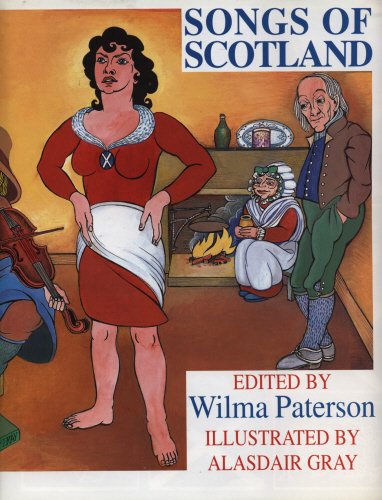
Wilma Paterson and Alasdair Gray’s ‘Songs of Scotland’

Front cover of Songs of Scotland by Wilma Paterson and Alasdair Gray, Mainstream Publishing

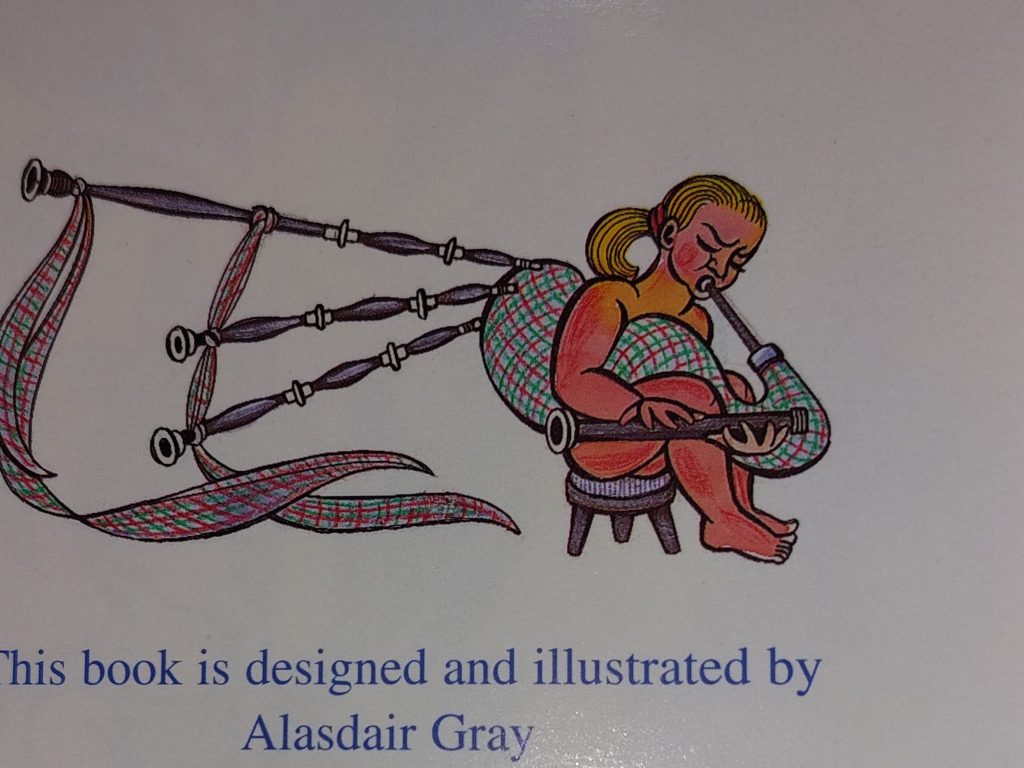
Published in 1997, this is quite an unusual collection: I can’t think of another Scottish song book illustrated throughout by a famous contemporary artist.  Inside,  the drawings and graphic art are monochrome  – only the cover is in full colour.  This, it must be said, is not quite what Gray initially envisaged; the decision was necessitated by cost, on the part of the publisher.  It’s still a beautiful piece of – well, book art – I imagine it sitting on coffee tables.  It doesn’t sit very easily on a piano music stand, due to its bulk.

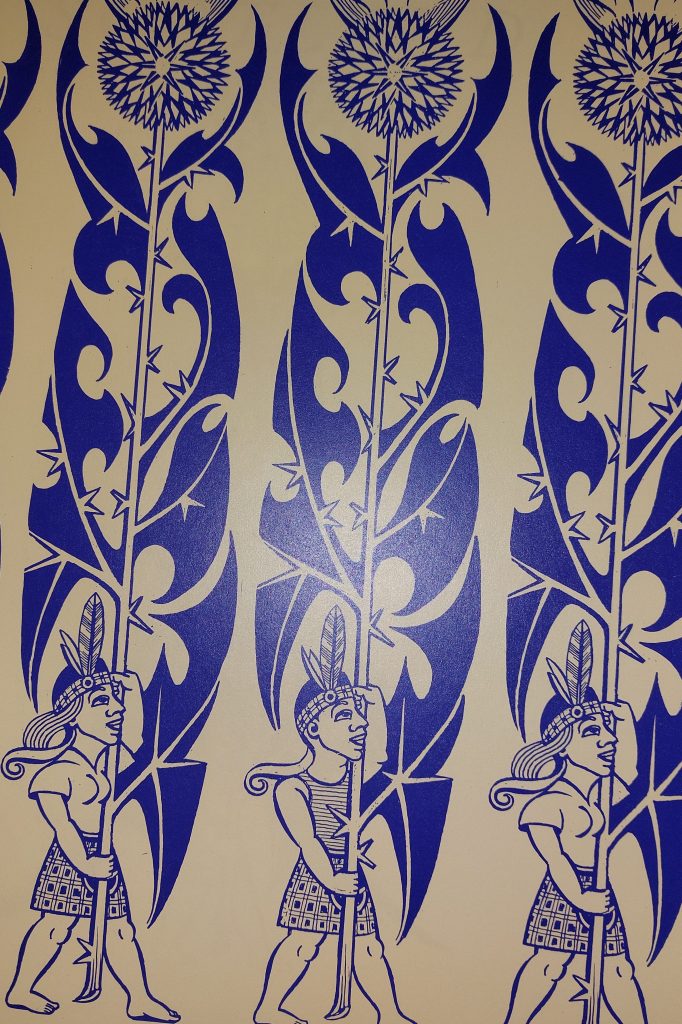
Today, as I opened it, the dust-jacket fell back, revealing an equally beautiful embossed cloth cover.  I just had to share it!

It’s a very traditional anthology  – you won’t find modern repertoire here.  But it’s  carefully annotated, with a bibliography bearing witness to the amount of research that went into it.

I have looked at contemporary reviews, and other related material – and there’s more I could say about this publication. However, I am keeping this for another day.

If you’d like your own copy, it’s out of print but easy to source second-hand. (Here’s the Abe Books link.)

Songs of Scotland, ed. by Wilma Paterson, designed and illustrated by Alasdair Gray (Edinburgh: Mainstream Publishing, 1997)

Robert Wilson, Scottish Singer and Entrepreneur

I wrote this post last year, but for some reason never actually posted. Not to worry – now is the time to share it!

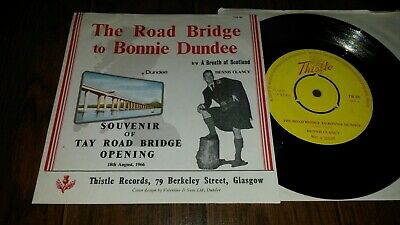
You could say Robert Wilson had Scottish music publishing just about tied up in Glasgow.  As his singing career began to wane, he bought up James S. Kerr’s and Frank Simpson’s, also co-founding Thistle Records from his premises in Berkeley Street. Not bad going, eh? Oh, and he also owned a travel company, which is less surprising considering his own worldwide travelling as a singer – he must have gained quite a bit of insight into the travel business. An informed, on-the-ground (or water, or airborne) interest, you could say.

After his death, the remaining shareholders of Kerr’s Corporation later acquired Mozart Allan’s AND Bayley & Ferguson’s backlists, too.

Wilson began a career as an apprentice draftsman, but after redundancy, started out as a singer. He sang with the Rothesay Entertainers, joined the D’Oyly Carte Opera Company Chorus between 1931-7 and then embarked upon his solo career, specialising in middle of the road Scottish song, but not limiting himself exclusively to this repertoire. Here he is, recorded by Pathe Films at the start of his solo career.

Annie Laurie (Maxwellton Braes are Bonnie)

If you’ve got a bit more time, here’s a ‘Voice of Scotland Short’ – a biopic lasting nearly an hour,with musical performances:-

Robert Wilson – Voice of Scotland Short

‘A Tribute to Robert Wilson’, with:-

  • Kenneth McKellar
  • Eliot Dobie
  • Jimmy Shand
  • Andy Stewart
  • Will Starr and Accordion
  • Cliff Hanley
  • Harry Carmichael
  • Sydney McEwan
  • Additional material by Bob Wright of Girvan

Header Image of ‘The Road Bridge to Bonnie Dundee’ from EBay

I have a forthcoming magazine article with more about Robert Wilson, of which I will give full details when it’s published in the near future.

You can read more about Scottish music in bygone days in my recent book:-

A History of Amateur Music-Making and Scottish National Identity: Scotland’s Printed Music 1880-1951

Thinking about the Forthcoming Entertainment  …

On LinkedIn, public-speaking coach Alex Merry recently posted these tips on making a great presentation. It occurs to me that some of these tips will be equally applicable to the Scottish song entertainment that I’m leading later this month.

Alex Merry’s Presentation Tips

In my case, it’s not a presentation at all – I just need to introduce the songs we’re singing.  So it’s categorically not about me. But I do need to be lively and relatable.  Start with a short sentence and a pause? I hadn’t thought of that, but it should be easy to factor in.

Fun? Oh, yes. I have a few ideas! 💡 Well, props, really. I’m going to need one of those big, reusable supermarket bags.  And I have an abundance of stories, so that’s all right.

My only problem is this: I’m a bit embarrassed about my Englishness.  I’ve lived in Scotland more than half my life.  Scottish national music is my specialism, and I’m secure in my subject – but this is a fun entertainment, not a demonstration of knowledge, and my accent is all wrong.  So … do I bring attention to it jokingly, or put it to the back of my mind? My personal view is that you should never draw attention to your weaknesses.  What would you do?  Stuart Chater on LinkedIn makes a good argument for NOT being ashamed of your accent.

And the song I’m going to sing? (It wasn’t my idea, someone asked me.)  It’s short. It’s within my vocal range. But I can no more sound Scottish than fly!

Someone please tell me I’m over-thinking this!

Alec Finlay: the ‘Pocket Harry Lauder’

This blog post is an edited excerpt from the research Exchange Talk I gave at the Royal Conservatoire of Scotland on 11 November 2024.

Inside the song-book, The Glories of Scotland, the foreword was followed by a full-page signed photo of a popular Scottish singer and comedian, Alec Finlay. The University of Glasgow’s Scottish Theatre Archive, characterises the latter as, ‘The pocket Harry Lauder’, and ‘Scotland’s gentleman’, describing his comedy as, ‘delightful, couthie and kindly’.

His was an international variety act; significantly, he toured America in late 1950.

If he was known as the ‘pocket Harry Lauder’, it was for a logical reason: a colleague of mine pointed out that Finlay, who clearly modelled his act on the variety superstar, Harry Lauder, even went so far as dressing like him, ‘wiggly stick’ and all.

Harry Lauder, from Wikiwand.com

A song is linked to the signed photograph of Alec Finlay at the front of the book. The photo is captioned ‘Scotland’s own comedian’, with Finlay in typical pose, full Highland dress, wiggly stick, and a blurred Scottish vista behind him. Beneath the photo, and alongside his signature, is the name of a song, ‘Let Scotland flourish’, composed and sung by Alec Finlay.

Sure enough, opposite a picture of Edinburgh’s Princes Street supplied by the Scottish Tourist Board, page 71 bears the words of the chorus – not the music, just the lyrics!:-

‘Let Scotland flourish / In all the years to be / The land that I was born in / Will aye be dear to me / Caledonia I adore you / Tho’ I travel the wide world o’er / My home is where my heart lies / Scotland ever more.’

It’s there, ‘by kind permission of Alec Finlay’, and it was written and composed by Bill McDonnell and Alec Finlay. At the foot of the page, we read that the ‘complete words, music and Solfa are available for 2/- from all music-sellers.’ It was published by Mozart Allan – who also published The Glories of Scotland.  The British cover appears at the top of this blog post.  (There was another for the overseas edition. )

‘Let Scotland flourish’ is a typical Scottish waltz of the era.  Finlay was a hit in America in 1950; and  selling the song as a single piece of music would make commercial sense.

In the recording of the song, published by Scottish Clan Records in New York, Finlay sings in the broad Scottish brogue that contemporary American listeners would have expected to hear.

YouTube audio – enjoy!

Dr Karen McAulay Exchange Talk and Book Launch at RCS, Glasgow 11 Nov 2024

Looking forward to my Exchange Talk and Book Launch next Monday, I made a wee promotional video! Maybe I’ll see you there, if you’re in/around Glasgow.

Click to Book tickets

Click for The book’s details