Musicology, and a Nerdy but Meaningful Spreadsheet

Musical notes cut out of old sheet music

How to Assess whether a Song Book was Aligned with Contemporary Tastes

There were once four books of Scottish songs in a mini-series: just under 100 songs, all told. They weren’t much advertised, and few copies are now extant.  If they were intended mainly for school use, then I need to know to what extent their contents were standard Scottish song repertoire for their day. (Each generation has its favourites, noticeably different from the previous ones.)

Now then, I spent a very long time indexing song books as a librarian; that library catalogue is now a reference resource in its own right.  Last night, I listed the contents of those four books, and next, I shall look each song up in our RCS library catalogue.  I’ll end up with two figures for each song:-

  1. How many times the song is listed altogether: a high figure means popularity over a long period.
  2. How many times the song is listed between 1930-1970: this will be a shorter range of numbers. If it’s as high as, say, five hits, then it was popular amongst quite a few compilers over that 40 years.  If it’s not in any other books between 1930-1970, then it’s either old-fashioned, or a more obscure ‘rarity’ from less well-known or very old collections. 

And THEN, I can look up the rare ones in the National Library of Scotland’s Digital Gallery. 

This is the only accurate way of ascertaining whether the contents themselves might have been off-putting to the very audiences that they were meant to attract. I hope that’s not the case, because the compilers were well-placed, indeed ideally-placed to know exactly what went down well with school children. Nonetheless, I want hard evidence, and comparing the repertoire with two significant sets of data – the RCS more standard books, and NLS rare books – seems to me a pretty good way of doing it.

Blogging Helps Clarify the Question

I enjoy writing this blog, because it helps me clarify in my mind what the big issues are that I am addressing. Writing for a wide audience, which may or may not have exactly the same scholarly interest in the topic as I do, is a good way of reminding myself to write accessibly, and hopefully interestingly, about the things which occupy my thoughts as I pursue my research. Do I succeed? You tell me!

‘I was born an American but my Forbears were Scotch’

I have written a lot about diasporic enthusiasm for Scottish culture. Usually, I’m thinking about music, but today’s archival materials embrace almost every topic under the sun. If it can be taught, then educational materials can be published. And thus it is that I encounter an American author’s proposal to Thomas Nelson’s in Edinburgh, which bears out everything I’ve ever said about people’s affinity with the Auld Country.  (Not to mention the annoying ‘Scotch’, a term unused by Scots!)

Thus I have a hankering, just for the romance of it, to have some of my verse published in Edinburgh, especially since I hope to be in that city in the not very far future […]

I can almost hear echoes of Brigadoon in the distance. But, the poet is practical.  Recognising the paper shortages at the time (post-World War 2), the enthusiastic poet offers money to help defray initial costs, because …

Once out, I believe both of us will profit by its […] appearance.

There was only one problem. The editor replied,

We regret very much, however, that we are not publishing poetry at the present time.

Image by Alan Kidd from Pixabay

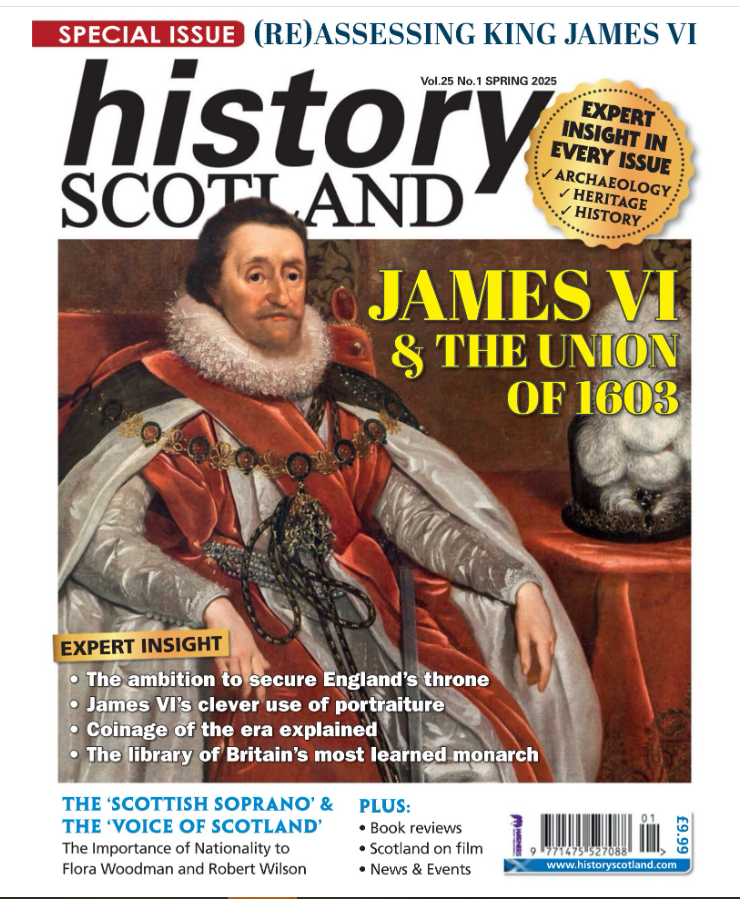
Now published in History Scotland, Spring 2025: The ‘Scottish Soprano’ and the ‘Voice of Scotland’

The Scottish Clans Association of London badge, on background of Mackinnon tartan

Sadly, this is the last issue of History Scotland, but I’m very pleased to have an article published there. I have really enjoyed writing this, and I think my idea of comparing two very different Scottish singers has actually come together rather well.  I wanted to write about Robert Wilson, but I didn’t want to go over the same ground that has already been covered.  I also wanted to write about Flora Woodman – but would anyone remember her? Then came the inspiration: what if I wrote about them both, two almost contemporary but very different celebrities, and then I could compare them.  This hadn’t been done before! And it worked  – the piece almost wrote itself.

Karen E McAulay, ‘The ‘Scottish Soprano’ and the ‘Voice of Scotland’: the Importance of Nationality to Flora Woodman and Robert Wilson’, History Scotland Vol.25 no.1 (Spring 2025), 74-81

If your public library has e-magazines, you’ll be able to read it online. Glasgow Life certainly has it!

Flora Woodman – photo and compliments, 25th October 1924

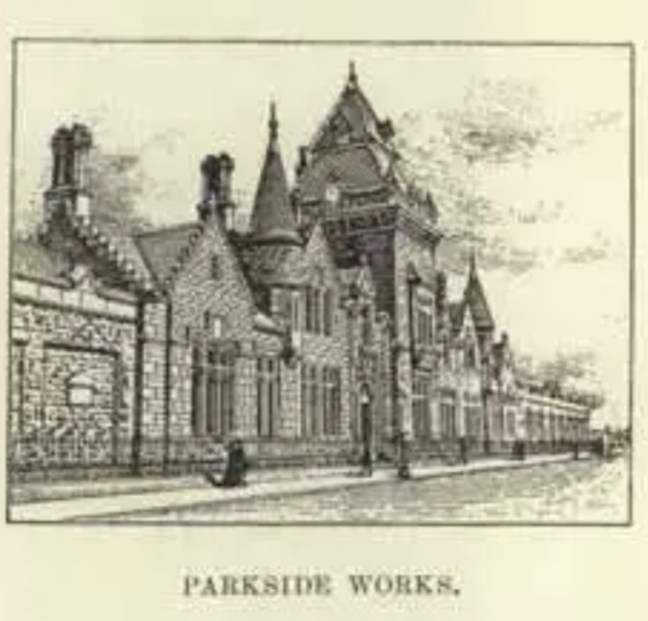
Seminar, Weds 26 March, 1pm:- Perusing the Papers from Thomas Nelson and Sons’ Parkside Works (Research into Nelson’s Scots Song Book – Work in Progress)

Through the archway into the courtyard at IASH

As I’ve mentioned, I’m currently Heritage Collections Research Fellow at IASH, the Institute for Advanced Studies in the Humanities, at the University of Edinburgh. All guest fellows are invited to give a work-in-progress seminar, and it’s my turn on Wednesday 26 March at 1 pm. You can attend in person, or online – more details on the link below. The abstract tells you what my talk is about.

Abstract and Zoom link

I’ll explain what I’m looking for, and introduce you to some of the individuals I’ve been finding out about.  The one thing I can’t predict, is whether I shall by then have found the answer to my prime question!

Nelson's Parkside Works - old engraving
Hope Park Square, home of IASH
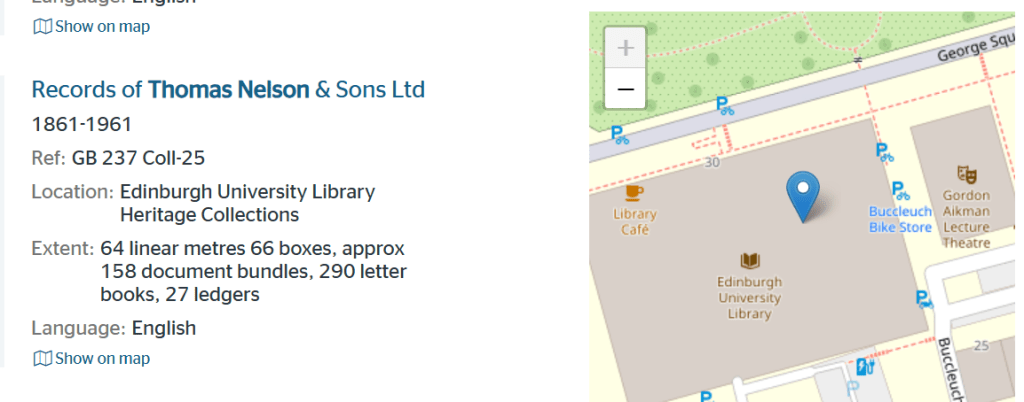
The ArchivesHub entry for the collection

Autoethnographical? Autobiographical? Reflective?

Well, the ‘Scottish Entertainment’ took place yesterday – attended by sixty to seventy people, if you include our [small] choir. A great time was had by all. There was lots of community singing, along with a couple of choir items, and a smattering of solo items (two spoken, two sung solos, and the concertina.)  And, of course, haggis, neeps and tatties in the middle of the entertainment.  Our pastoral care committee organised the whole event  – I just coordinated the entertainment bit!

It wasn’t a research event, and I can’t exactly call it public engagement – it wasn’t in any sense designed for, or linked with, my research. (Although, as I’ve mentioned, my little introductions were informed by my research!) So, I don’t think I can call this autoethnographical or practice-based research, but I can certainly reflect upon the whole experience.

Timing

I planned two equal ‘halves’ for either side of the meal. It wasn’t a full-scale meal, as such, but I underestimated how much time we’d spend eating. The first half of the entertainment was almost spot-on: we only had to leave one item until after the meal. However, the second ‘half’ had to be significantly cut back (mostly by omitting verses) – so I could really have made it a good bit shorter.

Feedback

The feedback was gratifying. Our repertoire went down well, as did the solos.  I shall respect the soloists’ privacy, so I won’t elaborate further on that point. 

My own debut as a soloist surprised me as much as everyone else, though.  ‘I didn’t know you sang’, someone said. ‘Nor did I – I’ve never sung a solo in public before!’

I chose a song within my range, and the concertina piece was likewise as simple as I could find!  Considering that I took up the concertina during lockdown, with the deliberate aim of having a ‘folk’ instrument for just such an occasion, it was gratifying to be able to play to an appreciative audience.

People were still talking about the event today, which was lovely to hear.

Repertoire

Remember that I did a BBC Scotland radio interview 13 months ago, discussing the top ten Scottish songs of nowadays, the results of a Visit Scotland survey? I didn’t even consult that list for our own afternoon entertainment. There was some, but not a lot of overlap – but I’m happy that the songs chosen by myself and the choir, went down well with our audience.  We had a few Burns songs, a few from the early 20th century, some from the middle and a couple from towards the end of it.

And if we were to  do another event, well, there’s still that Visit Scotland list to draw on!  There is bound to be variation, depending on the sample of people surveyed – whether they are young or old, whether they had children or taught children in schools, and so on.

Sheeps Heads? The Mind Boggles!

One sheep peeps over the backs of the rest of the flock

I have literally thousands of typed carbon copies to wade through, in my current research.  I’m looking for gems relating to a handful of music titles that this publisher produced.

Going through archives, it’s not uncommon to find wee gems – like the author who left his swimming trunks behind after a morning swim … (don’t ask!)

Or someone that an editor thinks his colleague might like to meet:-

You will find him uncommonly intelligent and possibly useful […]

Not to mention a rejected manuscript, described as,

The Scots description “cauld kale het again”. [Translation available on request.]

But today we have another conundrum. The publishing editor for the juvenile list decided not to proceed with a book that apparently combined music and art in some way, declaring that,

‘I felt that sheep’s heads are better in broth than served up eight to a bar.’

Or did she mean, eight to a baa-aa?

If only I could see the rejected manuscript to see what she meant! However, this was 1947, and the book went unpublished. I don’t think the author had any more luck elsewhere!

Scholarly Satan: a Sneaky Devil

Pink fluffy devil with halo

Dutifully, I booked a morning off because we were anticipating the advent of a roofer at home, and I didn’t want to be torn between roofing conversations and research work. The afternoon was my own, apart from a couple of rescheduled meetings at the end of the day. (There wouldn’t be anyone on the roof by then, surely.)

‘Anticipating’ was the word I just used, and it was just that. The storms a few weeks ago played havoc with more roofs than our own. Anyway, here I sat, two laptops in front of me, nothing happening on our roof, and Scholarly Satan started tugging at my conscience.

  • “You could sort out your timesheets, you know.”
  • “You can reschedule that tutorial. Do It Now.”
  • “You’ve got to update your CV, haven’t you? You LOVE formatting documents and getting the bullet-points and punctuation just right.”
  • “Oooh, look, you can action that email straight away – wouldn’t it feel good to be so on-the-ball?”

And then came his masterstroke.

“This is Scholarly Stuff, you know. There’s nothing sinful about Scholarly Stuff.” Which is true, of course, apart from the fact that I wasn’t meant to be working! Anyway, it’s now 4 pm, and I propose to walk away from the laptops for half an hour, until the last and only official duties of the day. I fear I’m too old to mend my ways now.

Robert Wilson, Scottish Singer and Entrepreneur

I wrote this post last year, but for some reason never actually posted. Not to worry – now is the time to share it!

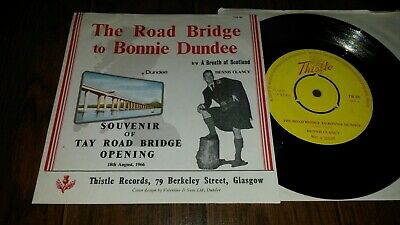
You could say Robert Wilson had Scottish music publishing just about tied up in Glasgow.  As his singing career began to wane, he bought up James S. Kerr’s and Frank Simpson’s, also co-founding Thistle Records from his premises in Berkeley Street. Not bad going, eh? Oh, and he also owned a travel company, which is less surprising considering his own worldwide travelling as a singer – he must have gained quite a bit of insight into the travel business. An informed, on-the-ground (or water, or airborne) interest, you could say.

After his death, the remaining shareholders of Kerr’s Corporation later acquired Mozart Allan’s AND Bayley & Ferguson’s backlists, too.

Wilson began a career as an apprentice draftsman, but after redundancy, started out as a singer. He sang with the Rothesay Entertainers, joined the D’Oyly Carte Opera Company Chorus between 1931-7 and then embarked upon his solo career, specialising in middle of the road Scottish song, but not limiting himself exclusively to this repertoire. Here he is, recorded by Pathe Films at the start of his solo career.

Annie Laurie (Maxwellton Braes are Bonnie)

If you’ve got a bit more time, here’s a ‘Voice of Scotland Short’ – a biopic lasting nearly an hour,with musical performances:-

Robert Wilson – Voice of Scotland Short

‘A Tribute to Robert Wilson’, with:-

  • Kenneth McKellar
  • Eliot Dobie
  • Jimmy Shand
  • Andy Stewart
  • Will Starr and Accordion
  • Cliff Hanley
  • Harry Carmichael
  • Sydney McEwan
  • Additional material by Bob Wright of Girvan

Header Image of ‘The Road Bridge to Bonnie Dundee’ from EBay

I have a forthcoming magazine article with more about Robert Wilson, of which I will give full details when it’s published in the near future.

You can read more about Scottish music in bygone days in my recent book:-

A History of Amateur Music-Making and Scottish National Identity: Scotland’s Printed Music 1880-1951

Thinking about the Forthcoming Entertainment  …

On LinkedIn, public-speaking coach Alex Merry recently posted these tips on making a great presentation. It occurs to me that some of these tips will be equally applicable to the Scottish song entertainment that I’m leading later this month.

Alex Merry’s Presentation Tips

In my case, it’s not a presentation at all – I just need to introduce the songs we’re singing.  So it’s categorically not about me. But I do need to be lively and relatable.  Start with a short sentence and a pause? I hadn’t thought of that, but it should be easy to factor in.

Fun? Oh, yes. I have a few ideas! đŸ’¡ Well, props, really. I’m going to need one of those big, reusable supermarket bags.  And I have an abundance of stories, so that’s all right.

My only problem is this: I’m a bit embarrassed about my Englishness.  I’ve lived in Scotland more than half my life.  Scottish national music is my specialism, and I’m secure in my subject – but this is a fun entertainment, not a demonstration of knowledge, and my accent is all wrong.  So … do I bring attention to it jokingly, or put it to the back of my mind? My personal view is that you should never draw attention to your weaknesses.  What would you do?  Stuart Chater on LinkedIn makes a good argument for NOT being ashamed of your accent.

And the song I’m going to sing? (It wasn’t my idea, someone asked me.)  It’s short. It’s within my vocal range. But I can no more sound Scottish than fly!

Someone please tell me I’m over-thinking this!