Dr Karen McAulay explores the history of Scottish music collecting, publishing and national identity from the 18th to 20th centuries. Research Fellow at Royal Conservatoire of Scotland, author of two Routledge monographs.
At Tuesday’s Women who Dared book launch, mention was made of the Wikipedia ‘Women in Red’ project, to which I once attempted to contribute. It’s a valuable project; there’s no denying far too few women are represented in Wikipedia.
I got nowhere with my own attempt, as I was the only person who had researched and written about ‘my’ Elizabeth Lambert (married name Williams), so I couldn’t provide the requisite references by respectable authors. She wasn’t ‘daring’, but she definitely made a worthwhile contribution to St Andrews University Library, in cataloguing their legal deposit music so borrowers knew what was available to borrow. (Her other private interests were interesting, too. She was an acknowledged expert in conchology.) I’m pleased to see she at least has a Wikidata entry now! Anyway, thwarted in my Wikipedia ambitions, I posted a biography on the present blog.
You might also find my article about St Andrews’ Copyright Collection of interest. Again, Miss Lambert gets several honorable mentions. And I found another posting that I’d forgotten all about, this time in 2021 for a University of Stirling research project. I might as well share details of these pieces, to get her a bit more exposure!
‘A Music Library for St Andrews: use of the University’s Copyright Music Collections, 1801-1849’, in Journal of the Edinburgh Bibliographical Society no.15 (2020), 13-33.
I only have to get through another eight weeks (and one of those is holiday) before I cease to be a librarian. Strangely enough, when there’s a thin chink of light through the slowly opening door, the frustrations of the job seem all the more irritating!
The Pressure to Get Things Done
For example, I’ve been ploughing through a pile of cello music needing cataloguing, and was feeling at least content that the pile was shrinking – when another big pile appeared uninvited beside me. Did you hear the silent scream?
‘We want to squeeze the most we can out of you’, came the joking comment the other week. (It was a joke, I hope!) I feel like a tube of toothpaste. (At least the McAulay is just retiring, to focus on research activities – unlike the empty tube of Macleans, destined for the bin!)
Time for tea yet?!
But this afternoon, continuing to catalogue jazz CDs (I’ve done nearly two thousand in recent years) was enough to drive me almost round the bend. It’s so repetitive, like being on a factory production line – there’s absolutely no creativity in it, and very little job satisfaction! What’s more, peering at the tiny print on the back of the CDs is not easy at the best of times. It’s even worse when my left eye is doing much of the work of the right one whilst it recovers from surgery. Both eyes end up dry and sore, to add to the tedium of the task itself. And then, when I glumly reflect on how little CDs get used these days…
To make things a bit better, I’m trying to come up with fun things that I can inject into the routine of my final few weeks. In recent weeks, I’ve given a NAG (National Acquisitions Group) webinar; attended the Books and Borrowing Database launch; given the Transformations lecture; and there will hopefully be a workshop at the end of this month.
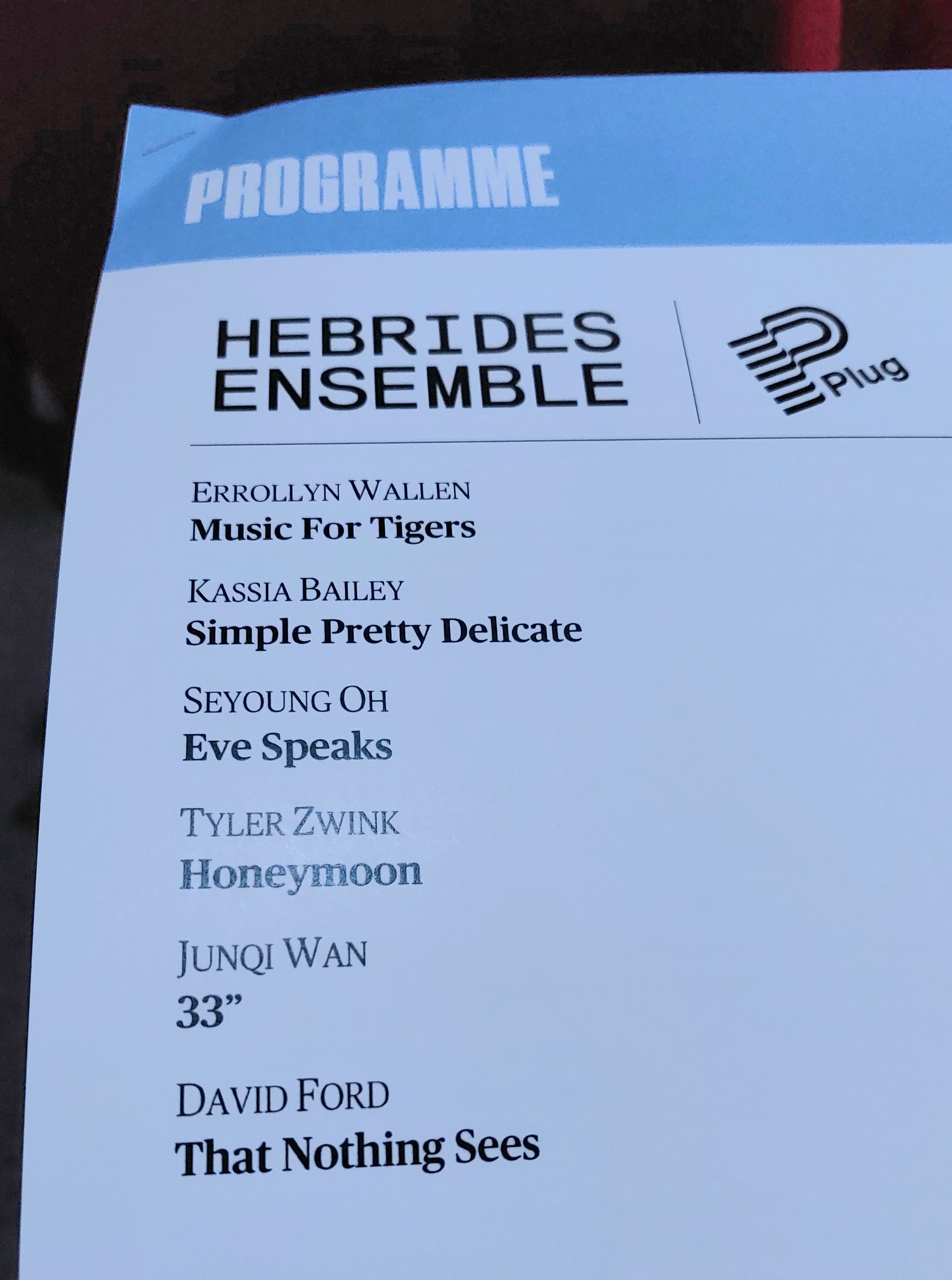
I’m also managing to get to a few lunchtime concerts, to brighten things up a bit more. This week, we’ve had the ‘PLUG’ festival of new student compositions, so on Monday I went to a thoroughly enjoyable concert of music for accordion-plus-one (or two or three) other instruments. Friday, I’ve got a ticket for another concert with a professional ensemble.
I’m racking my brains for other enjoyable activities, but there are limits to what I can come up with! Any sensible suggestions gratefully accepted …?
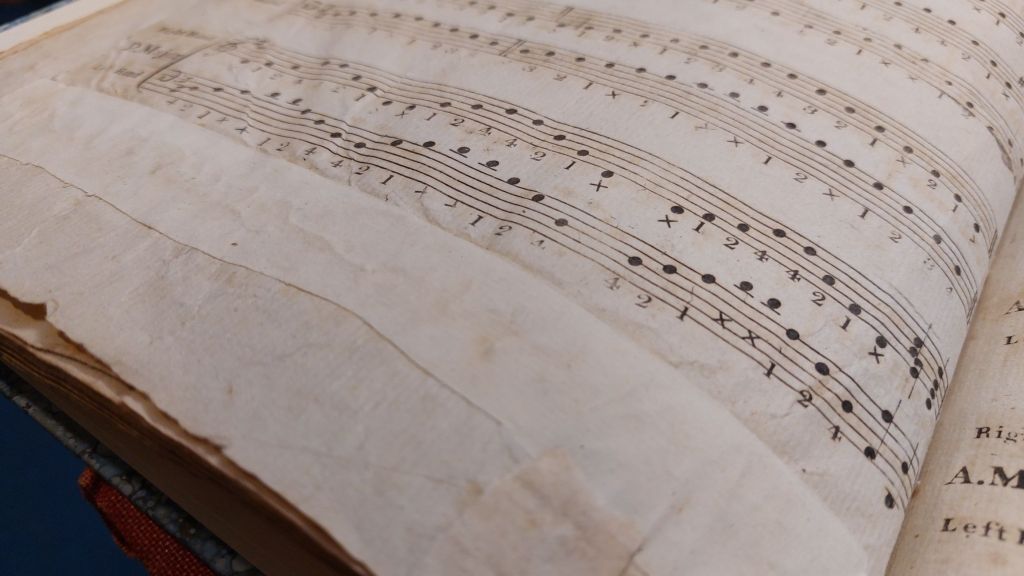
Reaching the end of my recent cataloguing project – the gift of a number of books of old Scottish music – I must confess I left what looked like the most miscellaneous, worn, unbound pieces until last. Late on Friday afternoon, I had observed that one such piece had a pencil note at the head – ‘Music for The Gentle Shepherd, Foulis edition, 1788’. Now, this is a famous ballad opera by Allan Ramsay. It was so popular that my colleague Brianna Robertson-Kirkland writes that there were 86 editions of TheGentle Shepherd, 66 of them the ballad opera. Initially, the songs only indicated the name of the tune to use, and different editions have more or less songs. The 1788 edition contains a full vocal score of the songs, and that’s what we’ve got. My guess is that the last owner bought the 18 pages which someone had previously separated from the back of the larger original volume.
I haven’t made a study of it myself, but I do recognise the opera and its songs as very significant in the history of Scottish music – and this edition has particular importance. So, if this gathering of pages was so important, it would benefit from a decent catalogue entry.
The pages are numbered 1-18. With no title-page, still less a cover, to give me further clues, it wasn’t a task for 4.30 on a Friday afternoon, but it very definitely was one for a Monday morning.
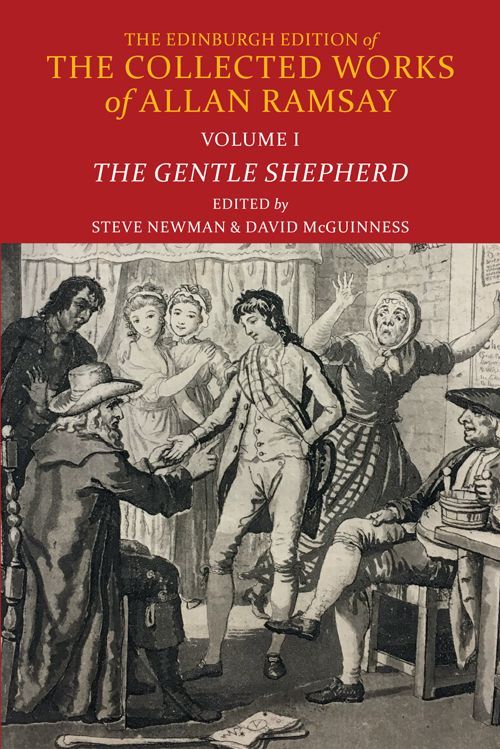
A bit of digging around soon found me another library’s catalogue record of Ramsay’s ballad opera in that very edition – a particularly significant edition, because it’s the most lavish, quite apart from having the complete vocal score section. RCS lecturer Brianna Robertson-Kirkland has researched the work in detail and written an article about it, which is on one of her class reading-lists. Dr David McGuinness, with whom I worked on the HMS.Scot AHRC-funded project a few years ago, has also recently published a book about it, with Steve Newman.
The new Edinburgh Edition of The Gentle Shepherd
But the catalogue record didn’t exactly fit my purpose, because what I had in my hand was the appendix at the end of the book, containing all the songs. We didn’t have the text of the ballad opera at all.
No problem – I downloaded the catalogue record and adapted it to reflect what we did have. I made sure the words ‘Scottish songs’ appeared in the catalogue record, and I indexed every one of those songs. The appendix is only eighteen pages long – it wasn’t that arduous a task. I’m really happy that we’ve been given this, because – even though it’s fragile and will have to be handled with extreme care – it means the students will now be able to see the music that Brianna has written about, and lectures about. (It still needs a nice stout card folder, and a secure storage space – but they’ll be sorted out soon.)
Informed Cataloguing
There’s one strange thing, though. It appears no other cataloguer has catalogued each song in The Gentle Shepherd – not in Jisc Library Hub, at any rate. Well, although we at RCS might not have the whole magnificent text, a title page or a cover, we HAVE now got a catalogue record which indexes all the songs. Hooray!
Contents:-
The wawking of the fauld (1st line: My Peggy is a young thing)
Fy gar rub her o’er wi’ strae (1st line: Dear Roger, if your Jenny geck)
Polwart on the Green (1st line: The dorty will repent)
O dear mother, what shall I do (1st line; O dear Peggy, love’s beguiling)
How can I be sad on my wedding day (1st line: How shall I be sad when a husband I hae?)
Nansy’s to the green-wood gane (1st line: I yield, dear lassie)
Cauld kail in Aberdeen (1st Line : Cauld be the rebels cast)
Mucking o’ Geordie’s byre (1st line: The laird, wha in riches)
Carle, an’ the king come (1st line: Peggy, now the king’s come)
The yellow-hair’d laddie (1st line: When first my dear ladie gade to the green hill)
Kirk wad let me be (1st line: Duty, and part of reason)
Woe’s my heart that we shou’d sunder (1st line: Speak on, speak thus)
Tweed Side (1st line: When hope was quite sunk in despair)
Bush aboon Traquair (1st line: At setting day and rising morn)
The bonny grey-ey’d morn
Corn-Riggs (1st line: My Patie is a lover gay)
I struggled to explain to my family just how gratifying I find this. But I think it’s really important not only that Brianna’s students can see which songs are in Foulis’s edition of The Gentle Shepherd, but also, anyone looking for one of those song titles will be able to see that it was one of the songs used in the famous ballad opera.
The Gentle Shepherd / Allan Ramsay ; edited by Steve Newman, David McGuinness.
As a matter of interest, we do also have some items going back to the era when Cedric Thorpe Davie put on a performance of the opera. Anyone checking our catalogue will spot those too!
The Gentle Shepherd: a pastoral comedy / by Allan Ramsay ; abridged and adapted for performance at Edinburgh International Festival by Robert Kemp [bound photocopy, 47 p.]
I accepted a generous donation of old books to the Library a couple of weeks ago. This presented me, personally, with a bit of a problem because our offices, furniture and contents are being moved around, and I had proudly emptied most of my shelves in readiness. There will be fewer shelves in the other office. And now I had two shelves full of old Scottish music – right up my street – which needed cataloguing.
Most vital priority – get them done before I retire from the Library.
Almost as vital – to get them done before the move on Thursday next week!
Of course, the lovely thing is that they’re books I’ve encountered in various research contexts … the PhD; the Bass Culture project (https://HMS.Scot); the book chapter on subscriptions; and my own forthcoming monograph.
I catalogued like crazy on Thursday and Friday. I’ve catalogued Sammelbande (personal bound volumes) of songs, piano music and fiddle tunes. I’ve shown colleagues books signed by George Thomson. I’ve indexed Gow’s strathspeys and reels. And yesterday I blogged about James Davie and his Caledonian Repository.
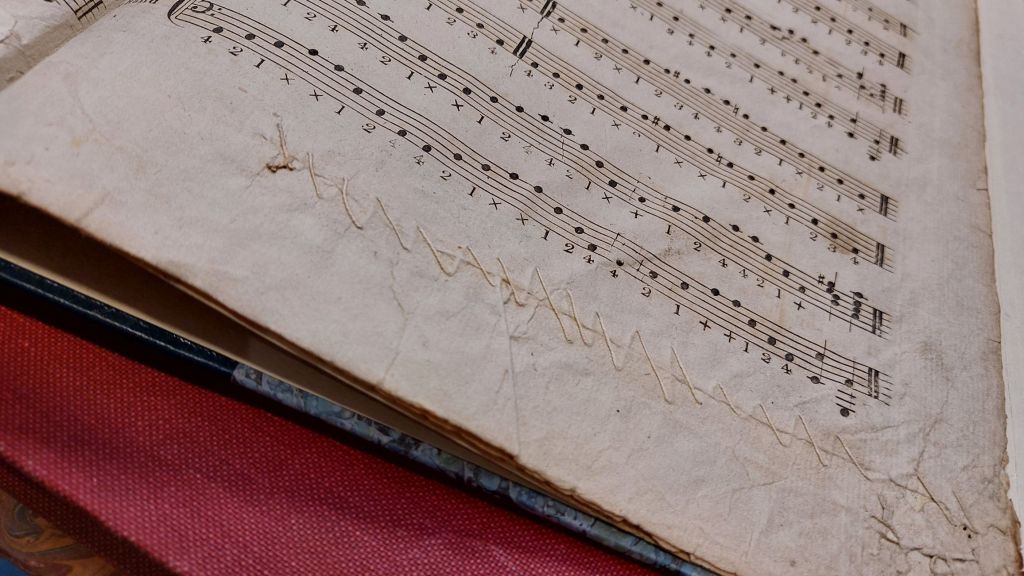
But I’ve also just enjoyed handling the music, because sometimes one finds some endearingly human evidence of the scores being used, even to the point of needing mending. It’s quite touching to ponder how much a piece had been used, before it actually needed stitching – here, along a line where the edge of the printer’s block had originally left a dent in the paper:-
Stitched on one side, pasted on the other!
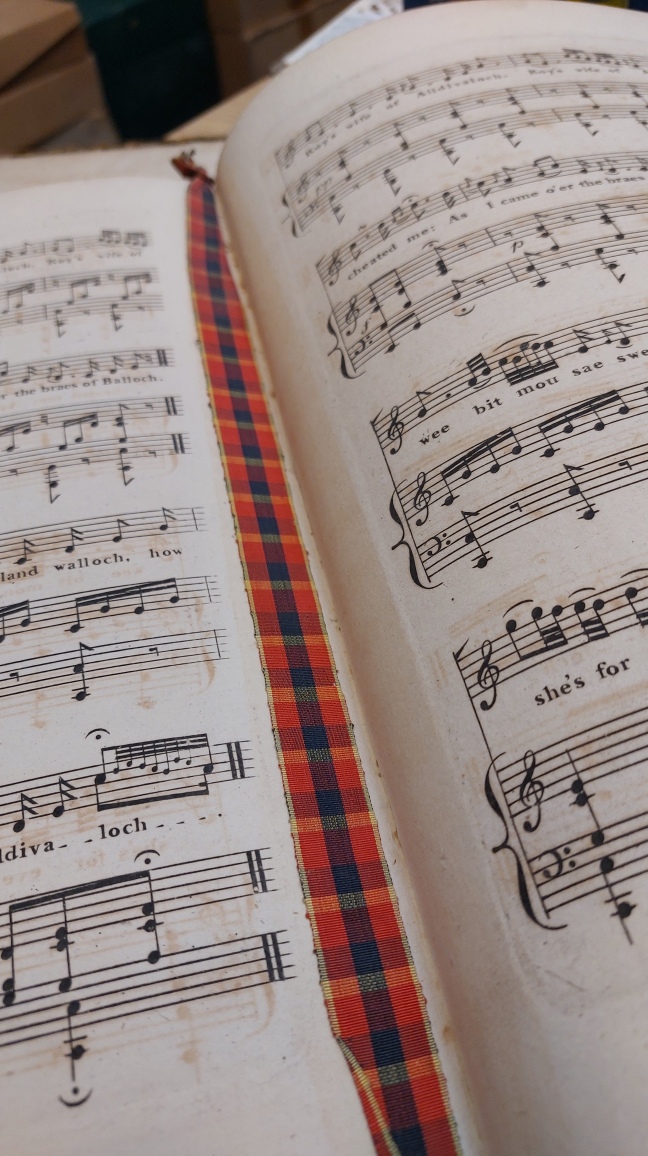
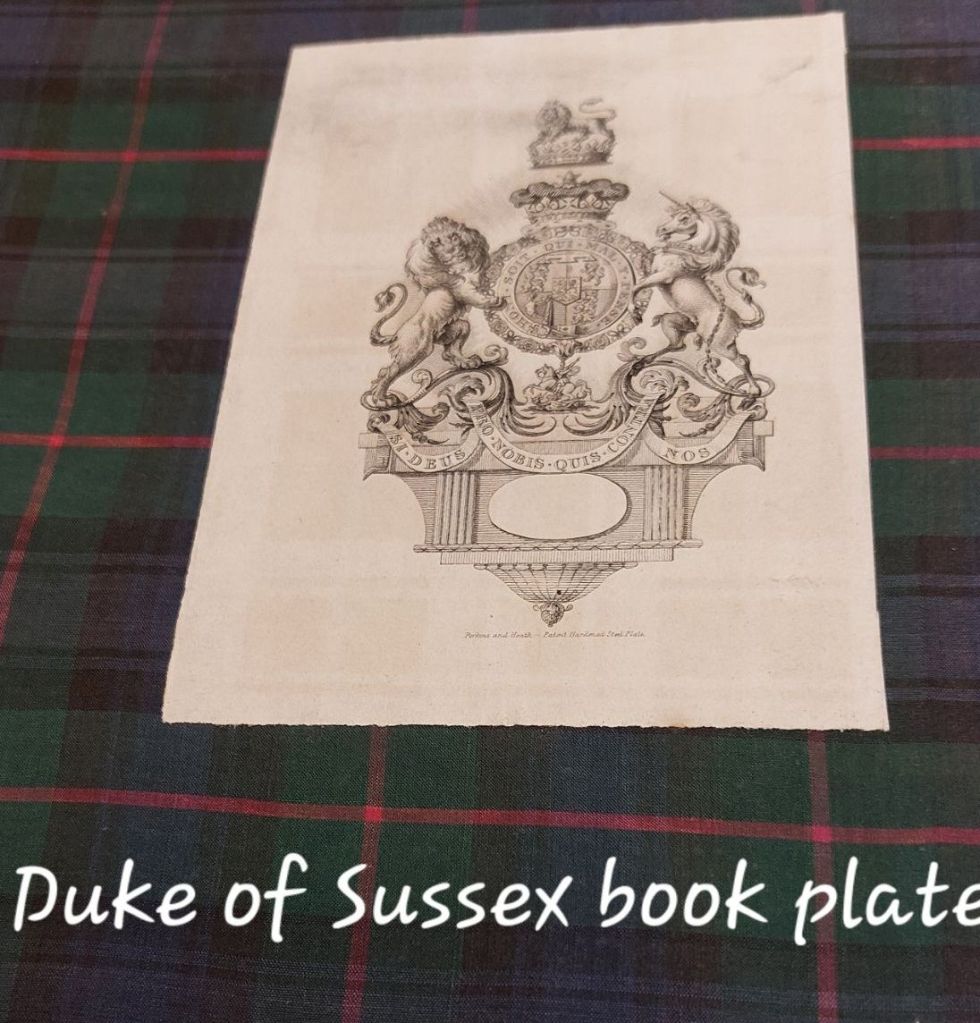
I’ve smiled at Georgian ladies’ stitched repairs to much-loved pieces, noticed with amusement a handful of early Mozart Allan books (yes, including some strathspeys and reels) in a fin-de-siecle Sammelband which had seen better days; spotted piano fingerings pencilled in; and best of all, found a tartan ribbon in a volume dedicated to the Duke of Sussex – his personal copy, which was first sold out of the family’s possession in 1844. His library was dispersed after he died in straitened financial circumstances:-
Nine Scots Songs and three Duetts, newly arranged with a harp or piano forte accompaniment / by P. Anthony Corri
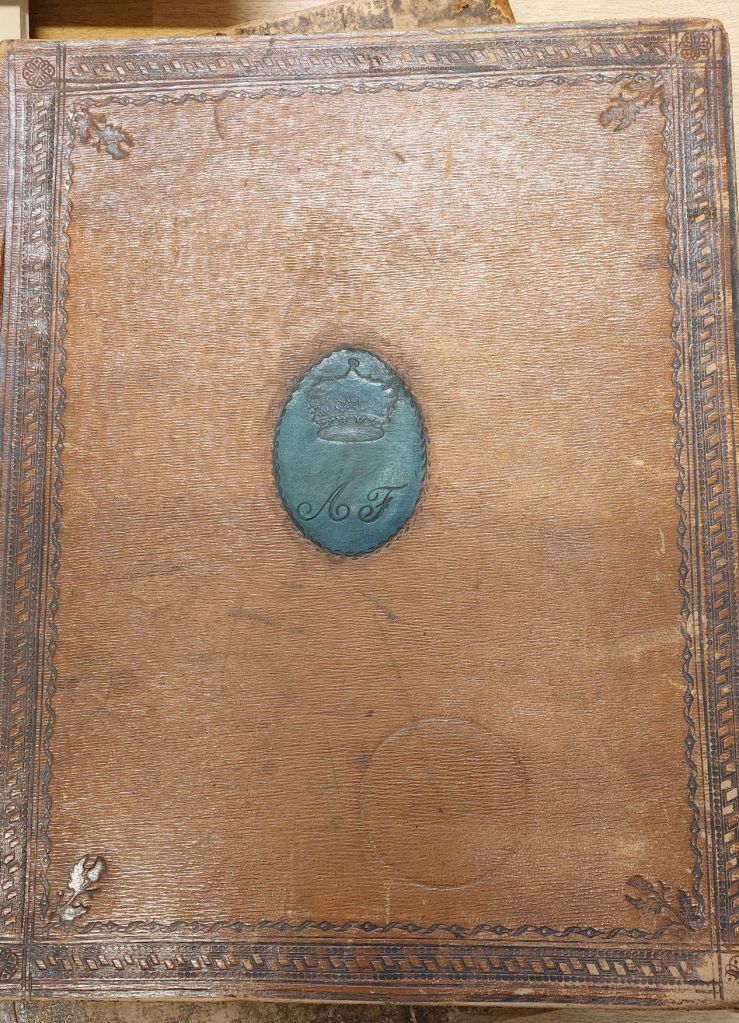
This book has the Duke’s family crest on a label pasted inside, and the outer cover is embossed with ‘A F’ (Augustus Frederick), reflecting the monogram on the title page.
The Duke of Sussex’s mongramAugustus Frederick, Duke of Sussex (1773-1843)
The tartan endpapers and tartan ribbon between pp.30-31 are a perfect illustration of what I have written about in a chapter on tartanry in my forthcoming monograph. Everyone – whether nobility or commoner – liked a bit of tartan on or inside their Scottish song books, and here, someone even found a bit of tartan ribbon to use as a bookmark.
I have just a few of those books left to catalogue now. There’s an intriguing one without a cover or title page, waiting for 9 am on Monday …! Hopefully, I’ll end up with an empty bookcase again.
To be fair, David Baptie spoke highly of the Aberdonian James Davie, an early to mid 19th Century Scottish song enthusiast. He was a friend of the Dundonian song collector James Wighton.
However, correspondence between the two men reveals him writing sour objections to other contemporaries’ activities and opinions. I quoted some of his grumblings in my first book, Our Ancient National. Airs. I formed the impression that he was decidedly irritable in his old age!
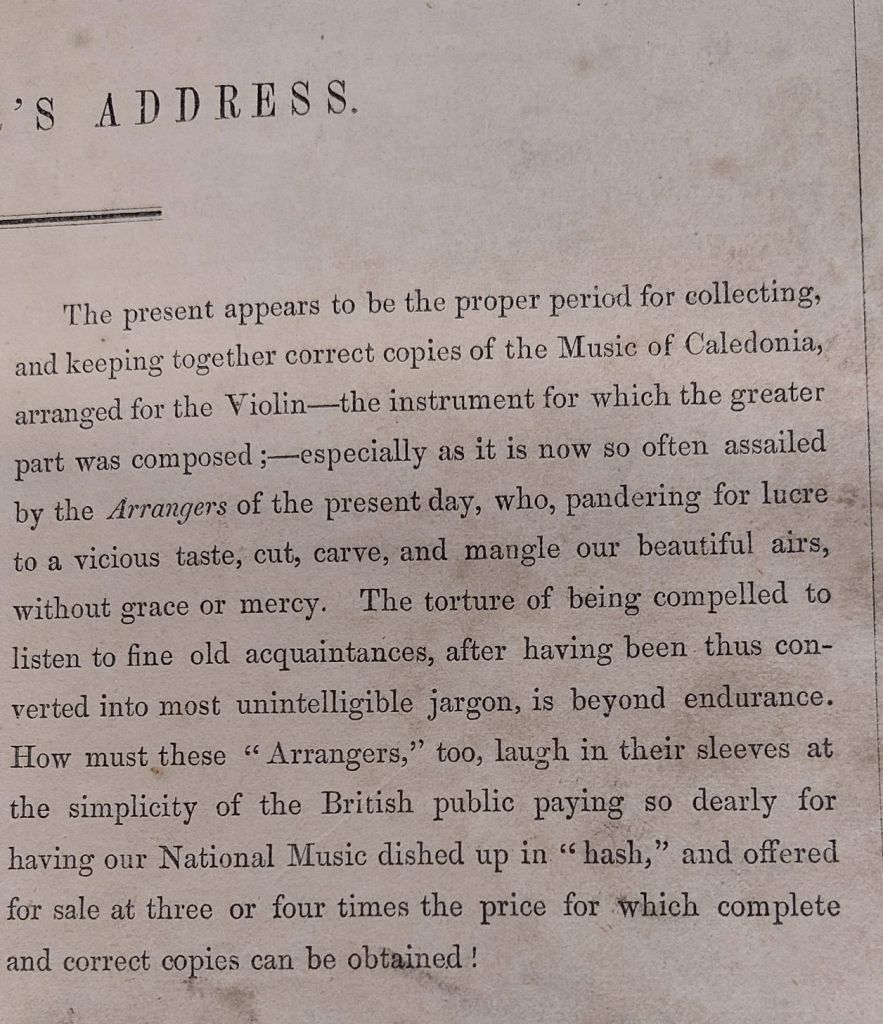
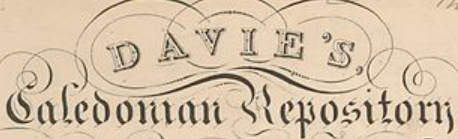
Here he is, in characteristic tone at the start of his CaledonianRepository:-
Arrangers? Pshaw!
Notwithstanding this, I was excited to accession several books of this Caledonian Repository to the library, since they’re quite rare. The books are tatty and fragile, but a tangible link with the past – they’re about 200 years old.
The Repository is in two series. We have three books from the first and two from the second. Grateful that the tune contents pages were there, I sorted out which pages belonged where, then catalogued them. Oh, my fingers flew. But the last one that I managed to catalogue before 5 pm yesterday, simply didn’t want to play fair. The catalogue entry was done. But, without going into details, it wasn’t displaying properly.
I went home, had tea, opened the laptop and recatalogued that piece using the info I’d already entered.
No luck.
I removed the identifying sequential number and tried again.
Still no luck.
Maybe ‘something’ magical would happen to it overnight? It was too much to hope! Mr Davie, irascible as ever, did NOT want that book to appear properly in our catalogue.
Finally, my line-manager suggested trying to give it a different barcode. I have absolutely no idea why the system didn’t like the one I’d assigned it, but I did as suggested, and hey presto, we have Davie’s Caledonian Repository, Series 2, Book 2, properly catalogued and accessible.
So that left me with Series 2, Book 1 to do this morning. That book has all its pages, but the page numbering is, shall we say, a little quixotic. Mr Davie has had the last laugh there.
Nonetheless, we do now have all five items in the Whittaker Library catalogue. I like to think Davie would be a little bit pleased!
I’ve been cataloguing a Sammelband (a bound compilation) of some early nineteenth-century songs, and my attention was caught by the amount of applause resounding between the title pages. The audiences’ hands must have been tingling after so many – ahem – superlative performances of such outstanding compositions. So, I ask you, how should we work out which was most popular …?!
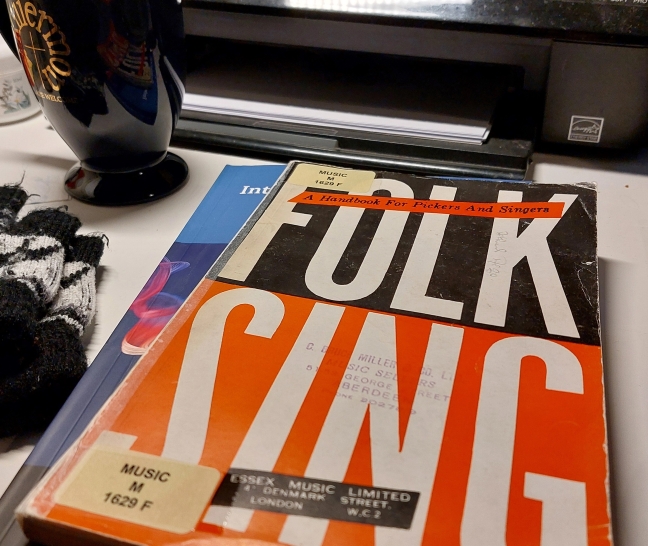
In the closing pages of my second monograph (currently at the publishers, pending approval of the revisions and then copy-editing), I comment on the changing approaches to folk music in the late 1950s and 60s. So, when a colleague presented me with a pile of music which used to be in the library, but needed recataloguing (don’t ask!), my immediate reaction to this book was, ‘Aha, see, I was right. Look how different this is to Mozart Allan, James Kerr’s and Bayley & Ferguson’s folk song collections!’
As a scholar, I smiled with satisfaction as I noted that even the COVER of Folk Sing: A Handbook for Pickers and Singers was more modern – huge white letters on a half-black, half-red background. As for ‘pickers and singers’: well, we didn’t have ‘pickers’ in any of the dozens of Scottish publications that I’ve been writing about! Guitar/accordion chords as an addition, assuredly, but not usually melody, chords and no keyboard line. And as for the term, ‘pickers’? No. A more savvy friend informs me that the book came at the end of the skiffle revival, which according to Oxford Music Online was particularly strong in the UK:-
“While the skiffle revival of the 1950s embraced the USA and Germany, it gained most ground in Great Britain. […] Donegan and his imitators enjoyed considerable popularity until about 1959, when skiffle gave way, both in the USA and Europe, to ‘beat’ music and to rock and roll.”
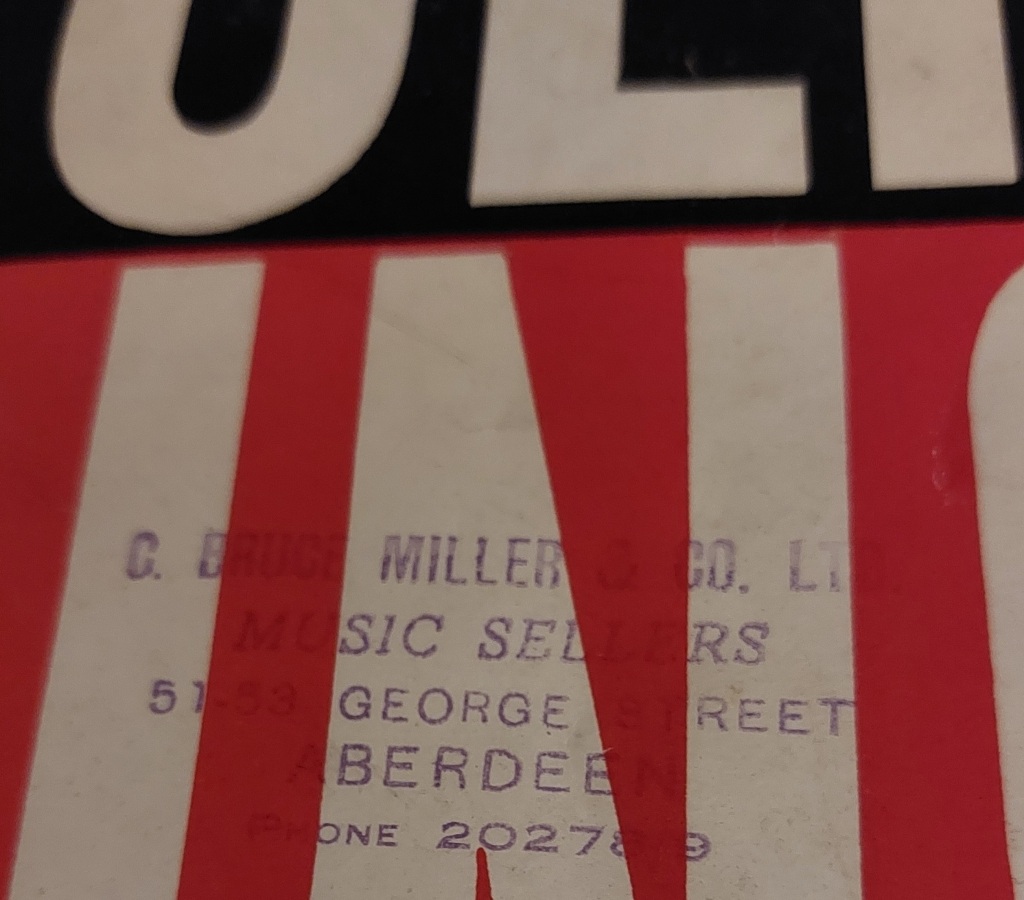
This song book was published in New York by Hollis Music in 1959, but distributed by Essex Music (4 Denmark Street) in London, and this particular copy was actually sold from a shop in Aberdeen. Notwithstanding this, it mainly contains American repertoire with just a few British songs and a single French one for good measure.
I examined it inside-out and backwards, observing contentedly that they indicated the names of the composer/arranger/lyricist above each song, along with which publishers owned the original copyright.
Then I sighed. This morning I had noted with pleasure that already this month, I’ve submitted a revised manuscript for my book, written a librarianship-ish article and two musicology abstracts, done a peer-review and a radio interview, with a research talk coming up to round off the month. That was my research-self.
But what I was supposed to be doing now, was cataloguing this anthology, not studying it.
‘Recataloguing’ means that I have already catalogued the book at some stage in the past … yawn!
The librarian part of me spent half this afternoon re-cataloguing it and copy-typing 150+ song titles from the contents list. It’s certainly useful – it means people will be able to find the songs – but it’s not nearly as rewarding!
Seriously, why do we do year-end reviews? To show the world what we’re most proud of? Quite possibly. To convince ourselves – and the world – that really, we’ve been very busy and deserve a pat on the back? Perhaps so. I took to the internet to find out why businesses do reviews, and why a career-minded individual might do one of their own.
Consulting the Experts
Braze.com said that year-end reviews offer the chance to ‘create distinctive content’; to ‘build loyalty’ and to remind the world what your particular business does best. To that end, obviously you log milestones, achievements and events. You use multimedia formats, and draw upon customer data. This all makes sense, although I don’t know that I, as an individual, can do all these things. (No customers, for a start!)
I tried again, and found a Harvard Business Review posting about, ‘How to create your own “Year in Review“. There’s plenty of sound advice here, suggesting that I should pause and reflect upon successes and failures; lessons learned; proudest achievements; who has helped me most; how my strengths have helped me to succeed; and whether there’s anything I wish I’d done differently. This is much more introspective, and certainly valuable advice. Whether I’d want to blog about all these headings is a moot point, though.
For me, I have an extra conundrum. I shall be retiring from the Whittaker Library at the beginning of July. I hope to continue the research element of my work, though. So – in one sense I’m writing a career-end review, as far as librarianship is concerned, but it’s not a career-end review for me as a researcher.
The Harvard Business Review suggests using your diary to capture key events on which to reflect. I spent a few minutes doing just that, yesterday. Immediately, I realised that there’s one thing I’m proud of over everything else, and that is that although I spend 85% of my time as an academic librarian, my 15% as a postdoctoral researcher is actually highly productive.
What do I do best? I get things done.
‘She’s a Librarian’
I confess, I don’t like hearing this! It makes me feel as though my research activity is dismissed as dilettantism – that I don’t do badly, considering research isn’t my main role. On the other hand, a fly on the wall would point out that yes, I do spend the majority of my time as a librarian.
Jazz CDs – not a Highlight
So, what did my diary exercise reveal? I’ve catalogued a lot of jazz CDs. This causes me to feel quite a bit of resentment, because I know our readers don’t generally listen to CDs as a format, so all my efforts are to very little avail indeed. Maybe that’s one of the things that I wish I’d done differently. It’s not a high-priority task; however, I am conscious that I don’t want to leave the backlog to my successor. And that’s why I do this dreadfully tedious and repetitive activity!
Retrospective Post Script: that jazz CD cataloguing was indeed a waste of time. I did it because the promise had been made that those CDs (thousands of them) would be catalogued. I didn’t make the promise, but I did feel the obligation to fulfil the promise. My resentment was because it used so little brainpower and expertise, provided so very little fulfilment in the moment, and so little benefit in the long-term.
Equality and Diversity: Stock Development
What I’m more proud of is my efforts to get more music by women and composers of colour, into the library, and most particularly, to ensure that our staff and students know just how much of it there now is in our stock. With a colleague from the academic staff, I’m concocting a plan to raise the profile of this material.
I also suggested maybe there might be a prize for diverse programming …
And I just heard – there is going to be such a prize – it really is happening. A red letter day!
For me, a particularly proud moment was being invited to attend a Masters student’s final recital in June, at which one of these new pieces was played. It was a piece requested by a member of staff – I don’t think it was me that actually stumbled across it – but I certainly sourced it, catalogued and listed it. Whilst I’m heartily sick of cataloguing, I do take pleasure in stock development, and in ensuring there are ample means of discovering the music once we have it.
In September, I was gratified that one of our performance departments reached out to me to request more materials by under-represented composers – a sign that the message is getting through, and that staff appreciate that the library really is trying to help.
Since October, I’ve also been broadening the stock of music inspired by climate change and ecology, including songbooks for school-children, since we have a number of music education students. That pleases me, too.
What else? Dealing with donations to the library, some eagerly received and others needing sifting through. Weeding stock to ensure there’s room for new material, and ensuring that tatty material is removed or replaced depending on how much it’s likely to be used.
User Education
Some things are cyclical – most particularly providing initial library introductions, and later talking to different year-groups about good library research practice. In June, I gave a talk about bibliography to the Scottish Graduate School of Arts and Humanities, which attracted far more of an audience than I’d ever dreamt of!
Queries, and Research-Related Activity
I’ve also dealt with queries – such as one from a Polish librarian, or another from an elderly enquirer wanting to trace music remembered from childhood. And I talked about my research activities at a library training session, even though I was rather afraid of wasting colleagues’ time going on about something that might not feel very relevant. (This autumn, I also obtained and catalogued – in detail – a book of Scottish songs that I have written a book chapter about. It would be dreadful, wouldn’t it?, if someone read the chapter but couldn’t find the song-book in the library!)
Professional Activity
Professionally, I managed the comms for the IAML Congress in Cambridge this summer (with a little bit of help from mascots Cam, Bridge and Don and a couple of fellow IAML (UK & Ireland) librarians, and I think it went quite well. The stats for the blog and Twitter (“X”) rose gratifyingly during this period. I went to a couple of days in Cambridge, but I didn’t speak this time.
IAML Congress mascot Don
A Researcher with Determination
Early on in 2023, I was gratified to receive an LIHG (Library and Information History Group) Bursary to attend a conference at the University of Stirling between 17-19 April, which was about Reading and Book Circulation 1650-1850. This was to be the first of two major successes this year, for I was also elected the inaugural Ketelbey Fellow in the Institute of Scottish Historical Research at the University of St Andrews. I’ve written extensively about this experience in other blog-posts, so I won’t duplicate it here. However, I can’t resist reminding myself of highlights!
Researching key documents in Martyrs’ Kirk Reading Room
Attending both fortnightly research lectures, and ISHR pub lunches on alternating weeks
Many enjoyable hours concentrating on my book revisions – with a view of the sea!
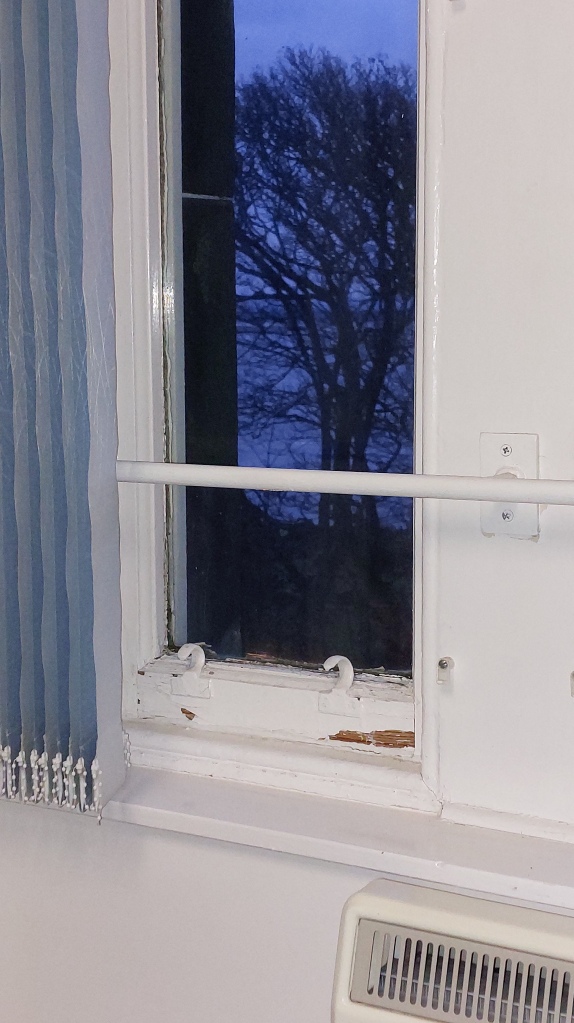
Twilight from my window, St Katharine’s Lodge, St Andrews
We’re not going on a (sniff!) Summer Holiday …
Being a researcher for 15% of the time is not easy – there simply isn’t the time to do all I want to do. Far from ‘dabbling’ in research, I take this side of my work very seriously indeed. I might have been a librarian most of the time, but I have devoted far more than the designated 10.5 hours a week to my research activity! I took annual leave in the summer to get my book draft completed, and took more annual leave to enable me to spend two, rather than 1.5 days researching in St Andrews. I’m doing it again next week; the book revisions must be completed and submitted very soon, and if the only way I can do it is by taking holiday, then that is what I must do.
In January, I wrote an article for the Glasgow Society of Organists, about a Paisley woman organist and accompanist whom I’d discovered during research over Christmas 2022. Even though it wasn’t for a scholarly journal, it was research done to my usual standard, and I’ve drawn upon that research in one of the chapters in my forthcoming monograph.
I’ve peer-reviewed an article, a book manuscript and a grant application. Considering all that I’ve had on my plate this year, I’m quite proud that I did manage to do these things. I don’t attend reading groups, and I’m not always able to attend research-related events that fall in ‘library time’ – I don’t want to give the impression I’m skiving off library work! But I do want to feel part of the research community, and that was precisely what was so magical about my Fellowship in St Andrews. For those two days a week, I was a researcher, pure and simple.
Roll on 2024! What am I going to do differently?
I’m looking forward to the summer. I feel I’ve been a librarian long enough. I’ll miss doing the user education, and rising to the challenges posed by unexpected or unusual queries. I shan’t be sorry to quit cataloguing, particularly jazz CDs!
I don’t actually have any ‘retirement’ plans as such. Apart from having more time to spend on my role as Honorary Librarian of the Friends of Wighton in Dundee. Whilst I live on the other side of Scotland, at least I shall have more opportunities to leap on a bus or train to get to Dundee Central Library to look after the repertoire that I love.
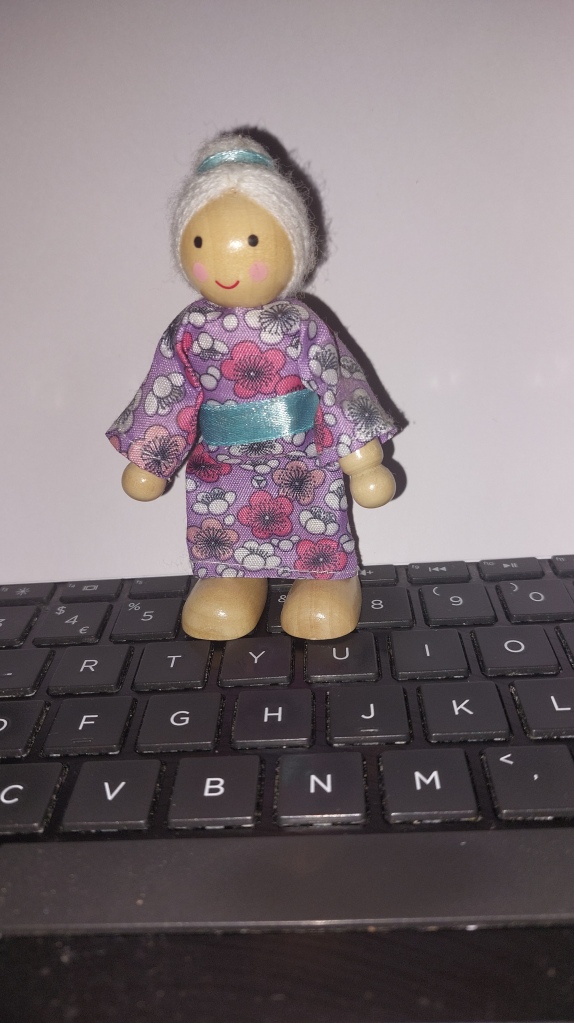
Little old lady? Not me!
Not Entirely Retiring!
I don’t feel remotely like a little old lady! I hope I’ll continue as a postdoctoral researcher in my present institution, but I’m also keeping my eyes open for any other part-time opportunities that I could pursue alongside that. ’Actively looking’, is the phrase, I think.
With a colleague in another institution, we’re cautiously planning a new research idea. And I also have strands of research that I commenced for my book, but hope to pursue in greater depth once this book is safely further along the publication process. Watch this space.
One day, when I’ve retired from librarianship, all that will be left to show for my 36 years here will be the books and music on the shelves – and their catalogue records. Naturally, I made sure RCS has a copy of Mozart Allan and Jack Fletcher’s The Glories of Scotland in Picture and Song. Click on the title to see how I’ve catalogued it!
I think you’ll agree I’ve managed to insert enough hints as to why I think it’s significant. There’s a book chapter coming out in an essay collection from the Centre for Printing History and Culture at Birmingham City University, so there will be more to read in due course.
I’ve mentioned before how, for the past four or five years, I’ve particularly focused on getting more music by women and composers of colour into the Whittaker Library. By the time I reach retirement age, there will be a good, up-to-date selection of such works for students to choose from. (I’ve also mentioned my rationale for this activity – if we introduce this music to today’s students, then whether they go out and perform it, or teach it, or combine these with other activities, there’s hope that they’ll pass on a wider, more receptive approach to repertoire-building to the students that follow on behind them.
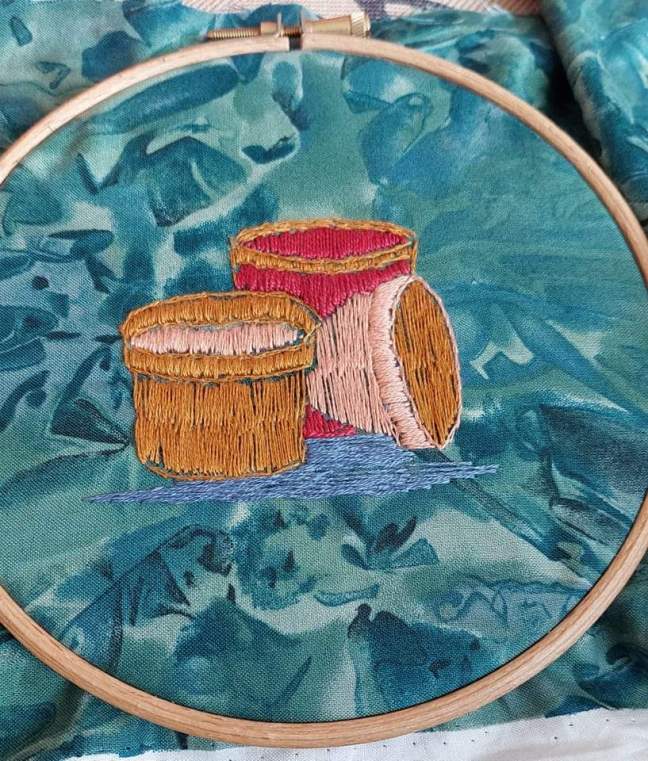
Today, I was invited to attend a recital by one of our students. Two of the pieces were pieces by women composers, that their teacher had recommended us to acquire. It was a great recital – innovative, exciting and impressive. One particular piece involved a percussionist playing a counterpart on – wait for it – an assortment of carefully-chosen, differently pitched flower pots. You didn’t think flower pots were pitched? No, they aren’t deliberately tuned, but they can be chosen for the sound they make when you hit them! I bet you none of the audience had ever heard flower pots in a recital before, but it was great. Another piece had been written with piano accompaniment, but this time it was played on accordion. (From a personal point of view, this was of considerable interest. I got an accordion a few months before the pandemic, and a concertina a few weeks before. I get a lot of enjoyment out of my beginner’s attempts with two inexpensive instruments. But to sit and hear a truly excellent instrument in expert hands – and a “button box”, too; completely baffling to me! – well, that was something else. If you think accordions are just about ceilidhs and the good old days of Jimmy Shand, then believe me, you’ve missed so much.)
I and my colleagues even got a mention in the programme “credits”, for having obtained the music. It makes all the difference to feel that we were part of the programme-planning in our own small way. Sometimes, in a performing institution, it’s easy to feel that our hidden-away, behind-the-scenes work is really very insignificant and unnoticed. Obviously, we research and source the materials, catalogue and index them, then sit back and wait to see what happens. Our job is effectively done, one score or resource at a time, and the performers then go off and do the hard work, putting together a balanced programme and practising hard. We don’t always get to hear the results, though, which is why this morning’s recital was so lovely.
I have already expressed my opinion on – and weariness of – repetitive cataloguing. Processing CD after CD, all in the same genre and series, is mind-numbing. The mental exercise in cataloguing and indexing fresh, contemporary sheet music is definitely more enjoyable! Nothing can be ‘discovered’ in a library unless it has first been carefully catalogued, indexed and assigned the correct place on the shelves.
Seeing and hearing the results reminds me of the importance of music librarianship. A timely reminder!









 Karen McAulay, Musicologist